Chapter 3: C#overview
1. List, enum, properties and indexers
2. Struct and in, out, ref
3. Sugar
4. Generics (other common data structures and custom generic types,
constraints)
5. Multidimensional arrays, jagged arrays, dictionary
6. Delegates and events
7. Extension methods
8. LINQ 1 (basics)
9. LINQ 2 (advanced cases and query syntax)
10. Attributes
11. Json and xml, how to use NuGet
12. Operators overloading
13. Overview of useful, but less often used features: tuples, deconstruction,
expressions, reflection, preprocessor, unsafe code...
3.
Agenda
● What isa generic type?
● What is a list?
● List vs Array
● Property vs
Getters/Setters
● 3 different ways of
defining properties
● Enum
● Enum vs const
The cool syntactic C# sugar
starts here!
What if wecould...
● Add or remove elements
to an array
● Remove element at any
index or by any value
● Have a whole bunch of
utility methods for
something that holds
many elements
● We can!
● The answer is List!
6.
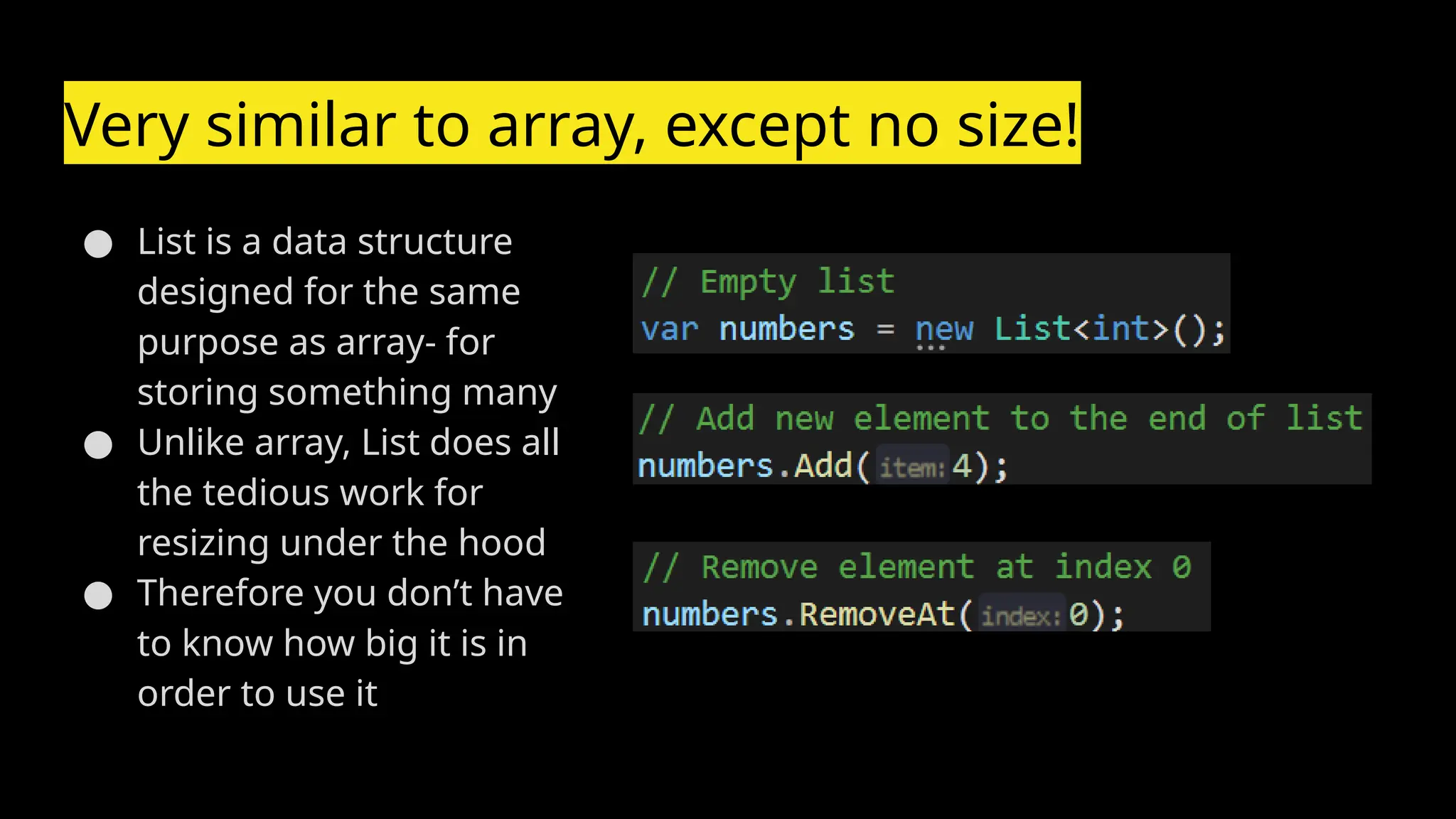
Very similar toarray, except no size!
● List is a data structure
designed for the same
purpose as array- for
storing something many
● Unlike array, List does all
the tedious work for
resizing under the hood
● Therefore you don’t have
to know how big it is in
order to use it
7.
List is aclass, but not just any class- a generic
class!
● Arrays across languages
tend to have the same
syntax ([])
● However a some special-
syntax based thing used
for storing the same of
many
● It just means that the
generic type (<T>) can be
anything
8.
Size doesn’t matter...
●List does has a size property when initializing it
● But it’s more of an optimization thing rather than
something you should put too much attention for
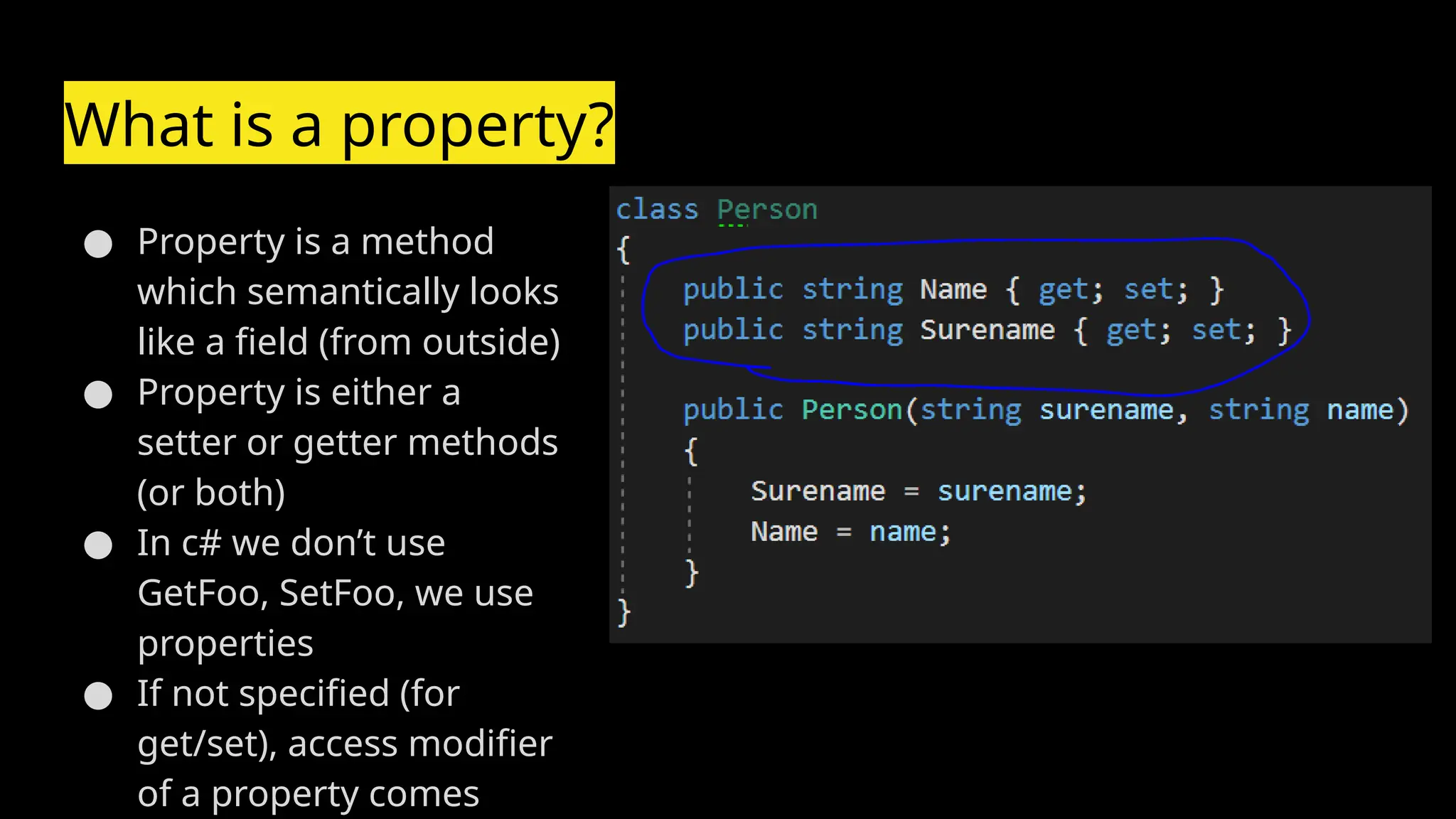
What is aproperty?
● Property is a method
which semantically looks
like a field (from outside)
● Property is either a
setter or getter methods
(or both)
● In c# we don’t use
GetFoo, SetFoo, we use
properties
● If not specified (for
get/set), access modifier
of a property comes
11.
Under the hood
●Properties are just
special getter and setter
methods with a backing
data field
● You don’t need to
declare neither names or
types of input- it’s all
known based on
property declaration
12.
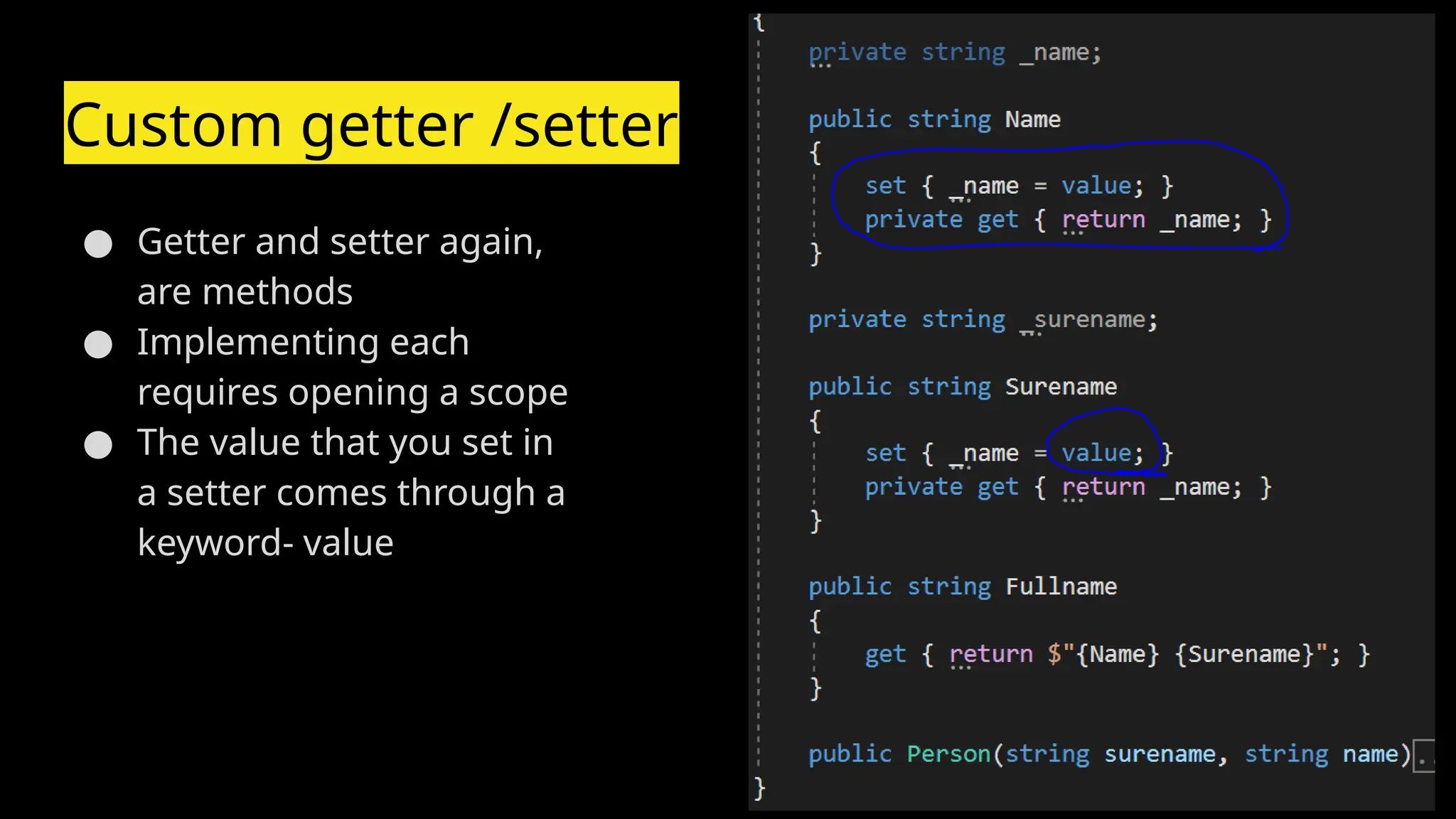
Custom getter /setter
●Getter and setter again,
are methods
● Implementing each
requires opening a scope
● The value that you set in
a setter comes through a
keyword- value
13.
3 different waysto declare properties
1. Expression-bodied
properties
2. Auto properties
3. Custom properties
14.
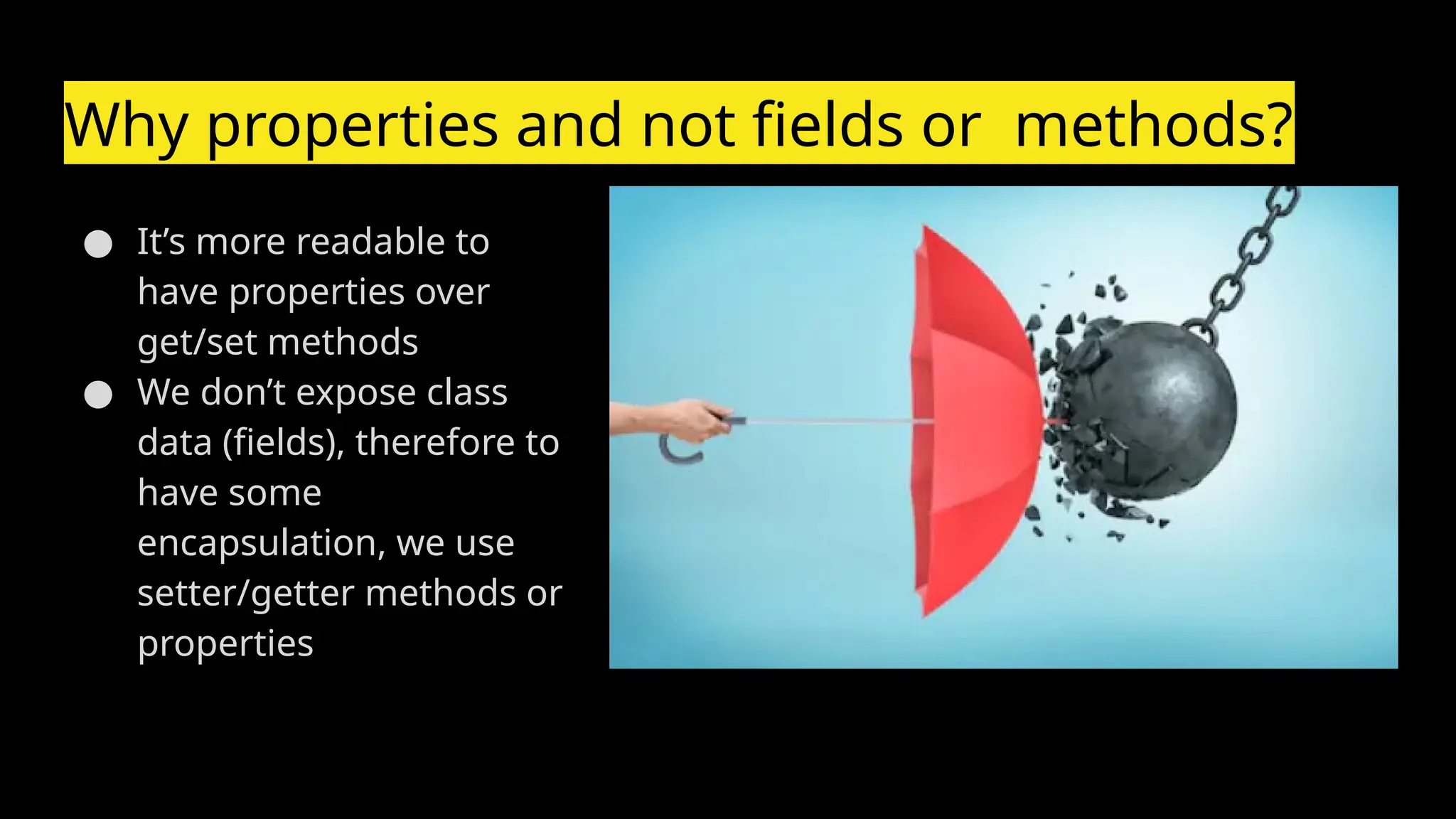
Why properties andnot fields or methods?
● It’s more readable to
have properties over
get/set methods
● We don’t expose class
data (fields), therefore to
have some
encapsulation, we use
setter/getter methods or
properties
15.
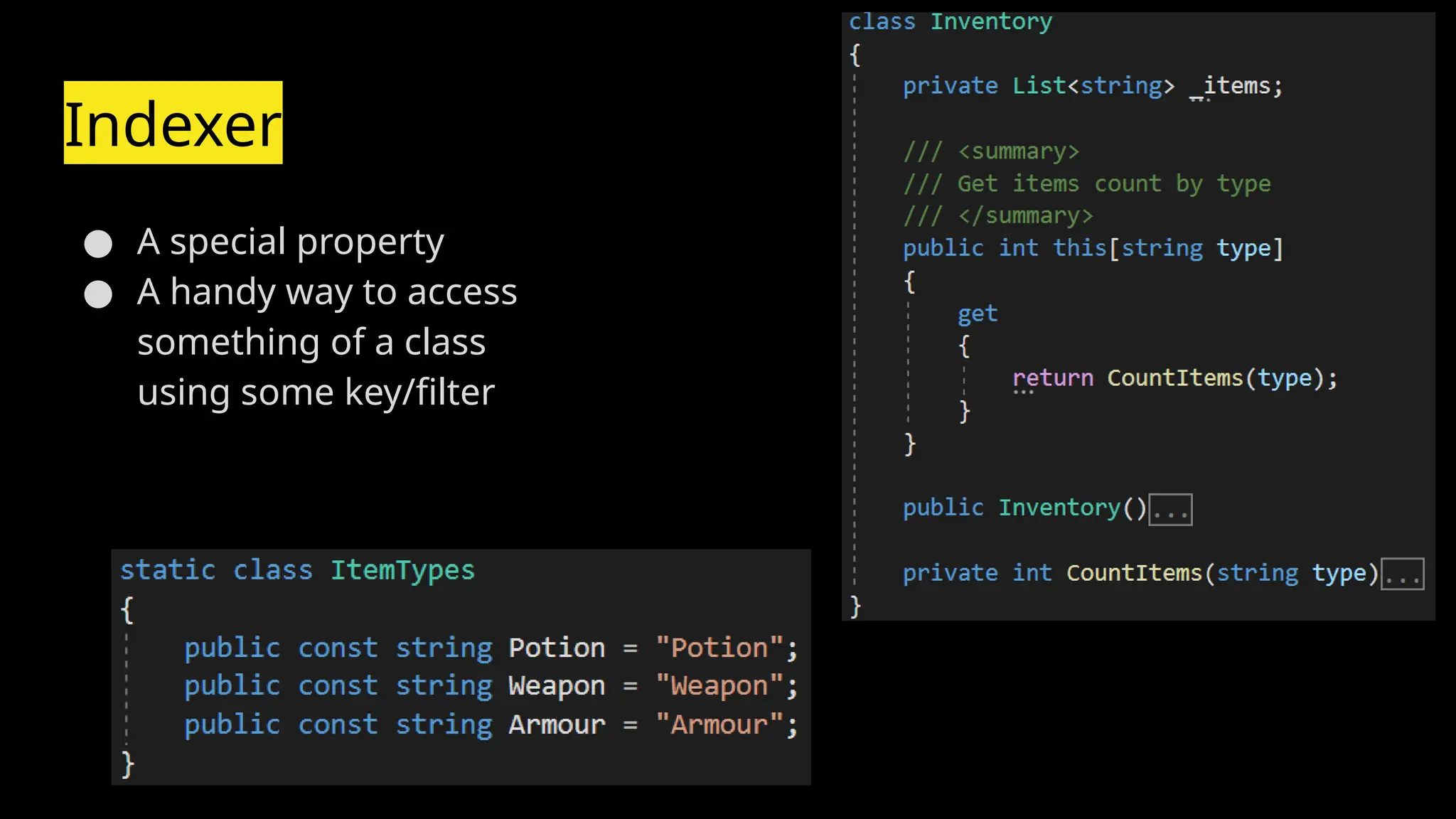
Indexer
● A specialproperty
● A handy way to access
something of a class
using some key/filter
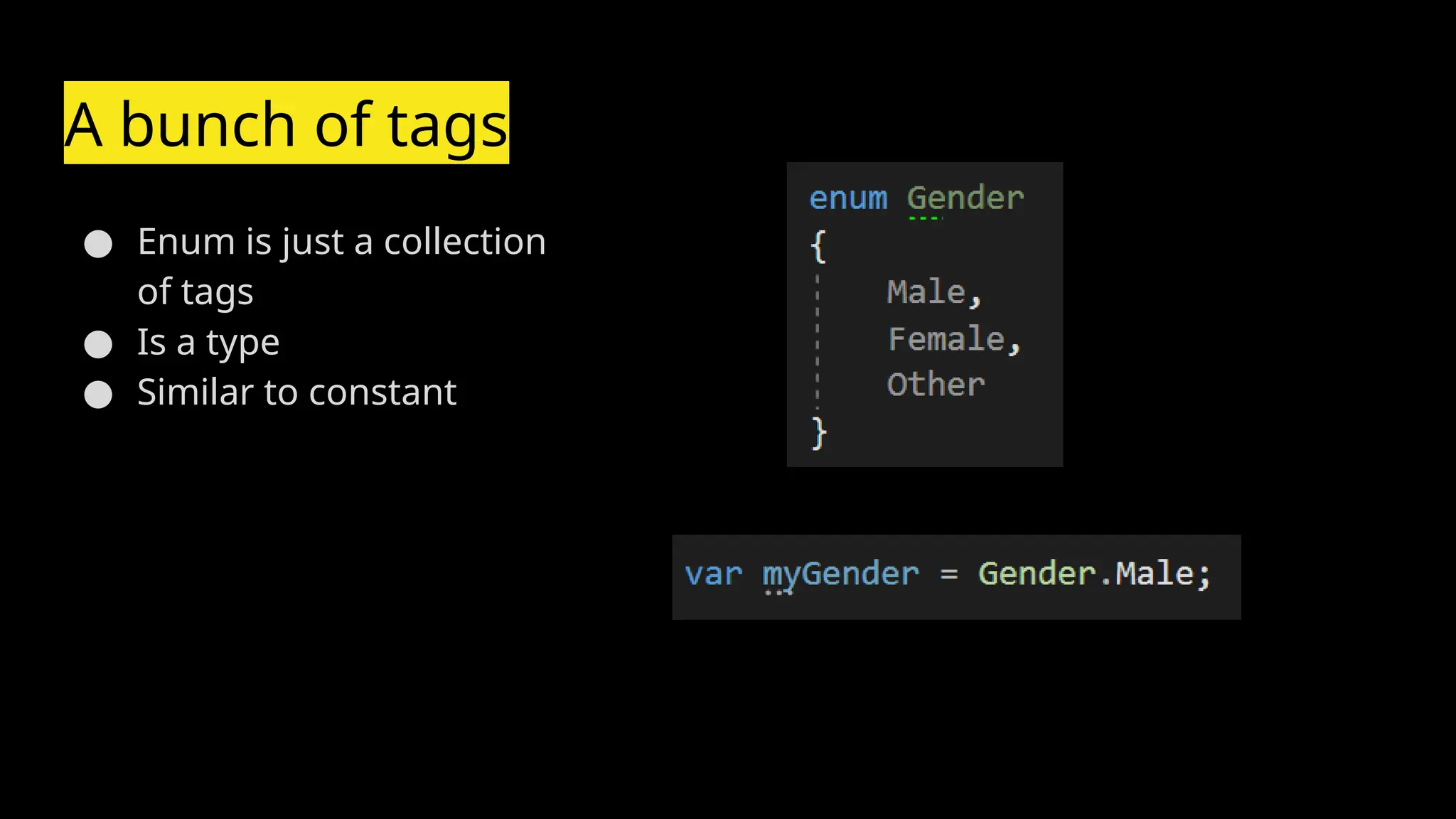
A bunch oftags
● Enum is just a collection
of tags
● Is a type
● Similar to constant
18.
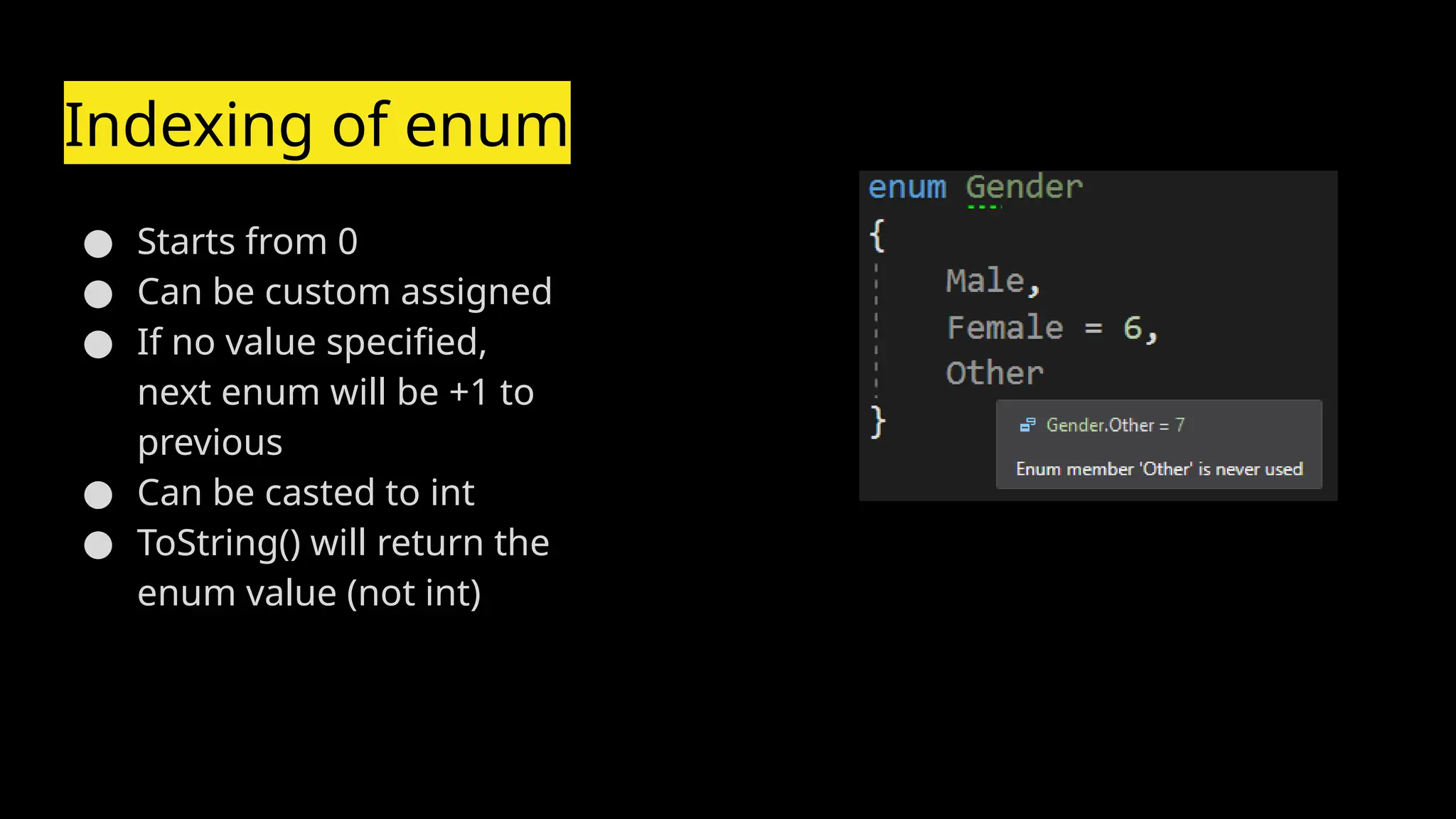
Indexing of enum
●Starts from 0
● Can be custom assigned
● If no value specified,
next enum will be +1 to
previous
● Can be casted to int
● ToString() will return the
enum value (not int)
19.
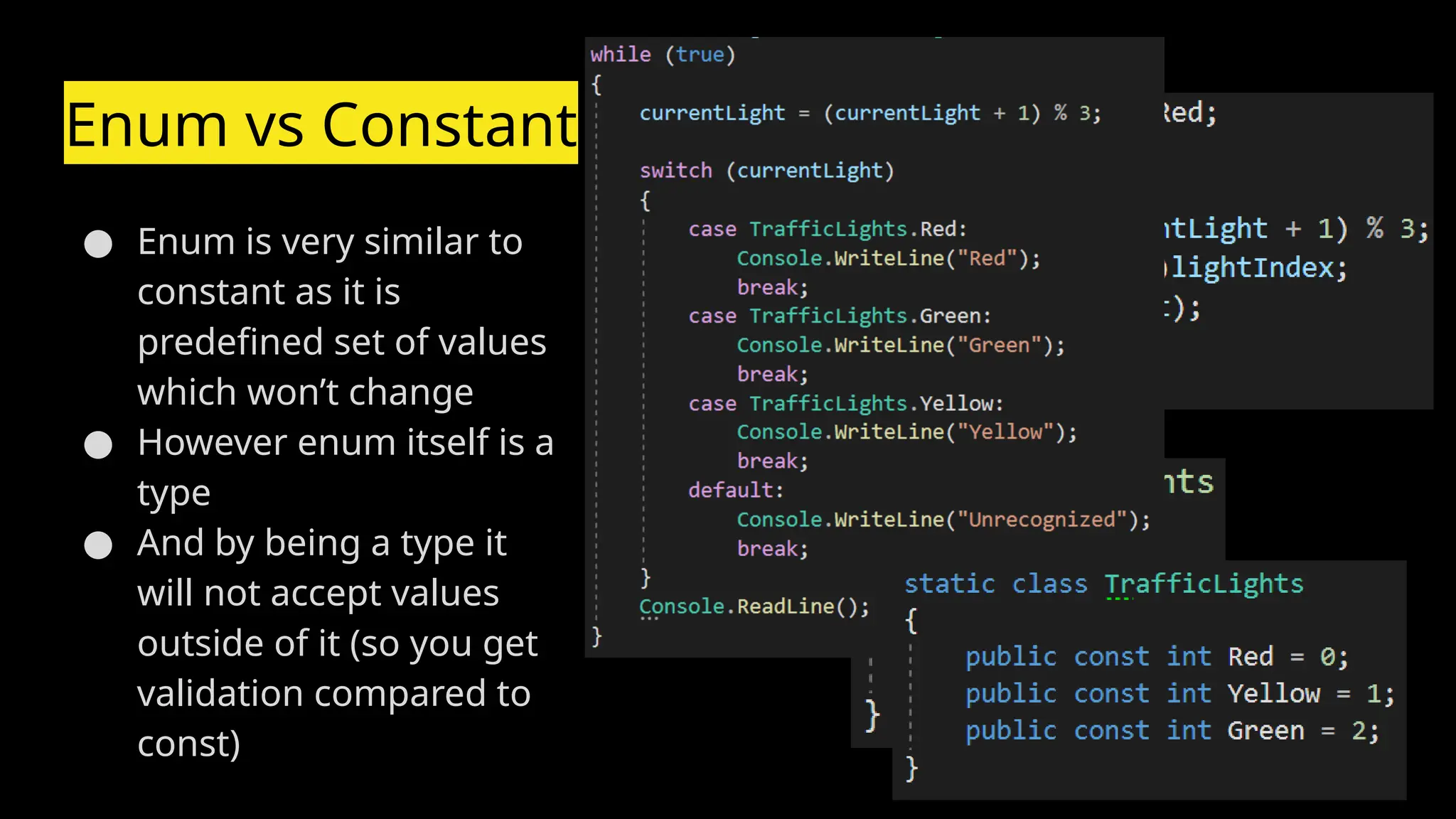
Enum vs Constant
●Enum is very similar to
constant as it is
predefined set of values
which won’t change
● However enum itself is a
type
● And by being a type it
will not accept values
outside of it (so you get
validation compared to
const)


![List is a class, but not just any class- a generic
class!
● Arrays across languages
tend to have the same
syntax ([])
● However a some special-
syntax based thing used
for storing the same of
many
● It just means that the
generic type (<T>) can be
anything](https://image.slidesharecdn.com/chapter3-250406204609-23555f65/75/Chapter-3-Lesson-1_-Properties-and-lists-pptx-7-2048.jpg)