B Y K A R I S O U C H U N S
Chapter 24
Violence Against Women
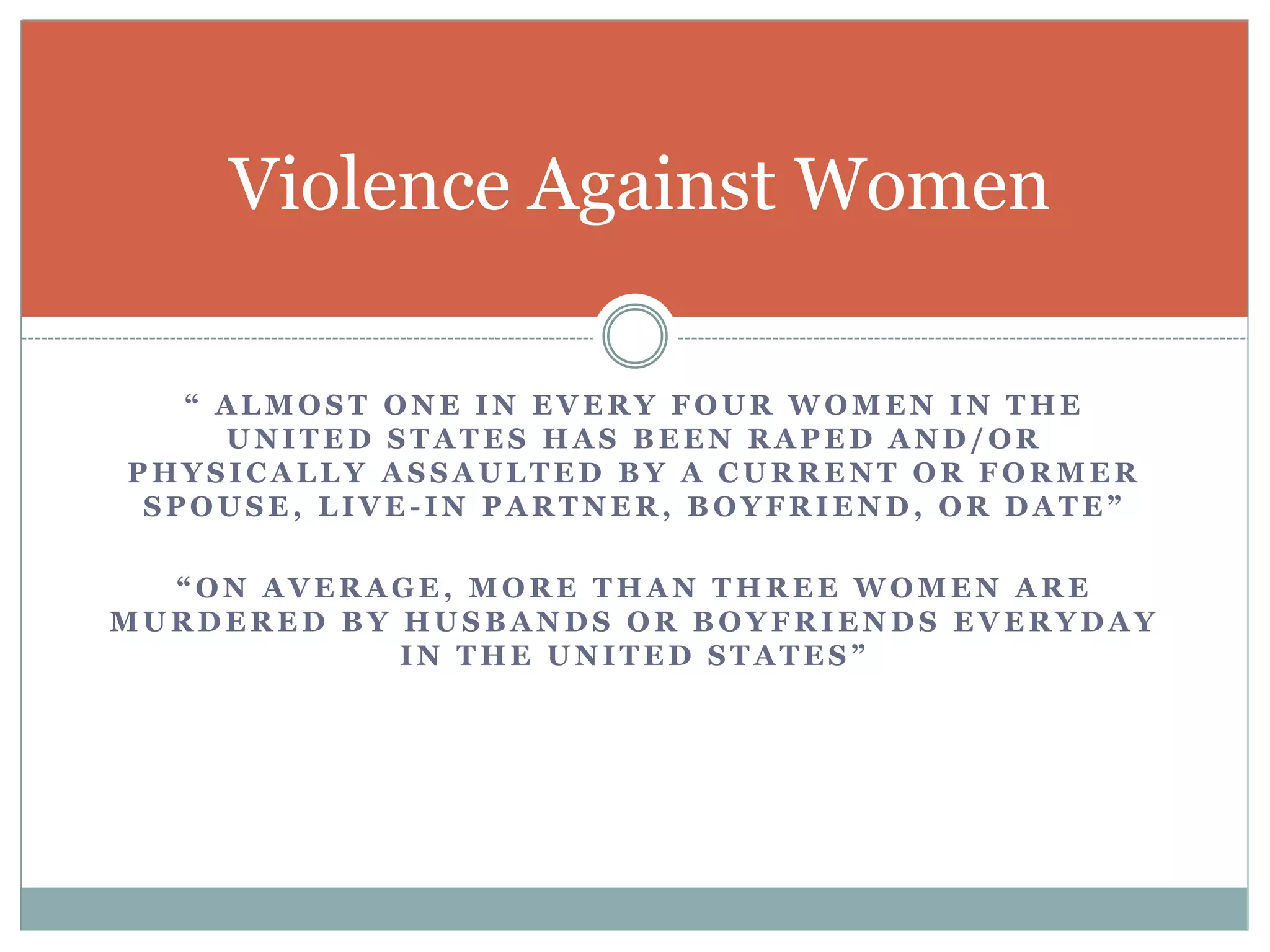
“ A L M O S T O N E I N E V E R Y F O U R W O M E N I N T H E
U N I T E D S T A T E S H A S B E E N R A P E D A N D / O R
P H Y S I C A L L Y A S S A U L T E D B Y A C U R R E N T O R F O R M E R
S P O U S E , L I V E - I N P A R T N E R , B O Y F R I E N D , O R D A T E ”
“ O N A V E R A G E , M O R E T H A N T H R E E W O M E N A R E
M U R D E R E D B Y H U S B A N D S O R B O Y F R I E N D S E V E R Y D A Y
I N T H E U N I T E D S T A T E S ”
Violence Against Women
Understanding Violence Against Women
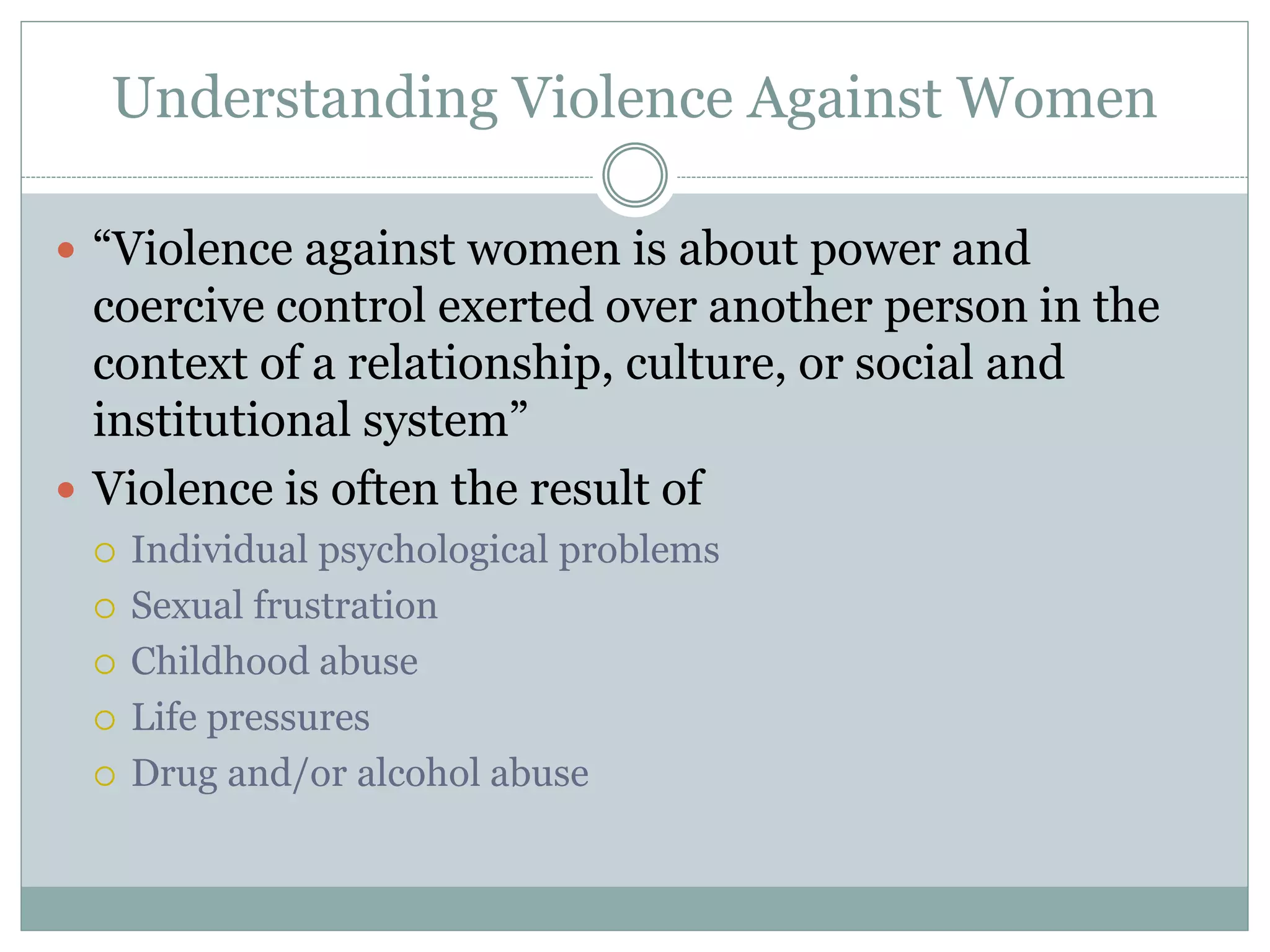
 “Violence against women is about power and
coercive control exerted over another person in the
context of a relationship, culture, or social and
institutional system”
 Violence is often the result of
 Individual psychological problems
 Sexual frustration
 Childhood abuse
 Life pressures
 Drug and/or alcohol abuse
Understanding Violence Against Women
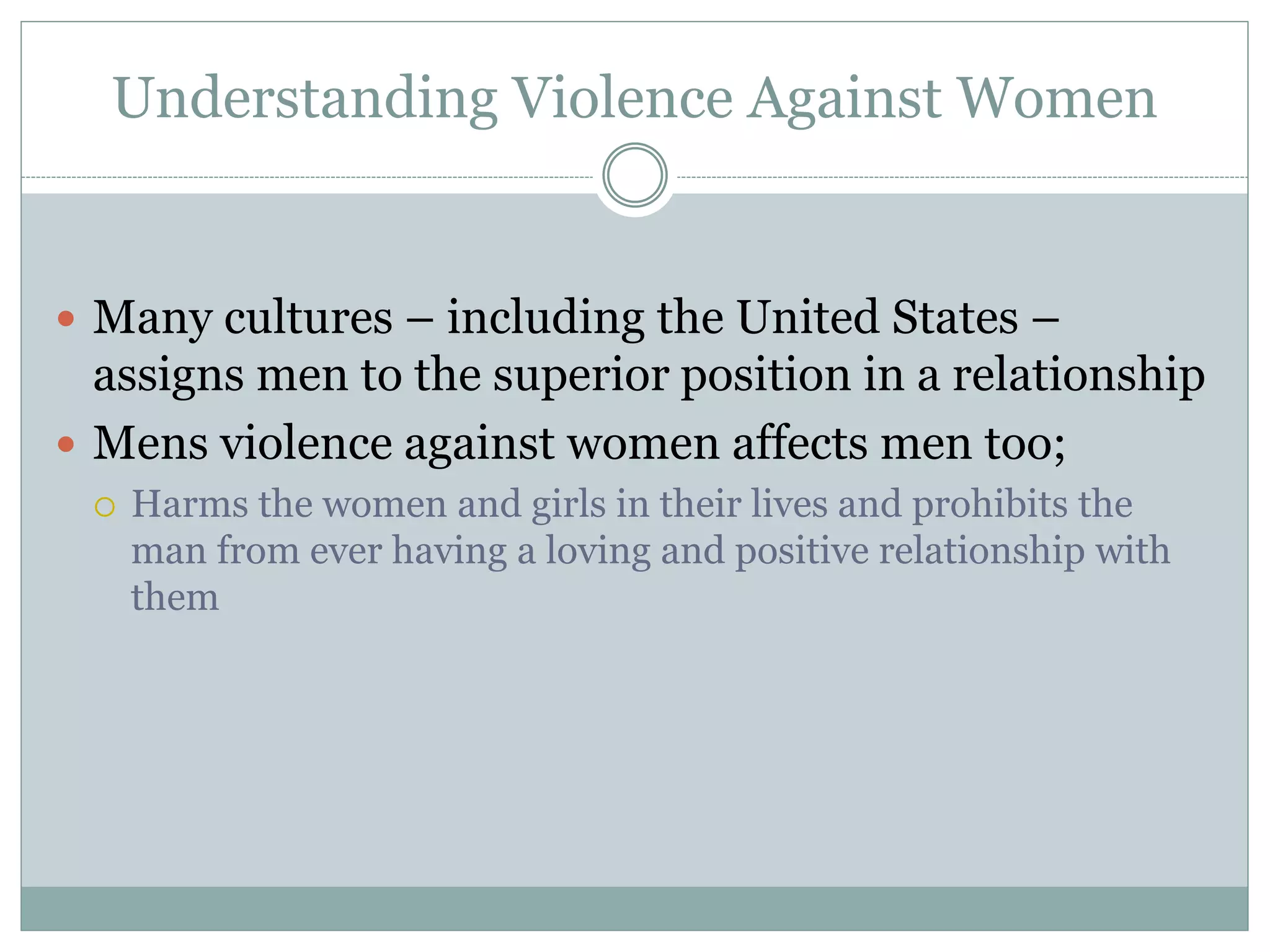
 Many cultures – including the United States –
assigns men to the superior position in a relationship
 Mens violence against women affects men too;
 Harms the women and girls in their lives and prohibits the
man from ever having a loving and positive relationship with
them
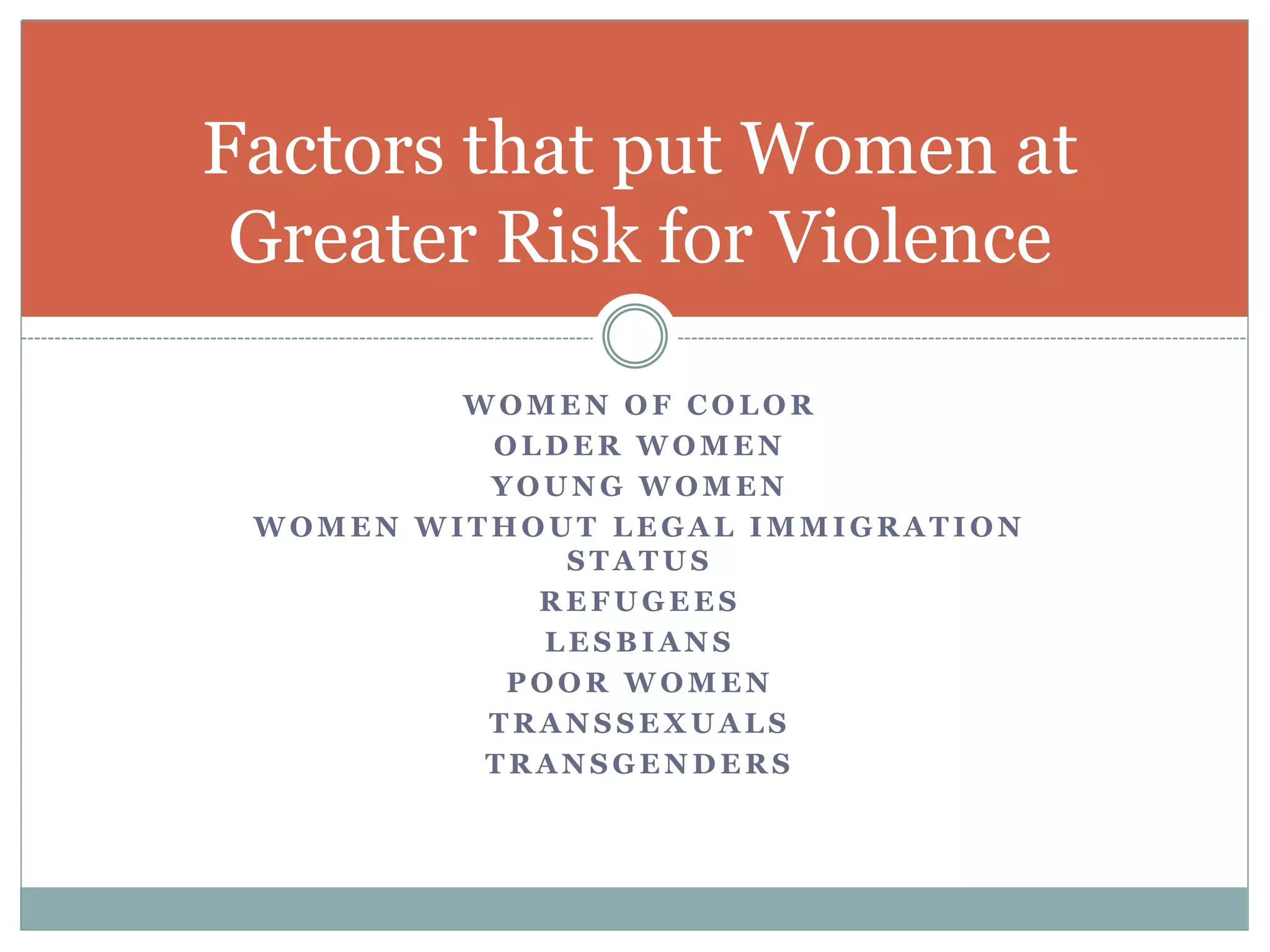
W O M E N O F C O L O R
O L D E R W O M E N
Y O U N G W O M E N
W O M E N W I T H O U T L E G A L I M M I G R A T I O N
S T A T U S
R E F U G E E S
L E S B I A N S
P O O R W O M E N
T R A N S S E X U A L S
T R A N S G E N D E R S
Factors that put Women at
Greater Risk for Violence
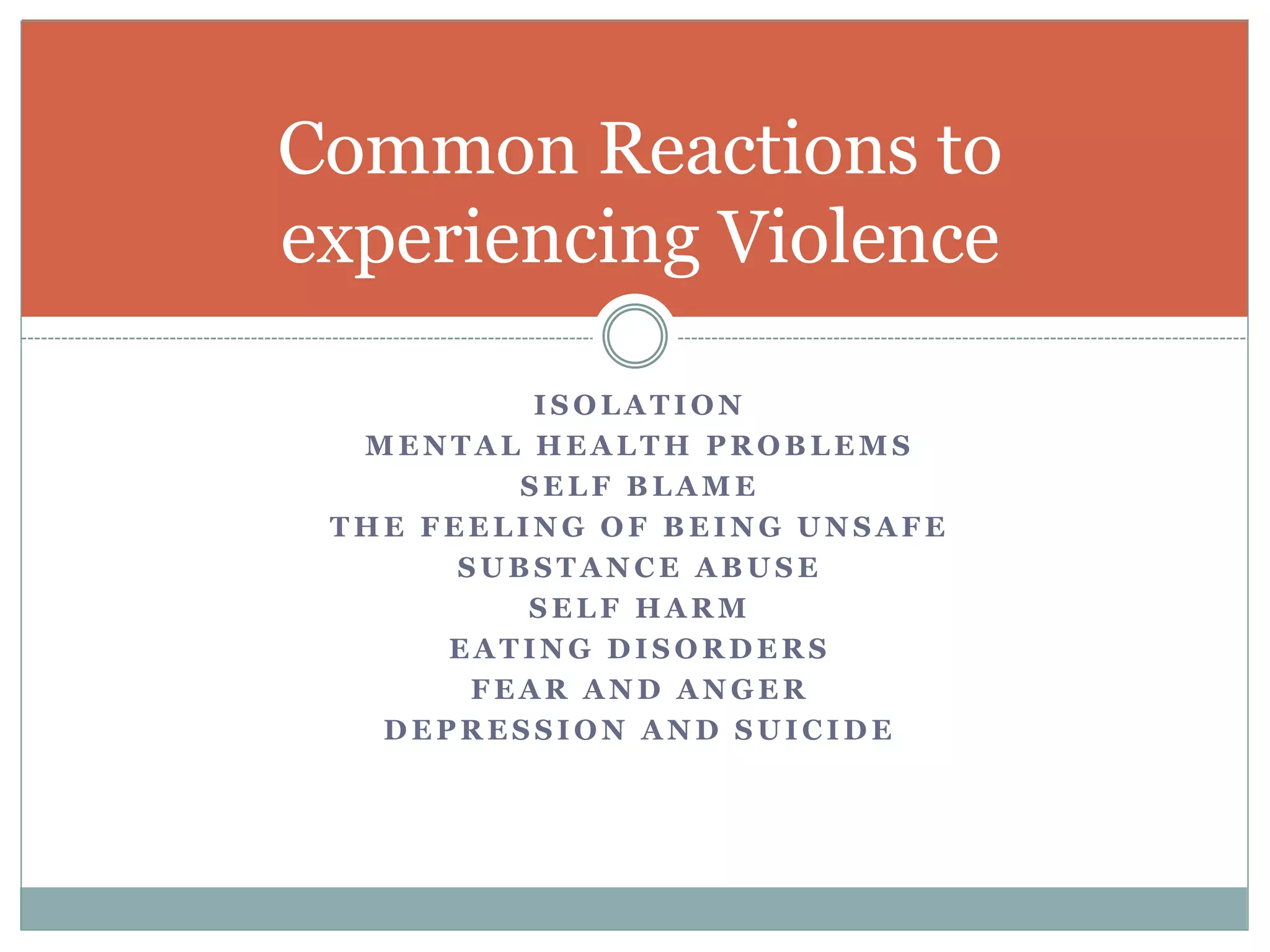
I S O L A T I O N
M E N T A L H E A L T H P R O B L E M S
S E L F B L A M E
T H E F E E L I N G O F B E I N G U N S A F E
S U B S T A N C E A B U S E
S E L F H A R M
E A T I N G D I S O R D E R S
F E A R A N D A N G E R
D E P R E S S I O N A N D S U I C I D E
Common Reactions to
experiencing Violence
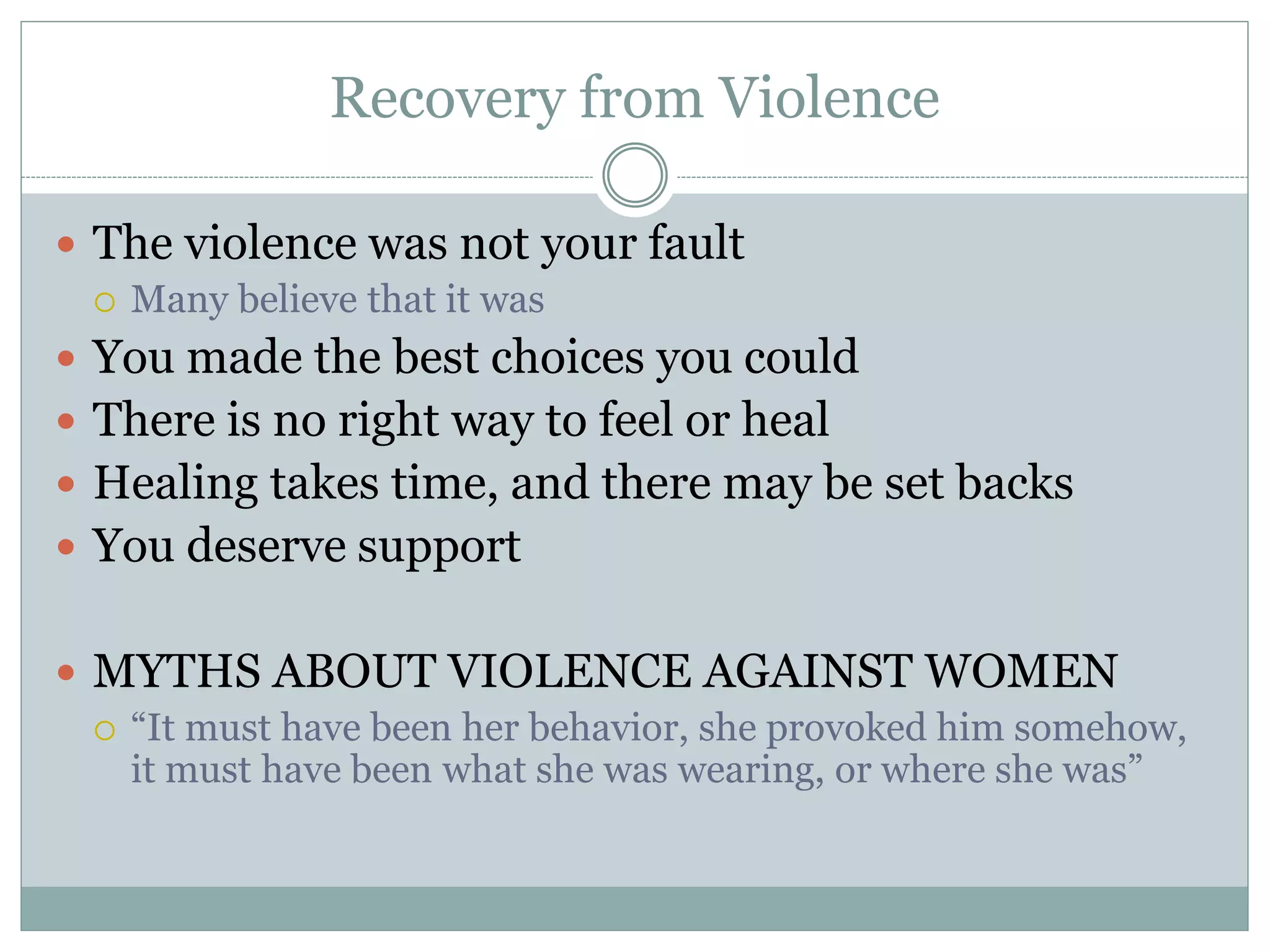
Recovery from Violence
 The violence was not your fault
 Many believe that it was
 You made the best choices you could
 There is no right way to feel or heal
 Healing takes time, and there may be set backs
 You deserve support
 MYTHS ABOUT VIOLENCE AGAINST WOMEN
 “It must have been her behavior, she provoked him somehow,
it must have been what she was wearing, or where she was”
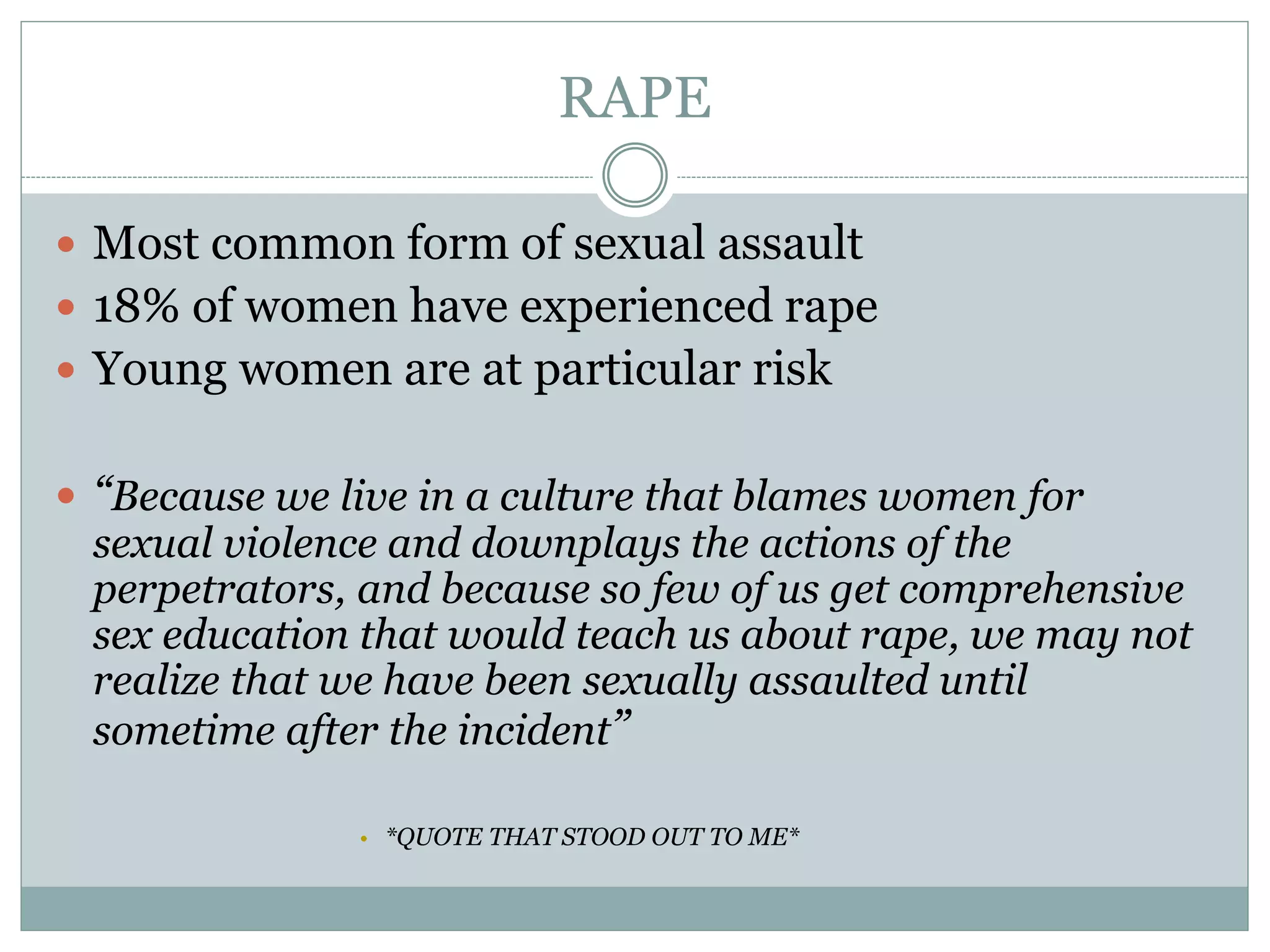
RAPE
 Most common form of sexual assault
 18% of women have experienced rape
 Young women are at particular risk
 “Because we live in a culture that blames women for
sexual violence and downplays the actions of the
perpetrators, and because so few of us get comprehensive
sex education that would teach us about rape, we may not
realize that we have been sexually assaulted until
sometime after the incident”
• *QUOTE THAT STOOD OUT TO ME*
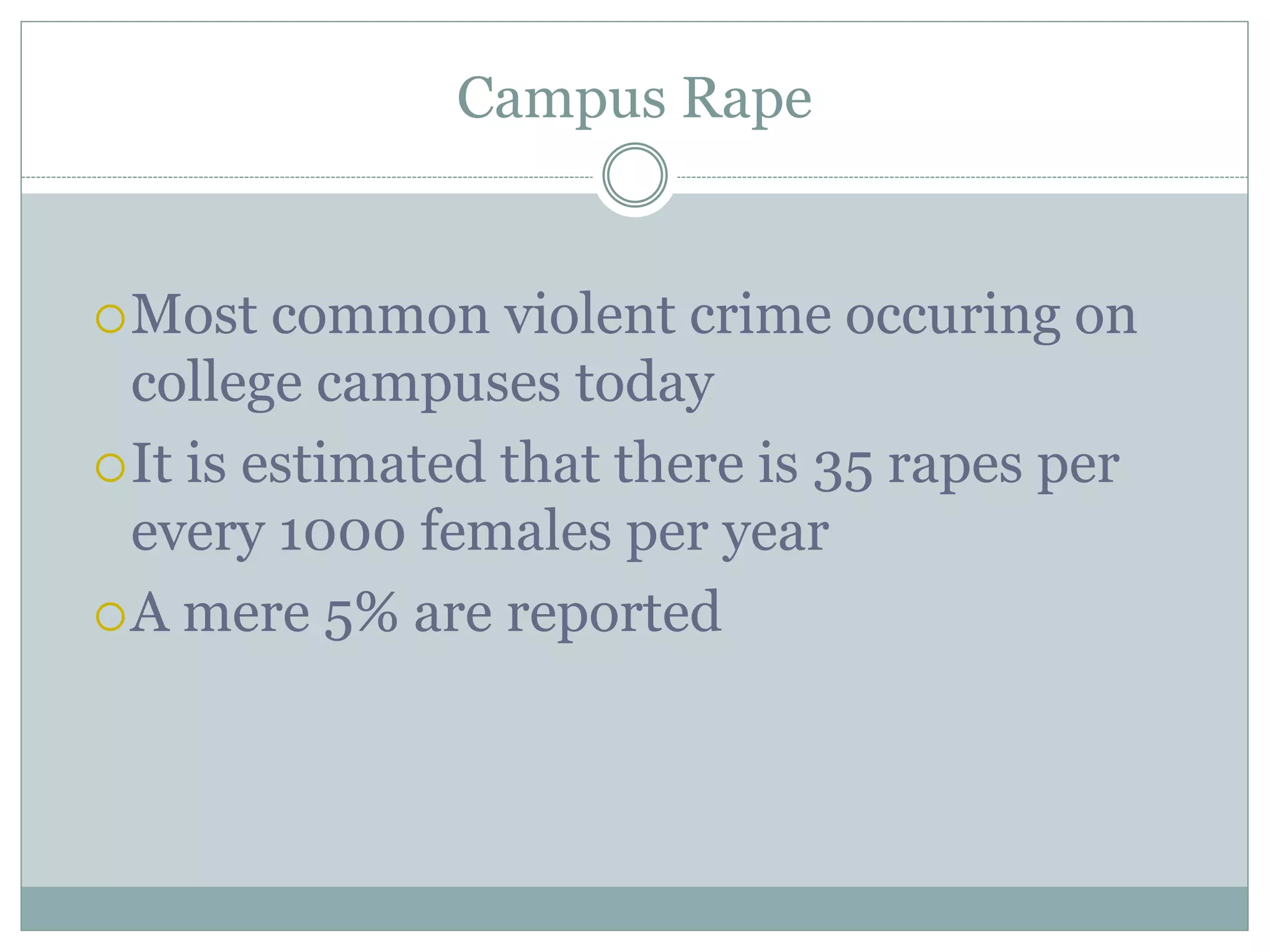
Campus Rape
Most common violent crime occuring on
college campuses today
It is estimated that there is 35 rapes per
every 1000 females per year
A mere 5% are reported
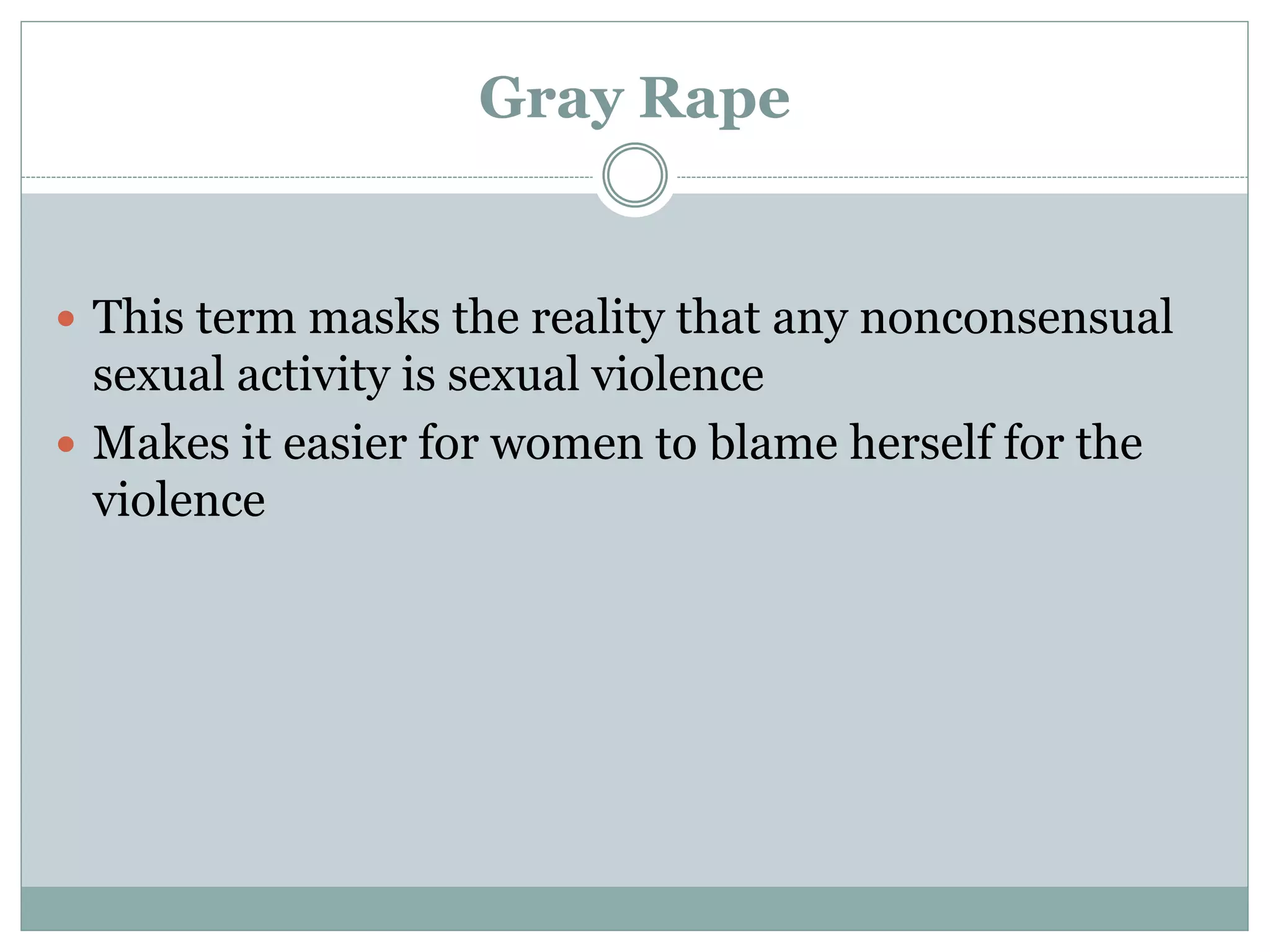
Gray Rape
 This term masks the reality that any nonconsensual
sexual activity is sexual violence
 Makes it easier for women to blame herself for the
violence
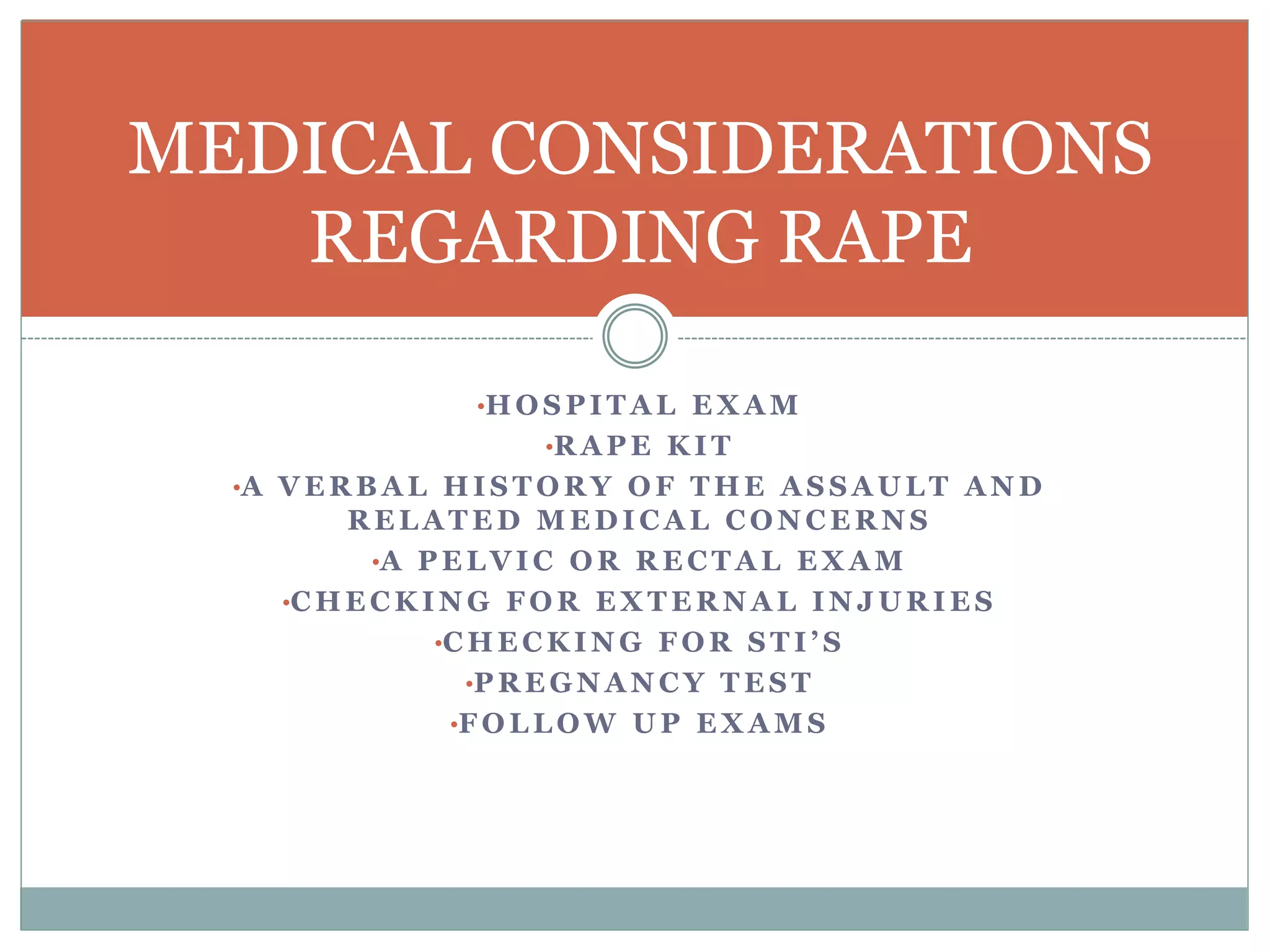
•H O S P I T A L E X A M
•R A P E K I T
•A V E R B A L H I S T O R Y O F T H E A S S A U L T A N D
R E L A T E D M E D I C A L C O N C E R N S
•A P E L V I C O R R E C T A L E X A M
•C H E C K I N G F O R E X T E R N A L I N J U R I E S
•C H E C K I N G F O R S T I ’ S
•P R E G N A N C Y T E S T
•F O L L O W U P E X A M S
MEDICAL CONSIDERATIONS
REGARDING RAPE
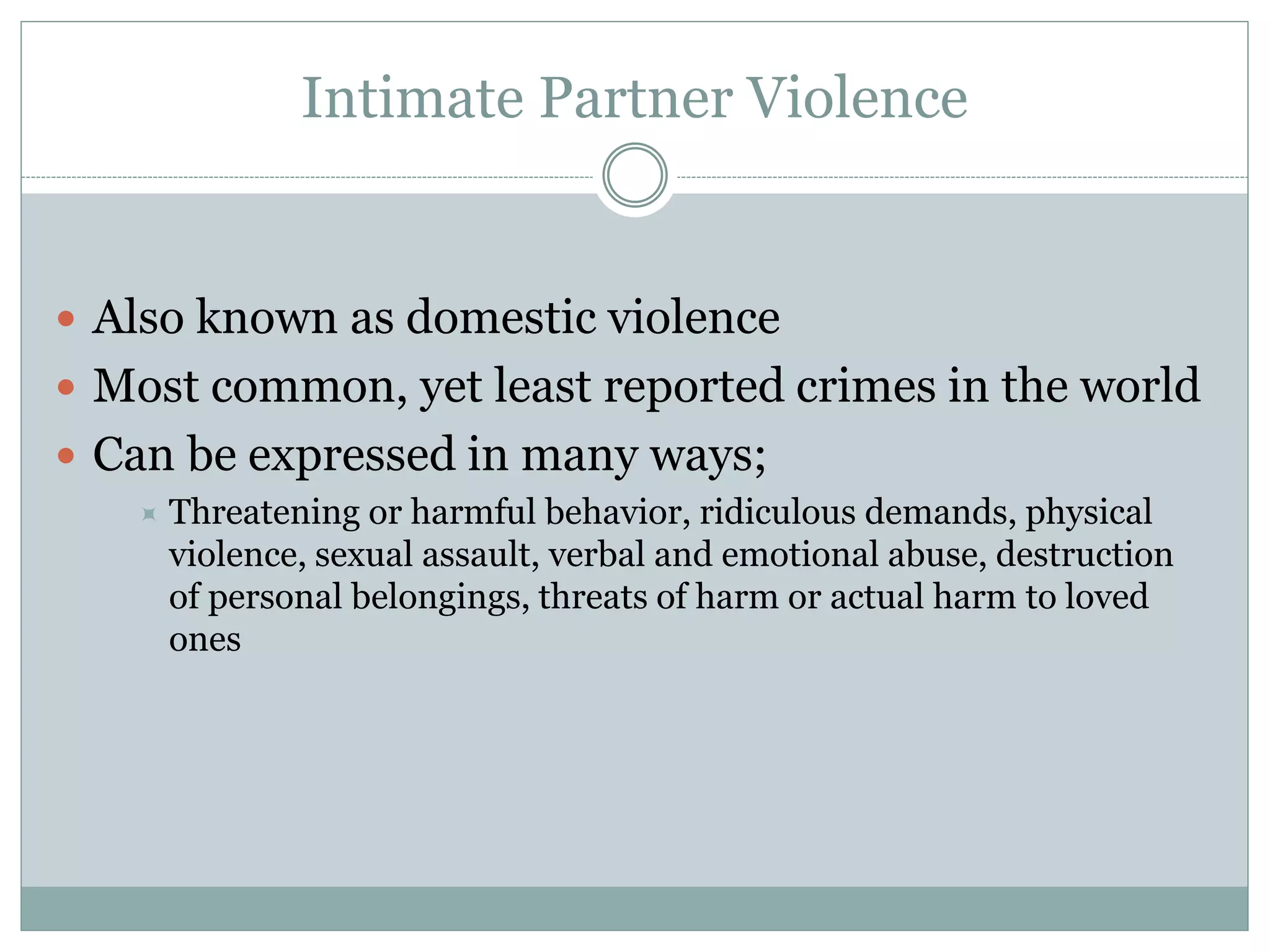
Intimate Partner Violence
 Also known as domestic violence
 Most common, yet least reported crimes in the world
 Can be expressed in many ways;
 Threatening or harmful behavior, ridiculous demands, physical
violence, sexual assault, verbal and emotional abuse, destruction
of personal belongings, threats of harm or actual harm to loved
ones
•CALL A VIOLENCE HOTLINE
•BUILD A SUPPORT NETWORK
•TEACH CHILDREN HOW TO CALL 911 FOR
EMERGENCIES ONLY
•PREPARE A SAFETY PLAN
•CARRY IMPORTANT PHONE NUMBERS, FIND
SOMEONE YOU TRUST TO TELL, FIND A SAFE PLACE,
What to do if Someone is
Experiencing Abuse
STALKING
 Working definition is “intentional behavior directed
at a specific person that would cause a reasonable
person to feel fear”
 Examples” Visual or physical proximity, nonconsensual
communication, and verbal or written threats
 Stalking is very serious, and sometimes violent, and
can escalate over time
Sexual abuse of Children and Adolescents
 The least reported form of sexual abuse
 Incest, childhood abuse and childhood sexual abuse
 One in every six boys has been sexuallly abused
 One in every four girls has been sexually abused
 In 2004, U.S. Department of Justice reported that
15% of all sexual assault and rape victims were under
the age of 12, and 29% were between the ages of 12
and 17
•RECOGNITION THAT VIOLENCE IS A RISK
THROUGHOUT AN ENTIRE LIFEESPAN
•ADVOCATE TO MAKE NECESSARY SERVICES
AVAILABLE TO WOMEN OF ALL AGES AND
BACKGROUNDS
•SPEAK OUT AGAINST OPINIONS IN SOCIETY
THAT GLORIFY VIOLENCE
•TEACH AND MODEL NONVIOLENCE
ENDING VIOLENCE AGAINST
WOMEN
•INTERVENE IN S SAFE MANNER WHEN WE
RECOGNIZE THE EXPRESSION OF VIOLENCE
AGAINST WOMEN
•STRENGTHEN COMMUNITY AND FAMILY
SANCTIONS AGAINST VIOLENCE AS OPPOSED
TO RELYING ON CRIMINAL JUSTICE SYSTEM
•MAINTAIN A STRONG NETWORK FOR
EVERYONE AT RISK
ENDING VIOLENCE AGAINST
WOMEN
DISCUSSION
QUESTION
 Why do you think transsexual and
transgender abuse is considered a
form of violence against women,
even if the person involved was
not always a woman?
REFERENCES
Our Bodies, Ourselves. New York:
Simon and Schuster, 2o11. Print.

Chapter 24

  • 1.
    B Y KA R I S O U C H U N S Chapter 24 Violence Against Women
  • 2.
    “ A LM O S T O N E I N E V E R Y F O U R W O M E N I N T H E U N I T E D S T A T E S H A S B E E N R A P E D A N D / O R P H Y S I C A L L Y A S S A U L T E D B Y A C U R R E N T O R F O R M E R S P O U S E , L I V E - I N P A R T N E R , B O Y F R I E N D , O R D A T E ” “ O N A V E R A G E , M O R E T H A N T H R E E W O M E N A R E M U R D E R E D B Y H U S B A N D S O R B O Y F R I E N D S E V E R Y D A Y I N T H E U N I T E D S T A T E S ” Violence Against Women
  • 3.
    Understanding Violence AgainstWomen  “Violence against women is about power and coercive control exerted over another person in the context of a relationship, culture, or social and institutional system”  Violence is often the result of  Individual psychological problems  Sexual frustration  Childhood abuse  Life pressures  Drug and/or alcohol abuse
  • 4.
    Understanding Violence AgainstWomen  Many cultures – including the United States – assigns men to the superior position in a relationship  Mens violence against women affects men too;  Harms the women and girls in their lives and prohibits the man from ever having a loving and positive relationship with them
  • 5.
    W O ME N O F C O L O R O L D E R W O M E N Y O U N G W O M E N W O M E N W I T H O U T L E G A L I M M I G R A T I O N S T A T U S R E F U G E E S L E S B I A N S P O O R W O M E N T R A N S S E X U A L S T R A N S G E N D E R S Factors that put Women at Greater Risk for Violence
  • 6.
    I S OL A T I O N M E N T A L H E A L T H P R O B L E M S S E L F B L A M E T H E F E E L I N G O F B E I N G U N S A F E S U B S T A N C E A B U S E S E L F H A R M E A T I N G D I S O R D E R S F E A R A N D A N G E R D E P R E S S I O N A N D S U I C I D E Common Reactions to experiencing Violence
  • 7.
    Recovery from Violence The violence was not your fault  Many believe that it was  You made the best choices you could  There is no right way to feel or heal  Healing takes time, and there may be set backs  You deserve support  MYTHS ABOUT VIOLENCE AGAINST WOMEN  “It must have been her behavior, she provoked him somehow, it must have been what she was wearing, or where she was”
  • 8.
    RAPE  Most commonform of sexual assault  18% of women have experienced rape  Young women are at particular risk  “Because we live in a culture that blames women for sexual violence and downplays the actions of the perpetrators, and because so few of us get comprehensive sex education that would teach us about rape, we may not realize that we have been sexually assaulted until sometime after the incident” • *QUOTE THAT STOOD OUT TO ME*
  • 9.
    Campus Rape Most commonviolent crime occuring on college campuses today It is estimated that there is 35 rapes per every 1000 females per year A mere 5% are reported
  • 10.
    Gray Rape  Thisterm masks the reality that any nonconsensual sexual activity is sexual violence  Makes it easier for women to blame herself for the violence
  • 11.
    •H O SP I T A L E X A M •R A P E K I T •A V E R B A L H I S T O R Y O F T H E A S S A U L T A N D R E L A T E D M E D I C A L C O N C E R N S •A P E L V I C O R R E C T A L E X A M •C H E C K I N G F O R E X T E R N A L I N J U R I E S •C H E C K I N G F O R S T I ’ S •P R E G N A N C Y T E S T •F O L L O W U P E X A M S MEDICAL CONSIDERATIONS REGARDING RAPE
  • 12.
    Intimate Partner Violence Also known as domestic violence  Most common, yet least reported crimes in the world  Can be expressed in many ways;  Threatening or harmful behavior, ridiculous demands, physical violence, sexual assault, verbal and emotional abuse, destruction of personal belongings, threats of harm or actual harm to loved ones
  • 13.
    •CALL A VIOLENCEHOTLINE •BUILD A SUPPORT NETWORK •TEACH CHILDREN HOW TO CALL 911 FOR EMERGENCIES ONLY •PREPARE A SAFETY PLAN •CARRY IMPORTANT PHONE NUMBERS, FIND SOMEONE YOU TRUST TO TELL, FIND A SAFE PLACE, What to do if Someone is Experiencing Abuse
  • 14.
    STALKING  Working definitionis “intentional behavior directed at a specific person that would cause a reasonable person to feel fear”  Examples” Visual or physical proximity, nonconsensual communication, and verbal or written threats  Stalking is very serious, and sometimes violent, and can escalate over time
  • 15.
    Sexual abuse ofChildren and Adolescents  The least reported form of sexual abuse  Incest, childhood abuse and childhood sexual abuse  One in every six boys has been sexuallly abused  One in every four girls has been sexually abused  In 2004, U.S. Department of Justice reported that 15% of all sexual assault and rape victims were under the age of 12, and 29% were between the ages of 12 and 17
  • 16.
    •RECOGNITION THAT VIOLENCEIS A RISK THROUGHOUT AN ENTIRE LIFEESPAN •ADVOCATE TO MAKE NECESSARY SERVICES AVAILABLE TO WOMEN OF ALL AGES AND BACKGROUNDS •SPEAK OUT AGAINST OPINIONS IN SOCIETY THAT GLORIFY VIOLENCE •TEACH AND MODEL NONVIOLENCE ENDING VIOLENCE AGAINST WOMEN
  • 17.
    •INTERVENE IN SSAFE MANNER WHEN WE RECOGNIZE THE EXPRESSION OF VIOLENCE AGAINST WOMEN •STRENGTHEN COMMUNITY AND FAMILY SANCTIONS AGAINST VIOLENCE AS OPPOSED TO RELYING ON CRIMINAL JUSTICE SYSTEM •MAINTAIN A STRONG NETWORK FOR EVERYONE AT RISK ENDING VIOLENCE AGAINST WOMEN
  • 18.
    DISCUSSION QUESTION  Why doyou think transsexual and transgender abuse is considered a form of violence against women, even if the person involved was not always a woman?
  • 19.
    REFERENCES Our Bodies, Ourselves.New York: Simon and Schuster, 2o11. Print.