Financial Statement Analysis
Introduction to Financial Statement Analysis
1
Graphs, charts, tables, examples, and figures are copyright 2022, CFAInstitute.
Reproduced and republished with permission from CFA Institute. All rights reserved.
www.ift.world
Contents
www.ift.world 2
1. Introduction
2. Scope of Financial Statement Analysis
3 – 8. Primary Financial Statements and Other Information Sources
9. Financial Statement Analysis Framework
1. Introduction
www.ift.world 3
• Financial reports are one of the most important sources of
information available to a financial analyst
• A financial analyst must have a strong understanding of the
information provided in a company’s financial reports, notes and
supplementary information
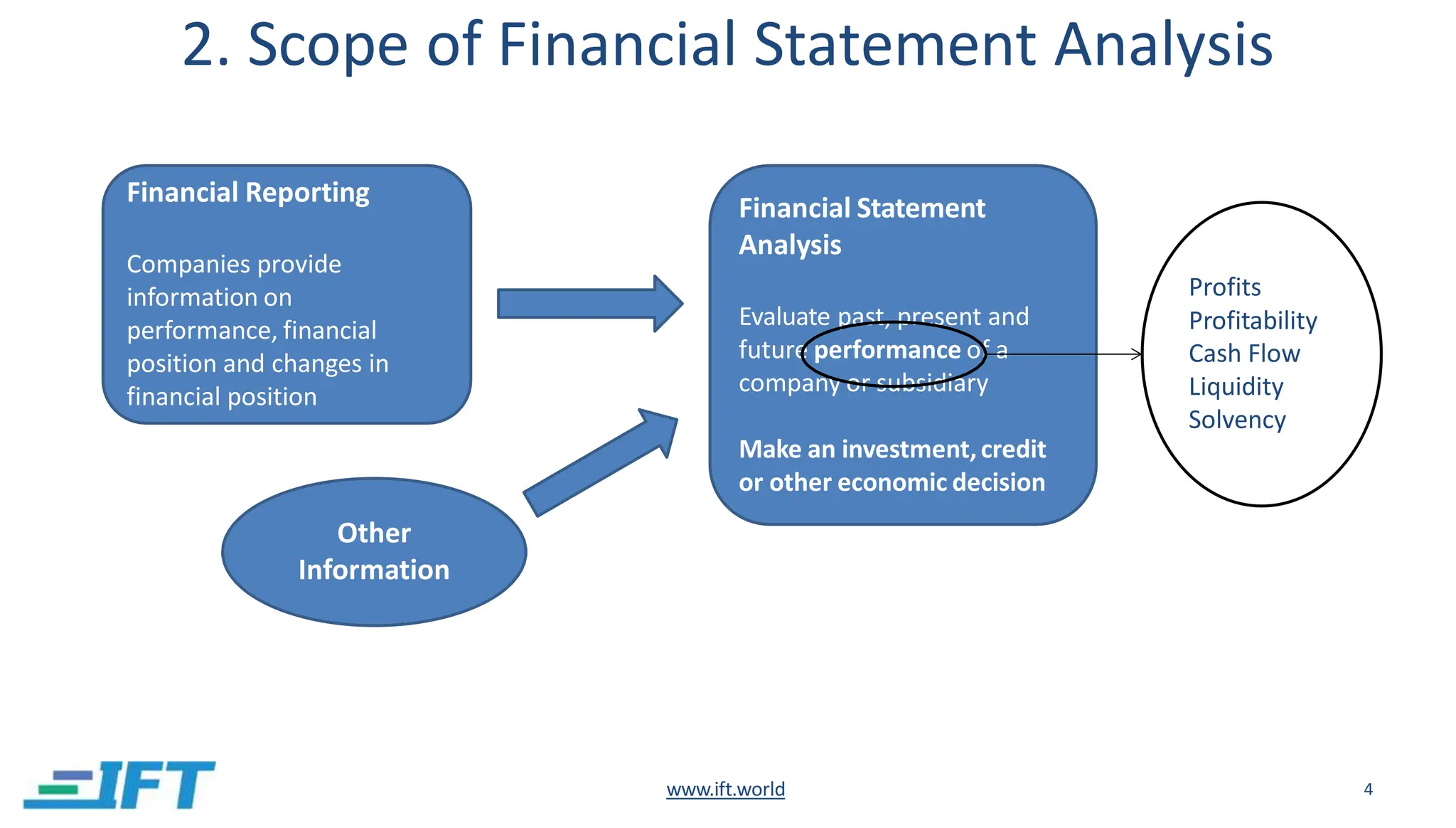
2. Scope of Financial Statement Analysis
Financial Reporting
Companies provide
information on
performance, financial
position and changes in
financial position
Financial Statement
Analysis
Evaluate past, present and
future performance of a
company or subsidiary
Make an investment,credit
or other economic decision
Other
Information
Profits
Profitability
Cash Flow
Liquidity
Solvency
www.ift.world 4
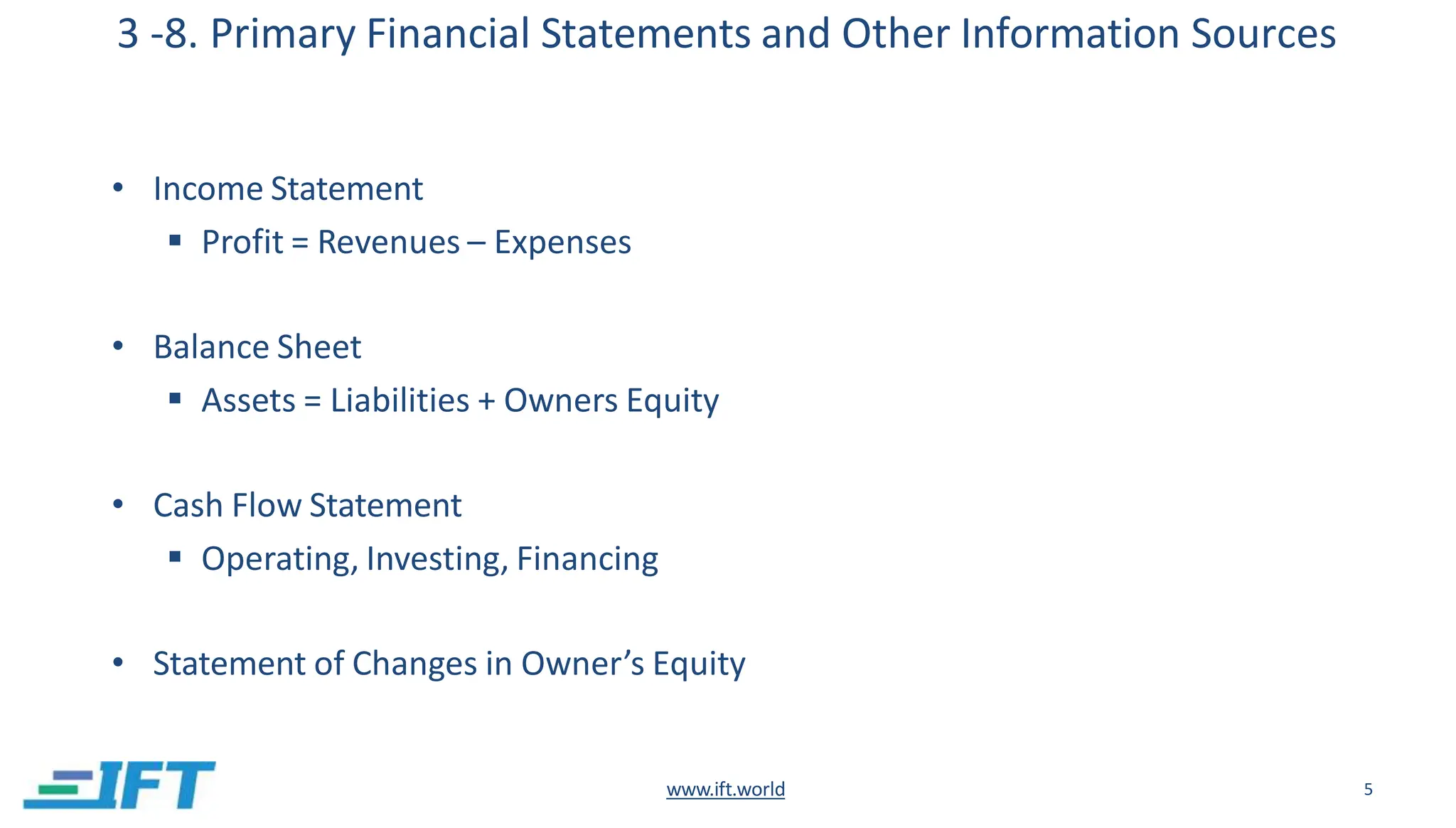
3 -8. Primary Financial Statements and Other Information Sources
www.ift.world 5
• Income Statement
 Profit = Revenues – Expenses
• Balance Sheet
 Assets = Liabilities + Owners Equity
• Cash Flow Statement
 Operating, Investing, Financing
• Statement of Changes in Owner’s Equity
Income Statement
©Principlesofaccounting.com
www.ift.world 6
XYZ Company
Income Statement
For the Year Ending 31 Dec 2012
Also called:
Statement of Operations
Profit and Loss (P&L) Statement
Statement of Comprehensive Income
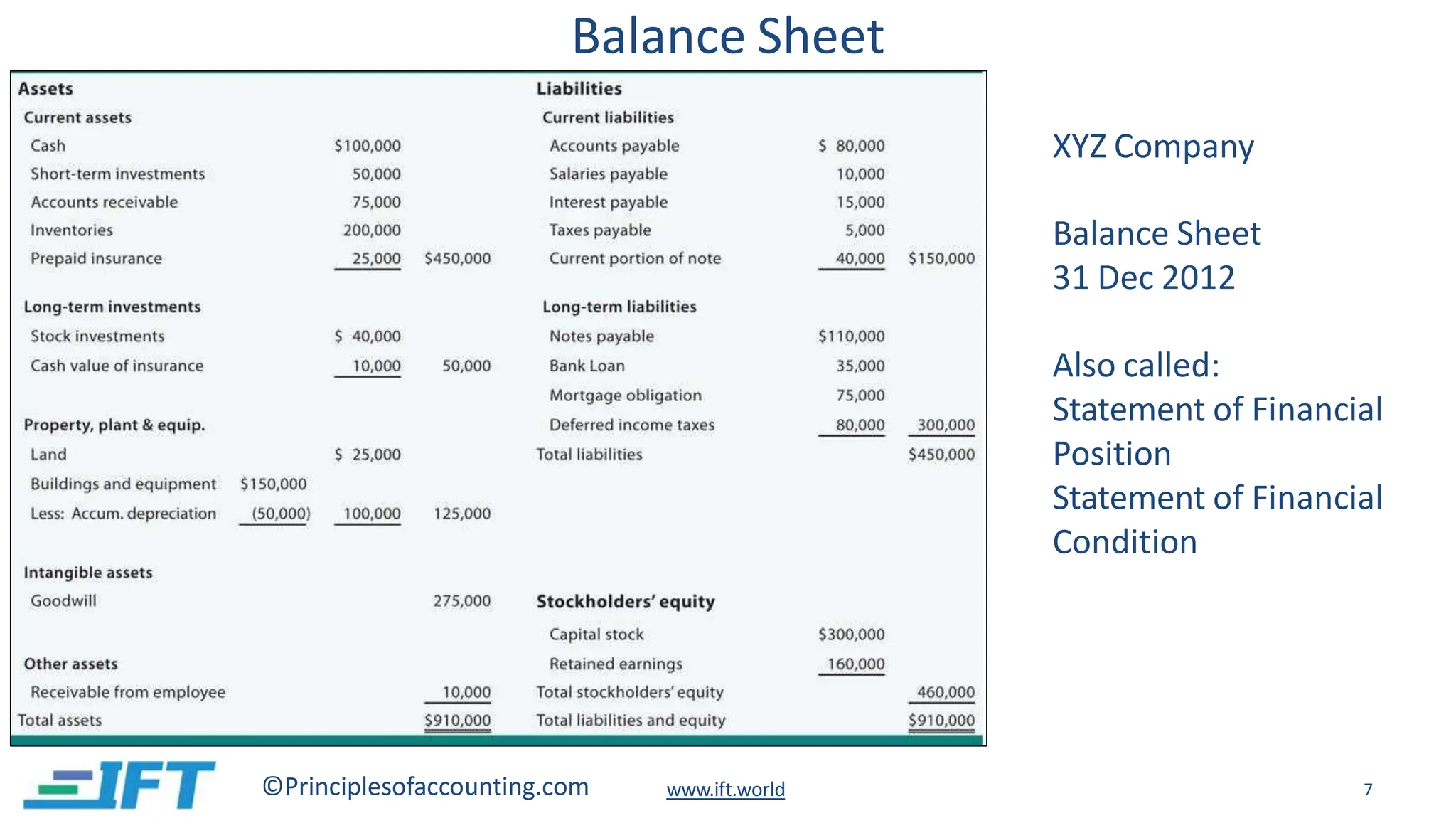
Balance Sheet
www.ift.world 7
©Principlesofaccounting.com
XYZ Company
Balance Sheet
31 Dec 2012
Also called:
Statement of Financial
Position
Statement of Financial
Condition
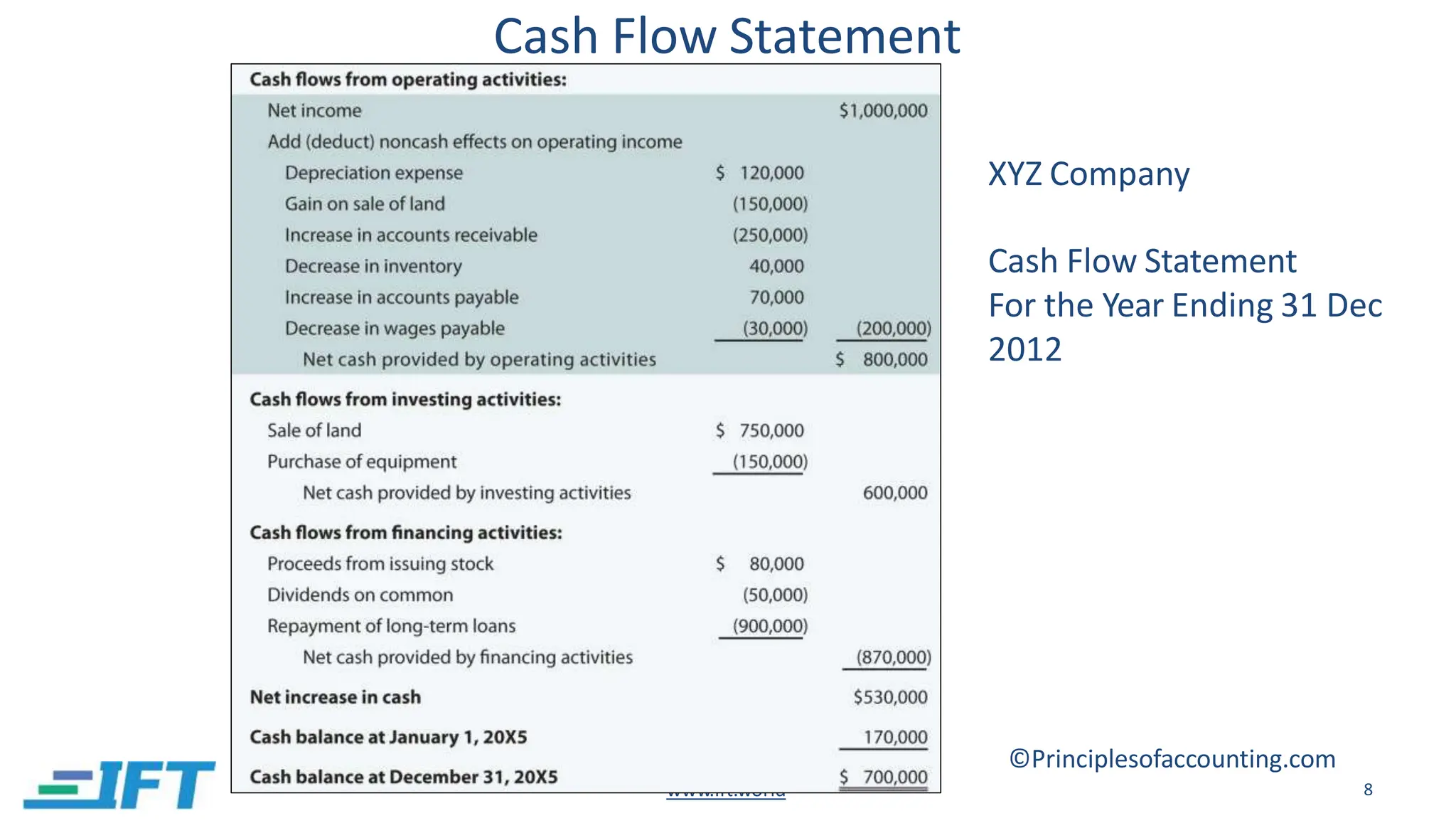
Cash Flow Statement
www.ift.world 8
©Principlesofaccounting.com
XYZ Company
Cash Flow Statement
For the Year Ending 31 Dec
2012
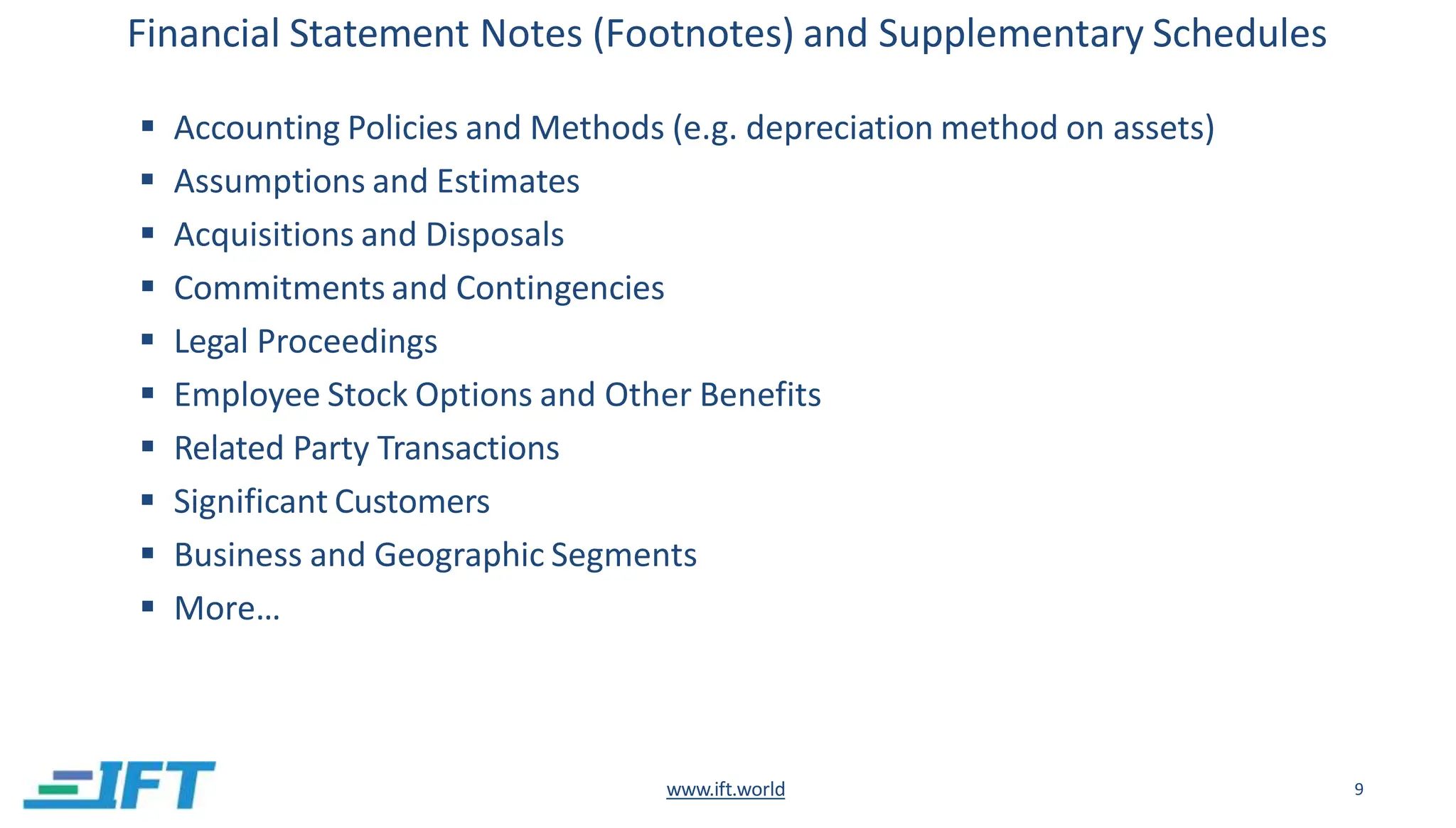
Financial Statement Notes (Footnotes) and Supplementary Schedules
www.ift.world 9
 Accounting Policies and Methods (e.g. depreciation method on assets)
 Assumptions and Estimates
 Acquisitions and Disposals
 Commitments and Contingencies
 Legal Proceedings
 Employee Stock Options and Other Benefits
 Related Party Transactions
 Significant Customers
 Business and Geographic Segments
 More…
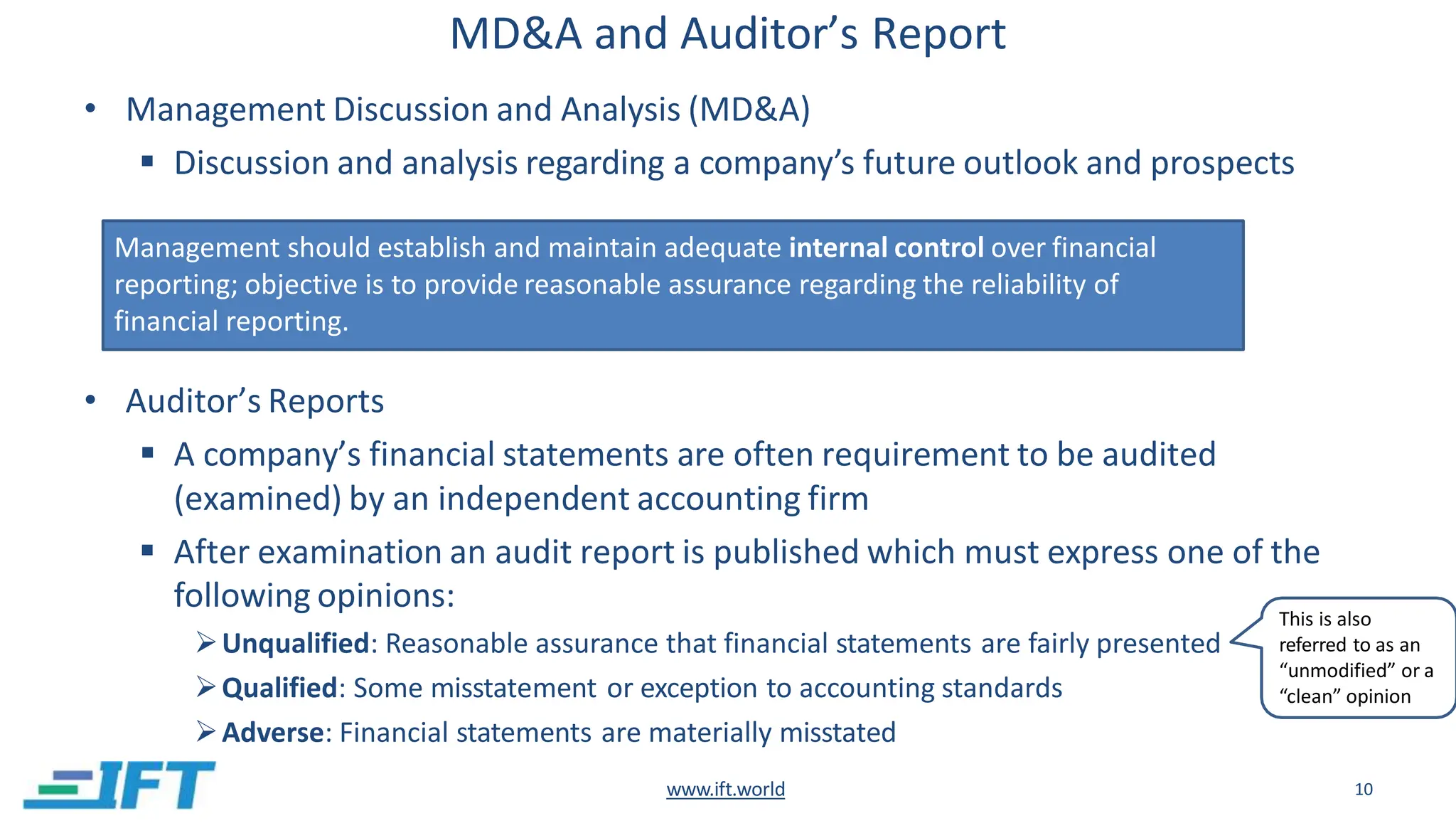
MD&A and Auditor’s Report
• Management Discussion and Analysis (MD&A)
 Discussion and analysis regarding a company’s future outlook and prospects
• Auditor’s Reports
 A company’s financial statements are often requirement to be audited
(examined) by an independent accounting firm
 After examination an audit report is published which must express one of the
following opinions:
Unqualified: Reasonable assurance that financial statements are fairly presented
Qualified: Some misstatement or exception to accounting standards
Adverse: Financial statements are materially misstated
Management should establish and maintain adequate internal control over financial
reporting; objective is to provide reasonable assurance regarding the reliability of
financial reporting.
This is also
referred to as an
“unmodified” or a
“clean” opinion
www.ift.world 10
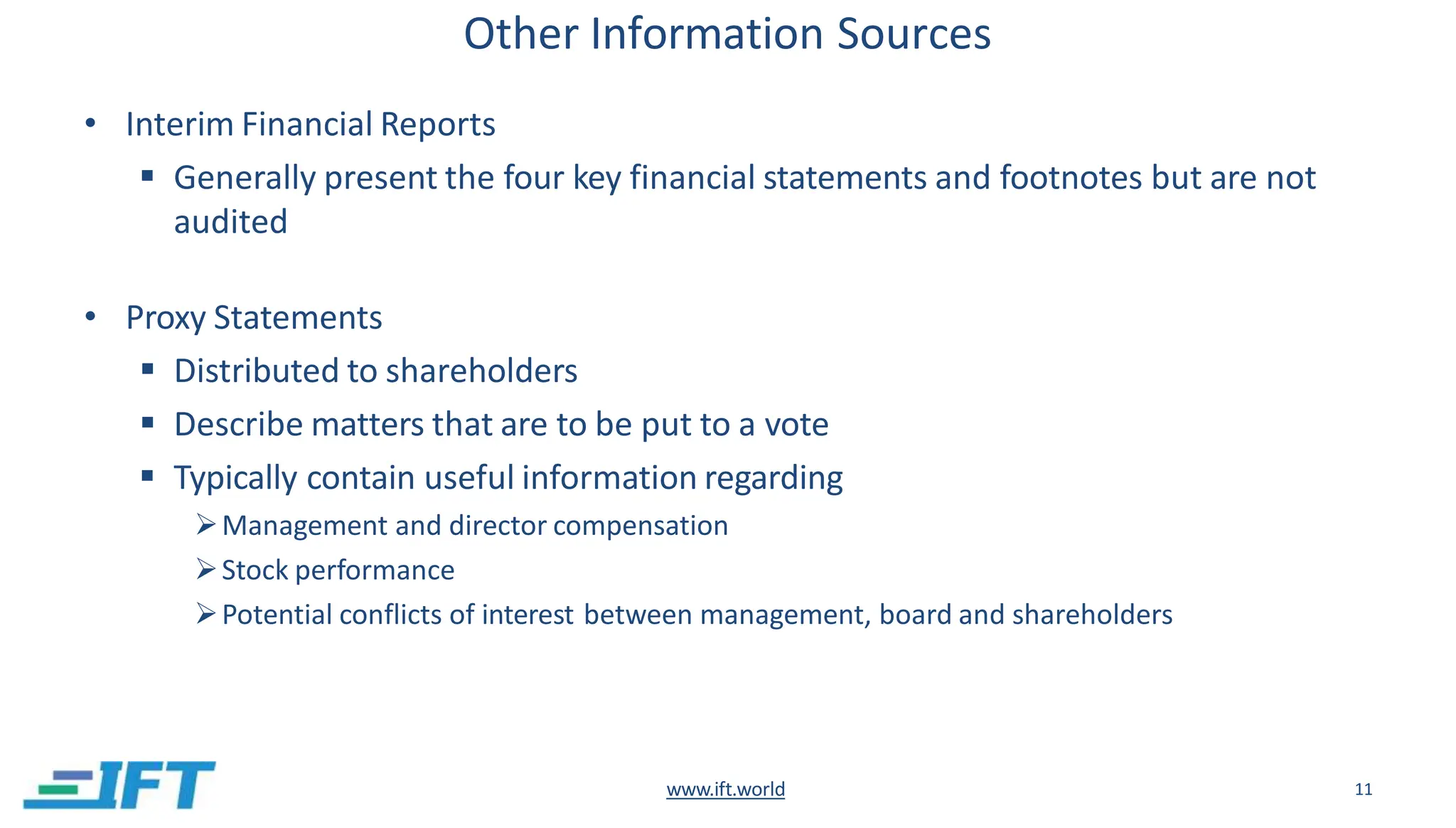
Other Information Sources
www.ift.world 11
• Interim Financial Reports
 Generally present the four key financial statements and footnotes but are not
audited
• Proxy Statements
 Distributed to shareholders
 Describe matters that are to be put to a vote
 Typically contain useful information regarding
Management and director compensation
Stock performance
Potential conflicts of interest between management, board and shareholders
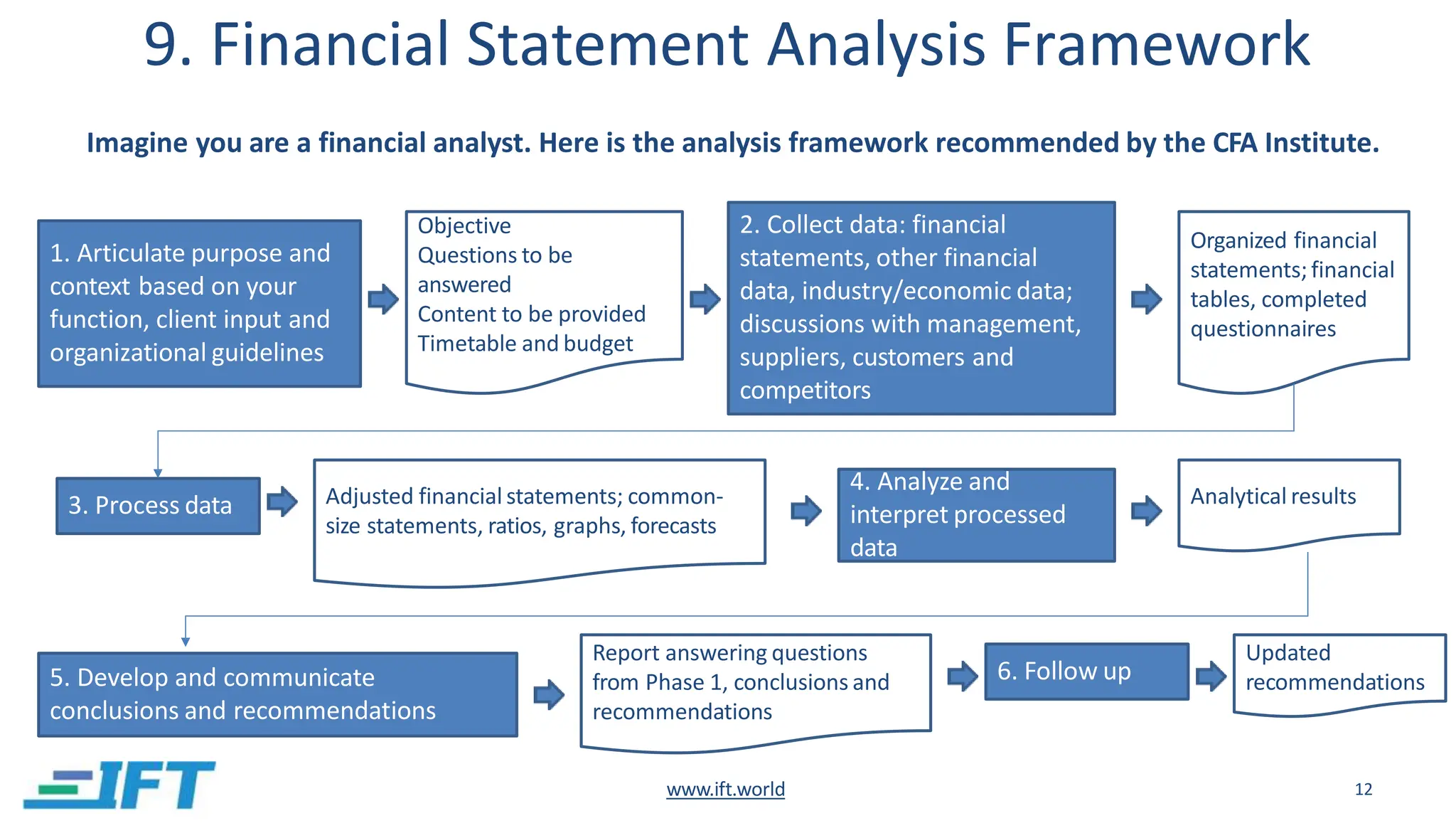
9. Financial Statement Analysis Framework
1. Articulate purpose and
context based on your
function, client input and
organizational guidelines
Imagine you are a financial analyst. Here is the analysis framework recommended by the CFA Institute.
Objective
Questions to be
answered
Content to be provided
Timetable and budget
2. Collect data: financial
statements, other financial
data, industry/economic data;
discussions with management,
suppliers, customers and
competitors
Organized financial
statements;financial
tables, completed
questionnaires
3. Process data Adjusted financial statements; common-
size statements, ratios, graphs, forecasts
4. Analyze and
interpret processed
data
Analytical results
5. Develop and communicate
conclusions and recommendations
Report answering questions
from Phase 1, conclusions and
recommendations
6. Follow up
Updated
recommendations
www.ift.world 12
Summary
www.ift.world 13
• Financial reporting versus analysis
• Key financial statements
• Other sources
• Audit reports
• Financial statement analysis framework
Conclusion
www.ift.world 14
• Summary
• Review learning objectives
• Examples: few and complicated
• Practice problems: good but not enough
• Practice questions from other sources

Chapter 1_Introduction to Financial Statement Analysis (1).pdf

  • 1.
    Financial Statement Analysis Introductionto Financial Statement Analysis 1 Graphs, charts, tables, examples, and figures are copyright 2022, CFAInstitute. Reproduced and republished with permission from CFA Institute. All rights reserved. www.ift.world
  • 2.
    Contents www.ift.world 2 1. Introduction 2.Scope of Financial Statement Analysis 3 – 8. Primary Financial Statements and Other Information Sources 9. Financial Statement Analysis Framework
  • 3.
    1. Introduction www.ift.world 3 •Financial reports are one of the most important sources of information available to a financial analyst • A financial analyst must have a strong understanding of the information provided in a company’s financial reports, notes and supplementary information
  • 4.
    2. Scope ofFinancial Statement Analysis Financial Reporting Companies provide information on performance, financial position and changes in financial position Financial Statement Analysis Evaluate past, present and future performance of a company or subsidiary Make an investment,credit or other economic decision Other Information Profits Profitability Cash Flow Liquidity Solvency www.ift.world 4
  • 5.
    3 -8. PrimaryFinancial Statements and Other Information Sources www.ift.world 5 • Income Statement  Profit = Revenues – Expenses • Balance Sheet  Assets = Liabilities + Owners Equity • Cash Flow Statement  Operating, Investing, Financing • Statement of Changes in Owner’s Equity
  • 6.
    Income Statement ©Principlesofaccounting.com www.ift.world 6 XYZCompany Income Statement For the Year Ending 31 Dec 2012 Also called: Statement of Operations Profit and Loss (P&L) Statement Statement of Comprehensive Income
  • 7.
    Balance Sheet www.ift.world 7 ©Principlesofaccounting.com XYZCompany Balance Sheet 31 Dec 2012 Also called: Statement of Financial Position Statement of Financial Condition
  • 8.
    Cash Flow Statement www.ift.world8 ©Principlesofaccounting.com XYZ Company Cash Flow Statement For the Year Ending 31 Dec 2012
  • 9.
    Financial Statement Notes(Footnotes) and Supplementary Schedules www.ift.world 9  Accounting Policies and Methods (e.g. depreciation method on assets)  Assumptions and Estimates  Acquisitions and Disposals  Commitments and Contingencies  Legal Proceedings  Employee Stock Options and Other Benefits  Related Party Transactions  Significant Customers  Business and Geographic Segments  More…
  • 10.
    MD&A and Auditor’sReport • Management Discussion and Analysis (MD&A)  Discussion and analysis regarding a company’s future outlook and prospects • Auditor’s Reports  A company’s financial statements are often requirement to be audited (examined) by an independent accounting firm  After examination an audit report is published which must express one of the following opinions: Unqualified: Reasonable assurance that financial statements are fairly presented Qualified: Some misstatement or exception to accounting standards Adverse: Financial statements are materially misstated Management should establish and maintain adequate internal control over financial reporting; objective is to provide reasonable assurance regarding the reliability of financial reporting. This is also referred to as an “unmodified” or a “clean” opinion www.ift.world 10
  • 11.
    Other Information Sources www.ift.world11 • Interim Financial Reports  Generally present the four key financial statements and footnotes but are not audited • Proxy Statements  Distributed to shareholders  Describe matters that are to be put to a vote  Typically contain useful information regarding Management and director compensation Stock performance Potential conflicts of interest between management, board and shareholders
  • 12.
    9. Financial StatementAnalysis Framework 1. Articulate purpose and context based on your function, client input and organizational guidelines Imagine you are a financial analyst. Here is the analysis framework recommended by the CFA Institute. Objective Questions to be answered Content to be provided Timetable and budget 2. Collect data: financial statements, other financial data, industry/economic data; discussions with management, suppliers, customers and competitors Organized financial statements;financial tables, completed questionnaires 3. Process data Adjusted financial statements; common- size statements, ratios, graphs, forecasts 4. Analyze and interpret processed data Analytical results 5. Develop and communicate conclusions and recommendations Report answering questions from Phase 1, conclusions and recommendations 6. Follow up Updated recommendations www.ift.world 12
  • 13.
    Summary www.ift.world 13 • Financialreporting versus analysis • Key financial statements • Other sources • Audit reports • Financial statement analysis framework
  • 14.
    Conclusion www.ift.world 14 • Summary •Review learning objectives • Examples: few and complicated • Practice problems: good but not enough • Practice questions from other sources