© 2014 by Pearson Higher Education, Inc
Upper Saddle River, New Jersey 07458 • All Rights Reserved
Class Name,
Instructor Name
Date, Semester
Criminal Justice: A Brief Introduction, 10th Edition
Chapter 1: What Is Criminal Justice?
1
During the 1960s and 1970s, the dominant
philosophy in American criminal justice
focused on guaranteeing the rights of criminal
defendants while seeking to understand the
root causes of crime and violence.
1. True
2. False
Correct answer
1. True
After reviewing individual rights and public
order, how do you see yourself?
1. I am an individual rights advocate
2. I am a public order advocate
3. Both; it depends on the issue or offense
4. I don’t understand the terms
Correct Answer
Survey or opinion question
Graph answers for class discussion
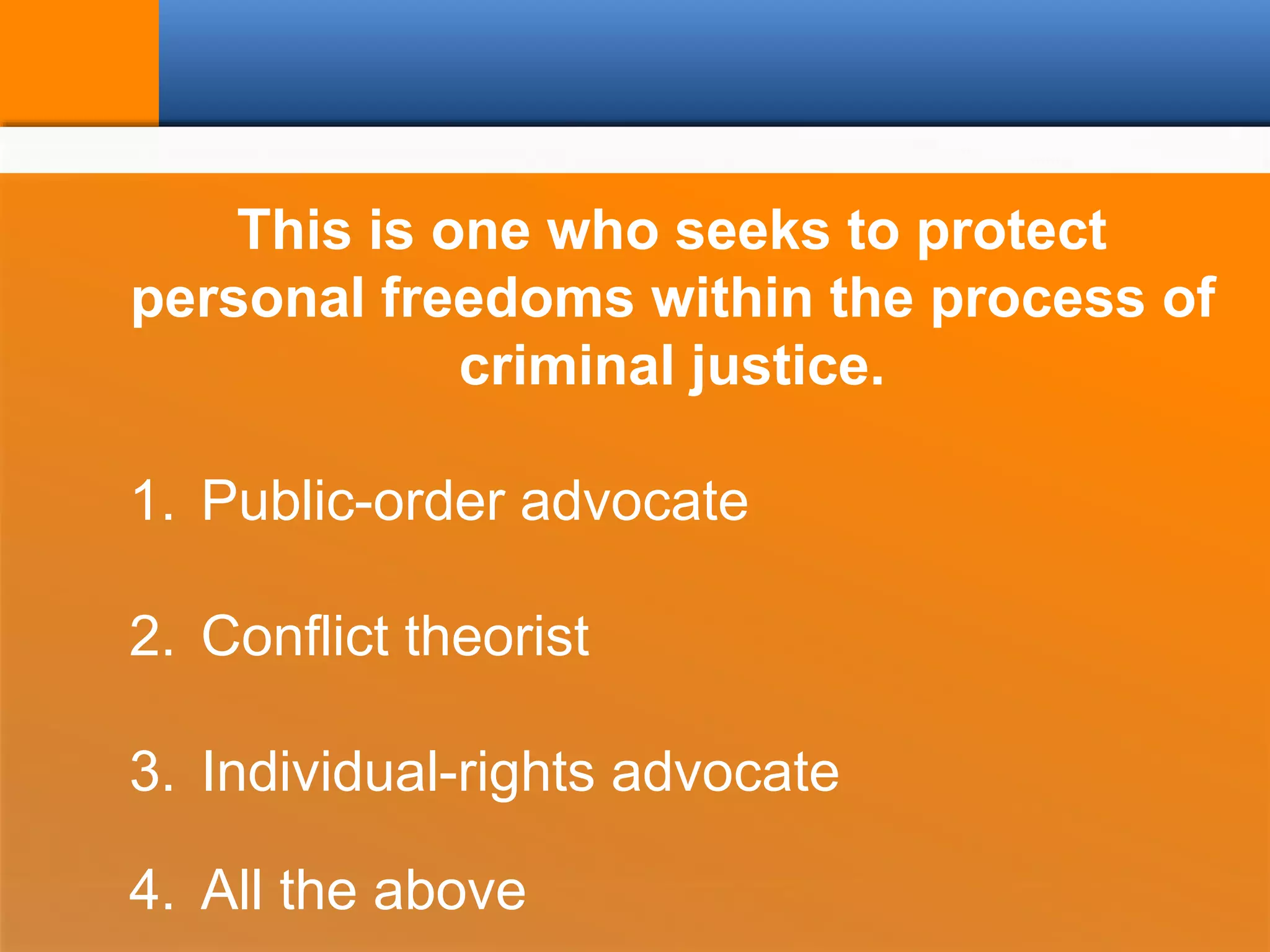
This is one who seeks to protect
personal freedoms within the process of
criminal justice.
1. Public-order advocate
2. Conflict theorist
3. Individual-rights advocate
4. All the above
Correct Answer
3. Individual-rights advocate
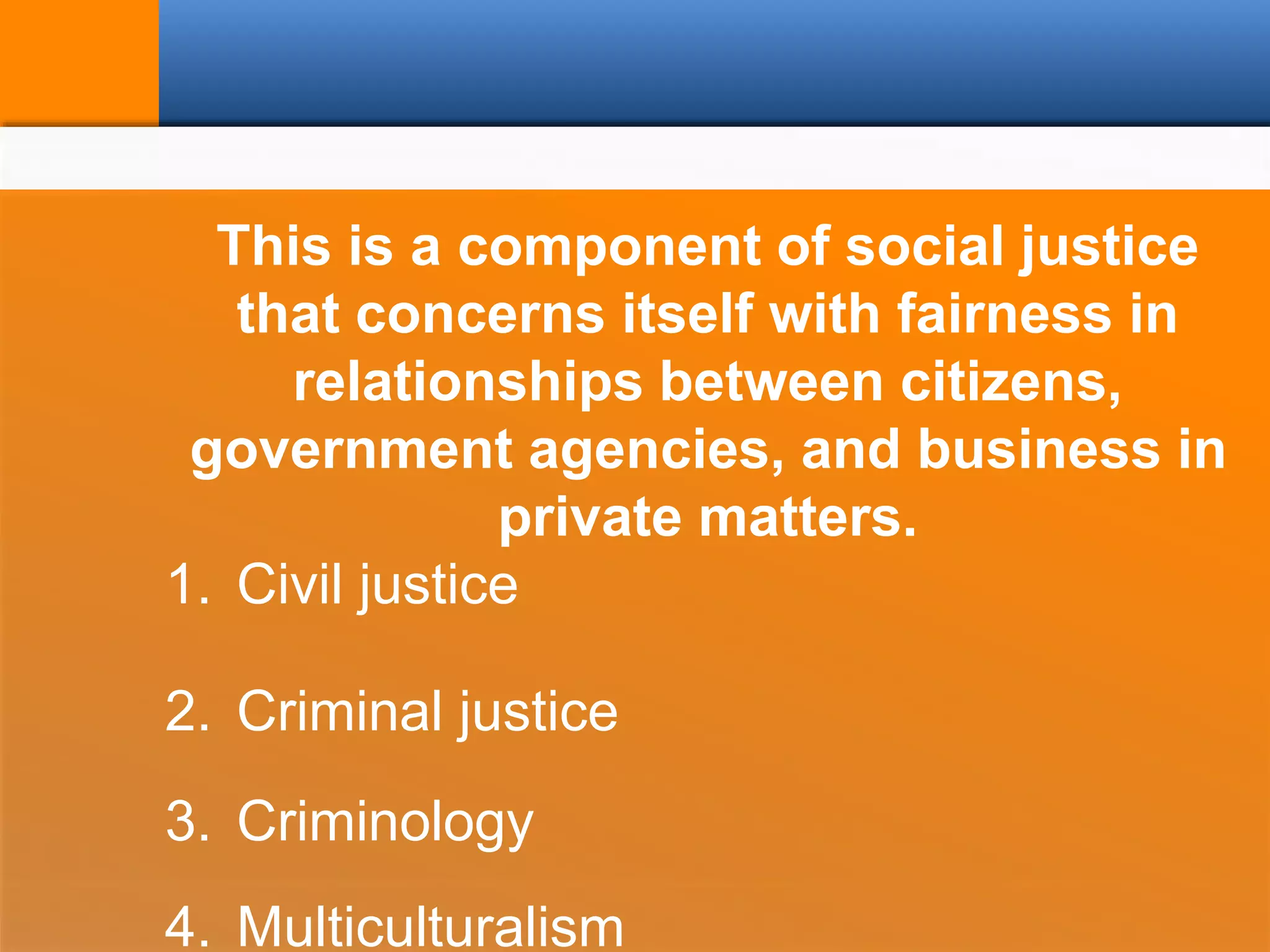
This is a component of social justice
that concerns itself with fairness in
relationships between citizens,
government agencies, and business in
private matters.
1. Civil justice
2. Criminal justice
3. Criminology
4. Multiculturalism
Correct answer
1. Civil justice
This is a criminal justice perspective
that assumes that the system’s
components work together
harmoniously to achieve justice.
1. Conflict model
2. Crime control model
3. Interactionist model
4. Consensus model
Correct answer
4. Consensus model
Under which model could you see the
criminal justice system operating as a
nonsystem?
1. Conflict model
2. Crime control model
3. Interactionist model
4. Consensus model
Correct answer
1. Conflict model
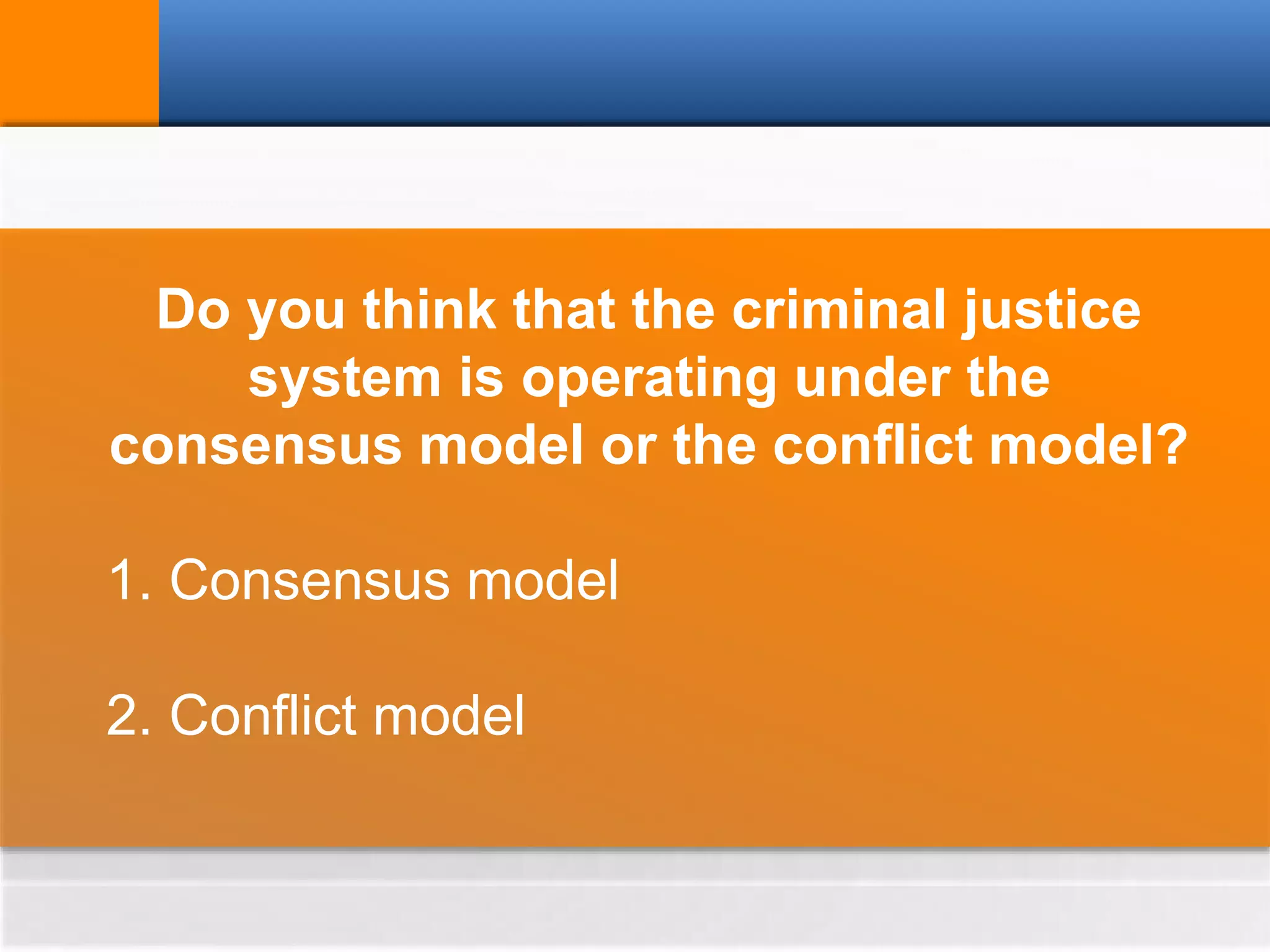
Do you think that the criminal justice
system is operating under the
consensus model or the conflict model?
1. Consensus model
2. Conflict model
Correct answer
Survey or opinion question
Graph answers for class discussion
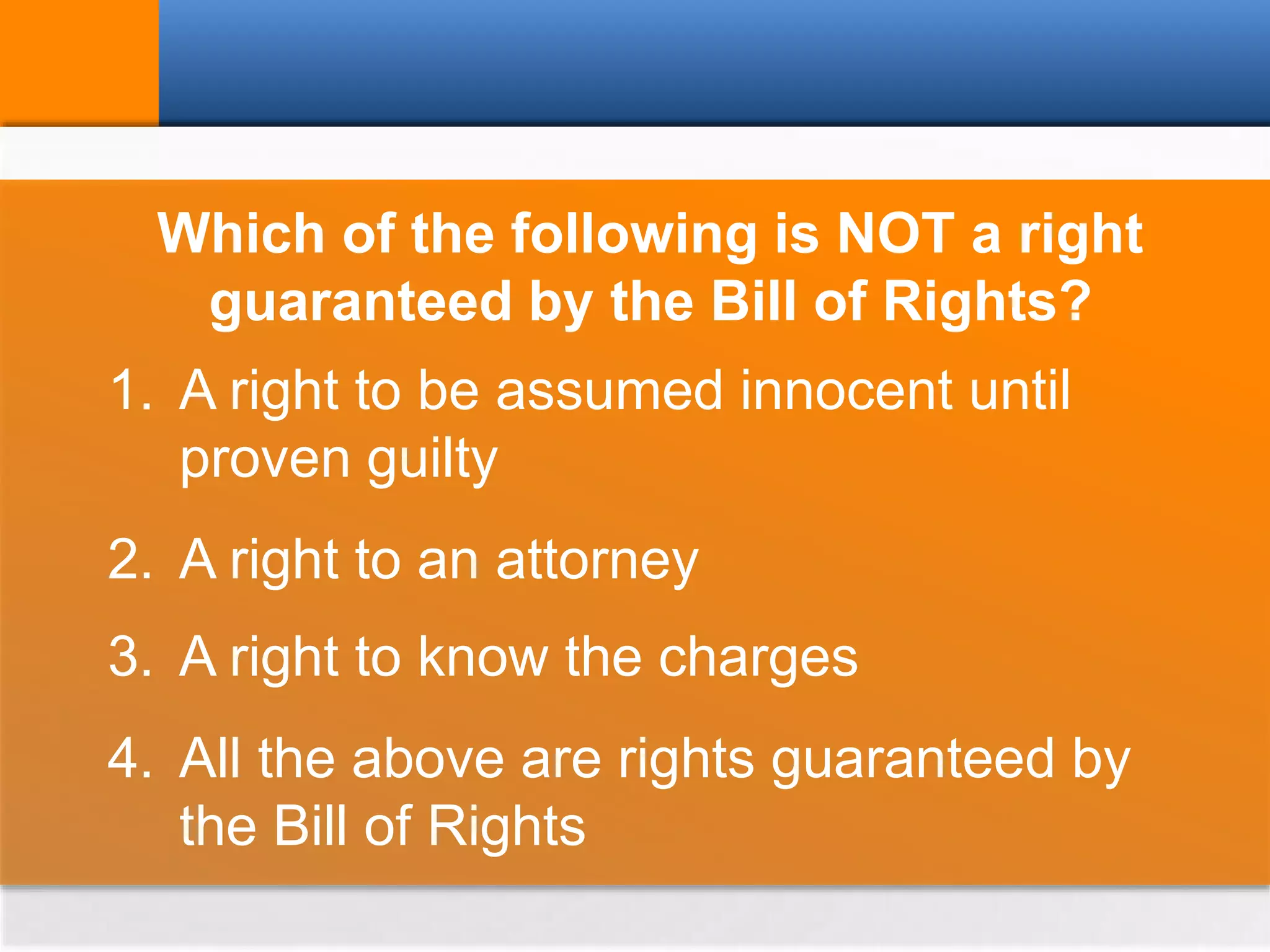
Which of the following is NOT a right
guaranteed by the Bill of Rights?
1. A right to be assumed innocent until
proven guilty
2. A right to an attorney
3. A right to know the charges
4. All the above are rights guaranteed by
the Bill of Rights
Correct answer
4. All the above are rights guaranteed by
the Bill of Rights
This criminal justice perspective
emphasizes the efficient arrest and
conviction of criminal offenders.
1. Crime control model
2. Consensus model
3. Due process model
4. Conflict model
Correct answer
1. Crime control model
This criminal justice perspective
emphasizes individual rights at all
stages of justices system processing.
1. Crime control model
2. Consensus model
3. Due process model
4. Conflict model
Correct answer
3. Due process model
Should our criminal justice system be
representative of the crime control
model, the due process model, or the
crime control through due process
model?
1. Crime control
2. Due process
3. Crime control through due process
Correct answer
Survey or opinion questions
Graph answers for class discussion
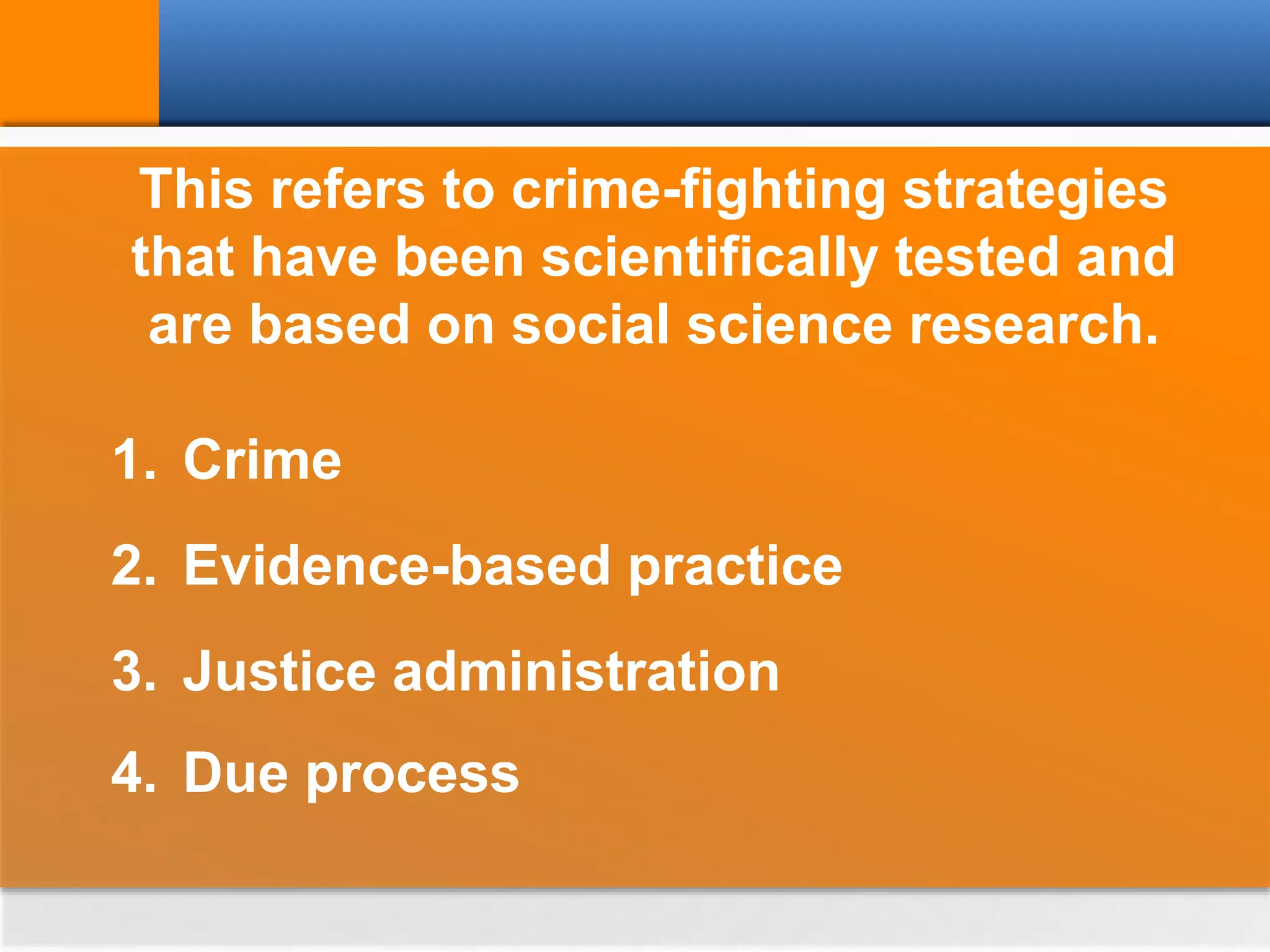
This refers to crime-fighting strategies
that have been scientifically tested and
are based on social science research.
1. Crime
2. Evidence-based practice
3. Justice administration
4. Due process
Correct answer
2. Evidence-based practice
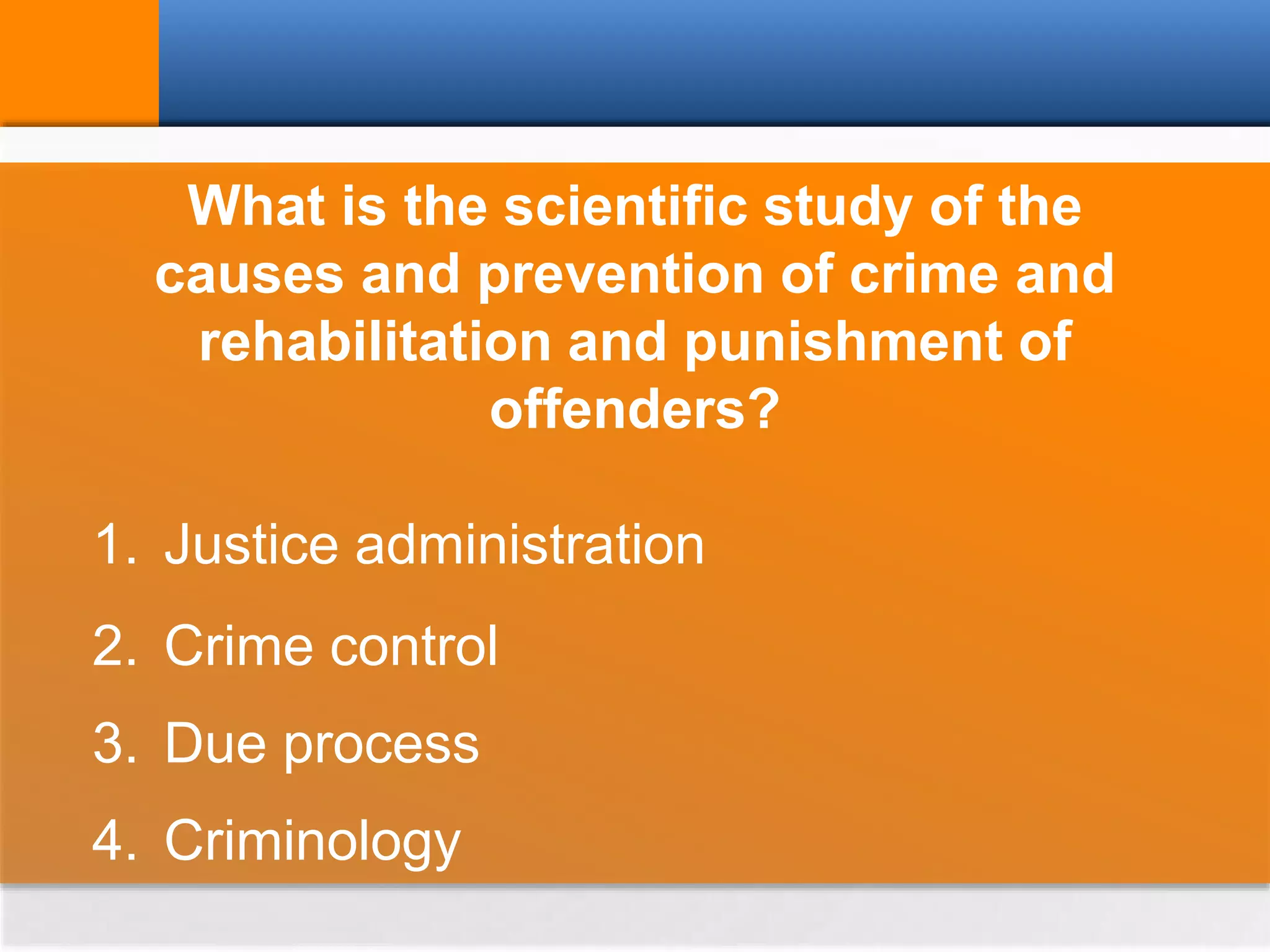
What is the scientific study of the
causes and prevention of crime and
rehabilitation and punishment of
offenders?
1. Justice administration
2. Crime control
3. Due process
4. Criminology
Correct answer
4. Criminology
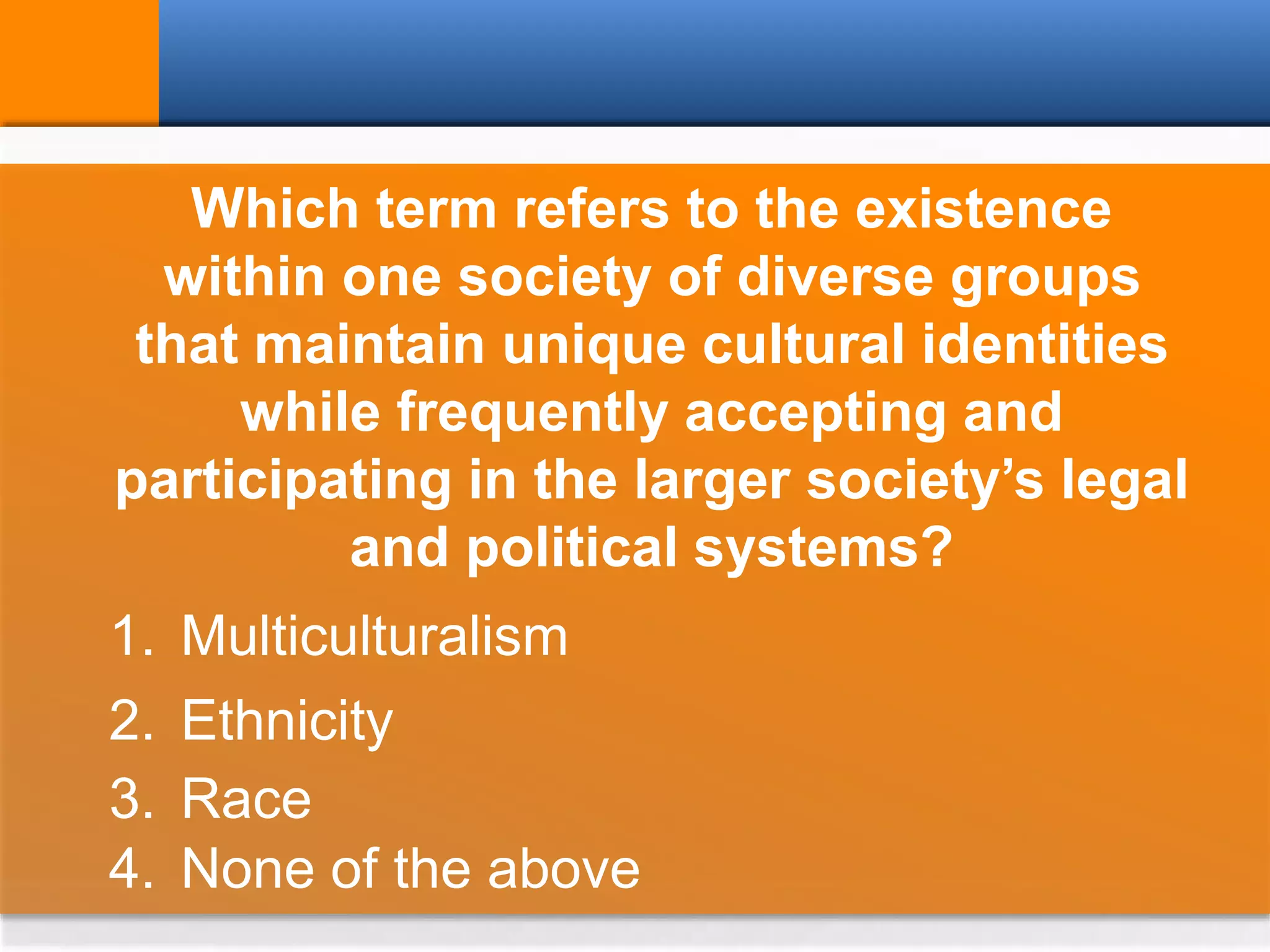
Which term refers to the existence
within one society of diverse groups
that maintain unique cultural identities
while frequently accepting and
participating in the larger society’s legal
and political systems?
1. Multiculturalism
2. Ethnicity
3. Race
4. None of the above
Correct answer
1. Multiculturalism

Chapter 1

  • 1.
    © 2014 byPearson Higher Education, Inc Upper Saddle River, New Jersey 07458 • All Rights Reserved Class Name, Instructor Name Date, Semester Criminal Justice: A Brief Introduction, 10th Edition Chapter 1: What Is Criminal Justice? 1
  • 2.
    During the 1960sand 1970s, the dominant philosophy in American criminal justice focused on guaranteeing the rights of criminal defendants while seeking to understand the root causes of crime and violence. 1. True 2. False
  • 3.
  • 4.
    After reviewing individualrights and public order, how do you see yourself? 1. I am an individual rights advocate 2. I am a public order advocate 3. Both; it depends on the issue or offense 4. I don’t understand the terms
  • 5.
    Correct Answer Survey oropinion question Graph answers for class discussion
  • 6.
    This is onewho seeks to protect personal freedoms within the process of criminal justice. 1. Public-order advocate 2. Conflict theorist 3. Individual-rights advocate 4. All the above
  • 7.
  • 8.
    This is acomponent of social justice that concerns itself with fairness in relationships between citizens, government agencies, and business in private matters. 1. Civil justice 2. Criminal justice 3. Criminology 4. Multiculturalism
  • 9.
  • 10.
    This is acriminal justice perspective that assumes that the system’s components work together harmoniously to achieve justice. 1. Conflict model 2. Crime control model 3. Interactionist model 4. Consensus model
  • 11.
  • 12.
    Under which modelcould you see the criminal justice system operating as a nonsystem? 1. Conflict model 2. Crime control model 3. Interactionist model 4. Consensus model
  • 13.
  • 14.
    Do you thinkthat the criminal justice system is operating under the consensus model or the conflict model? 1. Consensus model 2. Conflict model
  • 15.
    Correct answer Survey oropinion question Graph answers for class discussion
  • 16.
    Which of thefollowing is NOT a right guaranteed by the Bill of Rights? 1. A right to be assumed innocent until proven guilty 2. A right to an attorney 3. A right to know the charges 4. All the above are rights guaranteed by the Bill of Rights
  • 17.
    Correct answer 4. Allthe above are rights guaranteed by the Bill of Rights
  • 18.
    This criminal justiceperspective emphasizes the efficient arrest and conviction of criminal offenders. 1. Crime control model 2. Consensus model 3. Due process model 4. Conflict model
  • 19.
  • 20.
    This criminal justiceperspective emphasizes individual rights at all stages of justices system processing. 1. Crime control model 2. Consensus model 3. Due process model 4. Conflict model
  • 21.
    Correct answer 3. Dueprocess model
  • 22.
    Should our criminaljustice system be representative of the crime control model, the due process model, or the crime control through due process model? 1. Crime control 2. Due process 3. Crime control through due process
  • 23.
    Correct answer Survey oropinion questions Graph answers for class discussion
  • 24.
    This refers tocrime-fighting strategies that have been scientifically tested and are based on social science research. 1. Crime 2. Evidence-based practice 3. Justice administration 4. Due process
  • 25.
  • 26.
    What is thescientific study of the causes and prevention of crime and rehabilitation and punishment of offenders? 1. Justice administration 2. Crime control 3. Due process 4. Criminology
  • 27.
  • 28.
    Which term refersto the existence within one society of diverse groups that maintain unique cultural identities while frequently accepting and participating in the larger society’s legal and political systems? 1. Multiculturalism 2. Ethnicity 3. Race 4. None of the above
  • 29.