change management models and their implications for the organizations
1.
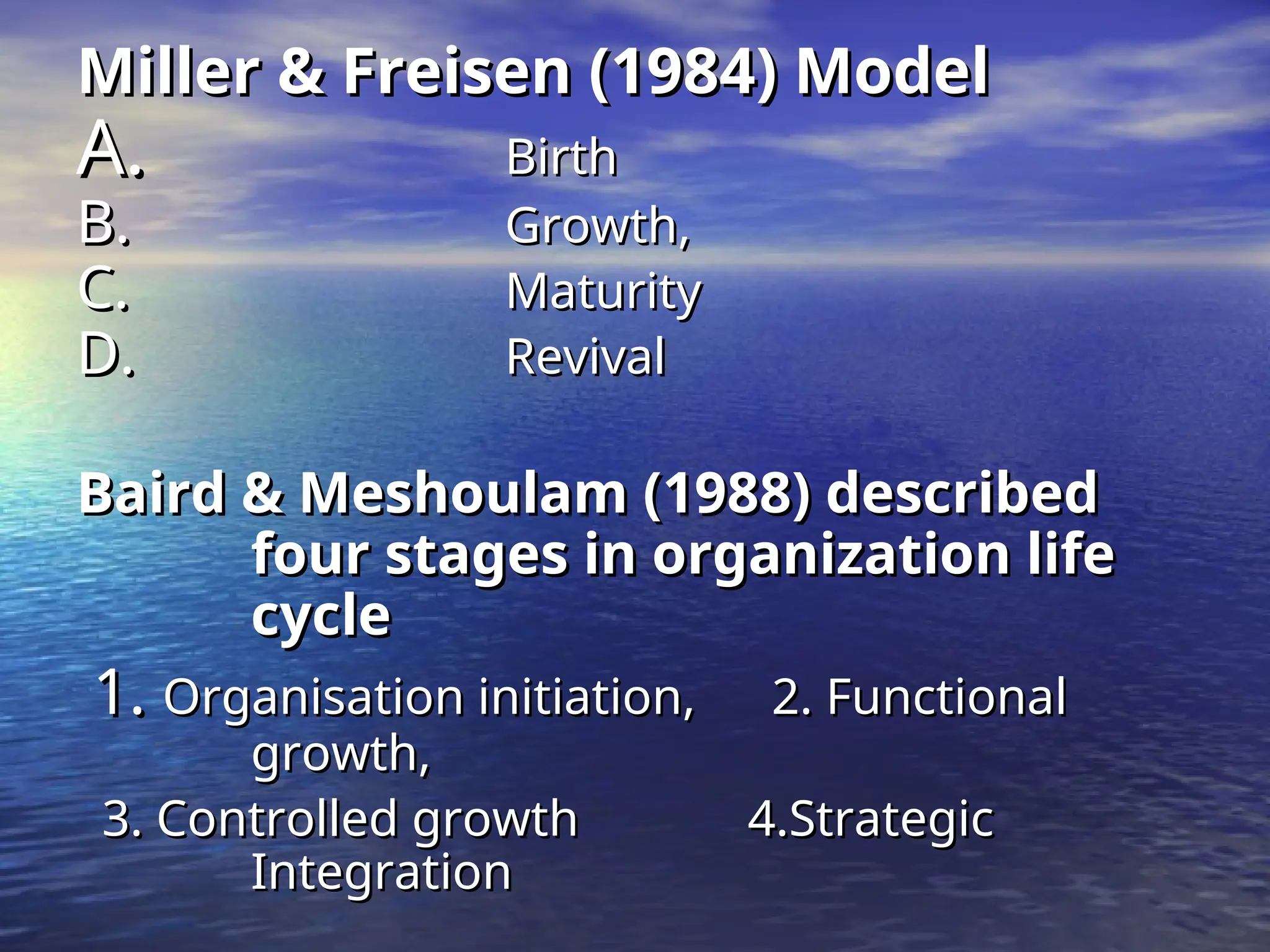
Miller & Freisen(1984) Model
Miller & Freisen (1984) Model
A.
A. Birth
Birth
B.
B. Growth,
Growth,
C.
C. Maturity
Maturity
D.
D. Revival
Revival
Baird & Meshoulam (1988) described
Baird & Meshoulam (1988) described
four stages in organization life
four stages in organization life
cycle
cycle
1.
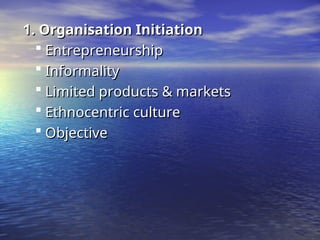
1. Organisation initiation,
Organisation initiation, 2. Functional
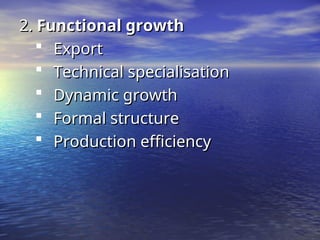
2. Functional
growth,
growth,
3. Controlled growth
3. Controlled growth 4.Strategic
4.Strategic
Integration
Integration
3.
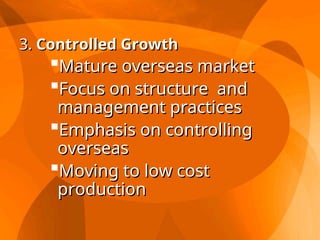
3. Controlled Growth
ControlledGrowth
Mature overseas market
Mature overseas market
Focus on structure and
Focus on structure and
management practices
management practices
Emphasis on controlling
Emphasis on controlling
overseas
overseas
Moving to low cost
Moving to low cost
production
production
5.
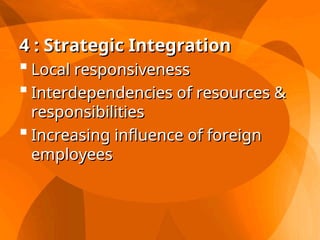
4 : StrategicIntegration
4 : Strategic Integration
Local responsiveness
Local responsiveness
Interdependencies of resources &
Interdependencies of resources &
responsibilities
responsibilities
Increasing influence of foreign
Increasing influence of foreign
employees
employees
6.
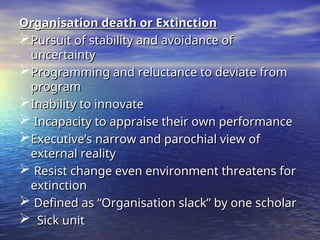
Organisation death orExtinction
Organisation death or Extinction
Pursuit of stability and avoidance of
Pursuit of stability and avoidance of
uncertainty
uncertainty
Programming and reluctance to deviate from
Programming and reluctance to deviate from
program
program
Inability to innovate
Inability to innovate
Incapacity to appraise their own performance
Incapacity to appraise their own performance
Executive’s narrow and parochial view of
Executive’s narrow and parochial view of
external reality
external reality
Resist change even environment threatens for
Resist change even environment threatens for
extinction
extinction
Defined as “Organisation slack” by one scholar
Defined as “Organisation slack” by one scholar
Sick unit
Sick unit
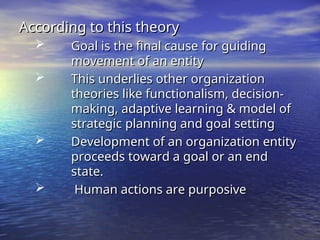
According to thistheory
According to this theory
Goal is the final cause for guiding
Goal is the final cause for guiding
movement of an entity
movement of an entity
This underlies other organization
This underlies other organization
theories like functionalism, decision-
theories like functionalism, decision-
making, adaptive learning & model of
making, adaptive learning & model of
strategic planning and goal setting
strategic planning and goal setting
Development of an organization entity
Development of an organization entity
proceeds toward a goal or an end
proceeds toward a goal or an end
state.
state.
Human actions are purposive
Human actions are purposive
9.
The entity ispurposeful and
The entity is purposeful and
adaptive by itself or interaction with
adaptive by itself or interaction with
others
others
The entity constructs an envisioned
The entity constructs an envisioned
state, takes action to reach it, and
state, takes action to reach it, and
monitors the progress.
monitors the progress.
Therefore development process
Therefore development process
entails the repetitive sequence of
entails the repetitive sequence of
goal formulation, implementation,
goal formulation, implementation,
evaluation and modification of goals
evaluation and modification of goals



![oRGANI;,ATIoNAt-, LFI] CYCI,ES ANiD S[II.1.N(;i C]RtTE,R.docx](https://cdn.slidesharecdn.com/ss_thumbnails/organiationat-lficyciesanidsii-221112195457-b167986b-thumbnail.jpg?width=640&height=640&fit=bounds)


