CH.1
WHY
STUDY
DRESS?
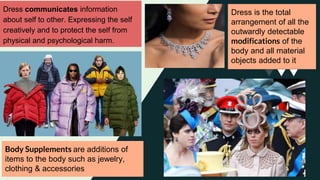
Dress communicates information
about self to other. Expressing the self
creatively and to protect the self from
physical and psychological harm.
Dress is the total
arrangement of all the
outwardly detectable
modifications of the
body and all material
objects added to it
Body Supplements are additions of
items to the body such as jewelry,
clothing & accessories
BODY
MODIFICATIONS
Changes made directly to the
body itself such as changes in
shape (teased hair, bbl), color
(ink or cosmetics), texture
(skin lotions alterations),
surface embellishments
(piercing). These can
permanent or temporary. They
can affect senses by way of
smell, sight, sound, taste or
touch.
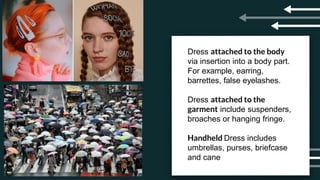
Dress attached to the body
via insertion into a body part.
For example, earring,
barrettes, false eyelashes.
Dress attached to the
garment include suspenders,
broaches or hanging fringe.
Handheld Dress includes
umbrellas, purses, briefcase
and cane
Suspended Dress Fitted Dress
Items include a necklace that
hangs from the neck, a loin
cloth that hangs or an apron
that hangs.
Items that are pre-shaped to the
contours of the body through
seams, darts & closures.
Examples include American
shirts & pants.
Wrapped Dress
Items that are often long
pieces of fabric that are
wrapped around the body or
head and pleated or knotted
to hold them in place.
Examples include sarong or
sari.
Cultural trait is a single identifiable material or
non-material element within a culture, and is
conceivable as an object in itself.
Culture is a concept that encompasses the
social behavior, institutions, and norms found in
human societies, as well as the knowledge,
beliefs, arts, laws, customs, capabilities, and
habits of the individuals in these groups.
Cultural Anthropology is the sociological
and psychological study of how people
share a common cultural system to organize
and shape the physical and social world
around them. Shaped by those ideas,
behaviors, and physical environments that
focus on humans impacted by economics,
politics, trade and belief systems.
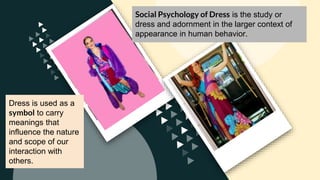
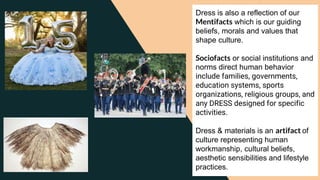
Dress is used as a
symbol to carry
meanings that
influence the nature
and scope of our
interaction with
others.
Social Psychology of Dress is the study or
dress and adornment in the larger context of
appearance in human behavior.
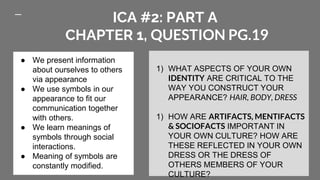
Dress is also a reflection of our
Mentifacts which is our guiding
beliefs, morals and values that
shape culture.
Sociofacts or social institutions and
norms direct human behavior
include families, governments,
education systems, sports
organizations, religious groups, and
any DRESS designed for specific
activities.
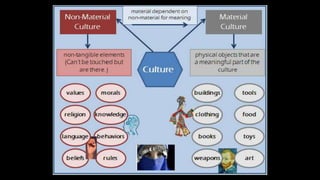
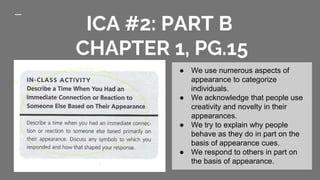
Dress & materials is an artifact of
culture representing human
workmanship, cultural beliefs,
aesthetic sensibilities and lifestyle
practices.
SOCIOFACT
ARTIFACT
What is the difference between sociofacts, mentifacts
and artifacts?
The framework presents three interrelated aspects of
culture-artifacts (things people make), sociofacts
(how people come together and for what purpose),
and mentifacts (what people think or believe).
2.
ICA #2: PART A
CHAPTER 1, QUESTION PG.19
● We present information
about ourselves to others
via appearance
● We use symbols in our
appearance to fit our
communication together
with others.
● We learn meanings of
symbols through social
interactions.
● Meaning of symbols are
constantly modified.
1) WHAT ASPECTS OF YOUR OWN
IDENTITY ARE CRITICAL TO THE
WAY YOU CONSTRUCT YOUR
APPEARANCE? HAIR, BODY, DRESS
1) HOW ARE ARTIFACTS, MENTIFACTS
& SOCIOFACTS IMPORTANT IN
YOUR OWN CULTURE? HOW ARE
THESE REFLECTED IN YOUR OWN
DRESS OR THE DRESS OF
OTHERS MEMBERS OF YOUR
CULTURE?
SOCIETY OF DRESS
Refers to smaller groups or individuals who interact with
each other and share commonalities of a similar
geographic area, language, lifestyle,interests, beliefs,
social structure and language.
The basis of a subculture could reflect a variety of factors
including ethnicity, hobbies, religion, neighborhood,
athletics, education or occupation
SUBCULTURE OR SOCIETY
ROLE MODELS
ICA #2: PART B
CHAPTER 1, PG.15
● We use numerous aspects of
appearance to categorize
individuals.
● We acknowledge that people use
creativity and novelty in their
appearances.
● We try to explain why people
behave as they do in part on the
basis of appearance cues.
● We respond to others in part on
the basis of appearance.
examples:
Type A Type B Type C Type D Type E
BREAK

CH1_ social constructs_ PART A.pptx

  • 1.
  • 2.
    Dress communicates information aboutself to other. Expressing the self creatively and to protect the self from physical and psychological harm. Dress is the total arrangement of all the outwardly detectable modifications of the body and all material objects added to it Body Supplements are additions of items to the body such as jewelry, clothing & accessories
  • 3.
    BODY MODIFICATIONS Changes made directlyto the body itself such as changes in shape (teased hair, bbl), color (ink or cosmetics), texture (skin lotions alterations), surface embellishments (piercing). These can permanent or temporary. They can affect senses by way of smell, sight, sound, taste or touch.
  • 4.
    Dress attached tothe body via insertion into a body part. For example, earring, barrettes, false eyelashes. Dress attached to the garment include suspenders, broaches or hanging fringe. Handheld Dress includes umbrellas, purses, briefcase and cane
  • 5.
    Suspended Dress FittedDress Items include a necklace that hangs from the neck, a loin cloth that hangs or an apron that hangs. Items that are pre-shaped to the contours of the body through seams, darts & closures. Examples include American shirts & pants. Wrapped Dress Items that are often long pieces of fabric that are wrapped around the body or head and pleated or knotted to hold them in place. Examples include sarong or sari.
  • 6.
    Cultural trait isa single identifiable material or non-material element within a culture, and is conceivable as an object in itself. Culture is a concept that encompasses the social behavior, institutions, and norms found in human societies, as well as the knowledge, beliefs, arts, laws, customs, capabilities, and habits of the individuals in these groups.
  • 9.
    Cultural Anthropology isthe sociological and psychological study of how people share a common cultural system to organize and shape the physical and social world around them. Shaped by those ideas, behaviors, and physical environments that focus on humans impacted by economics, politics, trade and belief systems.
  • 12.
    Dress is usedas a symbol to carry meanings that influence the nature and scope of our interaction with others. Social Psychology of Dress is the study or dress and adornment in the larger context of appearance in human behavior.
  • 13.
    Dress is alsoa reflection of our Mentifacts which is our guiding beliefs, morals and values that shape culture. Sociofacts or social institutions and norms direct human behavior include families, governments, education systems, sports organizations, religious groups, and any DRESS designed for specific activities. Dress & materials is an artifact of culture representing human workmanship, cultural beliefs, aesthetic sensibilities and lifestyle practices.
  • 14.
  • 16.
  • 17.
    What is thedifference between sociofacts, mentifacts and artifacts? The framework presents three interrelated aspects of culture-artifacts (things people make), sociofacts (how people come together and for what purpose), and mentifacts (what people think or believe).
  • 19.
  • 20.
    ICA #2: PARTA CHAPTER 1, QUESTION PG.19 ● We present information about ourselves to others via appearance ● We use symbols in our appearance to fit our communication together with others. ● We learn meanings of symbols through social interactions. ● Meaning of symbols are constantly modified. 1) WHAT ASPECTS OF YOUR OWN IDENTITY ARE CRITICAL TO THE WAY YOU CONSTRUCT YOUR APPEARANCE? HAIR, BODY, DRESS 1) HOW ARE ARTIFACTS, MENTIFACTS & SOCIOFACTS IMPORTANT IN YOUR OWN CULTURE? HOW ARE THESE REFLECTED IN YOUR OWN DRESS OR THE DRESS OF OTHERS MEMBERS OF YOUR CULTURE?
  • 21.
  • 25.
    Refers to smallergroups or individuals who interact with each other and share commonalities of a similar geographic area, language, lifestyle,interests, beliefs, social structure and language. The basis of a subculture could reflect a variety of factors including ethnicity, hobbies, religion, neighborhood, athletics, education or occupation SUBCULTURE OR SOCIETY
  • 27.
  • 29.
    ICA #2: PARTB CHAPTER 1, PG.15 ● We use numerous aspects of appearance to categorize individuals. ● We acknowledge that people use creativity and novelty in their appearances. ● We try to explain why people behave as they do in part on the basis of appearance cues. ● We respond to others in part on the basis of appearance.
  • 30.
    examples: Type A TypeB Type C Type D Type E
  • 31.