INTRODUCTORY
QUESTIONS
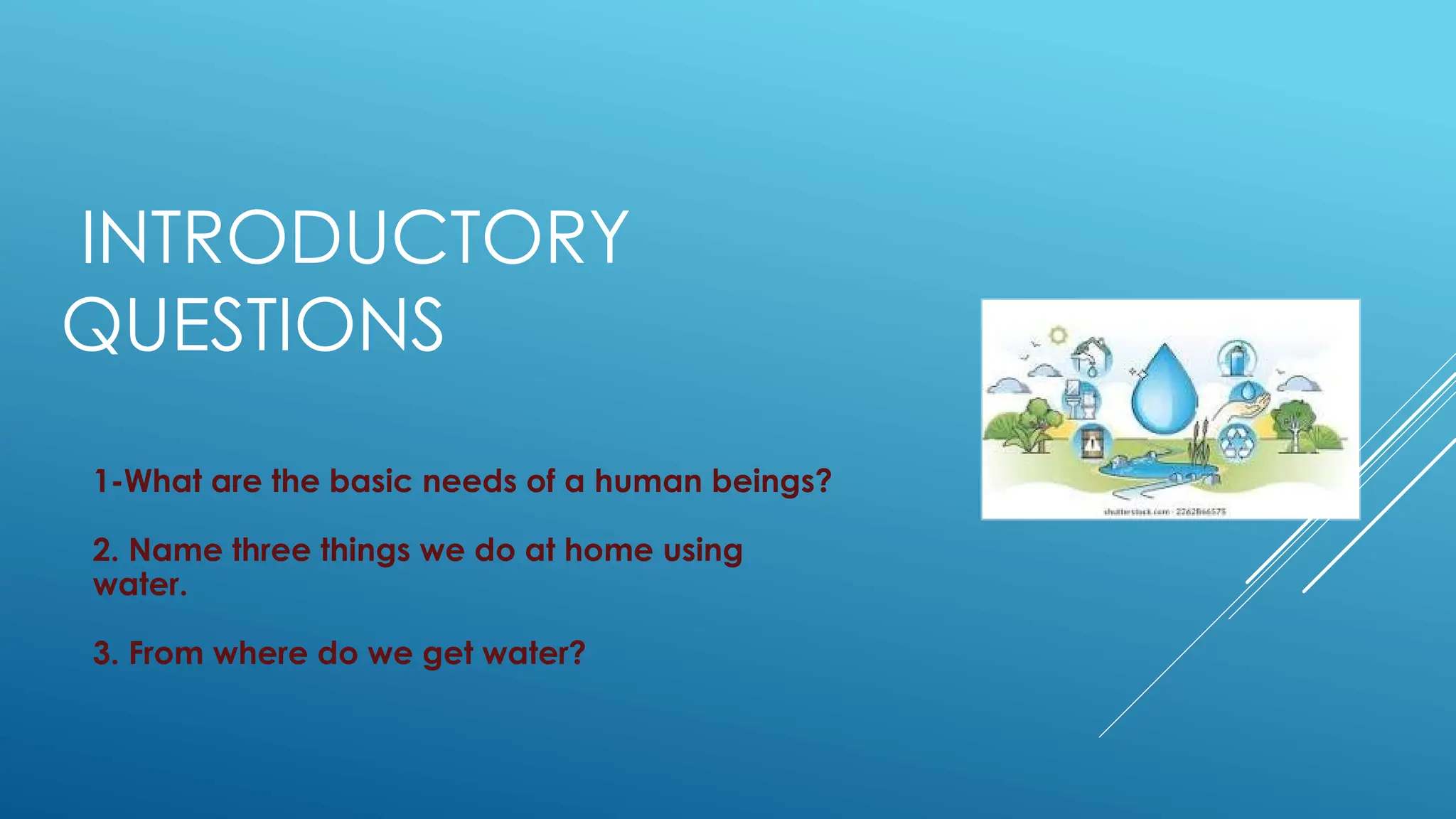
1-What are the basic needs of a human beings?
2. Name three things we do at home using
water.
3. From where do we get water?
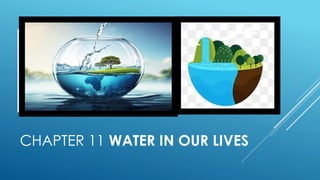
CHAPTER 11 WATER IN OUR LIVES
• QUENCH-SATISFY
• SALINE-CONTAINING TOO MUCH
SALT
• CIRCULATE-MOVEMENT OF LIQUID
OR GAS IN A CYCLE
• POTABLE-FIT FOR DRINKING
KEY WORDS
OBJECTIVES FOR THE CHAPTER-
By the end of the lesson, students will be able to:
1. Knowledge & Understanding
Explain the importance of water in our daily life.
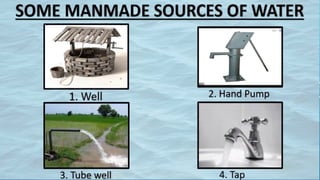
Identify different sources of water (rain, rivers, ponds, wells, hand pumps, taps etc.).
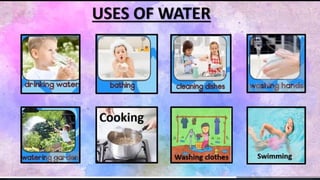
State the various uses of water in daily life (drinking, cooking, cleaning, farming, industry etc.).
2. Skills
Demonstrate simple ways to save water in school and at home.
Differentiate between safe and unsafe water for drinking.
Observe and record how water is used in their surroundings.
3. Values & Attitudes
Develop a sense of responsibility towards conserving water.
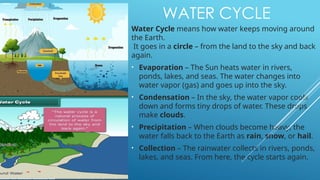
WATER CYCLE
Water Cycle means how water keeps moving around
the Earth.
It goes in a circle – from the land to the sky and back
again.
• Evaporation – The Sun heats water in rivers,
ponds, lakes, and seas. The water changes into
water vapor (gas) and goes up into the sky.
• Condensation – In the sky, the water vapor cools
down and forms tiny drops of water. These drops
make clouds.
• Precipitation – When clouds become heavy, the
water falls back to the Earth as rain, snow, or hail.
• Collection – The rainwater collects in rivers, ponds,
lakes, and seas. From here, the cycle starts again.
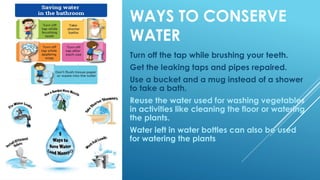
WAYS TO CONSERVE
WATER
Turn off the tap while brushing your teeth.
Get the leaking taps and pipes repaired.
Use a bucket and a mug instead of a shower
to take a bath.
Reuse the water used for washing vegetables
in activities like cleaning the floor or watering
the plants.
Water left in water bottles can also be used
for watering the plants
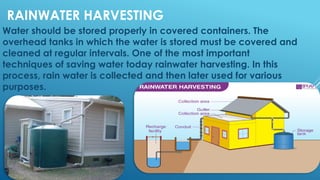
RAINWATER HARVESTING
Water should be stored properly in covered containers. The
overhead tanks in which the water is stored must be covered and
cleaned at regular intervals. One of the most important
techniques of saving water today rainwater harvesting. In this
process, rain water is collected and then later used for various
purposes.
Water is Our Life (Objective Questions)
A. Multiple Choice Questions (MCQs)
1. Water is used for:
a) Drinking
b) Cooking
c) Washing
d) All of these
2. The main source of drinking water is:
a) Air
b) Rain
c) Soil
d) Fire
3. We should drink:
a) Dirty water
b) Boiled and clean water
c) Salty water
d) Waste water
True or False
1. All living beings need water.______
2. Water can be wasted as much as we want.________
3. Boiling water kills germs. ___________
4. Rainwater is the main source of fresh water.________
5. We should keep water taps open always. __________

CH 11 evs ppt updated POWER POINT PRESENTATION 2.pptx

  • 1.
    INTRODUCTORY QUESTIONS 1-What are thebasic needs of a human beings? 2. Name three things we do at home using water. 3. From where do we get water?
  • 2.
    CHAPTER 11 WATERIN OUR LIVES
  • 3.
    • QUENCH-SATISFY • SALINE-CONTAININGTOO MUCH SALT • CIRCULATE-MOVEMENT OF LIQUID OR GAS IN A CYCLE • POTABLE-FIT FOR DRINKING KEY WORDS
  • 4.
    OBJECTIVES FOR THECHAPTER- By the end of the lesson, students will be able to: 1. Knowledge & Understanding Explain the importance of water in our daily life. Identify different sources of water (rain, rivers, ponds, wells, hand pumps, taps etc.). State the various uses of water in daily life (drinking, cooking, cleaning, farming, industry etc.). 2. Skills Demonstrate simple ways to save water in school and at home. Differentiate between safe and unsafe water for drinking. Observe and record how water is used in their surroundings. 3. Values & Attitudes Develop a sense of responsibility towards conserving water.
  • 9.
    WATER CYCLE Water Cyclemeans how water keeps moving around the Earth. It goes in a circle – from the land to the sky and back again. • Evaporation – The Sun heats water in rivers, ponds, lakes, and seas. The water changes into water vapor (gas) and goes up into the sky. • Condensation – In the sky, the water vapor cools down and forms tiny drops of water. These drops make clouds. • Precipitation – When clouds become heavy, the water falls back to the Earth as rain, snow, or hail. • Collection – The rainwater collects in rivers, ponds, lakes, and seas. From here, the cycle starts again.
  • 10.
    WAYS TO CONSERVE WATER Turnoff the tap while brushing your teeth. Get the leaking taps and pipes repaired. Use a bucket and a mug instead of a shower to take a bath. Reuse the water used for washing vegetables in activities like cleaning the floor or watering the plants. Water left in water bottles can also be used for watering the plants
  • 11.
    RAINWATER HARVESTING Water shouldbe stored properly in covered containers. The overhead tanks in which the water is stored must be covered and cleaned at regular intervals. One of the most important techniques of saving water today rainwater harvesting. In this process, rain water is collected and then later used for various purposes.
  • 16.
    Water is OurLife (Objective Questions) A. Multiple Choice Questions (MCQs) 1. Water is used for: a) Drinking b) Cooking c) Washing d) All of these 2. The main source of drinking water is: a) Air b) Rain c) Soil d) Fire 3. We should drink: a) Dirty water b) Boiled and clean water c) Salty water d) Waste water
  • 17.
    True or False 1.All living beings need water.______ 2. Water can be wasted as much as we want.________ 3. Boiling water kills germs. ___________ 4. Rainwater is the main source of fresh water.________ 5. We should keep water taps open always. __________