Yang et al. Molecular Cytogenetics 2012, 5:24 
http://www.molecularcytogenetics.org/content/5/1/24 
METHODOLOGY Open Access 
Selection of single blastocysts for fresh transfer 
via standard morphology assessment alone and 
with array CGH for good prognosis IVF patients: 
results from a randomized pilot study 
Zhihong Yang1, Jiaen Liu2, Gary S Collins3, Shala A Salem1, Xiaohong Liu2, Sarah S Lyle1, Alison C Peck1, 
E Scott Sills1* and Rifaat D Salem1 
Abstract 
Background: Single embryo transfer (SET) remains underutilized as a strategy to reduce multiple gestation risk in 
IVF, and its overall lower pregnancy rate underscores the need for improved techniques to select one embryo for 
fresh transfer. This study explored use of comprehensive chromosomal screening by array CGH (aCGH) to provide 
this advantage and improve pregnancy rate from SET. 
Methods: First-time IVF patients with a good prognosis (age <35, no prior miscarriage) and normal karyotype 
seeking elective SET were prospectively randomized into two groups: In Group A, embryos were selected on the 
basis of morphology and comprehensive chromosomal screening via aCGH (from d5 trophectoderm biopsy) while 
Group B embryos were assessed by morphology only. All patients had a single fresh blastocyst transferred on d6. 
Laboratory parameters and clinical pregnancy rates were compared between the two groups. 
Results: For patients in Group A (n = 55), 425 blastocysts were biopsied and analyzed via aCGH (7.7 blastocysts/ 
patient). Aneuploidy was detected in 191/425 (44.9%) of blastocysts in this group. For patients in Group B (n = 48), 
389 blastocysts were microscopically examined (8.1 blastocysts/patient). Clinical pregnancy rate was significantly 
higher in the morphology + aCGH group compared to the morphology-only group (70.9 and 45.8%, respectively; 
p = 0.017); ongoing pregnancy rate for Groups A and B were 69.1 vs. 41.7%, respectively (p = 0.009). There were no 
twin pregnancies. 
Conclusion: Although aCGH followed by frozen embryo transfer has been used to screen at risk embryos (e.g., known 
parental chromosomal translocation or history of recurrent pregnancy loss), this is the first description of aCGH fully 
integrated with a clinical IVF program to select single blastocysts for fresh SET in good prognosis patients. The 
observed aneuploidy rate (44.9%) among biopsied blastocysts highlights the inherent imprecision of SET when 
conventional morphology is used alone. Embryos randomized to the aCGH group implanted with greater efficiency, 
resulted in clinical pregnancy more often, and yielded a lower miscarriage rate than those selected without aCGH. 
Additional studies are needed to verify our pilot data and confirm a role for on-site, rapid aCGH for IVF patients 
contemplating fresh SET. 
* Correspondence: dr.sills@prc-ivf.com 
1Division of Reproductive Endocrinology Research, Pacific Reproductive 
Center, Torrance, CA 90505, USA 
Full list of author information is available at the end of the article 
© 2012 Yang et al.; licensee BioMed Central Ltd. This is an Open Access article distributed under the terms of the Creative 
Commons Attribution License (http://creativecommons.org/licenses/by/2.0), which permits unrestricted use, distribution, and 
reproduction in any medium, provided the original work is properly cited.
Yang et al. Molecular Cytogenetics 2012, 5:24 Page 2 of 8 
http://www.molecularcytogenetics.org/content/5/1/24 
Background 
Multiple gestation represents the most significant com-plication 
of assisted reproductive treatment (ART). Sin-gle 
embryo transfer (SET), either elective or mandatory, 
has been advocated as an effective means to avoid mul-tiple 
gestation following IVF [1-3]. Despite a welcome 
trend in increased acceptance and utilization of elective 
SET treatment in some groups [4], most IVF cycles con-tinue 
to involve two or more embryos for transfer. When 
SET is done, selection of the single embryo or blastocyst 
for transfer is typically done on the basis of morphology 
[5,6]. However, since acceptable morphology alone can-not 
negate the potential for chromosomal error in the 
selected embryo, the transfer of one apparently “normal 
looking” embryo carries considerable risk [7]. Aneu-ploidy 
is the most common abnormality in human 
embryos derived from IVF [8-15], a problem that contri-butes 
substantially to poor IVF outcomes [16]. As other 
investigators have noted, screening embryos by fluores-cence 
in situ hybridization (FISH) was a reasonable re-sponse 
to this challenge, but the approach was limited 
because it failed to screen all chromosomes at the same 
time [17-21]. Conventional comparative genomic 
hybridization (CGH) has been used for comprehensive 
screening of aneuploidy for oocytes and embryos [19,22- 
25] with cryopreservation of embryo(s) from which the 
biopsy was derived. When results became available, fro-zen 
embryo transfer (FET) was subsequently arranged so 
that only euploid embryo(s) were transferred. 
At present, there is no consensus on the best way to 
determine the competency of the embryonic genome 
during IVF. Both single nucleotide polymorphism (SNP) 
array and array CGH (aCGH) have been validated as ac-curate 
methods to achieve comprehensive chromosome 
screening when biopsy is performed on d3 for fresh 
transfer on d5 [26-30]. The difference in mosaicism be-tween 
embryos at d3 and d5 has led to a preference for 
biopsy at the blastocyst stage when mosaicism is reduced 
[31-33]. When combined with trophectoderm biopsy and 
blastocyst vitrification, SNP microarray has resulted in 
high implantation rate and low miscarriage rates for 
some IVF patients [31]. However, experience is limited 
with aCGH to select a single euploid blastocyst for fresh 
transfer in the absence of known chromosomal diagno-sis. 
In this pilot study, we evaluated a rapid, on-site 
aCGH application to select a single euploid blastocyst 
for fresh transfer in good prognosis patients <35 yrs of 
age, who were undergoing a first IVF attempt. 
Methods 
Patient sample 
Following IRB approval, patients undergoing IVF at our 
programs in Beijing and Los Angeles were offered enroll-ment 
in this prospective, single-blind, pilot interventional 
study to compare embryo assessment by conventional mi-croscopy 
alone or with array comparative genomic 
hybridization (aCGH) performed on trophectoderm. Writ-ten 
informed consent was obtained from all study partici-pants 
and all received pre-treatment counseling in 
anticipation of possible incorporation of aCGH in their IVF 
treatment. Patients were eligible for this study if (female) 
age was <35 yrs, if there was a history of regular ovulation, 
if etiology of infertility was tubal factor or male factor (or 
both), and if no prior IVF treatment had been initiated. 
Additionally, all study subjects were required to have a nor-mal 
intrauterine contour (confirmed by hysteroscopy), both 
ovaries intact, basal serum FSH and estradiol on d2-3 at 
<10 IU/l and <60 pg/ml, respectively. IVF patients whose 
treatment incorporated donor gametes or frozen/thawed 
embryos were excluded. A random number table was used 
to determine patients in vitro laboratory management strat-egy 
as either (1) traditional morphology assessment plus 
aCGH (Group A, n = 55), or (2) conventional morphology 
assessment only (Group B, n = 48). Patients (but not labora-tory 
or clinical staff) were blinded with regard to their 
randomization group. The two cohorts were mutually ex-clusive, 
and no study patient had embryos assigned to both 
laboratory groups. 
Ovarian stimulation and fertilization 
Before commencing gonadotropin therapy patients 
underwent transvaginal ultrasound evaluation with re-measurement 
of serum FSH, LH and estradiol on d3 of 
the index cycle. Pituitary downregulation was achieved 
with GnRH-agonist administered on d21 of the cycle im-mediately 
preceding treatment, as previously described 
[33]. Periodic transvaginal ultrasound and serum estra-diol 
measurements were used to track follicular growth 
and thickness of endometrial lining. When ≥3 follicles 
reached 19 mm mean diameter, periovulatory hCG was 
administered by subcutaneous injection of recombinant 
hCG (250 μg OvidrelW, Merck Serono; Geneva, Switzer-land) 
with oocyte retrieval performed under transvaginal 
ultrasound guidance 35-36 h later. Following removal of 
all cumulus cells, ICSI was performed and normal 
fertilization was verified 16-18 h after injection by pres-ence 
of two pronuclei and two polar bodies. 
Embryo culture and trophectoderm biopsy 
All embryos were cultured in sequential media (Vitro-life; 
Göteborg, Sweden) to blastocyst stage. On d3 when 
embryos were at the 6–8 cell stage, a noncontact 1.48 μ 
diode laser (OCTAX Microscience GmbH; Bruckberg, 
Germany) was used to create a circular 6-9 μ diameter 
opening in the zona pellucida. For embryos randomized 
to the aCGH group, this breach enabled biopsy of 
trophectoderm (TE) on d5 rapidly. Between 3–5 her-niated 
TE cells were gently aspirated by pipette and,
Yang et al. Molecular Cytogenetics 2012, 5:24 Page 3 of 8 
http://www.molecularcytogenetics.org/content/5/1/24 
when necessary, freed from the blastocyst by applica-tion 
of several laser pulses. Harvested TE cells were 
washed in PBS and placed within a PCR tube with 
2.5 μl 1x PBS as previously described [34]. A uniform 
assisted hatching methodology was used for all embryos 
irrespective of subsequent TE biopsy or conventional 
microscopic assessment alone. 
aCGH protocol 
Whole genome amplification was performed on-site using 
the SurePlex DNA amplification system (BlueGnome Ltd; 
Cambridge, UK) in accordance with manufacturer’s guide-lines, 
as described elsewhere [34,35]. Briefly, samples and 
control DNA (8 μl for each) were labeled with Cy3 and 
Cy5 fluorophores (BlueGnome Ltd; Cambridge, UK). La-beling 
time was approximately 3 h with DNA resuspended 
in dexsulphate hybridization buffer and hybridized over-night 
under cover slides. After washing 1x 10 min in sa-line 
sodium citrate (SSC)/0.05% Tween-20 at room 
temperature, an additional irrigation in SSC 1x 10 min 
was completed at room temperature. Slides were washed 
in SSC 1x 5 min at 60°C and again for 1 min at room 
temperature (in SSC). Vacuum centrifuge was used to 
dry microarray slides over 3 min, followed by laser scan-ning 
at 10 μm (Agilent Technologies; Santa Clara, USA). 
Microarray data were analyzed with BlueFuse software 
(BlueGnome, Cambridge, UK) for chromatin loss or gain 
across all 24 chromosomes. Aberrations were consid-ered 
non-artifact if ≥15 probes deviated from normal 
limits as defined by the 24Sure platform. The published 
accuracy rate for this aCGH technique when applied to 
TE cells is 95% [35]. 
Blastocyst grading and selection for transfer 
In both aCGH and control groups, blastocysts were 
graded [36] on a 1 to 6 scale determined by degree of ex-pansion 
and hatching status, as follows: Grade 1 (early 
blastocyst): blastocoele <1/2 of total embryo volume; 
Grade 2 (intermediate blastocyst): blastocoele ≥1/2 of 
total embryo volume; Grade 3 (full blastocyst): blasto-coele 
fully occupies the embryo; Grade 4 (expanded 
blastocyst): blastocoele is larger than early blastocyst and 
zona pellucida (ZP) demonstrates thinning; Grade 5 
(hatching blastocyst): herniation of trophectoderm cells 
from the ZP; and Grade 6 (hatched blastocyst): blastocyst 
has escaped the ZP. For blastocysts at Grades 3 to 6, the 
inner cell mass (ICM) and trophectoderm (TE) were also 
graded. The ICM was graded as follows: A (many ICM 
cells packed together tightly); B (several ICM cells 
grouped loosely) and C (very few ICM cells). TE was 
graded as follows: A (many TE cells forming multiple 
epithelial layers); B (few TE cells consisting of a loose 
epithelium) and C (very few large TE cells). 
Fresh SET was performed on the morning of d6 under 
direct ultrasound guidance for all patients. For embryos 
in the aCGH group only one euploid blastocyst was 
selected for transfer, based on data from the aCGH ana-lysis. 
When multiple euploid blastocysts were available 
(as determined by aCGH), the best grade euploid blasto-cyst 
was selected for transfer. Any surplus euploid blas-tocysts 
were vitrified for later use [34]. In the non-aCGH 
(control) group, a single blastocyst was selected for fresh 
transfer based on morphological criteria only (e.g., no 
aCGH evaluation). The surplus blastocysts with good 
morphology (grade 3BB or above) were vitrified for fu-ture 
FET cycles. 
Outcome measures and statistical analysis 
Clinical pregnancy rates were tabulated and compared 
for IVF patients in both groups. Clinical pregnancy was 
defined as an intrauterine gestational sac containing one 
embryo which demonstrated cardiac action with rate 
≥110/min [37], and pregnancies at ≥20 weeks of gesta-tion 
were classified at on-going. Differences between 
groups were assessed by Chi-squared and Fisher’s exact 
tests. A difference of p<0.05 was considered statistically 
significant. 
Results 
During the four-month study interval, a total of 188 IVF 
patients met inclusion criteria and 112 volunteered for 
enrollment (59.6%). Fifty six patients were randomized 
to each group. Of these, some patients did not initiate 
IVF due to failure to complete mandatory pre-IVF test-ing, 
they rescheduled their IVF, or they withdrew from 
treatment for personal reasons (see Figure 1). For Group 
A (morphology + aCGH) and Group B (morphology 
only) 55 and 48 IVF patients completed the study, re-spectively. 
The clinical and demographic features of the 
two groups were similar, as summarized in Table 1. 
There were no cancellations or complications for any pa-tient 
in either study group. 
For patients in Group A, 425 of 457 blastocysts were 
biopsied and analyzed via array CGH (7.7 blastocysts/pa-tient). 
Biopsy could not be completed for 32 blastocysts 
due to poor morphology or because they degenerated 
after biopsy. This evaluation revealed aneuploidy in 191/ 
425 (44.9%) of blastocysts. ‘No signal’ due to amplifica-tion 
failure occurred in 8 blastocysts. Among aneuploid 
blastocysts, 68/191 (35.6%) had single chromosome loss 
(monosomy) and 20.9% displayed single chromosome 
gain (trisomy). Approximately 43% of aneuploid blasto-cysts 
were chromosomally abnormal due to a severe, 
compound genetic defect where two or more chromo-somes 
were affected (see Table 2). While chromosomal 
abnormalities were detected in all chromosomes, disrup-tions 
involving chromosomes 15, 16, 21, 22 and X were
Yang et al. Molecular Cytogenetics 2012, 5:24 Page 4 of 8 
http://www.molecularcytogenetics.org/content/5/1/24 
1 8 
most frequently observed. Errors of chromosomes 4 and 
6 were relatively uncommon. All patients in Group A 
had at least one euploid blastocyst available for transfer 
on d6. For patients in Group B, 389 blastocysts were 
microscopically examined (8.1 blastocysts/patient). 
A single embryo was selected for transfer to all patients 
on d6. As shown in Table 3, the observed ongoing preg-nancy 
rate was significantly higher in the morphology + 
aCGH group compared to the morphology-only group 
(69.1 vs. 41.7%, respectively; p = 0.009). A significant dif-ference 
in clinical pregnancy rate was also noted between 
the two study groups (70.9 vs. 45.8%, respectively; 
p = 0.017). There were no twin pregnancies identified in 
either group. A low miscarriage rate was noted for all 
study patients, although this was somewhat lower in the 
morphology + aCCH group than for the morphology-only 
group (2.6 vs. 9.1%, respectively; p = 0.597, by Fisher’s 
exact test). 
Discussion 
Delivery of a healthy singleton live birth is the target out-come 
for all infertility treatment. Although elective SET 
has emerged as the best answer to reduce the multiple 
gestation rate in IVF, uncertainty about the technique it-self, 
low patient awareness of the process, lack of a favor-able 
reimbursement system, and inferior 
cryopreservation success rates have hindered the uptake 
of this approach [38]. The value of promoting SET was 
recently underscored by a population-based cohort study 
of IVF outcomes where cerebral palsy (CP) incidence 
was noted among 1042 IVF singletons born after SET in 
Denmark [39]. Only one of those children received a CP 
diagnosis, compared with 21 CP diagnoses among IVF 
singletons born after two or more embryo transfers [39]. 
In Canada, efforts to mandate SET gained support from 
a multi-year review showing how this change in IVF 
Table 1 Characteristics of patients whose embryos were 
randomized to assessment by morphology with aCGH 
(Group A) and blastocyst morphology only (Group B) 
Group A (n = 55) Group B (n = 48) 
Age (yrs) 31.2 ± 2.5 31.5 ± 2.7 
Total oocytes retrieved 19.5 ± 8.2 19.3 ± 8.1 
MII (mature) oocytes 16.6 ± 7.8 16.3 ± 7.6 
Oocytes fertilized (2pn) 13.1 ± 6.7 12.8 ± 6.4 
Day 3 embryos 12.9 ± 1.8 12.6 ± 1.9 
Day 5 blastocysts 8.3 ± 2.1 8.1 ± 2.4 
Notes: Total number of blastocysts in Group [A] and [B] were 457 and 389, 
respectively. aCGH = array comparative genomic hybridization, MII = metaphase 
II, 2pn = two pronuclei. All data reported as mean ± SD. There was no 
significant difference between groups (p>0.05) in any category. 
Table 2 Detail of aCGH results derived from aneuploid 
blastocysts (n = 191) in Group A 
n (%) 
Single chromosome loss (monosomy) 68 (35.6) 
Single chromosome gain (trisomy) 40 (20.9) 
Dual chromosomal abnormality 55 (28.8) 
Complex chromosomal abnormality 28 (14.7) 
188 
112 
56 56 
55 48 
A B 
425 389 
Eligible for study entry 
Enrolled and randomized 
Completed study 
Figure 1 Schematic for patients randomized either to embryo 
assessment by standard morphology plus aCGH (A) or 
morphology alone (B). Withdrawals, deferrals and drop-outs for 
each group are circled in red. The total number of blastocysts 
associated with each group is circled in blue. 
Table 3 Comparison of laboratory findings and clinical 
outcome among IVF patients undergoing SET with 
embryo assessment by aCGH + morphology (Group A) 
and blastocyst morphology alone (Group B) 
A B p 
Fresh blastocyst transfer according to 
morphology assessment: 
55 (100) 48 (100) 
Grade 5/6 31 (56.4) 28 (58.3) 
Grade 4 21 (38.2) 19 (39.6) 0.677a 
Grade 3 3 (5.4) 1 (2.1) 
Clinical pregnancy 39 (70.9) 22 (45.8) 0.017a 
Ongoing pregnancy (≥20wks GA) 38 (69.1) 20 (41.7) 0.009a 
Missed abortion 1 (2.6) 2 (9.1) 0.597b 
Notes: All data reported as n (%). SET = single embryo transfer; aCGH = array 
comparative genomic hybridization; GA = gestational age a by Chi-squared test 
b by Fisher’s exact test.
Yang et al. Molecular Cytogenetics 2012, 5:24 Page 5 of 8 
http://www.molecularcytogenetics.org/content/5/1/24 
practice would prevent infant deaths and reduce serious 
complications associated with multiple gestations [40]. 
Researchers found 17% of all NICU admissions—82 
infants from 44 multiple gestations—resulted from 
assisted fertility treatments, and most NICU admissions 
(75 of 82 infants) were twins or triplets whose mothers 
used IVF to become pregnant. Among those 75 babies 
there were 6 deaths, and 5 more developed severe intra-ventricular 
hemorrhage [40]. 
Given this background, IVF patients should be encour-aged 
to consider elective SET during pre-treatment 
counseling. Except for Sweden and Belgium [41,42], all 
other jurisdictions allow the decision for number of 
embryos for transfer to be made by doctor and patient, 
so the role of the reproductive endocrinologist in this 
process is vital [38]. How the choice to have elective SET 
is communicated has been shown to be an important in-fluencing 
factor as this choice is made [43]. Yet in many 
clinics, if SET is offered at all, it is the patient herself 
who requests this option. Confidence in chance of suc-cess 
after SET, younger patient age, and first IVF treat-ment 
appear to favor a patient asking for SET [44]. We 
support the basic criteria for elective SET as proposed by 
others [45], including age <37 yrs, at least two good 
quality embryos available (3–5 cells on d2 or 6–9 cells 
on d3; <20% fragmentation and no multinucleate blasto-meres), 
and no more than one previous failed treatment 
cycle. Among Australian IVF patients, preference for a 
healthy singleton pregnancy was predictive for elective 
SET, but perception of risk of multiple gestation was not 
[44]. Reporting on IVF patients in Ireland, Walsh et al. 
[46] investigated pre-treatment anxiety about twins and 
no association with patient age was observed. When pre-sented 
with the option of SET, good prognosis IVF 
patients in Ireland agreed with this approach [47]. 
So why hasn’t elective SET found wider application in 
clinical IVF practice? Low pregnancy rates after fresh 
SET [48-51] have limited its acceptance, but this criti-cism 
of elective SET may be offset when cumulative out-come 
with subsequent frozen embryo transfer (FET) 
cycles is considered [52-55]. To be sure, more IVF 
patients would request elective SET if the success rate 
approached that following a two embryo transfer [56]. It 
is therefore understandable for both patients and clini-cians 
to view elective SET with skepticism unless signifi-cant 
refinements in fresh embryo assessment come 
forward to facilitate the selection of competent embryos. 
The current study extends prior research where aCGH 
was used for IVF patients with a known chromosomal 
rearrangement [29,35], and is the first to apply this tech-nology 
to embryos from young, good prognosis patients 
undertaking IVF for the first time. Because SET is more 
frequently requested by IVF patients with a favorable 
prognosis [47], and since in this setting the clinical 
urgency to identify the best single embryo for transfer is 
maximal, our hypothesis developed this clinical problem 
into a therapeutic solution where aCGH figured promin-ently. 
Incorporating aCGH within an IVF clinic not only 
promises improved reproductive competency of each 
embryo at fresh transfer, it also offers important ploidy in-formation 
regarding any supernumary (non-transferred) 
embryos which may be cryopreserved for later use. At our 
center, integrating aCGH with the clinical IVF program 
was associated with the same extra cost typically charged 
for the more limited genetic assessment gained from 5- 
probe FISH—less than $3000. These considerations should 
be particularly welcome among patients and clinicians 
contemplating elective SET, but who hesitate to make 
decisions without the advantage of comprehensive 
chromosomal screening. Moreover, an integrated testing 
approach also removed the a priori requirement for mater-ial 
to be frozen and shipped off-site for testing, followed 
by arranging subsequent FET based on findings from 
aCGH performed remotely. We believe that patient stress 
was reduced by eliminating FET medications entirely, 
while also reducing overall IVF treatment time. How 
patients quantify the distinctions between fresh transfer 
and FET treatment regimes is the target of ongoing study. 
Our research contributes new aCGH data on embryos 
from good-prognosis IVF patients, placing the limita-tions 
of standard embryo morphology in sharp relief. 
The extent of aneuploidy in early human embryos can be 
extensive [11,57,58] although this rate is typically lower 
in blastocysts [25]. Yet, the current study provides fur-ther 
evidence of substantial genetic abnormality in ap-parently 
normal blastocysts, including monosomy and 
complex aneuploidy [7,25,59]. Our data show conven-tional 
morphological criteria alone to be insufficiently ac-curate 
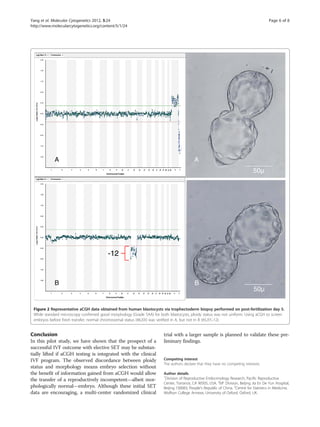
even for young, low-risk IVF patients (see 
Figure 2). Recent research on thawed blastocysts after 
SNP-based comprehensive chromosomal screening and 
vitrification has yielded similar results [60]. 
Several limitations of our investigation should be 
acknowledged. First, although elective SET brings dis-tinct 
advantages for many IVF patients, the approach is 
not for everyone. Indiscriminate use of elective SET for 
patients with multiple failed cycles has been criticized as 
inferior to a two-embryo strategy [61], and the improved 
pregnancy rate noted here may not fully generalize to all 
IVF patients. Additionally, this pilot study was designed 
to use aCGH for selection of a single blastocyst for fresh 
transfer. It is possible that embryo assessment by con-ventional 
morphology inappropriately excludes euploid 
embryos from transfer although this question was out-side 
the scope of our study. Hence, the relation between 
chromosomal integrity and morphological grades based 
on developmental stage, ICM and TE appearance, 
requires further investigation with a larger sample.
Yang et al. Molecular Cytogenetics 2012, 5:24 Page 6 of 8 
http://www.molecularcytogenetics.org/content/5/1/24 
Conclusion 
In this pilot study, we have shown that the prospect of a 
successful IVF outcome with elective SET may be substan-tially 
lifted if aCGH testing is integrated with the clinical 
IVF program. The observed discordance between ploidy 
status and morphology means embryo selection without 
the benefit of information gained from aCGH would allow 
the transfer of a reproductively incompetent—albeit mor-phologically 
normal—embryo. Although these initial SET 
data are encouraging, a multi-center randomized clinical 
trial with a larger sample is planned to validate these pre-liminary 
findings. 
Competing interest 
The authors declare that they have no competing interests. 
Author details 
1Division of Reproductive Endocrinology Research, Pacific Reproductive 
Center, Torrance, CA 90505, USA. 2IVF Division, Beijing Jia En De Yun Hospital, 
Beijing 100083, People's Republic of China. 3Centre for Statistics in Medicine, 
Wolfson College Annexe, University of Oxford, Oxford, UK. 
A 
B 
-12 
A 
B 
50μ 
50μ 
Figure 2 Representative aCGH data obtained from human blastocysts via trophectoderm biopsy performed on post-fertilization day 5. 
While standard microscopy confirmed good morphology (Grade 5AA) for both blastocysts, ploidy status was not uniform. Using aCGH to screen 
embryos before fresh transfer, normal chromosomal status (46,XX) was verified in A, but not in B (45,XY,-12).
Yang et al. Molecular Cytogenetics 2012, 5:24 Page 7 of 8 
http://www.molecularcytogenetics.org/content/5/1/24 
Authors’ contributions 
ZY and JL conceived the research, designed the study, and directed the 
aCGH analysis. GSC was the chief statistician in charge of data analysis. SAS, 
XL, ACP, ESS, and RDS were the reproductive endocrinologists with oversight 
of the clinical program. SSL was the embryologist. ESS edited the manuscript 
and organized the revisions. All authors read and approved the final 
manuscript. 
Received: 3 February 2012 Accepted: 2 May 2012 
Published: 2 May 2012 
References 
1. Coetsier T, Dhont M: Avoiding multiple pregnancies in in-vitro 
fertilization: who’s afraid of single embryo transfer? Hum Reprod 1998, 
13:2663–2664. 
2. Ryan G, Sparks A, Sipe C, Syrop C, Dokras A, Van Voorthis B: A mandatory 
single blastocyst transfer policy with educational campaign in a United 
States IVF program reduces multiple gestation rates without sacrificing 
pregnancy rates. Fertil Steril 2007, 88:354–360. 
3. Zander-Fox DL, Tremellen K, Lane M: Single blastocyst embryo transfer 
maintains comparable pregnancy rates to double cleavage-stage embryo 
transfer but results in healthier pregnancy outcomes. Aust N Z J Obstet 
Gynaecol 2011, 51:406–410. 
4. Maheshwari A, Griffiths S, Bhattacharya S: Global variations in the uptake of 
single embryo transfer. Human Reprod Update 2011, 17:107–120. 
5. Gardner DK, Surrey E, Minjarrez D, Leitz A, Stevens J, Schoolcraft WB: Single 
blastocyst transfer: a prospective randomized trial. Fertil Steril 2004, 
81:551–555. 
6. Racowsky C, Ohno-Machado L, Kim J, Biggers JD: Is there an advantage in 
scoring early embryos on more than one day? Hum Reprod 2009, 
24:2104–2113. 
7. Alfarawati S, Fragouli E, Colls P, Stevens J, Gutierrez-Mateo C, Schoolcraft WB, 
Wells D: The relationship between blastocyst morphology, chromosomal 
abnormality and embryo gender. Fertil Steril 2011, 95:520–524. 
8. Hassold T, Hunt P: Maternal age and chromosomally abnormal 
pregnancies: what we know and what we knew. Curr Opin Pediatr 2009, 
21:703–708. 
9. Kuliev A, Cieslak J, Verlinsky Y: Frequency and distribution of chromosome 
abnormalities in human oocytes. Cytogenet Genome Res 2005, 111:193–198. 
10. Bielanska M, Tan SL, Ao A: Chromosomal mosaicism throughout human 
preimplantation development in vitro: incidence, type, and relevance to 
embryo outcome. Hum Reprod 2002, 17:413–419. 
11. Magli MC, Gianaroli L, Ferraretti AP, Lappi M, Ruberti A, Farfalli V: Embryo 
morphology and development are dependent on the chromosomal 
complement. Fertil Steril 2007, 87:534–541. 
12. Munné S, Alikani M, Tomkin G, Grifo J, Cohen J: Embryo morphology, 
developmental rates, and maternal age are correlated with chromosome 
abnormalities. Fertil Steril 1995, 64:382–391. 
13. Munné S, Sandalinas M, Magli C, Gianaroli L, Cohen J, Warburton D: 
Increased rate of aneuploid embryos in young women with previous 
aneuploid conceptions. Prenat Diagn 2004, 24:638–643. 
14. Munné S, Chen S, Colls P, Garrisi J, Zheng X, Cekleniak N, Lenzi M, Hughes P, 
Fischer J, Garrisi M, Tomkin G, Cohen J: Maternal age, morphology, 
development and chromosome abnormalities in over 6000 cleavage-stage 
embryos. Reprod Biomed Online 2007, 14:628–634. 
15. Vanneste E, Voet T, Le Caignec C, Ampe M, Konings P, Melotte C, Debrock S, 
Amyere M, Vikkula M, Schuit F, Fryns JP, Verbeke G, D'Hooghe T, Moreau Y, 
Vermeesch JR: Chromosome instability is common in human cleavage-stage 
embryos. Nat Med 2009, 15:577–583. 
16. Wilton L: Preimplantation genetic diagnosis and chromosome analysis of 
blastomeres using comparative genomic hybridization. Hum Reprod 
Update 2005, 11:33–41. 
17. Staessen C, Platteau P, Van Assche E, Michiels A, Tournaye H, Camus M, 
Devroey P, Liebaers I, Van Steirteghem A: Comparison of blastocyst 
transfer with or without preimplantation genetic diagnosis for 
aneuploidy screening in couples with advanced maternal age: a 
prospective randomized controlled trial. Hum Reprod 2004, 19:2849–2858. 
18. Hardarson T, Hanson C, Lundin K, Hillensjö T, Nilsson L, Stevic J, Reismer E, 
Borg K, Wikland M, Bergh C: Preimplantation genetic screening in women 
of advanced maternal age caused a decrease in clinical pregnancy rate: 
a randomized controlled trial. Hum Reprod 2008, 23:2806–2812. 
19. Schoolcraft WB, Katz-Jaffe MG, Stevens J, Rawlins M, Munné S: 
Preimplantation aneuploidy testing for infertile patients of advanced 
maternal age: a randomized prospective trial. Fertil Steril 2009, 92:157–162. 
20. Masternbroek S, Twisk M, van Echten-Arends J, Sikkema-Raddatz B, Korevaar 
JC, Verhoever HR: In vitro fertilization with preimplantation genetic 
screening. N Engl J Med 2007, 357:9–17. 
21. Masternbroek S, Twisk M, van der Veen F, Repping S: Preimplantation 
genetic screening: a systematic review and meta-analysis of RCTs. Hum 
Reprod Update 2011, 17:454–466. 
22. Voullaire L, Wilton L, Slater H, Williamson R: Detection of aneuploidy in 
single cells using comparative genomic hybridization. Prenat Diagn 1999, 
19:846–851. 
23. Wells D, Delhanty JDA: Comprehensive chromosomal analysis of human 
preimplantation embryos using whole genome amplification and single 
cell comparative genomic hybridization. Mol Hum Reprod 2000, 6:1055–1062. 
24. Sher G, Keskintepe L, Keskintepe M, Ginsburg M, Maassarani G, Yakut T, 
Baltaci V, Kotze D, Unsal E: Oocyte karyotyping by comparative genomic 
hybridization [correction of hybridization] provides a highly reliable 
method for selecting “competent” embryos, markedly improving in vitro 
fertilization outcome: a multiphase study. Fertil Steril 2007, 87:1033–1040. 
25. Fragouli E, Lenzi M, Ross R, Katz-Jaffe M, Schoolcraft WB, Wells D: 
Comprehensive molecular cytogenetic analysis of the human blastocyst 
stage embryos. Hum Reprod 2008, 23:2596–2608. 
26. Hellani A, Abu-Amero K, Azouri J, El-Akoum S: Successful pregnancies after 
application of array-comparative genomic hybridization in PGS-aneuploidy 
screening. Reprod Biomed Online 2008, 17:814–817. 
27. Fishel S, Gordon A, Lynch C, Ndukwe G, Kelada E, Thomton S, Jenner L, 
Cater E, Brown A, Garcia-Bernardo J: Live birth after polar body array 
comprehensive genomic hybridization prediction of embryo ploidy – the 
future of IVF. Fertil Steril 2010, 93:1006.e7–1006.e10. 
28. Gutierrez-Mateo C, Colls P, Sanchez-Garcia J, Escudero T, Prates R, Ketterson K, 
Wells D, Munné S: Validation of microarray comparative genomic 
hybridization for comprehensive chromosome analysis of embryos. Fertil 
Steril 2011, 95:953–958. 
29. Fioretino F, Spizzichino L, Bono S, Birricik A, Kokkali G, Rienzi L, Ubaldi FM, 
Iammarrone E, Gordon A, Pantos K: PGD for reciprocal and Robertsonian 
translocation using array comparative genomic hybridization. Hum 
Reprod 2011, 26:1925–1935. 
30. Handyside AH: PGD and aneuploidy screening for 24 chromosome by 
genome-wide SNP analysis: seeing the wood and the trees. Reprod 
Biomed Online 2011, 23:686–691. 
31. Schoolcraft WB, Fragouli E, Stevens J, Munné S, Katz-faffe MG, Wells D: 
Clinical application of comprehensive chromosomal screening at the 
blastocyst stage. Fertil Steril 2010, 94:1700–1706. 
32. Ly KD, Agarwal A, Nagy ZP: Preimplatation genetic screening: does it help 
or hinder IVF treatment and what is the role of the embryo? J Assist 
Reprod Genet 2011, 28:833–849. 
33. Sills ES, Schattman GL, Veeck LL, Liu HC, Prasad M, Rosenwaks Z: 
Characteristics of consecutive in vitro fertilization cycles among patients 
treated with follicle-stimulating hormone (FSH) and human menopausal 
gonadotropin versus FSH alone. Fertil Steril 1998, 69:831–835. 
34. Yang Z, Salem S, Salem-Lyle S, Bayrak A, Salem RD: Trophectoderm cells 
derived from blastocyst biopsy are suitable for array CGH analysis of 24 
chromosomes. Fertil Steril 2011, 95(Suppl 4):S23. 
35. Alfarawati S, Fragouli E, Colls P, Wells D: First births after preimplantation 
genetic diagnosis of structural chromosome abnormalities using 
comparative genomic hybridization and microarray analysis. Hum Reprod 
2011, 26:1560–1574. 
36. Sakkas D, Gardner DK: Noninvasive methods to assess embryo quality. 
Curr Opin Obstet Gynecol 2005, 17:283–288. 
37. Rauch ER, Schattman GL, Christos PJ, Chicketano T, Rosenwaks Z: Embryonic 
heart rate as a predictor of first-trimester pregnancy loss in infertility 
patients after in vitro fertilization. Fertil Steril 2009, 91:2451–2454. 
38. van Peperstraten AM, Nelen WL, Hermens RP, Jansen L, Scheenjes E, Braat DD, 
Grol RP, Kremer JA: Why don't we perform elective single embryo transfer? 
A qualitative study among IVF patients and professionals. Hum Reprod 2008, 
23:2036–2042. 
39. Hvidtjørn D, Grove J, Schendel D, Svaerke C, Schieve LA, Uldall P, Ernst E, 
Jacobsson B, Thorsen P: Multiplicity and early gestational age contribute 
to an increased risk of cerebral palsy from assisted conception: a 
population-based cohort study. Hum Reprod 2010, 25:2115–2123.
Yang et al. Molecular Cytogenetics 2012, 5:24 Page 8 of 8 
http://www.molecularcytogenetics.org/content/5/1/24 
40. Voelker R: Researchers in Canada call for policy to mandate single-embryo 
transfer in IVF. JAMA. 2011, 305:1848. 
41. De Neubourg D, Gerris J, Van Royen E, Mangelschots K, Vercruyssen M: Impact 
of a restriction in the number of embryos transferred on the multiple 
pregnancy rate. Eur J Obstet Gynecol Reprod Biol 2006, 124:212–215. 
42. Karlström PO, Bergh C: Reducing the number of embryos transferred in 
Sweden-impact on delivery and multiple birth rates. Hum Reprod 2007, 
22:2202–2207. 
43. van den Akker OB, Purewal S: Elective single-embryo transfer: persuasive 
communication strategies can affect choice in a young British 
population. Reprod Biomed Online 2011, 23:838–850. 
44. de Lacey S, Davies M, Homan G, Briggs N, Norman RJ: Factors and 
perceptions that influence women's decisions to have a single embryo 
transferred. Reprod Biomed Online 2007, 15:526–531. 
45. Leniaud L, Poncelet C, Porcher R, Martin-Pont B, Cédrin-Durnerin I, Hugues JN, 
Wolf JP, Sifer C: Prospective evaluation of elective single-embryo transfer 
versus double-embryo transfer following in vitro fertilization: a two-year 
French hospital experience. Gynecol Obstet Fertil 2008, 36:159–165. 
46. Walsh AP, Collins GS, Le Du M, Walsh DJ, Sills ES: Pre-treatment 
preferences and characteristics among patients seeking in vitro 
fertilisation. Reprod Health 2009, 6:21. 
47. Milne P, Cottell E, Allen C, Spillane H, Vasallo J, Wingfield M: Reducing twin 
pregnancy rates after IVF–elective single embryo transfer (eSET). Ir Med J 
2010, 103:9–11. 
48. Baruffi RL, Mauri AL, Petersen CG, Nicoletti A, Pontes A, Oliveira JB, Franco JG Jr: 
Single-embryo transfer reduces clinical pregnancy rates and live births in 
fresh IVF and Intracytoplasmic Sperm Injection (ICSI) cycles: a meta-analysis. 
Reprod Biol Endocrinol 2009, 7:36. 
49. Gelbaya TA, Tsoumpou I, Nardo LG: The likelihood of live birth and 
multiple birth after single versus double embryo transfer at the cleavage 
stage: a systematic review and meta-analysis. Fertil Steril 2010, 94:936–945. 
50. McLernon DJ, Harrild K, Bergh C, Davies MJ, de Neubourg D, Dumoulin JC, 
Gerris J, Kremer JA, Martikainen H, Mol BW, Norman RJ, Thurin-Kjellberg A, 
Tiitinen A, van Montfoort AP, van Peperstraten AM, Van Royen E, 
Bhattacharya S: Clinical effectiveness of elective single versus double 
embryo transfer: meta-analysis of individual patient data from 
randomised trials. BMJ 2010, 341:c6945. 
51. Roberts SA, McGowan L, Mark Hirst W, Vail A, Rutherford A, Lieberman BA, 
Brison DR: towardSET Collaboration. Reducing the incidence of twins 
from IVF treatments: predictive modelling from a retrospective cohort. 
Hum Reprod 2011, 26:569–575. 
52. De Sutter P, Van der Elst J, Coetsier T, Dhont M: Single embryo transfer 
and multiple pregnancy rate reduction in IVF/ICSI: a 5-year appraisal. 
Reprod Biomed Online 2003, 6:464–469. 
53. Criniti A, Thyer A, Chow G, Lin P, Klein N, Soules M: Elective single 
blastocyst transfer reduces twin rates without compromising pregnancy 
rates. Fertil Steril 2005, 84:1613–1619. 
54. Koryntová D, Moosová M, Rezábek K, Pavelková I, Mára M: Single embryo 
transfer does not compromise the pregnancy rate in patients with good 
IVF/ICSI prognosis. Ceska Gynekol 2005, 70:435–439. 
55. Veleva Z, Karinen P, Tomás C, Tapanainen JS, Martikainen H: Elective single 
embryo transfer with cryopreservation improves the outcome and 
diminishes the costs of IVF/ICSI. Hum Reprod 2009, 24:1632–1639. 
56. Leese B, Denton J: Attitudes towards single embryo transfer, twin and 
higher order pregnancies in patients undergoing infertility treatment: a 
review. Hum Fertil (Camb) 2010, 13:28–34. 
57. Li M, DeUgarte CM, Surrey M, Danzer H, DeCherney A, Hill DL: Fluorescence 
in situ hybridization reanalysis of day-6 human blastocysts diagnosed 
with aneuploidy on day 3. Fertil Steril 2005, 84:1395–1400. 
58. Moayeri SE, Allen RB, Brewster WR, Kim MH, Porto M, Werlin LB: Day-3 
embryo morphology predicts euploidy among older subjects. Fertil Steril 
2008, 89:118–123. 
59. Rubio C, Rodrigo L, Mercader A, Mateu E, Buendía P, Pehlivan T, Viloria T, 
De los Santos MJ, Simón C, Remohí J, Pellicer A: Impact of chromosomal 
abnormalities on preimplantation embryo development. Prenat Diagn 
2007, 27:748–756. 
60. Schoolcraft WB, Treff NR, Stevens JM, Ferry K, Katz-Jaffe M, Scott RT Jr: Live 
birth outcome with trophectoderm biopsy, blastocyst vitrification, and 
single-nucleotide polymorphism microarray-based comprehensive 
chromosome screening in infertile patients. Fertil Steril 2011, 96:638–640. 
61. Min JK, Hughes E, Young D, Gysler M, Hemmings R, Cheung AP, Goodrow 
GJ, Senikas V, Wong BC, Sierra S, Carranza-Mamane B, Case A, Dwyer C, 
Graham J, Havelock J, Lee F, Liu K, Vause T: Joint Society of Obstetricians 
and Gynaecologists of Canada-Canadian Fertility and Andrology Society 
Clinical Practice Guidelines Committee. Elective single embryo transfer 
following in vitro fertilization. J Obstet Gynaecol Can 2010, 32:363–377. 
doi:10.1186/1755-8166-5-24 
Cite this article as: Yang et al.: Selection of single blastocysts for fresh 
transfer via standard morphology assessment alone and with array CGH 
for good prognosis IVF patients: results from a randomized pilot study. 
Molecular Cytogenetics 2012 5:24. 
Submit your next manuscript to BioMed Central 
and take full advantage of: 
• Convenient online submission 
• Thorough peer review 
• No space constraints or color figure charges 
• Immediate publication on acceptance 
• Inclusion in PubMed, CAS, Scopus and Google Scholar 
• Research which is freely available for redistribution 
Submit your manuscript at 
www.biomedcentral.com/submit

Cgh

  • 1.
    Yang et al.Molecular Cytogenetics 2012, 5:24 http://www.molecularcytogenetics.org/content/5/1/24 METHODOLOGY Open Access Selection of single blastocysts for fresh transfer via standard morphology assessment alone and with array CGH for good prognosis IVF patients: results from a randomized pilot study Zhihong Yang1, Jiaen Liu2, Gary S Collins3, Shala A Salem1, Xiaohong Liu2, Sarah S Lyle1, Alison C Peck1, E Scott Sills1* and Rifaat D Salem1 Abstract Background: Single embryo transfer (SET) remains underutilized as a strategy to reduce multiple gestation risk in IVF, and its overall lower pregnancy rate underscores the need for improved techniques to select one embryo for fresh transfer. This study explored use of comprehensive chromosomal screening by array CGH (aCGH) to provide this advantage and improve pregnancy rate from SET. Methods: First-time IVF patients with a good prognosis (age <35, no prior miscarriage) and normal karyotype seeking elective SET were prospectively randomized into two groups: In Group A, embryos were selected on the basis of morphology and comprehensive chromosomal screening via aCGH (from d5 trophectoderm biopsy) while Group B embryos were assessed by morphology only. All patients had a single fresh blastocyst transferred on d6. Laboratory parameters and clinical pregnancy rates were compared between the two groups. Results: For patients in Group A (n = 55), 425 blastocysts were biopsied and analyzed via aCGH (7.7 blastocysts/ patient). Aneuploidy was detected in 191/425 (44.9%) of blastocysts in this group. For patients in Group B (n = 48), 389 blastocysts were microscopically examined (8.1 blastocysts/patient). Clinical pregnancy rate was significantly higher in the morphology + aCGH group compared to the morphology-only group (70.9 and 45.8%, respectively; p = 0.017); ongoing pregnancy rate for Groups A and B were 69.1 vs. 41.7%, respectively (p = 0.009). There were no twin pregnancies. Conclusion: Although aCGH followed by frozen embryo transfer has been used to screen at risk embryos (e.g., known parental chromosomal translocation or history of recurrent pregnancy loss), this is the first description of aCGH fully integrated with a clinical IVF program to select single blastocysts for fresh SET in good prognosis patients. The observed aneuploidy rate (44.9%) among biopsied blastocysts highlights the inherent imprecision of SET when conventional morphology is used alone. Embryos randomized to the aCGH group implanted with greater efficiency, resulted in clinical pregnancy more often, and yielded a lower miscarriage rate than those selected without aCGH. Additional studies are needed to verify our pilot data and confirm a role for on-site, rapid aCGH for IVF patients contemplating fresh SET. * Correspondence: dr.sills@prc-ivf.com 1Division of Reproductive Endocrinology Research, Pacific Reproductive Center, Torrance, CA 90505, USA Full list of author information is available at the end of the article © 2012 Yang et al.; licensee BioMed Central Ltd. This is an Open Access article distributed under the terms of the Creative Commons Attribution License (http://creativecommons.org/licenses/by/2.0), which permits unrestricted use, distribution, and reproduction in any medium, provided the original work is properly cited.
  • 2.
    Yang et al.Molecular Cytogenetics 2012, 5:24 Page 2 of 8 http://www.molecularcytogenetics.org/content/5/1/24 Background Multiple gestation represents the most significant com-plication of assisted reproductive treatment (ART). Sin-gle embryo transfer (SET), either elective or mandatory, has been advocated as an effective means to avoid mul-tiple gestation following IVF [1-3]. Despite a welcome trend in increased acceptance and utilization of elective SET treatment in some groups [4], most IVF cycles con-tinue to involve two or more embryos for transfer. When SET is done, selection of the single embryo or blastocyst for transfer is typically done on the basis of morphology [5,6]. However, since acceptable morphology alone can-not negate the potential for chromosomal error in the selected embryo, the transfer of one apparently “normal looking” embryo carries considerable risk [7]. Aneu-ploidy is the most common abnormality in human embryos derived from IVF [8-15], a problem that contri-butes substantially to poor IVF outcomes [16]. As other investigators have noted, screening embryos by fluores-cence in situ hybridization (FISH) was a reasonable re-sponse to this challenge, but the approach was limited because it failed to screen all chromosomes at the same time [17-21]. Conventional comparative genomic hybridization (CGH) has been used for comprehensive screening of aneuploidy for oocytes and embryos [19,22- 25] with cryopreservation of embryo(s) from which the biopsy was derived. When results became available, fro-zen embryo transfer (FET) was subsequently arranged so that only euploid embryo(s) were transferred. At present, there is no consensus on the best way to determine the competency of the embryonic genome during IVF. Both single nucleotide polymorphism (SNP) array and array CGH (aCGH) have been validated as ac-curate methods to achieve comprehensive chromosome screening when biopsy is performed on d3 for fresh transfer on d5 [26-30]. The difference in mosaicism be-tween embryos at d3 and d5 has led to a preference for biopsy at the blastocyst stage when mosaicism is reduced [31-33]. When combined with trophectoderm biopsy and blastocyst vitrification, SNP microarray has resulted in high implantation rate and low miscarriage rates for some IVF patients [31]. However, experience is limited with aCGH to select a single euploid blastocyst for fresh transfer in the absence of known chromosomal diagno-sis. In this pilot study, we evaluated a rapid, on-site aCGH application to select a single euploid blastocyst for fresh transfer in good prognosis patients <35 yrs of age, who were undergoing a first IVF attempt. Methods Patient sample Following IRB approval, patients undergoing IVF at our programs in Beijing and Los Angeles were offered enroll-ment in this prospective, single-blind, pilot interventional study to compare embryo assessment by conventional mi-croscopy alone or with array comparative genomic hybridization (aCGH) performed on trophectoderm. Writ-ten informed consent was obtained from all study partici-pants and all received pre-treatment counseling in anticipation of possible incorporation of aCGH in their IVF treatment. Patients were eligible for this study if (female) age was <35 yrs, if there was a history of regular ovulation, if etiology of infertility was tubal factor or male factor (or both), and if no prior IVF treatment had been initiated. Additionally, all study subjects were required to have a nor-mal intrauterine contour (confirmed by hysteroscopy), both ovaries intact, basal serum FSH and estradiol on d2-3 at <10 IU/l and <60 pg/ml, respectively. IVF patients whose treatment incorporated donor gametes or frozen/thawed embryos were excluded. A random number table was used to determine patients in vitro laboratory management strat-egy as either (1) traditional morphology assessment plus aCGH (Group A, n = 55), or (2) conventional morphology assessment only (Group B, n = 48). Patients (but not labora-tory or clinical staff) were blinded with regard to their randomization group. The two cohorts were mutually ex-clusive, and no study patient had embryos assigned to both laboratory groups. Ovarian stimulation and fertilization Before commencing gonadotropin therapy patients underwent transvaginal ultrasound evaluation with re-measurement of serum FSH, LH and estradiol on d3 of the index cycle. Pituitary downregulation was achieved with GnRH-agonist administered on d21 of the cycle im-mediately preceding treatment, as previously described [33]. Periodic transvaginal ultrasound and serum estra-diol measurements were used to track follicular growth and thickness of endometrial lining. When ≥3 follicles reached 19 mm mean diameter, periovulatory hCG was administered by subcutaneous injection of recombinant hCG (250 μg OvidrelW, Merck Serono; Geneva, Switzer-land) with oocyte retrieval performed under transvaginal ultrasound guidance 35-36 h later. Following removal of all cumulus cells, ICSI was performed and normal fertilization was verified 16-18 h after injection by pres-ence of two pronuclei and two polar bodies. Embryo culture and trophectoderm biopsy All embryos were cultured in sequential media (Vitro-life; Göteborg, Sweden) to blastocyst stage. On d3 when embryos were at the 6–8 cell stage, a noncontact 1.48 μ diode laser (OCTAX Microscience GmbH; Bruckberg, Germany) was used to create a circular 6-9 μ diameter opening in the zona pellucida. For embryos randomized to the aCGH group, this breach enabled biopsy of trophectoderm (TE) on d5 rapidly. Between 3–5 her-niated TE cells were gently aspirated by pipette and,
  • 3.
    Yang et al.Molecular Cytogenetics 2012, 5:24 Page 3 of 8 http://www.molecularcytogenetics.org/content/5/1/24 when necessary, freed from the blastocyst by applica-tion of several laser pulses. Harvested TE cells were washed in PBS and placed within a PCR tube with 2.5 μl 1x PBS as previously described [34]. A uniform assisted hatching methodology was used for all embryos irrespective of subsequent TE biopsy or conventional microscopic assessment alone. aCGH protocol Whole genome amplification was performed on-site using the SurePlex DNA amplification system (BlueGnome Ltd; Cambridge, UK) in accordance with manufacturer’s guide-lines, as described elsewhere [34,35]. Briefly, samples and control DNA (8 μl for each) were labeled with Cy3 and Cy5 fluorophores (BlueGnome Ltd; Cambridge, UK). La-beling time was approximately 3 h with DNA resuspended in dexsulphate hybridization buffer and hybridized over-night under cover slides. After washing 1x 10 min in sa-line sodium citrate (SSC)/0.05% Tween-20 at room temperature, an additional irrigation in SSC 1x 10 min was completed at room temperature. Slides were washed in SSC 1x 5 min at 60°C and again for 1 min at room temperature (in SSC). Vacuum centrifuge was used to dry microarray slides over 3 min, followed by laser scan-ning at 10 μm (Agilent Technologies; Santa Clara, USA). Microarray data were analyzed with BlueFuse software (BlueGnome, Cambridge, UK) for chromatin loss or gain across all 24 chromosomes. Aberrations were consid-ered non-artifact if ≥15 probes deviated from normal limits as defined by the 24Sure platform. The published accuracy rate for this aCGH technique when applied to TE cells is 95% [35]. Blastocyst grading and selection for transfer In both aCGH and control groups, blastocysts were graded [36] on a 1 to 6 scale determined by degree of ex-pansion and hatching status, as follows: Grade 1 (early blastocyst): blastocoele <1/2 of total embryo volume; Grade 2 (intermediate blastocyst): blastocoele ≥1/2 of total embryo volume; Grade 3 (full blastocyst): blasto-coele fully occupies the embryo; Grade 4 (expanded blastocyst): blastocoele is larger than early blastocyst and zona pellucida (ZP) demonstrates thinning; Grade 5 (hatching blastocyst): herniation of trophectoderm cells from the ZP; and Grade 6 (hatched blastocyst): blastocyst has escaped the ZP. For blastocysts at Grades 3 to 6, the inner cell mass (ICM) and trophectoderm (TE) were also graded. The ICM was graded as follows: A (many ICM cells packed together tightly); B (several ICM cells grouped loosely) and C (very few ICM cells). TE was graded as follows: A (many TE cells forming multiple epithelial layers); B (few TE cells consisting of a loose epithelium) and C (very few large TE cells). Fresh SET was performed on the morning of d6 under direct ultrasound guidance for all patients. For embryos in the aCGH group only one euploid blastocyst was selected for transfer, based on data from the aCGH ana-lysis. When multiple euploid blastocysts were available (as determined by aCGH), the best grade euploid blasto-cyst was selected for transfer. Any surplus euploid blas-tocysts were vitrified for later use [34]. In the non-aCGH (control) group, a single blastocyst was selected for fresh transfer based on morphological criteria only (e.g., no aCGH evaluation). The surplus blastocysts with good morphology (grade 3BB or above) were vitrified for fu-ture FET cycles. Outcome measures and statistical analysis Clinical pregnancy rates were tabulated and compared for IVF patients in both groups. Clinical pregnancy was defined as an intrauterine gestational sac containing one embryo which demonstrated cardiac action with rate ≥110/min [37], and pregnancies at ≥20 weeks of gesta-tion were classified at on-going. Differences between groups were assessed by Chi-squared and Fisher’s exact tests. A difference of p<0.05 was considered statistically significant. Results During the four-month study interval, a total of 188 IVF patients met inclusion criteria and 112 volunteered for enrollment (59.6%). Fifty six patients were randomized to each group. Of these, some patients did not initiate IVF due to failure to complete mandatory pre-IVF test-ing, they rescheduled their IVF, or they withdrew from treatment for personal reasons (see Figure 1). For Group A (morphology + aCGH) and Group B (morphology only) 55 and 48 IVF patients completed the study, re-spectively. The clinical and demographic features of the two groups were similar, as summarized in Table 1. There were no cancellations or complications for any pa-tient in either study group. For patients in Group A, 425 of 457 blastocysts were biopsied and analyzed via array CGH (7.7 blastocysts/pa-tient). Biopsy could not be completed for 32 blastocysts due to poor morphology or because they degenerated after biopsy. This evaluation revealed aneuploidy in 191/ 425 (44.9%) of blastocysts. ‘No signal’ due to amplifica-tion failure occurred in 8 blastocysts. Among aneuploid blastocysts, 68/191 (35.6%) had single chromosome loss (monosomy) and 20.9% displayed single chromosome gain (trisomy). Approximately 43% of aneuploid blasto-cysts were chromosomally abnormal due to a severe, compound genetic defect where two or more chromo-somes were affected (see Table 2). While chromosomal abnormalities were detected in all chromosomes, disrup-tions involving chromosomes 15, 16, 21, 22 and X were
  • 4.
    Yang et al.Molecular Cytogenetics 2012, 5:24 Page 4 of 8 http://www.molecularcytogenetics.org/content/5/1/24 1 8 most frequently observed. Errors of chromosomes 4 and 6 were relatively uncommon. All patients in Group A had at least one euploid blastocyst available for transfer on d6. For patients in Group B, 389 blastocysts were microscopically examined (8.1 blastocysts/patient). A single embryo was selected for transfer to all patients on d6. As shown in Table 3, the observed ongoing preg-nancy rate was significantly higher in the morphology + aCGH group compared to the morphology-only group (69.1 vs. 41.7%, respectively; p = 0.009). A significant dif-ference in clinical pregnancy rate was also noted between the two study groups (70.9 vs. 45.8%, respectively; p = 0.017). There were no twin pregnancies identified in either group. A low miscarriage rate was noted for all study patients, although this was somewhat lower in the morphology + aCCH group than for the morphology-only group (2.6 vs. 9.1%, respectively; p = 0.597, by Fisher’s exact test). Discussion Delivery of a healthy singleton live birth is the target out-come for all infertility treatment. Although elective SET has emerged as the best answer to reduce the multiple gestation rate in IVF, uncertainty about the technique it-self, low patient awareness of the process, lack of a favor-able reimbursement system, and inferior cryopreservation success rates have hindered the uptake of this approach [38]. The value of promoting SET was recently underscored by a population-based cohort study of IVF outcomes where cerebral palsy (CP) incidence was noted among 1042 IVF singletons born after SET in Denmark [39]. Only one of those children received a CP diagnosis, compared with 21 CP diagnoses among IVF singletons born after two or more embryo transfers [39]. In Canada, efforts to mandate SET gained support from a multi-year review showing how this change in IVF Table 1 Characteristics of patients whose embryos were randomized to assessment by morphology with aCGH (Group A) and blastocyst morphology only (Group B) Group A (n = 55) Group B (n = 48) Age (yrs) 31.2 ± 2.5 31.5 ± 2.7 Total oocytes retrieved 19.5 ± 8.2 19.3 ± 8.1 MII (mature) oocytes 16.6 ± 7.8 16.3 ± 7.6 Oocytes fertilized (2pn) 13.1 ± 6.7 12.8 ± 6.4 Day 3 embryos 12.9 ± 1.8 12.6 ± 1.9 Day 5 blastocysts 8.3 ± 2.1 8.1 ± 2.4 Notes: Total number of blastocysts in Group [A] and [B] were 457 and 389, respectively. aCGH = array comparative genomic hybridization, MII = metaphase II, 2pn = two pronuclei. All data reported as mean ± SD. There was no significant difference between groups (p>0.05) in any category. Table 2 Detail of aCGH results derived from aneuploid blastocysts (n = 191) in Group A n (%) Single chromosome loss (monosomy) 68 (35.6) Single chromosome gain (trisomy) 40 (20.9) Dual chromosomal abnormality 55 (28.8) Complex chromosomal abnormality 28 (14.7) 188 112 56 56 55 48 A B 425 389 Eligible for study entry Enrolled and randomized Completed study Figure 1 Schematic for patients randomized either to embryo assessment by standard morphology plus aCGH (A) or morphology alone (B). Withdrawals, deferrals and drop-outs for each group are circled in red. The total number of blastocysts associated with each group is circled in blue. Table 3 Comparison of laboratory findings and clinical outcome among IVF patients undergoing SET with embryo assessment by aCGH + morphology (Group A) and blastocyst morphology alone (Group B) A B p Fresh blastocyst transfer according to morphology assessment: 55 (100) 48 (100) Grade 5/6 31 (56.4) 28 (58.3) Grade 4 21 (38.2) 19 (39.6) 0.677a Grade 3 3 (5.4) 1 (2.1) Clinical pregnancy 39 (70.9) 22 (45.8) 0.017a Ongoing pregnancy (≥20wks GA) 38 (69.1) 20 (41.7) 0.009a Missed abortion 1 (2.6) 2 (9.1) 0.597b Notes: All data reported as n (%). SET = single embryo transfer; aCGH = array comparative genomic hybridization; GA = gestational age a by Chi-squared test b by Fisher’s exact test.
  • 5.
    Yang et al.Molecular Cytogenetics 2012, 5:24 Page 5 of 8 http://www.molecularcytogenetics.org/content/5/1/24 practice would prevent infant deaths and reduce serious complications associated with multiple gestations [40]. Researchers found 17% of all NICU admissions—82 infants from 44 multiple gestations—resulted from assisted fertility treatments, and most NICU admissions (75 of 82 infants) were twins or triplets whose mothers used IVF to become pregnant. Among those 75 babies there were 6 deaths, and 5 more developed severe intra-ventricular hemorrhage [40]. Given this background, IVF patients should be encour-aged to consider elective SET during pre-treatment counseling. Except for Sweden and Belgium [41,42], all other jurisdictions allow the decision for number of embryos for transfer to be made by doctor and patient, so the role of the reproductive endocrinologist in this process is vital [38]. How the choice to have elective SET is communicated has been shown to be an important in-fluencing factor as this choice is made [43]. Yet in many clinics, if SET is offered at all, it is the patient herself who requests this option. Confidence in chance of suc-cess after SET, younger patient age, and first IVF treat-ment appear to favor a patient asking for SET [44]. We support the basic criteria for elective SET as proposed by others [45], including age <37 yrs, at least two good quality embryos available (3–5 cells on d2 or 6–9 cells on d3; <20% fragmentation and no multinucleate blasto-meres), and no more than one previous failed treatment cycle. Among Australian IVF patients, preference for a healthy singleton pregnancy was predictive for elective SET, but perception of risk of multiple gestation was not [44]. Reporting on IVF patients in Ireland, Walsh et al. [46] investigated pre-treatment anxiety about twins and no association with patient age was observed. When pre-sented with the option of SET, good prognosis IVF patients in Ireland agreed with this approach [47]. So why hasn’t elective SET found wider application in clinical IVF practice? Low pregnancy rates after fresh SET [48-51] have limited its acceptance, but this criti-cism of elective SET may be offset when cumulative out-come with subsequent frozen embryo transfer (FET) cycles is considered [52-55]. To be sure, more IVF patients would request elective SET if the success rate approached that following a two embryo transfer [56]. It is therefore understandable for both patients and clini-cians to view elective SET with skepticism unless signifi-cant refinements in fresh embryo assessment come forward to facilitate the selection of competent embryos. The current study extends prior research where aCGH was used for IVF patients with a known chromosomal rearrangement [29,35], and is the first to apply this tech-nology to embryos from young, good prognosis patients undertaking IVF for the first time. Because SET is more frequently requested by IVF patients with a favorable prognosis [47], and since in this setting the clinical urgency to identify the best single embryo for transfer is maximal, our hypothesis developed this clinical problem into a therapeutic solution where aCGH figured promin-ently. Incorporating aCGH within an IVF clinic not only promises improved reproductive competency of each embryo at fresh transfer, it also offers important ploidy in-formation regarding any supernumary (non-transferred) embryos which may be cryopreserved for later use. At our center, integrating aCGH with the clinical IVF program was associated with the same extra cost typically charged for the more limited genetic assessment gained from 5- probe FISH—less than $3000. These considerations should be particularly welcome among patients and clinicians contemplating elective SET, but who hesitate to make decisions without the advantage of comprehensive chromosomal screening. Moreover, an integrated testing approach also removed the a priori requirement for mater-ial to be frozen and shipped off-site for testing, followed by arranging subsequent FET based on findings from aCGH performed remotely. We believe that patient stress was reduced by eliminating FET medications entirely, while also reducing overall IVF treatment time. How patients quantify the distinctions between fresh transfer and FET treatment regimes is the target of ongoing study. Our research contributes new aCGH data on embryos from good-prognosis IVF patients, placing the limita-tions of standard embryo morphology in sharp relief. The extent of aneuploidy in early human embryos can be extensive [11,57,58] although this rate is typically lower in blastocysts [25]. Yet, the current study provides fur-ther evidence of substantial genetic abnormality in ap-parently normal blastocysts, including monosomy and complex aneuploidy [7,25,59]. Our data show conven-tional morphological criteria alone to be insufficiently ac-curate even for young, low-risk IVF patients (see Figure 2). Recent research on thawed blastocysts after SNP-based comprehensive chromosomal screening and vitrification has yielded similar results [60]. Several limitations of our investigation should be acknowledged. First, although elective SET brings dis-tinct advantages for many IVF patients, the approach is not for everyone. Indiscriminate use of elective SET for patients with multiple failed cycles has been criticized as inferior to a two-embryo strategy [61], and the improved pregnancy rate noted here may not fully generalize to all IVF patients. Additionally, this pilot study was designed to use aCGH for selection of a single blastocyst for fresh transfer. It is possible that embryo assessment by con-ventional morphology inappropriately excludes euploid embryos from transfer although this question was out-side the scope of our study. Hence, the relation between chromosomal integrity and morphological grades based on developmental stage, ICM and TE appearance, requires further investigation with a larger sample.
  • 6.
    Yang et al.Molecular Cytogenetics 2012, 5:24 Page 6 of 8 http://www.molecularcytogenetics.org/content/5/1/24 Conclusion In this pilot study, we have shown that the prospect of a successful IVF outcome with elective SET may be substan-tially lifted if aCGH testing is integrated with the clinical IVF program. The observed discordance between ploidy status and morphology means embryo selection without the benefit of information gained from aCGH would allow the transfer of a reproductively incompetent—albeit mor-phologically normal—embryo. Although these initial SET data are encouraging, a multi-center randomized clinical trial with a larger sample is planned to validate these pre-liminary findings. Competing interest The authors declare that they have no competing interests. Author details 1Division of Reproductive Endocrinology Research, Pacific Reproductive Center, Torrance, CA 90505, USA. 2IVF Division, Beijing Jia En De Yun Hospital, Beijing 100083, People's Republic of China. 3Centre for Statistics in Medicine, Wolfson College Annexe, University of Oxford, Oxford, UK. A B -12 A B 50μ 50μ Figure 2 Representative aCGH data obtained from human blastocysts via trophectoderm biopsy performed on post-fertilization day 5. While standard microscopy confirmed good morphology (Grade 5AA) for both blastocysts, ploidy status was not uniform. Using aCGH to screen embryos before fresh transfer, normal chromosomal status (46,XX) was verified in A, but not in B (45,XY,-12).
  • 7.
    Yang et al.Molecular Cytogenetics 2012, 5:24 Page 7 of 8 http://www.molecularcytogenetics.org/content/5/1/24 Authors’ contributions ZY and JL conceived the research, designed the study, and directed the aCGH analysis. GSC was the chief statistician in charge of data analysis. SAS, XL, ACP, ESS, and RDS were the reproductive endocrinologists with oversight of the clinical program. SSL was the embryologist. ESS edited the manuscript and organized the revisions. All authors read and approved the final manuscript. Received: 3 February 2012 Accepted: 2 May 2012 Published: 2 May 2012 References 1. Coetsier T, Dhont M: Avoiding multiple pregnancies in in-vitro fertilization: who’s afraid of single embryo transfer? Hum Reprod 1998, 13:2663–2664. 2. Ryan G, Sparks A, Sipe C, Syrop C, Dokras A, Van Voorthis B: A mandatory single blastocyst transfer policy with educational campaign in a United States IVF program reduces multiple gestation rates without sacrificing pregnancy rates. Fertil Steril 2007, 88:354–360. 3. Zander-Fox DL, Tremellen K, Lane M: Single blastocyst embryo transfer maintains comparable pregnancy rates to double cleavage-stage embryo transfer but results in healthier pregnancy outcomes. Aust N Z J Obstet Gynaecol 2011, 51:406–410. 4. Maheshwari A, Griffiths S, Bhattacharya S: Global variations in the uptake of single embryo transfer. Human Reprod Update 2011, 17:107–120. 5. Gardner DK, Surrey E, Minjarrez D, Leitz A, Stevens J, Schoolcraft WB: Single blastocyst transfer: a prospective randomized trial. Fertil Steril 2004, 81:551–555. 6. Racowsky C, Ohno-Machado L, Kim J, Biggers JD: Is there an advantage in scoring early embryos on more than one day? Hum Reprod 2009, 24:2104–2113. 7. Alfarawati S, Fragouli E, Colls P, Stevens J, Gutierrez-Mateo C, Schoolcraft WB, Wells D: The relationship between blastocyst morphology, chromosomal abnormality and embryo gender. Fertil Steril 2011, 95:520–524. 8. Hassold T, Hunt P: Maternal age and chromosomally abnormal pregnancies: what we know and what we knew. Curr Opin Pediatr 2009, 21:703–708. 9. Kuliev A, Cieslak J, Verlinsky Y: Frequency and distribution of chromosome abnormalities in human oocytes. Cytogenet Genome Res 2005, 111:193–198. 10. Bielanska M, Tan SL, Ao A: Chromosomal mosaicism throughout human preimplantation development in vitro: incidence, type, and relevance to embryo outcome. Hum Reprod 2002, 17:413–419. 11. Magli MC, Gianaroli L, Ferraretti AP, Lappi M, Ruberti A, Farfalli V: Embryo morphology and development are dependent on the chromosomal complement. Fertil Steril 2007, 87:534–541. 12. Munné S, Alikani M, Tomkin G, Grifo J, Cohen J: Embryo morphology, developmental rates, and maternal age are correlated with chromosome abnormalities. Fertil Steril 1995, 64:382–391. 13. Munné S, Sandalinas M, Magli C, Gianaroli L, Cohen J, Warburton D: Increased rate of aneuploid embryos in young women with previous aneuploid conceptions. Prenat Diagn 2004, 24:638–643. 14. Munné S, Chen S, Colls P, Garrisi J, Zheng X, Cekleniak N, Lenzi M, Hughes P, Fischer J, Garrisi M, Tomkin G, Cohen J: Maternal age, morphology, development and chromosome abnormalities in over 6000 cleavage-stage embryos. Reprod Biomed Online 2007, 14:628–634. 15. Vanneste E, Voet T, Le Caignec C, Ampe M, Konings P, Melotte C, Debrock S, Amyere M, Vikkula M, Schuit F, Fryns JP, Verbeke G, D'Hooghe T, Moreau Y, Vermeesch JR: Chromosome instability is common in human cleavage-stage embryos. Nat Med 2009, 15:577–583. 16. Wilton L: Preimplantation genetic diagnosis and chromosome analysis of blastomeres using comparative genomic hybridization. Hum Reprod Update 2005, 11:33–41. 17. Staessen C, Platteau P, Van Assche E, Michiels A, Tournaye H, Camus M, Devroey P, Liebaers I, Van Steirteghem A: Comparison of blastocyst transfer with or without preimplantation genetic diagnosis for aneuploidy screening in couples with advanced maternal age: a prospective randomized controlled trial. Hum Reprod 2004, 19:2849–2858. 18. Hardarson T, Hanson C, Lundin K, Hillensjö T, Nilsson L, Stevic J, Reismer E, Borg K, Wikland M, Bergh C: Preimplantation genetic screening in women of advanced maternal age caused a decrease in clinical pregnancy rate: a randomized controlled trial. Hum Reprod 2008, 23:2806–2812. 19. Schoolcraft WB, Katz-Jaffe MG, Stevens J, Rawlins M, Munné S: Preimplantation aneuploidy testing for infertile patients of advanced maternal age: a randomized prospective trial. Fertil Steril 2009, 92:157–162. 20. Masternbroek S, Twisk M, van Echten-Arends J, Sikkema-Raddatz B, Korevaar JC, Verhoever HR: In vitro fertilization with preimplantation genetic screening. N Engl J Med 2007, 357:9–17. 21. Masternbroek S, Twisk M, van der Veen F, Repping S: Preimplantation genetic screening: a systematic review and meta-analysis of RCTs. Hum Reprod Update 2011, 17:454–466. 22. Voullaire L, Wilton L, Slater H, Williamson R: Detection of aneuploidy in single cells using comparative genomic hybridization. Prenat Diagn 1999, 19:846–851. 23. Wells D, Delhanty JDA: Comprehensive chromosomal analysis of human preimplantation embryos using whole genome amplification and single cell comparative genomic hybridization. Mol Hum Reprod 2000, 6:1055–1062. 24. Sher G, Keskintepe L, Keskintepe M, Ginsburg M, Maassarani G, Yakut T, Baltaci V, Kotze D, Unsal E: Oocyte karyotyping by comparative genomic hybridization [correction of hybridization] provides a highly reliable method for selecting “competent” embryos, markedly improving in vitro fertilization outcome: a multiphase study. Fertil Steril 2007, 87:1033–1040. 25. Fragouli E, Lenzi M, Ross R, Katz-Jaffe M, Schoolcraft WB, Wells D: Comprehensive molecular cytogenetic analysis of the human blastocyst stage embryos. Hum Reprod 2008, 23:2596–2608. 26. Hellani A, Abu-Amero K, Azouri J, El-Akoum S: Successful pregnancies after application of array-comparative genomic hybridization in PGS-aneuploidy screening. Reprod Biomed Online 2008, 17:814–817. 27. Fishel S, Gordon A, Lynch C, Ndukwe G, Kelada E, Thomton S, Jenner L, Cater E, Brown A, Garcia-Bernardo J: Live birth after polar body array comprehensive genomic hybridization prediction of embryo ploidy – the future of IVF. Fertil Steril 2010, 93:1006.e7–1006.e10. 28. Gutierrez-Mateo C, Colls P, Sanchez-Garcia J, Escudero T, Prates R, Ketterson K, Wells D, Munné S: Validation of microarray comparative genomic hybridization for comprehensive chromosome analysis of embryos. Fertil Steril 2011, 95:953–958. 29. Fioretino F, Spizzichino L, Bono S, Birricik A, Kokkali G, Rienzi L, Ubaldi FM, Iammarrone E, Gordon A, Pantos K: PGD for reciprocal and Robertsonian translocation using array comparative genomic hybridization. Hum Reprod 2011, 26:1925–1935. 30. Handyside AH: PGD and aneuploidy screening for 24 chromosome by genome-wide SNP analysis: seeing the wood and the trees. Reprod Biomed Online 2011, 23:686–691. 31. Schoolcraft WB, Fragouli E, Stevens J, Munné S, Katz-faffe MG, Wells D: Clinical application of comprehensive chromosomal screening at the blastocyst stage. Fertil Steril 2010, 94:1700–1706. 32. Ly KD, Agarwal A, Nagy ZP: Preimplatation genetic screening: does it help or hinder IVF treatment and what is the role of the embryo? J Assist Reprod Genet 2011, 28:833–849. 33. Sills ES, Schattman GL, Veeck LL, Liu HC, Prasad M, Rosenwaks Z: Characteristics of consecutive in vitro fertilization cycles among patients treated with follicle-stimulating hormone (FSH) and human menopausal gonadotropin versus FSH alone. Fertil Steril 1998, 69:831–835. 34. Yang Z, Salem S, Salem-Lyle S, Bayrak A, Salem RD: Trophectoderm cells derived from blastocyst biopsy are suitable for array CGH analysis of 24 chromosomes. Fertil Steril 2011, 95(Suppl 4):S23. 35. Alfarawati S, Fragouli E, Colls P, Wells D: First births after preimplantation genetic diagnosis of structural chromosome abnormalities using comparative genomic hybridization and microarray analysis. Hum Reprod 2011, 26:1560–1574. 36. Sakkas D, Gardner DK: Noninvasive methods to assess embryo quality. Curr Opin Obstet Gynecol 2005, 17:283–288. 37. Rauch ER, Schattman GL, Christos PJ, Chicketano T, Rosenwaks Z: Embryonic heart rate as a predictor of first-trimester pregnancy loss in infertility patients after in vitro fertilization. Fertil Steril 2009, 91:2451–2454. 38. van Peperstraten AM, Nelen WL, Hermens RP, Jansen L, Scheenjes E, Braat DD, Grol RP, Kremer JA: Why don't we perform elective single embryo transfer? A qualitative study among IVF patients and professionals. Hum Reprod 2008, 23:2036–2042. 39. Hvidtjørn D, Grove J, Schendel D, Svaerke C, Schieve LA, Uldall P, Ernst E, Jacobsson B, Thorsen P: Multiplicity and early gestational age contribute to an increased risk of cerebral palsy from assisted conception: a population-based cohort study. Hum Reprod 2010, 25:2115–2123.
  • 8.
    Yang et al.Molecular Cytogenetics 2012, 5:24 Page 8 of 8 http://www.molecularcytogenetics.org/content/5/1/24 40. Voelker R: Researchers in Canada call for policy to mandate single-embryo transfer in IVF. JAMA. 2011, 305:1848. 41. De Neubourg D, Gerris J, Van Royen E, Mangelschots K, Vercruyssen M: Impact of a restriction in the number of embryos transferred on the multiple pregnancy rate. Eur J Obstet Gynecol Reprod Biol 2006, 124:212–215. 42. Karlström PO, Bergh C: Reducing the number of embryos transferred in Sweden-impact on delivery and multiple birth rates. Hum Reprod 2007, 22:2202–2207. 43. van den Akker OB, Purewal S: Elective single-embryo transfer: persuasive communication strategies can affect choice in a young British population. Reprod Biomed Online 2011, 23:838–850. 44. de Lacey S, Davies M, Homan G, Briggs N, Norman RJ: Factors and perceptions that influence women's decisions to have a single embryo transferred. Reprod Biomed Online 2007, 15:526–531. 45. Leniaud L, Poncelet C, Porcher R, Martin-Pont B, Cédrin-Durnerin I, Hugues JN, Wolf JP, Sifer C: Prospective evaluation of elective single-embryo transfer versus double-embryo transfer following in vitro fertilization: a two-year French hospital experience. Gynecol Obstet Fertil 2008, 36:159–165. 46. Walsh AP, Collins GS, Le Du M, Walsh DJ, Sills ES: Pre-treatment preferences and characteristics among patients seeking in vitro fertilisation. Reprod Health 2009, 6:21. 47. Milne P, Cottell E, Allen C, Spillane H, Vasallo J, Wingfield M: Reducing twin pregnancy rates after IVF–elective single embryo transfer (eSET). Ir Med J 2010, 103:9–11. 48. Baruffi RL, Mauri AL, Petersen CG, Nicoletti A, Pontes A, Oliveira JB, Franco JG Jr: Single-embryo transfer reduces clinical pregnancy rates and live births in fresh IVF and Intracytoplasmic Sperm Injection (ICSI) cycles: a meta-analysis. Reprod Biol Endocrinol 2009, 7:36. 49. Gelbaya TA, Tsoumpou I, Nardo LG: The likelihood of live birth and multiple birth after single versus double embryo transfer at the cleavage stage: a systematic review and meta-analysis. Fertil Steril 2010, 94:936–945. 50. McLernon DJ, Harrild K, Bergh C, Davies MJ, de Neubourg D, Dumoulin JC, Gerris J, Kremer JA, Martikainen H, Mol BW, Norman RJ, Thurin-Kjellberg A, Tiitinen A, van Montfoort AP, van Peperstraten AM, Van Royen E, Bhattacharya S: Clinical effectiveness of elective single versus double embryo transfer: meta-analysis of individual patient data from randomised trials. BMJ 2010, 341:c6945. 51. Roberts SA, McGowan L, Mark Hirst W, Vail A, Rutherford A, Lieberman BA, Brison DR: towardSET Collaboration. Reducing the incidence of twins from IVF treatments: predictive modelling from a retrospective cohort. Hum Reprod 2011, 26:569–575. 52. De Sutter P, Van der Elst J, Coetsier T, Dhont M: Single embryo transfer and multiple pregnancy rate reduction in IVF/ICSI: a 5-year appraisal. Reprod Biomed Online 2003, 6:464–469. 53. Criniti A, Thyer A, Chow G, Lin P, Klein N, Soules M: Elective single blastocyst transfer reduces twin rates without compromising pregnancy rates. Fertil Steril 2005, 84:1613–1619. 54. Koryntová D, Moosová M, Rezábek K, Pavelková I, Mára M: Single embryo transfer does not compromise the pregnancy rate in patients with good IVF/ICSI prognosis. Ceska Gynekol 2005, 70:435–439. 55. Veleva Z, Karinen P, Tomás C, Tapanainen JS, Martikainen H: Elective single embryo transfer with cryopreservation improves the outcome and diminishes the costs of IVF/ICSI. Hum Reprod 2009, 24:1632–1639. 56. Leese B, Denton J: Attitudes towards single embryo transfer, twin and higher order pregnancies in patients undergoing infertility treatment: a review. Hum Fertil (Camb) 2010, 13:28–34. 57. Li M, DeUgarte CM, Surrey M, Danzer H, DeCherney A, Hill DL: Fluorescence in situ hybridization reanalysis of day-6 human blastocysts diagnosed with aneuploidy on day 3. Fertil Steril 2005, 84:1395–1400. 58. Moayeri SE, Allen RB, Brewster WR, Kim MH, Porto M, Werlin LB: Day-3 embryo morphology predicts euploidy among older subjects. Fertil Steril 2008, 89:118–123. 59. Rubio C, Rodrigo L, Mercader A, Mateu E, Buendía P, Pehlivan T, Viloria T, De los Santos MJ, Simón C, Remohí J, Pellicer A: Impact of chromosomal abnormalities on preimplantation embryo development. Prenat Diagn 2007, 27:748–756. 60. Schoolcraft WB, Treff NR, Stevens JM, Ferry K, Katz-Jaffe M, Scott RT Jr: Live birth outcome with trophectoderm biopsy, blastocyst vitrification, and single-nucleotide polymorphism microarray-based comprehensive chromosome screening in infertile patients. Fertil Steril 2011, 96:638–640. 61. Min JK, Hughes E, Young D, Gysler M, Hemmings R, Cheung AP, Goodrow GJ, Senikas V, Wong BC, Sierra S, Carranza-Mamane B, Case A, Dwyer C, Graham J, Havelock J, Lee F, Liu K, Vause T: Joint Society of Obstetricians and Gynaecologists of Canada-Canadian Fertility and Andrology Society Clinical Practice Guidelines Committee. Elective single embryo transfer following in vitro fertilization. J Obstet Gynaecol Can 2010, 32:363–377. doi:10.1186/1755-8166-5-24 Cite this article as: Yang et al.: Selection of single blastocysts for fresh transfer via standard morphology assessment alone and with array CGH for good prognosis IVF patients: results from a randomized pilot study. Molecular Cytogenetics 2012 5:24. Submit your next manuscript to BioMed Central and take full advantage of: • Convenient online submission • Thorough peer review • No space constraints or color figure charges • Immediate publication on acceptance • Inclusion in PubMed, CAS, Scopus and Google Scholar • Research which is freely available for redistribution Submit your manuscript at www.biomedcentral.com/submit