CONSIDER
IN-STORE
A primer
on brandingfor the retailenvironment
MAY
2013
We’ve asked some of our in-store experts to put together
this presentation as a jumping-off point to help you
to understand some of the concepts, principles, and ideas
you should consider when you consider in-store.
We hope you find it useful. And, if you need further assistance,
contact us and we’d be happy to consider your in-store with you!
ABOUT THIS
DOCUMENT...
Too often, we see in-store which amounts to little more than
logos applied to given parameters rather than tailor-made
solutions designed to get the most from a company’s
investment in their brands.
In-store is rapidly becoming one of the most important
arenas in which brands compete. In-store is the last
opportunity to sway consumers and get your product sold.
It’s in the best interest of anyone with a product to sell to
make sure they understand how to use in-store to continue
building the brand story.
The 7 topics in this presentation are just a few of the things
we consider when we take on an in-store project for one
of our clients. We think you should consider them as well.
AT CG, WE REALLY BELIEVE THAT
IN-STORE*
CAN BE DONE BETTER
*Marketing materials displayed at the point of purchase
or the point of consumption (on- or off-trade)
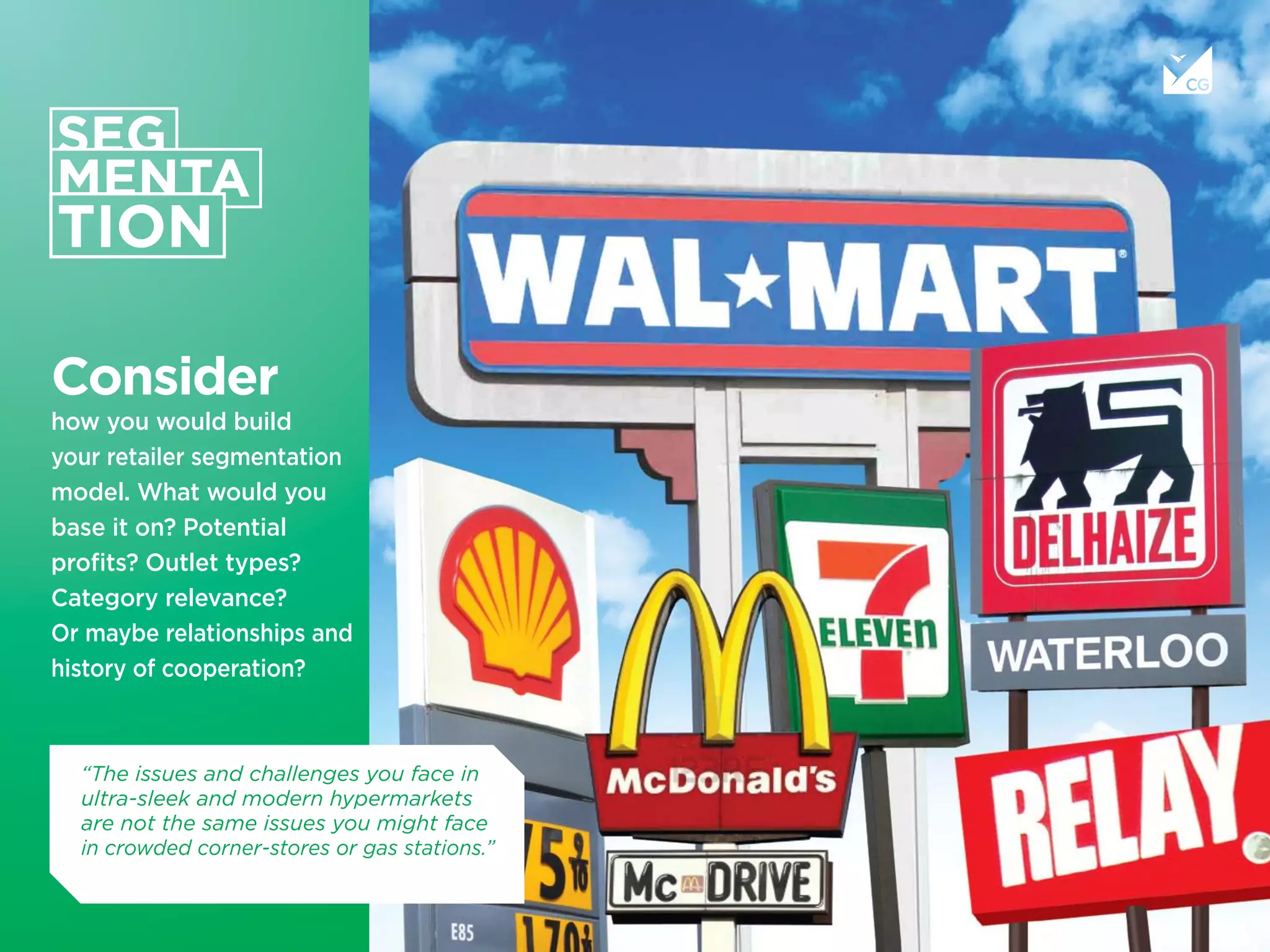
Consider
how you would build
your retailer segmentation
model. What would you
base it on? Potential
profits? Outlet types?
Category relevance?
Or maybe relationships and
history of cooperation?
“The issues and challenges you face in
ultra-sleek and modern hypermarkets
are not the same issues you might face
in crowded corner-stores or gas stations.”
Consider
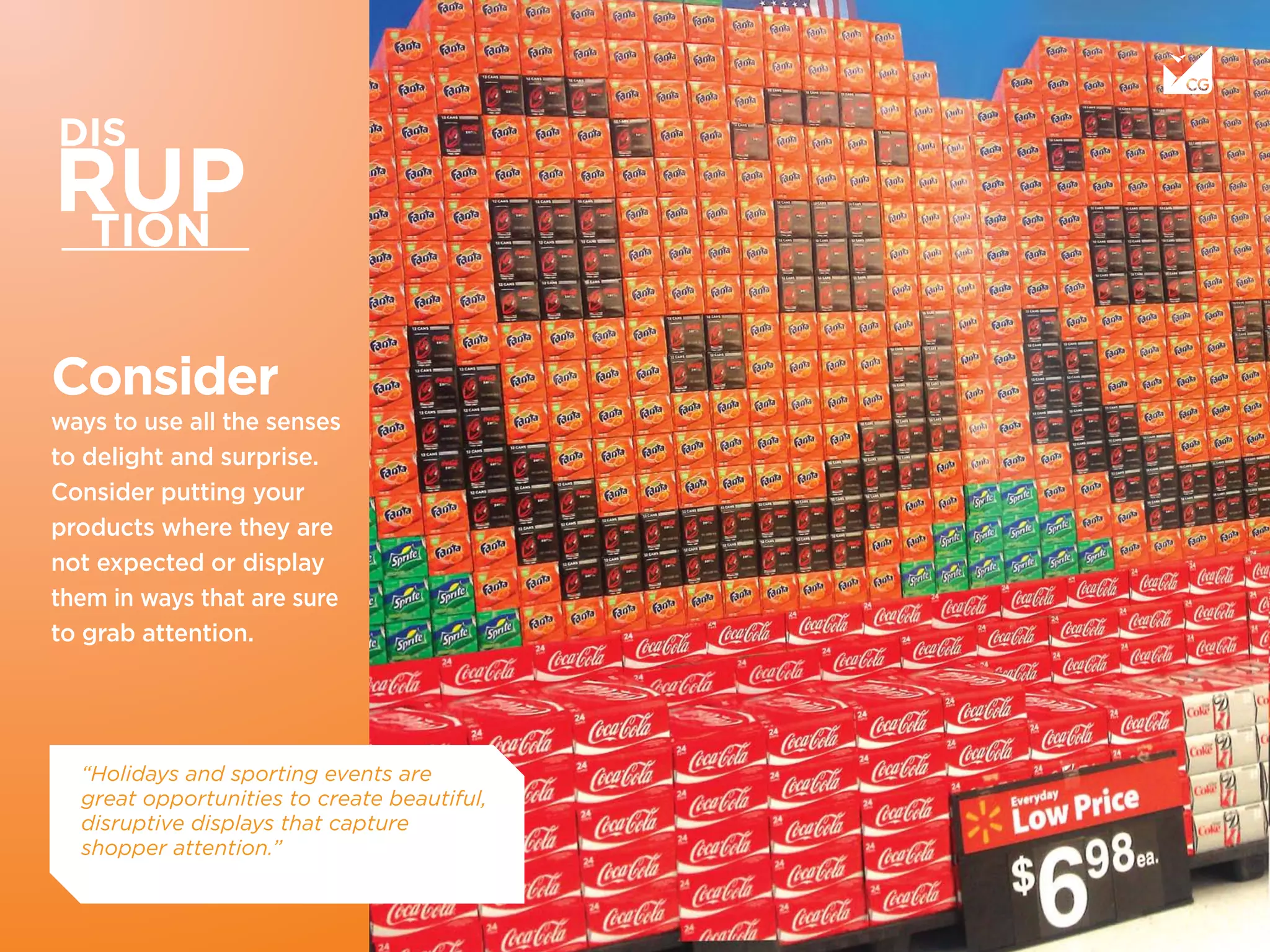
ways to use all the senses
to delight and surprise.
Consider putting your
products where they are
not expected or display
them in ways that are sure
to grab attention.
“Holidays and sporting events are
great opportunities to create beautiful,
disruptive displays that capture
shopper attention.”
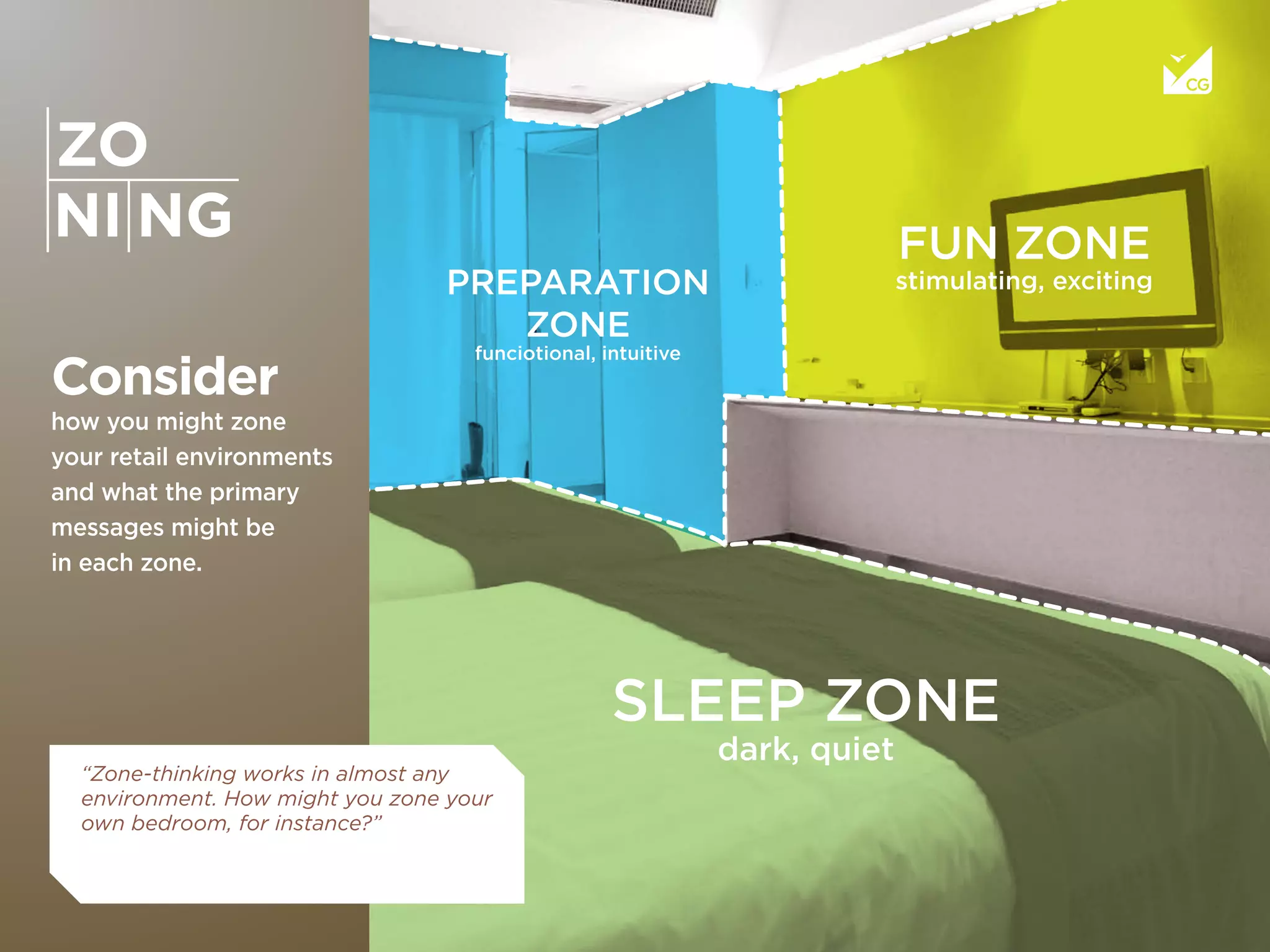
Consider
how you might zone
your retail environments
and what the primary
messages might be
in each zone.
NI NG
ZO
PREPARATION
ZONE
funciotional, intuitive
FUN ZONE
stimulating, exciting
SLEEP ZONE
dark, quiet
“Zone-thinking works in almost any
environment. How might you zone your
own bedroom, for instance?”
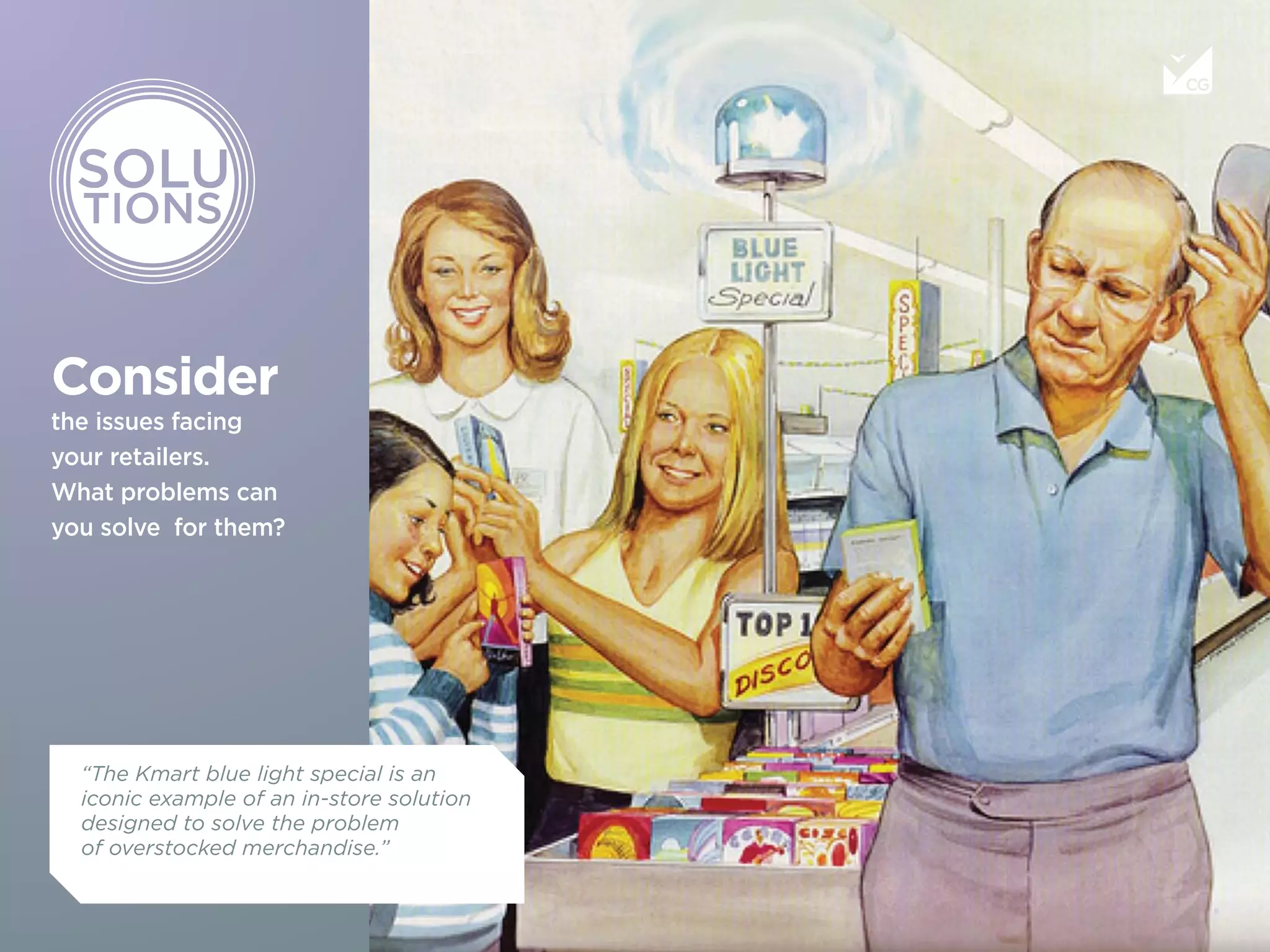
Consider
the issues facing
your retailers.
What problems can
you solve for them?
“The Kmart blue light special is an
iconic example of an in-store solution
designed to solve the problem
of overstocked merchandise.”
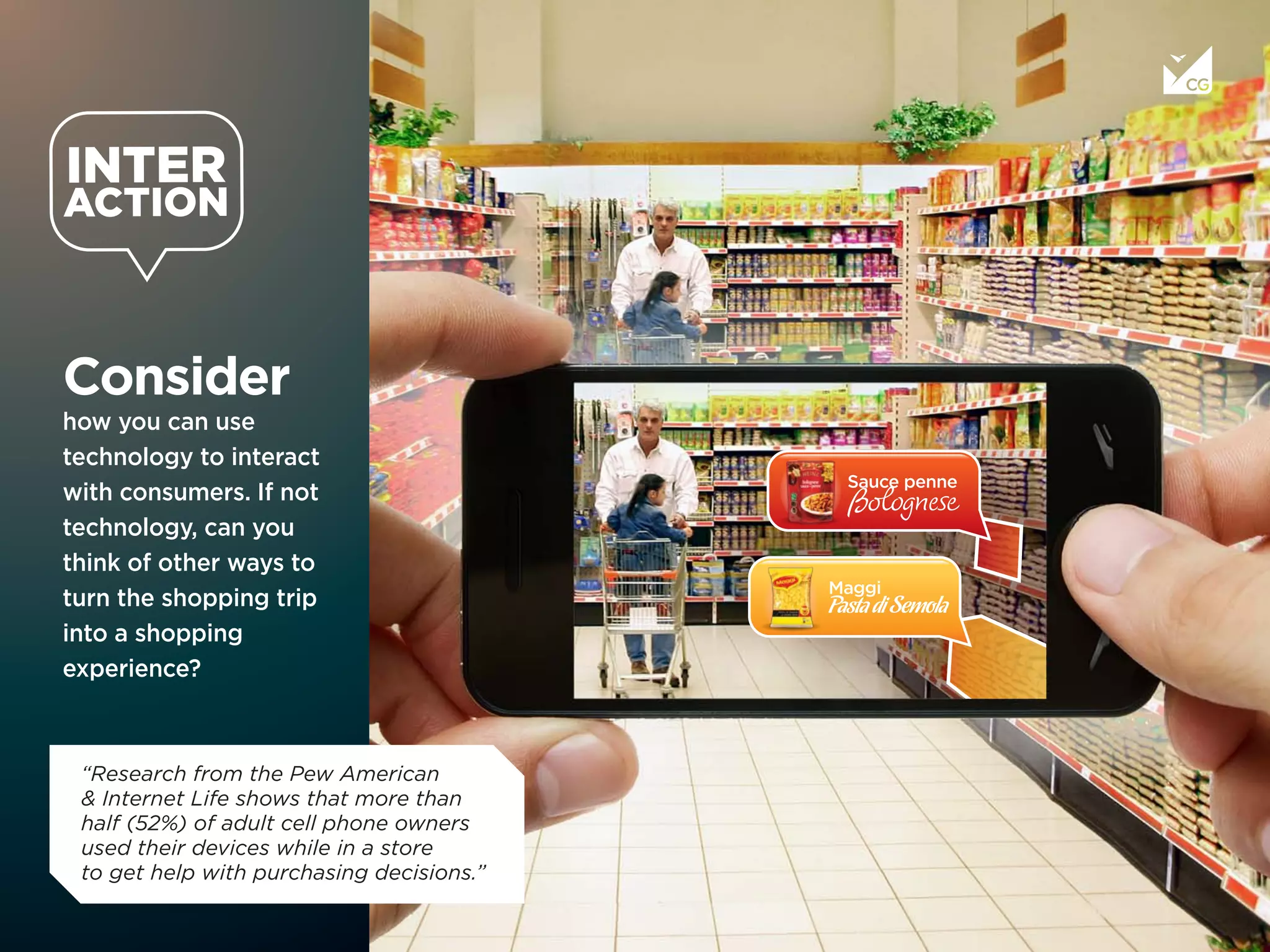
Consider
how you can use
technology to interact
with consumers. If not
technology, can you
think of other ways to
turn the shopping trip
into a shopping
experience?
“Research from the Pew American
& Internet Life shows that more than 
half (52%) of adult cell phone owners
used their devices while in a store
to get help with purchasing decisions.”
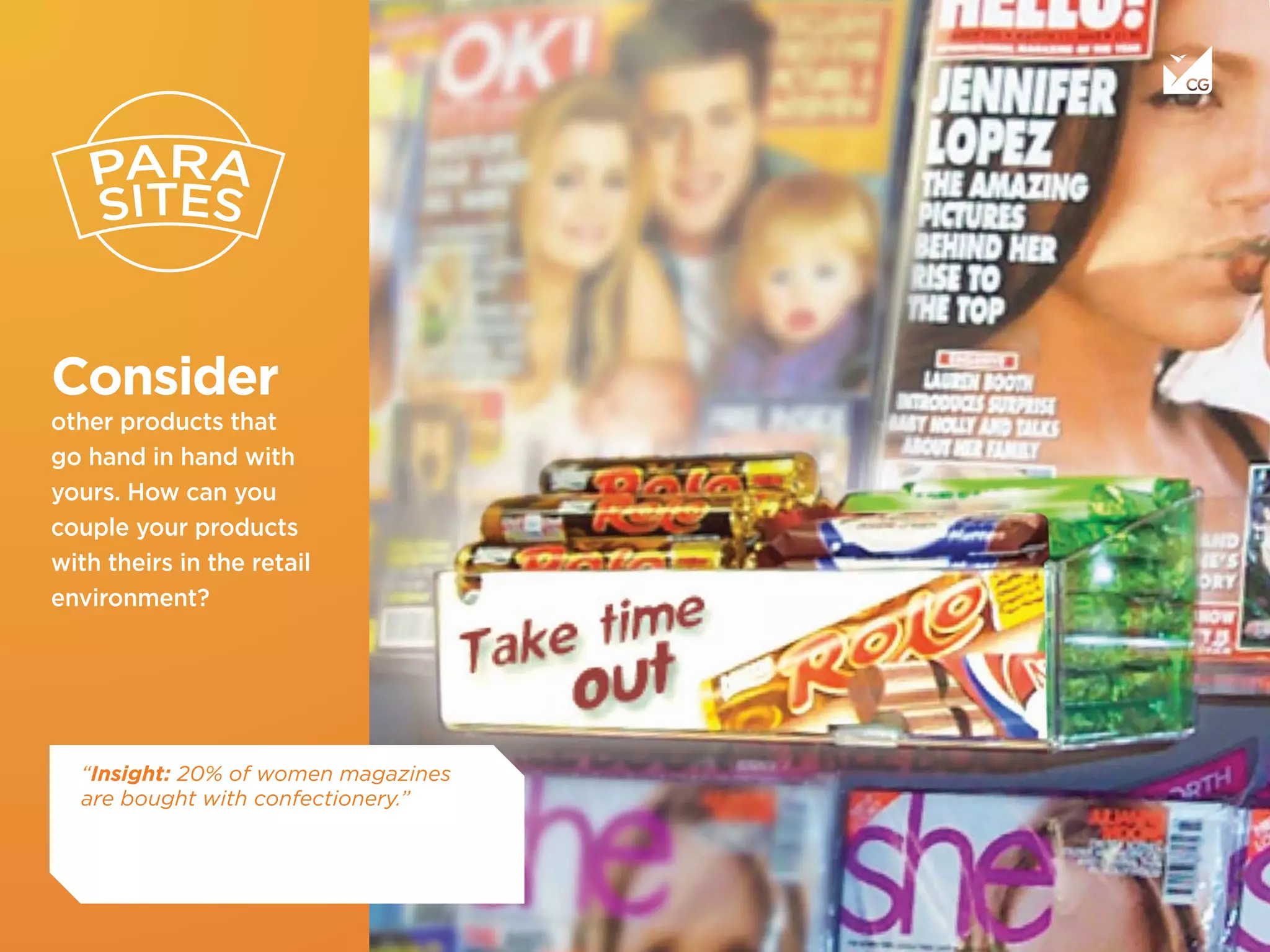
Consider
other products that
go hand in hand with
yours. How can you
couple your products
with theirs in the retail
environment?
“Insight: 20% of women magazines
are bought with confectionery.”
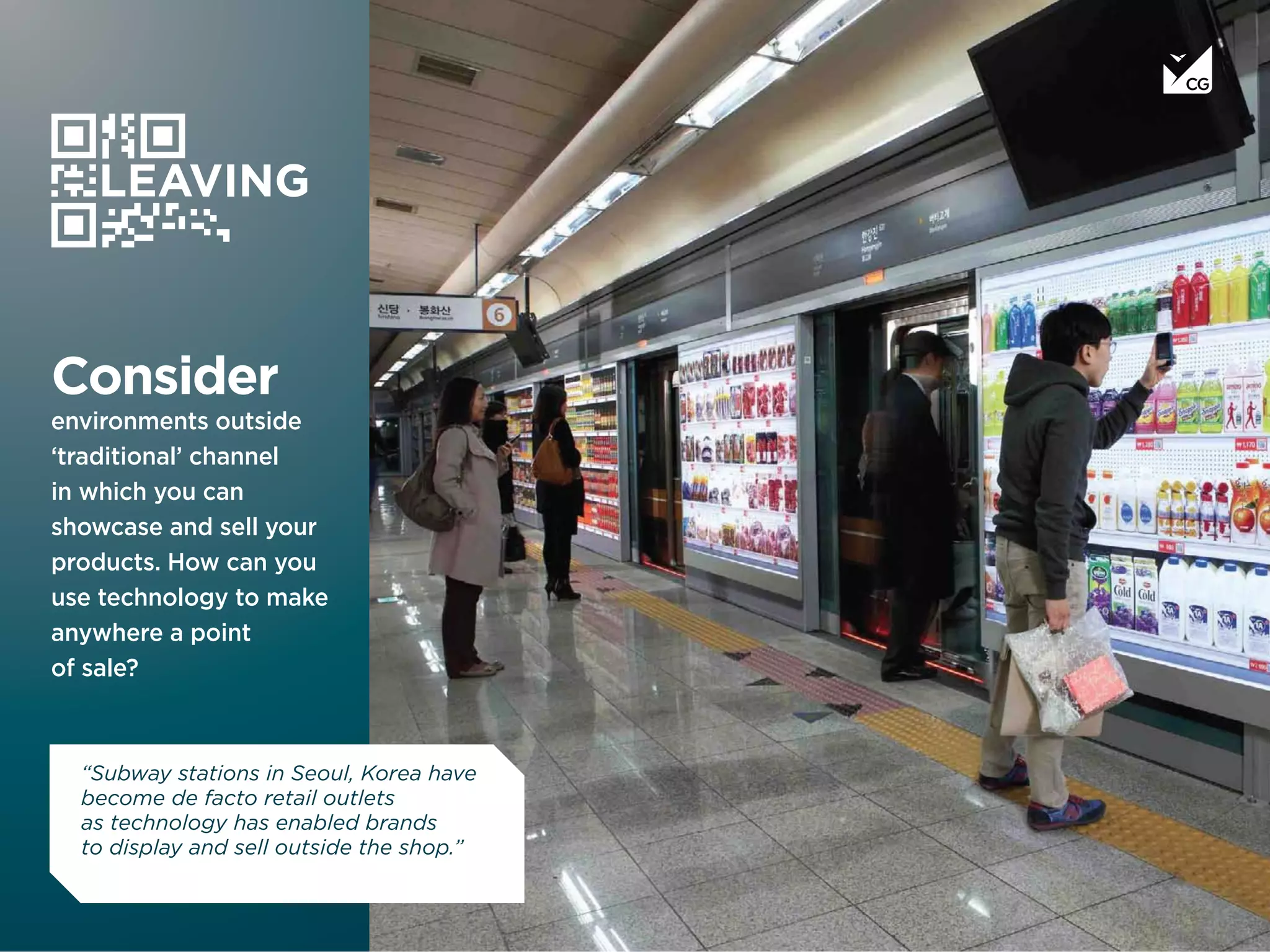
Consider
environments outside
‘traditional’ channel
in which you can
showcase and sell your
products. How can you
use technology to make
anywhere a point
of sale?
LEAVING
“Subway stations in Seoul, Korea have
become de facto retail outlets
as technology has enabled brands
to display and sell outside the shop.”
Image sources: Slide 5: http://allieferriera.com/2012/09/.
Slide 7: http://babyboomerflashback.blogspot.cz/2010/. Slide 10: http://randomwire.com/2011/.
All other imagery from shutterstock.com and stockphoto.com
Cocoon Group has over 15 years experience building
successful, award-winning brands. Starting as a packaging
design agency, over time we supplemented our
shopper-behavior expertise with brand consultancy
and industrial design. Combining these core disciplines,
we are able to meet our clients' needs for top-class in-store
branding and execution.
Today CG is a truly multi-disciplinary agency, offering all
aspects of brand creation, development, and implementation,
working out of 4 regional offices in Prague, Moscow,
Bucharest, and The Hague.
Consider
Segmentation
Consider
Disruption
Consider
Zoning
Consider
Solutions
Consider
Parasites
Consider
Interaction
Consider
Leaving
PREDICTING
AND EVOLVING
©CocoonGroup2013.AllRightsReserved
THANK
YOU!
FOR YOUR
ATTENTION
MAY
2013
For more information,
please contact:
COCOON GROUP
Eva Cimbálníková
e.cimbalnikova@cg-eu.com
+420 602 762 242
U Pruhonu 13, Prague,
Czech Republic 170 00
www.cg-eu.com

CG Consider In store May 2013

  • 1.
    CONSIDER IN-STORE A primer on brandingforthe retailenvironment MAY 2013
  • 2.
    We’ve asked someof our in-store experts to put together this presentation as a jumping-off point to help you to understand some of the concepts, principles, and ideas you should consider when you consider in-store. We hope you find it useful. And, if you need further assistance, contact us and we’d be happy to consider your in-store with you! ABOUT THIS DOCUMENT...
  • 3.
    Too often, wesee in-store which amounts to little more than logos applied to given parameters rather than tailor-made solutions designed to get the most from a company’s investment in their brands. In-store is rapidly becoming one of the most important arenas in which brands compete. In-store is the last opportunity to sway consumers and get your product sold. It’s in the best interest of anyone with a product to sell to make sure they understand how to use in-store to continue building the brand story. The 7 topics in this presentation are just a few of the things we consider when we take on an in-store project for one of our clients. We think you should consider them as well. AT CG, WE REALLY BELIEVE THAT IN-STORE* CAN BE DONE BETTER *Marketing materials displayed at the point of purchase or the point of consumption (on- or off-trade)
  • 4.
    Consider how you wouldbuild your retailer segmentation model. What would you base it on? Potential profits? Outlet types? Category relevance? Or maybe relationships and history of cooperation? “The issues and challenges you face in ultra-sleek and modern hypermarkets are not the same issues you might face in crowded corner-stores or gas stations.”
  • 5.
    Consider ways to useall the senses to delight and surprise. Consider putting your products where they are not expected or display them in ways that are sure to grab attention. “Holidays and sporting events are great opportunities to create beautiful, disruptive displays that capture shopper attention.”
  • 6.
    Consider how you mightzone your retail environments and what the primary messages might be in each zone. NI NG ZO PREPARATION ZONE funciotional, intuitive FUN ZONE stimulating, exciting SLEEP ZONE dark, quiet “Zone-thinking works in almost any environment. How might you zone your own bedroom, for instance?”
  • 7.
    Consider the issues facing yourretailers. What problems can you solve for them? “The Kmart blue light special is an iconic example of an in-store solution designed to solve the problem of overstocked merchandise.”
  • 8.
    Consider how you canuse technology to interact with consumers. If not technology, can you think of other ways to turn the shopping trip into a shopping experience? “Research from the Pew American & Internet Life shows that more than  half (52%) of adult cell phone owners used their devices while in a store to get help with purchasing decisions.”
  • 9.
    Consider other products that gohand in hand with yours. How can you couple your products with theirs in the retail environment? “Insight: 20% of women magazines are bought with confectionery.”
  • 10.
    Consider environments outside ‘traditional’ channel inwhich you can showcase and sell your products. How can you use technology to make anywhere a point of sale? LEAVING “Subway stations in Seoul, Korea have become de facto retail outlets as technology has enabled brands to display and sell outside the shop.”
  • 11.
    Image sources: Slide5: http://allieferriera.com/2012/09/. Slide 7: http://babyboomerflashback.blogspot.cz/2010/. Slide 10: http://randomwire.com/2011/. All other imagery from shutterstock.com and stockphoto.com Cocoon Group has over 15 years experience building successful, award-winning brands. Starting as a packaging design agency, over time we supplemented our shopper-behavior expertise with brand consultancy and industrial design. Combining these core disciplines, we are able to meet our clients' needs for top-class in-store branding and execution. Today CG is a truly multi-disciplinary agency, offering all aspects of brand creation, development, and implementation, working out of 4 regional offices in Prague, Moscow, Bucharest, and The Hague. Consider Segmentation Consider Disruption Consider Zoning Consider Solutions Consider Parasites Consider Interaction Consider Leaving PREDICTING AND EVOLVING
  • 12.
    ©CocoonGroup2013.AllRightsReserved THANK YOU! FOR YOUR ATTENTION MAY 2013 For moreinformation, please contact: COCOON GROUP Eva Cimbálníková e.cimbalnikova@cg-eu.com +420 602 762 242 U Pruhonu 13, Prague, Czech Republic 170 00 www.cg-eu.com