CERVICOGENIC
HEADACHE
DEFINISI:
Cervicogenic Headache
"headache syndrome arising from cervical nociceptive
structures"
CGH is a secondary headache that occurs because of a
physical or neurologic condition that started first.
CGH may be caused by trauma, such as fracture,
dislocation, or whiplash injury, or an underlying medical
condition such as rheumatoid arthritis, cancer, or
infection.
Patofisiologi
Tergantung Pain generatornya:
Discogenic: Referal Pain
Artritis: Referal Pain
Canalis Stenosis: Radikular pain
Oleh karena itu pemeriksaan yang dilakukan untuk
menjawab:
1. Apakah bersumber dari cervical?
2. Sumbernya bagian apa?
PENEGAKAN DIAGNOSIS
• History
• Pemeriksaan fisik
• Pemeriksaan Penunjang
Ciri-ciri CGH
• CGH is principally a unilateral headache but can also occur
bilaterally.
• The pain usually begins in the neck and radiates outward to the
fronto - temporal and possibly to the supra - orbital area.
• The headache is usually nagging and non-pulsating in character.
• The pain can occur in attacks; the duration of an attack is
unpredictable (hours to days).
• The pattern of the attacks can also change into a chronic
fluctuating headache
• CGH pain is mainly triggered by abnormal movements or postures
of the neck, pressing the back of the neck, or sudden movements
from coughing or sneezing.
Common Symptoms of CGH
• Dull, moderate to severe intensity pain. The pain in CGH is most commonly
described as dull and non-throbbing type and of moderate to severe
intensity in the head and neck region.
• Reduced flexibility of neck. The pain typically starts at the back of the neck
or head, which may lead to some neck stiffness and reduced range of
motion.
• Stiff Neck Causes, Symptoms, and Treatment
• Pain in multiple areas. From the back of the head, the pain may extend
toward the front following the scalp, forehead, area around the eye, temple,
and area surrounding the ear.
• Blurred vision in one eye. Blurring of vision may be felt in the eye of the
affected side
• Pain beneath the neck. Pain in the shoulder, arm, or between the shoulder
blades is also common.
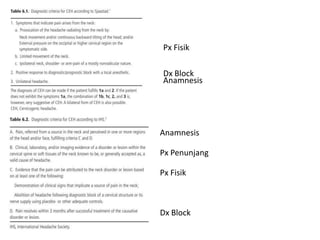
Anamnesis
Px Fisik
Dx Block
Anamnesis
Px Fisik
Dx Block
Px Penunjang
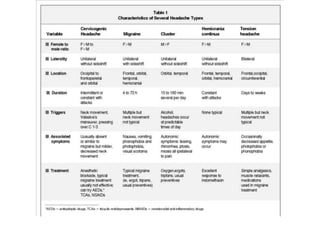
DIFFERENTIAL DIAGNOSIS
• Migraine without aura;
• Tension headache;
• Cluster headache;
When Is Cervicogenic Headache
Serious?
• In some cases, CGH may be caused by dangerous underlying conditions such as
tumor, hemorrhage, fracture, or arteriovenous malformation (abnormal
connection between arteries and veins) in the head or neck region. In such
cases, one or more of the following symptoms may also be present:
• A change in the type of headache pain, such as severe headache that is
intolerable
• Nausea and vomiting
• Confusion and disorientation
• Headaches triggered by coughing or Valsalva maneuver (an attempt to expel air
with the mouth shut and nostrils pinched tight)
• Neck stiffness and swelling
• Numbness in the arms
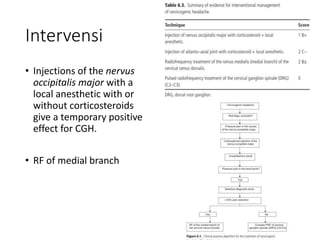
Intervensi
• Injections of the nervus
occipitalis major with a
local anesthetic with or
without corticosteroids
give a temporary positive
effect for CGH.
• RF of medial branch
INTERVENSI
• Persiapan
• Alat dan Obat
• Pasien
• Penghentian obat
• informed consent
• posisi
• Tindakan
• Pasca Tindakan
• Tindakan
• Pasca Tindakan

CERVICOGENIC HE-WPS Office.pptx

  • 1.
  • 2.
    DEFINISI: Cervicogenic Headache "headache syndromearising from cervical nociceptive structures" CGH is a secondary headache that occurs because of a physical or neurologic condition that started first. CGH may be caused by trauma, such as fracture, dislocation, or whiplash injury, or an underlying medical condition such as rheumatoid arthritis, cancer, or infection.
  • 3.
    Patofisiologi Tergantung Pain generatornya: Discogenic:Referal Pain Artritis: Referal Pain Canalis Stenosis: Radikular pain Oleh karena itu pemeriksaan yang dilakukan untuk menjawab: 1. Apakah bersumber dari cervical? 2. Sumbernya bagian apa?
  • 4.
    PENEGAKAN DIAGNOSIS • History •Pemeriksaan fisik • Pemeriksaan Penunjang
  • 5.
    Ciri-ciri CGH • CGHis principally a unilateral headache but can also occur bilaterally. • The pain usually begins in the neck and radiates outward to the fronto - temporal and possibly to the supra - orbital area. • The headache is usually nagging and non-pulsating in character. • The pain can occur in attacks; the duration of an attack is unpredictable (hours to days). • The pattern of the attacks can also change into a chronic fluctuating headache • CGH pain is mainly triggered by abnormal movements or postures of the neck, pressing the back of the neck, or sudden movements from coughing or sneezing.
  • 6.
    Common Symptoms ofCGH • Dull, moderate to severe intensity pain. The pain in CGH is most commonly described as dull and non-throbbing type and of moderate to severe intensity in the head and neck region. • Reduced flexibility of neck. The pain typically starts at the back of the neck or head, which may lead to some neck stiffness and reduced range of motion. • Stiff Neck Causes, Symptoms, and Treatment • Pain in multiple areas. From the back of the head, the pain may extend toward the front following the scalp, forehead, area around the eye, temple, and area surrounding the ear. • Blurred vision in one eye. Blurring of vision may be felt in the eye of the affected side • Pain beneath the neck. Pain in the shoulder, arm, or between the shoulder blades is also common.
  • 7.
    Anamnesis Px Fisik Dx Block Anamnesis PxFisik Dx Block Px Penunjang
  • 8.
    DIFFERENTIAL DIAGNOSIS • Migrainewithout aura; • Tension headache; • Cluster headache;
  • 10.
    When Is CervicogenicHeadache Serious? • In some cases, CGH may be caused by dangerous underlying conditions such as tumor, hemorrhage, fracture, or arteriovenous malformation (abnormal connection between arteries and veins) in the head or neck region. In such cases, one or more of the following symptoms may also be present: • A change in the type of headache pain, such as severe headache that is intolerable • Nausea and vomiting • Confusion and disorientation • Headaches triggered by coughing or Valsalva maneuver (an attempt to expel air with the mouth shut and nostrils pinched tight) • Neck stiffness and swelling • Numbness in the arms
  • 11.
    Intervensi • Injections ofthe nervus occipitalis major with a local anesthetic with or without corticosteroids give a temporary positive effect for CGH. • RF of medial branch
  • 13.
    INTERVENSI • Persiapan • Alatdan Obat • Pasien • Penghentian obat • informed consent • posisi • Tindakan • Pasca Tindakan
  • 14.
  • 15.