Patty Brouwer
7th European CCI meeting, Belgrade
22 April 2016
Background:Why this study?
Suffering from (chronic) pain can limit a child’s
ability to attend school, socialize and
participate in physical activity.
Studies suggest that many children do not
receive appropriate help or pain treatment, and
are often undertreated
(Goodman JE and McGrath PJ, 1991; Perquin CW et al., 2000; Schanberg LE et al., 2003).
Background:Why this study?
Pain is one of the most frequent and serious
symptoms experienced by patients in need of
palliative care
80% of the world’s population lack adequate
access to medication need for palliative care
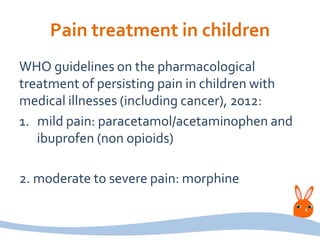
Pain treatment in children
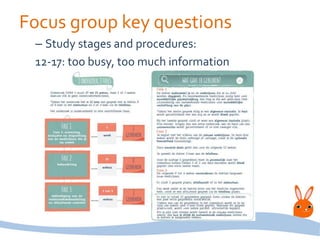
WHO guidelines on the pharmacological
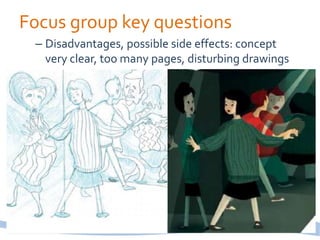
treatment of persisting pain in children with
medical illnesses (including cancer), 2012:
1. mild pain: paracetamol/acetaminophen and
ibuprofen (non opioids)
2. moderate to severe pain: morphine
WHO
1st priority is to find strong opioids as an
alternative for morphine or as a complimentary
drug to morphine
2nd priority is the search for drugs to reduce
neuropathic pain.Among these drugs,
gabapentin is specifically listed.
GABAPENTIN
• anti epileptic
• used in adults for neuropathic pain treatment
• for adults proven to bring great benefit, good
results
• expected to bring great benefit to children for
whom very few approved medication are
available for the treatment of pain
Why is CCI involved?
Pain is one of the most common symptoms in
children with cancer.
About 40% of cancer-related pain is
neuropathic pain.
A Parent’s Guide to Enhancing the Quality of Life in
Children with Cancer, Chapter 4 Pain in Children with Cancer,
2014 by Ruth I Hoffman MPH and Sandra E Smith
Why is CCI involved?
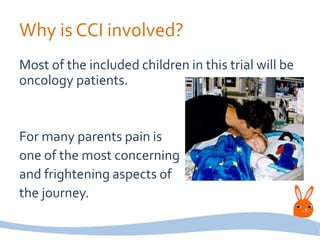
Most of the included children in this trial will be
oncology patients.
For many parents pain is
one of the most concerning
and frightening aspects of
the journey.
One of CCI’s visions
CCI wants to ensure that children receive the
best possible care (pain treatment) wherever
they are in the world at the time of diagnosis
and beyond
Final Goal of GAPP
To propose a treatment of chronic pain with a
neuropathic component in children with
gabapentin both as monotherapy and as
additional therapy to morphine
To assess the safety of gabapentin in children
CCI’s participation in GAPP
Complicated trials
• Children need to be woken up every 4 hours:
burden on child and parent during 17-21 weeks
• Large quantities of liquids of a nasty tasting
substance
• Challenge to include enough children
• Possibly high withdrawal rates for inefficacy or
adverse drug events
CCI’s participation in GAPP
• Ethic committee:
Anouk Nijenhuis: CCI andVOKK
2 Study Protocols, Information Document, Annex on side effects
of drugs, Consent form, Letter for the primary care
doctor/paediatrician for informing the parents and patients.
CCI’s participation in GAPP
• Scientific committee:
Marcela Zubieta: CCI board member
• PatientAdvisory Board (PAB): to provide input with
attention to patient perspective on GAPP project
Anouk Nijenhuis: CCI andVOKK
Patty Brouwer: CCI andVOKK
GAPP Patient Advisory Board (PAB)
The PAB aims to assess all relevant aspects of
the GAPP project from the patient perspective,
including patient information material for
both GABA-1 (WP 7) and GABA-2 (WP 8) trials
• Booklets: to help children to decide in
participation
• Video: explanation of trials in general
• Patient diary: children at home and record
pain scores
Focus Groups used for patients
perspective
• Children 6-11 and 12-17 years old (<6 not
included)
• 3 booklets for 3 age groups
• 2 countries: Italy and the Netherlands
• Italy: children's hospital Padova
• The Netherlands: pain department Rotterdam
andVOKK
Patient information booklets
FOCUS GROUP KEY QUESTIONS
• General question on what each page depicts
• Specific questions regarding key information
– Purpose of study: well understood
– Chronic vs. acute pain: in general well understood
but 9-11 struggled
Focus group key questions
– Study stages and procedures:
12-17: too busy, too much information
Focus group key questions
– Disadvantages, possible side effects: concept
very clear, too many pages, disturbing drawings
Focus group key questions
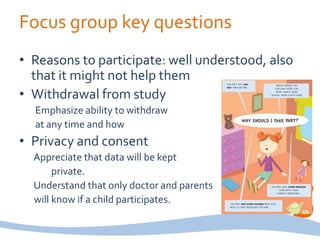
• Reasons to participate: well understood, also
that it might not help them
• Withdrawal from study
Emphasize ability to withdraw
at any time and how
• Privacy and consent
Appreciate that data will be kept
private.
Understand that only doctor and parents
will know if a child participates.
Resulting revisions to booklets
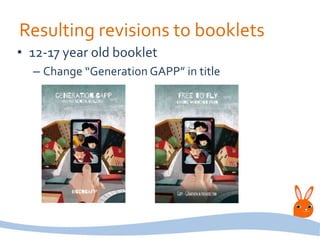
• 12-17 year old booklet
– Change “Generation GAPP” in title
Overall conclusions
• Patient information booklets clear and enjoyable
to read for the children
• Helpful minor revisions suggested
• Important themes identified for further
discussion with treating physician:
– Blood draws (frequency, how long)
– Randomization, blinding, placebo
– Urine test/pregnancy
– Study withdrawal procedures
Next step
• Including children in trials in:
Albania
Estonia
France
Greece
Germany
Italy
the Netherlands
United Kingdom
• Hand out of information booklets
Contacts
For more information contact:
Coordinator: Dr. Donato Bonifazi of the
Consorzio perValutazioni Biologiche e
Farmacologiche (CVBF) gapp@cvbf.net
Patty Brouwer
headoffice@cci.care

Cci pb gapp belgrad 22-04-2016

  • 1.
    Patty Brouwer 7th EuropeanCCI meeting, Belgrade 22 April 2016
  • 2.
    Background:Why this study? Sufferingfrom (chronic) pain can limit a child’s ability to attend school, socialize and participate in physical activity. Studies suggest that many children do not receive appropriate help or pain treatment, and are often undertreated (Goodman JE and McGrath PJ, 1991; Perquin CW et al., 2000; Schanberg LE et al., 2003).
  • 3.
    Background:Why this study? Painis one of the most frequent and serious symptoms experienced by patients in need of palliative care 80% of the world’s population lack adequate access to medication need for palliative care
  • 4.
    Pain treatment inchildren WHO guidelines on the pharmacological treatment of persisting pain in children with medical illnesses (including cancer), 2012: 1. mild pain: paracetamol/acetaminophen and ibuprofen (non opioids) 2. moderate to severe pain: morphine
  • 5.
    WHO 1st priority isto find strong opioids as an alternative for morphine or as a complimentary drug to morphine 2nd priority is the search for drugs to reduce neuropathic pain.Among these drugs, gabapentin is specifically listed.
  • 6.
    GABAPENTIN • anti epileptic •used in adults for neuropathic pain treatment • for adults proven to bring great benefit, good results • expected to bring great benefit to children for whom very few approved medication are available for the treatment of pain
  • 7.
    Why is CCIinvolved? Pain is one of the most common symptoms in children with cancer. About 40% of cancer-related pain is neuropathic pain. A Parent’s Guide to Enhancing the Quality of Life in Children with Cancer, Chapter 4 Pain in Children with Cancer, 2014 by Ruth I Hoffman MPH and Sandra E Smith
  • 8.
    Why is CCIinvolved? Most of the included children in this trial will be oncology patients. For many parents pain is one of the most concerning and frightening aspects of the journey.
  • 9.
    One of CCI’svisions CCI wants to ensure that children receive the best possible care (pain treatment) wherever they are in the world at the time of diagnosis and beyond
  • 10.
    Final Goal ofGAPP To propose a treatment of chronic pain with a neuropathic component in children with gabapentin both as monotherapy and as additional therapy to morphine To assess the safety of gabapentin in children
  • 11.
  • 12.
    Complicated trials • Childrenneed to be woken up every 4 hours: burden on child and parent during 17-21 weeks • Large quantities of liquids of a nasty tasting substance • Challenge to include enough children • Possibly high withdrawal rates for inefficacy or adverse drug events
  • 13.
    CCI’s participation inGAPP • Ethic committee: Anouk Nijenhuis: CCI andVOKK 2 Study Protocols, Information Document, Annex on side effects of drugs, Consent form, Letter for the primary care doctor/paediatrician for informing the parents and patients.
  • 14.
    CCI’s participation inGAPP • Scientific committee: Marcela Zubieta: CCI board member • PatientAdvisory Board (PAB): to provide input with attention to patient perspective on GAPP project Anouk Nijenhuis: CCI andVOKK Patty Brouwer: CCI andVOKK
  • 15.
    GAPP Patient AdvisoryBoard (PAB) The PAB aims to assess all relevant aspects of the GAPP project from the patient perspective, including patient information material for both GABA-1 (WP 7) and GABA-2 (WP 8) trials • Booklets: to help children to decide in participation • Video: explanation of trials in general • Patient diary: children at home and record pain scores
  • 16.
    Focus Groups usedfor patients perspective • Children 6-11 and 12-17 years old (<6 not included) • 3 booklets for 3 age groups • 2 countries: Italy and the Netherlands • Italy: children's hospital Padova • The Netherlands: pain department Rotterdam andVOKK
  • 17.
    Patient information booklets FOCUSGROUP KEY QUESTIONS • General question on what each page depicts • Specific questions regarding key information – Purpose of study: well understood – Chronic vs. acute pain: in general well understood but 9-11 struggled
  • 18.
    Focus group keyquestions – Study stages and procedures: 12-17: too busy, too much information
  • 19.
    Focus group keyquestions – Disadvantages, possible side effects: concept very clear, too many pages, disturbing drawings
  • 20.
    Focus group keyquestions • Reasons to participate: well understood, also that it might not help them • Withdrawal from study Emphasize ability to withdraw at any time and how • Privacy and consent Appreciate that data will be kept private. Understand that only doctor and parents will know if a child participates.
  • 21.
    Resulting revisions tobooklets • 12-17 year old booklet – Change “Generation GAPP” in title
  • 22.
    Overall conclusions • Patientinformation booklets clear and enjoyable to read for the children • Helpful minor revisions suggested • Important themes identified for further discussion with treating physician: – Blood draws (frequency, how long) – Randomization, blinding, placebo – Urine test/pregnancy – Study withdrawal procedures
  • 23.
    Next step • Includingchildren in trials in: Albania Estonia France Greece Germany Italy the Netherlands United Kingdom • Hand out of information booklets
  • 24.
    Contacts For more informationcontact: Coordinator: Dr. Donato Bonifazi of the Consorzio perValutazioni Biologiche e Farmacologiche (CVBF) gapp@cvbf.net Patty Brouwer headoffice@cci.care

Editor's Notes

  • #5 WHO guidelines on the pharmacological treatment of persisting pain in children with medical illnesses ‘(including cancer)’, 2012: 1. For children with mild pain, paracetamol/acetaminophen and ibuprofen (non opioids) are the medicines of choice. 2. For children with moderate to severe pain morphine is the medicine of choice.
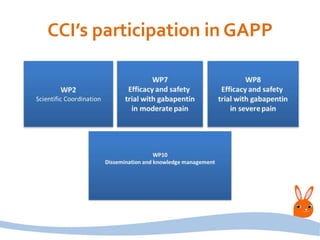
  • #12 WP2: starting Study Working Groups (SWG) WP7: Efficacy and safety trial with gabapentin in moderate pain WP8: Efficacy and safety trial with gabapentin in severe pain WP10: Dissemination and knowledge management: a project website, scientific articles, participation to external relevant meetings, the dissemination plan. Booklet on pain management: informative material addressed to patients/families.
  • #17 We asked the children of the 12-18 age group if they would like a video otr a booklet and they choose for the booklet. Video not neccessary and booklet they can take to read whenever they want.
  • #18 In the next slides I will only talk about the information booklets. They are reviewed by children in focus groups.