CBC Test: what is the normal range, what do
abnormal levels indicate?
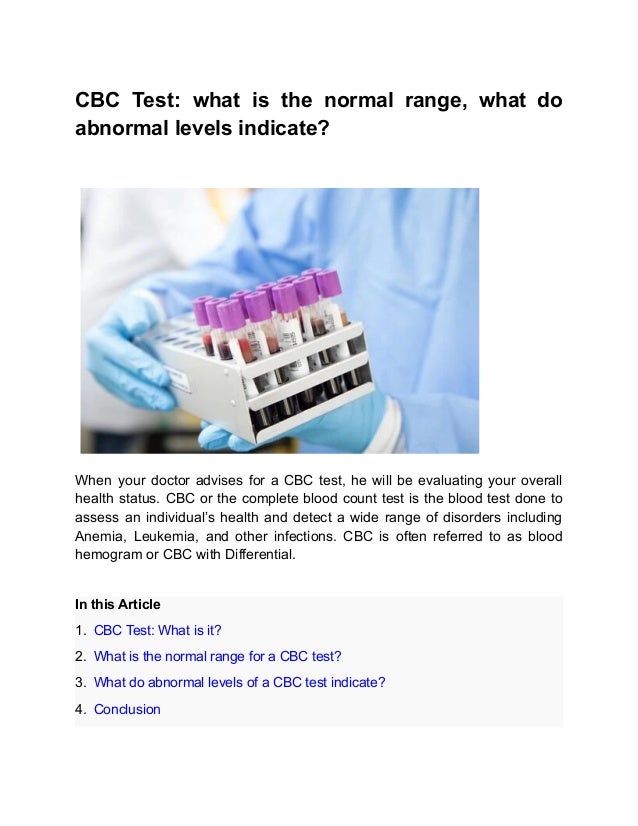
When your doctor advises for a CBC test, he will be evaluating your overall
health status. CBC or the complete blood count test is the blood test done to
assess an individual’s health and detect a wide range of disorders including
Anemia, Leukemia, and other infections. CBC is often referred to as blood
hemogram or CBC with Differential.
In this Article
1. CBC Test: What is it?
2. What is the normal range for a CBC test?
3. What do abnormal levels of a CBC test indicate?
4. Conclusion
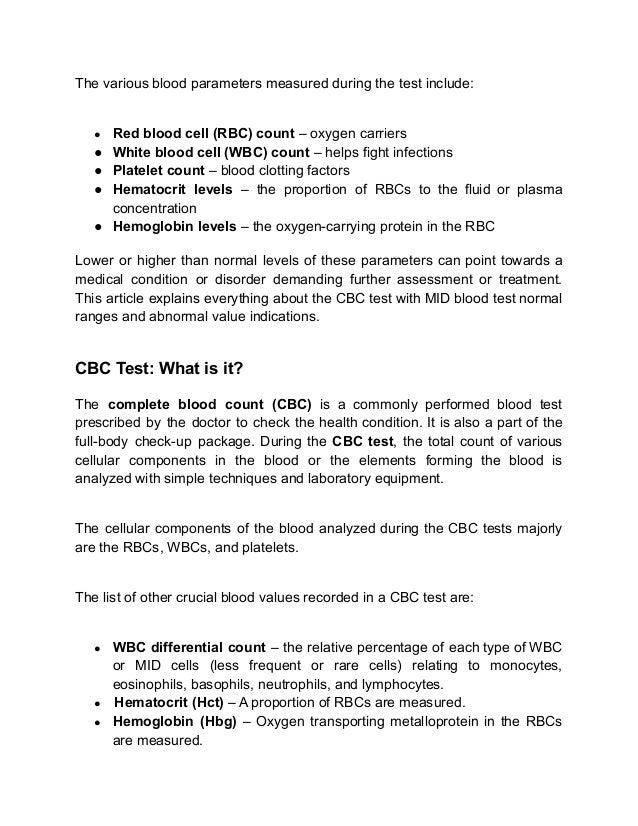
The various blood parameters measured during the test include:
● Red blood cell (RBC) count – oxygen carriers
● White blood cell (WBC) count – helps fight infections
● Platelet count – blood clotting factors
● Hematocrit levels – the proportion of RBCs to the fluid or plasma
concentration
● Hemoglobin levels – the oxygen-carrying protein in the RBC
Lower or higher than normal levels of these parameters can point towards a
medical condition or disorder demanding further assessment or treatment.
This article explains everything about the CBC test with MID blood test normal
ranges and abnormal value indications.
CBC Test: What is it?
The complete blood count (CBC) is a commonly performed blood test
prescribed by the doctor to check the health condition. It is also a part of the
full-body check-up package. During the CBC test, the total count of various
cellular components in the blood or the elements forming the blood is
analyzed with simple techniques and laboratory equipment.
The cellular components of the blood analyzed during the CBC tests majorly
are the RBCs, WBCs, and platelets.
The list of other crucial blood values recorded in a CBC test are:
● WBC differential count – the relative percentage of each type of WBC
or MID cells (less frequent or rare cells) relating to monocytes,
eosinophils, basophils, neutrophils, and lymphocytes.
● Hematocrit (Hct) – A proportion of RBCs are measured.
● Hemoglobin (Hbg) – Oxygen transporting metalloprotein in the RBCs
are measured.
● Mean corpuscular volume (MCV) – Refers to the average volume of a
red blood cell. The value calculated is derived from the hematocrit and
red cell count.
● Mean corpuscular hemoglobin (MCH)- Refers to the average amount
of hemoglobin in the average red blood cell volume. The value
calculated is derived from the mean values of hemoglobin and the red
cell count.
● Mean corpuscular hemoglobin concentration (MCHC) – Refers to
the average hemoglobin concentration in a given volume of red blood
cells. The percentage calculated is derived from hemoglobin and
hematocrit values.
● Red cell distribution width (RDW) – Refers to the range volume and
size of red blood cells.
● Mean Platelet Volume (MPV) – Average platelet size in a given volume
of the blood.
What is the normal range for a CBC test?
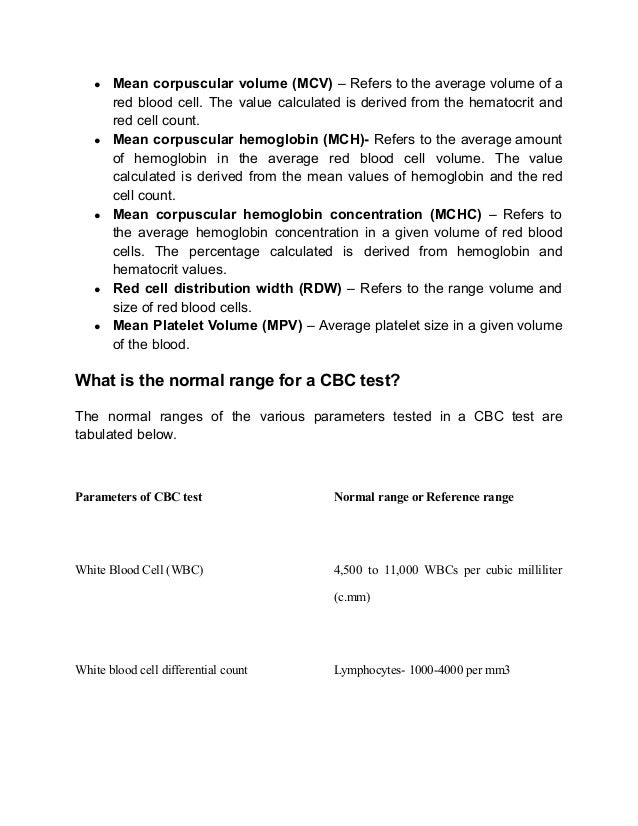
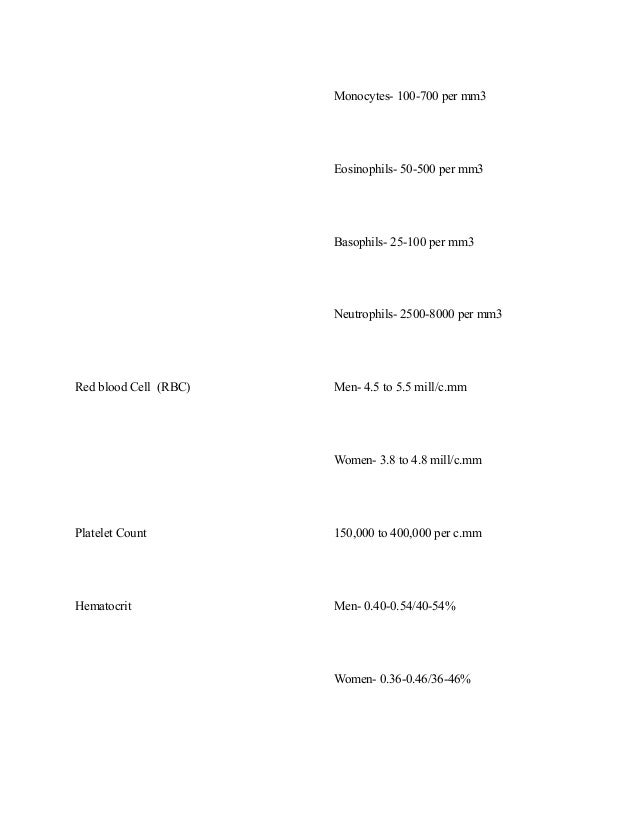
The normal ranges of the various parameters tested in a CBC test are
tabulated below.
Parameters of CBC test Normal range or Reference range
White Blood Cell (WBC) 4,500 to 11,000 WBCs per cubic milliliter
(c.mm)
White blood cell differential count Lymphocytes- 1000-4000 per mm3
Monocytes- 100-700 per mm3
Eosinophils- 50-500 per mm3
Basophils- 25-100 per mm3
Neutrophils- 2500-8000 per mm3
Red blood Cell (RBC) Men- 4.5 to 5.5 mill/c.mm
Women- 3.8 to 4.8 mill/c.mm
Platelet Count 150,000 to 400,000 per c.mm
Hematocrit Men- 0.40-0.54/40-54%
Women- 0.36-0.46/36-46%
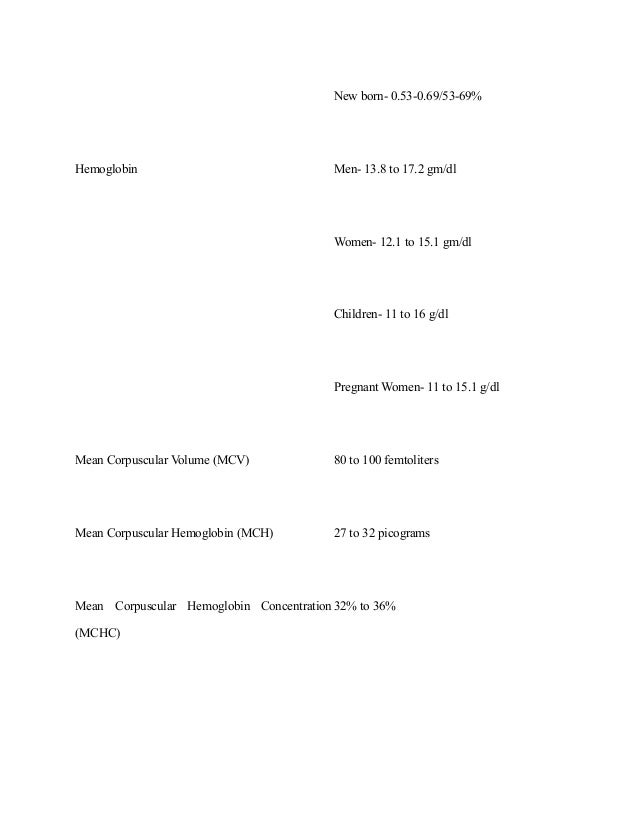
New born- 0.53-0.69/53-69%
Hemoglobin Men- 13.8 to 17.2 gm/dl
Women- 12.1 to 15.1 gm/dl
Children- 11 to 16 g/dl
Pregnant Women- 11 to 15.1 g/dl
Mean Corpuscular Volume (MCV) 80 to 100 femtoliters
Mean Corpuscular Hemoglobin (MCH) 27 to 32 picograms
Mean Corpuscular Hemoglobin Concentration
(MCHC)
32% to 36%
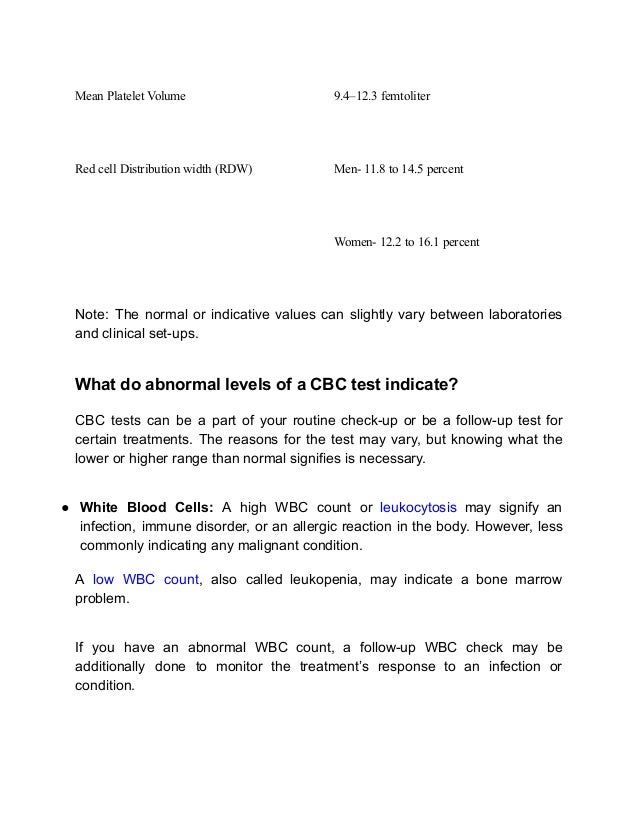
Mean Platelet Volume 9.4–12.3 femtoliter
Red cell Distribution width (RDW) Men- 11.8 to 14.5 percent
Women- 12.2 to 16.1 percent
Note: The normal or indicative values can slightly vary between laboratories
and clinical set-ups.
What do abnormal levels of a CBC test indicate?
CBC tests can be a part of your routine check-up or be a follow-up test for
certain treatments. The reasons for the test may vary, but knowing what the
lower or higher range than normal signifies is necessary.
● White Blood Cells: A high WBC count or leukocytosis may signify an
infection, immune disorder, or an allergic reaction in the body. However, less
commonly indicating any malignant condition.
A low WBC count, also called leukopenia, may indicate a bone marrow
problem.
If you have an abnormal WBC count, a follow-up WBC check may be
additionally done to monitor the treatment’s response to an infection or
condition.
● WBC Differential Count: The lower or higher than normal values of MID
cells indicates infections, certain medical conditions, or immune disorders.
● Red blood cells: A low red blood cell count or less hemoglobin can signify
anemia or deficiency of iron.
Conversely, a high red blood cell count or hemoglobin is called erythrocytosis.
It may point towards a bone marrow disease, low blood oxygen levels,
hypoxia, lung, kidney or a heart condition.
● Platelet Count: A low platelet count, also called thrombocytopenia, may
lead to prolonged bleeding or affect the production of platelets in the bone
marrow. This in turn may lead to other medical conditions.
On the other hand, a high platelet count, also known as thrombocytosis, may
point towards a bone marrow problem or inflammation.
The above-given conditions for abnormal blood values are probabilities and
do not draw any conclusion of you having a particular problem. Your doctor
will best guide you after a CBC test and let you know your problems
accordingly.
Conclusion
If you are looking to know your overall health condition, CBC or Complete
Blood Count (Hemogram) is usually recommended where the various
components of the blood are monitored and checked. Overall, it gives you the
total blood count values of different blood parameters. However, an abnormal
range can signify certain conditions and will require further diagnosis or
treatment.
Connect with your doctor to check your blood parameters or get a low CBC
test price done can be availed at Redcliffe labs at affordable prices with home
sample pick-up services and more.

CBC Test_ what is the normal range, what do abnormal levels indicate

  • 1.
    CBC Test: whatis the normal range, what do abnormal levels indicate? When your doctor advises for a CBC test, he will be evaluating your overall health status. CBC or the complete blood count test is the blood test done to assess an individual’s health and detect a wide range of disorders including Anemia, Leukemia, and other infections. CBC is often referred to as blood hemogram or CBC with Differential. In this Article 1. CBC Test: What is it? 2. What is the normal range for a CBC test? 3. What do abnormal levels of a CBC test indicate? 4. Conclusion
  • 2.
    The various bloodparameters measured during the test include: ● Red blood cell (RBC) count – oxygen carriers ● White blood cell (WBC) count – helps fight infections ● Platelet count – blood clotting factors ● Hematocrit levels – the proportion of RBCs to the fluid or plasma concentration ● Hemoglobin levels – the oxygen-carrying protein in the RBC Lower or higher than normal levels of these parameters can point towards a medical condition or disorder demanding further assessment or treatment. This article explains everything about the CBC test with MID blood test normal ranges and abnormal value indications. CBC Test: What is it? The complete blood count (CBC) is a commonly performed blood test prescribed by the doctor to check the health condition. It is also a part of the full-body check-up package. During the CBC test, the total count of various cellular components in the blood or the elements forming the blood is analyzed with simple techniques and laboratory equipment. The cellular components of the blood analyzed during the CBC tests majorly are the RBCs, WBCs, and platelets. The list of other crucial blood values recorded in a CBC test are: ● WBC differential count – the relative percentage of each type of WBC or MID cells (less frequent or rare cells) relating to monocytes, eosinophils, basophils, neutrophils, and lymphocytes. ● Hematocrit (Hct) – A proportion of RBCs are measured. ● Hemoglobin (Hbg) – Oxygen transporting metalloprotein in the RBCs are measured.
  • 3.
    ● Mean corpuscularvolume (MCV) – Refers to the average volume of a red blood cell. The value calculated is derived from the hematocrit and red cell count. ● Mean corpuscular hemoglobin (MCH)- Refers to the average amount of hemoglobin in the average red blood cell volume. The value calculated is derived from the mean values of hemoglobin and the red cell count. ● Mean corpuscular hemoglobin concentration (MCHC) – Refers to the average hemoglobin concentration in a given volume of red blood cells. The percentage calculated is derived from hemoglobin and hematocrit values. ● Red cell distribution width (RDW) – Refers to the range volume and size of red blood cells. ● Mean Platelet Volume (MPV) – Average platelet size in a given volume of the blood. What is the normal range for a CBC test? The normal ranges of the various parameters tested in a CBC test are tabulated below. Parameters of CBC test Normal range or Reference range White Blood Cell (WBC) 4,500 to 11,000 WBCs per cubic milliliter (c.mm) White blood cell differential count Lymphocytes- 1000-4000 per mm3
  • 4.
    Monocytes- 100-700 permm3 Eosinophils- 50-500 per mm3 Basophils- 25-100 per mm3 Neutrophils- 2500-8000 per mm3 Red blood Cell (RBC) Men- 4.5 to 5.5 mill/c.mm Women- 3.8 to 4.8 mill/c.mm Platelet Count 150,000 to 400,000 per c.mm Hematocrit Men- 0.40-0.54/40-54% Women- 0.36-0.46/36-46%
  • 5.
    New born- 0.53-0.69/53-69% HemoglobinMen- 13.8 to 17.2 gm/dl Women- 12.1 to 15.1 gm/dl Children- 11 to 16 g/dl Pregnant Women- 11 to 15.1 g/dl Mean Corpuscular Volume (MCV) 80 to 100 femtoliters Mean Corpuscular Hemoglobin (MCH) 27 to 32 picograms Mean Corpuscular Hemoglobin Concentration (MCHC) 32% to 36%
  • 6.
    Mean Platelet Volume9.4–12.3 femtoliter Red cell Distribution width (RDW) Men- 11.8 to 14.5 percent Women- 12.2 to 16.1 percent Note: The normal or indicative values can slightly vary between laboratories and clinical set-ups. What do abnormal levels of a CBC test indicate? CBC tests can be a part of your routine check-up or be a follow-up test for certain treatments. The reasons for the test may vary, but knowing what the lower or higher range than normal signifies is necessary. ● White Blood Cells: A high WBC count or leukocytosis may signify an infection, immune disorder, or an allergic reaction in the body. However, less commonly indicating any malignant condition. A low WBC count, also called leukopenia, may indicate a bone marrow problem. If you have an abnormal WBC count, a follow-up WBC check may be additionally done to monitor the treatment’s response to an infection or condition.
  • 7.
    ● WBC DifferentialCount: The lower or higher than normal values of MID cells indicates infections, certain medical conditions, or immune disorders. ● Red blood cells: A low red blood cell count or less hemoglobin can signify anemia or deficiency of iron. Conversely, a high red blood cell count or hemoglobin is called erythrocytosis. It may point towards a bone marrow disease, low blood oxygen levels, hypoxia, lung, kidney or a heart condition. ● Platelet Count: A low platelet count, also called thrombocytopenia, may lead to prolonged bleeding or affect the production of platelets in the bone marrow. This in turn may lead to other medical conditions. On the other hand, a high platelet count, also known as thrombocytosis, may point towards a bone marrow problem or inflammation. The above-given conditions for abnormal blood values are probabilities and do not draw any conclusion of you having a particular problem. Your doctor will best guide you after a CBC test and let you know your problems accordingly. Conclusion If you are looking to know your overall health condition, CBC or Complete Blood Count (Hemogram) is usually recommended where the various components of the blood are monitored and checked. Overall, it gives you the total blood count values of different blood parameters. However, an abnormal range can signify certain conditions and will require further diagnosis or treatment.
  • 8.
    Connect with yourdoctor to check your blood parameters or get a low CBC test price done can be availed at Redcliffe labs at affordable prices with home sample pick-up services and more.