Cavite Mutiny
The Cavite Mutiny is a major factor in the awakening of nationalism
among Filipinos of that time.
In February 17, 1872 The three martyrs were executed
Primary Sources
1. Excerpts from Jose Montero y Vidal
2. Official report of Governor General Izquierdo
3. Excerpts from Dr. Trinidad Hermenegildo Pardo de Tavera
4. Excerpts from Edmund Plauchut
Jose Montero y Vidal
-A Spanish historian
-centered on how the event was an attempt in overthrowing the
Spanish government in the Philippines
-the account was criticized as woefully biased
According to Jose Montero, the Cavite Mutiny was:
-the abolition of privileges enjoined by the laborers of the Cavite
arsenal of exemption from the tribute was the cause of insurrection
In the beginning of year 1872, the authorities received anonymous
communications with the information that a great uprising would break
out against Spaniards.
At times, the principal leaders met either in the house of Filipino
Spaniards, D. Joaquin Pardo de Tavera or in that of the native priest
Jacinto Zamora and these meetings were usually attended by the
curate of Bacoor, the soul movement to exercise a strong influence
According to Gov. Gen. Rafael Izquierdo, the
Cavite Mutiny was
It seems that the insurrection was motivated and prepared by the
native clergy, b y mestizos and native lawyers, and by those known here
as abogadillos
The instigator to carry out their criminal project, protested against the
injustice of the government in most paying the provinces for their
tabaco crops, and against the usury that some practice in documents
that the Finance department gives crop owner who have to sell them at
loss. They encouraged the rebellion by protesting what they called the
injustice of having obliged the workers in the Cavite arsenal to pay
tribute.
Up to now it has been clearly determined if they planned to establish a
monarchy or a republic but it turns out that they would place at the
head of the government a priest, that the head selected would be Jose
Burgos or Jacinto Zamora.
It is apparent that the accounts underscore the reason for the
revolution; the abolition of privileges enjoyed by the workers of the
Cavite arsenal such as exemption from payment of tribute and being
employed in polo y servicios or force labor.
They also reason out the presence of native clergy.
Izquierdo in his report highlighted that attempt to overthrow the
Spanish government in the Philippines to install a hari in the persons of
Burgos and Zamora.
The account detailed that on 20 January 1872, the ditrict of Sampaloc
celebrated the feast of the Virgin of Loreto and came with it were some
fireworks display.
The 200 men contingent led by Sergeant Lamadrid attacked Spanish
officers at sight and seized the arsenal. Izquierdo upon learning the
attack, ordered the reinforcement of the Spanish forces in Cavite to
quell the revolt. The revolution was easily crushed.
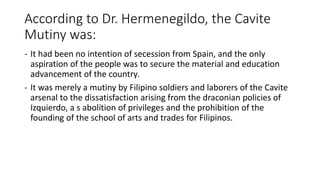
According to Dr. Hermenegildo, the Cavite
Mutiny was:
- It had been no intention of secession from Spain, and the only
aspiration of the people was to secure the material and education
advancement of the country.
- It was merely a mutiny by Filipino soldiers and laborers of the Cavite
arsenal to the dissatisfaction arising from the draconian policies of
Izquierdo, a s abolition of privileges and the prohibition of the
founding of the school of arts and trades for Filipinos.
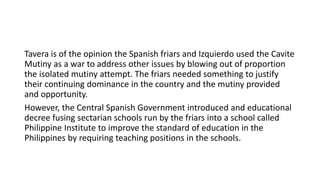
Tavera is of the opinion the Spanish friars and Izquierdo used the Cavite
Mutiny as a war to address other issues by blowing out of proportion
the isolated mutiny attempt. The friars needed something to justify
their continuing dominance in the country and the mutiny provided
and opportunity.
However, the Central Spanish Government introduced and educational
decree fusing sectarian schools run by the friars into a school called
Philippine Institute to improve the standard of education in the
Philippines by requiring teaching positions in the schools.
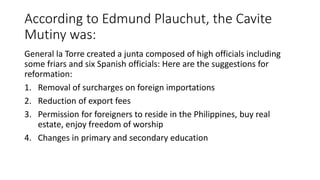
According to Edmund Plauchut, the Cavite
Mutiny was:
General la Torre created a junta composed of high officials including
some friars and six Spanish officials: Here are the suggestions for
reformation:
1. Removal of surcharges on foreign importations
2. Reduction of export fees
3. Permission for foreigners to reside in the Philippines, buy real
estate, enjoy freedom of worship
4. Changes in primary and secondary education
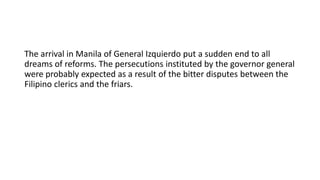
The arrival in Manila of General Izquierdo put a sudden end to all
dreams of reforms. The persecutions instituted by the governor general
were probably expected as a result of the bitter disputes between the
Filipino clerics and the friars.
The friars used the incident as a part of a larger conspiracy to cement
their dominance, which started to show cracks because of the
discontent of the Filipinos. They showcased the mutiny as a part of a
greater conspiracy in the Philippines by Filipinos to overthrow the
Spanish Government.

Cavite-Mutiny-1.pptx riph reporting in history

  • 1.
  • 2.
    The Cavite Mutinyis a major factor in the awakening of nationalism among Filipinos of that time. In February 17, 1872 The three martyrs were executed
  • 3.
    Primary Sources 1. Excerptsfrom Jose Montero y Vidal 2. Official report of Governor General Izquierdo 3. Excerpts from Dr. Trinidad Hermenegildo Pardo de Tavera 4. Excerpts from Edmund Plauchut
  • 4.
    Jose Montero yVidal -A Spanish historian -centered on how the event was an attempt in overthrowing the Spanish government in the Philippines -the account was criticized as woefully biased
  • 5.
    According to JoseMontero, the Cavite Mutiny was: -the abolition of privileges enjoined by the laborers of the Cavite arsenal of exemption from the tribute was the cause of insurrection
  • 6.
    In the beginningof year 1872, the authorities received anonymous communications with the information that a great uprising would break out against Spaniards. At times, the principal leaders met either in the house of Filipino Spaniards, D. Joaquin Pardo de Tavera or in that of the native priest Jacinto Zamora and these meetings were usually attended by the curate of Bacoor, the soul movement to exercise a strong influence
  • 7.
    According to Gov.Gen. Rafael Izquierdo, the Cavite Mutiny was It seems that the insurrection was motivated and prepared by the native clergy, b y mestizos and native lawyers, and by those known here as abogadillos
  • 8.
    The instigator tocarry out their criminal project, protested against the injustice of the government in most paying the provinces for their tabaco crops, and against the usury that some practice in documents that the Finance department gives crop owner who have to sell them at loss. They encouraged the rebellion by protesting what they called the injustice of having obliged the workers in the Cavite arsenal to pay tribute.
  • 9.
    Up to nowit has been clearly determined if they planned to establish a monarchy or a republic but it turns out that they would place at the head of the government a priest, that the head selected would be Jose Burgos or Jacinto Zamora.
  • 10.
    It is apparentthat the accounts underscore the reason for the revolution; the abolition of privileges enjoyed by the workers of the Cavite arsenal such as exemption from payment of tribute and being employed in polo y servicios or force labor. They also reason out the presence of native clergy. Izquierdo in his report highlighted that attempt to overthrow the Spanish government in the Philippines to install a hari in the persons of Burgos and Zamora.
  • 11.
    The account detailedthat on 20 January 1872, the ditrict of Sampaloc celebrated the feast of the Virgin of Loreto and came with it were some fireworks display. The 200 men contingent led by Sergeant Lamadrid attacked Spanish officers at sight and seized the arsenal. Izquierdo upon learning the attack, ordered the reinforcement of the Spanish forces in Cavite to quell the revolt. The revolution was easily crushed.
  • 12.
    According to Dr.Hermenegildo, the Cavite Mutiny was: - It had been no intention of secession from Spain, and the only aspiration of the people was to secure the material and education advancement of the country. - It was merely a mutiny by Filipino soldiers and laborers of the Cavite arsenal to the dissatisfaction arising from the draconian policies of Izquierdo, a s abolition of privileges and the prohibition of the founding of the school of arts and trades for Filipinos.
  • 13.
    Tavera is ofthe opinion the Spanish friars and Izquierdo used the Cavite Mutiny as a war to address other issues by blowing out of proportion the isolated mutiny attempt. The friars needed something to justify their continuing dominance in the country and the mutiny provided and opportunity. However, the Central Spanish Government introduced and educational decree fusing sectarian schools run by the friars into a school called Philippine Institute to improve the standard of education in the Philippines by requiring teaching positions in the schools.
  • 14.
    According to EdmundPlauchut, the Cavite Mutiny was: General la Torre created a junta composed of high officials including some friars and six Spanish officials: Here are the suggestions for reformation: 1. Removal of surcharges on foreign importations 2. Reduction of export fees 3. Permission for foreigners to reside in the Philippines, buy real estate, enjoy freedom of worship 4. Changes in primary and secondary education
  • 15.
    The arrival inManila of General Izquierdo put a sudden end to all dreams of reforms. The persecutions instituted by the governor general were probably expected as a result of the bitter disputes between the Filipino clerics and the friars.
  • 16.
    The friars usedthe incident as a part of a larger conspiracy to cement their dominance, which started to show cracks because of the discontent of the Filipinos. They showcased the mutiny as a part of a greater conspiracy in the Philippines by Filipinos to overthrow the Spanish Government.