Sylvie Pelletier
 YORK UNIVERSITY
  Thesis Defense
December 07, 2011
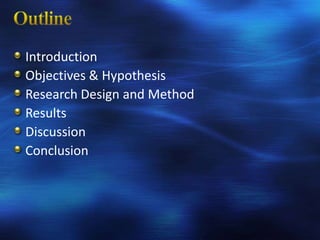
Introduction
Objectives & Hypothesis
Research Design and Method
Results
Discussion
Conclusion
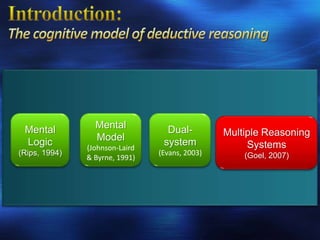
Mental          Mental           Dual-
                 Model                          Multiple Reasoning
 Logic         (Johnson-Laird
                                 system              Systems
(Rips, 1994)                    (Evans, 2003)       (Goel, 2007)
               & Byrne, 1991)
Main Effect                  Content                          Domain
Prado et al (in press)                                Reverberi (2010); Canessa et al.
                               Goel (2000)
                                                                  (2005)


                           Abstract/Non-
                              Causal
  Conditional
                         Bilateral parietal-frontal          Physical:
                                 pathway
  Reasoning                                             Left linguistic system
   Left posterior
parietal cortex, Left
 precentral gyrus,
medial frontal gyrus           Causal                          Social
                            Left hemispheric
                                                          Right-hemispheric
                             frontotemporal
                                                           prefrontal cortex
                                 system
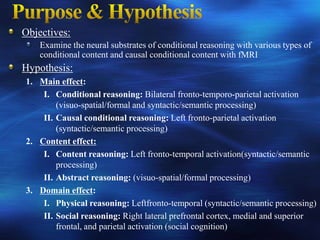
Objectives:
    Examine the neural substrates of conditional reasoning with various types of
    conditional content and causal conditional content with fMRI
Hypothesis:
1. Main effect:
    I. Conditional reasoning: Bilateral fronto-temporo-parietal activation
        (visuo-spatial/formal and syntactic/semantic processing)
    II. Causal conditional reasoning: Left fronto-parietal activation
        (syntactic/semantic processing)
2. Content effect:
    I. Content reasoning: Left fronto-temporal activation(syntactic/semantic
        processing)
    II. Abstract reasoning: (visuo-spatial/formal processing)
3. Domain effect:
    I. Physical reasoning: Leftfronto-temporal (syntactic/semantic processing)
    II. Social reasoning: Right lateral prefrontal cortex, medial and superior
        frontal, and parietal activation (social cognition)
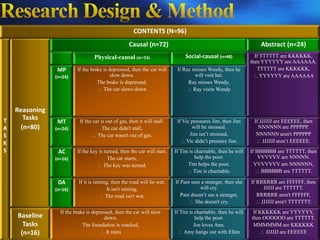
CONTENTS (N=96)
                                                     Causal (n=72)                                                  Abstract (n=24)
                                  Physical-causal (n=24)                        Social-causal (n=48)              If TTTTTT are KKKKKK,
                                                                                                                then YYYYYY are AAAAAA.
                 MP       If the brake is depressed, then the car will      If Ray misses Wendy, then he           TTTTTT are KKKKKK,
                (n=24)                     slow down.                               will visit her.                  YYYYYY are AAAAAA
                                    The brake is depressed,                      Ray misses Wendy,
                                       The car slows down                          Ray visits Wendy


    Reasoning
T      Tasks
                 MT        If the car is out of gas, then it will stall.    If Vic pressures Jim, then Jim       If JJJJJJ are EEEEEE, then
A     (n=80)    (n=24)                 The car didn't stall,                       will be stressed.               NNNNNN are PPPPPP.
S                                   The car wasn't out of gas.                    Jim isn’t stressed,             NNNNNN aren't PPPPPP
K                                                                                Vic didn’t pressure Jim.            JJJJJJ aren’t EEEEEE.
S                AC       If the key is turned, then the car will start.   If Tim is charitable, then he will   If BBBBBB are TTTTTT, then
                (n=16)                    The car starts,                            help the poor.                 VVVVVV are NNNNN.
                                        The key was turned.                      Tim helps the poor,              VVVVVVV are NNNNNN,
                                                                                    Tim is charitable.               BBBBBB are TTTTTT.

                 DA        If it is raining, then the road will be wet.    If Pam sees a stranger, then she     If RRRRRR are FFFFFF, then
                (n=16)                    It isn't raining,                           will cry.                      JJJJJ are TTTTTT.
                                          The road isn't wet.                 Pam doesn’t see a stranger,          RRRRRR aren't FFFFFF,
                                                                                    She doesn't cry.                JJJJJJ aren't TTTTTTT.
                  If the brake is depressed, then the car will slow        If Tim is charitable, then he will    If KKKKKK are YYYYYY,
    Baseline                            down.                                        help the poor.             then OOOOOO are TTTTTT.
      Tasks                  The foundation is cracked,                             Joe loves Ann,               MMMMMM are KKKKKK
     (n=16)                              It rains                               Amy hangs out with Ellen              JJJJJJ are EEEEEE
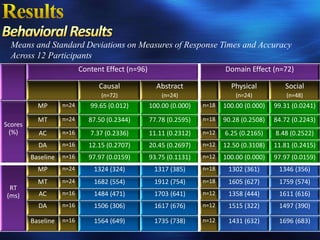
Means and Standard Deviations on Measures of Response Times and Accuracy
  Across 12 Participants
                           Content Effect (n=96)                           Domain Effect (n=72)

                                 Causal              Abstract                Physical          Social
                                  (n=72)               (n=24)                  (n=24)           (n=48)
           MP       n=24      99.65 (0.012)        100.00 (0.000)   n=18   100.00 (0.000)   99.31 (0.0241)
           MT       n=24      87.50 (0.2344)       77.78 (0.2595)   n=18   90.28 (0.2508)   84.72 (0.2243)
Scores
 (%)       AC       n=16      7.37 (0.2336)        11.11 (0.2312)   n=12   6.25 (0.2165)    8.48 (0.2522)
           DA       n=16      12.15 (0.2707)       20.45 (0.2697)   n=12   12.50 (0.3108)   11.81 (0.2415)
         Baseline   n=16      97.97 (0.0159)       93.75 (0.1131)   n=12   100.00 (0.000)   97.97 (0.0159)
           MP       n=24       1324 (324)           1317 (385)      n=18    1302 (361)       1346 (356)
           MT       n=24       1682 (554)           1912 (754)      n=18    1605 (627)       1759 (574)
 RT
(ms)       AC       n=16       1484 (471)           1703 (641)      n=12    1358 (444)       1611 (616)
           DA       n=16       1506 (306)           1617 (676)      n=12    1515 (322)       1497 (390)

         Baseline   n=16       1564 (649)           1735 (738)      n=12    1431 (632)       1696 (683)
1. Main effect of
   conditional reasoning


2. Main effect of causal conditional reasoning
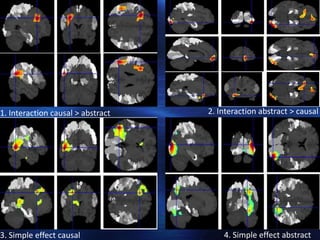
1. Interaction causal > abstract   2. Interaction abstract > causal


3. Simple effect causal                4. Simple effect abstract
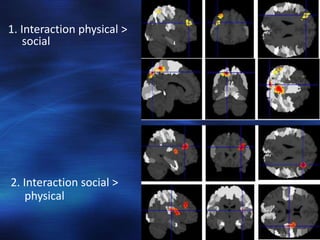
1. Interaction physical >
    social


2. Interaction social >
    physical
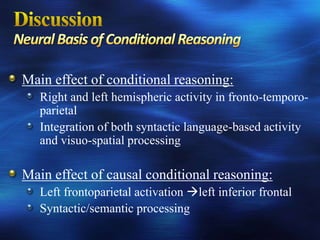
Main effect of conditional reasoning:
   Right and left hemispheric activity in fronto-temporo-
   parietal
   Integration of both syntactic language-based activity
   and visuo-spatial processing

Main effect of causal conditional reasoning:
   Left frontoparietal activation left inferior frontal
   Syntactic/semantic processing
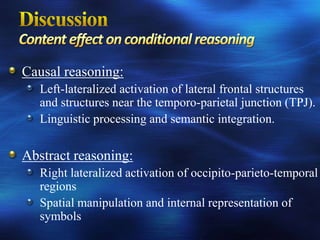
Causal reasoning:
   Left-lateralized activation of lateral frontal structures
   and structures near the temporo-parietal junction (TPJ).
   Linguistic processing and semantic integration.

Abstract reasoning:
   Right lateralized activation of occipito-parieto-temporal
   regions
   Spatial manipulation and internal representation of
   symbols
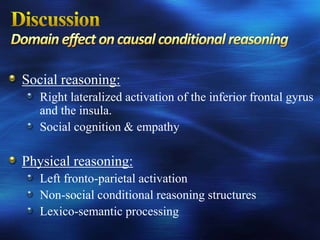
Social reasoning:
   Right lateralized activation of the inferior frontal gyrus
   and the insula.
   Social cognition & empathy

Physical reasoning:
   Left fronto-parietal activation
   Non-social conditional reasoning structures
   Lexico-semantic processing
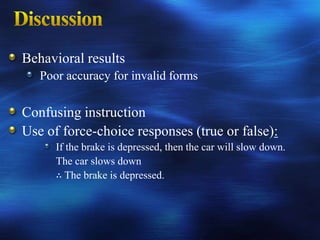
Behavioral results
   Poor accuracy for invalid forms

Confusing instruction
Use of force-choice responses (true or false):
      If the brake is depressed, then the car will slow down.
      The car slows down
      ∴ The brake is depressed.
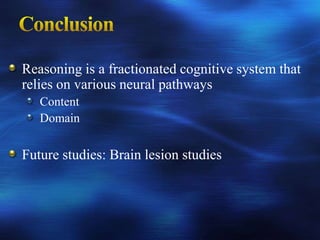
Reasoning is a fractionated cognitive system that
relies on various neural pathways
   Content
   Domain

Future studies: Brain lesion studies

Causal Reasoning

  • 1.
    Sylvie Pelletier YORKUNIVERSITY Thesis Defense December 07, 2011
  • 2.
    Introduction Objectives & Hypothesis ResearchDesign and Method Results Discussion Conclusion
  • 3.
    Mental Mental Dual- Model Multiple Reasoning Logic (Johnson-Laird system Systems (Rips, 1994) (Evans, 2003) (Goel, 2007) & Byrne, 1991)
  • 4.
    Main Effect Content Domain Prado et al (in press) Reverberi (2010); Canessa et al. Goel (2000) (2005) Abstract/Non- Causal Conditional Bilateral parietal-frontal Physical: pathway Reasoning Left linguistic system Left posterior parietal cortex, Left precentral gyrus, medial frontal gyrus Causal Social Left hemispheric Right-hemispheric frontotemporal prefrontal cortex system
  • 5.
    Objectives: Examine the neural substrates of conditional reasoning with various types of conditional content and causal conditional content with fMRI Hypothesis: 1. Main effect: I. Conditional reasoning: Bilateral fronto-temporo-parietal activation (visuo-spatial/formal and syntactic/semantic processing) II. Causal conditional reasoning: Left fronto-parietal activation (syntactic/semantic processing) 2. Content effect: I. Content reasoning: Left fronto-temporal activation(syntactic/semantic processing) II. Abstract reasoning: (visuo-spatial/formal processing) 3. Domain effect: I. Physical reasoning: Leftfronto-temporal (syntactic/semantic processing) II. Social reasoning: Right lateral prefrontal cortex, medial and superior frontal, and parietal activation (social cognition)
  • 6.
    CONTENTS (N=96) Causal (n=72) Abstract (n=24) Physical-causal (n=24) Social-causal (n=48) If TTTTTT are KKKKKK, then YYYYYY are AAAAAA. MP If the brake is depressed, then the car will If Ray misses Wendy, then he TTTTTT are KKKKKK, (n=24) slow down. will visit her. YYYYYY are AAAAAA The brake is depressed, Ray misses Wendy, The car slows down Ray visits Wendy Reasoning T Tasks MT If the car is out of gas, then it will stall. If Vic pressures Jim, then Jim If JJJJJJ are EEEEEE, then A (n=80) (n=24) The car didn't stall, will be stressed. NNNNNN are PPPPPP. S The car wasn't out of gas. Jim isn’t stressed, NNNNNN aren't PPPPPP K Vic didn’t pressure Jim. JJJJJJ aren’t EEEEEE. S AC If the key is turned, then the car will start. If Tim is charitable, then he will If BBBBBB are TTTTTT, then (n=16) The car starts, help the poor. VVVVVV are NNNNN. The key was turned. Tim helps the poor, VVVVVVV are NNNNNN, Tim is charitable. BBBBBB are TTTTTT. DA If it is raining, then the road will be wet. If Pam sees a stranger, then she If RRRRRR are FFFFFF, then (n=16) It isn't raining, will cry. JJJJJ are TTTTTT. The road isn't wet. Pam doesn’t see a stranger, RRRRRR aren't FFFFFF, She doesn't cry. JJJJJJ aren't TTTTTTT. If the brake is depressed, then the car will slow If Tim is charitable, then he will If KKKKKK are YYYYYY, Baseline down. help the poor. then OOOOOO are TTTTTT. Tasks The foundation is cracked, Joe loves Ann, MMMMMM are KKKKKK (n=16) It rains Amy hangs out with Ellen JJJJJJ are EEEEEE
  • 7.
    Means and StandardDeviations on Measures of Response Times and Accuracy Across 12 Participants Content Effect (n=96) Domain Effect (n=72) Causal Abstract Physical Social (n=72) (n=24) (n=24) (n=48) MP n=24 99.65 (0.012) 100.00 (0.000) n=18 100.00 (0.000) 99.31 (0.0241) MT n=24 87.50 (0.2344) 77.78 (0.2595) n=18 90.28 (0.2508) 84.72 (0.2243) Scores (%) AC n=16 7.37 (0.2336) 11.11 (0.2312) n=12 6.25 (0.2165) 8.48 (0.2522) DA n=16 12.15 (0.2707) 20.45 (0.2697) n=12 12.50 (0.3108) 11.81 (0.2415) Baseline n=16 97.97 (0.0159) 93.75 (0.1131) n=12 100.00 (0.000) 97.97 (0.0159) MP n=24 1324 (324) 1317 (385) n=18 1302 (361) 1346 (356) MT n=24 1682 (554) 1912 (754) n=18 1605 (627) 1759 (574) RT (ms) AC n=16 1484 (471) 1703 (641) n=12 1358 (444) 1611 (616) DA n=16 1506 (306) 1617 (676) n=12 1515 (322) 1497 (390) Baseline n=16 1564 (649) 1735 (738) n=12 1431 (632) 1696 (683)
  • 8.
    1. Main effectof conditional reasoning 2. Main effect of causal conditional reasoning
  • 9.
    1. Interaction causal> abstract 2. Interaction abstract > causal 3. Simple effect causal 4. Simple effect abstract
  • 10.
    1. Interaction physical> social 2. Interaction social > physical
  • 11.
    Main effect ofconditional reasoning: Right and left hemispheric activity in fronto-temporo- parietal Integration of both syntactic language-based activity and visuo-spatial processing Main effect of causal conditional reasoning: Left frontoparietal activation left inferior frontal Syntactic/semantic processing
  • 12.
    Causal reasoning: Left-lateralized activation of lateral frontal structures and structures near the temporo-parietal junction (TPJ). Linguistic processing and semantic integration. Abstract reasoning: Right lateralized activation of occipito-parieto-temporal regions Spatial manipulation and internal representation of symbols
  • 13.
    Social reasoning: Right lateralized activation of the inferior frontal gyrus and the insula. Social cognition & empathy Physical reasoning: Left fronto-parietal activation Non-social conditional reasoning structures Lexico-semantic processing
  • 14.
    Behavioral results Poor accuracy for invalid forms Confusing instruction Use of force-choice responses (true or false): If the brake is depressed, then the car will slow down. The car slows down ∴ The brake is depressed.
  • 15.
    Reasoning is afractionated cognitive system that relies on various neural pathways Content Domain Future studies: Brain lesion studies