CARDIAC FAILURE
DEFINITION
Reduced cardiac output (blood pumped in one minute)
Heart failure is the clinical syndrome that develops when the heart
cannot maintain an adequate cardiac output, or can do so only at
the expense of an elevated filling pressure.
Impaired pump function
• systolic
left ventricular ejection fraction (LVEF) < 0.4 (40%)
EF=[LVEDV-LVESV]/LVEDV
• diastolic
difficult to define & diagnose
1) clinical evidence of heart failure
2) minimal or no LVEF reduction
3) abnormal ventricular relaxation, filling, distensibility
or stiffness (difficult to standardise)
Characteristic symptoms
heart failure can be asymptomatic or associated with:
breathlessness, effort intolerance, fluid retention.
What is heart failure?
clinical
evidence
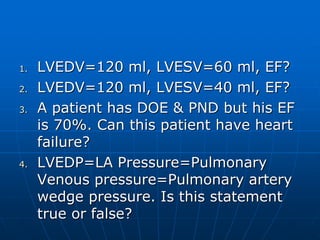
1. LVEDV=120 ml, LVESV=60 ml, EF?
2. LVEDV=120 ml, LVESV=40 ml, EF?
3. A patient has DOE & PND but his EF
is 70%. Can this patient have heart
failure?
4. LVEDP=LA Pressure=Pulmonary
Venous pressure=Pulmonary artery
wedge pressure. Is this statement
true or false?
 [LVEDV-LVESV]/LVEDV=EF
 When EF<40%, Heart failure with
reduced ejection fraction (HFrEF)
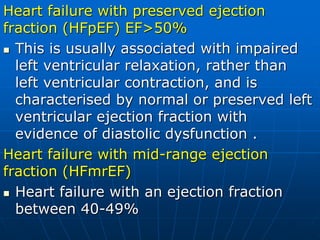
Heart failure with preserved ejection
fraction (HFpEF) EF>50%
 This is usually associated with impaired
left ventricular relaxation, rather than
left ventricular contraction, and is
characterised by normal or preserved left
ventricular ejection fraction with
evidence of diastolic dysfunction .
Heart failure with mid-range ejection
fraction (HFmrEF)
 Heart failure with an ejection fraction
between 40-49%
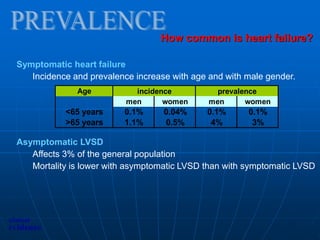
Symptomatic heart failure
Incidence and prevalence increase with age and with male gender.
Asymptomatic LVSD
Affects 3% of the general population
Mortality is lower with asymptomatic LVSD than with symptomatic LVSD
Age
men women men women
<65 years 0.1% 0.04% 0.1% 0.1%
>65 years 1.1% 0.5% 4% 3%
incidence prevalence
How common is heart failure?
clinical
evidence
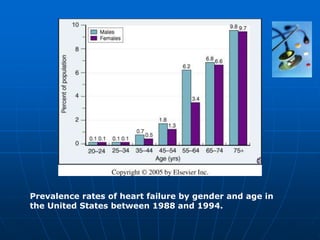
Prevalence rates of heart failure by gender and age in
the United States between 1988 and 1994.
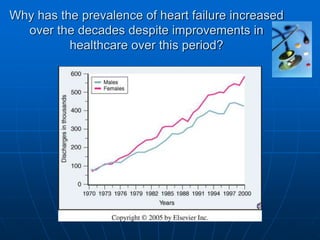
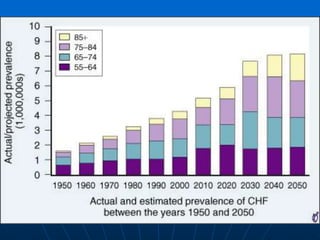
Why has the prevalence of heart failure increased
over the decades despite improvements in
healthcare over this period?
Left and right heart failure
 Left and right heart failure are quite
distinct clinical syndromes, although they
frequently coexist (biventricular failure).
 LV Systolic: poor EF, impaired organ
perfusion
 LV Diastolic: pulmonary edema
 RV Systolic: hypoxia due to impaired lung
perfusion
 RV Diastolic: venous pooling of blood
Historical types
 Historically, heart failure has been further
subdivided on the basis of presumed
pathophysiological mechanisms into:
 (1) forward or backward heart failure,
depending on whether congestion or
organ underperfusion was the
predominant clinical feature;
 (2) congestive or non-congestive,
depending on the presence or absence of
oedema; and
 (3) high-output or low-output.
Acute and chronic heart failure
 Acute heart failure usually has a
dramatic clinical presentation, with an
acutely dyspnoeic patient demonstrating
visible signs of cardiovascular insufficiency
such as tachycardia, pulmonary or
peripheral oedema and cardiogenic shock
with underperfusion of systemic organs.
 Chronic heart failure, by contrast, can
be a subtle disorder, in which, a chronic
persistent state of circulatory insufficiency
can exist with pulmonary and peripheral
oedema and symptoms and signs of
distress even at rest.
What is the type of heart failure?
1. A patient with pitting pedal edema,
soft tender hepatomegaly, ascites
and raised JVP.
2. A patient in cardiogenic shock and
pre-renal AKI.
3. A patient with proven pulmonary
embolism.
4. A patient presenting with acute
pulmonary oedema.
Causes of heart failure
Loss of myocytes
1.Ischaemic heart disease,
2.Idiopathic dilated cardiomyopathy,
Familial cardiomyopathies,
3.Infective cardiomyopathies,
e.g. Chagas' disease, viral
myocarditis
4.Toxic cardiomyopathies including
alcoholic cardiomyopathy,
5.Infiltrative conditions: sarcoid,
amyloid, iron overload, Cardiac
neoplasms.
Myocyte dysfunction
1.Nutritional deficiencies,
2.Chronic ischaemia
(hibernating myocardium),
3.Hypertrophic cardiomyopathy,
Restrictive cardiomyopathy,
Secondary to chronic
tachyarrhythmia,
4.Endocrine disorders, e.g.
thyrotoxic, hypocalcaemic,
acromegalic
Alterations in myocardial interstitium
Senile myocardial fibrosis
Endomyocardial fibrosis
Valvular disorders
Rheumatic heart disease
Congenital valve disease
Senile valve calcification
Mitral valve prolapse
Paravalvar dysfunction, e.g. paraprosthetic
leak, dissection of aortic valve
Infective endocarditis
Non-infective endocarditis, e.g. secondary to
connective tissue diseases
Pericardial disorders
Constrictive pericarditis
Cardiac tamponade
Extracardiac causes
Volume overload,
e.g. anaemia, arteriovenous shunt
Pressure overload,
e.g. coarctation, severe hypertension
Pathophysiology
 Structural changes in the heart are
common, both at macroscopic and
microscopic levels.
 The clinical picture usually includes
enlargement of the left ventricular cavity
(with the exception of diastolic dysfunction
and restrictive or constrictive
cardiomyopathies).
 The shape of the ventricle also changes
becoming more spherical.
 The enlargement of the ventricle is
associated with a thinning of the
ventricular wall
Pathophysiology
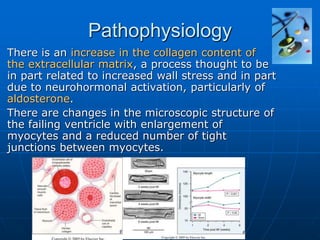
There is an increase in the collagen content of
the extracellular matrix, a process thought to be
in part related to increased wall stress and in part
due to neurohormonal activation, particularly of
aldosterone.
There are changes in the microscopic structure of
the failing ventricle with enlargement of
myocytes and a reduced number of tight
junctions between myocytes.
Pathophysiology
 If there is a reduction in myocardial
contractile function an enlargement
of the ventricle will develop in which
a greater preload will enhance
ventricular emptying via the Frank-
Starling mechanism. As a result the
ventricle will operate at an increased
end-diastolic and end-systolic
volume.
The Lungs in CCF
 With an acute reduction in left ventricular
performance a rapid increase in left
ventricular filling pressures and hence
pulmonary venous pressures will lead to
fluid accumulation in the lung
parenchyma. Initially this will decrease the
compliance of the lung, thereby reducing
vital capacity and increasing the work of
breathing. It may also, via oedematous
swelling of the bronchial mucosa, cause a
non-asthmatic bronchial constriction which
can mimic asthma and further increase
respiratory muscle work.
The Lungs in CCF
 With more severe pulmonary venous
hypertension the alveolar membrane
becomes thickened and oedematous and
this may impair gas exchange leading to
an increase in the alveolar-arterial oxygen
gradient and eventually arterial
hypoxaemia. Eventually frank pulmonary
oedema can form, further exacerbating
the above processes and leading to the
clinical picture of gross dyspnoea,
hypoxaemia, lung crepitations, and the
production of copious quantities of pink
frothy sputum (the alveolar oedema fluid
itself).
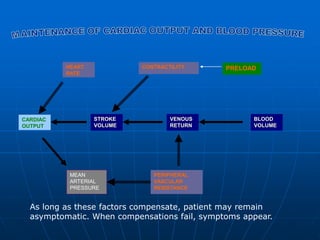
CARDIAC
OUTPUT
STROKE
VOLUME
HEART
RATE
VENOUS
RETURN
CONTRACTILITY
BLOOD
VOLUME
PERIPHERAL
VASCULAR
RESISTANCE
MEAN
ARTERIAL
PRESSURE
PRELOAD
As long as these factors compensate, patient may remain
asymptomatic. When compensations fail, symptoms appear.
1. A patient with chronic aortic stenosis who
has been stable for the last 8 years with
only occasional exertional syncope and a
mild pitting pedal oedema, now develops
worsening peripheral oedema and
pulmonary edema. Pulse is now feeble
with cold extremities and BP 82/56
mmHg. What has occurred to this
patient?
The renin-angiotensin-aldosterone system
 In untreated heart failure there is a mild
activation of the renin system.
 This is dramatically augmented by the first
use of diuretics in the treatment of the
heart failure.
 After that there is a reasonable
relationship between the severity of the
heart failure and further increases in
circulating renin and angiotensin II levels.
ß-Receptor function
 With chronic sympathetic activation
there is a down-regulation of ß1
receptors on the myocardium.
 There is also a decoupling of
receptors from the post-receptor
response, all of which lead to a loss
of myocardial response to increased
sympathetic drive.
The natriuretic peptide systems
 The atria and ventricles contain granulated cells
which release peptides, atrial natriuretic
peptide (ANP or ANF), brain natriuretic peptide
(BNP), and C-type natriuretic peptide (CNP) in
response to stretch. These peptides are
natriuretic agents which also relax peripheral
vasculature and thereby mildly oppose the
actions of the sympathetic and renin-
angiotensin systems. There is an increased
release of these peptides in chronic heart
failure associated with cardiac enlargement.
 NT-pro BNP can be estimated to diagnose CCF
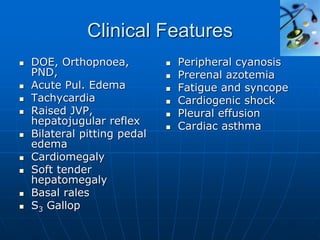
Clinical Features
 DOE, Orthopnoea,
PND,
 Acute Pul. Edema
 Tachycardia
 Raised JVP,
hepatojugular reflex
 Bilateral pitting pedal
edema
 Cardiomegaly
 Soft tender
hepatomegaly
 Basal rales
 S3 Gallop
 Peripheral cyanosis
 Prerenal azotemia
 Fatigue and syncope
 Cardiogenic shock
 Pleural effusion
 Cardiac asthma
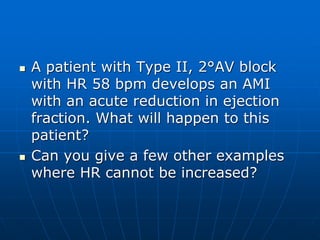
 A patient with Type II, 2°AV block
with HR 58 bpm develops an AMI
with an acute reduction in ejection
fraction. What will happen to this
patient?
 Can you give a few other examples
where HR cannot be increased?
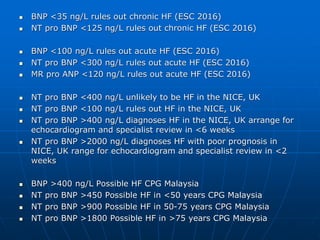
 BNP <35 ng/L rules out chronic HF (ESC 2016)
 NT pro BNP <125 ng/L rules out chronic HF (ESC 2016)
 BNP <100 ng/L rules out acute HF (ESC 2016)
 NT pro BNP <300 ng/L rules out acute HF (ESC 2016)
 MR pro ANP <120 ng/L rules out acute HF (ESC 2016)
 NT pro BNP <400 ng/L unlikely to be HF in the NICE, UK
 NT pro BNP <100 ng/L rules out HF in the NICE, UK
 NT pro BNP >400 ng/L diagnoses HF in the NICE, UK arrange for
echocardiogram and specialist review in <6 weeks
 NT pro BNP >2000 ng/L diagnoses HF with poor prognosis in
NICE, UK range for echocardiogram and specialist review in <2
weeks
 BNP >400 ng/L Possible HF CPG Malaysia
 NT pro BNP >450 Possible HF in <50 years CPG Malaysia
 NT pro BNP >900 Possible HF in 50-75 years CPG Malaysia
 NT pro BNP >1800 Possible HF in >75 years CPG Malaysia
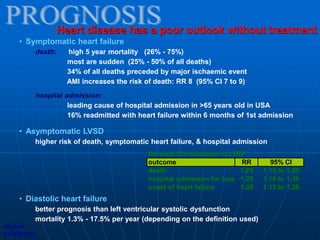
• Symptomatic heart failure
death: high 5 year mortality (26% - 75%)
most are sudden (25% - 50% of all deaths)
34% of all deaths preceded by major ischaemic event
AMI increases the risk of death: RR 8 (95% CI 7 to 9)
hospital admission:
leading cause of hospital admission in >65 years old in USA
16% readmitted with heart failure within 6 months of 1st admission
• Asymptomatic LVSD
higher risk of death, symptomatic heart failure, & hospital admission
• Diastolic heart failure
better prognosis than left ventricular systolic dysfunction
mortality 1.3% - 17.5% per year (depending on the definition used)
Heart disease has a poor outlook without treatment
outcome RR 95% CI
death 1.20 1.13 to 1.29
hospital admission for heart failure
1.28 1.18 to 1.38
onset of heart failure 1.20 1.13 to 1.26
for each 5% reduction in LVEF
clinical
evidence
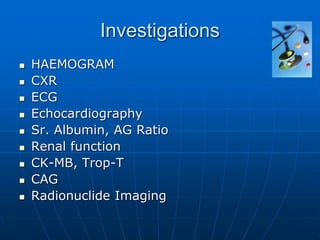
Investigations
 HAEMOGRAM
 CXR
 ECG
 Echocardiography
 Sr. Albumin, AG Ratio
 Renal function
 CK-MB, Trop-T
 CAG
 Radionuclide Imaging
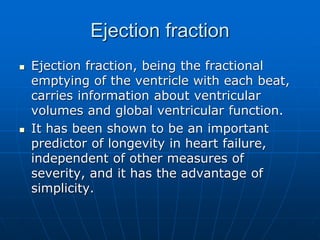
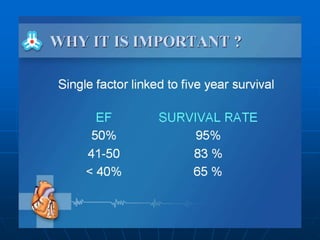
Ejection fraction
 Ejection fraction, being the fractional
emptying of the ventricle with each beat,
carries information about ventricular
volumes and global ventricular function.
 It has been shown to be an important
predictor of longevity in heart failure,
independent of other measures of
severity, and it has the advantage of
simplicity.
How many clinical & lab
features of heart failure
can you recollect?
• relieve symptoms
• improve quality of life
• reduce mortality and morbidity
• minimise adverse effects
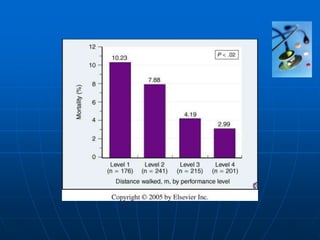
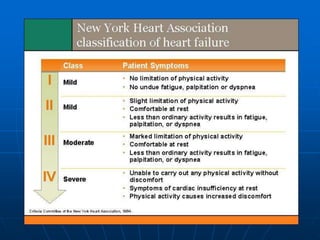
• Functional capacity
- New York Heart Association scale
- standardised exercise testing
- 6 minute walk test
• Quality of life
questionnaires
• Mortality
• Adverse effects
[Proxy measures used only when clinical
outcomes are unavailable
- LVEF
- hospital readmission rates]
Aims
Measures
clinical
evidence
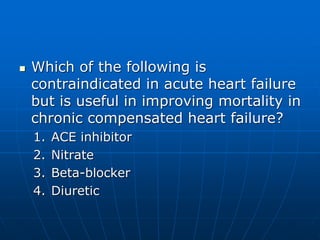
 Which of the following is
contraindicated in acute heart failure
but is useful in improving mortality in
chronic compensated heart failure?
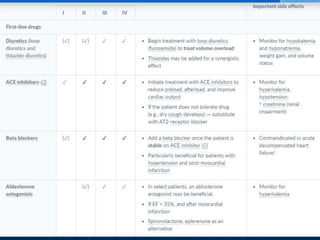
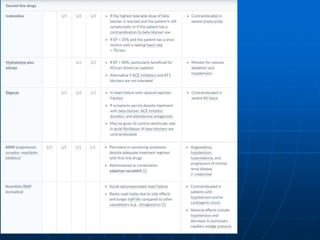
1. ACE inhibitor
2. Nitrate
3. Beta-blocker
4. Diuretic
Cardiac Failure Sem 5.pptx

Cardiac Failure Sem 5.pptx

  • 1.
  • 2.
    Reduced cardiac output(blood pumped in one minute) Heart failure is the clinical syndrome that develops when the heart cannot maintain an adequate cardiac output, or can do so only at the expense of an elevated filling pressure. Impaired pump function • systolic left ventricular ejection fraction (LVEF) < 0.4 (40%) EF=[LVEDV-LVESV]/LVEDV • diastolic difficult to define & diagnose 1) clinical evidence of heart failure 2) minimal or no LVEF reduction 3) abnormal ventricular relaxation, filling, distensibility or stiffness (difficult to standardise) Characteristic symptoms heart failure can be asymptomatic or associated with: breathlessness, effort intolerance, fluid retention. What is heart failure? clinical evidence
  • 3.
    1. LVEDV=120 ml,LVESV=60 ml, EF? 2. LVEDV=120 ml, LVESV=40 ml, EF? 3. A patient has DOE & PND but his EF is 70%. Can this patient have heart failure? 4. LVEDP=LA Pressure=Pulmonary Venous pressure=Pulmonary artery wedge pressure. Is this statement true or false?
  • 4.
     [LVEDV-LVESV]/LVEDV=EF  WhenEF<40%, Heart failure with reduced ejection fraction (HFrEF)
  • 5.
    Heart failure withpreserved ejection fraction (HFpEF) EF>50%  This is usually associated with impaired left ventricular relaxation, rather than left ventricular contraction, and is characterised by normal or preserved left ventricular ejection fraction with evidence of diastolic dysfunction . Heart failure with mid-range ejection fraction (HFmrEF)  Heart failure with an ejection fraction between 40-49%
  • 6.
    Symptomatic heart failure Incidenceand prevalence increase with age and with male gender. Asymptomatic LVSD Affects 3% of the general population Mortality is lower with asymptomatic LVSD than with symptomatic LVSD Age men women men women <65 years 0.1% 0.04% 0.1% 0.1% >65 years 1.1% 0.5% 4% 3% incidence prevalence How common is heart failure? clinical evidence
  • 7.
    Prevalence rates ofheart failure by gender and age in the United States between 1988 and 1994.
  • 8.
    Why has theprevalence of heart failure increased over the decades despite improvements in healthcare over this period?
  • 11.
    Left and rightheart failure  Left and right heart failure are quite distinct clinical syndromes, although they frequently coexist (biventricular failure).  LV Systolic: poor EF, impaired organ perfusion  LV Diastolic: pulmonary edema  RV Systolic: hypoxia due to impaired lung perfusion  RV Diastolic: venous pooling of blood
  • 12.
    Historical types  Historically,heart failure has been further subdivided on the basis of presumed pathophysiological mechanisms into:  (1) forward or backward heart failure, depending on whether congestion or organ underperfusion was the predominant clinical feature;  (2) congestive or non-congestive, depending on the presence or absence of oedema; and  (3) high-output or low-output.
  • 13.
    Acute and chronicheart failure  Acute heart failure usually has a dramatic clinical presentation, with an acutely dyspnoeic patient demonstrating visible signs of cardiovascular insufficiency such as tachycardia, pulmonary or peripheral oedema and cardiogenic shock with underperfusion of systemic organs.  Chronic heart failure, by contrast, can be a subtle disorder, in which, a chronic persistent state of circulatory insufficiency can exist with pulmonary and peripheral oedema and symptoms and signs of distress even at rest.
  • 14.
    What is thetype of heart failure? 1. A patient with pitting pedal edema, soft tender hepatomegaly, ascites and raised JVP. 2. A patient in cardiogenic shock and pre-renal AKI. 3. A patient with proven pulmonary embolism. 4. A patient presenting with acute pulmonary oedema.
  • 15.
    Causes of heartfailure Loss of myocytes 1.Ischaemic heart disease, 2.Idiopathic dilated cardiomyopathy, Familial cardiomyopathies, 3.Infective cardiomyopathies, e.g. Chagas' disease, viral myocarditis 4.Toxic cardiomyopathies including alcoholic cardiomyopathy, 5.Infiltrative conditions: sarcoid, amyloid, iron overload, Cardiac neoplasms.
  • 16.
    Myocyte dysfunction 1.Nutritional deficiencies, 2.Chronicischaemia (hibernating myocardium), 3.Hypertrophic cardiomyopathy, Restrictive cardiomyopathy, Secondary to chronic tachyarrhythmia, 4.Endocrine disorders, e.g. thyrotoxic, hypocalcaemic, acromegalic
  • 17.
    Alterations in myocardialinterstitium Senile myocardial fibrosis Endomyocardial fibrosis
  • 18.
    Valvular disorders Rheumatic heartdisease Congenital valve disease Senile valve calcification Mitral valve prolapse Paravalvar dysfunction, e.g. paraprosthetic leak, dissection of aortic valve Infective endocarditis Non-infective endocarditis, e.g. secondary to connective tissue diseases
  • 19.
  • 20.
    Extracardiac causes Volume overload, e.g.anaemia, arteriovenous shunt Pressure overload, e.g. coarctation, severe hypertension
  • 21.
    Pathophysiology  Structural changesin the heart are common, both at macroscopic and microscopic levels.  The clinical picture usually includes enlargement of the left ventricular cavity (with the exception of diastolic dysfunction and restrictive or constrictive cardiomyopathies).  The shape of the ventricle also changes becoming more spherical.  The enlargement of the ventricle is associated with a thinning of the ventricular wall
  • 22.
    Pathophysiology There is anincrease in the collagen content of the extracellular matrix, a process thought to be in part related to increased wall stress and in part due to neurohormonal activation, particularly of aldosterone. There are changes in the microscopic structure of the failing ventricle with enlargement of myocytes and a reduced number of tight junctions between myocytes.
  • 23.
    Pathophysiology  If thereis a reduction in myocardial contractile function an enlargement of the ventricle will develop in which a greater preload will enhance ventricular emptying via the Frank- Starling mechanism. As a result the ventricle will operate at an increased end-diastolic and end-systolic volume.
  • 24.
    The Lungs inCCF  With an acute reduction in left ventricular performance a rapid increase in left ventricular filling pressures and hence pulmonary venous pressures will lead to fluid accumulation in the lung parenchyma. Initially this will decrease the compliance of the lung, thereby reducing vital capacity and increasing the work of breathing. It may also, via oedematous swelling of the bronchial mucosa, cause a non-asthmatic bronchial constriction which can mimic asthma and further increase respiratory muscle work.
  • 25.
    The Lungs inCCF  With more severe pulmonary venous hypertension the alveolar membrane becomes thickened and oedematous and this may impair gas exchange leading to an increase in the alveolar-arterial oxygen gradient and eventually arterial hypoxaemia. Eventually frank pulmonary oedema can form, further exacerbating the above processes and leading to the clinical picture of gross dyspnoea, hypoxaemia, lung crepitations, and the production of copious quantities of pink frothy sputum (the alveolar oedema fluid itself).
  • 26.
  • 27.
    1. A patientwith chronic aortic stenosis who has been stable for the last 8 years with only occasional exertional syncope and a mild pitting pedal oedema, now develops worsening peripheral oedema and pulmonary edema. Pulse is now feeble with cold extremities and BP 82/56 mmHg. What has occurred to this patient?
  • 28.
    The renin-angiotensin-aldosterone system In untreated heart failure there is a mild activation of the renin system.  This is dramatically augmented by the first use of diuretics in the treatment of the heart failure.  After that there is a reasonable relationship between the severity of the heart failure and further increases in circulating renin and angiotensin II levels.
  • 29.
    ß-Receptor function  Withchronic sympathetic activation there is a down-regulation of ß1 receptors on the myocardium.  There is also a decoupling of receptors from the post-receptor response, all of which lead to a loss of myocardial response to increased sympathetic drive.
  • 30.
    The natriuretic peptidesystems  The atria and ventricles contain granulated cells which release peptides, atrial natriuretic peptide (ANP or ANF), brain natriuretic peptide (BNP), and C-type natriuretic peptide (CNP) in response to stretch. These peptides are natriuretic agents which also relax peripheral vasculature and thereby mildly oppose the actions of the sympathetic and renin- angiotensin systems. There is an increased release of these peptides in chronic heart failure associated with cardiac enlargement.  NT-pro BNP can be estimated to diagnose CCF
  • 31.
    Clinical Features  DOE,Orthopnoea, PND,  Acute Pul. Edema  Tachycardia  Raised JVP, hepatojugular reflex  Bilateral pitting pedal edema  Cardiomegaly  Soft tender hepatomegaly  Basal rales  S3 Gallop  Peripheral cyanosis  Prerenal azotemia  Fatigue and syncope  Cardiogenic shock  Pleural effusion  Cardiac asthma
  • 32.
     A patientwith Type II, 2°AV block with HR 58 bpm develops an AMI with an acute reduction in ejection fraction. What will happen to this patient?  Can you give a few other examples where HR cannot be increased?
  • 33.
     BNP <35ng/L rules out chronic HF (ESC 2016)  NT pro BNP <125 ng/L rules out chronic HF (ESC 2016)  BNP <100 ng/L rules out acute HF (ESC 2016)  NT pro BNP <300 ng/L rules out acute HF (ESC 2016)  MR pro ANP <120 ng/L rules out acute HF (ESC 2016)  NT pro BNP <400 ng/L unlikely to be HF in the NICE, UK  NT pro BNP <100 ng/L rules out HF in the NICE, UK  NT pro BNP >400 ng/L diagnoses HF in the NICE, UK arrange for echocardiogram and specialist review in <6 weeks  NT pro BNP >2000 ng/L diagnoses HF with poor prognosis in NICE, UK range for echocardiogram and specialist review in <2 weeks  BNP >400 ng/L Possible HF CPG Malaysia  NT pro BNP >450 Possible HF in <50 years CPG Malaysia  NT pro BNP >900 Possible HF in 50-75 years CPG Malaysia  NT pro BNP >1800 Possible HF in >75 years CPG Malaysia
  • 34.
    • Symptomatic heartfailure death: high 5 year mortality (26% - 75%) most are sudden (25% - 50% of all deaths) 34% of all deaths preceded by major ischaemic event AMI increases the risk of death: RR 8 (95% CI 7 to 9) hospital admission: leading cause of hospital admission in >65 years old in USA 16% readmitted with heart failure within 6 months of 1st admission • Asymptomatic LVSD higher risk of death, symptomatic heart failure, & hospital admission • Diastolic heart failure better prognosis than left ventricular systolic dysfunction mortality 1.3% - 17.5% per year (depending on the definition used) Heart disease has a poor outlook without treatment outcome RR 95% CI death 1.20 1.13 to 1.29 hospital admission for heart failure 1.28 1.18 to 1.38 onset of heart failure 1.20 1.13 to 1.26 for each 5% reduction in LVEF clinical evidence
  • 37.
    Investigations  HAEMOGRAM  CXR ECG  Echocardiography  Sr. Albumin, AG Ratio  Renal function  CK-MB, Trop-T  CAG  Radionuclide Imaging
  • 39.
    Ejection fraction  Ejectionfraction, being the fractional emptying of the ventricle with each beat, carries information about ventricular volumes and global ventricular function.  It has been shown to be an important predictor of longevity in heart failure, independent of other measures of severity, and it has the advantage of simplicity.
  • 41.
    How many clinical& lab features of heart failure can you recollect?
  • 42.
    • relieve symptoms •improve quality of life • reduce mortality and morbidity • minimise adverse effects • Functional capacity - New York Heart Association scale - standardised exercise testing - 6 minute walk test • Quality of life questionnaires • Mortality • Adverse effects [Proxy measures used only when clinical outcomes are unavailable - LVEF - hospital readmission rates] Aims Measures clinical evidence
  • 45.
     Which ofthe following is contraindicated in acute heart failure but is useful in improving mortality in chronic compensated heart failure? 1. ACE inhibitor 2. Nitrate 3. Beta-blocker 4. Diuretic