GAS CARRIERS
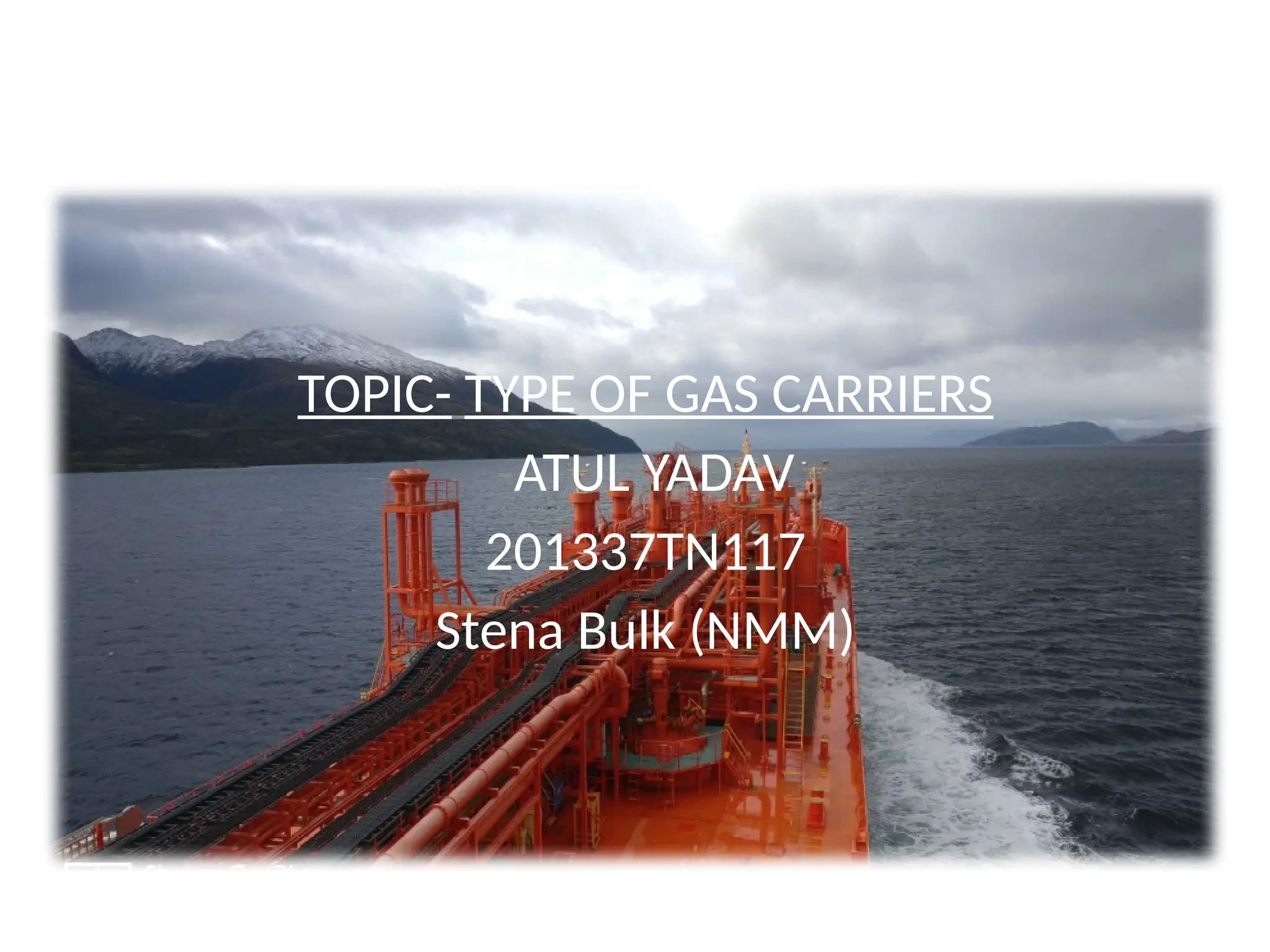
TOPIC- TYPE OF GAS CARRIERS
-ATUL YADAV
201337TN117
Stena Bulk (NMM)
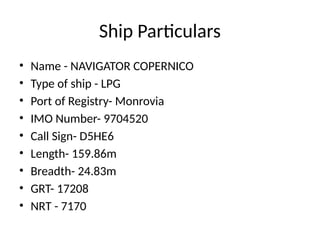
Ship Particulars
• Name - NAVIGATOR COPERNICO
• Type of ship - LPG
• Port of Registry- Monrovia
• IMO Number- 9704520
• Call Sign- D5HE6
• Length- 159.86m
• Breadth- 24.83m
• GRT- 17208
• NRT - 7170
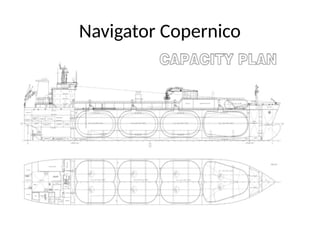
Navigator Copernico
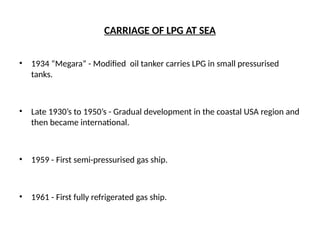
CARRIAGE OF LPG AT SEA
• 1934 “Megara” - Modified oil tanker carries LPG in small pressurised
tanks.
• Late 1930’s to 1950’s - Gradual development in the coastal USA region and
then became international.
• 1959 - First semi-pressurised gas ship.
• 1961 - First fully refrigerated gas ship.
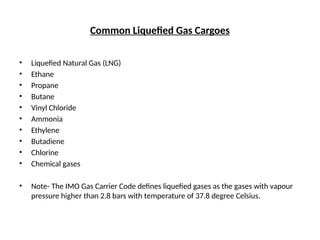
Common Liquefied Gas Cargoes
• Liquefied Natural Gas (LNG)
• Ethane
• Propane
• Butane
• Vinyl Chloride
• Ammonia
• Ethylene
• Butadiene
• Chlorine
• Chemical gases
• Note- The IMO Gas Carrier Code defines liquefied gases as the gases with vapour
pressure higher than 2.8 bars with temperature of 37.8 degree Celsius.
Introduction
• Gas carriers are the ships intended for transportation of compressed or liquefied
gas.
• Gas carriers are special type of ships that are used to carry highly inflammable
gases under controlled temperature and pressure.
• Liquefied gas carriers are specialized vessels that are used to transport Liquefied
Natural Gas (LNG) and Liquefied Petroleum Gas (LPG) under controlled
temperature and pressure.
Gas carriers are divided into Two main groups
• Liquefied Petroleum Gas (LPG) Carriers, which are designed to carry mainly
butane, propane, butadiene, propylene, vinyl chloride monomer (VCM) and are
able to carry anhydrous ammonia.
• Liquefied Natural Gas (LNG) Carriers, which are designed to carry liquefied natural
gas (which is mostly methane).
Gas carriers are classed in three types based on hazard
potential
i) Type 1G- designed to carry the most hazardous cargoes.
ii) Type 2G and 2PG- designed to carry cargoes having a lesser degree of hazard.
iii) Type 3G- designed to carry cargoes of the least hazardous nature.
• All gas cargoes are transported in liquid form- they are not carried as a gas in its
vapour form.
• Because of their physical and chemical properties, they are carried either at:
- pressures greater than atmospheric, or at
- temperatures below ambient, or a combination of both.
Therefore, gas carriers are having three types .
Gas Tanker Types
• Fully Pressurised ships
• Semi-pressurised and refrigerated
• Fully Refrigerated LPG Ships
Fully Refrigerated LPG Ships
• Fully refrigerated tankers are built to carry liquefied gases at low temperature and
atmospheric pressure between terminals equipped with fully refrigerated storage
tanks.
• The tankers have prismatic-shaped cargo tanks fabricated from 3.5% nickel steel,
allowing the carriage of cargoes at temperatures as low as –48°C, marginally below
the boiling point of pure propane.
• Prismatic tanks enabled the ship’s cargo carrying capacity to be maximized.
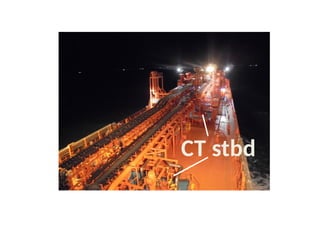
CT stbd
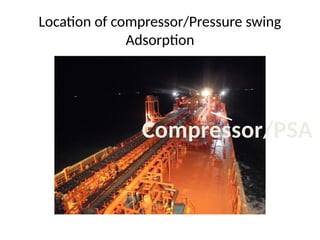
Location of compressor/Pressure swing
Adsorption
Compressor/PSA
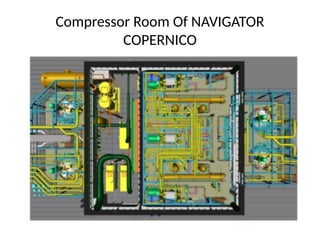
Compressor Room Of NAVIGATOR
COPERNICO
Cargo Containment Systems
A cargo containment system is the total arrangement for containing cargo including,
where fitted:
• A primary barrier (the cargo tank)
• Secondary barrier (if fitted)
• Associated thermal insulation
• Any intervening spaces, and
• Adjacent structure, if necessary, for the support of these elements. For cargoes
carried at temperatures between -10°C and -55°C the tanker's hull may act as the
secondary barrier and in such cases it may be a boundary of the hold space.
The basic cargo tank types
• lndependent Type 'A' (fully ref.)
• lndependent Type 'B' (typical LNG tank)
• Independent Type 'C' (fully pressurized)
• Membrane Tanks
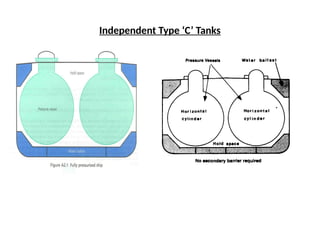
Independent Type 'C' (fully Pressurized)
• Type 'C' tanks are normally spherical or cylindrical pressure vessels having design
pressures higher than 4 bar. The cylindrical vessels may be vertically or horizontally
mounted.
• This type of containment system is always used for semi-pressurized and fully
pressurized gas carriers.
• In the case of the semi-pressurized tankers it can also be used for fully refrigerated
carriage, provided appropriate low temperature steels are used in tank
construction.
• No secondary barrier is required for Type 'C' tanks.
• The hold space can be filled with either inert gas or dry air.
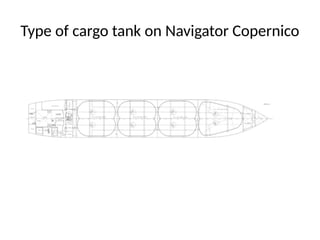
Type of cargo tank on Navigator Copernico
Independent Type ‘C’ Tanks
Thank You!

Car Carrier its purpose problems and uses.pptx

  • 1.
    GAS CARRIERS TOPIC- TYPEOF GAS CARRIERS -ATUL YADAV 201337TN117 Stena Bulk (NMM)
  • 2.
    Ship Particulars • Name- NAVIGATOR COPERNICO • Type of ship - LPG • Port of Registry- Monrovia • IMO Number- 9704520 • Call Sign- D5HE6 • Length- 159.86m • Breadth- 24.83m • GRT- 17208 • NRT - 7170
  • 3.
  • 4.
    CARRIAGE OF LPGAT SEA • 1934 “Megara” - Modified oil tanker carries LPG in small pressurised tanks. • Late 1930’s to 1950’s - Gradual development in the coastal USA region and then became international. • 1959 - First semi-pressurised gas ship. • 1961 - First fully refrigerated gas ship.
  • 5.
    Common Liquefied GasCargoes • Liquefied Natural Gas (LNG) • Ethane • Propane • Butane • Vinyl Chloride • Ammonia • Ethylene • Butadiene • Chlorine • Chemical gases • Note- The IMO Gas Carrier Code defines liquefied gases as the gases with vapour pressure higher than 2.8 bars with temperature of 37.8 degree Celsius.
  • 6.
    Introduction • Gas carriersare the ships intended for transportation of compressed or liquefied gas. • Gas carriers are special type of ships that are used to carry highly inflammable gases under controlled temperature and pressure. • Liquefied gas carriers are specialized vessels that are used to transport Liquefied Natural Gas (LNG) and Liquefied Petroleum Gas (LPG) under controlled temperature and pressure.
  • 7.
    Gas carriers aredivided into Two main groups • Liquefied Petroleum Gas (LPG) Carriers, which are designed to carry mainly butane, propane, butadiene, propylene, vinyl chloride monomer (VCM) and are able to carry anhydrous ammonia. • Liquefied Natural Gas (LNG) Carriers, which are designed to carry liquefied natural gas (which is mostly methane).
  • 8.
    Gas carriers areclassed in three types based on hazard potential i) Type 1G- designed to carry the most hazardous cargoes. ii) Type 2G and 2PG- designed to carry cargoes having a lesser degree of hazard. iii) Type 3G- designed to carry cargoes of the least hazardous nature.
  • 9.
    • All gascargoes are transported in liquid form- they are not carried as a gas in its vapour form. • Because of their physical and chemical properties, they are carried either at: - pressures greater than atmospheric, or at - temperatures below ambient, or a combination of both. Therefore, gas carriers are having three types .
  • 10.
    Gas Tanker Types •Fully Pressurised ships • Semi-pressurised and refrigerated • Fully Refrigerated LPG Ships
  • 11.
    Fully Refrigerated LPGShips • Fully refrigerated tankers are built to carry liquefied gases at low temperature and atmospheric pressure between terminals equipped with fully refrigerated storage tanks. • The tankers have prismatic-shaped cargo tanks fabricated from 3.5% nickel steel, allowing the carriage of cargoes at temperatures as low as –48°C, marginally below the boiling point of pure propane. • Prismatic tanks enabled the ship’s cargo carrying capacity to be maximized.
  • 12.
  • 13.
    Location of compressor/Pressureswing Adsorption Compressor/PSA
  • 14.
    Compressor Room OfNAVIGATOR COPERNICO
  • 15.
    Cargo Containment Systems Acargo containment system is the total arrangement for containing cargo including, where fitted: • A primary barrier (the cargo tank) • Secondary barrier (if fitted) • Associated thermal insulation • Any intervening spaces, and • Adjacent structure, if necessary, for the support of these elements. For cargoes carried at temperatures between -10°C and -55°C the tanker's hull may act as the secondary barrier and in such cases it may be a boundary of the hold space.
  • 16.
    The basic cargotank types • lndependent Type 'A' (fully ref.) • lndependent Type 'B' (typical LNG tank) • Independent Type 'C' (fully pressurized) • Membrane Tanks
  • 17.
    Independent Type 'C'(fully Pressurized) • Type 'C' tanks are normally spherical or cylindrical pressure vessels having design pressures higher than 4 bar. The cylindrical vessels may be vertically or horizontally mounted. • This type of containment system is always used for semi-pressurized and fully pressurized gas carriers. • In the case of the semi-pressurized tankers it can also be used for fully refrigerated carriage, provided appropriate low temperature steels are used in tank construction. • No secondary barrier is required for Type 'C' tanks. • The hold space can be filled with either inert gas or dry air.
  • 18.
    Type of cargotank on Navigator Copernico
  • 19.
  • 20.