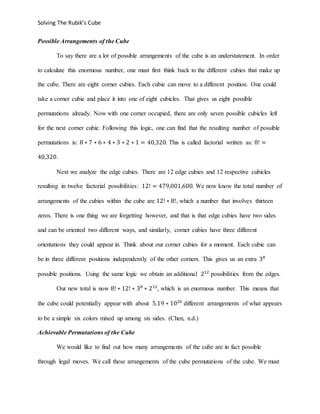
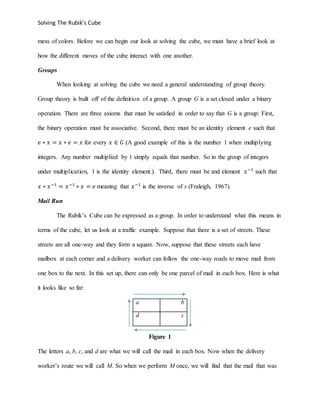
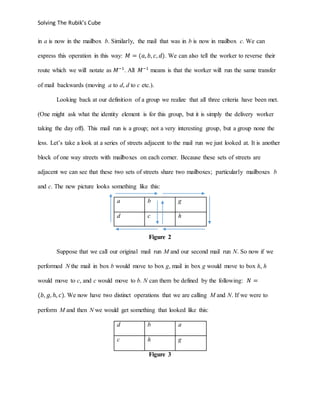
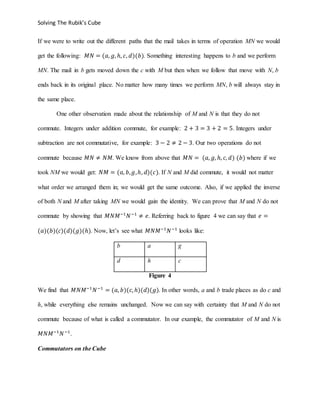
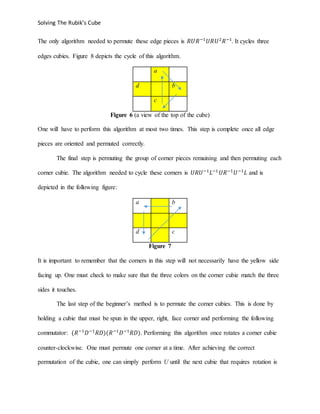
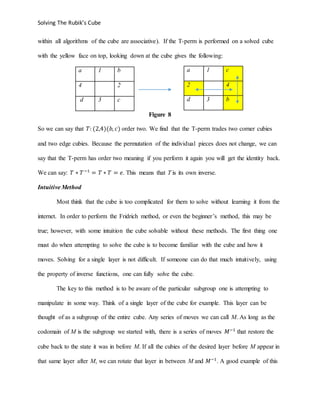
This document analyzes the Fridrich method for solving the Rubik's Cube by examining the underlying group theory and algebra. It discusses the history and development of speedcubing, provides an overview of the cube's composition and the large number of possible arrangements. However, only a fraction of these arrangements can be achieved through legal turns. The document then analyzes the moves and interactions that generate the permutations and looks at applying group theory to understanding the cube's solving algorithms.