The document discusses the trustworthiness of the Bible as a record of historical events and God's word, addressing questions of preservation and accuracy compared to other ancient texts. It highlights that there are around 25,000 manuscripts of the New Testament, which were copied with high accuracy and support the reliability of the Bible's content. The author encourages readers to approach the Bible with an open heart, suggesting that it provides guidance and speaks to diverse contexts of life.
Can I trustit as a
faithful record of
events that happened
so long ago ?
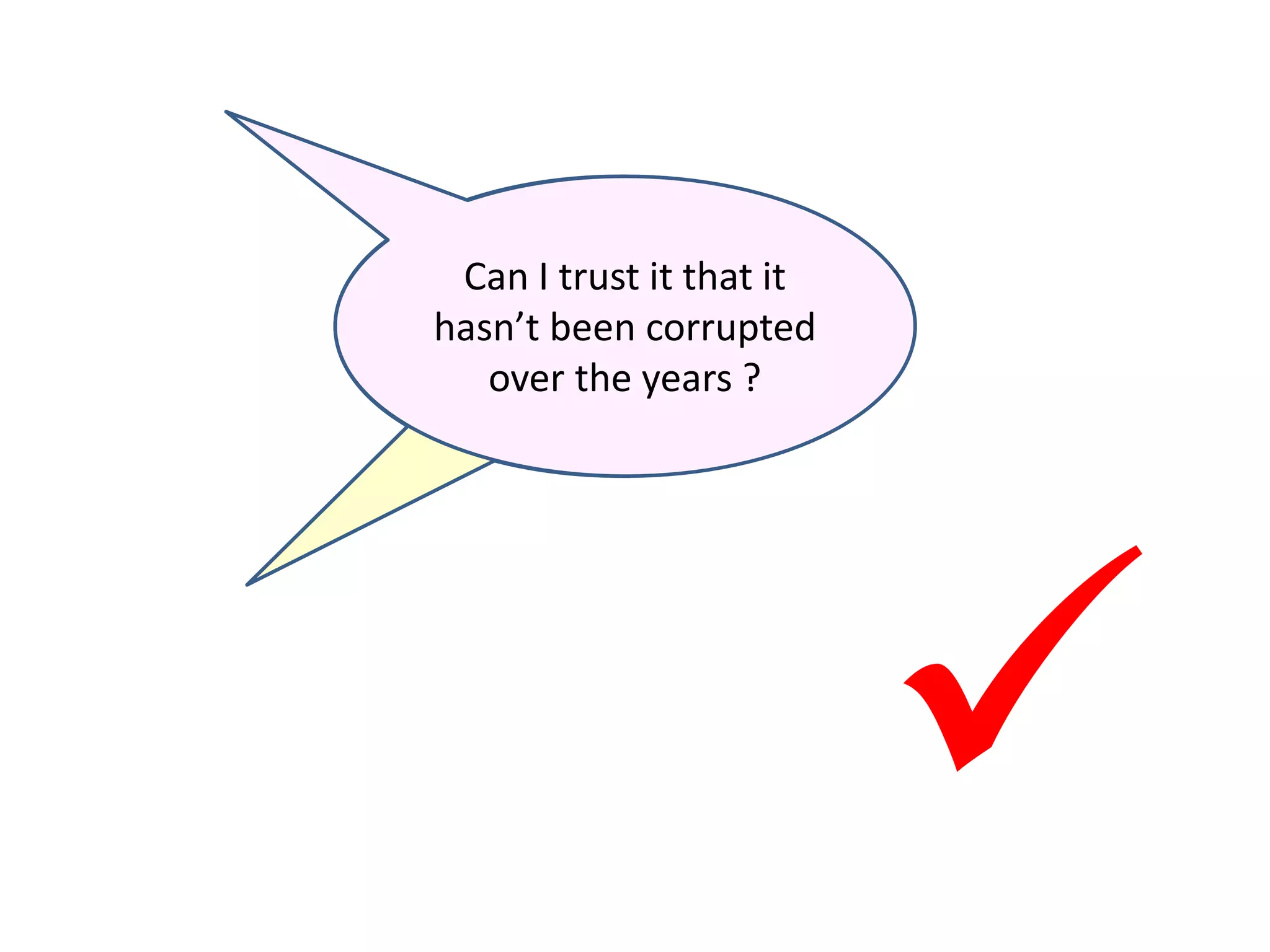
Can I trust it that it
hasn’t been corrupted
over the years ?
Can I trust it to
lead me to God and
to guide me in living ?
Can I trust that it
really is God’s word ?
4.
Can I trustthe Bible
as a faithful record of
events that happened
so long ago ?
5.
Ancient books werenot like modern books...
...they were far more valuable!
6.
But scrolls wearout and ink fades...
...how were ancient books preserved?
Can I trustthe Bible
as a faithful record of
events that happened
so long ago ?
Can I trust it that it
hasn’t been corrupted
over the years ?
36.
Can I trustthe Bible
as a faithful record of
events that happened
so long ago ?
Can I trust it that it
hasn’t been corrupted
over the years ?
Can I trust that it
really is God’s word ?
37.
Was it leftfor us, pre-written, on a hillside
like the Book of Mormon ?
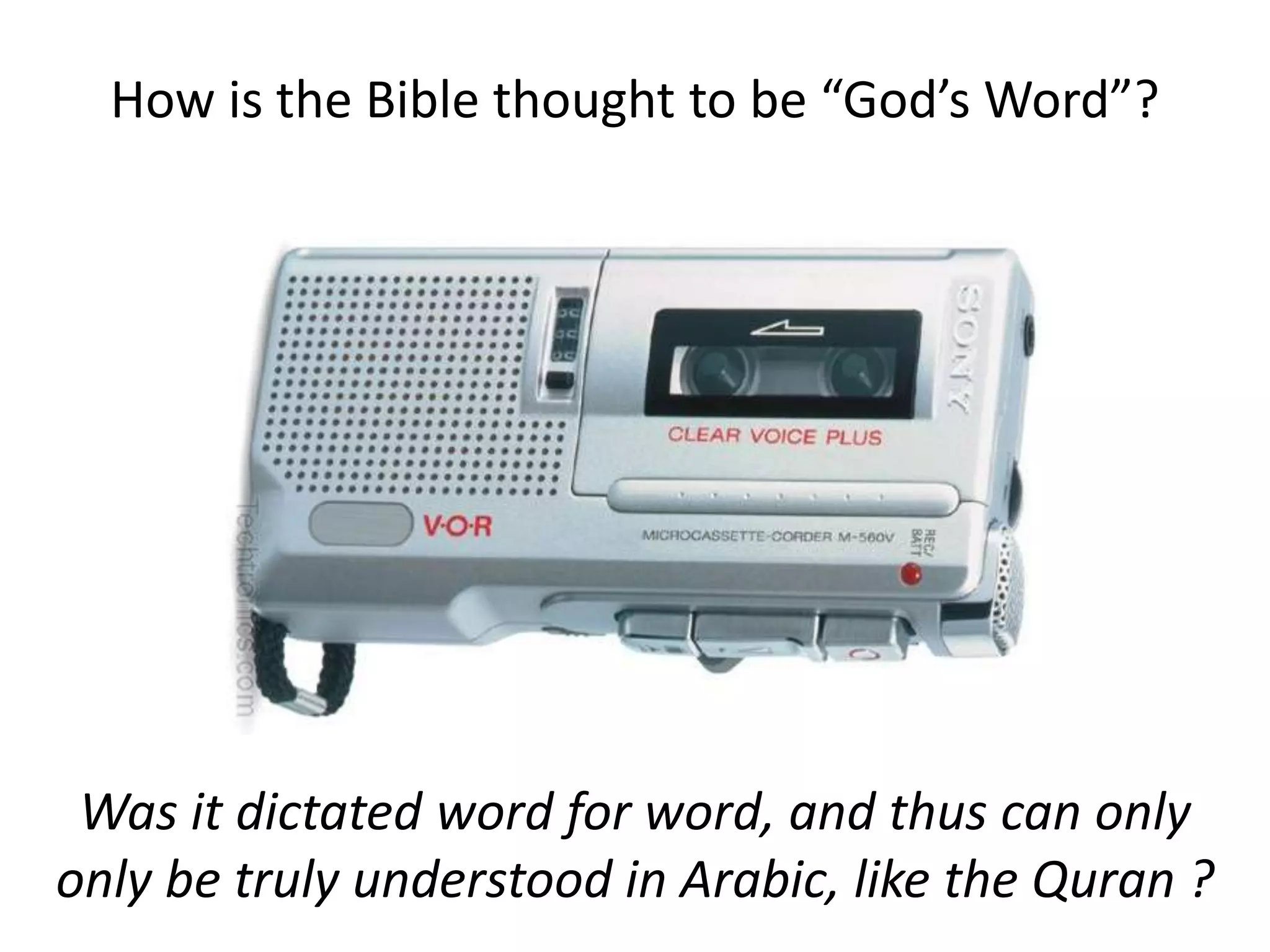
How is the Bible thought to be “God’s Word”?
38.
Was it dictatedword for word, and thus can only
only be truly understood in Arabic, like the Quran ?
How is the Bible thought to be “God’s Word”?
...
but they don’tcohere
either with
the complexity of our world
or
the personality God has to have!
51.
None of thisproves the Bible is God’s word;
but it does suggest that the Bible is
consistent with a relational God
who wants to communicate
with you and me
now
...
52.
it is not“pre-scientific” nonsense;
it is consistent with precisely
the kind of universe
we now know
we live in
Can I trustthe Bible
as a faithful record of
events that happened
so long ago ?
Can I trust it that it
hasn’t been corrupted
over the years ?
Can I trust that it
really is God’s word ?
55.
Can I trustthe Bible
as a faithful record of
events that happened
so long ago ?
Can I trust it that it
hasn’t been corrupted
over the years ?
Can I trust that it
really is God’s word ?
Can I trust it to
lead me to God and
to guide me in living ?
56.
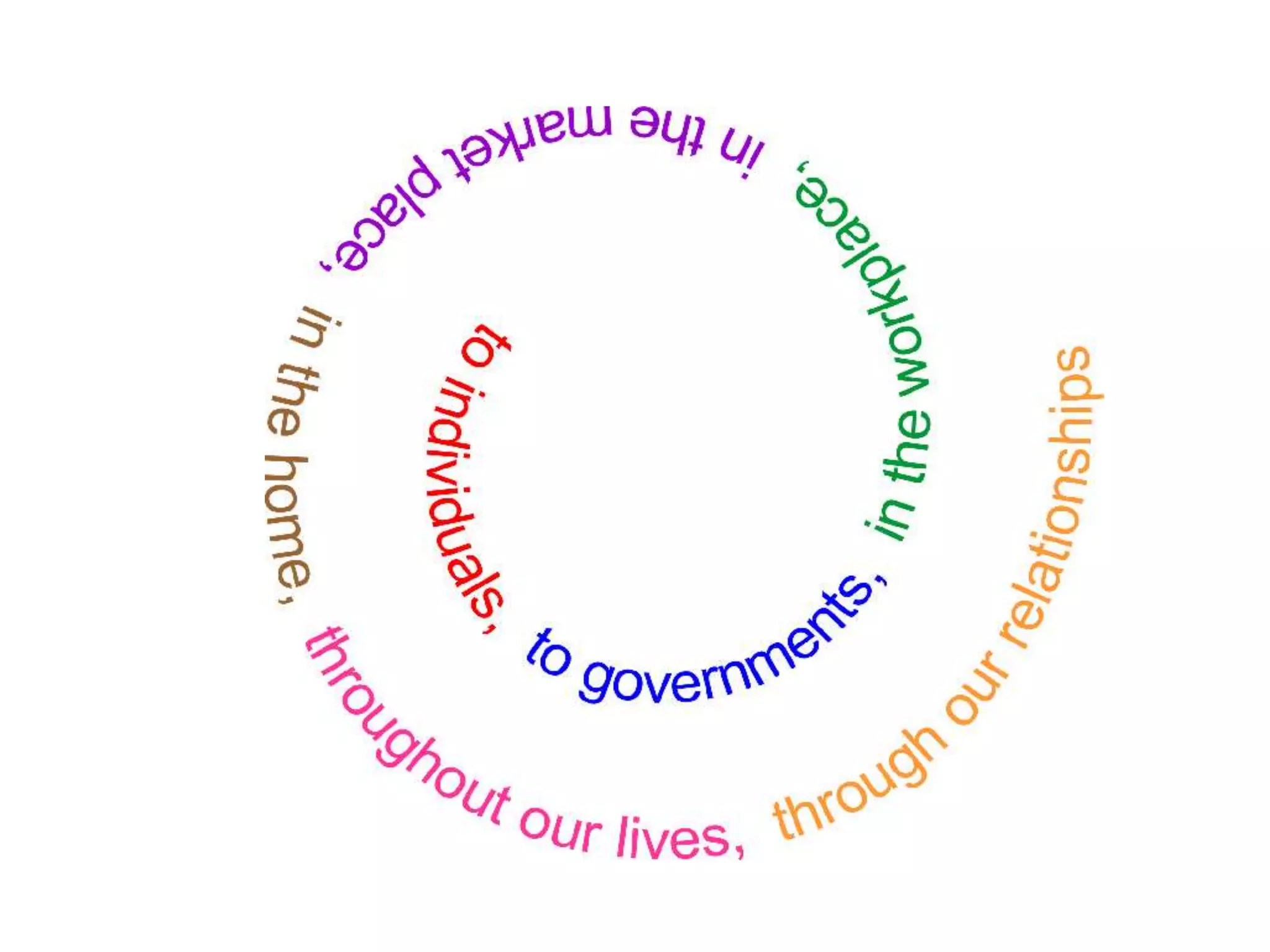
billions of peopledo, because the Bible
speaks at so many levels
on so many subjects
and in so many
ways
59.
what was spokenin one context
will speak in a new context
because God continues
to speak through
what he has
spoken
60.
Open up toGod the Father
you are reading humbly and inquiringly as a child
Pay attention to Jesus the Son
he is the final revelation and interpreter of the whole
Connect through God the Holy Spirit
feel for, and think about God’s message and leading for you today
How to read the Bible
Editor's Notes
#6 People kept them safe, they revered them, they hid them, they preserved them
#8 Much more reliable than modern photocopiers!
Not many people could read and write – so there was no such thing as sloppy handwriting; everything was done meticulously
The scribes workers in schools – their work was checked rigorously – crossing out was not allowed, especially in a sacred text.
It was an expensive process: if you made a mistake, the whole parchment had to be ditched; if you made a mistake in the name of God, which was considered holy, then the whole scroll was thrown away – you were close to a disciplinary hearing!
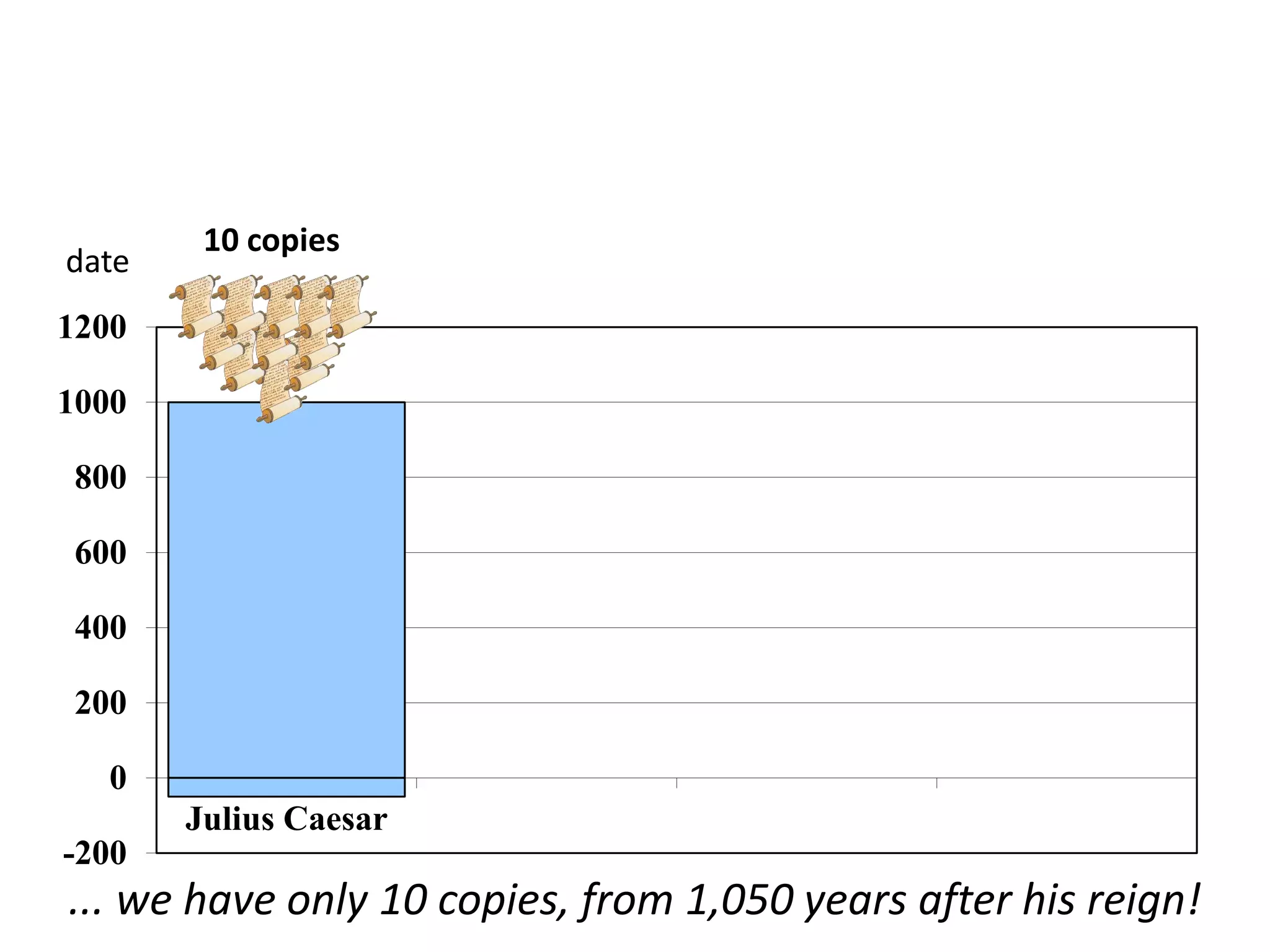
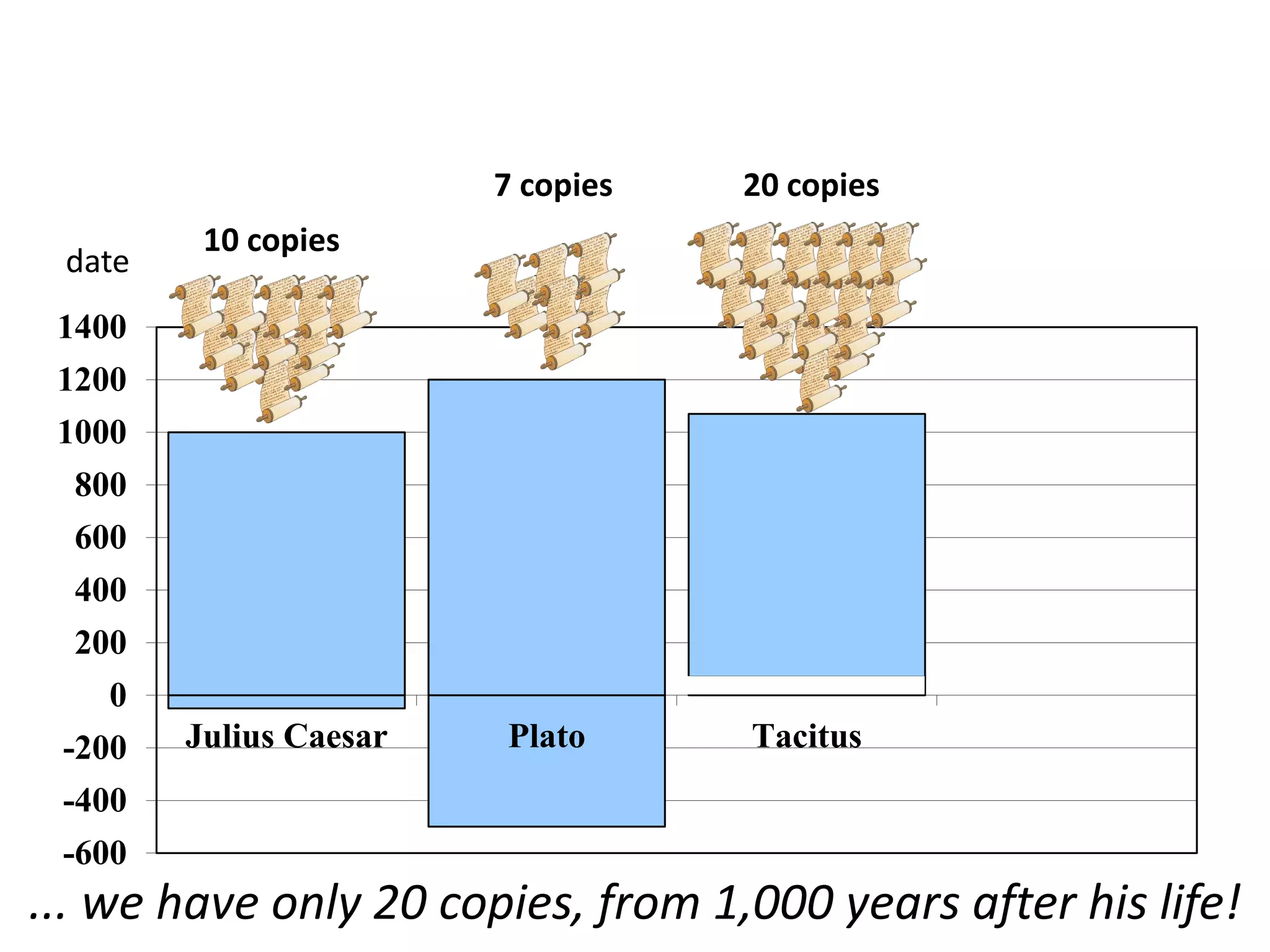
#9 That’s why, when it comes to Julius Caesar, even though the oldest manuscripts we have of his reign date from 1,000 years AFTER his reign, and we only have 10 copies of these – historians are very confident that they have been reliably copied over the centuries, and therefore reliably tell us about those events.
#10 That’s why, when it comes to Julius Caesar, even though the oldest manuscripts we have of his reign date from 1,000 years AFTER his reign, and we only have 10 copies of these – historians are very confident that they have been reliably copied over the centuries, and therefore reliably tell us about those events.
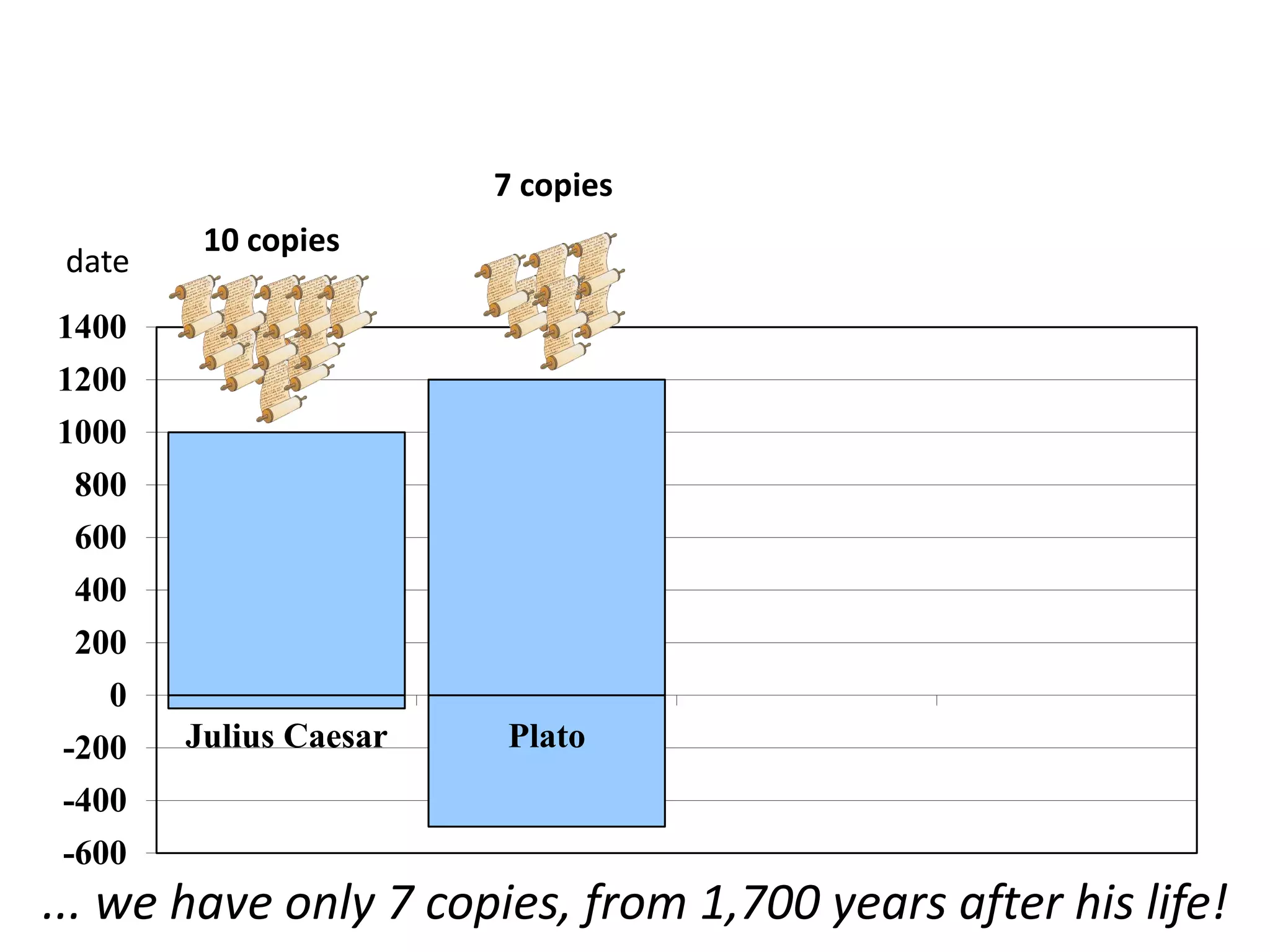
#11 Similarly when we think about Plato, who lived 500 years before Christ, and for whom the oldest remaining documents are 1700 years after his life.
#12 Similarly when we think about Plato, who lived 500 years before Christ, and for whom the oldest remaining documents are 1700 years after his life.
#13 Or think of Tacitus – a key historian from the time of Christ.
#14 Or think of Tacitus – a key historian from the time of Christ.
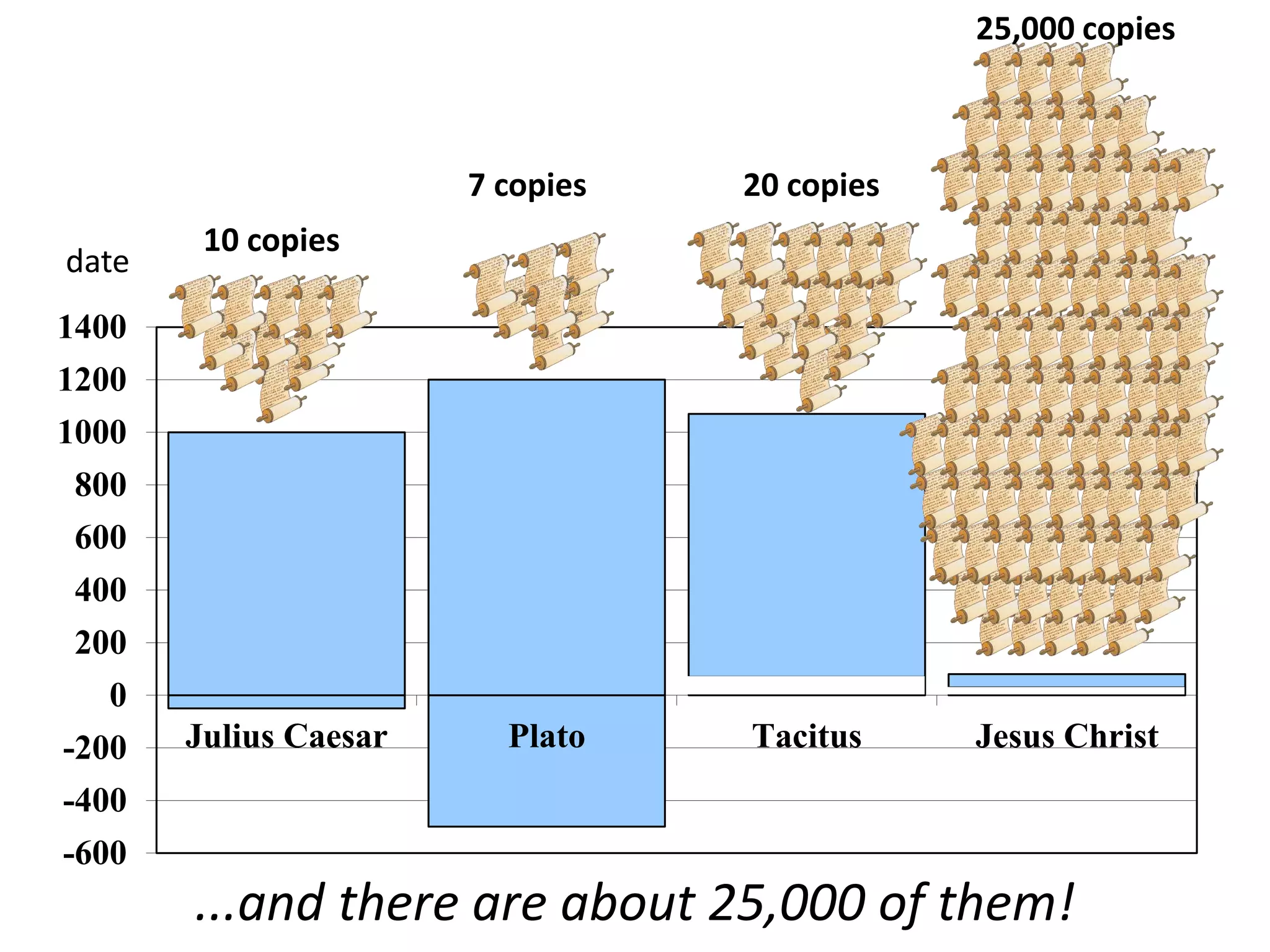
#16 The oldest fragments can be dated to within 50 years of Jesus life, with most of the rest dating from within just 150-300 years of Jesus life.
And there are about25,000 of them for comparison, one with another
#17 The oldest fragments can be dated to within 50 years of Jesus life, with most of the rest dating from within just 150-300 years of Jesus life.
And there are about25,000 of them for comparison, one with another
#18 The oldest fragments can be dated to within 50 years of Jesus life, with most of the rest dating from within just 150-300 years of Jesus life.
And there are about25,000 of them for comparison, one with another
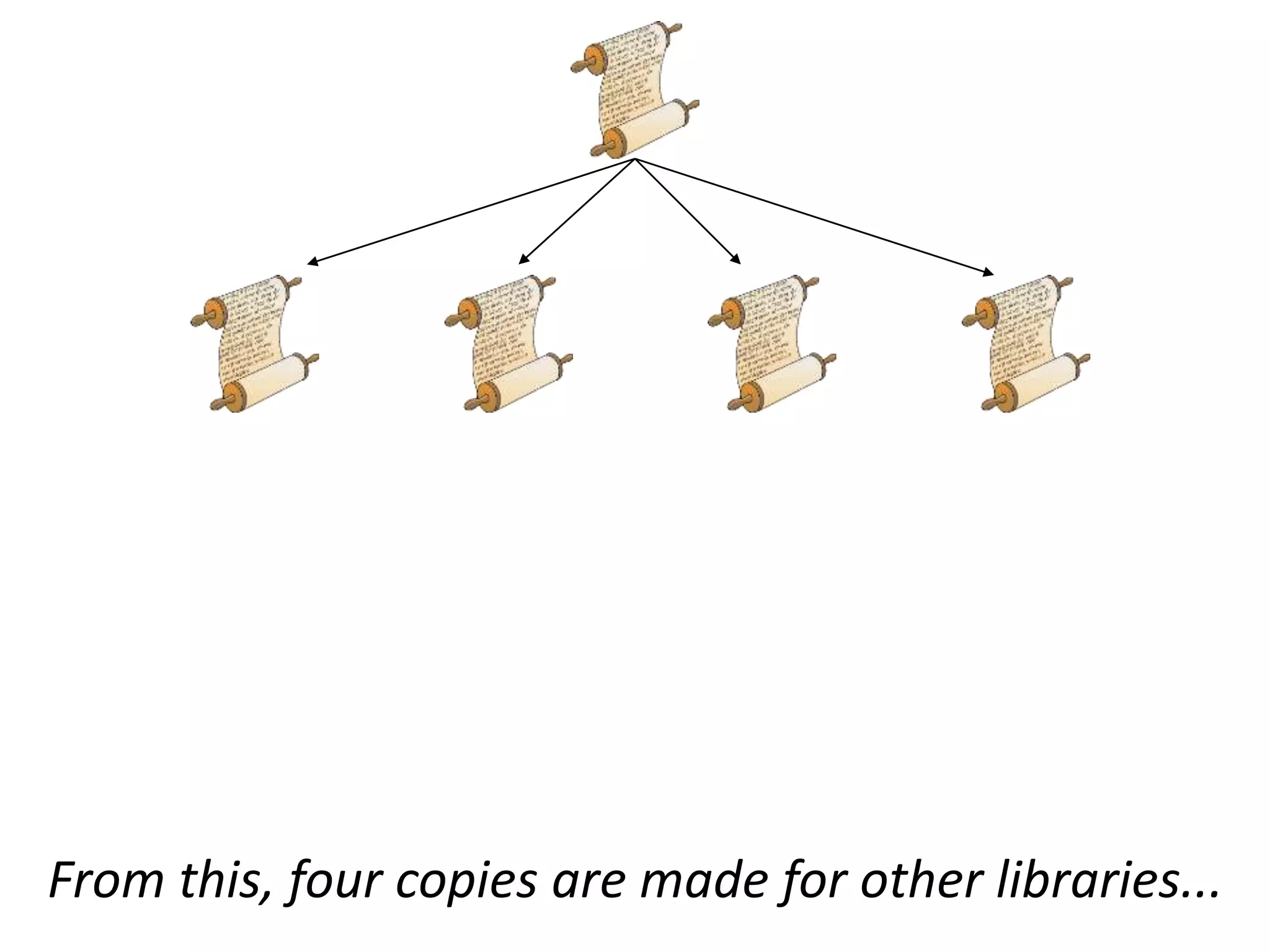
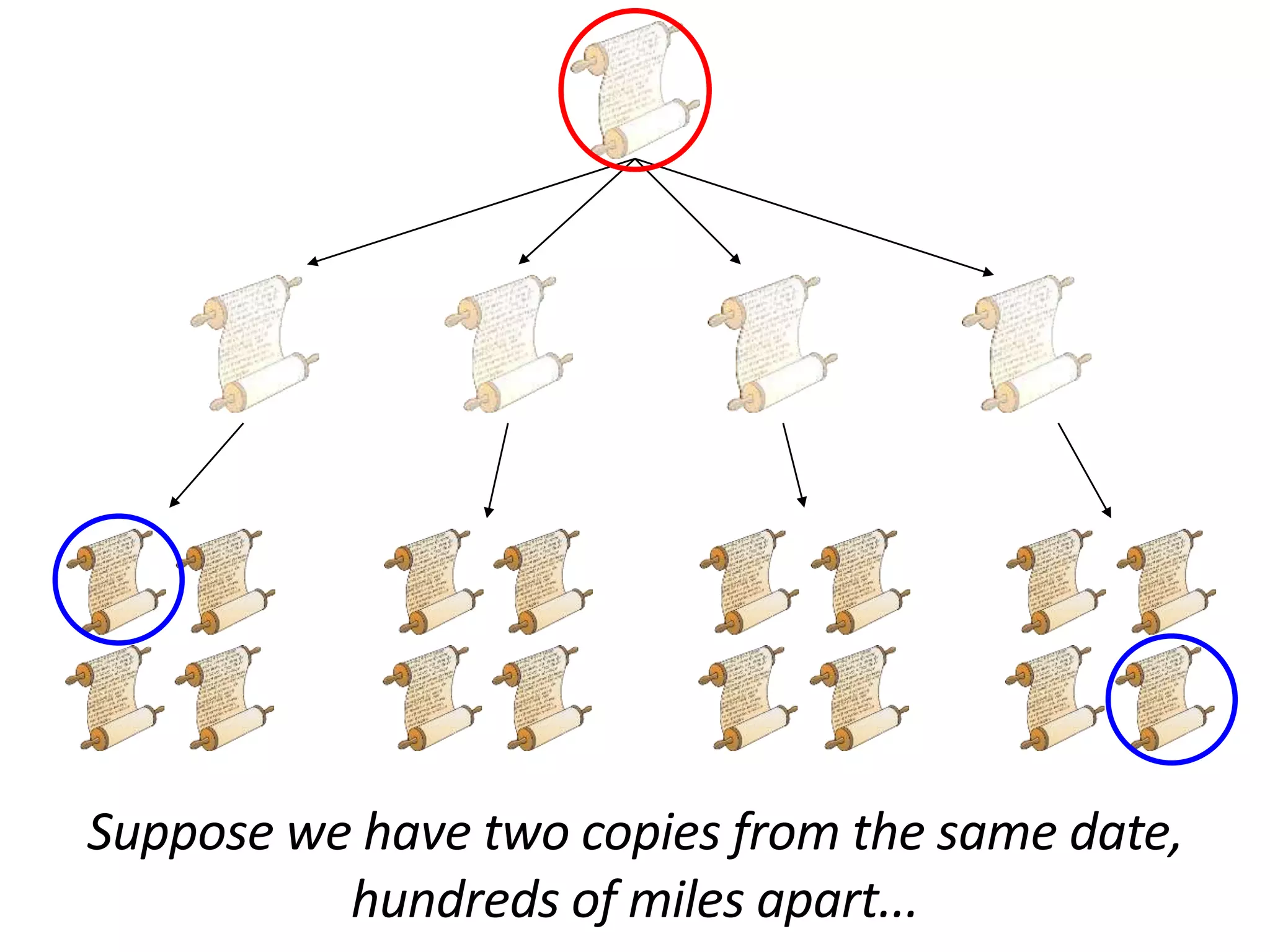
#21 And imagine that four copies are made of that work, and taken to four different libraries or owners, in different cities.
#22 And imagine that four copies are made of that work, and taken to four different libraries or owners, in different cities.
#23 Now imagine that in each place, four more copies are carefully made by hand, with three of each being taken to new locations.
#24 Over time, the original and the first copies get worn out, or stolen, or destroyed by fire...
#25 So how can we tell whether this more recent copy is accurate? We no longer have the original to compare it to!
#26 So how can we tell whether this more recent copy is accurate? We no longer have the original to compare it to!
#27 These two copies have been found hundreds of miles apart. We know they weren’t copied from each other. So they were copied from the generation before.
#28 These two copies have been found hundreds of miles apart. We know they weren’t copied from each other. So they were copied from the generation before.
#29 These two copies have been found hundreds of miles apart. We know they weren’t copied from each other. So they were copied from the generation before.
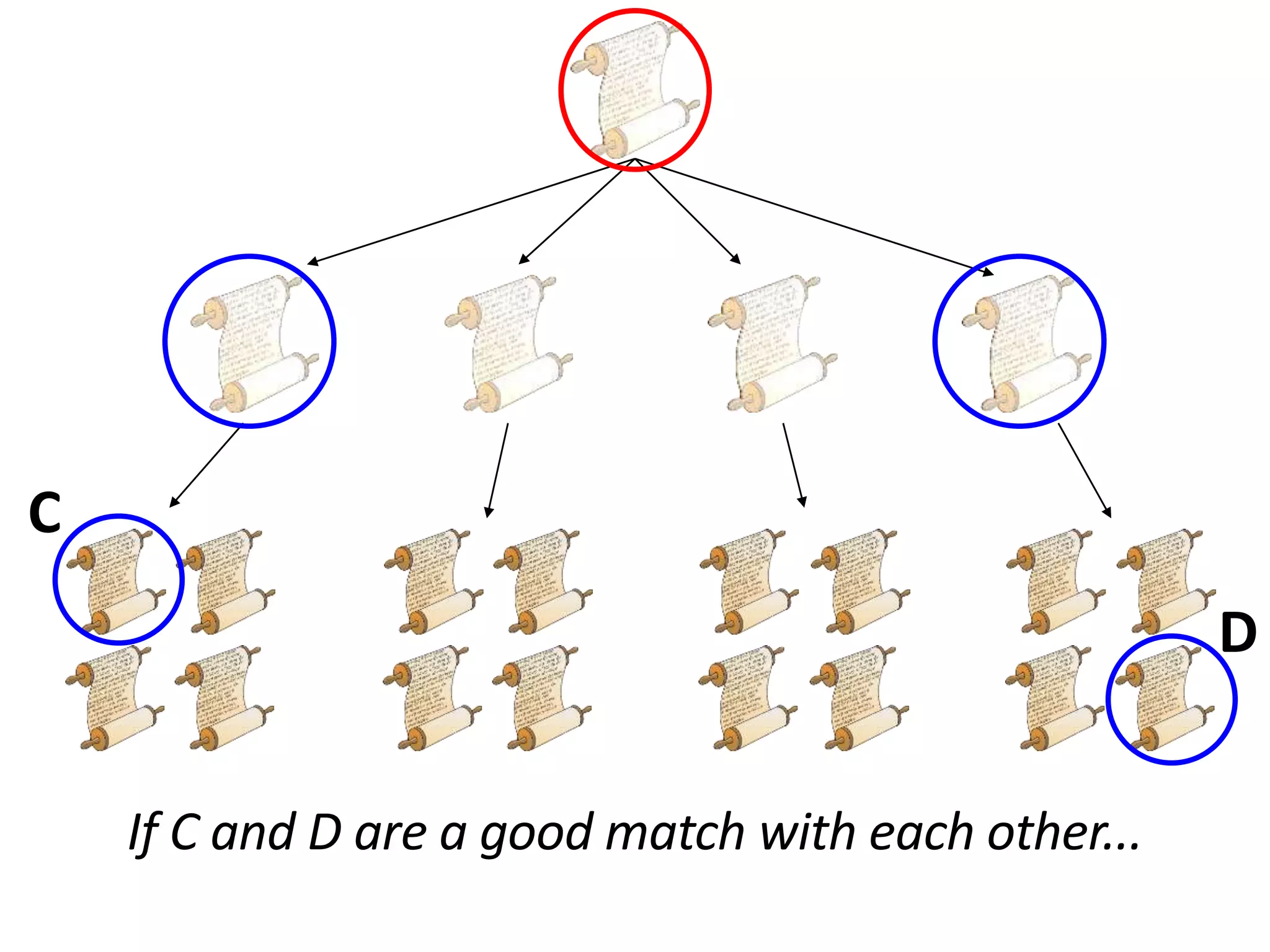
#30 If these copies, call them C and D match well, it can only be because A and B in the generation before them were a good match.
#31 it can only be because A and B in the generation before them were a good match – and so on, right back to the source.
#42 Our world is an infinitely complex network of relationships – think of human relationships, think of the biosphere, the ecology of the universe, the effect one thing has on the other, the connectedness of everything...
#43 Our world is an infinitely complex network of relationships – think of human relationships, think of the biosphere, the ecology of the universe, the effect one thing has on the other, the connectedness of everything...
#44 Our world is an infinitely complex network of relationships – think of human relationships, think of the biosphere, the ecology of the universe, the effect one thing has on the other, the connectedness of everything...
#45 Our world is an infinitely complex network of relationships – think of human relationships, think of the biosphere, the ecology of the universe, the effect one thing has on the other, the connectedness of everything...
#46 Our world is an infinitely complex network of relationships – think of human relationships, think of the biosphere, the ecology of the universe, the effect one thing has on the other, the connectedness of everything...
#47 Our world is an infinitely complex network of relationships – think of human relationships, think of the biosphere, the ecology of the universe, the effect one thing has on the other, the connectedness of everything...
#48 Our world is an infinitely complex network of relationships – think of human relationships, think of the biosphere, the ecology of the universe, the effect one thing has on the other, the connectedness of everything...
#49 But the Bible was neither deposited nor dictated.