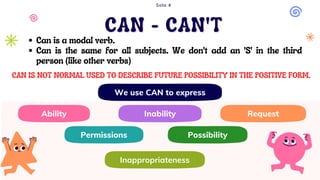
We use CAN to express
CAN - CAN'T
CAN - CAN'T
Sala 4
Can is a modal verb.
Can is the same for all subjects. We don't add an 'S' in the third
person (like other verbs)
CAN IS NOT NORMAL USED TO DESCRIBE FUTURE POSSIBILITY IN THE POSITIVE FORM.
Ability Inability
Permissions
Request
Possibility
Inappropriateness
P
POSITIVE SENTENCES
OSITIVE SENTENCES
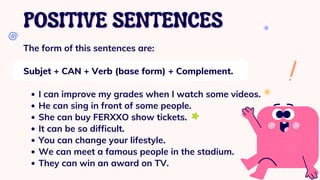
I can improve my grades when I watch some videos.
He can sing in front of some people.
She can buy FERXXO show tickets.
It can be so difficult.
You can change your lifestyle.
We can meet a famous people in the stadium.
They can win an award on TV.
The form of this sentences are:
Subjet + CAN + Verb (base form) + Complement.
NEGATIVE SENTECES
NEGATIVE SENTECES
I can't eat and study at the same time.
You can't eat in the class.
He can't play the guitar during class.
She can't exercise in the afternoon.
They can't stop sing.
We can't run.
Questions
Questions
Can I use your cell phone? Can they have lunch with us?
Can she speak chinese?
Can he swim?
Can you help me?
Can we play carnival?
Answers
Answers
When using a permission question the most commonly used answers are:
Certainly. Yes, certainly. Of course. Of course you can. Sure (informal)
But it is also used
I - You - She - He
- It - We - You -
They
Yes,
No,
Can
Can't

Can - Can't .pdf

  • 1.
    We use CANto express CAN - CAN'T CAN - CAN'T Sala 4 Can is a modal verb. Can is the same for all subjects. We don't add an 'S' in the third person (like other verbs) CAN IS NOT NORMAL USED TO DESCRIBE FUTURE POSSIBILITY IN THE POSITIVE FORM. Ability Inability Permissions Request Possibility Inappropriateness
  • 2.
    P POSITIVE SENTENCES OSITIVE SENTENCES Ican improve my grades when I watch some videos. He can sing in front of some people. She can buy FERXXO show tickets. It can be so difficult. You can change your lifestyle. We can meet a famous people in the stadium. They can win an award on TV. The form of this sentences are: Subjet + CAN + Verb (base form) + Complement.
  • 3.
    NEGATIVE SENTECES NEGATIVE SENTECES Ican't eat and study at the same time. You can't eat in the class. He can't play the guitar during class. She can't exercise in the afternoon. They can't stop sing. We can't run.
  • 4.
    Questions Questions Can I useyour cell phone? Can they have lunch with us? Can she speak chinese? Can he swim? Can you help me? Can we play carnival?
  • 5.
    Answers Answers When using apermission question the most commonly used answers are: Certainly. Yes, certainly. Of course. Of course you can. Sure (informal) But it is also used I - You - She - He - It - We - You - They Yes, No, Can Can't