Camera Angles and Effects
       Trailer Research
Establishing shot
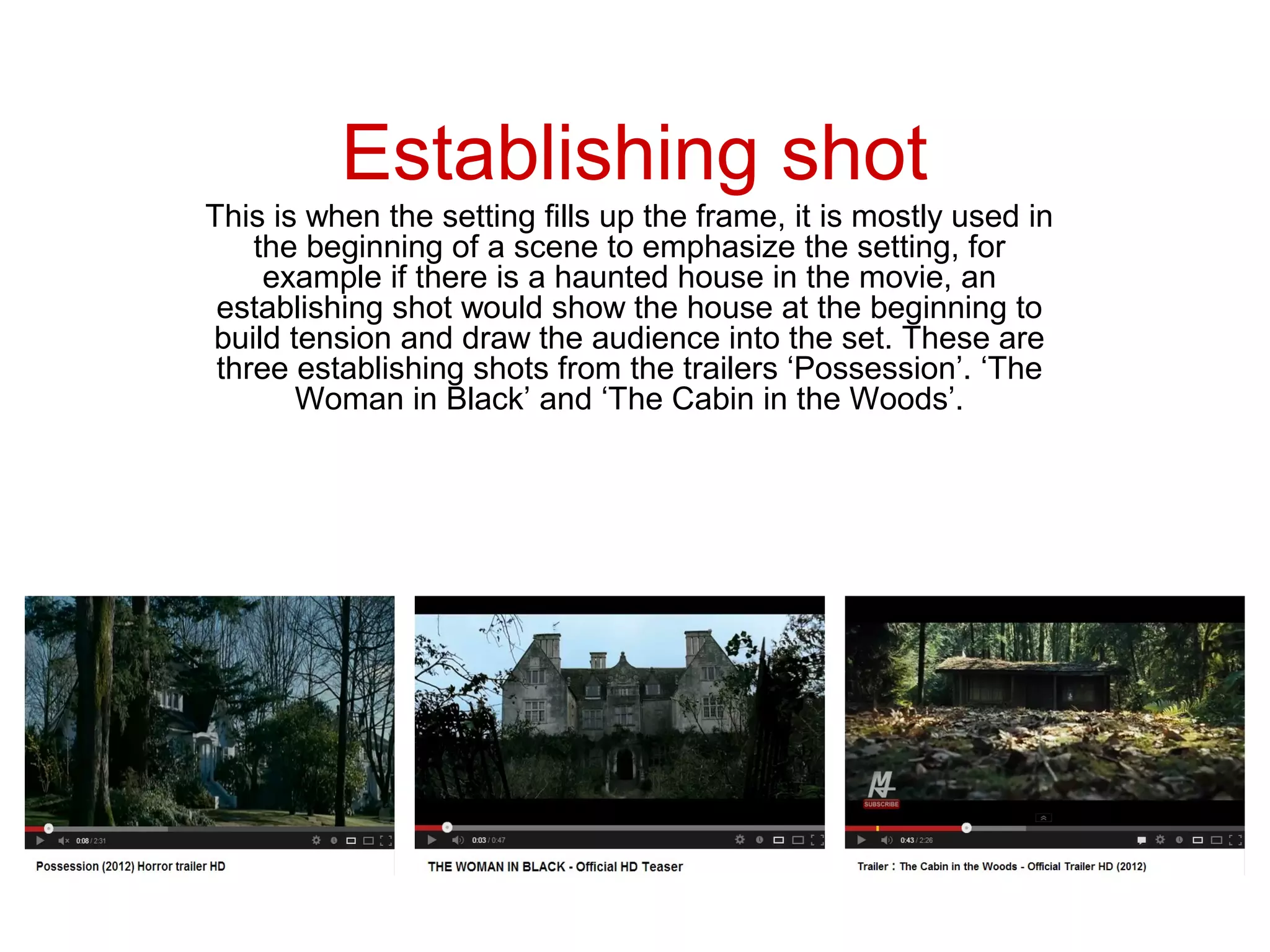
This is when the setting fills up the frame, it is mostly used in
    the beginning of a scene to emphasize the setting, for
     example if there is a haunted house in the movie, an
 establishing shot would show the house at the beginning to
build tension and draw the audience into the set. These are
 three establishing shots from the trailers ‘Possession’. ‘The
       Woman in Black’ and ‘The Cabin in the Woods’.
Close up or extreme close up
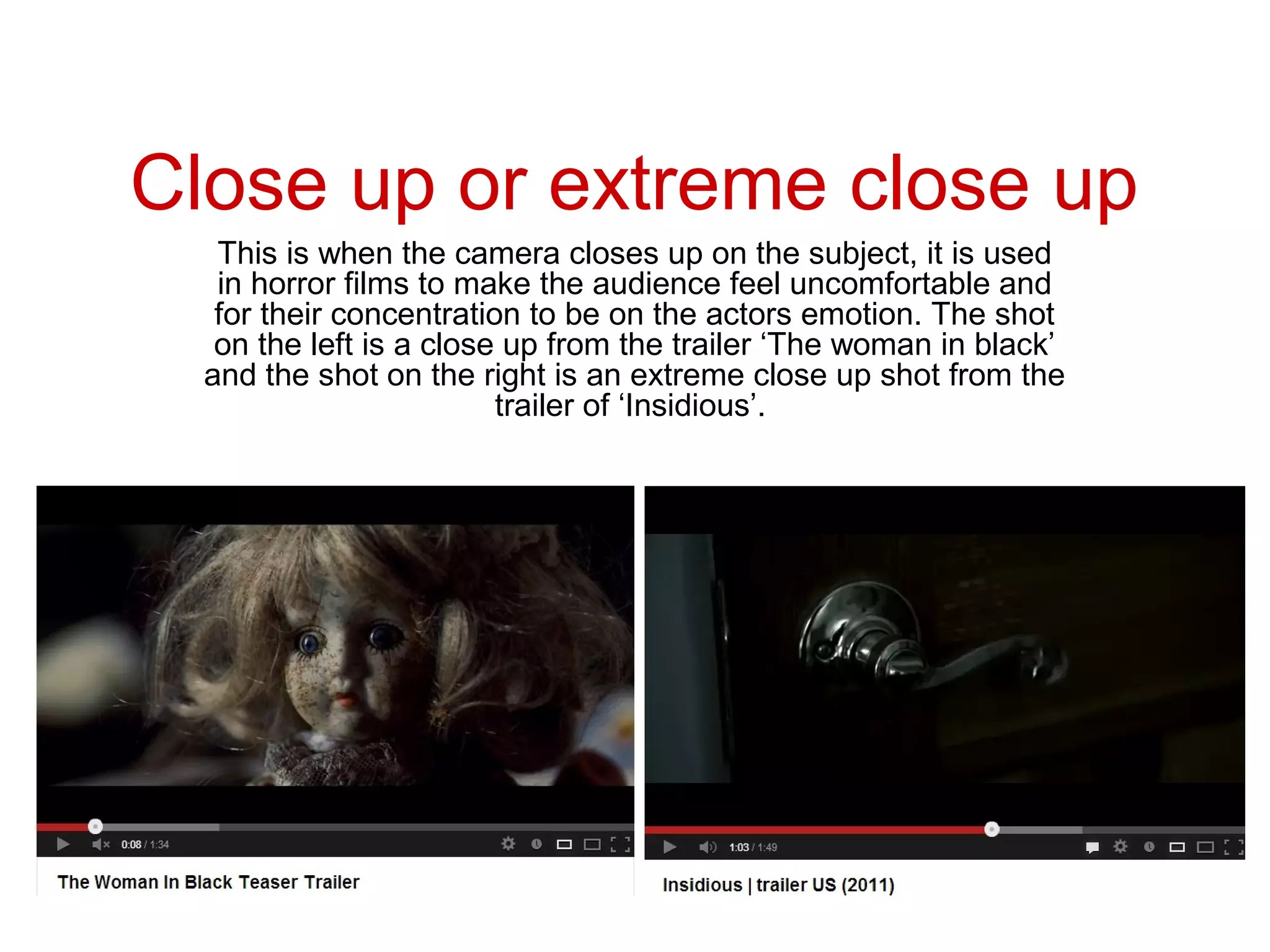
   This is when the camera closes up on the subject, it is used
   in horror films to make the audience feel uncomfortable and
   for their concentration to be on the actors emotion. The shot
   on the left is a close up from the trailer ‘The woman in black’
  and the shot on the right is an extreme close up shot from the
                         trailer of ‘Insidious’.
Point of view
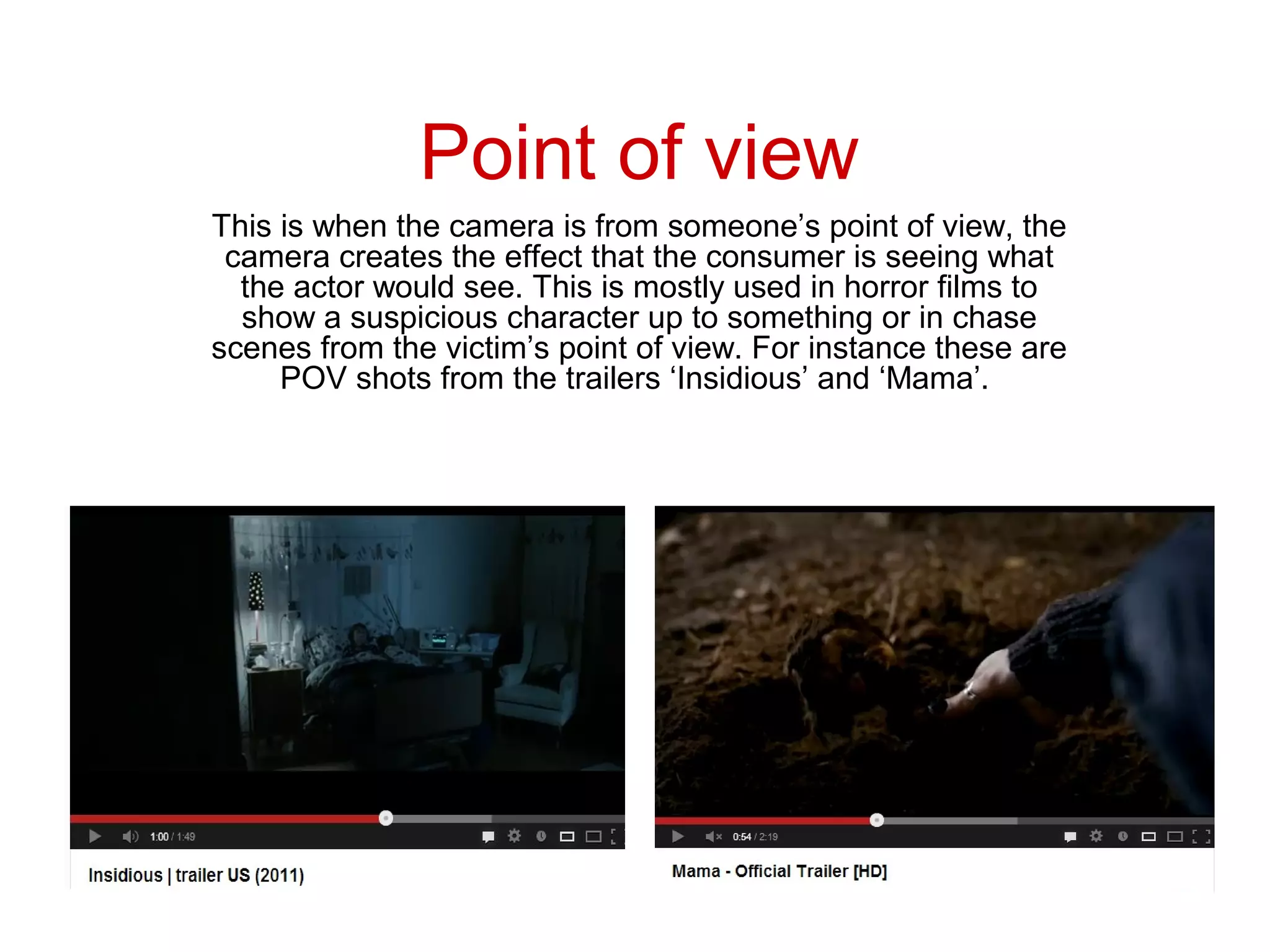
This is when the camera is from someone’s point of view, the
 camera creates the effect that the consumer is seeing what
  the actor would see. This is mostly used in horror films to
  show a suspicious character up to something or in chase
scenes from the victim’s point of view. For instance these are
     POV shots from the trailers ‘Insidious’ and ‘Mama’.
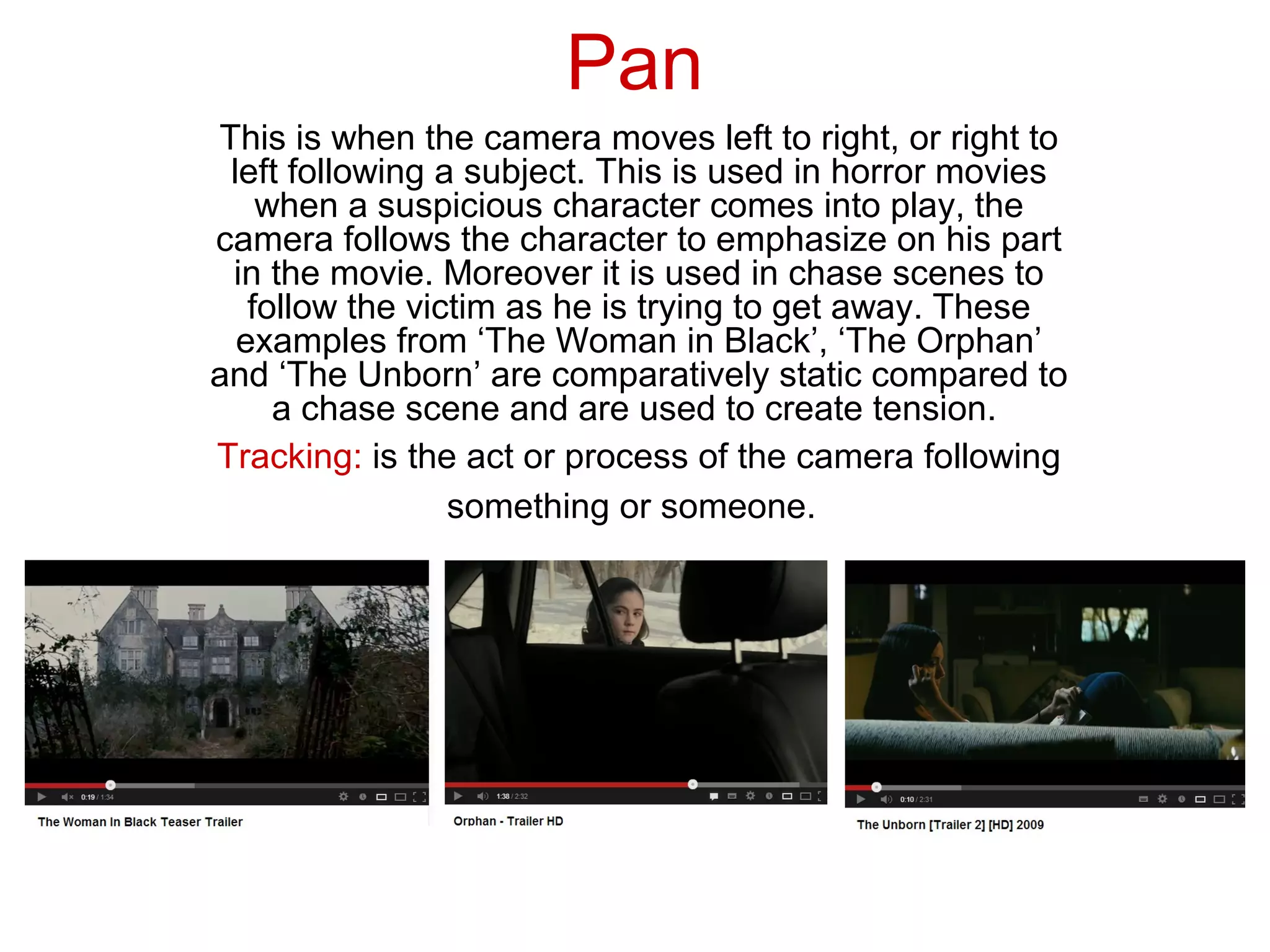
Pan
This is when the camera moves left to right, or right to
 left following a subject. This is used in horror movies
    when a suspicious character comes into play, the
camera follows the character to emphasize on his part
 in the movie. Moreover it is used in chase scenes to
   follow the victim as he is trying to get away. These
  examples from ‘The Woman in Black’, ‘The Orphan’
and ‘The Unborn’ are comparatively static compared to
     a chase scene and are used to create tension.
Tracking: is the act or process of the camera following
                 something or someone.
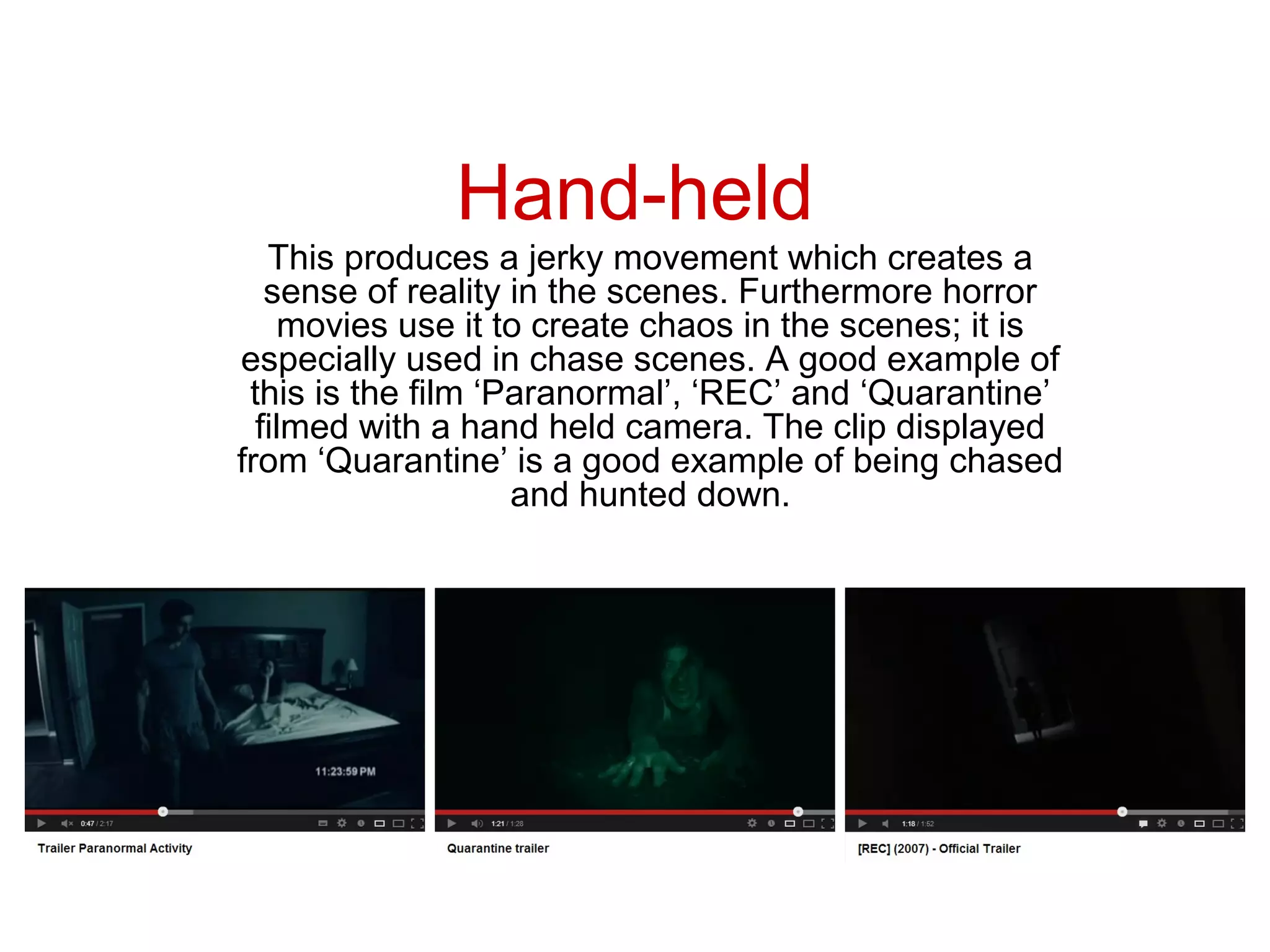
Hand-held
   This produces a jerky movement which creates a
   sense of reality in the scenes. Furthermore horror
    movies use it to create chaos in the scenes; it is
especially used in chase scenes. A good example of
 this is the film ‘Paranormal’, ‘REC’ and ‘Quarantine’
  filmed with a hand held camera. The clip displayed
from ‘Quarantine’ is a good example of being chased
                    and hunted down.
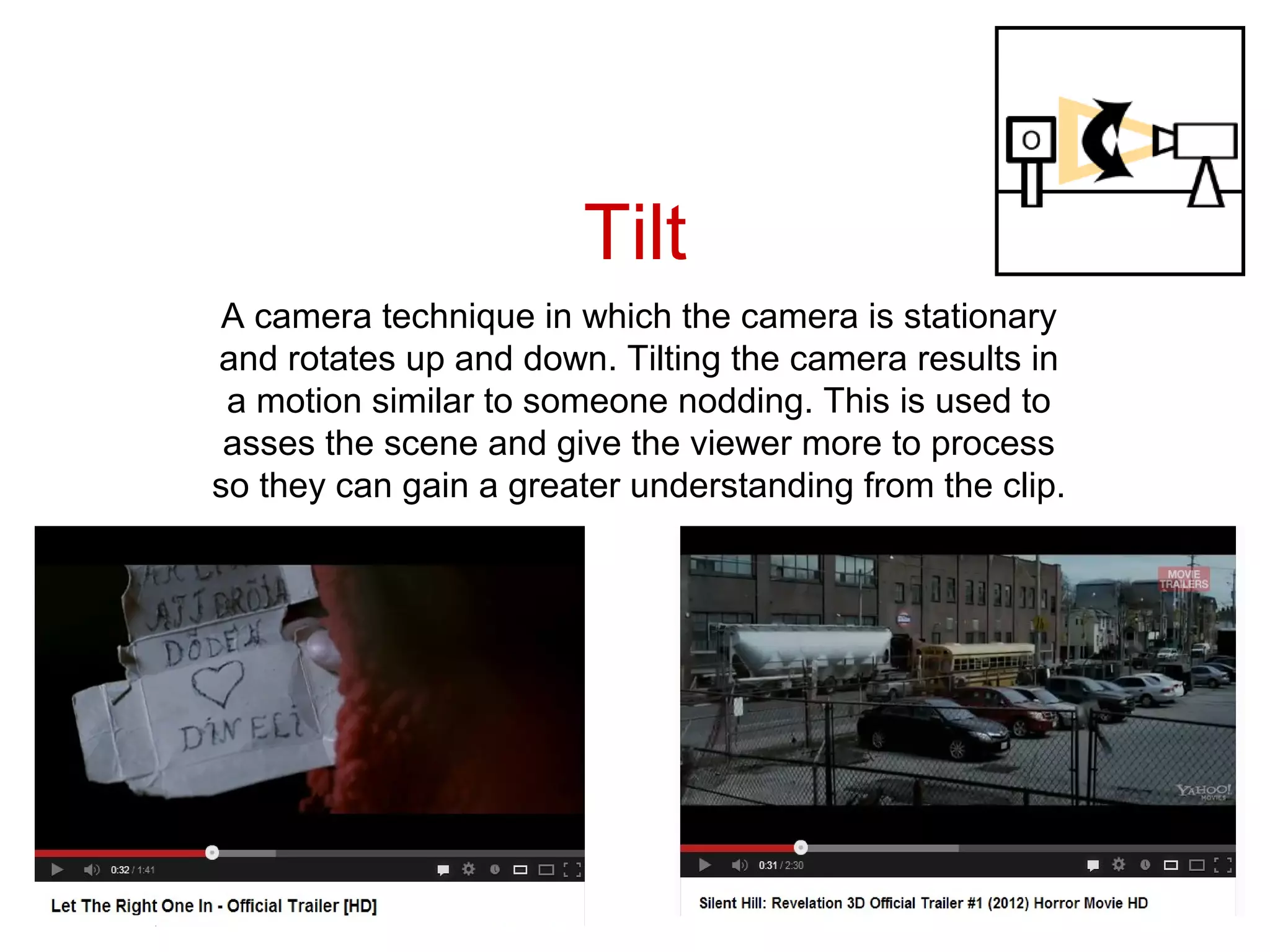
Tilt
 A camera technique in which the camera is stationary
and rotates up and down. Tilting the camera results in
 a motion similar to someone nodding. This is used to
 asses the scene and give the viewer more to process
so they can gain a greater understanding from the clip.
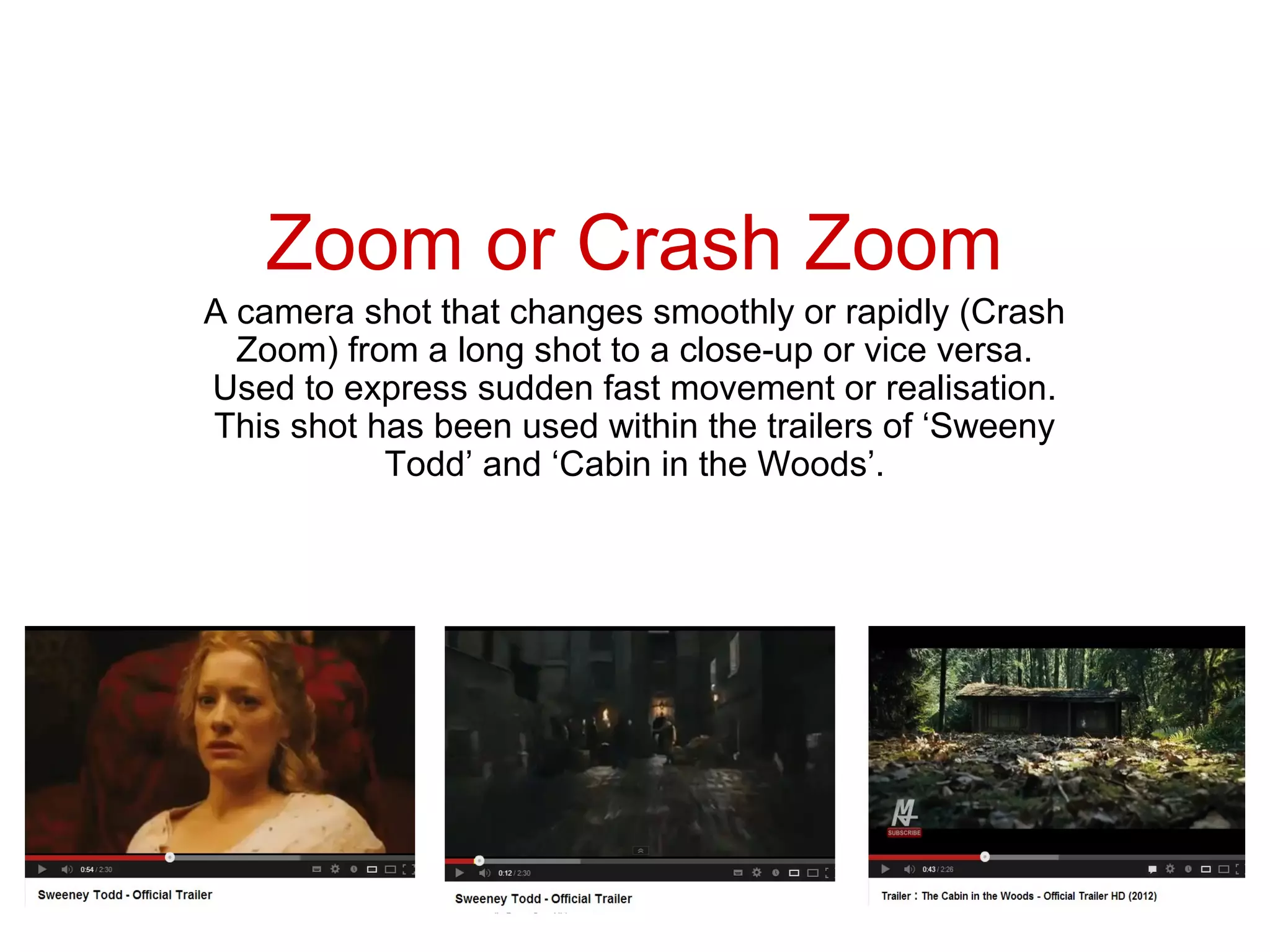
Zoom or Crash Zoom
A camera shot that changes smoothly or rapidly (Crash
  Zoom) from a long shot to a close-up or vice versa.
Used to express sudden fast movement or realisation.
This shot has been used within the trailers of ‘Sweeny
           Todd’ and ‘Cabin in the Woods’.
Static
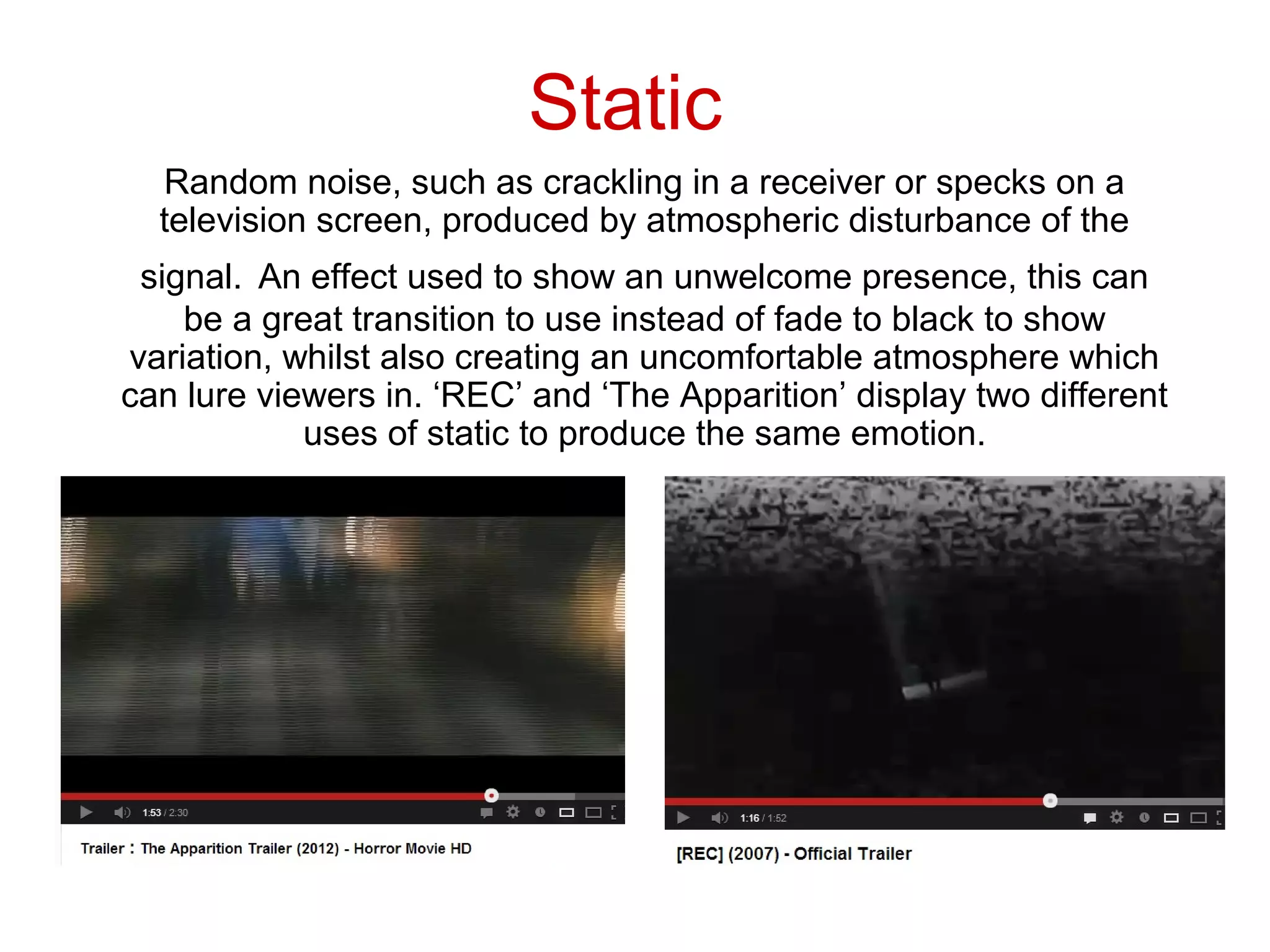
  Random noise, such as crackling in a receiver or specks on a
  television screen, produced by atmospheric disturbance of the
 signal. An effect used to show an unwelcome presence, this can
    be a great transition to use instead of fade to black to show
variation, whilst also creating an uncomfortable atmosphere which
can lure viewers in. ‘REC’ and ‘The Apparition’ display two different
            uses of static to produce the same emotion.
Fade to White/Black
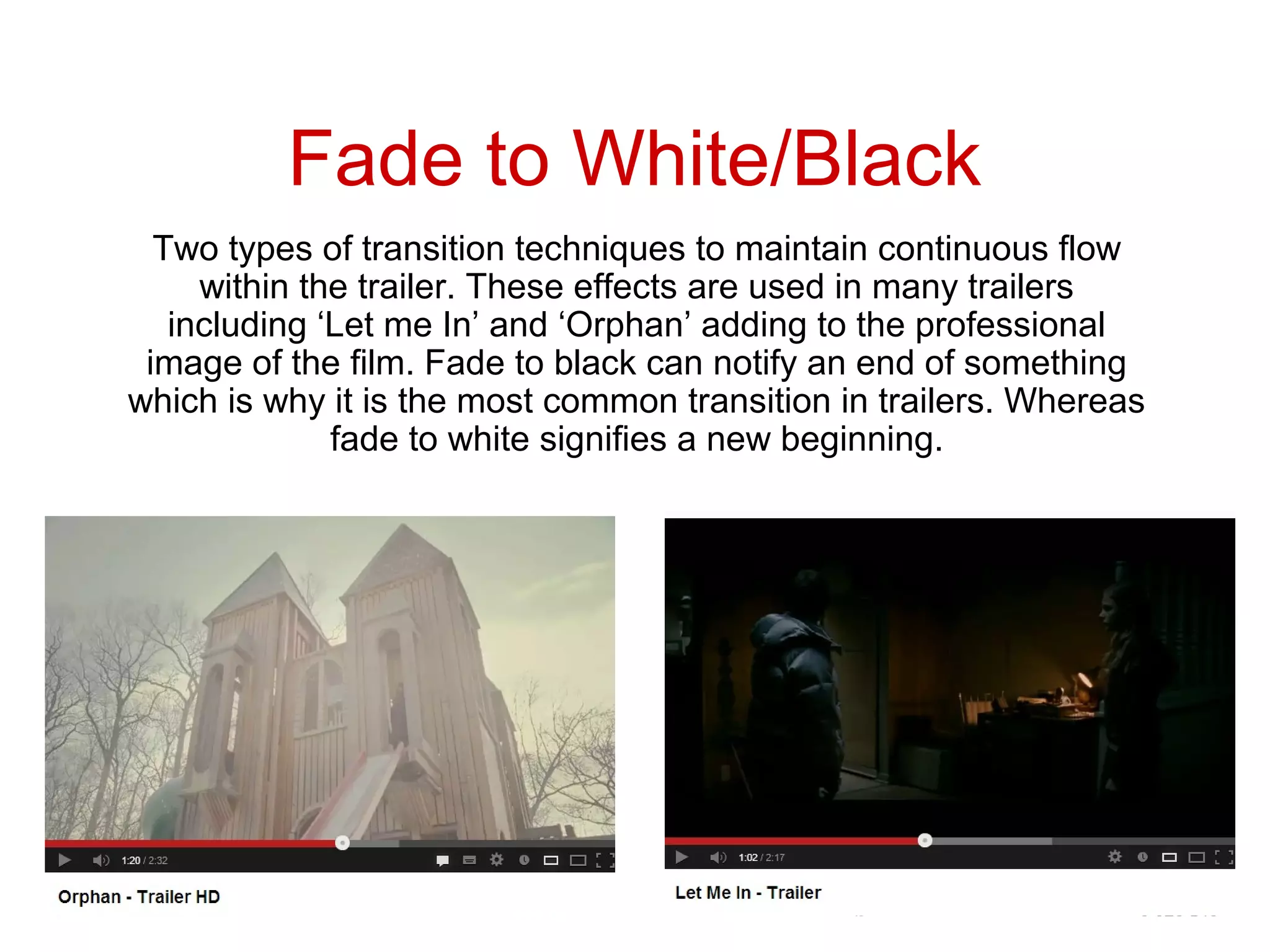
  Two types of transition techniques to maintain continuous flow
     within the trailer. These effects are used in many trailers
   including ‘Let me In’ and ‘Orphan’ adding to the professional
 image of the film. Fade to black can notify an end of something
which is why it is the most common transition in trailers. Whereas
              fade to white signifies a new beginning.
Over the Shoulder
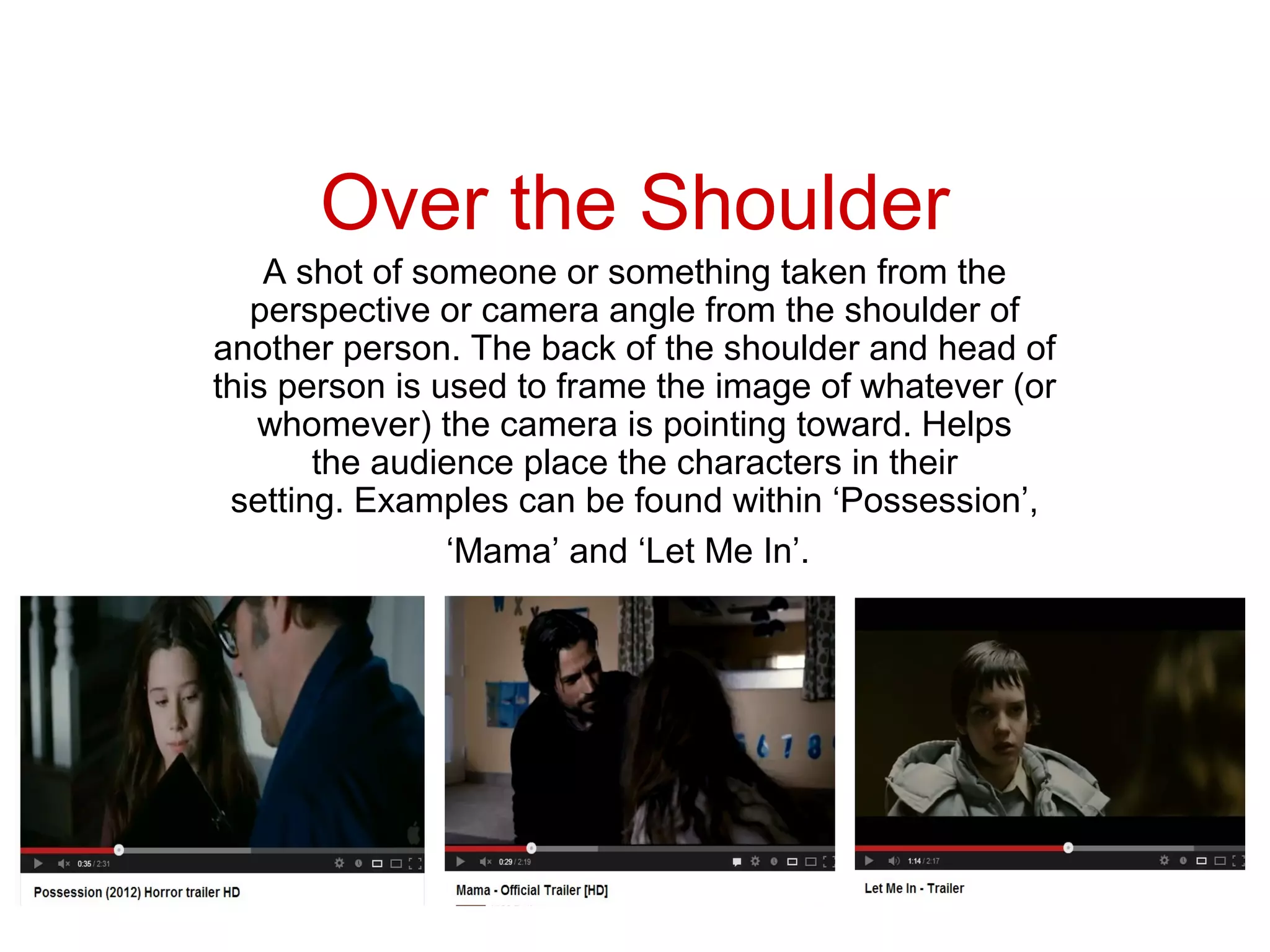
    A shot of someone or something taken from the
   perspective or camera angle from the shoulder of
another person. The back of the shoulder and head of
this person is used to frame the image of whatever (or
   whomever) the camera is pointing toward. Helps
       the audience place the characters in their
 setting. Examples can be found within ‘Possession’,
                ‘Mama’ and ‘Let Me In’.

Camera Angles

  • 1.
    Camera Angles andEffects Trailer Research
  • 2.
    Establishing shot This iswhen the setting fills up the frame, it is mostly used in the beginning of a scene to emphasize the setting, for example if there is a haunted house in the movie, an establishing shot would show the house at the beginning to build tension and draw the audience into the set. These are three establishing shots from the trailers ‘Possession’. ‘The Woman in Black’ and ‘The Cabin in the Woods’.
  • 3.
    Close up orextreme close up This is when the camera closes up on the subject, it is used in horror films to make the audience feel uncomfortable and for their concentration to be on the actors emotion. The shot on the left is a close up from the trailer ‘The woman in black’ and the shot on the right is an extreme close up shot from the trailer of ‘Insidious’.
  • 4.
    Point of view Thisis when the camera is from someone’s point of view, the camera creates the effect that the consumer is seeing what the actor would see. This is mostly used in horror films to show a suspicious character up to something or in chase scenes from the victim’s point of view. For instance these are POV shots from the trailers ‘Insidious’ and ‘Mama’.
  • 5.
    Pan This is whenthe camera moves left to right, or right to left following a subject. This is used in horror movies when a suspicious character comes into play, the camera follows the character to emphasize on his part in the movie. Moreover it is used in chase scenes to follow the victim as he is trying to get away. These examples from ‘The Woman in Black’, ‘The Orphan’ and ‘The Unborn’ are comparatively static compared to a chase scene and are used to create tension. Tracking: is the act or process of the camera following something or someone.
  • 6.
    Hand-held This produces a jerky movement which creates a sense of reality in the scenes. Furthermore horror movies use it to create chaos in the scenes; it is especially used in chase scenes. A good example of this is the film ‘Paranormal’, ‘REC’ and ‘Quarantine’ filmed with a hand held camera. The clip displayed from ‘Quarantine’ is a good example of being chased and hunted down.
  • 7.
    Tilt A cameratechnique in which the camera is stationary and rotates up and down. Tilting the camera results in a motion similar to someone nodding. This is used to asses the scene and give the viewer more to process so they can gain a greater understanding from the clip.
  • 8.
    Zoom or CrashZoom A camera shot that changes smoothly or rapidly (Crash Zoom) from a long shot to a close-up or vice versa. Used to express sudden fast movement or realisation. This shot has been used within the trailers of ‘Sweeny Todd’ and ‘Cabin in the Woods’.
  • 9.
    Static Randomnoise, such as crackling in a receiver or specks on a television screen, produced by atmospheric disturbance of the signal. An effect used to show an unwelcome presence, this can be a great transition to use instead of fade to black to show variation, whilst also creating an uncomfortable atmosphere which can lure viewers in. ‘REC’ and ‘The Apparition’ display two different uses of static to produce the same emotion.
  • 10.
    Fade to White/Black Two types of transition techniques to maintain continuous flow within the trailer. These effects are used in many trailers including ‘Let me In’ and ‘Orphan’ adding to the professional image of the film. Fade to black can notify an end of something which is why it is the most common transition in trailers. Whereas fade to white signifies a new beginning.
  • 11.
    Over the Shoulder A shot of someone or something taken from the perspective or camera angle from the shoulder of another person. The back of the shoulder and head of this person is used to frame the image of whatever (or whomever) the camera is pointing toward. Helps the audience place the characters in their setting. Examples can be found within ‘Possession’, ‘Mama’ and ‘Let Me In’.