

Calculating ROI of your enterprise app
Process, approaches and considerations
the need for calculating ROI
• As per a recent survey by Zenprise, 74.7% of decision-makers
said they have or will deploy line-of-business apps in the next 12
months.
• Deploying apps requires high amount of upfront investments
and substantial recurring expenses every year.
• As the global economy continues to stagnate, decision makers
are taking a hard look at their mobility expenditure and are
asking questions like-
“How much these mobile apps are benefiting the company?”
Or
“How to calculate the ROI of mobile apps to justify the
expenses?”
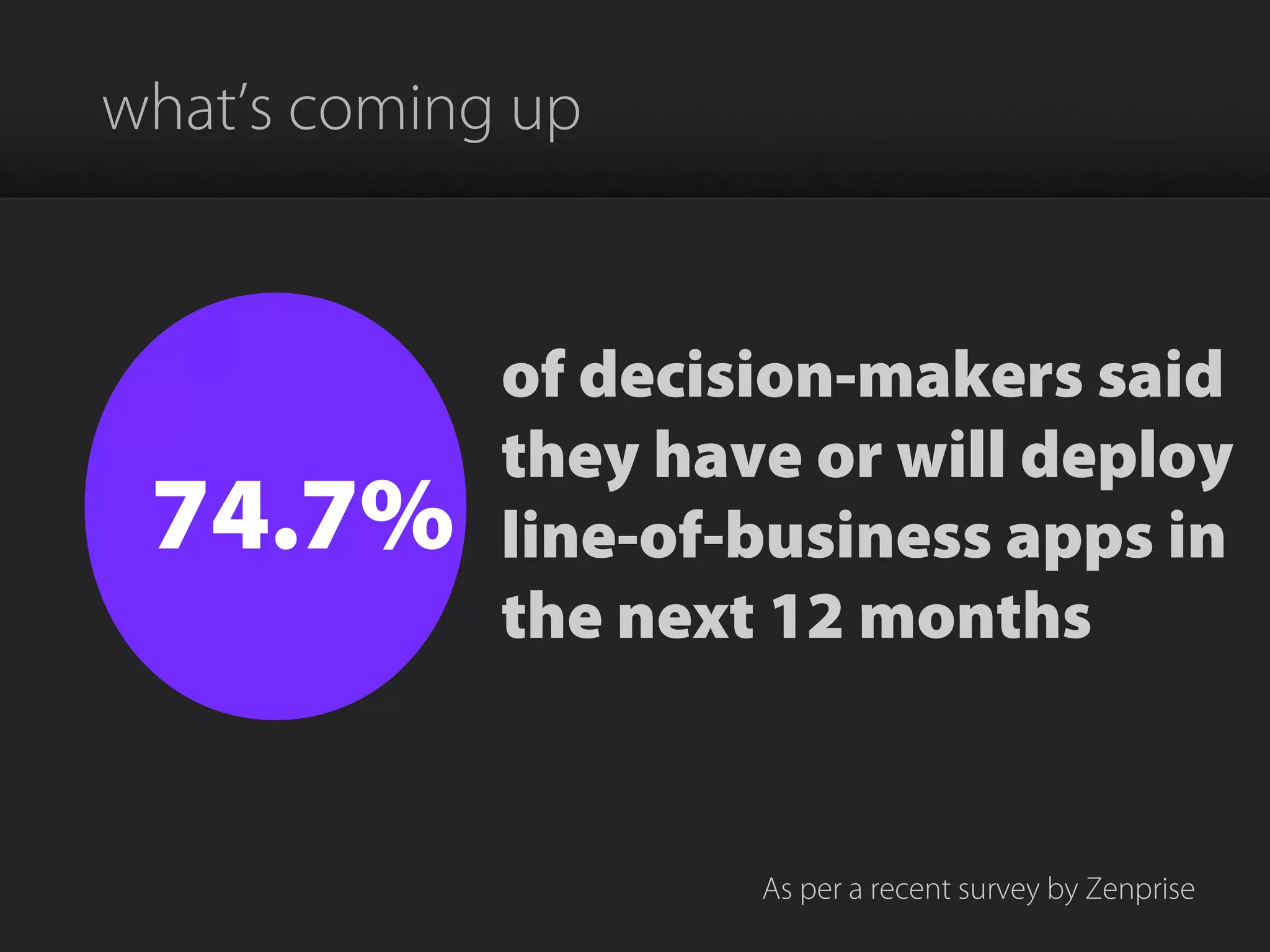
what’s coming up
As per a recent survey by Zenprise
of decision-makers said
they have or will deploy
line-of-business apps in
the next 12 months
74.7%
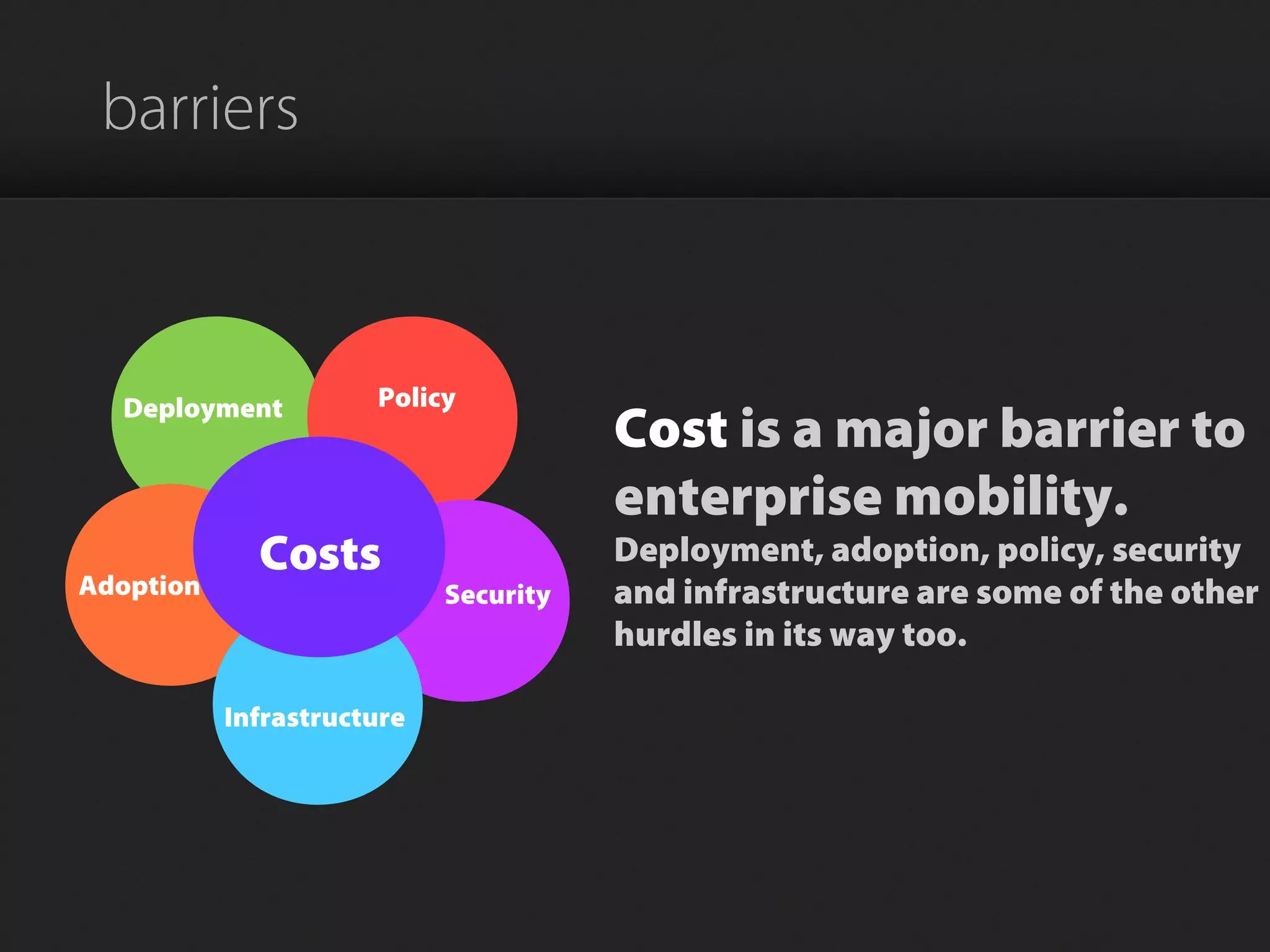
barriers
Cost is a major barrier to
enterprise mobility.
Deployment, adoption, policy, security
and infrastructure are some of the other
hurdles in its way too.
Deployment
Adoption
Policy
Infrastructure
Security
Costs
concerns raised
“How much these mobile apps are
benefiting the company?”
or
“How to calculate the ROI of mobile
apps to justify the expenses?”
process of calculating ROI
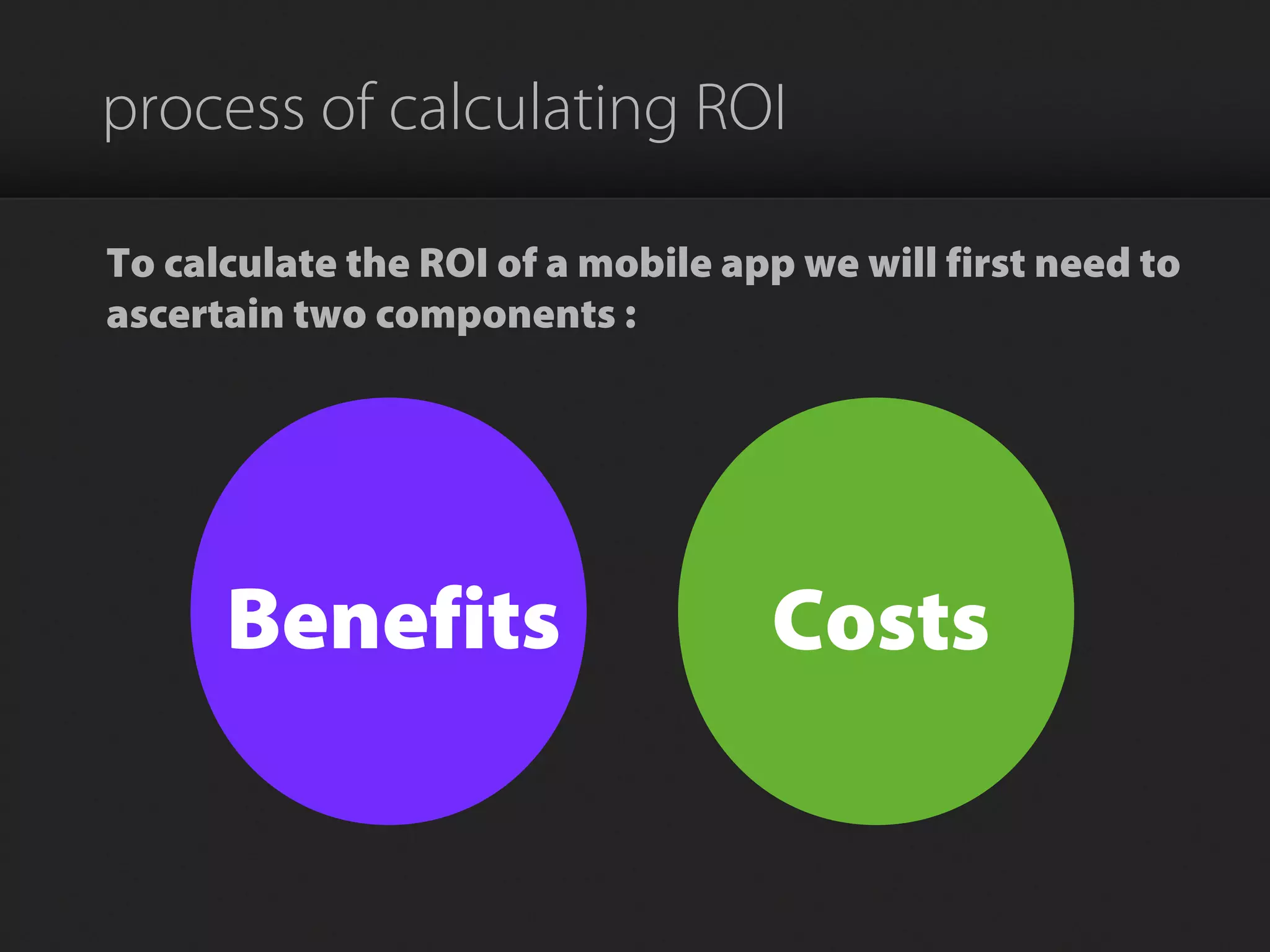
To calculate the ROI of a mobile app we will first need to
ascertain two components :
CostsBenefits
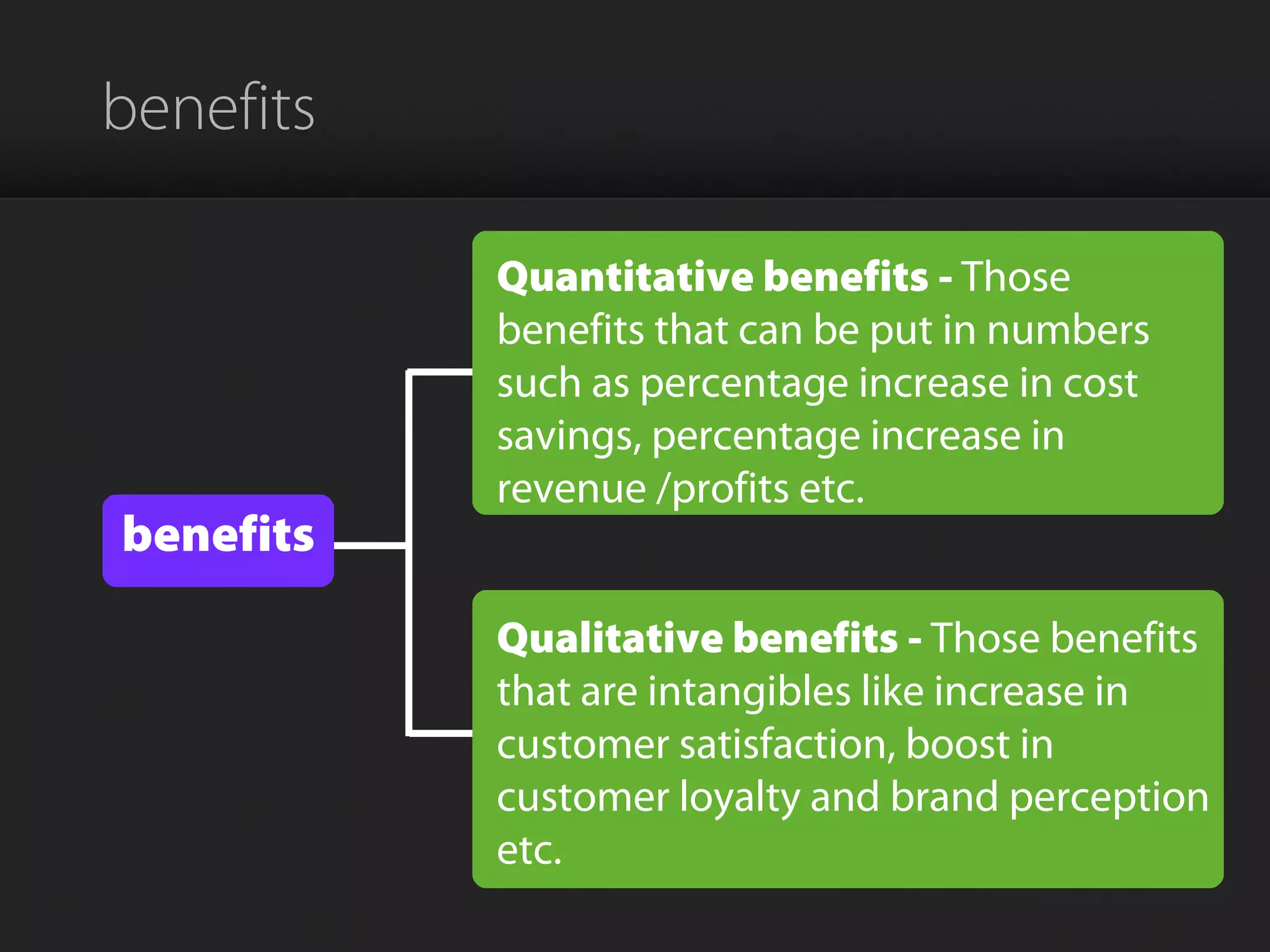
benefits
Quantitative benefits - Those
benefits that can be put in numbers
such as percentage increase in cost
savings, percentage increase in
revenue /profits etc.
Qualitative benefits - Those benefits
that are intangibles like increase in
customer satisfaction, boost in
customer loyalty and brand perception
etc.
benefits
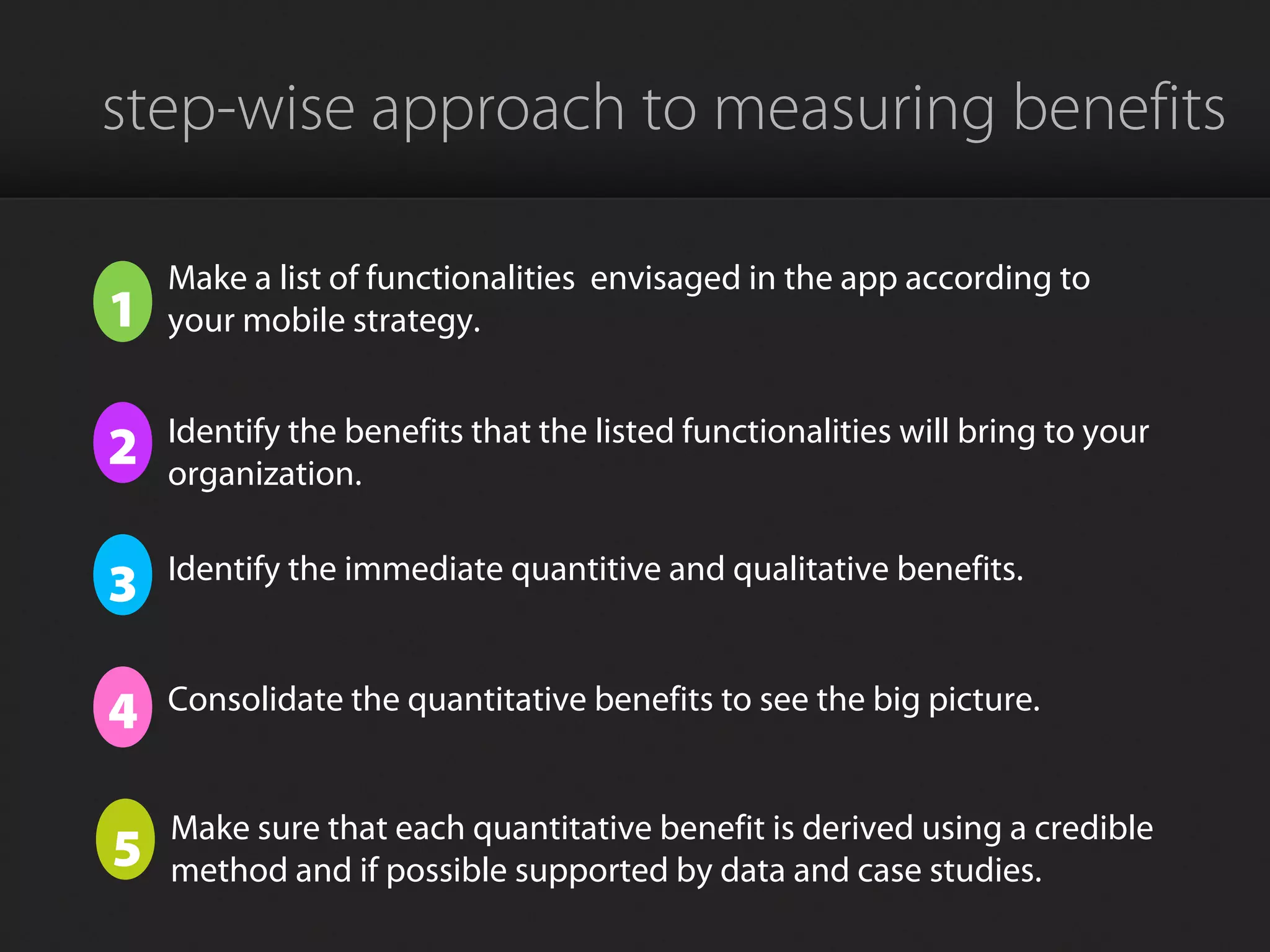
step-wise approach to measuring benefits
1
Make a list of functionalities envisaged in the app according to
your mobile strategy.
2 Identify the benefits that the listed functionalities will bring to your
organization.
3 Identify the immediate quantitive and qualitative benefits.
4 Consolidate the quantitative benefits to see the big picture.
5
Make sure that each quantitative benefit is derived using a credible
method and if possible supported by data and case studies.
sample benefit analysis
A mobile app for field service technicians providing real-time
information on customer complaints, tickets raised/solved etc., can
offer benefits in-
Quantitative Qualitative
Reducing response time
Travel savings
Improved resource
efficiency
Improved customer service
Higher customer loyalty
Boost in brand perception
calculating productivity gain
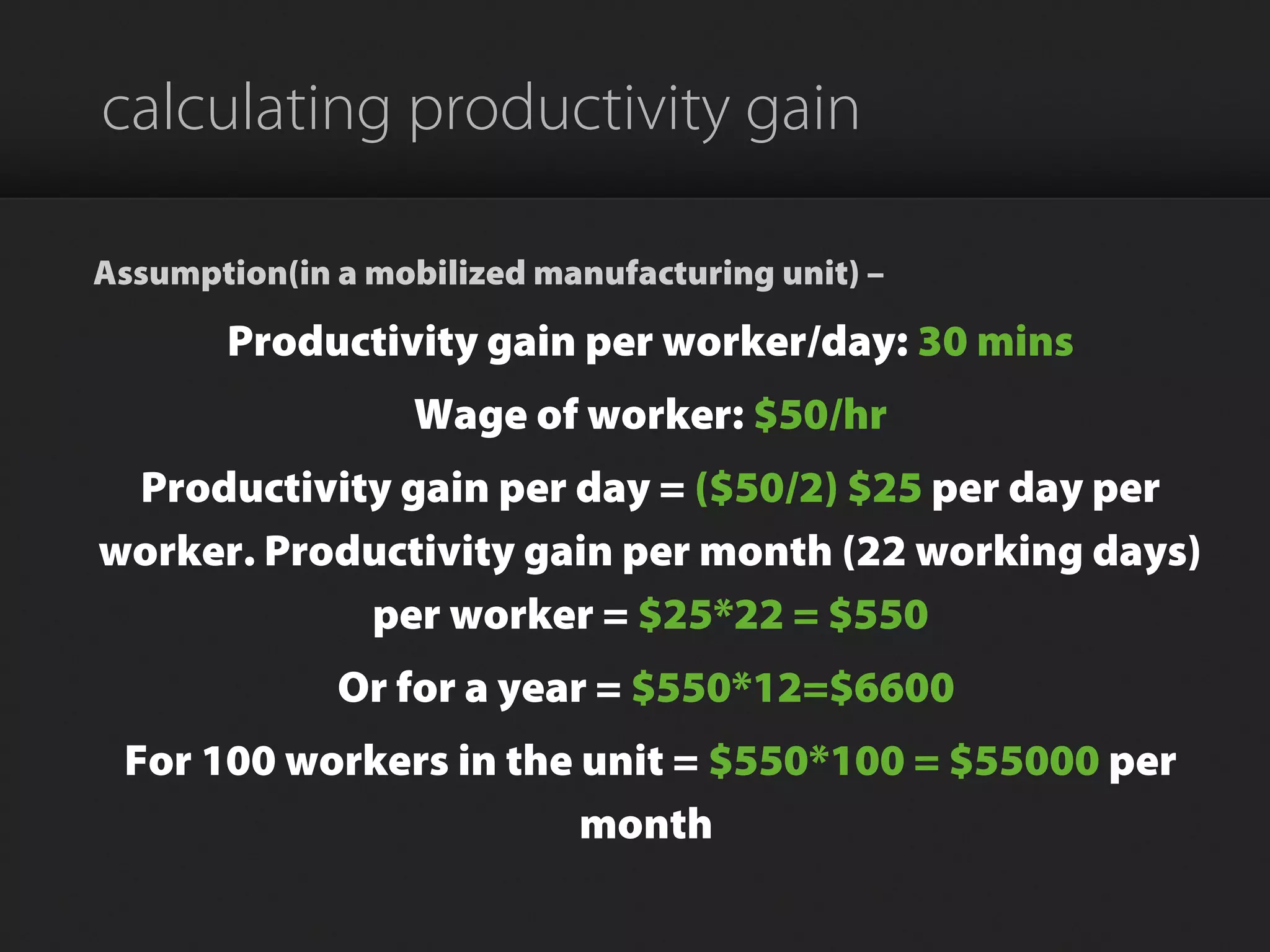
Assumption(in a mobilized manufacturing unit) –
Productivity gain per worker/day: 30 mins
Wage of worker: $50/hr
Productivity gain per day = ($50/2) $25 per day per
worker. Productivity gain per month (22 working days)
per worker = $25*22 = $550
Or for a year = $550*12=$6600
For 100 workers in the unit = $550*100 = $55000 per
month
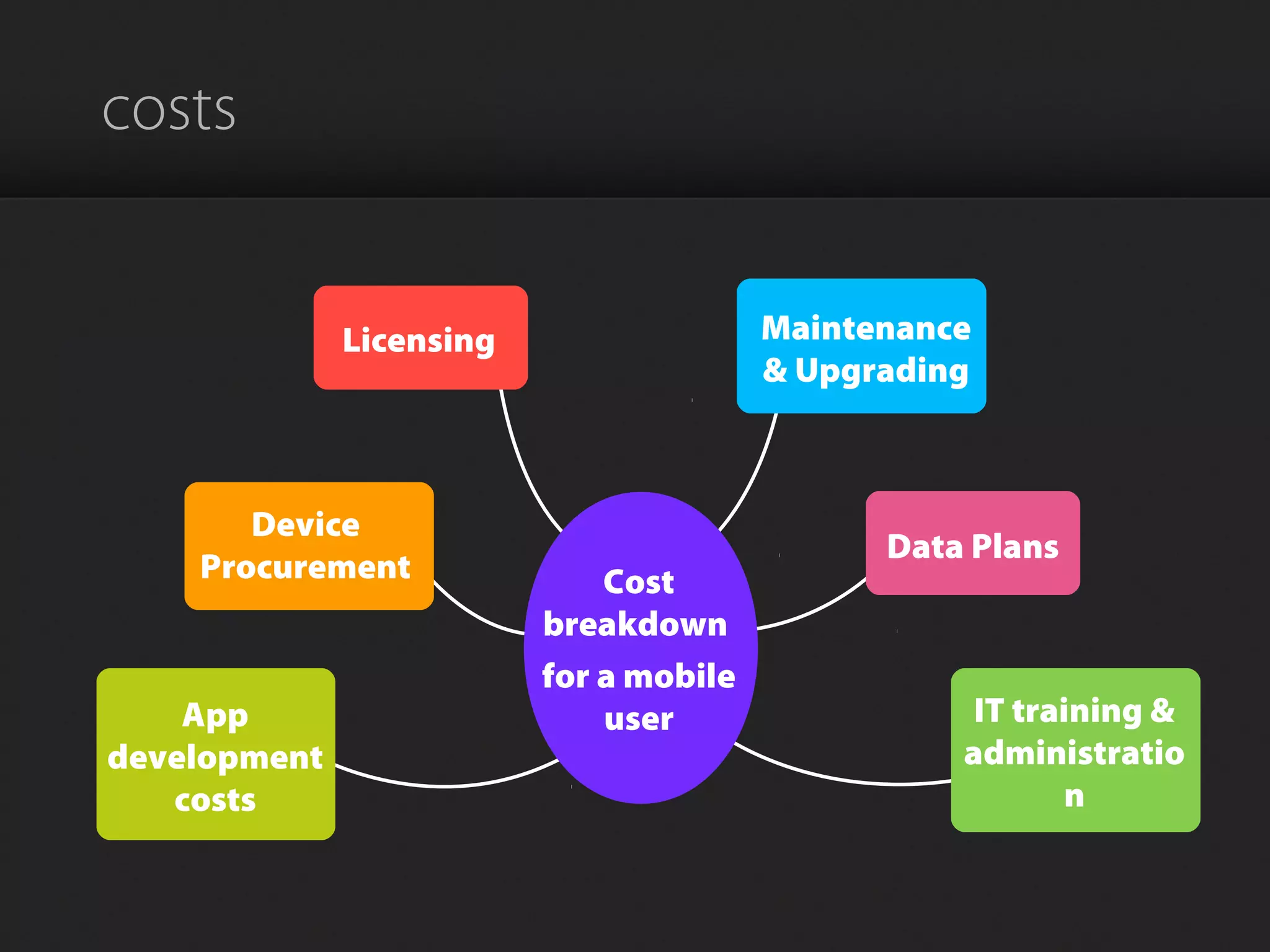
costs
Cost
breakdown
for a mobile
user IT training &
administratio
n
App
development
costs
Device
Procurement
Data Plans
Licensing Maintenance
& Upgrading
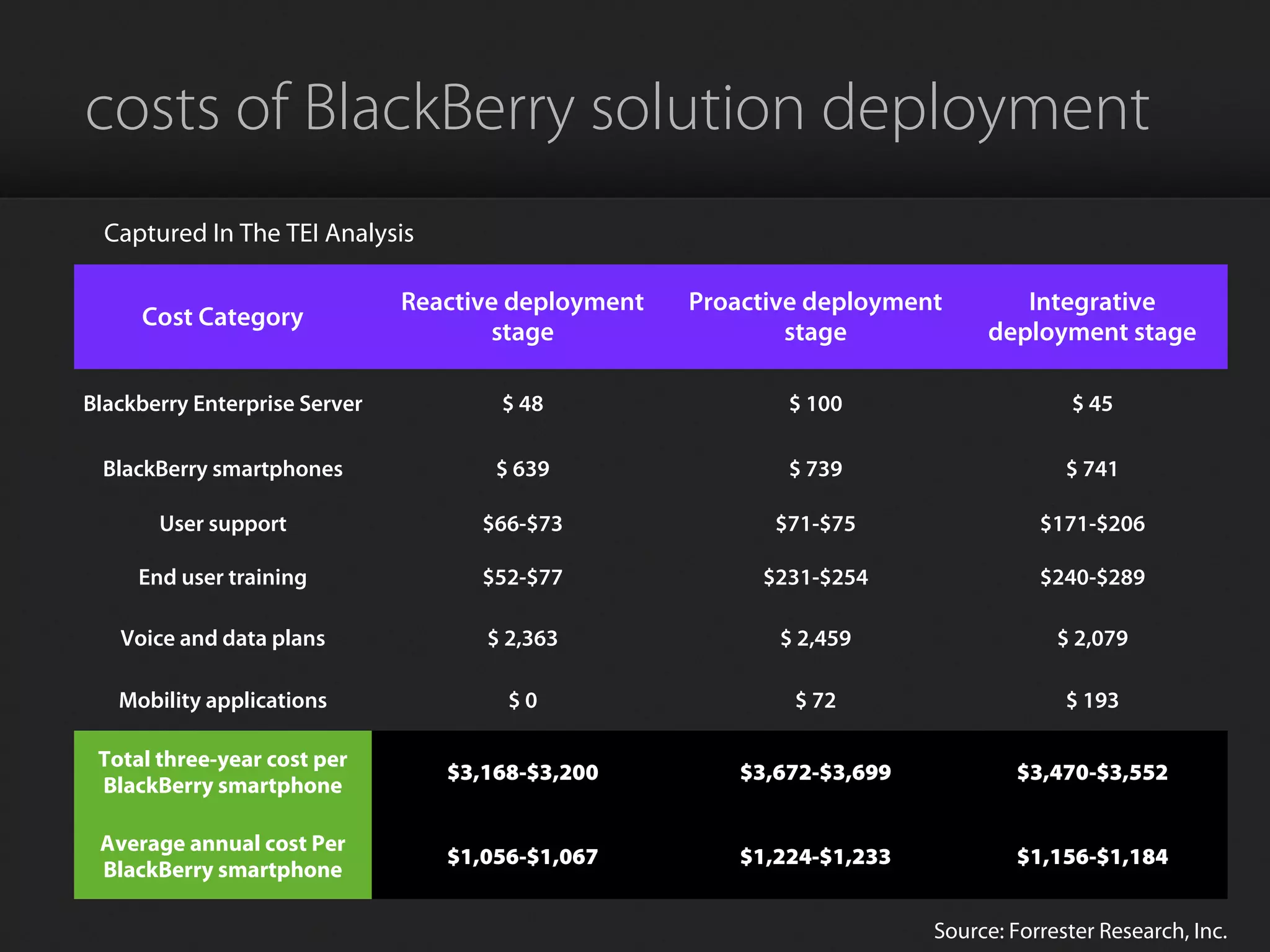
costs of BlackBerry solution deployment
Cost Category
Reactive deployment
stage
Proactive deployment
stage
Integrative
deployment stage
Blackberry Enterprise Server $ 48 $ 100 $ 45
BlackBerry smartphones $ 639 $ 739 $ 741
User support $66-$73 $71-$75 $171-$206
End user training $52-$77 $231-$254 $240-$289
Voice and data plans $ 2,363 $ 2,459 $ 2,079
Mobility applications $ 0 $ 72 $ 193
Total three-year cost per
BlackBerry smartphone
$3,168-$3,200 $3,672-$3,699 $3,470-$3,552
Average annual cost Per
BlackBerry smartphone
$1,056-$1,067 $1,224-$1,233 $1,156-$1,184
Source: Forrester Research, Inc.
Captured In The TEI Analysis
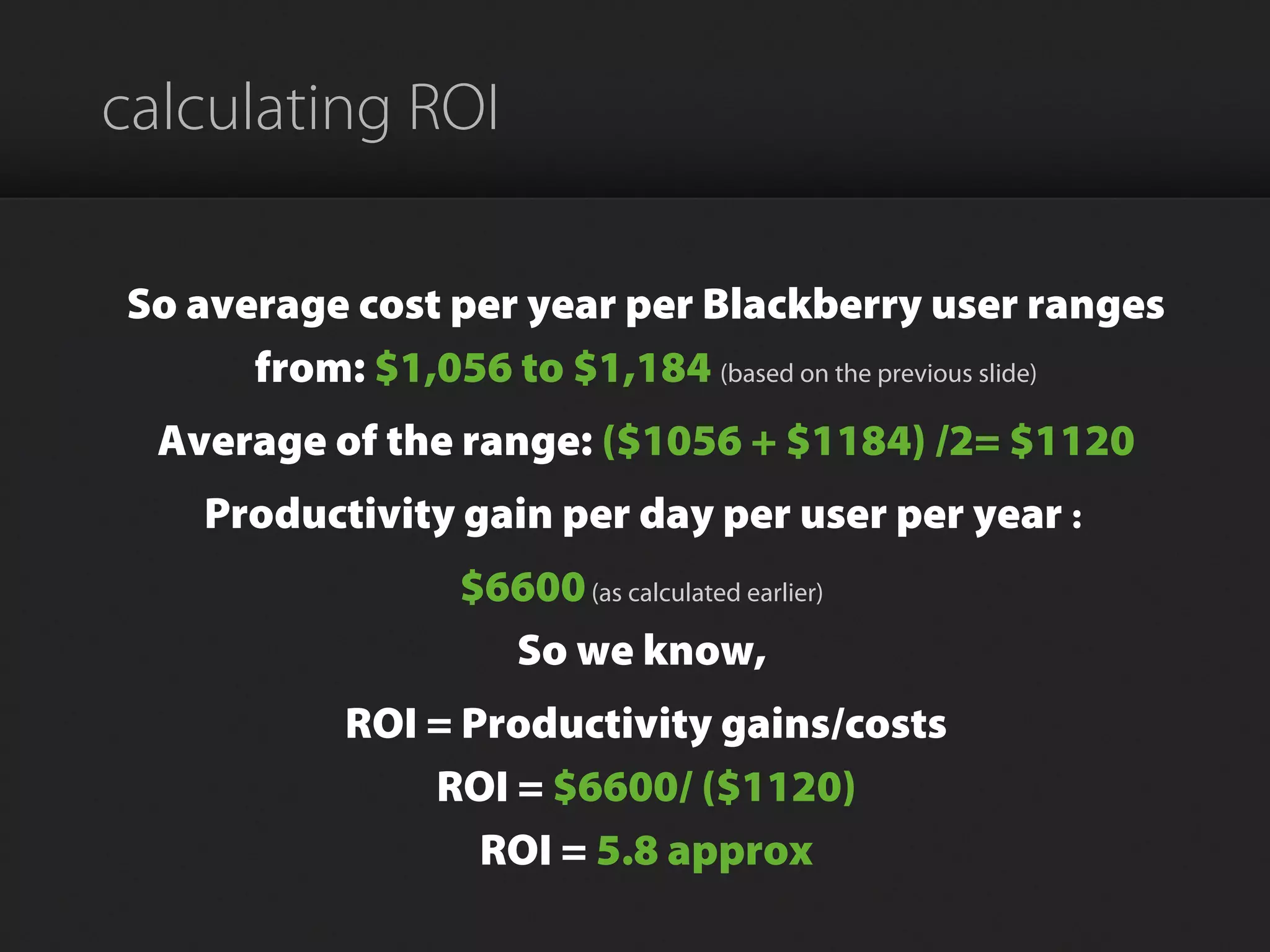
calculating ROI
So average cost per year per Blackberry user ranges
from: $1,056 to $1,184 (based on the previous slide)
Average of the range: ($1056 + $1184) /2= $1120
Productivity gain per day per user per year :
$6600(as calculated earlier)
So we know,
ROI = Productivity gains/costs
ROI = $6600/ ($1120)
ROI = 5.8 approx
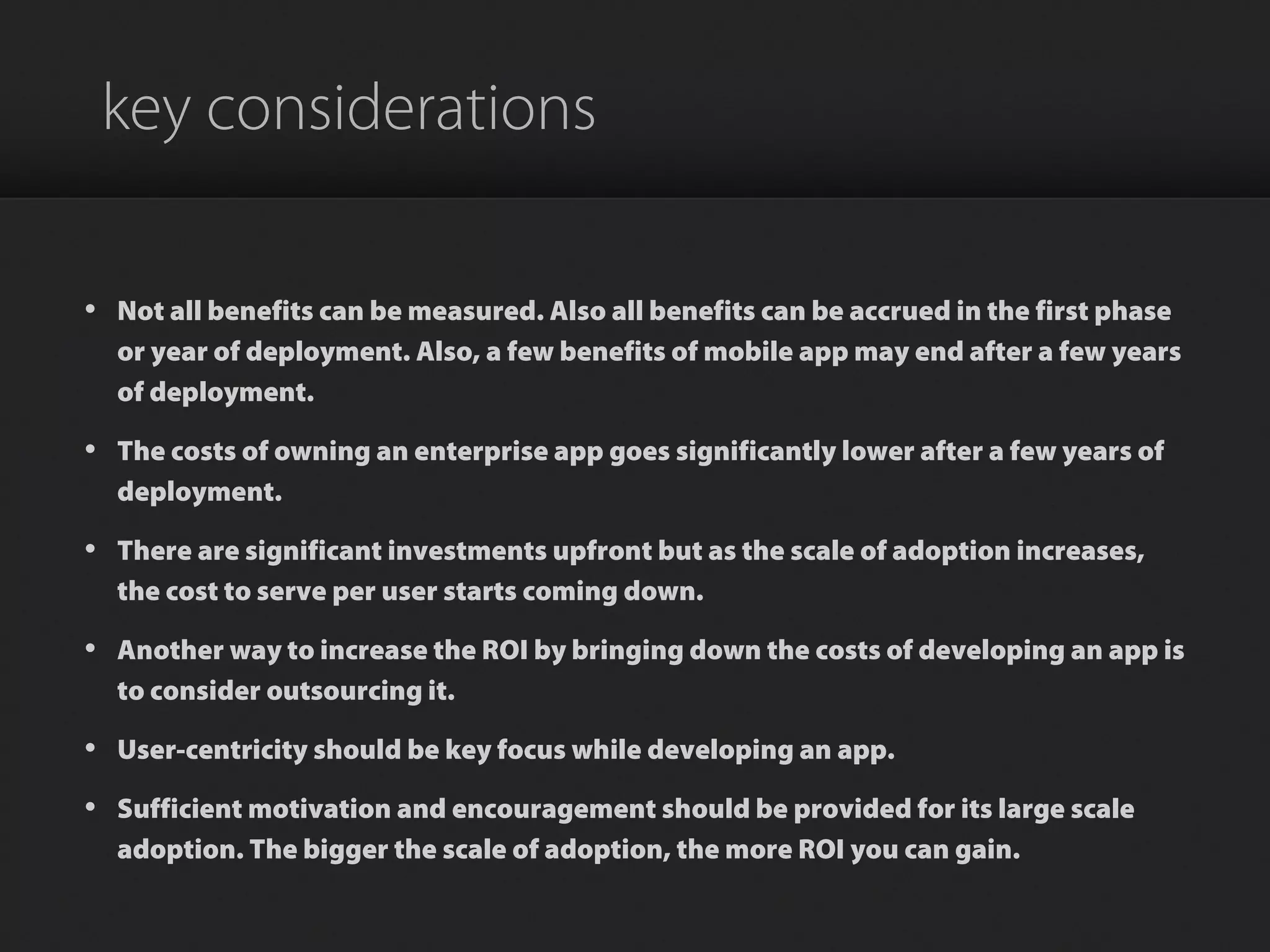
key considerations
• Not all benefits can be measured. Also all benefits can be accrued in the first phase
or year of deployment. Also, a few benefits of mobile app may end after a few years
of deployment.
• The costs of owning an enterprise app goes significantly lower after a few years of
deployment.
• There are significant investments upfront but as the scale of adoption increases,
the cost to serve per user starts coming down.
• Another way to increase the ROI by bringing down the costs of developing an app is
to consider outsourcing it.
• User-centricity should be key focus while developing an app.
• Sufficient motivation and encouragement should be provided for its large scale
adoption. The bigger the scale of adoption, the more ROI you can gain.
world-class mobile solutions

Calculating ROI of your enterprise App

  • 1.
    Calculating ROI ofyour enterprise app Process, approaches and considerations
  • 2.
    the need forcalculating ROI • As per a recent survey by Zenprise, 74.7% of decision-makers said they have or will deploy line-of-business apps in the next 12 months. • Deploying apps requires high amount of upfront investments and substantial recurring expenses every year. • As the global economy continues to stagnate, decision makers are taking a hard look at their mobility expenditure and are asking questions like- “How much these mobile apps are benefiting the company?” Or “How to calculate the ROI of mobile apps to justify the expenses?”
  • 3.
    what’s coming up Asper a recent survey by Zenprise of decision-makers said they have or will deploy line-of-business apps in the next 12 months 74.7%
  • 4.
    barriers Cost is amajor barrier to enterprise mobility. Deployment, adoption, policy, security and infrastructure are some of the other hurdles in its way too. Deployment Adoption Policy Infrastructure Security Costs
  • 5.
    concerns raised “How muchthese mobile apps are benefiting the company?” or “How to calculate the ROI of mobile apps to justify the expenses?”
  • 6.
    process of calculatingROI To calculate the ROI of a mobile app we will first need to ascertain two components : CostsBenefits
  • 7.
    benefits Quantitative benefits -Those benefits that can be put in numbers such as percentage increase in cost savings, percentage increase in revenue /profits etc. Qualitative benefits - Those benefits that are intangibles like increase in customer satisfaction, boost in customer loyalty and brand perception etc. benefits
  • 8.
    step-wise approach tomeasuring benefits 1 Make a list of functionalities envisaged in the app according to your mobile strategy. 2 Identify the benefits that the listed functionalities will bring to your organization. 3 Identify the immediate quantitive and qualitative benefits. 4 Consolidate the quantitative benefits to see the big picture. 5 Make sure that each quantitative benefit is derived using a credible method and if possible supported by data and case studies.
  • 9.
    sample benefit analysis Amobile app for field service technicians providing real-time information on customer complaints, tickets raised/solved etc., can offer benefits in- Quantitative Qualitative Reducing response time Travel savings Improved resource efficiency Improved customer service Higher customer loyalty Boost in brand perception
  • 10.
    calculating productivity gain Assumption(ina mobilized manufacturing unit) – Productivity gain per worker/day: 30 mins Wage of worker: $50/hr Productivity gain per day = ($50/2) $25 per day per worker. Productivity gain per month (22 working days) per worker = $25*22 = $550 Or for a year = $550*12=$6600 For 100 workers in the unit = $550*100 = $55000 per month
  • 11.
    costs Cost breakdown for a mobile userIT training & administratio n App development costs Device Procurement Data Plans Licensing Maintenance & Upgrading
  • 12.
    costs of BlackBerrysolution deployment Cost Category Reactive deployment stage Proactive deployment stage Integrative deployment stage Blackberry Enterprise Server $ 48 $ 100 $ 45 BlackBerry smartphones $ 639 $ 739 $ 741 User support $66-$73 $71-$75 $171-$206 End user training $52-$77 $231-$254 $240-$289 Voice and data plans $ 2,363 $ 2,459 $ 2,079 Mobility applications $ 0 $ 72 $ 193 Total three-year cost per BlackBerry smartphone $3,168-$3,200 $3,672-$3,699 $3,470-$3,552 Average annual cost Per BlackBerry smartphone $1,056-$1,067 $1,224-$1,233 $1,156-$1,184 Source: Forrester Research, Inc. Captured In The TEI Analysis
  • 13.
    calculating ROI So averagecost per year per Blackberry user ranges from: $1,056 to $1,184 (based on the previous slide) Average of the range: ($1056 + $1184) /2= $1120 Productivity gain per day per user per year : $6600(as calculated earlier) So we know, ROI = Productivity gains/costs ROI = $6600/ ($1120) ROI = 5.8 approx
  • 14.
    key considerations • Notall benefits can be measured. Also all benefits can be accrued in the first phase or year of deployment. Also, a few benefits of mobile app may end after a few years of deployment. • The costs of owning an enterprise app goes significantly lower after a few years of deployment. • There are significant investments upfront but as the scale of adoption increases, the cost to serve per user starts coming down. • Another way to increase the ROI by bringing down the costs of developing an app is to consider outsourcing it. • User-centricity should be key focus while developing an app. • Sufficient motivation and encouragement should be provided for its large scale adoption. The bigger the scale of adoption, the more ROI you can gain.
  • 15.