THE PRESENTATION
On
SPREAD & HISTORY OF
HOMOEOPATHIC
MEDICINE IN INDIA
BY DR.AMBRISH P. UKE (M.D.)
(ambarish.uke@gmail.com)
Contact no: 9850158778
www.apuhomc.com
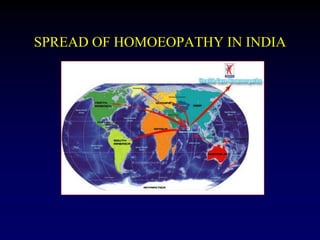
SPREAD OF HOMOEOPATHY IN INDIA
Introduction:
• Homoeopathy spans a period over 172 years
in India.
• India (Bharat) the land of Atreya ,
Dhanvantari , Charaka , Shushruta and
many other latter generations of their
followers and believers! As various
countries on personal and institutional level
face many opposition, how India be an
exception ?
BEGINNING:
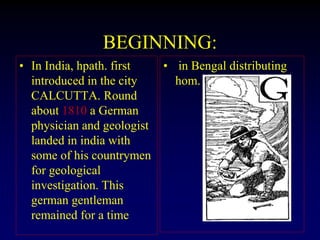
• In India, hpath. first
introduced in the city
CALCUTTA. Round
about 1810 a German
physician and geologist
landed in india with
some of his countrymen
for geological
investigation. This
german gentleman
remained for a time
• in Bengal distributing
hom.
BEGINNING:
...Indian servants and other poor Indians.
• Dr.Cooper and Dr.J.Rtherford Russel were two
medical officers in service of British
government who were known to Homoeopathy
and who privately treated some europeans
residents of Calcutta and Indians.
• About that time Mr.H.Ryper a retired military
officer distribute homoeopathic ….
BEGINNING:
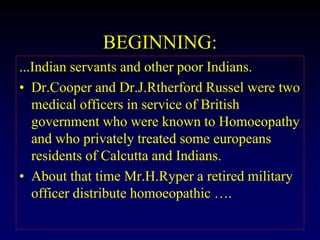
• Medicine to poor peoples of Cooly Bazar
and captain Mr.May helps him
economically.
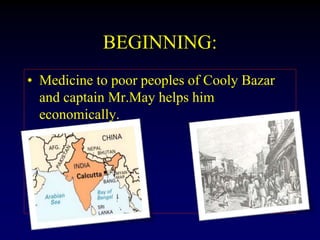
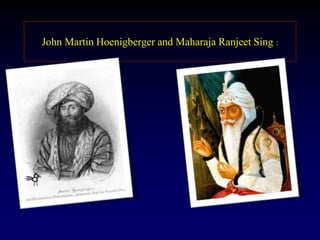
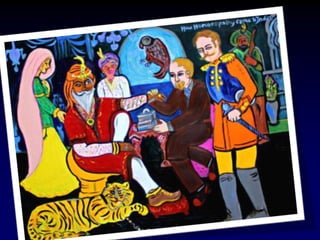
John Martin Hoenigberger and Maharaja Ranjeet Sing :
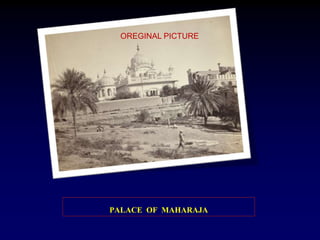
PALACE OF MAHARAJA
OREGINAL PICTURE
Chemistry of John Martin
Hoenigberger:
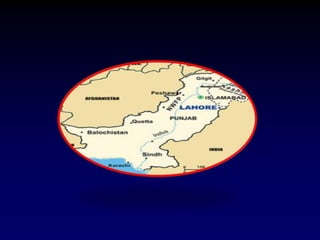
• A native of Transylvania, was physician in
court of Lahore when Maharaja Ranjeet
Singh,the Lion Of Punjab was ruling the
country.
• Hoeningberger was not only a man of science
but he knew politics and could follow well the
trend of public affairs and forecast future. He
systematically studied the various medical
systems of that time and came to conclusion
that……..
Cond…….
• Hahnemann’s homoeopathy was the only
system which should be embraced and
propagated by every medical man .
• The Romanian learnt homoeopathy from
Hahnemann in Paris.
• He was in India first time In 1810 to visit
Lahore.
• During his stay he cured several obstinate
cases and went to Constantinople.
• In spring of 1839 he arrived at Lahore and
found his former patron MAHARAJA
RANJEET SINGH, seated on chair, with
swollen feet, and made easy himself
understood by gestures and signs with his
hands. His organ of speech was paralyzed to
such an extent that he was not able to utter a
single articulate sound.
• By the administration of dulcamara 3x (infront
of King as he was suspicious) it was able to
effect a speedy cure.
• In Lahore as a physician he had a brilliant
carrier and was universally respected.
• He was at last honored with a good pension in
consideration of his long medical service to
MAHARAJA.
• After few years of death of MAHARAJA,
Honingberger shifted to Calcutta and became
popular as “Cholera Doctor”.
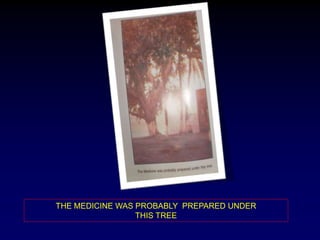
THE MEDICINE WAS PROBABLY PREPARED UNDER
THIS TREE
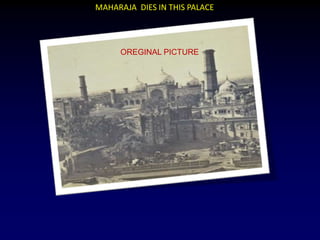
MAHARAJA DIES IN THIS PALACE
OREGINAL PICTURE
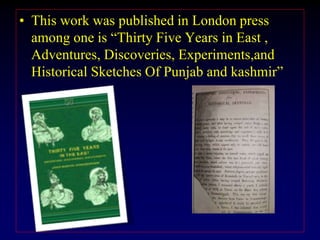
• This work was published in London press
among one is “Thirty Five Years in East ,
Adventures, Discoveries, Experiments,and
Historical Sketches Of Punjab and kashmir”
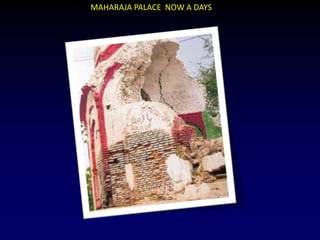
MAHARAJA PALACE NOW A DAYS
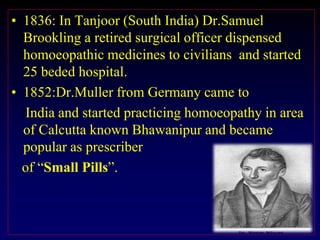
• 1836: In Tanjoor (South India) Dr.Samuel
Brookling a retired surgical officer dispensed
homoeopathic medicines to civilians and started
25 beded hospital.
• 1852:Dr.Muller from Germany came to
India and started practicing homoeopathy in area
of Calcutta known Bhawanipur and became
popular as prescriber
of “Small Pills”.
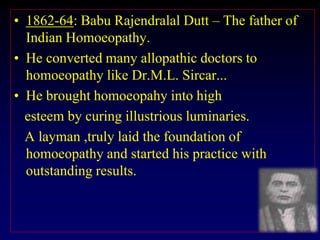
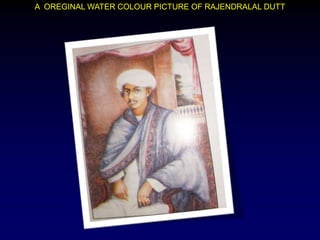
• 1862-64: Babu Rajendralal Dutt – The father of
Indian Homoeopathy.
• He converted many allopathic doctors to
homoeopathy like Dr.M.L. Sircar...
• He brought homoeopahy into high
esteem by curing illustrious luminaries.
A layman ,truly laid the foundation of
homoeopathy and started his practice with
outstanding results.
A OREGINAL WATER COLOUR PICTURE OF RAJENDRALAL DUTT
• Dr. Mahendralal Sircar who stood first from
Calcutta university(Bengal Branch Of British
Association) learned about homeopathy from a
layman Rajendralal Dutta.
• He was so impressed that he gave up his
medical degree for homoeopathy.
• On 16th Feb 1867 Dr. M.Sircar wrote an article
condemning allopathy .
• “On the supposed uncertainty in the medical
science and relationship between disease and
medicine”
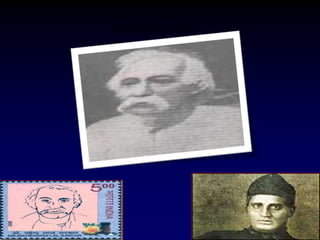
Dr.Mahendra Lal Sircar
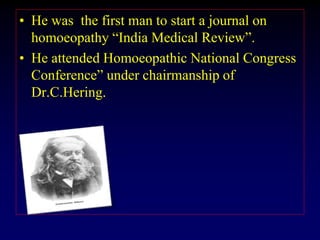
• He was the first man to start a journal on
homoeopathy “India Medical Review”.
• He attended Homoeopathic National Congress
Conference” under chairmanship of
Dr.C.Hering.
• 1867: Dr.Salzar of Vienna was very famous as
a founder of homoeopathic education in India.
He influenced many people towards practising
homoeopathy. Out of them,
Dr.Mujumdar,Dr.Roy,Dr.Banerjee,
Dr.Younan established 1st homoeopathic
college of India-1878, named “Calcutta
Homoeopathic Medical College”. And
principle was N.M.Choudhari.
• At the same time Dr.S.C.Ghosh proved
many Indian drugs from Indian herbs and
completed a book named “Drugs Of
Hindustan”.
• At that time in Banaras Shri.Lokanath
Moitre started a free homoeopathic
dispensary, and administrator of the
hospital which last for nearly 15 years.
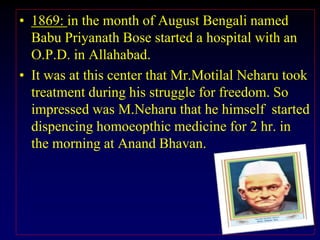
• 1869: in the month of August Bengali named
Babu Priyanath Bose started a hospital with an
O.P.D. in Allahabad.
• It was at this center that Mr.Motilal Neharu took
treatment during his struggle for freedom. So
impressed was M.Neharu that he himself started
dispencing homoeopthic medicine for 2 hr. in
the morning at Anand Bhavan.
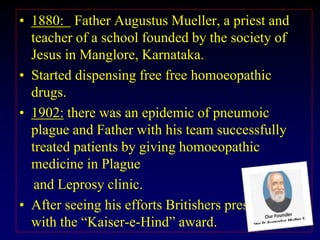
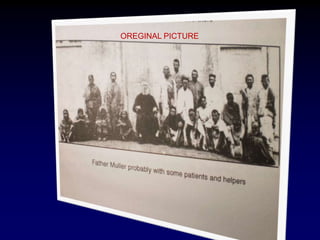
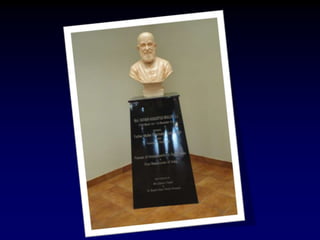
• 1880: Father Augustus Mueller, a priest and
teacher of a school founded by the society of
Jesus in Manglore, Karnataka.
• Started dispensing free free homoeopathic
drugs.
• 1902: there was an epidemic of pneumoic
plague and Father with his team successfully
treated patients by giving homoeopathic
medicine in Plague
and Leprosy clinic.
• After seeing his efforts Britishers presented him
with the “Kaiser-e-Hind” award.
OREGINAL PICTURE
• 1937: In April M.L.A.Ghias-ud-idin was able
to voice his opinion on homoeopathy in
assembly and his thought was accepted by all
states, but only West Bengal established a
council.
• On 17 Feb 1948 after independence Sir Satish
Chandra Samanta,from west Bengal piloted a
move in constituents assembly to establish
Central Council Of Homoeopathy passed after
modification by Mr.Mohan Lal Saxena(U.P.)
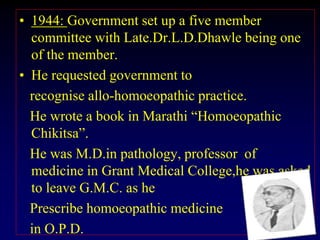
• 1944: Government set up a five member
committee with Late.Dr.L.D.Dhawle being one
of the member.
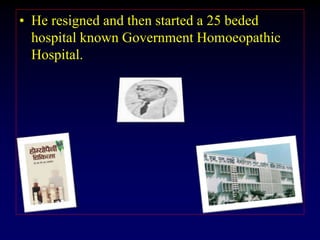
• He requested government to
recognise allo-homoeopathic practice.
He wrote a book in Marathi “Homoeopathic
Chikitsa”.
He was M.D.in pathology, professor of
medicine in Grant Medical College,he was asked
to leave G.M.C. as he
Prescribe homoeopathic medicine
in O.P.D.
• He resigned and then started a 25 beded
hospital known Government Homoeopathic
Hospital.
• 1946: Council of Homoeopathy of West Bengal
was established, with Homoeopathy being
recognized.
• In Orissa Dr.Abhin Chandra Rao was a pioneer
and he established homoeopathic college in
Dhaneshwar.
• In Hydrabad Dr.Jaisoorya ,M.D.medicine son of
Sarojini Naidu,started practicing homoeopathy and
established a college of homoeopathy known
today as “Jaisoorya Homoeopathic College”.
• In Andhra Dr.M.Gururaja obtained M.D. degree
from Chicago. He started practising homoeopathy
“Andhra Provincial Homoeopathic College”
today named as “Dr.Gururaja Government
Medical College and
Hospital”.
• In West Bengal Dr.Manish B.Chandra
Bhatacharya was first person who wrote an
unofficial pharmacopeia In English, Bangali.
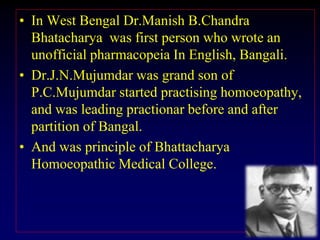
• Dr.J.N.Mujumdar was grand son of
P.C.Mujumdar started practising homoeopathy,
and was leading practionar before and after
partition of Bangal.
• And was principle of Bhattacharya
Homoeopathic Medical College.
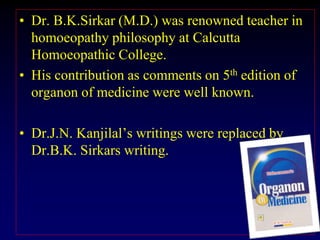
• Dr. B.K.Sirkar (M.D.) was renowned teacher in
homoeopathy philosophy at Calcutta
Homoeopathic College.
• His contribution as comments on 5th edition of
organon of medicine were well known.
• Dr.J.N. Kanjilal’s writings were replaced by
Dr.B.K. Sirkars writing.
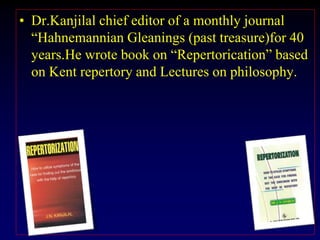
• Dr.Kanjilal chief editor of a monthly journal
“Hahnemannian Gleanings (past treasure)for 40
years.He wrote book on “Repertorication” based
on Kent repertory and Lectures on philosophy.
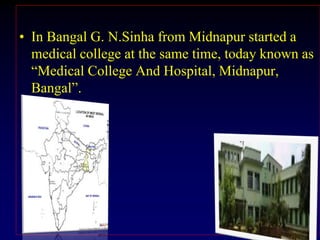
• In Bangal G. N.Sinha from Midnapur started a
medical college at the same time, today known as
“Medical College And Hospital, Midnapur,
Bangal”.
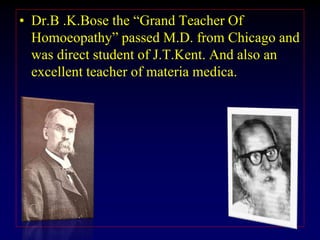
• Dr.B .K.Bose the “Grand Teacher Of
Homoeopathy” passed M.D. from Chicago and
was direct student of J.T.Kent. And also an
excellent teacher of materia medica.
• 1952-54: National Congress Government applied
a small committee Homoeopathic References
Committee, constituted by Rajkumari Amrit
Kaur,the union health minister of India (1952).
• Dr.J.C. Mukerjee was nominated as chairman,
including 6 homoeopath and 4 allopath with
health minister as Chair person .
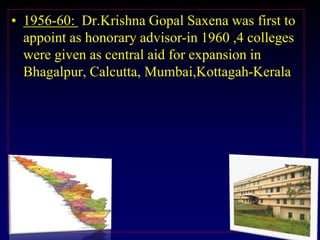
• 1956-60: Dr.Krishna Gopal Saxena was first to
appoint as honorary advisor-in 1960 ,4 colleges
were given as central aid for expansion in
Bhagalpur, Calcutta, Mumbai,Kottagah-Kerala
1.Dr. T.N.S. Kurup, Deputy Director (In-Situ)Incharge,
Central Research Institute (H),Sachivothamapuram,a
Kottayam - 686 532(Kerala).
2. Dr. Sunil Kumar, Deputy Director (In-Situ)Incharge,
Central Research Institute (H), A-1/1, Sector- 24,
Opp. ESI Hospital, Noida.(U.P.)
3. Dr. K.C.Murlidharan,Assistant Director (In-Situ)Incharge,
Regional Research Institute (H),CBD, Belapur, Navi Mumbai - 400 056.(Maharashtra)
Tel : 022 - 27579154(Off),
Fax : 022 - 27577501
4. Dr. CH.Ravindaran, Assistant Director (In-Situ) Incharge,
Regional Research Institute (H), 13/210-A, Club Road,
Gudivada - 521 301.(A.P.)
5. Dr. (Mrs. ) Bindu Sharma, Assistant Director (In-Situ) Incharge,
Regional Research Institute (H), House No.2, Type-D, Lane-1,
Sector-1, Below B.C.S., New Shimla - 171 009.(H.P.)
• Government of India constituted a central
council of Health, was committee of health
minister .
• It passed a resolution that each state would
give recognition to homoeopathic college from
1960 and Government of India promote in
homoeopathy.
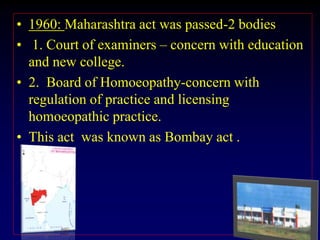
• 1960: Maharashtra act was passed-2 bodies
• 1. Court of examiners – concern with education
and new college.
• 2. Board of Homoeopathy-concern with
regulation of practice and licensing
homoeopathic practice.
• This act was known as Bombay act .
• Dr.Pulsule started manafacturing
homoeopathic medicine in Maharashtra in
Chinchwad area of Pune.
• Dr.M.V.Kulkarni followed foot stepes of
Bhatacharya in Bangal.
• He started “Roy and Company” in Mumbai.
• They were chief importers of Boerick and
Ttafel of America,and Schwabe of Germany.
• They published Boger Boennignhausen
repertory 1st time in India.
• He also started manufacturing homoeopathic
drugs in Maharashtra.
• Dr. A.C.Das settled successful practice in
Mumbai.
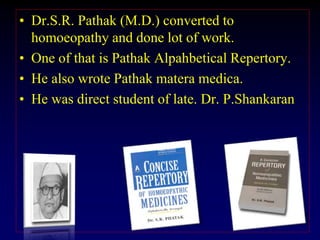
• Dr.S.R. Pathak (M.D.) converted to
homoeopathy and done lot of work.
• One of that is Pathak Alpahbetical Repertory.
• He also wrote Pathak matera medica.
• He was direct student of late. Dr. P.Shankaran
• Dr.P.Shankaran he acquired name and frame
internationally, in very short period of time.
• He wrote number of booklets 30 on the topic
relevant and important to practice of
homoeopathy.
• He also proved many drugs like aqua
marina…..
• He was popular for publishing low praised
edition of books on homoeopathy.(Rs.10)
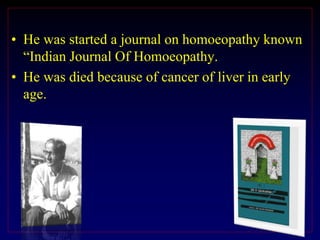
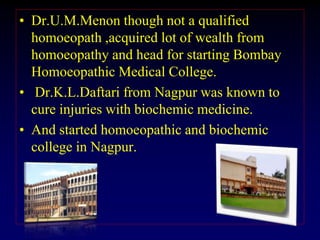
• He was started a journal on homoeopathy known
“Indian Journal Of Homoeopathy.
• He was died because of cancer of liver in early
age.
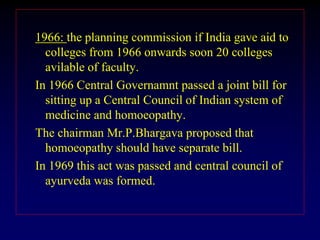
• Dr.U.M.Menon though not a qualified
homoeopath ,acquired lot of wealth from
homoeopathy and head for starting Bombay
Homoeopathic Medical College.
• Dr.K.L.Daftari from Nagpur was known to
cure injuries with biochemic medicine.
• And started homoeopathic and biochemic
college in Nagpur.
1966: the planning commission if India gave aid to
colleges from 1966 onwards soon 20 colleges
avilable of faculty.
In 1966 Central Governamnt passed a joint bill for
sitting up a Central Council of Indian system of
medicine and homoeopathy.
The chairman Mr.P.Bhargava proposed that
homoeopathy should have separate bill.
In 1969 this act was passed and central council of
ayurveda was formed.
• 1972: 3rd of April a separate bill for
homoeopathy was introduced in Rajya Sabha.
• On 19th Dec.1973 President gave his consent,
to bill and thus “Homoeopathy Central Council
Act 1973” was passed ,was very important for
establishment of homoeopathic colleges.
• 1974: in December Dr.Karan Singh
inaugurated Central Council Of Homoeopathy.
• During this time Gov. of India constitute
research organisation called C.C.R.
• Later council for Research in Indian Medicine
and Homoeopathy-C.C.R.I.M.&H
• Government of India established clinical
research at some of homoeopathic colleges at
Gudiada,Kottayam,Bhagatpur,Calcutta.
• 1972:central research institute at Calcutta was
established by Government of India.
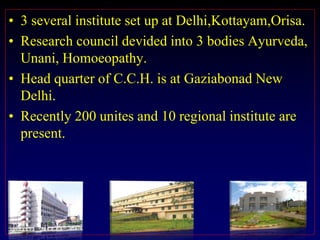
• 3 several institute set up at Delhi,Kottayam,Orisa.
• Research council devided into 3 bodies Ayurveda,
Unani, Homoeopathy.
• Head quarter of C.C.H. is at Gaziabonad New
Delhi.
• Recently 200 unites and 10 regional institute are
present.
• C.C.H. along with on other recommendation
started with a uniform syllabus for diploma,
then degree, and after post graduation, and
linked courses.
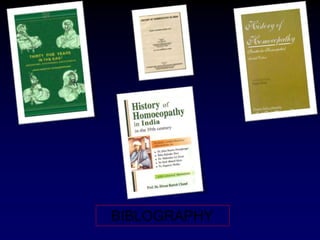
BIBLOGRAPHY

By DR.AMBRISH UKE (M.D.)

  • 1.
    THE PRESENTATION On SPREAD &HISTORY OF HOMOEOPATHIC MEDICINE IN INDIA BY DR.AMBRISH P. UKE (M.D.) (ambarish.uke@gmail.com) Contact no: 9850158778 www.apuhomc.com
  • 2.
  • 3.
    Introduction: • Homoeopathy spansa period over 172 years in India. • India (Bharat) the land of Atreya , Dhanvantari , Charaka , Shushruta and many other latter generations of their followers and believers! As various countries on personal and institutional level face many opposition, how India be an exception ?
  • 4.
    BEGINNING: • In India,hpath. first introduced in the city CALCUTTA. Round about 1810 a German physician and geologist landed in india with some of his countrymen for geological investigation. This german gentleman remained for a time • in Bengal distributing hom.
  • 5.
    BEGINNING: ...Indian servants andother poor Indians. • Dr.Cooper and Dr.J.Rtherford Russel were two medical officers in service of British government who were known to Homoeopathy and who privately treated some europeans residents of Calcutta and Indians. • About that time Mr.H.Ryper a retired military officer distribute homoeopathic ….
  • 6.
    BEGINNING: • Medicine topoor peoples of Cooly Bazar and captain Mr.May helps him economically.
  • 7.
    John Martin Hoenigbergerand Maharaja Ranjeet Sing :
  • 8.
  • 9.
    Chemistry of JohnMartin Hoenigberger: • A native of Transylvania, was physician in court of Lahore when Maharaja Ranjeet Singh,the Lion Of Punjab was ruling the country. • Hoeningberger was not only a man of science but he knew politics and could follow well the trend of public affairs and forecast future. He systematically studied the various medical systems of that time and came to conclusion that……..
  • 10.
    Cond……. • Hahnemann’s homoeopathywas the only system which should be embraced and propagated by every medical man . • The Romanian learnt homoeopathy from Hahnemann in Paris. • He was in India first time In 1810 to visit Lahore.
  • 12.
    • During hisstay he cured several obstinate cases and went to Constantinople. • In spring of 1839 he arrived at Lahore and found his former patron MAHARAJA RANJEET SINGH, seated on chair, with swollen feet, and made easy himself understood by gestures and signs with his hands. His organ of speech was paralyzed to such an extent that he was not able to utter a single articulate sound.
  • 14.
    • By theadministration of dulcamara 3x (infront of King as he was suspicious) it was able to effect a speedy cure. • In Lahore as a physician he had a brilliant carrier and was universally respected. • He was at last honored with a good pension in consideration of his long medical service to MAHARAJA. • After few years of death of MAHARAJA, Honingberger shifted to Calcutta and became popular as “Cholera Doctor”.
  • 15.
    THE MEDICINE WASPROBABLY PREPARED UNDER THIS TREE
  • 16.
    MAHARAJA DIES INTHIS PALACE OREGINAL PICTURE
  • 17.
    • This workwas published in London press among one is “Thirty Five Years in East , Adventures, Discoveries, Experiments,and Historical Sketches Of Punjab and kashmir”
  • 18.
  • 19.
    • 1836: InTanjoor (South India) Dr.Samuel Brookling a retired surgical officer dispensed homoeopathic medicines to civilians and started 25 beded hospital. • 1852:Dr.Muller from Germany came to India and started practicing homoeopathy in area of Calcutta known Bhawanipur and became popular as prescriber of “Small Pills”.
  • 20.
    • 1862-64: BabuRajendralal Dutt – The father of Indian Homoeopathy. • He converted many allopathic doctors to homoeopathy like Dr.M.L. Sircar... • He brought homoeopahy into high esteem by curing illustrious luminaries. A layman ,truly laid the foundation of homoeopathy and started his practice with outstanding results.
  • 21.
    A OREGINAL WATERCOLOUR PICTURE OF RAJENDRALAL DUTT
  • 22.
    • Dr. MahendralalSircar who stood first from Calcutta university(Bengal Branch Of British Association) learned about homeopathy from a layman Rajendralal Dutta. • He was so impressed that he gave up his medical degree for homoeopathy. • On 16th Feb 1867 Dr. M.Sircar wrote an article condemning allopathy . • “On the supposed uncertainty in the medical science and relationship between disease and medicine”
  • 23.
  • 24.
    • He wasthe first man to start a journal on homoeopathy “India Medical Review”. • He attended Homoeopathic National Congress Conference” under chairmanship of Dr.C.Hering.
  • 25.
    • 1867: Dr.Salzarof Vienna was very famous as a founder of homoeopathic education in India. He influenced many people towards practising homoeopathy. Out of them, Dr.Mujumdar,Dr.Roy,Dr.Banerjee, Dr.Younan established 1st homoeopathic college of India-1878, named “Calcutta Homoeopathic Medical College”. And principle was N.M.Choudhari.
  • 26.
    • At thesame time Dr.S.C.Ghosh proved many Indian drugs from Indian herbs and completed a book named “Drugs Of Hindustan”. • At that time in Banaras Shri.Lokanath Moitre started a free homoeopathic dispensary, and administrator of the hospital which last for nearly 15 years.
  • 27.
    • 1869: inthe month of August Bengali named Babu Priyanath Bose started a hospital with an O.P.D. in Allahabad. • It was at this center that Mr.Motilal Neharu took treatment during his struggle for freedom. So impressed was M.Neharu that he himself started dispencing homoeopthic medicine for 2 hr. in the morning at Anand Bhavan.
  • 28.
    • 1880: FatherAugustus Mueller, a priest and teacher of a school founded by the society of Jesus in Manglore, Karnataka. • Started dispensing free free homoeopathic drugs. • 1902: there was an epidemic of pneumoic plague and Father with his team successfully treated patients by giving homoeopathic medicine in Plague and Leprosy clinic. • After seeing his efforts Britishers presented him with the “Kaiser-e-Hind” award.
  • 29.
  • 31.
    • 1937: InApril M.L.A.Ghias-ud-idin was able to voice his opinion on homoeopathy in assembly and his thought was accepted by all states, but only West Bengal established a council. • On 17 Feb 1948 after independence Sir Satish Chandra Samanta,from west Bengal piloted a move in constituents assembly to establish Central Council Of Homoeopathy passed after modification by Mr.Mohan Lal Saxena(U.P.)
  • 32.
    • 1944: Governmentset up a five member committee with Late.Dr.L.D.Dhawle being one of the member. • He requested government to recognise allo-homoeopathic practice. He wrote a book in Marathi “Homoeopathic Chikitsa”. He was M.D.in pathology, professor of medicine in Grant Medical College,he was asked to leave G.M.C. as he Prescribe homoeopathic medicine in O.P.D.
  • 33.
    • He resignedand then started a 25 beded hospital known Government Homoeopathic Hospital.
  • 34.
    • 1946: Councilof Homoeopathy of West Bengal was established, with Homoeopathy being recognized. • In Orissa Dr.Abhin Chandra Rao was a pioneer and he established homoeopathic college in Dhaneshwar.
  • 35.
    • In HydrabadDr.Jaisoorya ,M.D.medicine son of Sarojini Naidu,started practicing homoeopathy and established a college of homoeopathy known today as “Jaisoorya Homoeopathic College”. • In Andhra Dr.M.Gururaja obtained M.D. degree from Chicago. He started practising homoeopathy “Andhra Provincial Homoeopathic College” today named as “Dr.Gururaja Government Medical College and Hospital”.
  • 36.
    • In WestBengal Dr.Manish B.Chandra Bhatacharya was first person who wrote an unofficial pharmacopeia In English, Bangali. • Dr.J.N.Mujumdar was grand son of P.C.Mujumdar started practising homoeopathy, and was leading practionar before and after partition of Bangal. • And was principle of Bhattacharya Homoeopathic Medical College.
  • 37.
    • Dr. B.K.Sirkar(M.D.) was renowned teacher in homoeopathy philosophy at Calcutta Homoeopathic College. • His contribution as comments on 5th edition of organon of medicine were well known. • Dr.J.N. Kanjilal’s writings were replaced by Dr.B.K. Sirkars writing.
  • 38.
    • Dr.Kanjilal chiefeditor of a monthly journal “Hahnemannian Gleanings (past treasure)for 40 years.He wrote book on “Repertorication” based on Kent repertory and Lectures on philosophy.
  • 39.
    • In BangalG. N.Sinha from Midnapur started a medical college at the same time, today known as “Medical College And Hospital, Midnapur, Bangal”.
  • 40.
    • Dr.B .K.Bosethe “Grand Teacher Of Homoeopathy” passed M.D. from Chicago and was direct student of J.T.Kent. And also an excellent teacher of materia medica.
  • 41.
    • 1952-54: NationalCongress Government applied a small committee Homoeopathic References Committee, constituted by Rajkumari Amrit Kaur,the union health minister of India (1952). • Dr.J.C. Mukerjee was nominated as chairman, including 6 homoeopath and 4 allopath with health minister as Chair person .
  • 42.
    • 1956-60: Dr.KrishnaGopal Saxena was first to appoint as honorary advisor-in 1960 ,4 colleges were given as central aid for expansion in Bhagalpur, Calcutta, Mumbai,Kottagah-Kerala
  • 43.
    1.Dr. T.N.S. Kurup,Deputy Director (In-Situ)Incharge, Central Research Institute (H),Sachivothamapuram,a Kottayam - 686 532(Kerala). 2. Dr. Sunil Kumar, Deputy Director (In-Situ)Incharge, Central Research Institute (H), A-1/1, Sector- 24, Opp. ESI Hospital, Noida.(U.P.) 3. Dr. K.C.Murlidharan,Assistant Director (In-Situ)Incharge, Regional Research Institute (H),CBD, Belapur, Navi Mumbai - 400 056.(Maharashtra) Tel : 022 - 27579154(Off), Fax : 022 - 27577501 4. Dr. CH.Ravindaran, Assistant Director (In-Situ) Incharge, Regional Research Institute (H), 13/210-A, Club Road, Gudivada - 521 301.(A.P.) 5. Dr. (Mrs. ) Bindu Sharma, Assistant Director (In-Situ) Incharge, Regional Research Institute (H), House No.2, Type-D, Lane-1, Sector-1, Below B.C.S., New Shimla - 171 009.(H.P.)
  • 44.
    • Government ofIndia constituted a central council of Health, was committee of health minister . • It passed a resolution that each state would give recognition to homoeopathic college from 1960 and Government of India promote in homoeopathy.
  • 45.
    • 1960: Maharashtraact was passed-2 bodies • 1. Court of examiners – concern with education and new college. • 2. Board of Homoeopathy-concern with regulation of practice and licensing homoeopathic practice. • This act was known as Bombay act .
  • 46.
    • Dr.Pulsule startedmanafacturing homoeopathic medicine in Maharashtra in Chinchwad area of Pune. • Dr.M.V.Kulkarni followed foot stepes of Bhatacharya in Bangal. • He started “Roy and Company” in Mumbai.
  • 47.
    • They werechief importers of Boerick and Ttafel of America,and Schwabe of Germany. • They published Boger Boennignhausen repertory 1st time in India. • He also started manufacturing homoeopathic drugs in Maharashtra. • Dr. A.C.Das settled successful practice in Mumbai.
  • 48.
    • Dr.S.R. Pathak(M.D.) converted to homoeopathy and done lot of work. • One of that is Pathak Alpahbetical Repertory. • He also wrote Pathak matera medica. • He was direct student of late. Dr. P.Shankaran
  • 49.
    • Dr.P.Shankaran heacquired name and frame internationally, in very short period of time. • He wrote number of booklets 30 on the topic relevant and important to practice of homoeopathy. • He also proved many drugs like aqua marina….. • He was popular for publishing low praised edition of books on homoeopathy.(Rs.10)
  • 50.
    • He wasstarted a journal on homoeopathy known “Indian Journal Of Homoeopathy. • He was died because of cancer of liver in early age.
  • 51.
    • Dr.U.M.Menon thoughnot a qualified homoeopath ,acquired lot of wealth from homoeopathy and head for starting Bombay Homoeopathic Medical College. • Dr.K.L.Daftari from Nagpur was known to cure injuries with biochemic medicine. • And started homoeopathic and biochemic college in Nagpur.
  • 52.
    1966: the planningcommission if India gave aid to colleges from 1966 onwards soon 20 colleges avilable of faculty. In 1966 Central Governamnt passed a joint bill for sitting up a Central Council of Indian system of medicine and homoeopathy. The chairman Mr.P.Bhargava proposed that homoeopathy should have separate bill. In 1969 this act was passed and central council of ayurveda was formed.
  • 53.
    • 1972: 3rdof April a separate bill for homoeopathy was introduced in Rajya Sabha. • On 19th Dec.1973 President gave his consent, to bill and thus “Homoeopathy Central Council Act 1973” was passed ,was very important for establishment of homoeopathic colleges. • 1974: in December Dr.Karan Singh inaugurated Central Council Of Homoeopathy.
  • 54.
    • During thistime Gov. of India constitute research organisation called C.C.R. • Later council for Research in Indian Medicine and Homoeopathy-C.C.R.I.M.&H • Government of India established clinical research at some of homoeopathic colleges at Gudiada,Kottayam,Bhagatpur,Calcutta. • 1972:central research institute at Calcutta was established by Government of India.
  • 55.
    • 3 severalinstitute set up at Delhi,Kottayam,Orisa. • Research council devided into 3 bodies Ayurveda, Unani, Homoeopathy. • Head quarter of C.C.H. is at Gaziabonad New Delhi. • Recently 200 unites and 10 regional institute are present.
  • 56.
    • C.C.H. alongwith on other recommendation started with a uniform syllabus for diploma, then degree, and after post graduation, and linked courses.
  • 57.

Editor's Notes