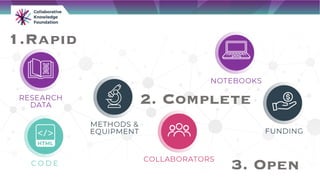
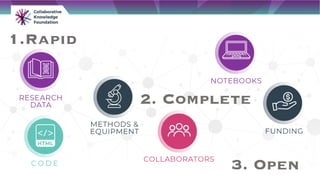
1.Rapid
2. Complete
3. Open
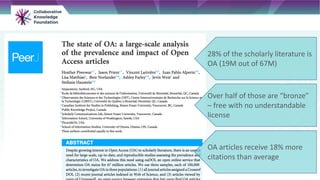
28% of the scholarly literature is
OA (19M out of 67M)
Over half of those are “bronze”
– free with no understandable
license
OA articles receive 18% more
citations than average
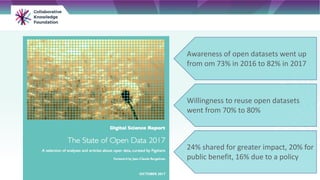
Awareness of open datasets went up
from om 73% in 2016 to 82% in 2017
Willingness to reuse open datasets
went from 70% to 80%
24% shared for greater impact, 20% for
public benefit, 16% due to a policy
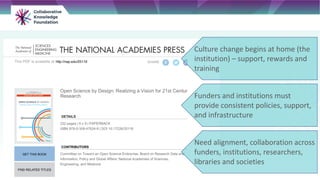
Need alignment, collaboration across
funders, institutions, researchers,
libraries and societies
Culture change begins at home (the
institution) – support, rewards and
training
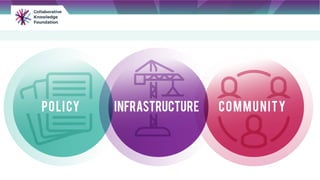
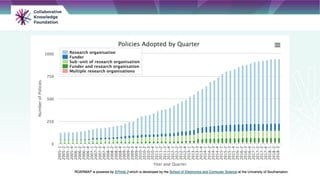
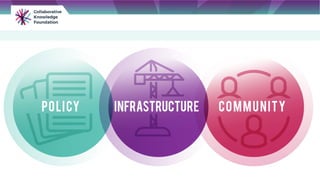
Funders and institutions must
provide consistent policies, support,
and infrastructure
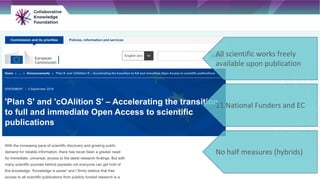
No half measures (hybrids)
All scientific works freely
available upon publication
11 National Funders and EC
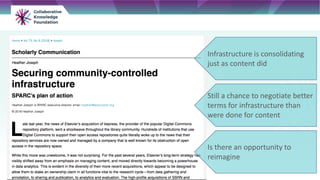
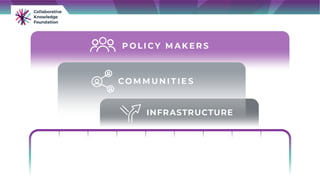
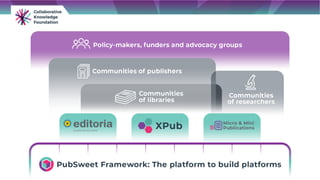
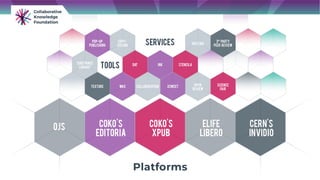
Infrastructure is consolidating
just as content did
Still a chance to negotiate better
terms for infrastructure than
were done for content
Is there an opportunity to
reimagine
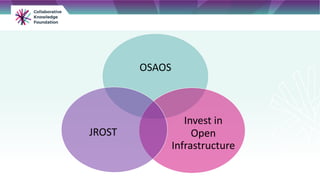
OSAOS
Invest in
Open
Infrastructure
JROST
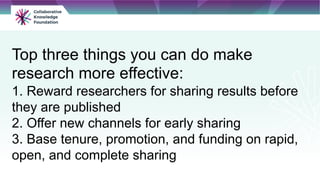
Top three things you can do make
research more effective:
1. Reward researchers for sharing results before
they are published
2. Offer new channels for early sharing
3. Base tenure, promotion, and funding on rapid,
open, and complete sharing
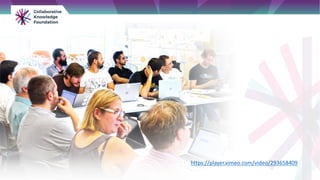
https://player.vimeo.com/video/293658409
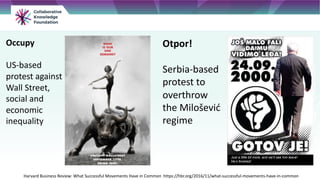
Occupy
US-based
protest against
Wall Street,
social and
economic
inequality
Otpor!
Serbia-based
protest to
overthrow
the Milošević
regime
Harvard Business Review: What Successful Movements Have in Common https://hbr.org/2016/11/what-successful-movements-have-in-common
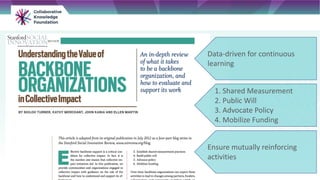
Data-driven for continuous
learning
1. Shared Measurement
2. Public Will
3. Advocate Policy
4. Mobilize Funding
Ensure mutually reinforcing
activities
1.Rapid
2. Complete
3. Open
Kristen Ratan
kristen@coko.foundation
Executive Director and co-Founder
Collaborative Knowledge Foundation
coko.foundation
@cokofoundation
@kristenratan

Building an Open Science Movement: learning from the enemy