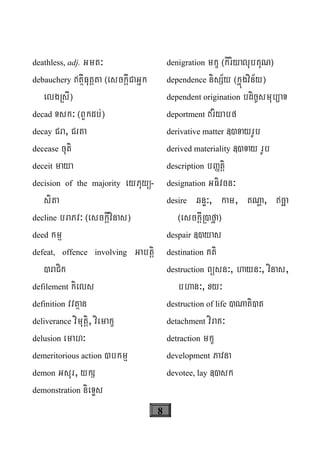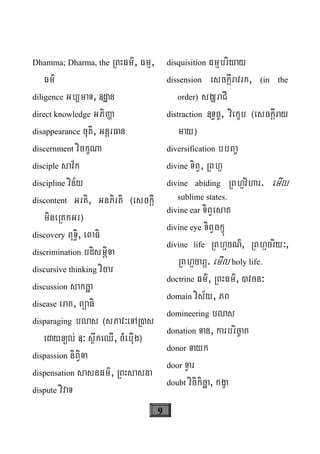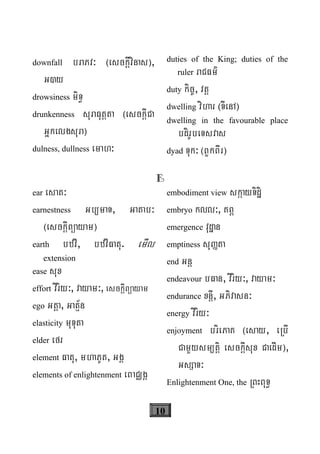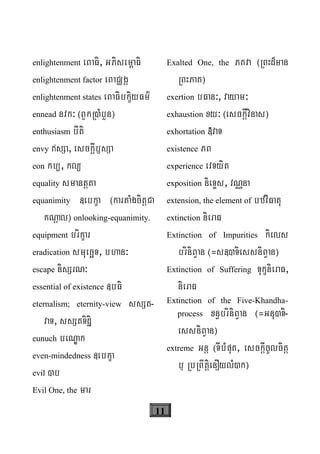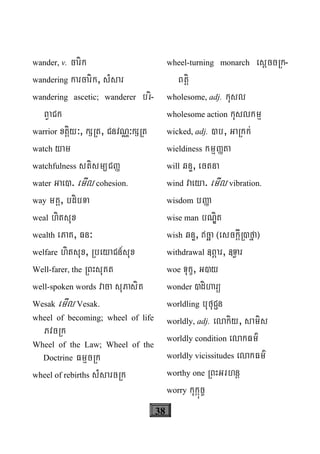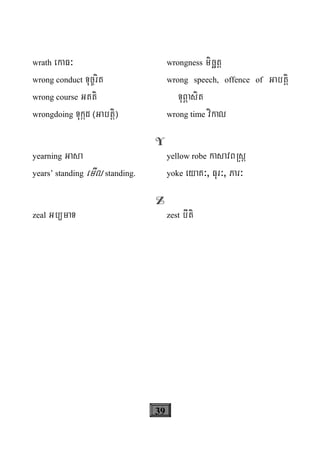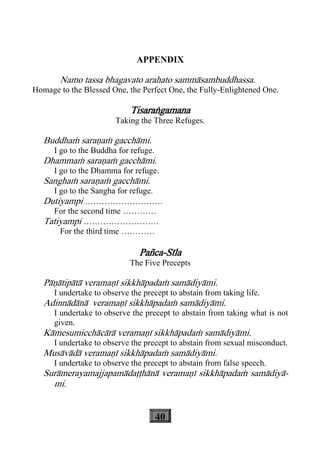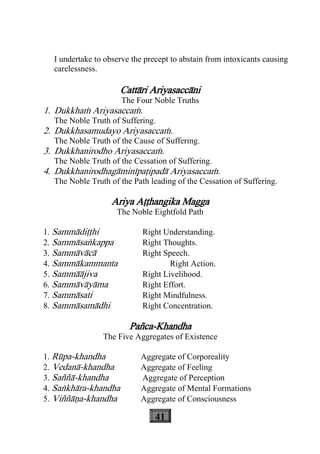
ភាគ ២
វចននុ កមពុទធ សន
ែខ្មរ - អង់េគ្លស
Part II
Khmer - English
Buddhist Dictionary


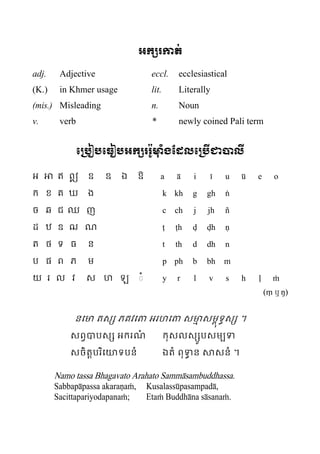
អក រកត់
adj. Adjective eccl. ecclesiastical
(K.) in Khmer usage lit. Literally
(mis.) Misleading n. Noun 
v. verb * newly coined Pali term
េ ប បេធ បអក ររ ៉ូមុ ំងែដលេ បជបលី
អ ឥ ឦ ឧ ឩ ឯ ឱ a à i ì u ù e o
ក ខ គ ឃ ង k kh g gh æ
ច ឆ ជ ឈ ញ c ch j jh ñ
ដ ឋ ឌ ឍ ណ å åh ð ðh ä
ត ថ ទ ធ ន t th d dh n
ប ផ ព ភ ម p ph b bh m
យ រ ល វ ស ហ ឡ ◌ំ y r l v s h ø ç
(ö ឬ ŋ)
នេម តស ភគវេ អរហេ សមម សមពទធសុ ។
សពបបស អករណំ កុសលស បសមបទូ
សចិតបរិេយទបនំ ឯតំ ពុទធ ន សនំ ។
Namo tassa Bhagavato Arahato Sammàsambuddhassa.
Sabbapàpassa akaraäaç, Kusalassùpasampadà,
Sacittapariyodapanaç; Etaç Buddhàna sàsanaç. 
1
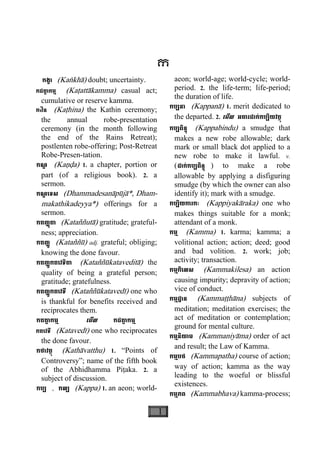
ក
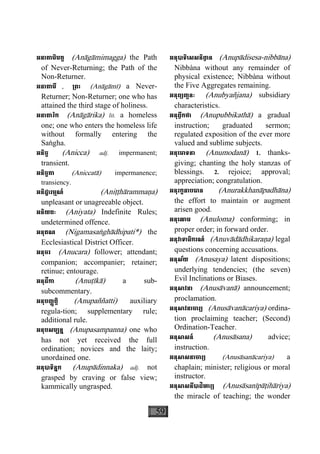
កង្ខា (Kaækhà) doubt; uncertainty.
កដតា្ត កម្ម (Kaåattàkamma) casual act;
cumulative or reserve kamma.
កឋិន (Kaåhina) the Kathin ceremony;
the annual robe-presentation
ceremony (in the month following
the end of the Rains Retreat);
postlenten robe-offering; Post-Retreat
Robe-Presen-tation.
កណ្ឌ (Kaäða) 1. a chapter, portion or
part (of a religious book). 2. a
sermon.
កណ្ឌ េទស (Dhammadesanàpùjà*, Dham-
makathikadeyya*) offerings for a
sermon.
កតញ្ញតាុ (Kataññutà) gratitude; grateful-
ness; appreciation.
កតញ្ញូ (Kataññù) adj. grateful; obliging;
knowing the done favour.
កតញ្ញកតេវទិតាូ (Kataññùkatavedità) the
quality of being a grateful person;
gratitude; gratefulness.
កតញ្ញកតេវទីូ (Kataññùkatavedì) one who
is thankful for benefits received and
reciprocates them.
កតតា្ត កម្ម េមីល កដតា្ត កម្ម
កតេវទី (Katavedì) one who reciprocates
the done favour.
កថាវត្ថុ (Kathàvatthu) 1. “Points of
Controversy”; name of the fifth book
of the Abhidhamma Piåaka. 2. a
subject of discussion.
កប្ប , កល្ប (Kappa) 1. an aeon; world-
aeon; world-age; world-cycle; world-
period. 2. the life-term; life-period;
the duration of life.
កប្បនា (Kappanà) 1. merit dedicated to
the departed. 2. េមីល អគារដាក់កប្បិយវត្ថុ
កប្បពិន្ទុ (Kappabindu) a smudge that
makes a new robe allowable; dark
mark or small black dot applied to a
new robe to make it lawful. v.
(ដាក់កប្បពិន្ទុ ) to make a robe
allowable by applying a disfiguring
smudge (by which the owner can also
identify it); mark with a smudge.
កប្បិយការកៈ (Kappiyakàraka) one who
makes things suitable for a monk;
attendant of a monk.
កម្ម (Kamma) 1. karma; kamma; a
volitional action; action; deed; good
and bad volition. 2. work; job;
activity; transaction.
កម្មកិេលស (Kammakilesa) an action
causing impurity; depravity of action;
vice of conduct.
កម្មដ្ឋាន (Kammaååhàna) subjects of
meditation; meditation exercises; the
act of meditation or contemplation;
ground for mental culture.
កម្មនិយាម (Kammaniyàma) order of act
and result; the Law of Kamma.
កម្មបថ (Kammapatha) course of action;
way of action; kamma as the way
leading to the woeful or blissful
existences.
កម្មភព (Kammabhava) kamma-process;
2
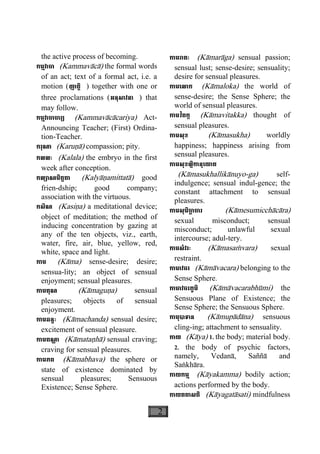
the active process of becoming.
កម្មវាចា (Kammavàcà) the formal words
of an act; text of a formal act, i.e. a
motion (ញាត្តិ ) together with one or
three proclamations (អនុសាវនា ) that
may follow.
កម្មវាចាចារ្យ (Kammavàcàcariya) Act-
Announcing Teacher; (First) Ordina-
tion-Teacher.
ករុណា (Karuäà) compassion; pity.
កលលៈ (Kalala) the embryo in the first
week after conception.
កល្យាណមិត្តតា (Kalyàäamittatà) good
frien-dship; good company;
association with the virtuous.
កសិណ (Kasiäa) a meditational device;
object of meditation; the method of
inducing concentration by gazing at
any of the ten objects, viz., earth,
water, fire, air, blue, yellow, red,
white, space and light.
កាម (Kàma) sense-desire; desire;
sensua-lity; an object of sensual
enjoyment; sensual pleasures.
កាមគុណ (Kàmaguäa) sensual
pleasures; objects of sensual
enjoyment.
កាមឆន្ទៈ (Kàmachanda) sensual desire;
excitement of sensual pleasure.
កាមតណ្ហ ា (Kàmataähà) sensual craving;
craving for sensual pleasures.
កាមភព (Kàmabhava) the sphere or
state of existence dominated by
sensual pleasures; Sensuous
Existence; Sense Sphere.
កាមរាគៈ (Kàmaràga) sensual passion;
sensual lust; sense-desire; sensuality;
desire for sensual pleasures.
កាមេលាក (Kàmaloka) the world of
sense-desire; the Sense Sphere; the
world of sensual pleasures.
កាមវិតក្ក (Kàmavitakka) thought of
sensual pleasures.
កាមសុខ (Kàmasukha) worldly
happiness; happiness arising from
sensual pleasures.
កាមសុខល្លិកានុេយាគ
(Kàmasukhallikànuyo-ga) self-
indulgence; sensual indul-gence; the
constant attachment to sensual
pleasures.
កាមសុមិចា្ឆ ចារ (Kàmesumicchàcàra)
sexual misconduct; sensual
misconduct; unlawful sexual
intercourse; adul-tery.
កាមសំវរៈ (Kàmasaçvara) sexual
restraint.
កាមាវចរ (Kàmàvacara) belonging to the
Sense Sphere.
កាមាវចរភូមិ (Kàmàvacarabhùmi) the
Sensuous Plane of Existence; the
Sense Sphere; the Sensuous Sphere.
កាមុបាទាន (Kàmupàdàna) sensuous
cling-ing; attachment to sensuality.
កាយ (Kàya) 1. the body; material body.
2. the body of psychic factors,
namely, Vedanà, Saññà and
Saækhàra.
កាយកម្ម (Kàyakamma) bodily action;
actions performed by the body.
កាយគតាសតិ (Kàyagatàsati) mindfulness
3
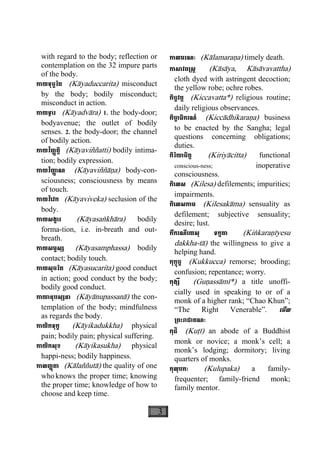
with regard to the body; reflection or
contemplation on the 32 impure parts
of the body.
កាយទុច្ចរិត (Kàyaduccarita) misconduct
by the body; bodily misconduct;
misconduct in action.
កាយទ្វារ (Kàyadvàra) 1. the body-door;
bodyavenue; the outlet of bodily
senses. 2. the body-door; the channel
of bodily action.
កាយវិញ្ញត្តិ (Kàyaviññatti) bodily intima-
tion; bodily expression.
កាយវិញា្ញ ណ (Kàyaviññàäa) body-con-
sciousness; consciousness by means
of touch.
កាយវិេវក (Kàyaviveka) seclusion of the
body.
កាយសង្ខារ (Kàyasaækhàra) bodily
forma-tion, i.e. in-breath and out-
breath.
កាយសម្ផស្ស (Kàyasamphassa) bodily
contact; bodily touch.
កាយសុចរិត (Kàyasucarita) good conduct
in action; good conduct by the body;
bodily good conduct.
កាយានុបស្សនា (Kàyànupassanà) the con-
templation of the body; mindfulness
as regards the body.
កាយិកទុក្ខ (Kàyikadukkha) physical
pain; bodily pain; physical suffering.
កាយិកសុខ (Kàyikasukha) physical
happi-ness; bodily happiness.
កាលញ្ញតាុ (Kàlaññutà) the quality of one
whoknows the proper time; knowing
the proper time; knowledge of how to
choose and keep time.
កាលមរណៈ (Kàlamaraäa) timely death.
កាសាវព្រស្ត (Kàsàya, Kàsàvavattha)
cloth dyed with astringent decoction;
the yellow robe; ochre robes.
កិច្ចវត្ត (Kiccavatta*) religious routine;
daily religious observances.
កិចា្ច ធិករណ៍ (Kiccàdhikaraäa) business
to be enacted by the Sangha; legal
questions concerning obligations;
duties.
កិរិយាចិត្ត (Kiriyàcitta) functional
conscious-ness; inoperative
consciousness.
កិេលស (Kilesa) defilements; impurities;
impairments.
កិេលសកាម (Kilesakàma) sensuality as
defilement; subjective sensuality;
desire; lust.
កឹករណីេយសុ ទក្ខតា (Kiækaraäìyesu
dakkha-tà) the willingness to give a
helping hand.
កុក្កុច្ច (Kukkucca) remorse; brooding;
confusion; repentance; worry.
កុង្សី (Guäassàmì*) a title unoffi-
cially used in speaking to or of a
monk of a higher rank; “Chao Khun”;
“The Right Venerable”. េមីល
្រពះរាជាគណៈ
កុដិ (Kuåì) an abode of a Buddhist
monk or novice; a monk’s cell; a
monk’s lodging; dormitory; living
quarters of monks.
កុលុបកៈ (Kulupaka) a family-
frequenter; family-friend monk;
family mentor.
4
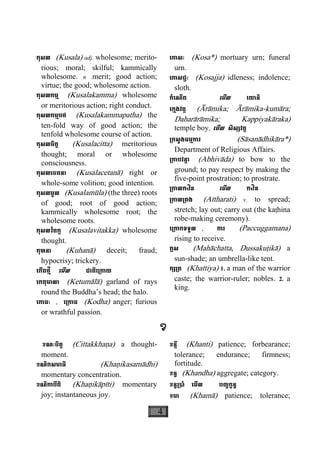
កុសល (Kusala) adj. wholesome; merito-
rious; moral; skilful; kammically
wholesome. n .merit; good action;
virtue; the good; wholesome action.
កុសលកម្ម (Kusalakamma) wholesome
or meritorious action; right conduct.
កុសលកម្មបថ (Kusalakammapatha) the
ten-fold way of good action; the
tenfold wholesome course of action.
កុសលចិត្ត (Kusalacitta) meritorious
thought; moral or wholesome
consciousness.
កុសលេចតនា (Kusalacetanà) right or
whole-some volition; good intention.
កុសលមូល (Kusalamùla) (the three) roots
of good; root of good action;
kammically wholesome root; the
wholesome roots.
កុសលវិតក្ក (Kusalavitakka) wholesome
thought.
កុហនា (Kuhanà) deceit; fraud;
hypocrisy; trickery.
េកីតថ្មី េមីល ជាតិេ្រកាយ
េកតុមាលា (Ketumàlà) garland of rays
round the Buddha’s head; the halo.
េកាធៈ , េ្រកាធ (Kodha) anger; furious
or wrathful passion.
េកាសៈ (Kosa*) mortuary urn; funeral
urn.
េកាសជ្ជៈ (Kosajja) idleness; indolence;
sloth.
កំេណីត េមីល េយានិ
េក្មងវត្ត (Àràmika; Àràmika-kumàra;
Daharàràmika; Kappiyakàraka)
temple boy. េមីល សិស្សវត្ត
្រកសួងធម្មការ (Sàsanàdhikàra*)
Department of Religious Affairs.
្រកាបវន្ទា (Abhivàda) to bow to the
ground; to pay respect by making the
five-point prostration; to prostrate.
្រកាលកឋិន េមីល កឋិន
្រកាល្រគង (Attharati) v. to spread;
stretch; lay out; carry out (the kaåhina
robe-making ceremony).
េ្រកាកទទួល , ការ (Paccuggamana)
rising to receive.
ក្លស (Mahàchatta, Dussakuåikà) a
sun-shade; an umbrella-like tent.
ក្ស្រត (Khattiya) 1. a man of the warrior
caste; the warrior-ruler; nobles. 2. a
king.
ខ
ខណៈចិត្ត (Cittakkhaäa) a thought-
moment.
ខណិកសមាធិ (Khaäikasamàdhi)
momentary concentration.
ខណិកាបីតិ (Khaäikàpìti) momentary
joy; instantaneous joy.
ខន្តី (Khanti) patience; forbearance;
tolerance; endurance; firmness;
fortitude.
ខន្ធ (Khandha) aggregate; category.
ខន្ធ្របាំ េមីល បញ្ចក្ខន្ធ
ខមា (Khamà) patience; tolerance;
5
pardon.
ខមាេទាស , ការសុំ (Khamàpana) asking
for pardon.
ខាងេខ្នីត (Juäha-pakkha, Sukka-~) the
waxing moon.
ខាងរេនាច (Kaäha-pakkha, Kàëa-~) the
waning moon.
ខាទនីយៈ (Khàdanìya) hard or solid
food.
ខីណា្រសព (Khìäàsava) an Arahant; the
cankerfree one; one whose mind is
free from mental obsessions.
ខុទ្ទកនិកាយ (Khuddakanikàya) “Smaller
Collection”; the “Minor Anthologies
of the Pali Canon”; name of the fifth
of the five main divisions of the Sutta
Piåaka.
ខុទ្ទកបាឋ (Khuddakapàåha) “Shorter
Texts”; the “Text of Small Passages”;
name of the first division of the
Khuddaka Nikàya.
ខុទ្ទកាបីតិ (Khuddakàpìti) slight sense of
interest; lesser thrill.
ែខ្សចំណង (Parittasutta*) sacred thread;
sacred cord.
គ
គណៈ (Gaäa) group; denomination;
monastery section.
គណៈកម្មការកិច្ចការសាធារណៈ
(Sàdhàraäakàrà-dhikàra*) Board of
Public Works.
គណៈកម្មការ្រគប់្រគង្រពះសង្ឃ
(Saæghapàlanà-dhikàra*) Board of
Eccl. Admini-stration.
គណៈកម្មការផ្សព្វផ្សាយ្រពះធម៌
(Dhammapakàsa-nàdhikàra*) Board
of Propagation.
គណៈកម្មការសិក្សា (Sàsanasikkhàdhikàra*)
Board of Education.
គណបូរកៈ (Gaäapùraka) one who
completes the quorum; quorum-
completing monk.
គណៈសង្ឃ (Saægha) the monastic order;
the Church, especially the Buddhist
monastic order; the Order; the
Saægha.
គតិ (Gati) (the five) courses of
existence; destiny; destination.
គន្ថធុរៈ (Ganthadhura) the burden of
studying the Scriptures; the burden of
the books.
គន្ធ (Gandha) odour; odorous object;
smell.
គន្ធព (Gandhabba) 1. a heavenly musi-
cian. 2. a being ready to take a new
existence.
គម្ពីរ (Gantha, Potthaka, Pakaraäa) (T.) a
scripture; text; canon; religious book.
គរុកម្ម (Garukakamma) Weighty
Action; kamma of serious or strong
effect.
គរុដ្ឋានីយបុគ្គល (Garuååhànìyapuggala) a
respectable person.
គរុធម៌ (Garudhamma) (the eight) strict
6
conditions or chief rules to be
observed by the Buddhist nun
throughout her life.
គហិបដិបត្តិ (Gihipaåipatti*) practices for
the layman; code of morality for the
laity.
គាថា (Gàthà) 1. a verse; stanza of 4
half-lines. 2. (K.) a magic spell.
គាមវាសី (Gàmavàsì) (K.) a town-monk.
គារវៈ (Gàrava) respect; reverence;
esteem; attention; appreciative action.
គិលានបច្ច័យ (Gilànapaccaya) support for
the sick; requisites for the sick;
medicine.
គិលានេភសជ្ជ (Gilànabhesajja) drug;
medicine.
គុណ (Guäa) 1. quality; property. 2.
good quality; virtue; merit. 3. (K.)
help; aid; benefit; support; favour.
គុណធម៌ (Guäadhamma) goodness;
virtue.
គុណពិេសស , គុណវិេសស (Visesa)
unusual virtue; extraordinary state;
specific attainment.
េគាចរ (Gocara) 1. field or sphere of
sense perception; a sense-object. 2. a
suitable  place; resort for alms; alms
resort.
េគាចរគាម (Gocaragàma) a village
where a monk goes for alms or
obtains his food; alms-resort village.
េគាតម (Gotama) name of the clan to 
which the Buddha belonged.
េគា្រត (Gotta) clan; ancestry; lineage.
្រគង (Ekaçsaç) v. to arrange the upper
robe over one shoulder (the left one).
្រគងចីវរ (Nivàseti, Pàrupati) v. to don;
wear; put on (the yellow robe).
្រគបបា្រត (Pattapidhàna) lid or cover for
an alms-bowl; alms-bowl lid.
្រគហស្ថ (Gahaååha) a householder;
layman; the laity.
្រគូសូ្រត (Upasampadàcariya,
Kammavàcà-cariya +
Anusàvanàcariya) the two monks
who chant the formal words of an act
(especially, of ordination); Act-
Announcer; Ordination-Teacher.
ឃ
ឃនសញា្ញ (Ghanasaññà) perception of
compactness; the idea of
massiveness.
ឃរាវាស (Gharàvàsa) 1. the household
life. 2. (K.) a householder; layman; the
laity.
ឃរាវាសធម៌ (Gharàvàsa-dhamma)
virtues for a good household life;
rules of household conduct; qualities
of a good layman.
ឃានៈ (Ghàna) the nose.
ឃានទ្វារ (Ghànadvàra) nose-door; nose-
avenue.
ឃានវិញា្ញ ណ (Ghànaviññàäa) nose-
consciousness.
េឃាសប្បមាណិកា (Ghosappamàäikà)
7
those who measure or judge by voice;
those whose faith depends on sweet
voice or good repute; those attached
to voice.
ង
េងឿងឆ្ងល់ (muååhassati) confused;
muddled; deranged.
េងឿងឆ្ងល់ , េសចក្តី (sammosa)
confusion; falling into oblivion.
ច
ចក្ខុ (Cakkhu) the eye.
ចក្ខុទ្វារ (Cakkhudvàra) the eye-door;
eye-avenue.
ចក្ខុវិញា្ញ ណ (Cakkhuviññàäa) eye-con-
sciousness.
ច្រក , ច្រកធម៌ (Cakka) the set of four
virtues, being like the four wheels of
a carriage, constituting the means to
prosperity; virtues wheeling to
prosperity.
ច្រកវាឡ (Cakkavàøa) a world-circle;
solarsystem; universe.
ចង្កូមែកវ េមីល ទាឋធាតុ
ច្រង្កម (Caækama) walking up and
down; a terraced walk. v. to walk up
and down.
ចង្វាក់សូ្រតធម៌ (Vatta, Bhàäassara*)
mode of chanting.
ចណ្ឌ ាល (Caäðàla) an outcaste; the
untouchable.
ចតុត្ថជ្ឈាន (Catutthajjhàna) the fourth
Jhàna; the fourth absorption.
ចតុធាតុវវតា្ថ ន (Catudhàtuvavatthàna)
analysis of the four elements;
determining of the elements;
contemplation on the four essential
qualities of which the body is
composed.
ចតុបច្ច័យ (Catupaccaya) េមីល បច្ច័យ
ចតុព្វិធពរ (Catubbidhavara*) the
fourfold blessing; the four excellent
things, viz., long life, beauty,
happiness and health.
ចតុរារិយសច្ច (Cattàri Ariyasaccàni) the
Four Noble Truths; the Four Holy
Truths.
ចតុវគ្គ (Catuvagga) a chapter of four
monks.
ចន្ទគតិ (Candagati*) the system of a
lunar calendar.
ចេ្រមីន្រពះពុទ្ធមន្ត (Parittabhaäana) (K.)
(used for auspicious ceremonies) to
chant holy stanzas.
ចរណៈ (Caraäa) behaviour; conduct;
good conduct.
ចរិត (Carita) the intrinsic nature of a
person; (the six types of)
characteristic behaviour; character;
temperament.
ចរិយាបិដក (Cariyàpiåaka) “Modes of
Conduct”; name of the fifteenth
division of the Khuddaka Nikàya.
ចរិយាវត្ត (Cariyàvatta*) 1. customs and
manners to be observed; duties
8
concerned with conduct. 2. conduct
and duties; moral conduct and the
performance of duties.
ចាគៈ (Càga) 1. charity; generosity;
sacrifice; self-denial; liberality;
munificence; benefaction. 2.
abandoning; giving up; renunciation.
ចាគសម្បទា (Càgasampadà) achievement
of charity.
ចាគានុស្សតិ (Càgànussati) reflection on
generosity; recollection of liberality.
ចាតុទ្ទសី (Càtuddasì) the 14th day of a
fortnight.
ចាតុម្មហារាជិកា (Càtummahàràjikà) the
Four Guardian Deities; the realm of
the Four Great Kings.
ចាតុរង្គសន្និបាត (Càturaægasannipàta) the
Great Assembly of Disciples marked
by the union of four factors.
ចាន្រសាក់ (Bhattahàrikà*) food carrier;
tiffin carrier.
ចារិក (Càrika) 1. a traveller; wanderer;
way-farer. 2. a wandering place. 3. a
journey; wandering. 4. (T,) v. to
wander; go on a journey.
ចារឹក (Likhati) v. to inscribe; incise;
engrave.
ចិតកាដ្ឋាន (Citakà) a funeral pile;
cremato-rium; pyre; crematory;
catafalque.
ចិត្ត១
(Citta) thought; mind; a state of
consciousness.
ចិត្ត២
(Citta) thought; thoughtfulness;
active thought.
ចិត្តនិយាម (Cittaniyàma) psychic order;
psychic law; order of mind.
ចិត្តវិសុទ្ធិ (Cittavisuddhi) purity of mind;
purification of consciousness.
ចិត្តសង្ខារ (Cittasaækhàra) mental forma-
tion; mental function, i.e. perception
and feeling.
ចិតា្ត នុបស្សនា (Cittànupassanà) the
contem-plation of mind;
contemplation of various states of
mind; mindfulness as regards mental
states.
ចិត្តុប្បាទ (Cittuppàda) the rise of a 
thought; thought; intention.
ចិន្តមយបញា្ញ (Cintamayapaññà) under-
standing through reasoning; wisdom
resulting from reflection.
ចីវរ (Cìvara) 1. the yellow robe (of a
Buddhist monk or novice); any of the
three garments of the monk. 2. (K.) the
upper or inner robe.
ចីវរអធិដ្ឋាន (Adhiååhitacìvara) the
deter-mined robes; the three robes
determined for regular personal use.
ចុតិ (Cuti) shifting (out of one
existence to another); decease; the
final thought-moment of a particular
life; death.
ចុតិចិត្ត (Cuticitta) death-consciousness;
dying or death-consciousness; the
consciousness disconnecting the
present life.
ចុតិវិញា្ញ ណ (Cutiviññàäa) េមីល ចុតិចិត្ត
ចុតូបបាតញា្ញ ណ (Cutùpapàtañàäa) the
know-ledge of the decease and
rebirth of beings; the clairvoyant
supernormal vision dealing with the
death and rebirth of beings; the
9
perception of the appearing and
disappearing of various beings
according to the consequences of
their past deeds.
ចុល្លវគ្គ (Cullavagga) “Smaller Section”;
name of a book of the Vinaya Piåaka.
ចូលវស្សា េមីល ៃថ្ងចូលវស្សា
េចតនា (Cetanà) volition; will;
intention.
េចតភូត (Attà, Jìva) soul; the self;
àtman.
េចតសិក (Cetasika) mental
concomitants; mental factors; mental
states; mental activities; the adjuncts
of conscious-ness; mental adjuncts;
mental coefficients.
េចតសិកទុក្ខ (Cetasikadukkha) mental
pain.
េចតសិកសុខ (Cetasikasukha) mental
happi-ness.
េចតិយ (Cetiya) 1. a person, place  or
object worthy of worship; reminder.
2. (K.) a sepulchral monument;
pagoda; shrine; dagoba; bell-shaped
stupa (with a slender spire); tapering-
spired stupa; Phra Chedi.
េចេតាបរិយញា្ញ ណ (Cetopariyañàäa) know-
ledge of others’ thoughts; telepathy.
េចេតាវិមុត្តិ (Cetovimutti) deliverance of
mind.
េចាទក (Codaka) reprover; accuser;
plaintiff.
េចាទនា (Codanà) reproof; charge; accu-
sation; plaint.
េចៅអធិការ (Vihàràdhipati*,
Adhikàrapati*) the abbot who is an
Ecclesiastical Sub-District Chief as
well.
េចៅអាវាស (Vihàrapati*) the abbot.
ចាំវស្សា , ការ (Vassàvàsa) Vassa-
residence; the rains-retreat; rains-
residence; keeping the Buddhist Lent;
keeping the rainy season; welling
permanently at a suitable place
throughout the three months of the
rainy season.
្រចូចទឹក (Dakkhiäodakapàtana) v.
pouring the water of dedication (to
transfer merit to other beings).
ឆ
ឆកាមាវចរសួគ៌
(Chakàmàvacaradevaloka) the six
heavens of sensual pleasures.
ឆ័្រត (Chatta) royal canopy; sunshade;
parasol.
ឆន្ទៈ (Chanda) 1. will; aspiration; the
will to do; resolve; zeal; desire;
impulse; wish; loving interest; desire
for truth and understanding. 2.
consent; declaration of consent to an
official act by an absentee; proxy
vote.
ឆន្ទ (Chanda) metrics; prosody; a
metre; metrical composition.
ឆន្ទាគតិ (Chandàgati) the wrong way of
behaviour consisting in predilection;
10
prejudice caused by love; partiality.
ឆព្វណ្ណរង្សី (Chabbaääaraçsì) the ray of
six colours.
ឆឡភិញា្ញ (Chaøabhiññà) the sixfold
super-normal knowledge; the six
psychic powers.
ឆាកសំពត់ េមីល បង្សុកូល
ឆាន់ (Bhuñjati) v. (of a monk or
novice) to eat; take food.
ឆាយា (Chàyà) 1. (K.) the Pali monastic
name of a Buddhist monk; ordina-
tion-name. 2. shade; shadow.
ឆ្លង (Mahakamma) celebration. v. to
celebrate.
ជ
ជដិល (Jaåila) a class of ascetics with
matted hair, usually worshipping fire,
sometimes classed under Isi; matted-
hair ascetic.
ជនកម្ម (Janakakamma) reproductive
kamma; regenerative kamma.
ជម្ពូទ្វីប (Jambùdìpa) the continent of the
roseapples, i.e. India.
ជយមង្គលគាថា (Jayamaægalagàthà)
stanzas for the blessing or glory of
victory.
ជរា (Jarà) old age; decay.
ជលាពុជៈ (Jalàbuja) womb-born
creatures; those born from the
womb; the viviparous.
ជវន (Javana) impulsion; apperception;
impulsive moment; a phase or stage
of the process of consciousness at
which there is full perception and at
which kamma is performed, usually
lasting for seven thought-moments.
ជាគរិយានុេយាគ (Jàgariyànuyoga)
practice of watchfulness; avoidance
of sleep; wakefulness.
ជាតក (Jàtaka) 1. a birth story; the
stories of the Buddha’s previous
lives. 2. “Birth Stories”; name of the
tenth division of the Khuddaka
Nikàya.
ជាតិ (Jàti) birth; rebirth.
ជាតិេ្រកាយ (Paraloka, punabbhava)
rebirth; reexistence;future life.
ជាតិមុន (Atìtabhava) a previous birth;
former life.
ជិនៈ (Jina) 1. the conqueror; the victor;
the Buddha. 2. Jain; Jaina.
ជិនបុ្រត , ជិេនារស (Jinaputta, Jinorasa)
a disciple of the Buddha.
ជិវា្ហ (Jivhà) the tongue.
ជិវា្ហ ទ្វារ (Jivhàdvàra) tongue-door; tong-
ueavenue.
ជី (Muäðakaupàsikà*) a shaven-
headed female devotee who wears
white robes and observes five or
eight precepts; white-robed female
lay follower.
ជីវិត (Jìvita) life; vitality.
ជីវិតិ្រន្ទីយ៍ (Jìvitindriya) vitality; life-
prin-ciple;psychic life; the faculty of
life.
ជីវា្ហ វិញា្ញ ណ (Jivhàviññàäa) tongue-cons-
ciousness.
11
ជុក (Moli) topknot (of hair on the
crown of the head).
េជីងថ្ករ េមីល ចិត កាដ្ឋាន
េជីងេទៀន (Sitthadìpàdhàra*)
candlestick.
េជីងបា្រត (Pattàdhàraka) bowl-support;
bowlstand.
េជីងពាន (ratanaghara*) back plate
ជ្វា (Kaääikà, Kùåapilandhana*)  the
curved finial (of a gable); gable-
finial; (elongated ornate) gable spire.
ឈ
ឈាន (Jhàna) meditation; absorption;
a state of serene contemplation
attained by meditation; (mis.) trance;
ecstasy.
ឈាបនកិច្ច (Jhàpanakicca) cremation.
ឈាបនដ្ឋាន (Jhàpanaååhàna)
crematorium.
ញ
ញត្តិ , ញតិ (Ñatti) a motion.
ញាណ (Ñàäa) knowledge; real knowledge;
wisdom; insight.
ញាណទស្សនៈ (Ñàäadassana) knowing
and seeing; perfect knowledge; all-
com-prising knowledge; a vision of
truth; insight; vision through wisdom.
ញាណទស្សនវិសុទ្ធ (Ñàäadassana-visuddhi)
purity of knowledge and vision;
purity of vision regarding intuitive
wisdom; purification by knowledge
and vision.
ញាតិ (Ñàti) a kinsman; relative.
ញាតិពលី (Ñàtibali) offering to kinsfolk;
the helping of one’s relatives.
ញាតិសេ្រង្គាះ (Ñàtisaægaha) good
treatment towards kinsmen; the
helping of one’s relatives.
ញាតិសាេលាហិត (Ñàtisàlohita) relations
and blood relations.
ញាយ្យ , ញាយ្យធម៌ (Ñàya) right path;
right method; the Noble Path; truth;
Nibbàna.
េញយ្យធម៌ (Ñeyyadhamma) anything
that should be learnt or understood;
the knowable.
េញាម (Posì) appellation used by a
monk for his parents or his patron or
supporter.
ដ
ដាក់បា្រត (Piäðadàna) v. to offer food
to the monks on their almsround.
ដាក់សំពត់ [បង្សុកូល ]
(Paçsukùlacìvaranik-khipana) (K.) v.
12
to lay a robe (as an offering to a
monk at a funeral or memorial
ceremony); lay down a funeral robe.
ដាក់អាយុសង្ខារ (Àyusaækhàra-vossajjana)
to relinquish the vital force; the
Buddha’s announcement of his
coming death.
ដីកា (Åìkà) 1. a sub-commentary. 2. (K.)
a letter of invitation or invitation card
to a monk. 3. (K.) written request for
donation. 4. (K.) petition; appeal.
ដុំថ្មនិមិត្តសីមា (Sìmànimittùparisilàpaååa)
boundarymarking slab (usually made
of stone and erected over a buried
boundary-marking stone to show its
place). េមីល លូកនិមិត្ត
ឋ
ឋាន (Åhàna*) pedestal (as of a
Buddha image).
ឋានានុ្រកម (Åhànànukkama*) the
ecclesia-stical order of retinue;
assistants or staff members; 
entourage.
ឋានានុសក្កិ (Åhànànusatti) the authority
based on one’s rank or dignity.
ឋិតិ , ឋីតិ (Åhiti, Åhìti) duration; static
moment; the moment of standing.
ត
តចបញ្ចកកម្មដ្ឋាន (Tacapañcaka-
kammaååhà-na) the “skin pentad” of
meditation subjects; the subject for
meditation comprising the five
constituents ending with the skin (the
four others being hair, body hair,
nails and teeth)
តជ្ជនីយកម្ម (Tajjanìyakamma) the formal
act of censure.
តណ្ហ ា (Taähà) craving; desire; thirst.
តតិយជ្ឈាន (Tatiyajjhàna) the third
Jhàna; the third absorption.
ត្រតមជ្ឈត្តតា (Tatramajjhattatà)
equanimity; equipoise; mental
balance.
តថាគត (Tathàgata) 1. the
Accomplished One; the Thus-come;
the Thus-gone; the Truthwinner; an
epithet of the Buddha. 2. an Arahant.
3. a being.
តទង្គប្បហានៈ (Tadaægapahàna)
abandoning by substitution of
opposites.
តទង្គវិមុត្តិ (Tadaægavimutti) deliverance
by substitution of opposites.
តបៈ (Tapa) 1. religious austerity;
penan-ce. 2. exertion; mental
devotion; ascetic practice.
តស្សបាបិយសិកា (Tassapàpiyasikà)
inflicting a penalty on one who is at
fault; decision for specific depravity.
តាបស (Tàpasa) a hermit; ascetic.
តាលបត្ត (Tàlapatta) a palm leaf. (K.) a
fan made of palm-leaves, with a long
13
handle, used by a monk in
ceremonies; ceremonial fan. េមីល ផ្លិត
ដំែណង
តាវត្តិង្ស , តាវត្តឹស (Tàvatiçsà) the realm
(or heaven) of the Thirty-three Gods;
name of the second heavenly abode,
of which Sakka is the king.
តិណវតា្ថ រកវិន័យ (Tiäavatthàrakavinaya)
pro-cedure for covering over (as)
with grass, (a reconciliation of both
parties without need for clearing up
the rights and wrongs).
តិរចា្ឆ ន , កំេណីត េមីល
តិរចា្ឆ នេយានិ
តិរចា្ឆ នកថា (Tiracchànakathà) a variety
of worldly talk; childish talk; aimless
talk.
តិរចា្ឆ នេយានិ (Tiracchànayoni) the
animal kingdom; the realm of the
brute creation.
តិរចា្ឆ នវិជ្ជា (Tiracchànavijjà) a low art;
pseudosciences; any study tending to
be an obstacle on the way to
Nibbàna.
តិរ្ថិយ (Titthiya) an adherent of another
religion; heretical teacher.
តិសរណគមនូបសម្បទា (Tisaraäagamanùpa-
sampadà) ordination by taking the
Threefold Refuge.
តុេរៀបេ្រគឿងសកា្ក រៈ (Pùjanapìåha*) a set of
altar tables.
តុសិត (Tusità) the realm of delight; the
delightful realm; the heaven of the
satisfied gods;  name of the fourth
heavenly abode, of which Santusita is
the king.
េតេជាកសិណ (Tejokasiäa) fire-
contempla-tion; fire as a meditational
device.
េតេជាធាតុ (Tejodhàtu) fire-element; the
element of heat; heat.
េតវាចិក (Tevàcika) lit. pronouncing
three words or three times; especially
one who pronounces the threefold
formula of refuge, the first being
Yasa’s father.
្រតាស់ដឹង (Bodhi) Enlightenment. v. to
be enlightened; attain enlightenment.
ៃ្រតចីវរ (Ticìvara) the three robes of a
Bhikkhu, consisting of the under, the
upper and the outer robes; Triple
Robe.
ៃ្រតទ្វារ (Tidvàra) the three doors or
avenues of action: body, speech, and
mind.
ៃ្រតបិដក (Tepiåaka) lit. the Three
Baskets; the Tipiåaka; the three
divisions of the Buddhist Canon, viz.,
Vinaya, Sutta and Abhidhamma,
generally known as the Pali Canon.
ៃ្រតភព , ៃ្រតភូមិ (Tibhava, Tebhùmi)
the Three Spheres, viz., the Sense
Sphere, the Form Sphere and the
Formless Sphere; three realms; three
worlds; three planes of existence.
ៃ្រតមាស , ្រតីមាស (Temàsa) three
months, especially those of the rainy
season.
ៃ្រតរតន៍ (Ratanattaya) the Three Jewels;
the Three Gems; Triple Gem. េមីល
រតន្រត័យ
ៃ្រតលក្ខណៈ (Tilakkhaäa) the Three
14
Charac-teristics; the Three Signs of
Being; also called the Common
Characteristics. េមីល សាមញ្ញលក្ខណៈ
ៃ្រតេលាក (Tiloka) the three worlds. េមីល
ៃ្រតភព
ៃ្រតេវទ (Tiveda) lit. the three
knowledges; the three Vedas; the
three divisions of the Brahmanic
canon of authorized religious
teaching and practice, viz., Irubbeda,
Yajubbeda and Sàmaveda, to which
the fourth, Athabbana, was added
later.
ៃ្រតសរណៈ (Tisaraäa) the Threefold
Refuge; Three Refuges; Triple
Guide.
ៃ្រតសរណគមន៍ (Tisaraäagamana) taking
the Threefold Refuge; going to the
Buddha, the Dhamma, and the
Sangha for refuge.
ៃ្រតសិកា្ខ (Sikkhàttaya) the Threefold
Learning; the Threefold Training; the
Three Studies: morality, concen-
tration and wisdom, (preferably,
training in higher morality, in higher
mentality, and in higher wisdom).
ថ
ថង់យាម (Thavikà) a small bag in
which the monk carries things; a
monk’s bag; satchel.
ថម្ភ (Thambha) obstinacy; immobility;
hardness; obduracy.
ថីនៈ (Thìna) sloth; unwieldiness;
impliability; morbid state of mind.
ថីនមិទ្ធ (Thìnamiddha) sloth and torpor;
sloth and drowsiness; torpor and
languor; stolidity and drowsiness.
ថុល្លច្ច័យ (Thullaccaya) a grave offence;
Serious Transgression.
ថូបារហបុគ្គល (Thùpàrahapuggala)
persons worthy of a tope; those
whose relics should be enshrined.
ថូផ្កា (pupphàdhàna*) a vase.
េថនៈ (Thena) a thief; (K.) unbecoming
religious; shameless monk.
េថយ្យចិត្ត (Theyyacitta) intention to
steal.
េថយ្យេចតនា (Theyyacetanà) intention to
steal.
េថយ្យសំវាស (Theyyasaçvàsa) living
clandestinely with the monks;
disguising oneself as a monk;
communion by theft.
េថរៈ (Thera) an elder; a senior member
of the Order; a senior monk (of at
least ten years’ standing).
េថរគាថា (Theragàthà) “Psalms of the
Brethren”; “Verses of the Elders”;
name of the eighth division of the
Khuddaka Nikàya.
េថរវាទ (Theravàda) the Doctrine of the
Elders; Teaching of the Elders; the
Southern School of Buddhism.
េថរានុេថរៈ (Therànuthera) senior monks
in general.
េថរី (Therì) a woman elder; senior nun.
15
េថរីគាថា (Therìgàthà) “Psalms of the
Sisters”; “Verses of the Women
Elders”; name of the ninth division of
the Khuddaka Nikàya.
ៃថ្ងេការ (Kesoropaäadivasa*) Shaving
Day; the eve of a Buddhist holy day.
ៃថ្ងចូលវស្សា (Vassùpanàyikàdivasa) the
first day of the rains-retreat;
beginning of the rains-residence;
Rains-Entry Day.
ៃថ្ងេចញវស្សា (Pavàraäàdivasa) the last
day of the rains-residence; end of the
rains-retreat; Retreat-Ending Day.
ៃថ្ងបវារណា (Pavàraäàdivasa) the last day
of the rains-residence, on which the
Pavàraäà ceremony is performed;
Pavàraäà Day.
ៃថ្ងេពញបូរណ៍ (Puääamìdivasa) the full-
moon day.
ៃថ្ងឧេបាសថ១
(Uposathadivasa) the
Buddhist holy day; Buddhist
Sabbath; day of merit-making;
observance day.
ៃថ្ងឧេបាសថ២
(Uposathadivasa) 1. េមីល ៃថ្ង
ឧេបាសថ១
2. observance day; the day
on which the Fundamental Rules of
the Buddhist monks are recited.
ថ្វាយ (Deti) v. to offer, give or present
(to a monk or a prince).
ថ្វាយ្រពះេភ្លីង (Sarìrajjhàpana) the
cremation ceremony.
ទ
ទក្ខិណា (Dakkhiäà) a gift; donation;
dedicatory gift; an intercessional
expiatory offering; donation given to
a holy person with reference to un-
happy beings in the Peta existence,
intended for the alleviation of their
sufferings.
ទក្ខិណានុប្បទាន (Dakkhiäànuppadàna*)
offering made to a monk or monks on
behalf of the dead.
ទក្ខិណាវដ្ដ (Dakkhiäàvaååa) winding to
the right; clockwise.
ទក្ខិេណយ្យបុគ្គល (Dakkhiäeyyapuggala)
an individual deserving a donation;
one worthy of a donation.
ទក្ខិេណាទក (Dakkhiäodaka) water of
dedication; consecrated water.
ទក្សិណនិកាយ (Dakkhiäanikàya) the
Southern School of Buddhism, i.e.
the Theravàda.
ទណ្ឌ កម្ម (Daäðakamma) punishment;
penalty.
ទធិ (Dadhi) curd; sour milk.
ទមៈ (Dama) self-command; self-
control; taming; subjugation;
training; mastery; adjustment.
ទសជាតិ (Dasajàti) the ten longest birth-
stories of the Buddha, regarded as the
most important.
ទសបារមី (Dasapàramì) the ten
perfections; the ten principal virtues
practised by a Bodhisatta.
ទសពរ (Dasavara) the ten blessings; ten
16
boons.
ទសពល (Dasabala) 1. the Ten Powers of
the Buddha. 2. one who is endowed
with ten supernormal powers, i.e. the
Buddha.
ទសពលញា្ញ ណ (Dasabalañàäa) the ten
supreme intellectual powers of the
Buddha.
ទសពិធរាជធម៌ (Dasaràjadhamma) the
ten-fold code of the king; the tenfold
virtue or duty of the king; the ten
royal virtues; virtues of a ruler.
ទស្សនៈ (Dassana) 1. seeing; sight;
intuition. 2. view; opinion; theory.
ទឡ្ហីកម្ម (Daøhìkamma) making firm;
strengthening by repeating, as re-
ordination.
ទាឋធាតុ (Dàåhadhàtu) the tooth relic (of
the Buddha).
ទាន (Dàna) giving; gift; alms-giving;
charity; generosity; benevolence;
liberality; a gift; donation; alms;
benefaction.
ទានបតី (Dànapati) 1. lord of alms;
master in liberality. 2. one in charge
of alms-giving; chief donor.
ទានមយៈ (Dànamaya) (merit) gained
through, or connected with, alms-
giving; the way of making merit,
consisting in alms-giving or charity.
ទាយក (Dàyaka) almsgiver; donor;
benefactor; the lay supporter of
Bhikkhus; lay giver; lay supporter.
ទាយិកា (Dàyikà) a female donor.
ទិដ្ឋធម៌ (Diååhadhamma) the visible
order of things; present condition;
this world; the present life;
temporality.
ទិដ្ឋធម្មេវទនីយកម្ម
(Diååhadhammavedanìya-kamma)
immediately effective kamma;
kamma ripening during the life-time.
ទិដ្ឋធម្មិកត្ថ (Diååhadhammikattha) gain
for this life; present benefit; temporal
welfare; sources of happiness in the
present life.
ទិដ្ឋាវិកម្ម (Diååhàvikamma) an open
state-ment of one’s view; explanation
of views; view clarification.
ទិដ្ឋិ (Diååhi) 1. a theory; view; belief;
opinion; speculation; dogma. 2.
misbelief; erroneous opinion; false
theory.
ទិដ្ឋិវិសុទ្ធិ (Diååhivisuddhi) purity of
under-standing; purification of view.
ទិដ្ឋិសាមញ្ញតា (Diååhi-sàmaññatà) equality
in view; unity in view.
ទិដ្ឋុជុកម្ម (Diååhujukamma) straightening
of one’s own views.
ទិដ្ឋុបាទាន (Diååhupàdàna) clinging to
erro-neous opinions; attachment to
views.
ទិព្វ (Dibba) divine; heavenly; celestial.
ទិព្វចក្ខុ (Dibbacakkhu) divine eye;
heavenly eye; clairvoyance.
ទិព្វេសាត (Dibbasota) divine ear;
heavenly ear; clairaudience.
ទី (Saæghikavatthu) monastery
estate.
ទីឃនិកាយ (Dìghanikàya) the Collection
of Long Discourses; Dialogues of the
Buddha; name of the first main
17
division of the Sutta Piåaka.
ទីធា្ល វត្ត (Àràmavatthu, Vihàravatthu)
monastery compound.
ទីបំផុត េមីល អន្តធម៌
ទីវត្ត (Kappanàvatthu*) monastic
revenue estate.
ទឹកេដាះខាប់ (Navanìta) fresh butter;
(accor-ding to some, ghee).
ទឹកេដាះថ្លា (Sappi) ghee; clarified butter.
ទឹកមន្ត (Parittodaka*) consecrated
water; blessing water; lustral water;
holy water.
ទុក្កដ (Dukkaåa) an offence of
wrongdoing.
ទុក្ករកិរិយា (Dukkarakiriyà) the practice
of austerities; self-mortification.
ទុក្ខ (Dukkha) 1. suffering; misery;
woe; pain; ill; sorrow; trouble;
discomfort; unsatisfactoriness;
problematic situa-tion; stress;
conflict. adj. unsatisfac-tory;
miserable; painful; subject to
suffering; ill; causing pain. 2. physical
or bodily pain; difficulty; unease; ill-
being.
ទុក្ខតា (Dukkhatà) the state of being
subject to suffering; painfulness;
stress; conflict.
ទុក្ខនិេរាធគាមិនីបដិបទា
(Dukkhanirodhagàmi-nìpaåipadà
Ariyasacca) the Noble Truth of the
Path that leads to the Cessation (or,
the Extinction) of Suffering.
ទុក្ខនិេរាធអរិយសច្ច (Dukkhanirodha Ariya-
sacca) the Noble Truth of the
Cessation of Suffering; the Noble
Truth of the Extinction of Suffering.
ទុក្ខេវទនា (Dukkhavedanà) painful
feeling.
ទុក្ខសមុទយអរិយសច្ច (Dukkhasamudaya
Ariya-sacca) the Noble Truth of the
Cause (or, the Origin) of Suffering;
the Noble Truth of the Condition of
the Arising of Suffering.
ទុក្ខអរិយសច្ច (Dukkha Ariyasacca) the
Noble Truth of Suffering.
ទុគ្គតិ (Duggati) (the 3 or 4) States of
Unhappiness; woeful courses of
existence; evil states; woeful existen-
ces.
ទុច្ចរិត (Duccarita) bad conduct; wrong
action.
ទុតិយជ្ឈាន (Dutiyajjhàna) the second
Jhàna; the second absorption.
ទុពា្ភ សិត (Dubbhàsita) an offence of
wrong speech.
ទុស្សីល (Dussìla) of bad conduct; void
of morality; immoral.
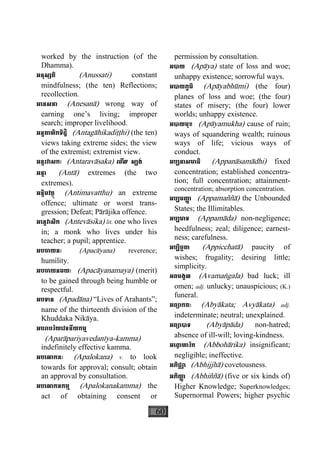
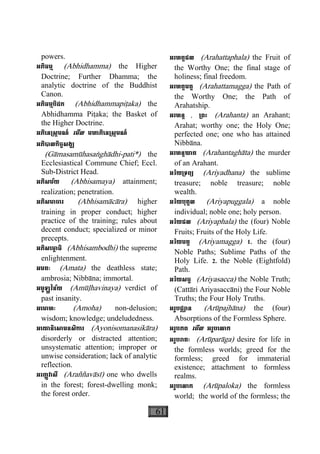
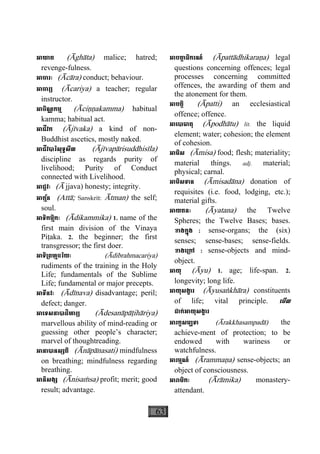
េទៀន (Sitthadìpa) a candle.
េទៀនវស្សា (Vassadìpa, Vassikapadìpa)
candle for the rains; Lenten candle.
េទព (Deva) lit. a shining one; god;
deity; divine being.
េទយ្យទាន (Deyyadàna) a gift fit to be
given; gift; donation.
េទយ្យធម៌ (Deyyadhamma) that which
has the quality of being given; gift;
offerings (to monks).
េទវតា (Devatà) a celestial or heavenly
being; deity.
េទវតានុស្សតិ (Devatànussati) recollection
18
of heavenly beings; reflection on
deifying virtues as found in oneself.
េទវតាពលី (Devatàbali) an offering to
the deity.
េទវទូត (Devadùta) lit. gods’ messenger;
divine messenger; a symbolic name
for those things which remind man of
his future and rouse him to earnest
striving.
េទវធម៌ (Devadhamma) divine virtue;
the virtues that make divine, i.e.
moral shame and dread.
េទវរូប (Devarùpa*) an image of a deity;
idol.
េទវេលាក (Devaloka) world of gods;
heaven; celestial realm.
េទសកាល (Desakàla) a season for merit-
making and local festivals.
េទសនា (Desanà) preaching; discourse;
sermon; instruction. v. to preach;
expound the Doctrine; give a sermon.
េទសនាមហាជាតក (Mahàjàtakadesanà*)
(K.) “Great-Birth Sermon”; a sermon
on the great birth story of the
Bodhisatta Vessantara.
េទាមនស្ស (Domanassa) a painful mental
feeling; (mental) displeasure; sad-
mindedness; grief.
េទាស (Dosa, Vajja, Àdìnava) fault;
blemish; defect; corruption;
depravity; disadvantage.
េទាសៈ (Dosa) hatred; anger; ill-will;
aversion.
េទាសចរិត (Dosacarita) the hateful; one
of hating temperament; a quick-
tempered person.
េទាសាគតិ (Dosàgati) wrong way of
behaviour consisting in hatred;
prejudice caused by hatred.
ទ្វារ (Dvàra) 1. door; avenue. 2. a sense-
door; sense-avenue. 3. door of action.
េទ្វវាចកៈ (Dvevàcika) lit. pronouncing
two words or two times; especially
those who pronounce the words,
taking only two refuges, viz., the
Buddha and the Dhamma, Tapussa
and Bhallika being the first ones.
ធ
ធម៌ - េមីល ធម្ម -
ធម៌វិន័យ (Dhammavinaya) Dhamma-
Vinaya; the Norm-Discipline; the
Doctrine and the Discipline.
ធម្ម , ធម៌ (Dhamma) 1. the Dharma;
the Dhamma; the Doctrine; the
Teachings (of the Buddha). 2. the
Law; nature. 3. the Truth; Ultimate
Reality. 4. the Supramundane,
especially Nibbàna. 5. quality;
righteousness; virtue; morality; good
conduct; right behaviour. 6. tradition;
practice; principle; norm; rule; duty.
7. justice; impartiality. 8. thing;
phenomenon. 9. a cognizable object;
mind-object; idea. 10. mental state;
mental factor; mental activities. 11.
condition; cause; causal antecedent.
19
ធម្មកថា (Dhammakathà) ethical discus-
sion; religious talk; talk on the
Dhamma; Dhammalecture.
ធម្មកថិក (Dhammakathika) one who
preaches the Doctrine; a preacher.
ធម្មកាមតា (Dhammakàmatà) the quality
of one who loves the Dhamma; love
of Truth.
ធម្មក្ខន្ធ (Dhammakkhandha) a portion
of the Dhamma; a main article of the
Doctrine; a textual unit; a category of
the Dhamma.
ធម្ម្រកក (Dhamakaraka) a filter; water-
strainer.
ធម្មគុណ (Dhammaguäa) virtue or
quality of the Dhamma.
ធម្មចក្កប្បវត្តនសូ្រត
(Dhammacakkappavatta-nasutta) the
discourse of setting in motion the
Wheel of the Doctrine; the Discourse
of the Foundation of the Kingdom of
Righteousness; the First Sermon.
ធម្មចក្ខុ (Dhammacakkhu) the Eye of
Truth; the Eye of Wisdom.
ធម្មច្រក (Dhammacakka) the Wheel of
the Doctrine; the Wheel of the Law;
the Wheel of Truth; the Kingdom of
Righteousness; the First Sermon.
ធម្មចរិយា (Dhammacariyà) observance
of righteousness; righteous conduct.
ធម្មចារិកៈ (Dhammacàrika) wandering
Dhamma-preacher; spiritual-welfare
worker.
ធម្មេចតីយ៍ (Dhammacetiya) a shrine in
which sacred texts are housed; a
shrine of theDoctrine; doctrinal
monument.
ធម្មញ្ញតាុ (Dhammaññutà) the quality of
one who knows the Law; knowing
the cause or origin; knowing the
principles.
ធម្មតា (Dhammatà) general rule;
nature; the law of nature; cosmic law.
ធម្មទាន (Dhammadàna) the Gift of
Truth; gift of the Dhamma.
ធម្មទូត (Dhammadùta*) Dhamma-
messen-ger; Buddhist field-preacher;
Buddhist missionary.
ធម្មេទសនា (Dhammadesanà)
expounding the Dhamma; preaching;
exposition of the Doctrine; a sermon.
ធម្មេទសនាមយៈ (Dhammadesanàmaya)
(merit) connected with, or to be
gained through, preaching; the way
of making merit consisting in moral
instruction.
ធម្មធរៈ (Dhammadhara) “Dhamma
bearer”; one versed in the Dhamma;
an expert in the Dhamma.
ធម្មធាតុ (Dhammadhàtu) 1. a mental
object. 2. the cosmic law.
ធម្មនិយាម (Dhammaniyàma) order of
the norm; law of the Dhamma;
certainty or orderliness of causes and
effects; general law of cause and
effect.
ធម្មបដិសម្ភិទា (Dhammapaåisambhidà)
Dis-crimination of the Law;
analytical knowledge of the Law;
discrimina-ting knowledge of
reasons, conditions or causal
relations.
20
ធម្មបទ (Dhammapada) 1. “Way of
Truth”; “An Anthology of Sayings of
the Buddha”; name of the second
division of the Khuddaka Nikàya. 2. a
line or stanza of the Doctrine; a word
of the Doctrine; talk or discourse on
the Dhamma.
ធម្មបរិយាយ (Dhammapariyàya) disquisi-
tion.
ធម្មប្បមាណិកា (Dhammappamàäikà)
those who measure or judge by right-
eousness; those whose faith depends
on the Dhamma or on righteous
behaviour.
ធម្មយុត្តិ , ធម្មយុត្តិកនិកាយ
(Dhammayuttika-nikàya*) the
Dhammayutika Sect; “Law-Abiding
Sect”; Smaller Sub-Order (of the
Khmer Monkhood); smaller
denomination. េ្របៀបេធៀប មហានិកាយ
ធម្មវាទី (Dhammavàdì) one who speaks
according to the Dhamma; speaker of
the doctrine; speaker of the rightful
things.
ធម្មវិច័យ (Dhammavicaya) investigation
of the Truth or the Doctrine; (K.)
research on the Dhamma; search of
Truth.
ធម្មវិជ័យ (Dhammavijaya) conquest by
piety; conquest by righteousness.
ធម្មវិភាគ (Dhammavibhàga)
classification of dhammas;
enumeration of the Dhamma;
Dhamma classification.
ធម្មសង្គណី (Dhammasaægaäi)
“Classifica-tion of Dhammas”;
“Enumeration of Phenomena”; name
of the first book of the Abhidhamma
Piåaka.
ធម្មសភា (Dhammasabhà) the Hall of
Truth; a hall for the discussion of the
Dhamma; a place for religious
meeting.
ធម្មសវនៈ េមីល ធម្មស្សវនៈ
ធម្មសាកចា្ឆ (Dhammasàkacchà)
discussion about the Doctrine;
religious discus-sion.
ធម្មសាលា (Dhammasàlà) preaching hall;
study hall.
ធម្មេសនាបតី (Dhammasenàpati)
generalis-simo of the Dhamma;
Commander in Chief of the Law; an
epithet of the Venerable Sàriputta.
ធម្មស្សវនៈ (Dhammassavana) hearing
the Dhamma; hearing the preaching
of the Dhamma; hearing a sermon;
listening to the good teaching.
ធម្មស្សវនមយៈ (Dhammassavanamaya)
(merit) connected with, or to be
gained through, hearing a sermon; the
way of making merit consisting in
listening to the Dhamma.
ធមា្ម ធម្មបដិបត្តិ
(Dhammànudhammapaåi-patti)
practice in perfect conformity to the
Dhamma.
ធមា្ម ធិដ្ឋាន (Dhammàdhiååhàna)
exposition in terms of ideas; teaching
with reference to ideas.
ធមា្ម ធិបេតយ្យ (Dhammàdhipateyya)
regard of the Dhamma (the Law or
righteousness) as being supreme;
supremacy of the Dhamma; dominant
21
influence by the Dhamma; rule of the
true law; rule of righteousness.
ធមា្ម នុបស្សនា (Dhammànupassanà) the
Con-templation of Mind-object;
contem-plation of phenomena;
mindfulness as regards the Dhamma.
ធមា្ម នុស្សតិ (Dhammànussati)
recollection of the Doctrine;
reflection on the virtues of the
Dhamma.
ធមា្ម ភិសម័យ (Dhammàbhisamaya)
under-standing of the Truth;
conversion to the Dhamma;
enlight nment.e
ធមា្ម រម្មណ៍ (Dhammàrammaäa) a mind-
object;  cognizable object; cognos-
cible object.
ធមា្ម សនៈ (Dhammàsana) the Dhamma-
seat; a seat on which a monk sits
while preaching; pulpit.
ធម្មីកថា (Dhammìkathà) religious talk;
discussion concerning the Doctrine;
Dhamma talk.
ធាតុ (Dhàtu) 1. an element; natural
condition; that which carries its own
characteristic mark. 2. a relic,
especially that of the Buddha or an
Arahant.
ធាតុកថា (Dhàtukathà) “Discussion with
reference to the Elements”; name of
the third book of the Abhidhamma
Piåaka.
ធាតុកម្មដ្ឋាន េមីល ចតុធាតុវវតា្ថ ន
ធាតុេចតីយ៍ (Dhàtucetiya) a shrine over
the Buddha’s relic; dagoba.
ធាតុមនសិការ េមីល ចតុធាតុវវតា្ថ ន
ធាតុវវតា្ថ ន េមីល ចតុធាតុវវតា្ថ ន
ធិតិ (Dhiti) energy; courage; steadfast-
ness; firm character; resolution;
wisdom.
ធុតង្គ (Dhutaæga, Dhùtaæga) (the
thirteen) Austere Practices;
constituents of ascetic practice to
remove defile-ments.
ធុរៈ (Dhura) burden; load; duty;
charge; office; responsibility.
ធូប (Dhùpa) an incense-stick; joss-
stick.
េធ្វីបុណ្យ (Puññakaraäa) merit-making;
performing meritorious action. v. to
make merit; do merit; do good;
perform meritorious action.
ន
នក្ខត្តឫក្ស (Nakkhattakìøana) the
celebra-tion of a festival; festivity.
នច្ចគីតវាទិតវិសូកទស្សនៈ
(Naccagìtavàditavisù-kadassana)
dancing, singing, music, and
unseemly shows (or stage plays).
នត្ថិកទិដ្ឋិ, ~វាទ (Natthikadiååhi) lit. the
theory of nothingness; nihilism;
nihilistic view.
នមស្សការ (Namakkàra) salutation; the
act of paying homage; homage;
veneration; (K.) salutation with joined
22
palms.
នមស្សការេពល្រពឹក (Pubbaäha-sajjhàya*,
Pàta-bhàäa*) morning chanting.
នមស្សការេពលលា្ង ច (Sàyaäha-sajjhàya*,
Sàya-bhàäa*) evening chanting.
នរក (Naraka, Niraya) abyss; hell;
purgatory. េមីល និរយៈ
នវកភិក្ខុ (Navakabhikkhu) a neophyte;
newly ordained monk (of less than 5
years’ standing).
នវកម្ម (Navakamma) building new;
construction; making repairs.
នាគ (Nàga) 1. a serpentlike water-god.
2. (K.) an applicant (or candidate) for
ordination; ordinand.
នាម (Nàma) mind; name; mental
factors; mentality.
នាមរូប (Nàmarùpa) Mind and Matter;
name and form; mind and body;
mentality and corporeality.
នាសនៈ , នាសនា (Nàsana, ~nà) causing
to perish; expulsion.
និកាយ (Nikàya) 1. a collection; group;
any of the five main divisions of the
Sutta Piåaka. 2. a sect; school;
denomination.
និេក្ខបបទ (Nikkhepapada) a verse or
words of summary; thesis; verse or
passage set up for detailed treatment
in a discourse; a saying quoted for
discoursing; discourse-opening verse.
និេក្ខបបទ (Nikkhepapada) topic; theme;
subject; subject matter; gist; point of
a discussion; query.
និគ្គហកម្ម (Niggahakamma) suppression;
punishment; censure; reproach;
rebuke; chastisement of a perverse
monk.
និ្រគន្ថ (Nigaäåha) lit. one who is freed
from all ties; a member of the Jain
Order; ascetic in Jainism.
និច្ចភត្ត (Niccabhatta) a continuous
foodsupply; monthly food allowance.
និច្ចសីល (Niccasìla) regular precepts;
uninterrupted observance of virtue;
the good conduct to be observed
uninterruptedly, i.e. the Five
Precepts.
និទាន (Nidàna) 1. source; cause; origin;
reference. 2. (K.) a story.
និទាន (Vaçsa) tradition; chronicle.
និេទ្ទស (Niddesa) 1. “Expositions”;
name of the eleventh division of the
Khuddaka Nikàya. 2. description;
analytic explanation.
និន្ទា (Nindà) blame; reproach; fault-
finding; calumny. v. to blame;
calumniate; speak ill of a person.
និពា្វ ន (Nibbàna) Nirvàäa; Nibbàna; the
extinction of the fires of greed, of
hatred and of ignorance; the
Unconditioned; the supreme goal of
Buddhism; the Summum Bonum of
Buddhism; the Final Goal; the
extinction of all defilements and
suffering.
និព្វិទា (Nibbidà) dispassion; disinterest;
disenchantment.
និមន្ត (Nimanteti) v. to invite (monks),
especially for a collective action.
និមន្ត , ការ (Nimantana) invitation (for
23
a monk). v. to invite (a monk).
និមិត្ត (Nimitta) sign; omen; mark;
portent; cause; mental image; mental
reflex; boundary marker.
និមិត្តសីមា (Sìmà-nimitta, Nimitta) a
boundary marker, boundary-marking
stone.
និមា្ម នរតី (Nimmànarati) the realm of the
gods who rejoice in (their own)
creations; name of the fifth heavenly
abode of which Sunimmita is the
king.
និយស្សកម្ម (Niyasakamma, Niyassa~)
the formal act of subordination;
giving guidance; causing (a monk) to
live (again) in dependence.
និយាម (Niyàma) certainty; fixed
method; regular order; the state of
certainty; the five orders of processes
which operate in the physical and
mental realms; natural and regular
orders governing all things; natural
law.
និរយៈ (Niraya) hell; woeful state.
និរុត្តិបដិសម្ភិទា (Niruttipaåisambhidà) the
Discrimination of Language; know-
ledge of dialects or philological
analysis; analytical knowledge of the
language (with regard to the true
meaning and the Law).
និេរាធ (Nirodha) the Cessation or
Extinction of Suffering; cessation;
extinction.
និវាតៈ (Nivàta) humbleness; humility;
lowliness; gentleness.
និស្សគ្គិយបាចិត្តិយ (Nissaggiyapàcittiya) an
offence entailing expiation with
forfeiture.
និស្ស័យ (Nissaya) 1. េមីល និស្សយ 2.
habit.
និស្សយ (Nissaya) that on which
anything depends; foundation; help;
resource; support; protection;
guidance; tutelage; dependence.
និស្សយកម្ម េមីល និយស្សកម្ម
និស្សយមុត្តកៈ (Nissayamuttaka) lit.
released from dependence, or
independent of protection; a legally
independent monk; a monk who has
completed five years of living in
dependence on the preceptor.
និស្សរណវិមុត្តិ (Nissaraäavimutti) deliver-
ance by escaping from defilements;
freedom by deliverance; Nibbàna.
នីវរណៈ (Nìvaraäa) (the five)
hindrances; obstacles.
េនក្ខម្ម (Nekkhamma) renunciation;
giving up the world; escape from
sensual-ity; absence of greed;
independence of sensual desire and
pleasures; self-denial; self-
abnegation.
េនក្ខម្មវិតក្ក (Nekkhammavitakka)
thought of renunciation; thought free
from selfish desire.
េនន េមីល សាមេណរ
េនយ្យ (Neyya) one who is to be led or
instructed; one requiring guidance; a
trainable or teachable person.
េនវសញា្ញ នាសញា្ញ យតនៈ
(Nevasaññànàsaññà-yatana) the
Realm of neither Perception nor Non-
24
perception; the fourth immaterial sphere.
ប
បករណ៍ (Pakaraäa) a literary work;
book; canonical text; scripture.
បក្ខ (Pakkha) a fortnight; one half of
the lunar month; (lunar) half-month.
បង្កាន់ៃដ (Ratanapàkàra) consecrated
wall; a parapet (surrounding a sacred
building).
បង្គន់ (Vaccakuåì) the water closet;
toilet (for monks); privy.
បង្សុកូល (Paçsukùla) lit. soiled or
loathesome as dirt; like a dust
heap; discarded; disposed of;
unwanted. 1. rags from a dust heap;
a robe made of rags taken from dust-
bins; discarded cloth; rag-robe. 2. (K.)
a yellow robe dedicated to a deceased
person. v. to take such robes after
contemplating on the imper-manence
of compounded things; meditate and
take a funeral (or memorial) robe.
បង្សុកូលចីវរ (Paçsukùla-cìvara,
Assàmika-vattha) “Forest Robe”;
(probably, សំពត់បង្សុកួល ) cloth
discarded in the forest or on a charnel
ground; discarded cloth; (K.) a robe
left for the monks to take as a
discarded cloth. v. (ដាក់សំពត់ ) to
leave a robe (together with other
offerings) for the monks to take as a
discarded cloth; hold a Forest-Robe
Presenta-tion Ceremony.
បច្ចន្ត្របេទស (Paccantadesa) the out-
skirts of a country; bordering regions.
បច្ច័យ (Paccaya) 1. condition; aiding
condition; factor. 2. (the four)
requisites, viz., clothing, food,
dwelling and medicine; necessities.
បច្ចយសន្និស្សិតសីល (Paccayasannissitasìla)
discipline as regards the four
requisites; conduct in connection
with the necessities of life.
បច្ចយាការៈ (Paccayàkàra) “the Mode of
Dependency.” េមីល បដិច្ចសមុប្បាទ
បច្ចេវក្ខណៈ (Paccavekkhaäa) reflection;
consideration; reviewing.
បច្ចុបដ្ឋាន (Paccupaååhàna) appearance;
mode of appearance; phenomenon.
បេច្ចកពុទ្ធ (Paccekabuddha) a private
Buddha; a Silent Buddha; a Buddha
who has won enlightenment by
himself, but does not teach others;
one who gains liberation for himself
alone.
បចា្ឆ ភត្ត (Pacchàbhatta) afternoon; after
the mealtime of the monk.
បចា្ឆ សមណៈ (Pacchàsamaäa) a junior
monk who walks behind a senior on
his rounds; accompanying monk;
attend-ant.
បច្ឆិមជាតិ (Pacchimajàti) the last birth.
បច្ឆិមភត្តកាល (Pacchimabhattakàla*) the
limited time for the second and last
meal of the monk; lunchtime for
Buddhist monks, (11.00 A.M. to 12.00
noon); forenoon meal.
25
បច្ឆិមយាម (Pacchimayàma) the last
watch (from 2:00 to 6:00 a.m.).
បច្ឆិមវាចា (Pacchimavàcà) the last word;
the last saying.
បច្ឆិមឱវាទ (Pacchimaovàda) the last
instru-ction; the last advice or
exhortation.
បច្ឆិមិកាវស្សា (Pacchimikà) the later
period for keeping the rains.
បញ្ចក្ខន្ធ (Pañcakkhandha) the Five
Aggre-gates; the five groups of
existence; the five causally
conditioned elements of existence
forming a being or entity, viz.,
corporeality, feeling, perception,
mental forma-tions and
consciousness.
បញ្ចង្គ្របតិសា្ថ ន (Pañcappatiååhitena
vandana) five-point prostration; the
method of veneration or obeisance by
prostra-ting oneself or kneeling and
touching the ground with five parts of
the body, viz., the knees, elbows and
forehead.
បញ្ចទ្វារ (Pañcadvàra) the five sense-
doors: eye, ear, nose, tongue and
body.
បញ្ចធម៌ (Pañcadhamma) the five ennob-
ling virtues.
បញ្ចវគ្គិយ (Pañcavaggiya) “belonging to
the group of five”; the five Bhikkhus;
the five ascetics; the five mendicants,
namely, Aññàkoäðañña, Vappa,
Bhaddiya, Mahànàma, and Assaji.
បញ្ចសីល (Pañcasìla) the Five Precepts;
the Five Rules of Morality; the Five
Training Rules.
បញា្ញ (Paññà) wisdom; knowledge;
insight; discernment.
បញា្ញ ចក្ខុ (Paññàcakkhu) the Eye of
Wisdom.
បញា្ញ វិមុត្តិ (Paññàvimutti) liberation
through wisdom; emancipation
through insight.
បញា្ញ សម្បទា (Paññàsampadà)
achievement of wisdom; the blessing
of higher knowledge.
បញា្ញ សិកា្ខ េមីល អធិបញា្ញ សិកា្ខ
បញា្ហ (Pañhà) a question; inquiry;
problem.
បដិកូលសញា្ញ (Paåikùlasaññà)
consciousness of impurity;
perception of loath-someness.
បដិគា្គ ហកៈ (Paåiggàhaka) a recipient;
one who receives.
បដិឃៈ (Paåigha) repulsion; irritation;
anger; illwill; grudge.
បដិច្ចសមុប្បាទ (Paåiccasamuppàda) the
Dependent Origination; the Law of
Causation; the Chain of Causation;
the Law of Dependent Arising; the
Chain of Phenomenal Cause and
Effect; the Conditional Arising and
Cessation of All Phenomena; (the
twelve links of) conditioned co-
production.
បដិញា្ញ តករណ៍ (Paåiññàtakaraäa) doing
according to what is admitted;
proceeding on the acknowledgement
(by the accused monk).
បដិបត្តិ (Paåipatti) the practice.
បដិបទា (Paåipadà) path; way; method;
26
mode of progress; means of reaching
a goal; practice; line of conduct.
បដិបទាញាណទស្សនវិសុទ្ធិ
(Paåipadàñàäadassana-visuddhi) purity
of knowledge and vision of progress.
បដិបស្សទ្ធិវិមុត្តិ (Paåipassaddhivimutti)
deli-verance by tranquillization.
បដិភាគនិមិត្ត (Paåibhàganimitta)
conceptua-lized image; counterpart
sign; counter image.
បដិភាណៈ (Paåibhàäa) perspicuity;
sagacity; shrewdness; ready wit.
បដិភាណបដិសម្ភិទា (Paåibhàäa-
paåisambhidà) the Discrimination of
Sagacity.
បដិមា (Paåimà) an image; figure.
បដិរូបេទសវាស (Paåirùpadesavàsa) living
in a suitable region; residing in a
suitable locality; dwelling in a
favourable place.
បដិេលាម (Paåiloma) reverse; opposite;
contrary; backward; in reverse order.
បដិេវធៈ (Paåivedha) penetration;
realiza-tion; comprehension;
attainment; insight; knowledge.
បដិសង្ខរណៈ (Paåisaækharaäa)
restoration; reparation; repair;
mending.
បដិសណ្ឋ ារៈ (Paåisanthàra) friendly
welcome; kind reception; hospitality;
greeting.
បដិសន្ធិ (Paåisandhi) relinking; rebirth;
reunion; conception.
បដិសន្ធិខណៈ (Paåisandhikkhaäa)
relinking moment; the initial thought-
moment of life; the initial thought-
process.
បដិសន្ធិវិញា្ញ ណ (Paåisandhiviññàäa)
rebirth-consciousness; relinking
conscious-ness.
បដិសម្ភិទា (Paåisambhidà) (the four)
Discrimination; analytic insight;
Analytical Knowledge; discrimina-
ting knowledge.
បដិសម្ភិទាមគ្គ (Paåisambhidàmagga) “the
Way of Analysis”; the Way of
Discriminating Knowledge”; name of
the twelfth division of the Khuddaka
Nikàya.
បដិសារណីយកម្ម (Paåisàraäìyakamma)
formal act of reconciliation.
បដិស្សវៈ (Paåissava) promise; assent.
បដ្ឋាន (Paååhàna) “the Book of Causal
Relations”; name of the seventh book
of the Abhidhamma Piåaka.
បឋមជ្ឈាន (Paåhamajjhàna) the first
Jhàna; the first absorption.
បឋមេទសនា (Paåhamadesanà) the First
Sermon; the First Discourse. េមីល ធម្ម
ចក្កប្បវត្តនសូ្រត
បឋមយាម (Paåhamayàma) the first
watch (from 6:00 to 10:00 p.m.)
បឋមសាវ័ក (Paåhamasàvaka) the first
disciple: Aññàkoäðañña.
បឋវីធាតុ (Paåhavìdhàtu) lit. the earth-
element; the element of extension;
solid; the substratum of matter.
បណិធាន (Paäidhàna) aspiration;
determi-nation; resolution.
បណ្ឌ កៈ (Paäðaka) a eunuch.
បណ្ណត្តិវជ្ជ (Paääattivajja) formulated
27
fault; breach of the training rules; that
which is blamable by the regulation.
េ្របៀបេធៀប េលាកវជ្ជ
បេណ្ត ញ , ការ (Pattanikujjanà) the
formal act of exclusion from
association; excommunication.
បត់េជីង (Aððhapallaækanisajjà) v. to sit
flat with both legs tucked back to one
side; sit sideways.
បតា្ត នុេមាទនា (Pattànumodanà) rejoicing
in others’ merit.
បតា្ត នុេមាទនាមយៈ (Pattànumodanàmaya)
(merit) connected with, or to be
gained through, rejoicing in others’
merit.
បត្តិទាន (Pattidàna) giving of merit;
transference of merit; letting others
share or participate in doing good.
បត្តិទានមយៈ (Pattidànamaya) (merit)
connected with, or to be gained
through, the giving out of one’s
accumulated merit; the transference
of merit or letting others share in
doing good as a way of making merit.
បទដ្ឋាន (Padaååhàna) a proximate cause.
បធានៈ (Padhàna) effort; exertion;
striving; the Four Great Efforts.
បបញ្ច (Papañca) diversification;
diffuse-ness; multiplicity;
proliferation.
បព្វជិត (Pabbajita) an ascetic; recluse;
monk; the ordained; religious;
renunciate; monastic.
បព្វជ្ជា (Pabbajjà) 1. leaving the world;
going forth; adopting the ascetic life;
ordination. 2. the lower ordination;
ordination of a novice; admission to
novicehood; Initiation.
បពា្វ ជនីយកម្ម (Pabbàjanìyakamma) the
act of banishment; exile; the
punishment made to a monk
deserving to be expelled.
បមាទ , េសចក្តី្របមាទ (Pamàda)
heedlessness; carelessness;
negligence; indolence; remissness.
បរចិត្តវិជ្ជា េមីល េចេតាបរិយញា្ញ ណ
បរទារកម្ម (Paradàrakamma) adultery;
unlawful intercourse with others’
wives.
បរនិម្មិតវសវត្តី (Paranimmitavasavattì) the
realm of gods who lord over the
creation of others; name of the sixth
heavenly abode of which Vasavatti is
the king.
បរមត្ថ , បរមត្ថធម៌ (Paramattha) 1. the
highest good; the highest ideal; the
highest gain; the highest benefit; the
final goal; the Absolute Truth; the
Ultimate Reality; Nibbàna. 2. (the
four) Ultimates; Ultimate Realities.
បរមត្ថសច្ច (Paramatthasacca) the
absolute truth; ultimate truth.
បរមធាតុ , ្រពះ (Dhàtu) the Buddha’s
relics.
បរេលាក (Paraloka) the other world; the
world beyond; the world to come.
បរវាទី (Paravàdì) the opponent (in
argument or controversy.)
បរិកម្ម (Parikamma) 1. arrangement;
pre-paration; preliminary action. 2.
(K.) repetition; pronouncing
incantations; recitation (or to recite)
28
for the purpose of making sacred.
បរិកា្ខ រ (Parikkhàra) requisite; (the
eight) requisites of a Buddhist monk:
the three robes, the bowl, a razor, a
needle, the girdle and a water-
strainer; accessory; equipment.
បរិចា្ច គ (Pariccàga) donation; charity;
sacrifice. v. to donate; give; give up.
បរិចា្ច គ (Pariccàga) giving up; sacrifice.
បរិេច្ឆទ (Pariccheda) a chapter;
fascicule.
បរិញា្ញ (Pariññà) accurate or exact
knowledge; full understanding;
comprehension.
បរិញា្ញ (Pariññù*, Pàliññù*) one versed
or learned in Pali studies; one who
has passed the examination of any of
the seven higher (3 to 9) grades of
Pali studies; eccl. graduate of Pali
studies; Pali graduate; Pali scholar.
បរិេញ្ញយ្យធម៌ (Pariññeyyadhamma) that
which is to be known accurately; that
which should be understood or
comprehended, i.e. suffering (or all
conditioned things).
បរិត្ត (Paritta) verses of protection or
safeguard; protective chants; holy
stanzas.
បរិេទវៈ (Parideva) lamentation.
បរិនិពា្វ ន (Parinibbàna) the final or
complete Nibbàna; the complete
extinction of all passions; the final
release from the round of rebirth; the
Great Decease of the Buddha; death
(after the last life-span of an Arhant).
បរិពា្វ ជក (Paribbàjaka) a wandering
religious mendicant; wanderer.
បរិេភាគេចតីយ៍ (Paribhogacetiya) a tree,
shrine, dwelling, bed, etc. used by the
Buddha and consequently remindful
of him and sacred; the monument of
the Buddha’s utility; shrine by use (or
by association).
បរិយត្តិ (Pariyatti) the Scriptures; study
of the Scriptures; the Teachings to be
studied.
បរិវារៈ (Parivàra) “Epitome of the
Vinaya”; “the Accessory”; name of
the last book of the Vinaya Piåaka.
បរិវារ (Parivàra) 1. retinue; suite; pomp;
followers; following. 2. accessories.
បរិវាស (Parivàsa) probation.
បរិេវណវត្ត (Àvàsapariveäa) the
compound of a monastery; the Wat
compound.
បរិសញ្ញតាុ (Parisaññutà) the quality of
one who knows the assembly;
knowing the assembly; knowledge of
groups of persons.
បរិស័ទ (Parisà) surrounding people; an
assembly; company: association; the
four assemblies of the Buddhist
devouts: the assemblies of monks,
nuns, male and female lay devotees.
បលាសៈ (Palàsa) rivalry; envious
rivalry; domineering.
បលិេពាធ (Palibodha) obstruction;
hindran-ce; obstacle; impediment;
drawback.
បល្ល័ង្ក (Pallaæka) a couch; throne;
crossedlegged sitting.
បល្ល័ង្កដម្កល់្រពះពុទ្ធរូប (Mahàpaåimà-
29
patiååhà-na) base (for the principal
Buddha image); pedestal.
បវារណា (Pavàraäà) 1. invitation; giving
occasion or opportunity; allowance.
2. invitation to ask. 3. invitation to
speak; the act of inviting others to
advise one or to speak of one’s
offences or any unbecoming behav-
iour; the ecclesiastical ceremony at
the end of the rains retreat, in which
monks invite one another to speak of
any offences or unbecoming behav-
iour they have seen, heard or
suspected to have been committed
during the rains. v. to invite to ask or
to speak.
បសាទៈ (Pasàda) confidence;
satisfaction; joy; calm and clarity of
mind; appreciation; faith.
បស្សទ្ធិ (Passaddhi) tranquillity;
quietude; calmness; repose; serenity;
relaxa-tion.
បស្សាសៈ (Passàsa) out-breathing;
exhala-tion.
បហាតព្វធម៌ (Pahàtabbadhamma) that
which is to be eradicated or
abandoned, i.e. the Cause of
Suffering.
បហានៈ (Pahàna) giving up;
abandoning; removal; eradication;
overcoming.
បហានបធាន (Pahànapadhàna) the effort
to discard evils that have arisen; the
effort to overcome unwholesome
states.
បាច (Abbhukkirati, Siñcati) v. to
sprinkle.
បាចិត្តិយៈ (Pàcittiya) 1. “Minor
Offences”; one of the books of the
Vinaya; 2. an offence entailing
expiation.
បាដិេទសនីយៈ (Pàåidesanìya) an offence
to be confessed.
បាដិេមាក្ខ , បាតិេមាក្ខ (Pàåmokkha,
Pàtimok-kha) “the Fundamental
Precepts”; the fundamental rules of
the Order; the 227 disciplinary rules
binding on Bhikkhus; a collection of
the fundamental precepts of the
Order recited every fortnight;
fortnightly recitation of the
fundamental precepts; Disciplinary
Code.
បាដិេមាក្ខសំវរសីល
(Pàåimokkhasaçvarasìla) discipline
as prescribed by the Pàåimokkha;
moral discipline as regards the
Fundamental Precepts; restraint with
regard to the monastic disciplinary
code.
បាដិហារ្យ (Pàåihàriya) marvel; wonder;
miracle.
បាណាតិបាត (Pàäàtipàta) taking life;
killing.
បា្រត (Patta) a bowl; alms-bowl.
បាប (Pàpa) evil; wrong action;
demerit; (mis.) sin. adj. evil; bad;
wicked; demeritorious; (mis.) sinful.
បាេមាជ្ជ (Pàmojja) delight; joy;
gladness; cheerfulness.
បារមី (Pàramì) (the ten) Perfections;
stages of spiritual perfection achieved
by a Bodhisatta on his path to
30
Buddhahood (or by those who are
determined to become Pacceka-
buddhas or Arahant disciples of a
Buddha).
បារាជិក (Pàràjika) 1. “Major Offences”;
the first of the two divisions of the
Suttavibhaæga of the Vinaya. 2. a
grave offence involving expulsion
from monkhood; Defeat. 3. one who
has committed the grave offence of
expulsion; defeated one.
បារិសុទ្ធិសីល (Pàrisuddhisìla) the four
kinds of Higher Sìla; the fourfold
moral purity; morality for
purification; morality consisting in
purity.
បាលី (Pàli) 1. Pàli language; the
language adopted by the Theravàdins
as the language in which to preserve
the memorized teachings of the
Buddha. 2. Tipiåaka; the text of the
Pali Canon; the Buddha’s teachings
as contained in the Tipiåaka.
បាវចនៈ (Pàvacana) the fundamental
text; the Scriptures; the Dhamma and
the Vinaya; the Doctrine and the
Discipline.
បិដក (Piåaka) a basket; any of the three
main divisions of the Pàli Canon. េមីល
ៃ្រតបិដក
បិណ្ឌ បាត (Piäðapàta) food received in
the alms-bowl (of a Bhikkhu); alms-
gathering; almsfood. v. to go for alms;
go for collecting alms; go for alms-
gathering; go on an almsround;
receive food-offerings.
បិតមាស (Suvaääàlepa) v. to gild; cover
with gold leaf; put a gold leaf on. adj.
gilded; covered with gold leaves.
បិតុឃាត (Pitughàta) patricide.
បិត្តិវិស័យ , េបត្តិវិស័យ (Pittivisaya,
Pettivisa-ya) the plane of the
departed; the world of manes; the
realm of ghost-beings.
បិយវាចា (Piyavàcà) pleasant speech;
kindly speech.
បិសុណាវាចា (Pisuäavàcà) malicious
speech; slandering; tale-bearing.
បីតិ (Pìti) joy; rapture; delight; zest;
interest.
បុគ្គលញ្ញតាុ (Puggalaññutà) the quality of
one who knows individuals; knowing
the individual; knowledge of
individuals.
បុគ្គលបញ្ញត្តិ (Puggalapaññatti)
“Description of Individuals”;
“Designation of Individuals”; name
of the fourth book of the
Abhidhamma Piåaka.
បុគ្គលាធិដ្ឋាន (Puggalàdhiååhàna)
exposition in terms of persons;
teaching with reference to persons;
teaching by means of personification.
cf. Dham-màdhiååhàna.
បុចា្ឆ វិស្សជ្ជនា (Pucchàvissajjanà)
catechism; question and answer.
បុញ្ញកិរិយាវត្ថុ (Puññakiriyàvatthu) (the
three or ten) items of meritorious
action; way of making merit.
បុណ្យ (Puñña) merit; meritorious
action; virtue; righteousness; moral
acts; good works. adj. meritorious;
good.
31
បុណ្យជ្វា , ពិធី (Kaääikàropana*) (K.)
the ceremony of mounting the gable-
finial.
បុណ្យេនៅផ្ទះ (Gehamaægala*) house-
blessing ceremony.
បុណ្យបញ្ចុះសីមា (Sìmànimittanidhàna)
cere-mony of depositing boundary
marking stones; burial of boundary
markers.
បុណ្យសព (Sarìrajjhàpana) funeral;
obsequies; cremation ceremony.
បុណ្យេឡីងផ្ទះ
(Gehapaåhamaparibhogamaæ-gala*,
Gehappavesana-maægala*)
housewarming ceremony.
បុថុជ្ជន (Puthujjana) a worldling;
worldly person; ordinary man.
បុព្វកតបុញ្ញតា (Pubbekatapuññatà) the
state of having done meritorious
actions in the past; to have done good
deeds in the past; having prepared
oneself with good background.
បុព្វកម្ម (Pubbakamma) a former deed; a
deed done in a former existence.
បុព្វករណ៍ (Pubbakaraäa) preliminary
works.
បុព្វការី (Pubbakàrì) one who does a
favour before; a previous benefactor.
បុព្វកិច្ច (Pubbakicca) preliminary
function; preliminary duties.
បុព្វនិមិត្ត (Pubbanimitta) a foregoing
sign; prognostic; portent.
បុព្វេបតពលី (Pubbapetabali) offerings
dedi-cated to the deceased.
បុេព្វនិវាសានុស្សតិញាណ
(Pubbenivàsànussati-ñàäa)
Reminiscence of Past or Previous
Births; the recollection of former
lives; supernormal know-ledge which
enables one to remember the various
past courses of one’s own existences.
បុេព្វសន្និវាស (Pubbesannivàsa) living
toge-ther in the past; previous
association; cohabitation in a
previous life.
បុរិមិកាវស្សា (Purimikà) the earlier period
for keeping the rains.
បូជនីយបុគ្គល (Pùjanìyapuggala) a
venerable person; person worthy of
honour; one entitled to homage.
បូជនីយវត្ថុ (Pùjanìyavatthu*) an object
of worship.
បូជនីយសា្ថ ន , បូជនីយដ្ឋាន
(Pùjanìyaååhàna*) a place of
worship; place of sanctity; religious
place; shrine; holy or sacred place;
sanctuary.
បូជា (Pùjà) worship (external and men-
tal); honour; veneration; homage;
devotional attention; devotional
offering.
បូរណ៍មី (Puääamì) the full-moon day.
បួស , ការ (Pabbajjà, upasampadà)
giving up the world; adopting the
ascetic life; ordination. v. to go forth;
give up or renounce the world;
become an ascetic, a Bhikkhu or a
novice; be ordained; join or enter the
Order.
េបតវត្ថុ (Petavatthu) “Stories of the
Departed”; name of the tenth divi-
sion of the Khuddaka Nikàya.
32
េបយ្យវជ្ជ (Peyyavajja) lit. “drinkable
words”; kindly speech.
េបសុញ្ញវាទ េមីល បិសុណាវាចា
បំេពញ , ចេ្រមីន (Pùreti, Bhàveti) v. to
fulfil; cultivate; develop; practise.
្របេគន (Sakkaccaç sahatthà deti) v. to
present (something to a monk) with
the hand.
្របជុំេភ្លីង (Citakàlimpana,
Sarìrajjhàpana) v. to light the funeral
pyre.
្របណម្យ (Añjaliç karoti) v. to lift the
joined palms as a token of reverence;
put the hands together (at the chest or
forehead) in salutation.
្របទក្សិណ (Padakkhiäà) respectful
clock-wise circumambulation. v. to
circumambulate; make a triple
circumambulation.
្របមាទ េមីល បមាទ
្របស់ទឹកមន្ត (Parittodaka-abbhukkiraäa*;
~- siñcana*) to sprinkle the holy
water.
្របាង្គ េមីល ្រពះ្របាង្គ
េ្របត (Peta) a departed being; ghost;
ghost-being; hungry ghost; the ghost
of the departed.
ផ
ផរណាបីតិ (Pharaäàpìti) rapture;
diffused rapture.
ផរុសវាចា (Pharusavàcà) harsh speech;
harsh language.
ផល (Phala) fruit; result; consequence;
effect.
ផស្ស (Phassa) contact; touch; mental
impression.
ផាណិតៈ (Phàäita) treacle; molasses;
sugar.
េផីងេជីងធូប (Dhùpabhàjana*) incensory;
censer.
េផាដ្ឋព្វ (Phoååhabba) tangible object.
ផ្លិតតំែណង (Cittavìjanì,
Åhànantaravìjanì) an ornamental
long-handled fan used as insignia of a
monastic rank; fan as rank insignia;
rank fan; official fan; fan insignia.
ផ្សព្វផ្សាយ (ធម៌ ) (Pakàsana,
Vipulakaraäa) propagation;
dissemination; spread-ing.
ផ្សាយកុសល េមីល ឧទ្ទិសកុសល
ផ្សាយេមតា្ត (Mettàya pharaäà) radiation
of loving-kindness. v. to wish others
(or all beings) to be well and happy.
ព
ព័ទ្ធសីមា (Baddhasìmà) boundary establi-shed by the Saægha;
33
ពរ (Vara) boon; blessing; favour.
ពលៈ (Bala) power; strength; health;
energy.
ពលី (Bali) religious offering.
ពហុលកម្ម (Bahulakamma) េមីល អាចិណ្ណកម្ម
ពហុស្សូត (Bahussuta) one who has great
knowledge; a very learned man; well-
taught man; man of great learning.
ពាល (Bàla) a fool; spiritually defective
person.
ពាហុសច្ច (Bàhusacca) much learning;
great learning; profound knowledge.
ពិធី (Vidhàna) arrangement; perform-
ance; ceremony.
ពិធីកម្ម (Pùjàvidhi, Càrittaniyama*) rite;
ritual; ceremony.
ពិធីករ (Vidhikara*) master of
ceremonies.
ពិធីដ៏មង្គល (Maægala, Maægala-samaya)
auspicious ceremony; festive occa-
sion.
ពិធីបុណ្យក្នុងវត្ត (Cetiyamahàpùjà*,
Vihàra-samajja*, ~ussava*, ~maha*)
temple fair.
ពិធីមង្គលការ (Vivàhakàla,
Vivàhamaægala) wedding; marriage
ceremony.
ពិធីេស្តច េមីល រាជពិធី
ពិធីអពមង្គល (Avamaægala,
Petadakkhiäà-dàna) (K.) funeral; rites
for the dead; funereal occasion;
memorial service; inauspicious
occasion.
ពិន្ទុ , ពិន្ទុកប្ប េមីល កប្បពិន្ទុ
ពីជនិយាម (Bìjaniyàma) physical
organic order; biological laws.
ពុទ្ធ (Buddha) the Buddha; a Buddha;
enlightened one.
ពុទ្ធកាល (Buddhakàla) the time of the
Buddha (or a Buddha); the advent of
the Buddha.
ពុទ្ធកិច្ច (Buddhakicca) the Buddha’s
daily routine; duty of the Buddha.
ពុទ្ធគុណ (Buddhaguäa) the quality
(virtue or character) of the Buddha.
ពុទ្ធច្រក (Buddhacakka) the Buddhist
monastic order.
ពុទ្ធចរិយា (Buddhacariyà) the Buddha’s
conduct; the Buddha’s course of
conduct; the Buddha’s career or style
of life; the Buddha’s life activities;
the way of the Buddha.
ពុទ្ធន្តរ (Buddhantara) a Buddha-
interval; the period between the
appearance of one Buddha and the
next.
ពុទ្ធបដិមា េមីល ្រពះពុទ្ធបដិមា
ពុទ្ធបរិស័ទ (Buddhaparisà) the Buddhist
assembly; the four assemblies of
Buddhists; Buddhists (collectively).
ពុទ្ធបាទ (Buddhapàda) the Buddha’s
footprint.
ពុទ្ធ្របវត្តិ (Buddhapavatti*) the life of
the Buddha; life-story of the Buddha.
ពុទ្ធភាសិត (Buddhabhàsita) what was
said by the Buddha; the Buddha’s
sayings.
34
ពុទ្ធមាមកៈ (Buddhamàmaka) one
devoted to the Buddha; one who
professes Buddhism; Buddhist.
ពុទ្ធរូប េមីល ្រពះពុទ្ធរូប
ពុទ្ធវចនៈ (Buddhavacana) the word of
the Buddha; (K.) any sayings or
teachings of the Buddha.
ពុទ្ធវំស (Buddhavaçsa) “the History of
the Buddhas”; name of the fourteenth
division of the Khuddaka Nikàya.
ពុទ្ធសករាជ (Buddhasaka*) the Buddhist
Era (B.E.).
ពុទ្ធសាសនា េមីល ្រពះពុទ្ធសាសនា
ពុទ្ធសាសនិក (Buddhamàmaka) a
Buddhist; adherent of Buddhism.
ពុទ្ធានុស្សតិ (Buddhànussati) recollection
of the Buddha; reflection on the
virtue of the Buddha.
ពុទ្ធាវាស (Buddhàvàsa*) ‘residence of
the Buddha’; the sanctuary or public
precincts of a monastery.
ពុទ្ធិចរិត (Buddhicarita) the intellectual;
the wise; one whose behaviour or
character is wisdom; an intelligent-
natured person.
េពាជ្ឈង្គ (Bojjhaæga) (the seven) Consti-
tuents (or Factors) of Enlightenment;
enlightenment factors.
េពាធិ៍ (េដីម ) (Bodhirukkha) the “Bo”
tree; the Bodhi Tree; pipal tree; the
Ficus Religiosia.
េពាធិញាណ (Bodhiñàäa) Enlightenment;
supreme knowledge.
េពាធិបក្ខិយធម៌ (Bodhipakkhiya-dhamma)
(the thirty-seven) qualities contri-
buting to enlightenment; virtues
partaking of enlightenment.
េពាធិសត្វ , ្រពះ (Bodhisatta) the
Bodhisatta; Bodhisattva; a Buddha-
to-be; Enlig-htenment  being;
candidate for Buddhahood; one who
has resolved to attain enlightenment
for the helping of his fellow beings.
ព្យាករណ៍ (Vyàkaraäa) answer; explana-
tion; declaration; exposition; predic-
tion.
ព្យាធិ (Byàdhi) disease; sickness;
ailment.
ព្យាបាទ (Byàpàda) ill-will; hatred;
malevolence; aversion.
ព្យាយាម , េសចក្តី (Vàyàma) effort;
exertion; striving; endeavour.
្រពហ្ម (Brahma) 1. (in Hinduism)
Brahma; the Creator; the Universal
Self. 2. (in Buddhism) a divine being
of the Form Sphere or of the
Formless Sphere; brahma god; happy
and blameless celestial being;
inhabitant of the higher heavens.
្រពហ្មចរិយៈ (Brahmacariya) the Holy
Life; sublime life; religious life;
celibate life; chaste life; strict
chastity; Brahma-faring.
្រពហ្មចារី (Brahmacàrì) one who leads a
holy or chaste life; celibate; Brahma-
farer.
្រពហ្មទណ្ឌ (Brahmadaäða) lit. sublime
punishment; punishment by suspend-
ing or breaking off conversation and
communication; sanctioned punish-
ment by silent treatment.
35
្រពហ្មេលាក (Brahmaloka) the Brahma
world; the Fine-Material and Imma-
terial Worlds.
្រពហ្មវិហារ (Brahmavihàra) (the four)
Divine States (of mind); the four
noble sentiments; the Highest
Conduct; the sublime states of mind.
្រពាហ្មណ៍ (Bràhmaäa) a Brahmin; man
of the Brahmin caste; a priest.
្រពះ្រកាប (Abhivàdanacela*) cloth for
placing the forehead on when bowing
down; prostrating cloth.
្រពះ្រគូ (Garuååhàniyabhikkhu*) the title
of a monastic dignitary lower than
Chao Khun; Phra Khru; Venerable
Teacher.
្រពះដ៏មាន្រពះភាគ (Bhagavà) the Blessed
One; the Exalted One.
្រពះធម៌ (Dhamma) Dhamma; Dharma;
the Doctrine; the Teachings; the Law;
the Norm.
្រពះបរមសាសា្ត (Satthu) the Master; the
Teacher; the Great Master; the
Buddha.
្រពះពុទ្ធ (Buddha) the Buddha; Lord
Buddha; the Enlightened One; the
Awakened One.
្រពះពុទ្ធបដិមា (Buddhapaåimà) a Buddha
image.
្រពះពុទ្ធបដិមាតូចៗ
(Patiååhànabuddhapaåimà*) a Buddha
image of a larger size fit to be placed
more or less permanently for
worship; Buddha image (to be) set
(on an altar) for worship; altar
Buddha-image.
្រពះពុទ្ធបដិមាធំៗ
(Padhànabuddhapaåimà*) the
principal Buddha image (in the
Uposatha hall); main Buddha image.
្រពះពុទ្ធបន្ទំ (Sìhaseyyàkappakabuddha-
paåimà*, Sayànapaåimà*) Reclining
Buddha.
្រពះពុទ្ធបាទ (Buddhapàda) the Buddha’s
footprint.
្រពះពុទ្ធរូប (Buddharùpa) the figure of the
Buddha; a Buddha image.
្រពះពុទ្ធសាសនា (Buddhasàsana)
Buddhism; the teaching of the
Buddha.
្រពះសង្ឃ (Saægha) 1. Saægha; the Order;
the monastic order. 2. (K.) a monk.
្រពះសថូប (Thùpa) (round-topped)
tower-like stupa with a pronged
crown-piece; Phra Prang.
្រពះសយ្យាសនៈ េមីល ្រពះពុទ្ធបន្ទំ
្រពះអង្គ (Khuddakabuddhapaåibimba*) a
small Buddha image (often used as
an amulet or talisman); amuletic
Buddha image.
ភ
ភគវា េមីល ្រពះដ៏មាន្រពះភាគ ភង្គ (Bhaæga) dissolution; cessation;
36
dissolving or waning moment.
ភណ្ឌ ាគារិក (Bhaäðàgàrika) a store-
keeper or treasurer.
ភណ្ឌូ កម្ម (Bhaäðùkamma) close
shaving; act of shaving close.
ភត្ត (Bhatta) food; meal; boiled rice.
ភត្តកិច្ច (Bhattakicca) taking a meal.
ភត្តុេទ្ទសកៈ (Bhattuddesaka) one in
charge of the distribution of food; an
elder who supervises the distribution
of food; superintendent of meals;
issuer of meals.
ភព (Bhava) becoming; existence; pro-
cess of becoming; state of existence.
ភ័យ (Bhaya) fear; fright; danger.
ភយាគតិ (Bhayàgati) wrong way of
behaviour consisting in fear;
prejudice caused by fear.
ភវង្គ (Bhavaæga) life-continuum; the
subliminal consciousness; constituent
of becoming; the passive state of
mind.
ភវតណ្ហ ា (Bhavataähà) craving for exist-
ence; craving for rebirth; craving for
sensual pleasures connected with the
view of eternalism.
ភាវៈ (Bhàva) fixed nature; condition;
state of being.
ភាវនា (Bhàvanà) development; mental
culture; meditation.
ភាវនាបធាន (Bhàvanàpadhàna) the effort
to develop unrisen good; the effort to
develop wholesome states.
ភាវនាមយៈ (Bhàvanàmaya) (merit)
gained through, or connected with,
meditation; merit accomplished by
mental culture; mental culture as a
way of making merit.
ភាវនាមយបញា្ញ (Bhàvanàmayapaññà)
wisdom resulting from mental
development; understanding through
practice.
ភាេវតព្វធម៌ (Bhàvetabbadhamma) that
which is to be developed, i.e. the
Noble Eightfold Path.
ភាសិត (Bhàsita) a saying.
ភិកា្ខ (Bhikkhà) alms; begged food.
ភិកា្ខ ចារ (Bhikkhàcàra) going about for
alms; begging for alms.
ភិក្ខុ (Bhikkhu) a Bhikkhu; Bhikshu;
Buddhist monk.
ភិក្ខុនី (Bhikkhunì) a Bhikkhuni;
Bhikshuni; Buddhist nun.
ភូត (Bhùta) 1. the elements of which
the body is composed. េមីល មហាភូតរូប
2. a living being; born creature. 3. a
ghost. 4. an Arahant.
ភូមិ (Bhùmi) 1. ground; plane; stage;
level. 2. plane of existence; plane of
consciousness.
េភសជ្ជ (Bhesajja) medicine; drug.
េភាគ (Bhoga) wealth; riches;
possession; enjoyment.
េភាជន (Bhojana) food; meal.
េភាជនដ្ឋាន (Bhattagga) refectory.
េភាជនីយ (Bhojanìya) fit to be eaten;
soft food.
េភាជេន មតញ្ញតាុ (Bhojanemattaññutà)
moderation in eating.
37
ម
មក្ខ (Makkha) depreciation of
another’s worth; detraction.
មគ្គ (Magga) the Path; the Way; the
Noble Path; the Noble Eightfold
Path; the Path leading to the
Cessation of Suffering.
មគ្គនាយក (Magganàyaka*) lay leader of
a congregation (or, of a Wat lay
community).
មង្គល (Maægala) festivity; good omen;
auspice; auspicious ceremony; (the
thirty-eight) blessings. adj. auspicious.
មច្ចុ (Maccu) death.
មច្ចុរាជ (Maccuràja) the king of death;
the Death.
មច្ឆរិយៈ (Macchariya) meanness; avari-
ciousness; stinginess; possessiveness.
មជ្ជ (Majja) an intoxicant.
មជ្ឈិម (Majjhima) middler; a monk
who has been ordained between 5
and just under 10 years.
មជ្ឈិមនិកាយ (Majjhimanikàya)
“Collection of Middle-length
Discourses”; “Further Dialogues of
the Buddha”; name of the second of
the five main divisions of the Sutta
Piåaka.
មជ្ឈិម្របេទស េមីល មធ្យម្របេទស
មជ្ឈិមយាម (Majjhimayàma) the middle
watch (from 10:00 p.m. to 2:00 a.m.).
មជ្ឈិមាបដិបទា (Majjhimà paåipadà) the
Middle Path; the Middle Way; the via
media; the golden mean. េមីល មគ្គ
មណ្ឌ ប (Maäðapa) a pavilion;
temporary shed; square spired
pavilion.
មត្តញ្ញតាុ (Mattaññutà) moderation; tem-
perance; sense of proportion.
មទៈ (Mada) intoxication; pride; sexual
excess.
មទ្ទវៈ (Maddava) gentleness; softness.
មធ្យម្របេទស (Majjhimadesa) the middle
country including the Ganges basin.
មនៈ , មេនា (Mana) mind; thinking
func-tion; thinking faculty.
មនសិការ (Manasikàra) attention;
pondering; attentiveness; advertence;
mental application; reflection.
មនុស្ស (Manussa) a human being.
មនុស្សធម៌ (Manussadhamma) humanity;
virtue of man; the Five Precepts.
មនុស្សេលាក (Manussaloka) the human
world; the human realm; the world of
humans.
មេនាកម្ម (Manokamma) mental action;
action done by mind.
មេនាទុច្ចរិត (Manoduccarita) evil mental
action; evil of mind or thoughts;
misconduct by mind; mental
misconduct.
មេនាទ្វារ (Manodvàra) the mind-door;
mind-avenue.
មេនាធាតុ (Manodhàtu) the mind-
element; element of apprehension;
the ideational faculty.
មេនាមយិទ្ធិ (Manomayiddhi) the magic
38
power of the mind; mind-made
magical power.
មេនាវិញា្ញ ណ (Manoviññàäa) mind-
conscious-ness; the mind cognition.
មេនាវិញា្ញ ណធាតុ (Manoviññàäadhàtu)
mind-consciousness element.
មេនាសង្ខារ េមីល ចិត្តសង្ខារ
មេនាសុចរិត (Manosucarita) good mental
action; good conduct in thought.
មន្ត (Manta) a charm; spell;
incantation; sacred or magical
formula or invocation; verbal
formulas used as incantations in the
magic of sound. េមីល សូ្រតមន្ត
ម្រន្តីសង្ឃ (Saæghamanti-gaäa, ~-
samajjà*) Council of Saægha
Ministers; Eccl. Cabinet.
មមង្ការ (Mamaækàra) lit. the making of
the utterance ‘my’; selfish
attachment; the notion of ‘my’; ‘my’-
making. េ្របៀបេធៀប អហង្ការ
មរណៈ (Maraäa) death.
មរណភាព (Maraäabhàva*) death (of a
monk or novice).
មរណសតិ (Maraäasati) mindfulness of
death; meditation on death.
មលៈ (Mala) dirt; impurity; stain;
refuse; dust.
មហា (Mahà*) the title of a អ្នកធំ
មហាជាតិ (Mahàjàtaka) the Great Birth
Story; story of the Buddha when he
was born as Prince Vessantara. េមីល
េទសនាមហាជាតិ
មហាេថរសមាគម (Mahàtherasamàgama*)
Mahathera Council; Council of
Elders; the Saægha Supreme Council.
មហានិកាយ (Mahànikàya*) the
Mahànikàya Sect; “Great Sect”;
Greater Sub-Order (of the Khmer
Monkhood); greater denomination.
េ្របៀបេធៀប ធម្ម -យុត្ត
មហាបុរស (Mahàpurisa) Great Man.
មហាបុរសលក្ខណៈ (Mahàpurisalakkhaäa)
(the thirty-two) marks of the Great
Man.
មហាភិេន្រស្កមណ៍ (Mahàbhinikkhamana)
the Great Renunciation; the going
forth of the Bodhisatta into the
homeless life.
មហាភូតរូប (Mahàbhùtarùpa) (the four)
primary elements; great essentials;
material qualities of matter.
មហាយាន (Mahàyàna) “the Great
Vehicle”; the school of the Great
Vehicle (of salvation); the Northern
School of Buddhism.
មាឃបូជា (Màghapùjà) Worship on the
Full-Moon Day of the third lunar
month in commemoration of the
Great Assembly of Disciples.
មាតាបិតុឧបដ្ឋាន (Màtàpituupaååhàna) the
support of mother and father;
ministering to parents; looking after
parents.
មាតិកា (Màtikà) 1. matrix; schedule;
list; heading. 2. (K.) funeral chanting
(of Abhidhamma matrices or
schedules).
មាតុគាម (Màtugàma) a woman;
women-folk; women (collectively).
មាតុឃាត (Màtughàta) matricide.
39
មានត្ត (Mànatta) penance.
មានះ (Màna) conceit; pride; inordinate
feeling; lust for power.
មាយា (Màyà) illusion; deceit; trick; the
display of an illusion.
មារ (Màra) the Evil One; Death; the
Tempter.
មិចា្ឆ ទិដ្ឋិ (Micchàdiååhi) wrong view;
false view.
មិត្តបដិរូបកៈ (Mittapaåirùpaka) a false
friend; one pretending to be a friend.
មិទ្ធ (Middha) torpor; drowsiness;
languor.
មុខបាឋ (Mukhapàåha) word of mouth;
verbal recital; oral tradition.
មុទិតា (Mudità) sympathetic joy;
altruistic joy.
មុទិតាចិត្ត , ការសែម្តង (Muditàkamma*)
congratulation.
មុសាវាទ (Musàvàda) false speech;
lying.
មូលកម្មដ្ឋាន (Mùla-kammaååhàna) basic
meditation subject (comprising the
five exposed parts of the body, viz.,
head hair, body hair, nails, teeth and
skin).
មូលបញ្ញត្តិ (Paññatti, Mùlapaññatti) root-
regulation; main rule; principal or
primary rule.
េមគណ (Gaäàdhipati*) 1. chief monk of
an administrative division; eccl. chief
officer; eccl. governor. The term
Ecclesiastical, or its abbreviation Eccl.
can be prefixed to the title of a
government administrative officer at
different levels to designate its
equivalent in the Ecclesiastical
Order, e.g. Eccl. District Officer, for
អនុគណ 2. chief monk of a
monastery- section.
េមគណេខត្ត (Nagarasaæghapàmokkha*)
the Ecclesiastical Provincial
Governor.
េមគណតំបន់ (Mahàsaæghamaäðalapàmok-
kha*) the Chief Superintendent of the
(Central, North, South, East, or
Dhammayuttika) Ecclesiastries;
Chief of the ... Eccl. Jurisdiction;
Eccl. Governor General.
េមគណភូមិភាគ
(Cùøasaæghamaäðalapàmok-kha*)
the Ecclesiastical Regional Governor.
េមតា្ត (Mettà) loving-kindness; friendli-
ness; goodwill.
េមថុនធម្ម (Methunadhamma) sexual
intercourse; coupling; coitus.
េមរុ , េមន េមីល ចិតកាដ្ឋាន
េមាក្ខ (Mokkha) salvation; release;
deliverance; liberation; the state of
disentanglement; release; freedom.
េមាក្ខធម៌ (Mokkhadhamma) salvation;
deliverance; freedom.
េមាហៈ (Moha) delusion; ignorance;
dullness.
េមាហចរិត (Mohacarita) the
unintelligent; the ignorant; one whose
habit is infatuation; a man of foolish
habits; the stupid- or dullnatured; one
of deluded temperament.
េមាហាគតិ (Mohàgati) wrong way of
behaviour consisting in delusion;
40
prejudice caused by delusion or
stupidity.
មំសវិរតិ (Maçsavirati*) abstinence
from meat; vegetarianism.
មា្ច ស់េដីមបុណ្យ . (Nimantaka, Dànapati)
the host; sponsor; chief donor.
យ
យក្ស (Yakkha) 1. a demon. 2. an
attendant of Kuvera or Vessavaäa. 3.
a messenger of Yama. 4. a fallen
angel; deity. 5. Sakka. 6. any of the
Four Great Kings. 7. the individual
soul.
យញ្ញ (Yañña) 1. (in Hinduism)
sacrifice; offerings. 2. (in Buddhism)
alms-giving; charity.
យថាភូតញាណទស្សនៈ
(Yathàbhùtañàäadassana) absolute
knowledge; the knowledge and vision
according to reality; knowing and
seeing things as they are.
យមកៈ (Yamaka) “The Book of Pairs”;
name of the sixth book of the
Abhidhamma Piåaka.
យមកបាដិហារ្យ (Yamakapàåihàriya) the
Twin Wonder; the Twin Miracle; the
miracle of the double appearances,
consisting in the appearance of
phenomena of opposite character in
pairs, as streaming forth of fire and
water at the same time.
យមរាជ (Yama) the Lord of the Under-
world; ruler of the kingdom of the
dead; death.
យស (Yasa) glory; fame; repute;
success; honour; high position.
យាមា (Yàmà) the realm of the Yàma
gods; name of the third heavenly
abode, of which Suyàma is the king.
េយភុយ្យសិកា (Yebhuyyasikà) decision
according to the majority.
េយាគៈ (Yoga) 1. effort; endeavour;
application; undertaking. 2. bond; tie;
attachment.
េយាគាវចរ (Yogàvacara) one who
practises spiritual exercise; meditator.
េយាគី (Yogì) one who devotes himself
to spiritual things; an earnest student;
one devoted to mental training;
meditator.
េយាជន៍ (Yojana) a measure of length; a
distance of about 10 miles, or 16
kilometres.
េយានិ (Yoni) 1. origin; way of birth;
place of birth; realm of existence;
source; (the four) Modes of Births. 2.
thoroughness; knowledge; insight.
េយានិេសាមនសិការ (Yonisomanasikàra)
proper attention; systematic attention;
having thorough method in one’s
thought; proper consideration; wise
consideration; thorough attention;
critical reflection; genetical reflec-
tion; analytical reflection.
41
រ
រង្វាស់បល្ល័ង្ក (Pallaækappamàäa) ”lap-
front measure”; the method of
measuring the size of a crosslegged
sitting Buddha image.
រតន្រត័យ (Ratanattaya) the Triple Gem;
the Triple Jewel; the Three Jewels.
រត្តញ្ញូ (Rattaññù) an elder of long
standing.
រេបៀង [្រពះវិហារ ] (Maåha, Samanta-
paghaäa) cloister.
រេបៀង្រពះវិហារ (Maåha; Samantapaghaäa)
cloister.
រស (Rasa) 1. taste; sapid object;
flavour. 2. function.
រាគៈ (Ràga) lust; passion; excitement;
greed; attachment.
រាគចរិត (Ràgacarita) the lustful; one
whose habit is passion; one of
passionate behaviour; the lustful-
natured; one of lustful temperament.
រាជពលី (Ràjabali) offering to the king
or the government, as by paying
taxes.
រាជពិធី (Ràjavidhi*, Ràjapùjàvidhi*) a
royal ceremony.
រាជាគណៈ (Ràjàgaäayati,
Cùøasaægharàjà*) (a dignitary
belonging to) the Royal Chapter (of
monks); Chao Khun.
រាន្រពះភូមិ (Bhummadevaååhàna*)
(guardian-) spirit house.
រាយមាយ , េសចក្តី (uddhacca)
restlessness; distraction; flurry.
រូប (Rùpa) 1. matter; form; material;
body; shape; corporeality. 2. object of
the eye; visible object.
រូបជ្ឈាន (Rùpajhàna) Jhànas
(Absorptions) of the Fine-Material
Sphere.
រូបរាគៈ (Rùparàga) desire for life in the
world of form; craving for form;
attachment to realms of form; greed
for fine-material existence.
រូបេលាក (Rùpaloka) the world of form;
the Form Sphere.
រូបារម្មណ៍ (Rùpàrammaäa) visible object.
រូបាវចរភូមិ (Rùpàvacarabhùmi) the Plane
of Form; the Form Plane; Fine-
Material Sphere.
ៃរអង្គាស , ការ (Samantayàcanà*)
request for donation; collection of
voluntary contributions.
េរាងដាក់ជួង (Gaäðighara) belfry; bell
tower.
េរាងឧេបាសថ (Uposathagga,
Uposathàgàra) the uposatha hall; a
chapter house; a hall or building in a
monastery in which ecclesiastical
acts or ceremo-nies are performed;
consecrated assembly hall; (mis.)
church; temple.
42
ល
លក្ខណៈ (Lakkhaäa) a characteristic;
sign; mark; distinguishing mark;
prog-nosticative mark; quality.
លទ្ធិ (Laddhi) a theory; view; doctrine.
លយ្របទីប (Puåaplàvana*) ‘leaf-vessel
floating’; the Loy Krathong Festival.
លាចាកសិកា្ខ បទ (Sikkhaç paccakkhàti) to
give up the Training; leave
monkhood. េមីល សឹក
លាប (េម្សៅ៉ ) (Abbhañjati) v. to
anoint; n. anointment.
លាភ (Làbha) gain; acquisition.
លុតជង្គង់ (Jannukàhi nipatati) v. to sit on
one’s heels; kneel.
លូខប្បមាណិកា (Lùkhappamàäikà) those
who measure or judge by shabbiness;
those whose faith depends on
shabbiness or miserable life.
េលាក (Loka) the world; a world; plane
of existence.
េលាកធម៌ (Lokadhamma) (the eight)
worldly conditions; things of the
world; worldly vicissitudes.
េលាកធាតុ (Lokadhàtu) a unit of the
Universe; world; sphere; another
term for Cakkavàla.
េលាកធិបេតយ្យ (Lokàdhipateyya)
dependence on public opinion;
following the influence of the world;
supremacy of the world; dominant
influence by (the censure of) the
world.
េលាកបាល េមីល ចាតុម្មហារាជ
េលាកមា្ច ស់ (Bhikkhu, Pabbajita) 1. title
used when speaking of a Buddhist
monk; venerable. 2. a Bhikkhu;
Buddhist monk; monk; (in other
religions) a priest; minister;
clergyman; etc.
េលាកវជ្ជ (Lokavajja) worldly fault;
breach of the ordinary moral law;
action reprehended in the world; that
which is blamable by the world.
េ្របៀបេធៀប បញ្ញត្តិវជ្ជ
េលាកីយ៍ (Lokiya) adj. mundane;
worldly; belonging to the world.
េលាកុត្តរ (Lokuttara) adj. supramundane;
transcendental; beyond these worlds.
េលាកុត្តរធម៌ (Lokuttaradhamma) (the
nine) supramundane states: the Four
Paths, the Four Fruits and Nibbàna.
េលាកុត្តរភូមិ (Lokuttarabhùmi) the Supra-
mundane Plane (of consciousness).
េលាភៈ (Lobha) greed; covetousness;
acquisitiveness.
េលាហិតុប្បាទ (Lohituppàda) wounding of
a Buddha; causing a Buddha to suffer
a contusion or to bleed.
លះ (ចីវរ ជាេដីម ) (Paccuddharaäa) to
give up the use (of an old robe);
remove; revoke.
43
វ
វគ្គ (Vagga) a group; party; chapter
of a book.
វចីកម្ម (Vacìkamma) verbal action;
deed by word; action performed by
speech.
វចីទុច្ចរិត (Vacìduccarita) misbehaviour
in words; misconduct by speech;
verbal misconduct.
វចីទ្វារ (Vacìdvàra) speech as a door of
action; speech-door.
វចីវិញ្ញត្តិ (Vacìviññatti) verbal
intimation; verbal expression.
វចីសង្ខារ (Vacìsaækhàra) verbal
formation, i.e. Vitakka and Vicàra;
verbal volition.
វចីសុចរិត (Vacìsucarita) good action in
speech; good conduct in word.
វច្ចកុដិ (Vaccakuåì) េមីល បង្គន់
វដ្ដ (Vaååa) the round of rebirth; the
round of existences; the cycle of
rebirth.
វណ្ណៈ (Vaääa) 1. colour of the skin;
appearance; complexion; beauty. 2.
caste. 3. fame; repute.
វត្ត (Vatta) duty; service; function;
monastic daily routine or service;
custom; observance.
វត្ត (Vihàra, Àràma) Wat; a monastery;
templemonastery; (mis.) temple.
វត្តចាស់ (េគេបាះបង់េចាល )
(Suññavihàra*) deserted monastery;
uninhabited monastery.
វត្ត្របតិបត្តិ (Vata) ascetic practice;
religious observance.
វត្ត្រពះរាជា (Ràjavaravihàra*, Ràjàvàsa*)
royal monastery.
វត្តរា្រស្ត (Gàmikavihàra*) private
monastery; community monastery.
វត្ថពន្ធចេង្កះ (Kàyabandhana) a girdle;
waistband.
វត្ថុកាម (Vatthukàma) objective
sensuality; lovely sense-objects;
sensual pleasures.
វត្ថុមង្គល (Maægalavatthu*) amulet;
talis-man; fetish; lucky piece; charm;
good-luck charm.
វត្ថុមានអំណាច , វត្ថុស័ក្តិសិទ្ធិ (Parittavatthu,
Indajàlikavatthu*) something said to
have magic power; magic object;
amulet; talisman; charm; fetish.
វត្ថុស័ក្តិសិទ្ធិ (Indajàlikavatthu*) an
amulet; talisman.
វ័យ (Vaya) 1. (the three) ages; periods
of life. 2. decay; loss.
វស្ស (Vassa) a year; rainy season; the
rains; rains-retreat; rains-residence;
the Buddhist Lent.
វស្សូបមាយិកា េមីល ៃថ្ងចូលវស្សា
វាចា (Vàcà) speech; word; saying.
វាទៈ (Vàda) theory; saying; doctrine;
creed.
វាយាមៈ (Vàyàma) effort; endeavour;
exertion; striving.
វាេយាធាតុ (Vàyodhàtu) lit. the air-
element; motion; the element of
motion; vibration.
44
វិកប្ប (Vikappa) to share ownership (of
an extra bowl or robe) with another
monk.
វិកាល (Vikàla) improper time; wrong
time; unseemly hours; afternoon and
night.
វិក្ខម្ភនវិមុត្តិ (Vikkhambhanavimutti)
deliver-ance by suppression.
វិច័យ (Vicaya) investigation; (K.)
research.
វិចារ (Vicàra) sustained application;
discursive thinking; deliberation.
វិចិកិចា្ឆ (Vicikicchà) doubt; perplexity;
scepsis; scepticism; indecision;
uncertainty.
វិជ្ជា (Vijjà) knowledge; transcendental
wisdom; the Threefold Knowledge.
វិញ្ញត្តិ (Viññatti) 1. intimation;
expression. 2. begging; (unlawful)
request (for food and other
requisites); hinting.
វិញា្ញ ណ (Viññàäa) consciousness; act of
consciousness; (T., mis.) soul; spirit.
វិញា្ញ ណញា្ច យតនៈ (Viññàäañcàyatana) the
Realm of Infinity of Consciousness;
the Realm of Boundless Conscious-
ness.
វិញ្ញូ (Viññù) a wise man.
វិតក្ក (Vitakka) initial application;
thought conception; thought.
វិតក្កចរិត (Vitakkacarita) the discursive;
the ruminating-natured; one of
speculative temperament.
វិន័យ (Vinaya) 1. discipline; the
monastic regulations; the code of
monastic discipline; the rules of
discipline of the Order. 2. training;
guidance. 3. organization; system.
វិន័យធរ (Vinayadhara-gaäa, ~-
samajjà*) Eccl. judicature.
វិន័យធរ (Vinayadhara) one versed in
the Discipline; an expert in the
disciplinary code. េមីល គណៈវិន័យធរ
វិន័យបិដក (Vinayapiåaka) the Basket of
Discipline; the Discipline Basket; the
Book of Discipline.
វិនិបាត (Vinipàta) bad falling; place of
suffering; perdition; birth of demons.
វិបត្តិ (Vipatti) failure; falling away;
misfortune; downfall; disadvantage;
abortion; invalidity.
វិបរិណាម (Vipariäàma) change;
transforma-tion; alteration.
វិបលា្ល ស (Vipallàsa) derangement;
perver-sion; perversity.
វិបស្សនា (Vipassanà) insight; intuitive
vision; introspection; comtempla-
tion; intuition; insight development.
វិបស្សនាកម្មដ្ឋាន េមីល វិបស្សនាភាវនា
វិបស្សនាធុរៈ (Vipassanàdhura) the
burden of comtemplation; obligation
of insight development; task of
meditation practice.
វិបស្សនាភាវនា (Vipassanà-bhàvanà)
insight development.
វិបាក (Vipàka) consequence; effect;
result; resultant; fruit.
វិបាកចិត្ត (Vipàkacitta) resultant
conscious-ness; kamma resultant.
វិប្បដិសារី (Vippaåisàra) remorse;
45
repentance.
វិភង្គ (Vibhaæga) “the Book of
Divisions”; “the Book of Treatises”;
name of the second book of the
Abhidhamma Piåaka.
វិភវតណ្ហ ា (Vibhavataähà) craving for
selfannihilation; craving for (or
attachment to) sensual pleasures
connected with the view of nihilism;
craving for non-existence.
វិមាន (Vimàna) a celestial mansion;
fairy-palace.
វិមានវត្ថុ (Vimànavatthu) “Stories of
Celestial Mansions”; “Stories of the
Mansions”; name of the ninth
division of the Khuddaka Nikàya.
វិមុត្តិ (Vimutti) deliverance;
emancipation; release; salvation;
liberation; freedom.
វិមុត្តិសុខ (Vimuttisukha) Bliss of Eman-
cipation; bliss of freedom.
វិេមាក្ខ (Vimokkha) េមីល វិមុត្តិ
វិមំសា (Vìmaçsà) investigation;
reason-ing; reflection; examination;
testing.
វិរតិ (Virati) abstinence; (the three)
abstinences.
វិរាគៈ (Viràga) detachment;
dispassionate-ness; absence of lust;
destruction of passions.
វិរិយារម្ភ (Viriyàrambha) application of
exertion; stirred-up energy; energetic
effort.
វិវដ្ដ (Vivaååa) freedom from rebirth;
absence of the cycle of existence;
Nibbàna.
វិវាទធិករណ៍ (Vivàdàdhikaraäa) legal
questions concerning disputes;
contention (concerning the Doctrine
and the Discipline).
វិេវក (Viveka) seclusion; solitude;
detachment.
វិសង្ខារ េមីល អសង្ខតធម៌
វិសជ្ជនា (Visajjanà) answer;
explanation; exposition; elucidation.
វិស័យ (Visaya) 1. range; reach; scope;
sphere; realm; power; capacity. 2.
sense-object.
វិសាខបូជា (Visàkhapùjà) Worship on the
Full-Moon Day of the sixth lunar
month in commemoration of the
Buddha’s Birth, Enlightenment and
Passing; the Buddhist New Year; the
Festival of the May Full Moon;
widely known as Wesak or Vesak, but
preferably,Vesakh or Wesakh.
វិសុទ្ធិ (Visuddhi) purity; purification;
stage of purity.
វិសុំគាមសីមា (Visuçgàmasìmà) a land
grant (set apart for the Saægha of a
monastery); consecrated boundaries;
consecrated area; concession; a tract
of land (now, usually a small
rectangular plot of ground) officially
granted to the Saægha for establish-
ing the boundaries of the jurisdiction
of a community of monks (now, for
consecrating as the site of the
Uposatha hall of a monastery).
វិហារ (Vihàra) 1. a dwelling-place (for
monks); retreat; monastery; abode. 2.
a state of mind; mode of life. 3. (K.) a
temple; repository of Buddha images;
46
Buddha-image hall; shrinehall.
វិហឹសាវិតក្ត (Vihiçsàvitakka) cruel
thought; thought of cruelty; thought
of violence.
វីថិចិត្ត (Vìthicitta) thought process;
process of cognition; a single unit of
cognition; different serial processes
of cognition; conscious mind.
វីរិយៈ (Viriya; Vìriya) effort; energy;
vigour; endeavour; exertion;
perseverance.
េវទនា (Vedanà) feeling; sensation.
េវទនានុបស្សនា (Vedanànupassanà) the
contemplation of feelings; the
contemplation of sensations; mind-
fulness as regards feelings.
េវេនយ្យ (Veneyya) one who is
accessible to instruction; one who is
ready to receive the Teaching (of the
Buddha); a tractable person; trainable
person; teachable person.
េវយ្យាវច្ច (Veyyàvacca) service; helpful
activity; attention; duty.
េវយ្យាវច្ចករ (Veyyàvaccakara) a servant;
attendant; monks’ agent; one who
renders a service; lay bursar (of a
monastery).
េវយ្យាវច្ចមយៈ (Veyyàvaccamaya) (merit)
to be gained through, or connected
with, rendering one’s services.
េវរា (Vera) enmity; hostile action;
hatred; revenge.
េវសារជ្ជ (Vesàrajja) intrepidity; perfect
selfconfidence.
េវស្សៈ (Vessa) a member of the third
caste; merchant and agriculturalist;
tradesfolk.
ស
សកទាគាមិផល (Sakadàgàmiphala) the
Fruit of Once-Returning.
សកទាគាមិមគ្គ (Sakadàgàmimagga) the
Path of Once-Returning.
សកទាគាមី , ្រពះ (Sakadàgàmì) the
Once-Returner; one who has attained
the second stage of the Path and will
be reborn on the earth only once
before attaining the final
emancipation.
សកលមហាសង្ឃបរិណាយកៈ (Sakalamahàsaæ
gha pariäàyaka) top leader of the
entire Great Sangha; head of the
national Sangha; the secondary title
attached to the title of សេម្តច្រពះសង្ឃរាជ
(Saægharàja), i.e. the Supreme
Patriarch, or chief of the Buddhist
Order of Thailand.
សកវាទី (Sakavàdì) the affirmative;
proposer.
សកា្ក យទិដ្ឋិ (Sakkàyadiååhi) self-illusion;
the delusion of self; belief in a
personal self; theory of soul; egoistic
view.
សកា្ក រៈ (Sakkàra) honour; worship;
hospitality.
សគ្គ េមីល សួគ៌
47
ស្រង្កាន (Mahàsaækanti) (K.) the festival
celebrated on the day of the passage
of the Sun to Aries, the first sign of
the Zodiac; Songkran Festival; water-
throwing festival; the traditional
Khmer New Year.
សង្ខតធម៌ (Saækhatadhamma) things
condi-tioned by causes; things
produced by combination of causes;
conditioned or compounded things.
សង្ខារ (Saækhàra) 1. compounded
things; component things;
conditioned things; the world of
phenomena; all things which have
been made up by pre-existing causes,
(as in Sabbe Saækhàrà aniccà). 2.
volitional activities; formation;
kamma forma-tions; mental
formations; mental predispositions;
volitional impulses; impulses and
emotions; volition; all the mental
factors except feeling and perception
having volition as the constant factor,
(as in the Five Aggregates and in the
Law of Causation). 3. essential
conditions; the sum of the conditions
or essential properties for a given
process or result; constructing or
formative factors, (as in
Àyusaækhàra, Kàyasaæ khàra). 4.
conducive factors; instiga-tion (as in
Sasaækhàrika, Asaækhàrika).
សង្គណី េមីល ធម្មសង្គណី
សង្គហវត្ថុ (Saægahavatthu) objects of
sym-pathy; objects of favour;
principles of kindly treatment;
principles of service and social
integration.
សង្គាយនា , សង្គីតិ (Saægìti) rehearsal; a
Council; general convocation of the
Sangha in order to settle questions of
doctrine and to fix the text of the
Scriptures.
សង្គីតិកថា (Saægìtikathà*) preaching or
chanting on the account of the First
Council of Buddhism.
សេ្រង្គាះ (Saægaha) 1. to treat kindly;
give help; favour; aid. 2. to compile;
collect; comprise; include; group.
សង្ឃ (Saægha) community;
assemblage; a chapter of (not less
than four) Buddhist monks; the
Sangha; the Order; the Buddhist
clergy; the Buddhist church; Holy
Brotherhood.
សង្ឃកម្ម (Saæghakamma) an act or
ceremony performed by a chapter of
Buddhist monks assembled in solemn
conclave; a formal act.
សង្ឃគុណ (Saæghaguäa) (the nine)
virtues of the Saægha.
សង្ឃដីកា ឬ ឆាយា (Suddhipaååa*)
identity card; identification papers.
សង្ឃទាន (Saæghadàna) offering to the
Order; gift to the Sangha; offering
dedicated to the Sangha; gift
dedicated to the Community as a
whole.
សង្ឃនាយក (Saæghanàyaka*) Eccl.
Prime Minister.
សង្ឃេភទ (Saæghabheda) schism;
causing dissension among the Order;
the creation of a schism in the
Saægha.
48
សង្ឃមណ្ឌ ល (Saæghamaäðala) the Order;
the Monastic Order; the Sangha; the
monkhood.
សង្ឃម្រន្តី Eccl. Minister. េមីល គណៈសង្ឃ
សង្ឃរាជ , សេម្តច្រពះ (Saægharàja) (His
Holi-ness) the Supreme Patriarch.
សង្ឃសភា (Saæghasabhà) Eccl.
Assembly.
សង្ឃាដី (Saæghàåi) the outer robe of a
Buddhist monk.
សង្ឃាទិេសស (Saæghàdisesa) an offence
entailing initial and subsequent
meetings of the Saægha; Formal
Meeting.
សង្ឃាធិការ (Saæghàdhikàra*) an
ecclesia-stical official; eccl.
administrative officer.
សង្ឃានុស្សតិ (Saæghànussati) recollection
of the Order; reflection on the virtue
of the Saægha.
សង្ឃាវាស (Saæghàvàsa*) the monastic
precincts; living quarters of the
monks.
សច្ច (Sacca) truth; truthfulness.
សច្ចធម៌ (Sacca) the truth; Truth.
សច្ឆិកាតព្វធម៌ (Sacchikàtabbadhamma)
that which is to be realized, i.e. the
Cessation of Suffering or Nibbàna.
សញ្ញមៈ (Saññama, Saçyama) restraint;
self-control; abstinence.
សញា្ញ (Saññà) perception; idea;
ideation.
សញា្ញ ប័្រត (Adhikàrapaååa*) certificate of
appointment; credentials; eccl.
warrant.
សញា្ញ ប័្រត (Saññàpaååa*) commission;
royal certificate of appointment.
សេញា្ញ ជនៈ េមីល សំេយាជនៈ
សតិ (Sati) mindfulness; attentiveness;
detached watching; awareness.
សតិប្បដ្ឋាន (Satipaååhàna) (the four)
Foundations of Mindfulness; setting
up of mindfulness.
សតិវិន័យ (Sativinaya) verdict of inno-
cence; procedure for the acquittal of
an Arahant who has fully-developed
mindfulness.
សេតកិចា្ឆ (Satekicchà) adj. curable;
amendable; remediable. n. monastic
offences which can be corrected
through some kinds of punishment,
i.e. all offences except the four grave
ones called Pàràjika. េ្របៀបេធៀប អេតកិចា្ឆ
សតា្ត វាស (Sattàvàsa) (the nine) spheres
inhabited by beings; abodes of
beings.
សតា្ត ហករណីយៈ (Sattàhakaraäìya)
business to be attended to within
seven days; grounds or occasions on
which monks are permitted to leave
the rains-residence for the limited
time of seven days.
សត្វ (Satta) a being; living being;
creature; person.
សថូប (Thùpa) a relic mound; reliquary
mound; tope; cairn; monument
erected over the ashes of a holy
person; stupa.
សទារសេន្តាស (Sadàrasantosa)
contentment with one’s own wife.
សទ្ទារម្មណ៍ (Saddàrammaäa) audible
49
object; sound.
សទ្ធម្ម (Saddhamma) the true Dhamma;
true doctrine; doctrine of the good;
good law; good principle.
សទ្ធម្មបដិរូបកៈ (Saddhammapaåirùpaka)
false doctrine; pseudo-Dhamma.
សទ្ធា (Saddhà) faith; confidence.
សទ្ធាចរិត (Saddhàcarita) the devout; the
faithful-natured; one of faithful
temperament.
សទ្ធាេទយ្យ (Saddhàdeyya) a gift of faith;
a gift offered through faith.
សទ្ធាសម្បទា (Saddhàsampadà)
achievement of faith.
សទ្ធិវិហារិក (Saddhivihàrika) a co-
resident; pupil.
សន្តតិ (Santati) continuity (especially of
consciousness); a series of moments.
សន្តាន (Santàna) 1. continuity of subli-
minal consciousness; the ever mov-
ing, flowing panorama of successive
mental states. 2. intrinsic or inherent
qualities of character; inborn trait;
innate character.
សន្តិ (Santi) peace; tranquillity;
calmness.
សន្តុដ្ឋី េមីល សេន្តាស
សេន្តាស (Santuååhi, Santosa)
contentment; satisfaction with
whatever is one’s own.
សន្ទនាធម៌ េមីល សាកចា្ឆ
សន្លឹកបឹតមាស (Suvaääapatta) (K.) gold
leaf.
សប្បាយ (Sappàya) 1. adj. beneficial;
wholesome; suitable; favourable. 2.
favourable condition.
សប្បិ (Sappi) េមីល ទឹកេដាះថ្លា
សប្បុរស (Sappurisa) a good, worthy
man; righteous man; gentleman.
សប្បុរិស េមីល សប្បុរស
សប្បុរិសធម៌ (Sappurisadhamma) virtue
of the righteous; (the seven) qualities
of a good man.
ស្រពហ្មចារី (Sabrahmacàrì) a fellow
monk; fellow in the holy life; co-
celibate.
សព្វញ្ញតញា្ញ ណុ (Sabbaññutañàäa)
omniscience.
សព្វញ្ញូ (Sabbaññù) the Omniscient One;
an epithet of the Buddha.
សភាវៈ (Sabhàva) nature; condition;
state; reality.
សភាវធម៌ (Sabhàvadhamma) principle
of nature; natural condition; natural
phenomenon.
សមជីវិតា (Samajìvità) balanced
livelihood; regular life; living
economically; living within one’s
means.
សមណៈ (Samaäa) a recluse; a Buddhist
monk.
សមណេទ្ទស (Samaäuddesa) a novice.
សមណធម៌ (Samaäadhamma) duties of a
monk; monastic observances.
សមណ្រពាហ្មណ៍ (Samaäa-bràhmaäa)
recluses and brahmins; ascetics and
priests; the recluses and mendicants
of non-Vedic or non-Brahmanical
systems (such as Buddhism and
Jainism) and the brahmins of the
50
priestly caste of the Vedic religion.
សមណស័ក្តិ (Samaäasatti*) eccl.
honorific rank; title.
សមណសញា្ញ (Samaäasaññà) awareness
of one’s monkhood; consciousness of
proper behaviour of a monk; a
monk’s sense of duty.
សមណសារុប្ប (Samaäasàruppa) a monk’s
proper behaviour; the mien and
deportment appropriate to a monk.
សមថៈ (Samatha) calm; tranquillity;
quietude of heart.
សមថកម្មដ្ឋាន េមីល សមថភាវនា
សមថភាវនា (Samathabhàvanà)
concentration development; the
method and practice of concentrating
the mind; tranquillity development.
សមាទាន (Samàdàna) undertaking;
observ-ance; acceptance. v. to
undertake; take upon oneself.
សមាធិ (Samàdhi) concentration; one-
pointedness of mind; mental
discipline.
សមានត្តតា (Samànattatà) impartiality;
sociability; state of equality; even
and equal treatment; equality and
participation.
សមាបត្តិ (Samàpatti) attainment;
meditat-ive attainments.
សមុេច្ឆទវិមុត្តិ (Samucchedavimutti)
deliver-ance by extirpation.
សមុដ្ឋាន (Samuååhàna) origination;
cause.
សមុទយៈ (Samudaya) the Cause of
Suffering; the Origin of Suffering.
សេម្តច (Upasaægharàja*) Somdech; any
of the highest dignitaries in the
hierarchy of the Khmer Saægha,
second only to the Supreme
Patriarch.
សែម្តងអាបត្តិ (Àpattidesanà) the
confession of an offence. v. to confess
an offence.
សម្បជញ្ញ (Sampajañña) clear
comprehen-sion; discrimination;
circumspection; clear consciousness;
awareness.
សម្បត្តិ (Sampatti) success; attainment;
achievement; accomplishment;
advantage; fulfilment; happiness;
bliss; fortune; wealth; prosperity;
perfection; soundness; validity.
សម្បទា (Sampadà) achievement; fulfil-
ment; accomplishment; attainment;
success; happiness.
សម្បរាយៈ (Samparàya) a future life; the
beyond; the hereafter; spirituality.
សម្បរាយិកត្ថ (Samparàyikattha) gain for
the hereafter; future benefit; spiritual
welfare; sources of happiness in the
future life.
សម្បរាយិកភព (Samparàya) a future
existence; next life; future life.
សម្ផប្បលាបៈ (Samphappalàpa) frivolous
talk; idle talk; vain talk.
សម្ផស្ស េមីល ផស្ស
សម្ពុទ្ធ (Sambuddha) one who has been
well enlightened or has thoroughly
understood; a Buddha; the Buddha.
សេមា្ព ធ េមីល ឆ្លង
សម្ភេវសី (Sambhavesì) lit. seeking birth
51
or existence. 1. a living being at the
first stage of life or during the birth-
process; a being yet to be born. 2. a
being subject to rebirth; worldling. 3.
(K.) a spirit seeking (or awaiting)
rebirth. េ្របៀបេធៀប ភូត
សម្មតិ (Sammati; Sammuti) convention;
agreement; consent; authorization;
appointment; election.
សម្មតិសង្ឃ (Sammatisaægha;
Sammutisaægha) Saægha by
convention; conventional Saægha;
community of ordained monks.
សម្មតិសច្ច (Sammatisacca;
Sammutisacca) conventional truth.
សម្មតិសីមា (Sìmàsammati) v. to establish
the boundary of the Sangha
communion area. n. consecration of
the Assembly Hall boundary.
សម្មប្បធាន (Sammappadhàna) (the Four)
Great Efforts; Supreme Efforts; Right
Efforts.
សមា្ម កម្មន្តៈ (Sammàkammanta) Right
Action; Right Conduct; Right
Behaviour.
សមា្ម ទិដ្ឋិ (Sammàdiååhi) Right View;
Right Understanding.
សមា្ម វាចា (Sammàvàcà) Right Speech.
សមា្ម វាយាមៈ (Sammàvàyàma) Right
Effort; Right Endeavour; Right
Exertion.
សមា្ម សង្កប្ប (Sammàsaækappa) Right
Thought; Right Mental Attitude;
Right Motives; Right Aspiration.
សមា្ម សតិ (Sammàsati) Right
Mindfulness; Right Attentiveness.
សមា្ម សមាធិ (Sammàsamàdhi) Right
Concentration.
សមា្ម សម្ពុទ្ធ (Sammàsambuddha) the
Fully (or Perfectly) Enlightened One.
សមា្ម អាជីវៈ (Sammààjìva) Right
Livelihood; Right Living; Right
Means of Livelihood; Right Pursuits.
សម្មុខាវិន័យ (Sammukhàvinaya) verdict
in the presence of (a Sangha, the
persons and the matter concerned,
and the Doctrine and Discipline).
សេ្រមច (Pàpuäàti; Sacchikaroti;
Abhisa-meti) to attain; realize; reach;
achieve; experience for oneself.
សយម្ភូ (Sayambhù) the Self-Existent;
an epithet of the Buddha.
សរណៈ (Saraäa) refuge; help;
protection; guide; remembrance.
សរណគមន៍ (Saraäagamana, ~äàgamana)
taking refuge (in the Triple Gem);
going for refuge.
សរភញ្ញ (Sarabhañña) intoning; a
particular mode of recitation
(allowable to monks).
សរេសីរ , េសចក្តី (Pasaçsà) praise;
commen-dation.
សរីរៈ (Sarìra) the (physical) body.
សលាកភត្ត (Salàkabhatta) food to be
distributed by tickets; ticket-food.
សស្សតទិដ្ឋិ (Sassatadiååhi) eternalism; the
doctrine of the continuance of the
soul after death; the doctrine that soul
and the world are eternal.
សហធម្មិក (Sahadhammika) co-
religionists; fellow Dhamma-farer.
52
សឡាយតនៈ (Saøàyatana) the six senses;
sense-bases; sense-organs; sense-
spheres.
សឧបាទិេសសនិពា្វ ន (Saupàdisesa-nibbàna)
Nibbàna realized with the body
remaining; Nibbàna with the
substratum of life remaining.
សាកចា្ឆ (Sàkacchà) conversation;
discussion.
សាជីវៈ (Sàjìva) the code of discipline;
all the disciplinary rules abiding on
the life of the monk.
សាេថយ្យ , សាេតយ្យ (Sàåheyya)
hypocrisy; craft; treachery.
សាមគ្គី (Sàmaggì) concord; unity;
harmony; unanimity; union.
សាមញ្ញលក្ខណៈ (Sàmaññalakkhaäa) the
Common Characteristics (of compo-
nent things), viz., impermanence,
state of conflict and not-self.
សាមេណរ (Sàmaäera) a novice; one who
is ordained by taking the Three
Refuges and observes the Ten
Precepts.
សាមេណរី (Sàmaäerì) a female novice;
female apprentice of a nun.
សាមីចិកម្ម (Sàmìcikamma) proper act of
respect; opportune gestures of
respect.
សាយ (Saækharoti; Abhisaækharoti) to
think under the influence of some
passion or motive; proliferate.
សារម្ភ (Sàrambha) contention; vying;
presumption.
សារាណីយធម៌ (Sàràäìyadhamma) states
of conciliation; virtues for fraternal
living.
សារីរិកធាតុ េមីល ធាតុ
សាលា (Sàlà) hall; pavilion; wayside
shelter; study and merit-making hall;
public building; preaching hall;
multipurpose hall.
សាលាសូ្រតមន្ត (Sajjhàyanasàlà*) chanting
hall; hall for daily meeting and
chanting.
សាវ័ក (Sàvaka) a disciple; hearer;
follower.
សាសនសម្បត្តិ (Sàsanasampatti*) ecclesia-
stical property; temporalities.
សាសនា១
(Sàsana) teaching; message;
doctrine; the Dispensation.
សាសនា២
(Samaya, Diååhi, Pàsaäða) a
religion.
សាសនាចារ្យ (Sàsanàcariya) a religious
teacher; moral instructor; mission-
ary. េ្របៀបេធៀប អនុសាសនាចារ្យ
សាសនិក (Sàsanika) an adherent;
follower.
សាសា្ត (Satthu) a teacher; master; (the
Six) Teachers; (K.) the founder of a
religion.
សាសា្ត , ្រពះបរម (Satthu) the Master;
the Great Master; the Teacher.
សាសា្ត ព្យាករណ៍ (Anàgatavattu*) a
prophet.
សិក្ខមានា (Sikkhamànà) a female novice
undergoing a probationary course of
two years (before receiving the
higher ordination).
សិកា្ខ (Sikkhà) learning; study; training;
discipline.
53
សិកា្ខ បទ (Sikkhàpada) a disciplinary
rule; rule of morality; precept;
training rule.
សិស្សវត្ត (Àràmika, Kappiyakàraka,
Bhikkhu-sissa) monastery boy;
monastery pupil; temple boy; a
monk’s pupil.
សីមា (Sìmà) a boundary; limit;
precinct; consecrated area
(established by sanctioned
boundaries).
សីល (Sìla; Sikkhàpada) 1. morality;
moral conduct. 2. a precept; rule of
morality; training rule.
សីល (Sìla) morality; moral practice;
moral conduct; code of morality;
Buddhist ethics; a precept; rule of
morality.
សីលធម៌ (Sìla; Sucarita; Àcàra)
morality; morals.
សីលព្វតបរាមាសៈ (Sìlabbataparàmàsa)
adher-ence to mere rules and rituals;
clinging to rules and vows;
overestimation regarding the efficacy
of rules and observances.
សីលព្វតុបាទាន (Sìlabbatupàdàna) clinging
to mere rules and rituals; adherence
to rites and ceremonies; attachment
to the belief in the efficacy of
religious ceremonies and rituals.
សីលមយៈ (Sìlamaya) (merit) to be
gained through, or connected with,
morality.
សីលវិសុទ្ធិ (Sìlavisuddhi) purity of
morality; purification of morality.
សីលសម្បទា (Sìlasampadà) achievement
of virtue; fulfilment of moral
conduct.
សីលសាមញ្ញតា (Sìlasàmaññatà) equality
in moral conduct; unity in moral or
disciplinary practices.
សីលសិកា្ខ េមីល អធិសីលសិកា្ខ
សីលាចារវត្ត (Sìlàcàravatta*) moral
conduct, manners and duties; moral
habits, mien and deportment; the way
of behaving and observing one’s
duties.
សីលានុស្សតិ (Silànussati) recollection of
morality; reflection on the advan-
tages of morality or on one’s own
morals.
សីហេសយ្យា (Sìhaseyyà) lying like a lion;
lying on the right side.
សឹក (Uppabbajati, Vibbhamati) v. to
leave the Order; leave monkhood;
disrobe. េមីល លាចាកសិកា្ខ បទ
សឹង (Seyyaç kappeti) v. (of a monk or
novice) to sleep.
សុក្ខវិបស្សកៈ (Sukkhavipassaka) a dry-
visioned Arahant; bare-insight
worker.
សុខ (Sukha) 1. happiness; ease; joy;
comfort; pleasure. 2. physical or
bodily happiness or ease.
សុគត (Sugata) the Happy One; the
Well-Farer; the Buddha.
សុគតិ (Sugati) (the two or twenty-
seven) Happy States; blissful states
of existence; good bourn.
សុចរិត (Sucarita) right conduct; good
conduct; uprightness.
54
សុតៈ (Suta) that which is heard or
learnt; hearing; learning.
សុតមយបញា្ញ (Sutamayapaññà)
understand-ing acquired by learning;
wisdom resulting from study.
សុត្តនិបាត (Suttanipàta) “Collected
Discou-rses”; “Woven Cadences of
Early Buddhists”; name of the fifth
division of the Khuddaka Nikàya.
សុត្តន្តបិដក (Suttantapiåaka) “The Basket
of Discourses”; The Basket of
Sermons”; the second main division of
the Pali Canon containing discourses.
សុទ្ទ េមីល សូ្រទ
សុទ្ធាវាស (Suddhàvàsa) (the Five) Pure
Abodes (in the Form Sphere) where
the Non-Returners are reborn.
សុភាសិត (Subhàsita) pleasant speech;
well-spoken words; a proverb.
សុរាេមរយមជ្ជបមាទដ្ឋានា
(Suràmerayamajjapa-màdaååhàna)
(taking) intoxicants tending to cloud
the mind; intoxi-cants causing
carelessness.
សុរិយគតិ (Suriyagati*) the system of a
solar calendar.
សូ្រត (Sutta; Suttanta) a discourse;
dialogue; aphorism.
សូ្រត , ្រពះ (Sutta; Suttapiåaka) the
discourses; the original sermons and
dialogues of the Buddha. េមីល
សុត្តន្តបិដក
សូ្រតបាដិេមាក្ខ , ការ (Pàåimokkhuddesa)
recit-ation of the Fundamental
Precepts of the Buddhist monks. v. to
recite or chant the Fundamental
Precepts. េមីល បាដិេមាក្ខ .
សូ្រតបួងសួង , ការ [ទូេទៅ ] (Àyàcanà)
prayer. v. to pray; chant; say a prayer.
សូ្រត្រពះអភិធម្ម (Abhidhammabhaäana*)
funeral chanting (of Abhidhamma
excerpts); requiem chanting.
សូ្រតមន្ត , ការ [ក្នុង្រពះពុទ្ធសាសនា ]
(Sajjhàya, Uddesa, Padabhàäa,
~gàyana, ~bhaäana, Parittakaraäa)
recitation; chanting (especially of
protective verses); rehearsal. v. to
recite (the Buddha’s teachings);
chant; chant the holy stanzas.
សូ្រទ (Sudda) a person of the lowest
caste; the workers; those who
contribute the necessary physical
labour; a Sudra; servant; menial;
workpeople.
សួគ៌ (Sagga) a place of happiness;
heaven; heavenly abode.
េសក្ខ , ្រពះ (Sekha; Sekkha) the
learner, i.e. one who is in the course
of perfection; one who has reached
one of the stages of holiness, except
the last, and has yet to undergo a
higher training.
េសខិយវត្ត (Sekhiyadhamma;
Sekhiyavatta) (the seventy-five) rules
for training; rules of good breeding;
the code of etiquette.
េសចក្តីផុត្រសឡះ េមីល វិមុត្តិ
េសនាសនៈ (Senàsana) sleeping and
sitting; bed and seat; dwelling;
lodging.
េសយ្យា (Seyyà) bed; bedding; sleep;
rest; lying down; reclining.
55
េសាក (Soka) grief; sorrow.
េសាតទ្វារ (Sotadvàra) the ear-door; ear-
avenue.
េសាតវិញា្ញ ណ (Sotaviññàäa) ear-
conscious-ness.
េសាតាបត្តិផល (Sotàpattiphala) the
Fruition of Stream-Entry; Fruit of
Stream-Entrance.
េសាតាបត្តិមគ្គ (Sotàpattimagga) the Path
of Stream-Entrance; Path of Stream-
Attainment.
េសាតាបន្ន (Sotàpanna) a Stream-
Enterer; Stream-Winner; one who has
attained the first stage of holiness.
េសាមនស្ស (Somanassa) a pleasurable
mental feeling; mental pleasure; glad-
mindedness; joy; delight.
េសារច្ច (Soracca) gentleness; meekness;
suavity; gentility; refinement;
mannerliness; graciousness.
េសាវច្ចស្សតា (Sovacassatà) “state of
being easy to speak with”;
amenability to correction; obedience;
admonish-ability.
េសាឡស (Soøasa) sixteen.
សំណាក់សង្ឃ (Saæghanivàsa*,
Saæghaniketa*) monastic residence;
monks’ lodging.
សំពត់ងូតទឹក (Udakasàåikà) a bathing-
cloth.
សំពត់ងូតទឹកេភ្លៀង (Vassikasàåikà) cloth
for the rains; rains-cloth.
សំពះ (Vandana, Namassana) v. to salute
with joined palms.
សំយុត្តនិកាយ (Saçyuttanikàya)
Collection of Connected Discourses;
Book of the Kindred Sayings; name
of the third main division of the Sutta
Piåaka.
សំេយាជនៈ (Saçyojana) (the ten) Fetters
(that bind man to the round of
rebirth).
សំវរៈ (Saçvara) 1. to be composed;
self-controlled; restrained; decorous;
sedate. 2. commingled; mixed (food).
សំវរៈ (Saçvara) restraint.
សំវរបធាន (Saçvarapadhàna) the effort
to prevent the arising of unrisen evils;
the effort to avoid unwholesome
states.
សំវាស (Saçvàsa) communion.
សំេវគ (Saçvega) sense of urgency.
សំេវជនីយសា្ថ ន (Saçvejanìyaååhàna) a
place apt to rouse the sense of
urgency; (the Four) Holy Places of
Buddhism.
សំសារ (Saçsàra, Saçsàracakka) lit.
faring on; the Round of Rebirth; the
Round of Existence; the Wheel of
Rebirth; the Wheel of Life; the Life
Process; Rebirth process; the Process
of Birth and Death.
សំសារវដ្ដ េមីល សំសារៈ
សំេសទជៈ (Saçsedaja) moisture-born
creatures.
ស្គរតូច (Paäðava) a small drum.
េស្តចច្រក (Cakkavatti) 1. world-king; a
universal monarch, endowed with the
seven valuables or treasures. 2. (K.) an
emperor.
ស្បង់ (Antaravàsaka) inner garment;
56
the undergarment of a Buddhist
monk, nun or novice; the under robe.
្រសង់ទឹក (Nhàyati) v. (of a monk or
novice) to bathe.
េ្រសាមបា្រត (Pattathavikà) the bag with a
sling, used for carrying an alms-bowl
in; bowl-case; bowl-bag.
សា្វ ធ្យាយ , េមីល សូ្រតមន្ត
[ក្នុង្រពះពុទ្ធសាសនា ].
ហ
ហត្ថបាស (Hatthapàsa) the distance
within a hand’s reach.
ហទយវត្ថុ (Hadayavatthu) heart-base;
mind-base; the heart; the physical
base of mental life.
ហសិតុប្បាទចិត្ត (Hasituppàdacitta) smile-
producing consciousness.
ហិរិ (Hiri) moral shame.
ហីនយាន (Hìnayàna) the Lesser
Vehicle; the Smaller Vehicle; the
Southern School of Buddhism;
Theravàda.
េហតុ (Hetu) a cause; causal condition;
root-cause.
េហាជាង (Gahasikhara) gable; pediment.
េហារៃ្រតយ៍ (Tipiåakàlaya*;
Potthakàgàra*; Ganthàlaya*)
monastery library; Scripture Library;
library of sacred writings.
ហំសបាត (Haçsapàda) crimson.
អ
អកតញ្ញូ (Akataññù) ungrateful.
អករណីកិច្ច (Akaraäìyakicca) deed which
should not be done; improper action;
unbefitting action.
អកាលមរណៈ (Akàlamaraäa) untimely
death.
អកិរិយទិដ្ឋិ , ~វាទ (Akiriyadiååhi) lit. the
theory of nonaction; the theory that
there is no after-effect of action; view
of the inefficacy of action.
អកុសល (Akusala) adj. unwholesome;
demeritorious; immoral; kammically
unwholesome; unskilful. n. demerit;
bad action.
អកុសលកម្ម (Akusalakamma) an evil
action; unwholesome action.
អកុសលកម្មបថ (Akusalakammapatha)
(the tenfold) way of bad action;
unwholesome course of action.
អកុសលចិត្ត (Akusalacitta) demeritorious
thought; immoral consciousness.
អកុសលមូល (Akusalamùla) (the three)
roots of evil; the roots of bad actions;
kammically unwholesome roots;
demeritorious roots.
អកុសលវិតក្ក (Akusalavitakka) unwhole-
some thought.
អេកា្ក ធៈ (Akkodha) non-anger; freedom
57
from hatred.
អគតិ (Agati) wrong way of behaviour;
prejudice; bias.
អេគាចរ (Agocara) wrong pasture;
wrong resort; non-resorts for alms;
improper haunts; evil haunts.
អគ្គសាវ័ក (Aggasàvaka) the most
distinguished disciples; (the two)
Chief Disciples, i.e. Sàriputta and
Mahàmoggallàna.
អង្គ (Aæga) factor; constituent.
អង្គារ (Aægàra) 1. charcoal; ashes. 2.
ash; the ashes, especially of the
Buddha.
អង្គាស (Parivisana) v. to serve with
food; wait upon at a meal.
អង្គុត្តរនិកាយ (Aæguttaranikàya) the
collection of discourses arranged in
accordance with number; Adding-
One Collection; Collection of
Numerical Sayings; the Book of the
Gradual Sayings; name of the fourth
main division of the Sutta Piåaka.
អង្គុយសមាធិ (Pallaækaç àbhujati) to sit
(flat on the haunches) cross-legged.
អង្ស័ក (Açsa) 1. a part; side. 2.
shoulder. 3. (K.) shoulder piece; chest
cloth; the sleeveless one-shouldered
singlet of a monk.
អចិេន្តយ្យ (Acinteyya) the (four)
unthink-ables.
អច្ឆរិយៈ (Acchariya) adj. wonderful;
marvellous; astonishing; exceptional;
extraordinary; (K.) genius.
អញ្ជលី េមីល ្របណម្យ
អដ្ឋកថា (Aååhakathà) a commentary.
អណ្ឌ ជៈ (Aäðaja) egg-born creatures;
the oviparous.
អតិថិពលី (Atithibali) offering to guests;
reception.
អតិមានះ (Atimàna) pride; arrogance;
contempt; disdain; scorn.
អតិេរកចីវរ (Atirekacìvara) an extra robe.
អតិេរកចីវរ (Atirekacìvara) extra robe.
អតិេរកលាភ (Atirekalàbha) extra acqui-
sitions.
អេតកិចា្ឆ (Atekicchà) adj. incurable;
unamendable; irremediable. n. the
four major offences, called Pàràjika,
which entail expulsion from the
Order. េ្របៀបេធៀប សេតកិចា្ឆ
អត្តកិលមថានុេយាគ (Attakilamathànuyoga)
Self-Mortification; the constant
attachment to Self-Mortification.
អត្តញ្ញតាុ (Attaññutà) the quality of one
who knows oneself; knowing oneself.
អត្តភាព (Attabhàva) personality; indivi-
duality.
អត្តវាទុបាទាន (Attavàdupàdàna)
attachment to the self- (or soul-)
theory; the belief in a persistent self
or soul; clinging to the Ego-belief.
អត្តសមា្ម បណិធិ (Attasammàpaäidhi)
setting oneself in the right course;
aspiring and directing oneself in the
right way; perfect self-adjustment;
thorough pursuit or development of
one’s personality.
អតា្ត (Attà) 1. self; soul; ego; personal
entity. 2. mind; the whole personality.
អតា្ត ធិបេតយ្យ (Attàdhipateyya) self-
58
depen-dence; self-reliance;
supremacy of self; dominant
influence by oneself (or by self-
regard).
អត្ថ (Attha) 1. meaning; the spirit; the
correct sense; essence. 2. benefit;
advantage; gain; welfare; the good. 3.
goal; purpose.
អត្ថចរិយា (Atthacariyà) benefaction;
useful conduct or behaviour; doing a
favour; life of service; doing good.
អត្ថញ្ញតាុ (Atthaññutà) the quality of one
who knows what is useful or who
knows the correct meaning of
something; knowledge of the
meaning; knowing the purpose;
knowing the consequence.
អត្ថបដិសម្ភិទា (Atthapaåisambhidà) know-
ledge of the meaning (of words); the
Discrimination of the Meaning;
analytic insight of consequence.
អទិន្នាទាន (Adinnàdàna) taking what is
not given; stealing.
អទុក្ខមសុខ (Adukkhamasukha) neither
pain nor happiness; indifferent
feeling. adj. neither painful nor
pleasurable.
អេទាសៈ (Adosa) non-hatred; non-
anger; amity; hatelessness.
អធម៌ (Adhamma) misconduct; unright-
eousness; injustice; false doctrine. adj.
unjust; unrighteous.
អធិកមាស (Adhikamàsa) intercalary
month; (a year with) an extra eighth
lunar month.
អធិករណ៍ (Adhikaraäa) a case; question;
affair; lawsuit; dispute; disciplinary
case of dispute; legal process; legal
question.
អធិករណសមថៈ (Adhikaraäasamatha)
settling of a case, a question, a
dispute or a lawsuit; transaction;
settlement of legal processes.
អធិកវារៈ (Adhikavàra) intercalary lunar
day; (a year with) an extra day (15th
of the seventh waning moon).
អធិកសុរទិនៈ (Adhikasuradina*) (K.)
intercalary solar day; (a year with) an
extra day (29 February).
អធិចិត្តសិកា្ខ (Adhicittasikkhà) training in
higher mentality; mental discipline.
អធិដ្ឋាន (Adhiååhàna) resolve; decision;
resolution; determination. v. to
determine (a robe or a bowl) for
regular personal use.
អធិបញា្ញ សិកា្ខ (Adhipaññàsikkhà) training
in higher wisdom.
អធិបេតយ្យ (Adhipateyya) 1. supremacy.
2. (K.) sovereignty.
អធិេមាក្ខ (Adhimokkha) determination;
resolution; conviction.
អធិសីលសិកា្ខ (Adhisìlasikkhà) training in
higher morality.
អនត្តតា (Anattatà) soullessness;
egoless-ness.
អនតា្ត (Anattà) adj. no-soul; soulless;
not-self. n. non-self; non-ego.
អនភិជ្ឈា (Anabhijjhà) non-
covetousness; nonavarice.
អនាគាមិផល (Anàgàmiphala) the Fruit of
Never-Returning; the Result of the
Non-Returner.
59
អនាគាមិមគ្គ (Anàgàmimagga) the Path
of Never-Returning; the Path of the
Non-Returner.
អនាគាមី , ្រពះ (Anàgàmì) a Never-
Returner; Non-Returner; one who has
attained the third stage of holiness.
អនាគារិក (Anàgàrika) lit. a homeless
one; one who enters the homeless life
without formally entering the
Saægha.
អនិច្ច (Anicca) adj. impermanent;
transient.
អនិច្ចតា (Aniccatà) impermanence;
transiency.
អនិដ្ឋារម្មណ៍ (Aniååhàrammaäa)
unpleasant or unagreeable object.
អនិយតៈ (Aniyata) Indefinite Rules;
undetermined offence.
អនុគណ (Nigamasaæghàdhipati*) the
Ecclesiastical District Officer.
អនុចរ (Anucara) follower; attendant;
companion; accompanier; retainer;
retinue; entourage.
អនុដីកា (Anuåìkà) a sub-
subcommentary.
អនុបញ្ញត្តិ (Anupaññatti) auxiliary
regula-tion; supplementary rule;
additional rule.
អនុបសម្បន្ន (Anupasampanna) one who
has not yet received the full
ordination; novices and the laity;
unordained one.
អនុបាទិន្នក (Anupàdinnaka) adj. not
grasped by craving or false view;
kammically ungrasped.
អនុបាទិេសសនិពា្វ ន (Anupàdisesa-nibbàna)
Nibbàna without any remainder of
physical existence; Nibbàna without
the Five Aggregates remaining.
អនុព្យញ្ជនៈ (Anubyañjana) subsidiary
characteristics.
អនុព្វីកថា (Anupubbikathà) a gradual
instruction; graduated sermon;
regulated exposition of the ever more
valued and sublime subjects.
អនុេមាទនា (Anumodanà) 1. thanks-
giving; chanting the holy stanzas of
blessings. 2. rejoice; approval;
appreciation; congratulation.
អនុរក្ខនាបធាន (Anurakkhanàpadhàna)
the effort to maintain or augment
arisen good.
អនុេលាម (Anuloma) conforming; in
proper order; in forward order.
អនុវាទាធិករណ៍ (Anuvàdàdhikaraäa) legal
questions concerning accusations.
អនុស័យ (Anusaya) latent dispositions;
underlying tendencies; (the seven)
Evil Inclinations or Biases.
អនុសាវនា (Anusàvanà) announcement;
proclamation.
អនុសាវនាចារ្យ (Anusàvanàcariya) ordina-
tion  proclaiming teacher; (Second)
Ordination-Teacher.
អនុសាសន៍ (Anusàsana) advice;
instruction.
អនុសាសនាចារ្យ (Anusàsanàcariya) a
chaplain; minister; religious or moral
instructor.
អនុសាសនីបាដិហារ្យ (Anusàsanìpàåihàriya)
the miracle of teaching; the wonder
60
worked by the instruction (of the
Dhamma).
អនុស្សតិ (Anussati) constant
mindfulness; (the ten) Reflections;
recollection.
អេនសនា (Anesanà) wrong way of
earning one’s living; improper
search; improper livelihood.
អន្តគាហិកទិដ្ឋិ (Antagàhikadiååhi) (the ten)
views taking extreme sides; the view
of the extremist; extremist view.
អន្តរវាសកៈ (Antaravàsaka) េមីល ស្បង់
អន្តា (Antà) extremes (the two
extremes).
អន្តិមវត្ថុ (Antimavatthu) an extreme
offence; ultimate or worst trans-
gression; Defeat; Pàràjika offence.
អេន្តវាសិក (Antevàsika) lit. one who lives
in; a monk who lives under his
teacher; a pupil; apprentice.
អបចាយនៈ (Apacàyana) reverence;
humility.
អបចាយនមយៈ (Apacàyanamaya) (merit)
to be gained through being humble or
respectful.
អបទាន (Apadàna) “Lives of Arahants”;
name of the thirteenth division of the
Khuddaka Nikàya.
អបរាបរិយេវទនីយកម្ម
(Aparàpariyavedanìya-kamma)
indefinitely effective kamma.
អបេលាកនៈ (Apalokana) v. to look
towards for approval; consult; obtain
an approval by consultation.
អបេលាកនកម្ម (Apalokanakamma) the
act of obtaining consent or
permission by consultation.
អបាយ (Apàya) state of loss and woe;
unhappy existence; sorrowful ways.
អបាយភូមិ (Apàyabhùmi) (the four)
planes of loss and woe; (the four)
states of misery; (the four) lower
worlds; unhappy existence.
អបាយមុខ (Apàyamukha) cause of ruin;
ways of squandering wealth; ruinous
ways of life; vicious ways of
conduct.
អប្បនាសមាធិ (Appanàsamàdhi) fixed
concentration; established concentra-
tion; full concentration; attainment-
concentration; absorption concentration.
អប្បមញា្ញ (Appamaññà) the Unbounded
States; the Illimitables.
អប្បមាទ (Appamàda) non-negligence;
heedfulness; zeal; diligence; earnest-
ness; carefulness.
អប្បិច្ឆតា (Appicchatà) paucity of
wishes; frugality; desiring little;
simplicity.
អពមង្គល (Avamaægala) bad luck; ill
omen; adj. unlucky; unauspicious; (K.)
funeral.
អព្យាកតៈ (Abyàkata; Avyàkata) adj.
indeterminate; neutral; unexplained.
អព្យាបាទ (Abyàpàda) non-hatred;
absence of ill-will; loving-kindness.
អេពា្វ ហារិក (Abbohàrika) insignificant;
negligible; ineffective.
អភិជ្ឈា (Abhijjhà) covetousness.
អភិញា្ញ (Abhiññà) (five or six kinds of)
Higher Knowledge; Superknowledges;
Supernormal Powers; higher psychic
61
powers.
អភិធម្ម (Abhidhamma) the Higher
Doctrine; Further Dhamma; the
analytic doctrine of the Buddhist
Canon.
អភិធម្មបិដក (Abhidhammapiåaka) the
Abhidhamma Piåaka; the Basket of
the Higher Doctrine.
អភិេន្រស្កមណ៍ េមីល មហាភិេន្រស្កមណ៍
អភិបាលកិច្ចសង្ឍ
(Gàmasamùhasaæghàdhi-pati*) the
Ecclesiastical Commune Chief; Eccl.
Sub-District Head.
អភិសម័យ (Abhisamaya) attainment;
realization; penetration.
អភិសមាចារ (Abhisamàcàra) higher
training in proper conduct; higher
practice of the training; rules about
decent conduct; specialized or minor
precepts.
អភិសេមា្ព ធិ (Abhisambodhi) the supreme
enlightenment.
អមតៈ (Amata) the deathless state;
ambrosia; Nibbàna; immortal.
អមូឡ្ហវិន័យ (Amùøhavinaya) verdict of
past insanity.
អេមាហៈ (Amoha) non-delusion;
wisdom; knowledge; undeludedness.
អេយានិេសាមនសិការ (Ayonisomanasikàra)
disorderly or distracted attention;
unsystematic attention; improper or
unwise consideration; lack of analytic
reflection.
អរញ្ញវាសី (Araññavàsì) one who dwells
in the forest; forest-dwelling monk;
the forest order.
អរហត្តផល (Arahattaphala) the Fruit of
the Worthy One; the final stage of
holiness; final freedom.
អរហត្តមគ្គ (Arahattamagga) the Path of
the Worthy One; the Path of
Arahatship.
អរហន្ត , ្រពះ (Arahanta) an Arahant;
Arahat; worthy one; the Holy One;
perfected one; one who has attained
Nibbàna.
អរហន្តឃាត (Arahantaghàta) the murder
of an Arahant.
អរិយ្រទព្យ (Ariyadhana) the sublime
treasure; noble treasure; noble
wealth.
អរិយបុគ្គល (Ariyapuggala) a noble
individual; noble one; holy person.
អរិយផល (Ariyaphala) the (four) Noble
Fruits; Fruits of the Holy Life.
អរិយមគ្គ (Ariyamagga) 1. the (four)
Noble Paths; Sublime Paths of the
Holy Life. 2. the Noble (Eightfold)
Path.
អរិយសច្ច (Ariyasacca) the Noble Truth;
(Cattàri Ariyasaccàni) the Four Noble
Truths; the Four Holy Truths.
អរូបជ្ឈាន (Arùpajhàna) the (four)
Absorptions of the Formless Sphere.
អរូបភព េមីល អរូបេលាក
អរូបរាគៈ (Arùparàga) desire for life in
the formless worlds; greed for the
formless; greed for immaterial
existence; attachment to formless
realms.
អរូបេលាក (Arùpaloka) the formless
world; the world of the formless; the
62
Formless Realms; the Immaterial
Sphere.
អរូបាវចរ (Arùpàvacara) adj. belonging
to the Formless Plane.
អរូបាវចរភូមិ (Arùpàvacarabhùmi) the
Formless Plane; Formless Sphere;
Immaterial Sphere.
អលជ្ជី (Alajjì) shameless monk;
immoral monk.
អេលាភៈ (Alobha) non-greed; greedless-
ness; liberality; generosity.
អវិជ្ជា (Avijjà) ignorance; nescience;
lack of knowledge; delusion.
អវិេរាធនៈ (Avirodhana) non-
obstruction; non-opposition; non-
violation; non-deviation from the
Dhamma.
អវិហារ (Avahàra) action of stealing.
អវិហិង្សា េមីល អហិង្សា
អវីចី (Avìci) the Avìci Hell; the lowest
hell.
អសង្ខតធម៌ (Asaækhatadhamma) that
which is not conditioned by any
cause; the Unconditioned; Nibbàna.
អសេង្ខយ្យ (Asaækheyya) incalculable.
អសទិសទាន (Asadisadàna) Unparalleled
Gift; incomparable alms-giving.
អសុភ (Asubha) 1. ugly; loathsome. n.
loathsomeness; impurity. 2. a corpse.
អសុរកាយ (Asurakàya) the plane of
Asura demons; demons.
អេសក្ខ (Asekha) one who does not
require any further training; an
Arahant; the adept.
អស្សាទៈ (Assàda) enjoyment; attraction;
satisfaction; gratification; advantage.
អស្សាសៈ (Assàsa) in-breathing;
inhalation.
អហង្ការ (Ahaçkàra) lit. the making of
the utterance “I”; egoity; egotism;
ego-consciousness; the concept of ‘I’;
‘I’-making; (K.) arrogance; haughti-
ness. េ្របៀបេធៀប មមង្ការ
អហិង្សា , អវិហិង្សា (Ahiçsà, Avihiçsà)
non-violence; non-harming;
inoffensive-ness; noninjury.
អេហតុកទិដ្ឋិ , ~វាទ (Ahetukadiååhi) lit.
the theory of causelessness; the
theory that there is no cause of a
phenomenon; doctrine of non-
causality.
អេហាសិកម្ម (Ahosikamma) defunct
kamma; an act or thought which has
no longer any potential force.
អាកាស [ធាតុ ] (Àkàsa) space.
អាកាសានញា្ច យតនៈ (Àkàsànañcàyatana)
the Sphere of Unbounded Space; the
Realm of Infinity of Space.
អាកិញ្ចញា្ញ យតនៈ (Àkiñcaññàyatana) the
Sphere (or Realm) of Nothingness.
អាគន្តុកៈ (Àgantuka) a guest; new-
comer; stranger.
63
អាឃាត (Àghàta) malice; hatred;
revenge-fulness.
អាចារៈ (Àcàra) conduct; behaviour.
អាចារ្យ (Àcariya) a teacher; regular
instructor.
អាចិណ្ណកម្ម (Àciääakamma) habitual
kamma; habitual act.
អាជីវក (Àjìvaka) a kind of non-
Buddhist ascetics, mostly naked.
អាជីវបារិសុទ្ធសីល (Àjìvapàrisuddhisìla)
discipline as regards purity of
livelihood; Purity of Conduct
connected with Livelihood.
អាជ្ជវៈ (À jjava) honesty; integrity.
អាត្ម័ន (Attà; Sanskrit: Àtman) the self;
soul.
អាទិកម្មិកៈ (Àdikammika) 1. name of the
first main division of the Vinaya
Piåaka. 2. the beginner; the first
transgressor; the first doer.
អាទិ្រពហ្មចរិយៈ (Àdibrahmacariya)
rudiments of the training in the Holy
Life; fundamentals of the Sublime
Life; fundamental or major precepts.
អាទីនវៈ (Àdìnava) disadvantage; peril;
defect; danger.
អាេទសនាបាដិហារ្យ (Àdesanàpàåihàriya)
marvellous ability of mind-reading or
guessing other people’s character;
marvel of thoughtreading.
អានាបានស្សតិ (Ànàpànasati) mindfulness
on breathing; mindfulness regarding
breathing.
អានិសង្ស (Ànisaçsa) profit; merit; good
result; advantage.
អាបតា្ត ធិករណ៍ (Àpattàdhikaraäa) legal
questions concerning offences; legal
processes concerning committed
offences, the awarding of them and
the atonement for them.
អាបត្តិ (Àpatti) an ecclesiastical
offence; offence.
អាេបាធាតុ (Àpodhàtu) lit. the liquid
element; water; cohesion; the element
of cohesion.
អាមិស (Àmisa) food; flesh; materiality;
material things. adj. material;
physical; carnal.
អាមិសទាន (Àmisadàna) donation of
requisites (i.e. food, lodging, etc.);
material gifts.
អាយតនៈ (Àyatana) the Twelve
Spheres; the Twelve Bases; bases.
ខាងក្នុង : sense-organs; the (six)
senses; sense-bases; sense-fields.
ខាងេ្រកៅ : sense-objects and mind-
object.
អាយុ (Àyu) 1. age; life-span. 2.
longevity; long life.
អាយុសង្ខារ (Àyusaækhàra) constituents
of life; vital principle. េមីល
ដាក់អាយុសង្ខារ
អារក្ខសម្បទា (Àrakkhasampadà) the
achieve-ment of protection; to be
endowed with wariness or
watchfulness.
អារម្មណ៍ (Àrammaäa) sense-objects; an
object of consciousness.
អារាមិកៈ (Àràmika) monastery-
attendant.
64
អាសនៈសង្ឃ (Saæghàsana*) monks’ seat;
dais or raised platform for monks.
អាសន្នកកម្ម (Àsannakamma) death-
proximate kamma; a kamma done
immediately before death; proximate
kamma.
អាសវៈ (Àsàva) mental intoxication or
defilement; worldly influxes;
accumulation; outflows; corruption;
canker; taint; pollution.
អាសវក្ខយញា្ញ ណ (Àsavakkhayañàäa) the
knowledge of the cessation of mental
intoxication; knowledge of the
destruction of cankers; knowledge
that the outflows are extinct.
អាសាឡ្ហបូជា (Àsàøhapùjà) worship on the
full-moon day of the Àsàøha month
(the eighth lunar month) in
commemoration of the First Sermon
and the foundation of the Buddhist
order.
អាហារ (Àhàra) food; nutriment.
អ្នកេទសនា េមីល ធម្មកថិក
អ្នកបួស១
(Pabbajita) a religious; priest;
monk.
អ្នកបួស២
(Yati, Vatavantu) one who
takes up a religious practice or
observes a religious vow; ascetic;
recluse; hermit.
អ្នក្របកបេដាយធម៌ (Dhammika*) one
learned in the Doctrine; Doctrine-
knower; one who has passed the
examination of any of the three
grades of Dhamma-study; eccl.
graduate of Dhamma studies;
Dhamma graduate; Dhamma scholar.
អ្នកសូ្រត (Dhammagàyaka*) a chanter.
ឥ
ឥចា្ឆ (Icchà) 1. desire. 2. (K.) េមីល ឥស្សា
ឥតិវុត្តក (Itivuttaka) “Thus said”
Discour-ses; name of the fourth
division of the Khuddaka Nikàya.
ឥទ្ធិ (Iddhi) success; supernormal
power; psychic power; magical
power.
ឥទ្ធិបាដិហារ្យ (Iddhipàåihàriya) a wonder
of psychic power; marvel; miracle.
ឥទ្ធិបាទ (Iddhipàda) the Four Paths of
Accomplishment; Means of Accom-
plishment; the means of accomplish-
ing one’s own end or purpose; the
four Roads to Power; basis for
success.
ឥទ្ធិវិធី (Iddhividhi) psychic powers;
different psychic powers; various
magical powers.
ឥ្រន្ទិយសំវរសីល (Indriyasaçvarasìla)
discipline as regards sense-restraint;
Sense-Restraint; purity of conduct
consisting in the restraint of the
senses.
ឥ្រន្ទីយ៍ (Indriya) 1. the sense-faculties;
the sense-forces. 2. spiritual faculties;
faculties.
65
ឥរិយាបថ (Iriyàpatha) deportment;
posture.
ឥសី (Isi) an ascetic; sage; seer.
ឥស្សា (Issà) envy; jealousy.
ឧ
ឧេក្ខបនីយកម្ម (Ukkhepanìyakamma)
the formal act of suspension;
ostracism.
ឧគ្គហនិមិត្ត (Uggahanimitta) mental
image; learning sign; sign to be
grasped.
ឧេច្ឆទទិដ្ឋិ (Ucchedadiååhi)
annihilationism; the doctrine of the
annihilation (of the soul); belief in
the annihilation of the soul.
ឧដ្ឋានសម្បទា (Uååhànasampadà) the
achievement of persistent effort.
ឧតុនិយាម (Utuniyàma) physical
inorganic order; physical laws.
ឧត្តរាសង្គៈ (Uttaràsaæga) the upper robe.
ឧត្តរិមនុស្សធម្ម (Uttarimanussadhamma)
superhuman state; extraordinary
attainment.
ឧទាន (Udàna) an utterance; a paean;
“Paeans of Joy”; the Solemn
Utterances of the Buddha; name of
the third division of the Khuddaka
Nikàya.
ឧទ្ទិសកុសល , ការ (Pattidàna,
Dakkhiäàdisana) dedication or
transference of merit; radiation of
merit.
ឧេទ្ទសកេចតីយ៍ (Uddesikacetiya) shrine
by dedication; memorial object of
worship referring to the Buddha, i.e.
a Buddha image.
ឧទ្ធច្ច (Uddhacca) restlessness; unrest;
distraction; flurry.
ឧទ្ធច្ចកុក្កុច្ច (Uddhaccakukkucca) restless-
ness and worry; flurry and worry;
restlessness and anxiety.
ឧបក្កិេលស (Upakkilesa) impurity; defile-
ment.
ឧបឃាតកកម្ម (Upaghàtakakamma)
destruc-tive kamma.
ឧបចារ (Upacàra) neighbourhood;
surround-ing area.
ឧបចារសមាធិ (Upacàrasamàdhi)
proximate concentration; approaching
concentra-tion; neighbourhood-
concentration; access-concentration.
ឧបជ្ឈាយ៍ (Upajjhàya) a spiritual
teacher; preceptor.
ឧបដ្ឋាក (Upaååhàka) attendant; lay sup-
porter.
ឧបត្ថម្ភកកម្ម (Upatthambhakakamma)
supportive kamma.
ឧបនាហៈ (Upanàha) ill-will; grudge;
enmity.
ឧបបជ្ជេវទនីយកម្ម (Upapajjavedanìyakam-
ma) subsequently effective kamma;
kamma ripening in the next life.
ឧបបីឡកកម្ម (Upapìøakakamma) obstruc-
tive kamma; counteractive kamma.
ឧបមា (Upamà) simile; parable.
66
ឧបសម្បទា (Upasampadà) full (or
higher) ordination; taking up the
Bhikkhu-ship; Full Admission to the
Saægha; Ordination Ceremony. v. to
be ordained; enter the monkhood;
join the Order.
ឧបសម្បន្ន (Upasampanna) the ordained;
a Bhikkhu or Bhikkhunì.
ឧបាទាន (Upàdàna) attachment;
clinging; grasping.
ឧបាទានក្ខន្ធ (Upàdànakkhandha)
aggregate (as object) of clinging.
ឧបាទាយរូប (Upàdàyarùpa) the
Derivatives; derivative or secondary
material properties dependent on the
Four Great Essentials; material
qualities derived from the Four Great
Essentials; derivative matter.
ឧបាទិន្នកៈ (Upàdinnaka) lit. grasped by
craving and false view; kammically
acquired; kammically grasped.
ឧបាយ (Upàya) means; method;
resource; expedient.
ឧបាយាស (Upàyàsa) despair.
ឧបាសក (Upàsaka) lit. one who comes or
sits near; a lay devotee; a devout or
faithful layman; lay Buddhist.
ឧបាសិកា (Upàsikà) a female devotee; a
female lay follower.
ឧេបកា្ខ (Upekkhà) 1. equanimity; even-
mindedness; neutrality; poise. 2.
indifference; neutral feeling; neither
pleasurable nor painful feeling.
ឧេបាសថ (Uposatha) 1. observance; the
observance of the Eight Precepts. 2.
biweekly recitation of the Vinaya
rules by a chapter of Buddhist
monks; the days for special meetings
of the order, and for recitation of the
Pàåimokkha. 3. the Uposatha hall;
consecrated assembly hall.
ឧេបាសថសីល (Uposathasìla) the Eight
Precepts observed by lay devotees on
Uposatha days.
ឧប្បាទៈ (Uppàda) arising; genesis.
ឧេព្វគាបីតិ (Ubbegàpìti; Ubbeægàpìti)
uplifting joy; thrilling emotion.
ឫ
ឫទ្ធិ េមីល ឥទ្ធិ ឫស្យា េមីល ឥស្សា
ឯ
ឯកគ្គតា (Ekaggatà) one-pointedness
(of mind); mental one-pointedness;
concentration.
ឯតទគ្គ (Etadagga) foremost; first or
best of that class or type.
67
ឱ
ឱក្កន្តិកាបីតិ (Okkantikàpìti) oscillating
interest; showering joy.
ឱជា (Ojà) nutritive essence; nutriment.
ឱត្តប្ប (Ottappa) moral fear; moral
dread.
ឱបបាតិកៈ (Opapàtika) creatures having
spontaneous births.
ឱវាទ (Ovàda) admonition; exhortation;
advice.
ឱវាទបាដិេមាក្ខ (Ovàdapàåimokkha) the
Principal Teaching; the Fundamental
Teaching; exhortatory Pàåimokkha.
ភាគ ៣
វចននុ កមពុទធ សន
អង់េគ្លស - ែខ្មរ
Part III
English - Khmer
Buddhist Dictionary
1
A
abandoning; abandonment bhan³,
caK³, ¬karlHbg;, kare)Hbg;¦
abiding vihar ¬Fm’¦
abode PB, esnasn³, Galy³,
vihar
absolute sense brmtß
absolute truth brmtßsc©
absorption Qan, Gb/na
abstention evrmNI. v. to abstain.
abstinence virti
access concentration «bcarsmaFi
accessory brivar, brivar ¬rbs;rbr¦
accompanied by shKt³
accomplishment, basis of T§i)T
achievement sm/Ta
acquisition laP
act kmμ
act, formal sgÇkmμ
action kmμ, kmμnþ
adaptability kmμØta
adept Geskç
adherence to habits and practices
sIlBVtbramas³
adherent sasnik
adjustment Tm³
admonition »vaT
adultery kaemsumicäacar
advantage GanisgÇ
adverting GavC¢³
advice »vaT
aeon kb/, kl/
affliction BüaFi
age v½y
ageing Cra
aggregate xn§
agility lhuta
agitation «T§c©
agreeable dæ ¬tamR)fña¦
2
agreement smμti ¬karyl;RBmrYmKña
dak;tYnaTIEtgtaMg¦
aim Gtß
allowable adj. kb/iy³
alms, alms food Pikça, Tan, Tanvtßú,
biNÐ)t
alms-bowl )Rt
alms-gathering biNÐ)t, karedIr
biNÐ)t
alms resort eKacr ¬TIedIreTA biNÐ-
)t, TIrkGahar¦
almsround karedIrbiNÐ)t
alteration vibriNam
analysis viPgÁ, vinieBÖaK
analytic insight bdismÖiTa
anger ekaF³, esckþIeRkaF
annihilationism «ecäTvaT, «ecäTTidæi
anxiety «T§c©kukáúc©
appreciation Cvn³
arahant; Arahant RBHGrhnþ
Arahatship Grhtþ, Grhtþpl
ardour tb³, Gatb³, esckþIBüa-
yamdutkMedAkiels
arising «b/aT, «b/tþi
ariyan Griy³
arrogance GtimanH
ascetic sI, tabs, Gñk«TÞis,
GñkbYs
ascetic practices tb³, FutgÁ
aspect Gakar³
assembly sPa, bris½T ¬=brisa -
TIRbCuMCn¦
associated with sm/yutþ
association sm/eyaK, esvna
assuming «)Tan
attachment «)Tan
attainment GPism½y ¬karseRmc¦,
smabtþi
attainment concentration Gb/na-
smaFi
3
attendance «bdæan ¬karTMnukbRmug,
karbeRmI, karBüa)l¦
attendant «bdæak
attention mnsikar
attentiveness karmansti
audible object sTÞarmμN_, sTÞ
austere practices FutgÁ
austerities tb³
authority GaCJa, sSriy³
avarice mcäriy³
aversion bdiX³, Garti
avoidance virti, sMvr
Awakened One, the RBHBuT§
Awakening GPisem<aFi
awareness sm/CØ
B
bad )b. emIl evil.
bad company )bshayta ¬esckþI
manmitþGaRkk;¦
balanced life; balanced livelihood
smCIvita
banishment bBVaCnIykmμ
basis of mindfulness stib/dæan
basis for success T§i)T
becoming PB, Pv³
being stV
belief in a Soul of Self skáayTidæi
benefaction Tan, Gtßcriya
benefactor Tayk
benefit GanisgS, Gtß
benevolence Gtßcriya
besotting drink mC¢
birth Cati
birth story Catk
blameless action GnvC¢kmμ ¬kmμmin
maneTas, kareFVIR)scakeTasmin
manxesAhμg EtmanRbeyaCn_¦
4
Blessed One, the PKva ¬RBHd¾man
RBHPaK¦
blessing Br, mgÁl, GnuemaTna,
GanisgS
bliss sux
Bodhisatta, Bodhisattva RBHeBaFi-
stV
bodily, adj. kayik ¬pøÚvkay¦
bodily action kaykmμ
bodily avenue kayTVar
bodily formation; bodily functions
kaysgçar
bodily good conduct kaysucrit
bodily happiness kayiksux
bodily misconduct kayTuc©rit
bodily pain kayikTukç
body kay
bond eyaK³
boon Br
border district bc©nþCnbT
boundary sIma
bourn Kti
bowl emIl alms-bowl.
Brahma-farer RBhμcarI
Brahma-faring RBhμcriy³
Brahmin, brahman RBahμN_
breathing in GsSas³ ¬kardkdegðIm
cUl¦ (=in-breathing.)
breathing out bsSas³ ¬kardkdegðIm
ecj¦ (=out-breathing.)
Buddha, the RBHBuT§
Buddhism RBHBuT§sasna
Buddhist BuT§sasnik
buoyancy lhuta ¬karRbRBwtþieTA
y:agqab;rh½sniggayRsYl¦
burden Fur³, Par³
5
C
calm smf³
Calmed One, the RBHmunI
canker Gasv³
canon bidk, Km<Ir
carelessness bmaT³, esckþIRbmaT
carnalities Gamis
caste vNѳ
category xn§
casual occasion zan
cause ehtu
Cause of Suffering TukçsmuTy³,
smuT½y
cemetery TIsμsan
cessation nieraF
Cessation of Suffering TukçnieraF,
nieraF
change vibriNam
change-of-lineage eKaRtPU
chanting karsURFmnþ v. to chant.
chapter of monks KN³ ¬kñúgvin½y¦
character crit
characteristic lkçN³
charity Tan, caK³
clairaudience TiBVesat
clairvoyance TiBVckçú
clan eKaRt, RtkUl
clansman kulbuRt
classification sgÁh³
clear comprehension sm/CØ
clinging «)Tan
coefficients emIl mental coeffi-
cients.
cognizance citþ
cognizable object FmμarmμN_
cohesion, the element of Gae)Fatu
Collection nikay ¬énKm<Ir¦
comfort pasuk
commentary Gdækfa
6
common characteristics samØ-
lkçN³
community sgÇ
companion shay
compassion kruNa, Gnukm/a. adj.
compassionate.
compounded things sgçar,
sgçtFm’
comprehension sm/CØ, briØa
conceit manH
concentration smaFi
concentration development smaFi
Pavna, smfPavna
concept bØtþi
conception bdisn§i
concord samKÁI
condition bc©½y
conditioned genesis bdic©smub/aT
conditioned things sgçar, sgçtFm’
conduct Gacar³, criya, crN³,
smacar
confession ¬Gabtþi¦ eTsna ¬kar
sEmþgGabtþi¦ v. to confess.
confidence sT§a, bsaT³
conformity Gnuelam
conquest C½y, viC½y
conquest by piety FmμviC½y
conscience hiri
conscientious, adj. lC¢I, manhiri-
»tþb/
consciousness viØaN
consequence vi)k
consideration mnsikar
constituent GgÁ
contact psS
contemplation GnubsSna, GnusSti
contemplation of the body kayanu-
bsSna
7
contemplation of the feelings evTna-
nubsSna
contemplation of the mind citþanu-
bsSna
contemplation of the mind-objects
FmμanubsSna
contempt mkç, GtimanH
content; contentment senþas, snþúdæI
continuity snþti, snþan
control of the senses ®nÞiysMvr³
controlling faculty ®nÞIy_
conventional truth smμtisc©
conversion Gavdþ, Gavdþna, karbþÚr
citþeBleTsna
co-religionist shFmμik
corporeality rUb, rUbFm’
corruption sgáiels, «bkiels,
Gasv³
Council sgÁayna, sgÁIti
counterpart bdiPaK
couplet Tuk³ ¬BYkBIr¦
course of action kmμbf
courteous speech; courtesy biyvaca
covetousness GPiCÄa
craving tNða
craving for annihilation viPvtNða
craving for existence PvtNða
craving for non-existence viPvtNða
craving for sensual pleasures
kamtNða
cremation Qabnkic©
crematorium Qabndæan
cruelty vihigSa
culture emIl mind culture
curds TFi
D
danger Gnþray, GaTInv³ death mrN³, mc©ú, cuti
8
deathless, adj. Gmt³
debauchery tßIFutþta ¬esckþICaGñk
elgRsI¦
decad Tsk³ ¬BYkdb;¦
decay Cra, Crta
decease cuti
deceit maya
decision of the majority eyPuyü-
sita
decline braPv³ ¬esckþIvinas¦
deed kmμ
defeat, offence involving Gabtþi
)raCik
defilement kiels
definition vvtßan
deliverance vimutþi, viemakç
delusion emah³
demeritorious action )bkmμ
demon Gsur, ykS
demonstration nieTÞs
denigration mkç ¬kiriyalubKuN¦
dependence nisS½y ¬kñúgvin½y¦
dependent origination bdic©smub/aT
deportment riyabf
derivative matter «)TayrUb
derived materiality «)Tay rUb
description bØtþi
designation GFivcn³
desire qnÞ³, kam, tNða, cäa
¬esckþIR)fña¦
despair «)yas
destination Kti
destruction Büsn³, hayn³, vinas,
bhan³, xy³
destruction of life )Nati)t
detachment viraK³
detraction mkç
development Pavna
devotee, lay «)sk
9
Dhamma; Dharma, the RBHFm’, Fmμ,
Fm’
diligence Gb/maT, «dæan
direct knowledge GPiØa
disappearance cuti, GnþrFan
discernment vickçNa
disciple sav½k
discipline vin½y
discontent Grti, GnPirti ¬esckþI
mineRtkGr¦
discovery BuT§i, eBaFi
discrimination bdismÖiTa
discursive thinking vicar
discussion sakcäa
disease eraK, BüaFi
disparaging blas ¬sPav³eTAR)s
edayxül; «³ søwkeQI, cMebuIg¦
dispassion niBViTa
dispensation sasnFm’, RBHsasna
dispute vivaT
disquisition Fmμbriyay
dissension esckþIravrk, (in the
order) sgÇraCI
distraction «T§c©, viekçb ¬esckþIray
may¦
diversification bbBa©
divine TiBV, RBhμ
divine abiding RBhμvihar. emIl
sublime states.
divine ear TiBVesat
divine eye TiBVckçú
divine life RBhμcN’, RBhμcriy³,
RBhμcarü. emIl holy life.
doctrine Fm’, RBHFm’, )vcn³
domain vis½y, PB
domineering blas
donation Tan, karbric©aK
donor Tayk
door TVar
doubt vicikicäa, kgça
10
downfall braPv³ ¬esckþIvinas¦,
G)y
drowsiness miT§
drunkenness suraFutþta ¬esckþICa
Gñkelgsura¦
dulness, dullness emah³
duties of the King; duties of the
ruler raCFm’
duty kic©, vtþ
dwelling vihar ¬TIenA¦
dwelling in the favourable place
bdirUbeTsvas
dyad Tuk³ ¬BYkBIr¦
E
ear esat³
earnestness Gb/maT, Gatab³
¬esckþIBüayam¦
earth bzvI, bzvIFatu. emIl
extension
ease sux
effort viriy³, vayam³, esckþIBüayam
ego Gtþa, Gatμ½n
elasticity muTuta
elder efr
element Fatu, mhaPUt, GgÁ
elements of enlightenment eBaCÄgÁ
embodiment view skáayTidæi
embryo kll³, KBÖ
emergence vudæan
emptiness suØta
end Gnþ
endeavour bFan, viriy³, vayam³
endurance xnþI, GPivasn³
energy viriy³
enjoyment briePaK ¬esay, eRbI
CamYysm/tþi esckþIsux CaedIm¦,
GsSaT³
Enlightenment One, the RBHBuT§
11
enlightenment eBaFi, GPisem<aFi
enlightenment factor eBaCÄgÁ
enlightenment states eBaFibkçiyFm’
ennead nvk³ ¬BYkR)MbYn¦
enthusiasm bIti
envy sSa, esckþIb£sSa
eon kb/, kl/
equality smantþta
equanimity «ebkça ¬kartaMgcitþCa
kNþal¦ onlooking-equanimity.
equipment brikçar
eradication smuecäT, bhan³
escape nisSrN³
essential of existence «bFi
eternalism; eternity-view ssSt-
vaT, ssStTidæi
eunuch beNÐak
even-mindedness «ebkça
evil )b
Evil One, the mar
Exalted One, the PKva ¬RBHd¾man
RBHPaK¦
exertion bFan³, vayam³
exhaustion xy³ ¬esckþIvinas¦
exhortation »vaT
existence PB
experience evTyit
exposition nieTÞs, vNÑna
extension, the element of bzvIFatu
extinction nieraF
Extinction of Impurities kiels
briniBVan ¬=s«)TiessniBVan¦
Extinction of Suffering TukçnieraF,
nieraF
Extinction of the Five-Khandha-
process xn§briniBVan ¬=Gnu)Ti-
essniBVan¦
extreme Gnþ ¬TIbMput, esckþIcUlcitþ
b¤ RbRBwtþienOylM)k¦
12
expiration, offence of Gabtþi-
)citþy³
eye ckçú
F
factor GgÁ
faculty ®nÞIy_
fading away of craving tNðakS½y,
tNðakçy
fading of lust viraK³
failure vibtþi
faith sT§a. emIl confidence
falseness; falsity micätþ
false speech musavaT
false views micäaTidæi
fame ys, kitþis½BÞ
favourable, adj. sb/ay
fear P½y
fear of blame «tþb/
feeling evTna
femininity tßIPav³, tßi®nÞIy_
fetter sMeyaCn³, seØaCn_
final knowledge GØa
fine-material sphere rUbPB, rUb-
elak
firmness Fiti ¬esckþIBüayam¦
Five Precept, the bBa©sIl
fixation «)Tan
flavour rs
flood »X³
fluid element Gae)Fatu. emIl
cohesion.
flurry and worry «T§c©kukáúc©
follower sav½k, sasnik
fool Bal, mnusSBal
foolish man emaXburs
forbearance tItikça, xnþI
forest-dweller GrØvasI
13
forfeiture, offence of expiation
involving GabtþinisSKÁiy)citþiy³
form rUb
formal act sgÇkmμ
formal meeting of the order,
offence entailing a GabtþisgÇa-
Tiess
formations sgçar
former action buBVkrN³
former exhibition bueBVnivas
formless GrUb
forward order Gnuelam
foundation of mindfulness sti-
b/dæan
fragrant, adj. suKn§
Fragrant Cell, the RBHKn§kudi
fraud saefyü
freedom vimutþi
friend mitþ, miRt
friendliness emtþa
frivolous talk smöb/lab³
fruit; fruition pl, vi)k
Fully Enlightenment One, the
RBHsmμasm<úT§
full moon; full moon day buNÑmI,
bUrN_mI, eBjvg;
function kic©, rs
functional consciousness kiriyacitþ
fundamental precepts )tiemakç
fundamentals of mindfulness sti-
b/dæan
G
gain laP
gambling karelgEl/gPñal;
generosity caK³, Tan
gentleness mTÞv³
gesture kayviØtþi
ghee sb/i
14
ghost eRbt
gift Tan, Tanvtßú
giving Tan
giving up caK³, bric©aK
goal Gtß, brieyasan
god eTv³, eTB, eTvta
going forth (from home) bBVC¢a
good, n. Gtß. adj. klüaN, buØ
good company klüaNmitþta
gossip smöb/lab³
grasping «)Tan
grateful, adj. ktØÚ
gratefulness ktØúta, ktØÚktevTita
gratification GsSaT³
gratitude ktØúta, ktØÚktevTita
grave offence Gabtþifuløc©½y
great entity mhaPUt
Great Man mhaburs
Great Renunciation, the mha
Pien®sámN_
Great Vehicle mhayan
greed elaP³
greediness mhicäta ¬esckþIelaP
cg;)neRcIn¦
grief eTamnsS, esak
group-meal KnePaCn
Groups of Existence, the Five xn§5
growth «bc©y³
grudging «bnah³
guidance nisS½y ¬kñúgvin½y¦
guide srN³, entþi
guiding out vin½y
guile kuhna
H
halo bPa happiness sux
15
harmlessness GhwgSa
harmony samKÁI
harsh speech prusvaca
hate eTas³
hatred eTas³, evr
health GeraKü ¬esckþIsb/ay, Kμan
eraK¦, kløta
hearer sav½k. emIl disciple.
heart hTy³
heating element eteCaFatu
heaven sKÁ, sYK’
heavenly abiding TiBVvihar
heavenly being eTBþa, eTvta
heavenly ear TiBVesat
heavenly eye TiBVckçú
heedfulness bmaT, esckþIRbmaT
hell niry³, nrk
help sgÁh³
heptad stþk³ ¬BYkR)MBIr¦
here and now TidæFm’
hereafter brelak, sm/ray³
heresy titßaytn³ ¬kMBg;Twk, lT§i
dUcCaTwk¦
heritage TayC¢ ¬esckþICaTayaT,
mt’k¦
hermit enlightened one bec©kBuT§
hexad qká³ ¬BYkR)MmYy¦
higher knowledge emIl super
knowledge.
higher mentality GFicitþ
higher morality GFisIl
higher thought GFicitþ
higher wisdom GFibØa
hindrance nIvrN³
holy life RBhμcN’, RBhμcriy³,
RBhμcarü
holy men smNRBahμN_
holy one RBHGriy³, RBHGrhnþ
homage nm³, nmkáar, bUCa
homeless one GnaKarik
16
homeless life GnaKariy³, CIvit
GnaKarik
honesty GaC¢v³
honour skáar³, bUCa
hostile action evr
householder KhbtI, RKhsß
house-life; household life Xravas,
CIvitRKhsß
human being mnusS
humility nivat³. ¬karbnÞabxøÜn¦ adj.
humble.
hut kudI
hypocrisy saefyü ¬Pav³énbuKÁl
GYtGag¦
I
ideation sØa. emIl perception.
idleness ekasC¢
ignoble, adj. Gnriy³, Gnarü
ignorance GviC¢a
illimitables Gb/mØa
illumination »Pas
illusion bemah³, maya
ill-will Büa)T
image bdima. emIl mental image
I-making Ghgáar
immaterial, adj. GrUb
immaterial sphere GrUbPB,
GrUbelak
immoral, adj. )b, Gkusl
immortal, adj. Gmt³
impartiality smantþta
impediment blieBaF, kiBa©n³
impermanence Gnic©ta
impermanent, adj. Gnic©, Gnic©M
imperturbability GaenBa¢a, GenBa¢a
impulsion Cvn³, Cv½n
impurity kiels, ml³, mnÞil
17
in-and-out-breathing Gna)n³,
GsSasbsas³
incantation mnþ
incense stick FUb
inclination GCÄas½y, GFimutþi
independent, adj. GnisSit
indeterminate, adj. GBüakt³
indifferent feeling «ebkçaevTna,
GTukçmsux
individual buKÁl
individuality GtþPav³, GtþPaB
indolence ekasC¢
industry GnsSta, «dæan ¬esckþI
eRkakeLIg¦
inertia bzvIFatu
infinite, adj. Gnnþ
infinity of consciousness viØaN-
Ba©aytn³
infinity of space GakasanBa©aytn³
inheritance TayC¢. emIl heritage
inner sense-sphere GCÄtþikaytn³
¬Gaytn³xagkñúg¦
initial application vitká
inquiry vimMsa ¬R)CJa¦, bribucäa ¬kar
saksYr¦
insight jaN, TsSn³
insight development vibsSnaPavna
insight into the heart of others
brcitþviC¢a, ecetabriyØaN
insistence GPinievs
instigated, adj. ssgçarik
instruction GnusasnI, sasn³
integrity GavC¢
intention sgáb/, GFib/ay, ectna
intimation viØtþi
intoxicant mC¢, suraemr½y
intoxicant, mental Gasv³
intrepidity evsarC¢
investigation vic½y, snþIrN³,
vielakn³
18
investigation of the Doctrine
Fmμvic½y
invitation karnimnþ, GaraFna, bvarNa
issuer of meals PtþúeTÞsk ¬Gñkcat;
EcgnUvPtþ¦
J
jealous sSa, esckþIb£sSa
jewel rtn³ ¬kñúg {rtnRt½y{¦
joy esamnsS, ¬ectsik¦ sux, bIti,
muTita. emIl sympathetic joy.
K
Kamma; Karma kmμ
Karmically acquired, adj. «)Tinñk³,
kmμC¢
killing )Nati)t
kindly speech biyvaca
kinsman jati
knowable things ejyüFm’
knowing and seeing jaNTsSn³
knowledge jaN, viC¢a
L
laity, the RKhsß, GñkenARKb;RKgpÞH
lamentation brieTv³ ¬yM, xSwkxSÜl¦
latent bias Gnus½y
latent tendency Gnus½y
Law, the RBHFm’
lay devotee «)sk
lay disciple «)sk, RKhsß sav½k
lay follower «)sk, BuT§sasnik
EpñkRKhsß
laying down karbØtþi ¬sikçabT¦ v.
to lay down
layman RKhsß
19
laziness ekasC¢, Galsiy³
learner eskç
learning sut³
legal question GFikrN_
Lesser Vehicle hInyan
lethargy fIn³
lethargy and drowsiness fInmiT§
letter Gkçr³, BüBa¢n³
liberality Tan, caK³
liberation viemakç, vimutþi
life-faculty Civiti®nÞIy_
life-principle CIv³, CIviti®nÞIy_
life-span Gayu, CIvkal, Cnμkal,
Gayukb/
lightness lhuta
liquor sura
livelihood GaCIv³
living in befitting places bdirUb-
eTsvas
living within one’s means smCIvita
loathsome, adj. bdikUl. n.
loathsomeness
lodgings esnasn³
longing cäa ¬esckþIR)fña/cg;, kar
b:unb:g¦
love ebm³, ebrm³ ¬esckþIRsLaj;¦
loving-kindness emtþa
lunar, adj. xagcnÞKti
lunar calendar RbtiTincnÞKti
lust raK³
lusting wish qnÞraK³
lying; lying speech emIl false
speech.
M
magical power T§i)diharü Mahayana mhayan ¬nikayRBHBuT§
20
sasna¦
maintaining; maintenance Gnurkçna
malice GaXat ¬esckþIxwg, KMnuM¦
malicious speech bisuNavaca,
ebsuØvaT
malleability muTuta
management viFan, sMviFan
manifestation bc©úb/dæan
manner briyay, Gakar³
marvel )diharü
masculinity burisPav³, burisi®nÞIy_
mass smUh³, Xn³ ¬duM¦
Master, the RBHsasþa, RBHbrm
sasþa
mastery vsI ¬Gñkman®nÞIy_sRgÜm
ehIy, GñkbYs¦
material gifts GamisTan
material happiness samissux
material qualities rUbFm’, rUb
material things Gamis
material worship GamisbUCa
matricide matuXat
matrix matika
matted-hair ascetic Cdil
matter rUb
maturity bri)k ¬kiriyacas;CuMvij,
kiriyaTuM¦
meal Ptþ, ePaCn
mealtime Ptþkal
meaning Gtß
meanness mcäriy³
means «)y, viFI, beyaK
medicine ePsC¢
meditation Qan, Pavna
meditator QayI, GñkbMeBj Qan,
GñkceRmInPavna
meekness esavcsSta ¬PaBén
buKÁl KWeKRbedAgay¦
mental, adj. ectsik ¬xagcitþ¦
mental action menakmμ
21
mental activities ectsik
mental adjuncts ectsik
mental avenue menaTVar
mental body namkay ¬kg/BYkén
namFm’¦
mental coefficients ectsik
mental concomitants ectsik
mental factors ectsik
mental formation; mental functions
menasgçar, citþsgçar
mental formations sgçar ¬én xn§5¦
mental good conduct menasucrit
mental happiness ectsiksux
mental image nimitþ
mentality nam, namFm’, ectsik
mental misconduct menaTuc©rit
mental object FmμarmμN_
mental pain ectsikTukç
mental quality ectsik
mercy Tya, GnuT½y
merit buØ, buNü
meritorious action buØkmμ
message RBHFm’, BakübeRgon
Middle Path, the mCÄima bdibTa
mind citþ, mena, nam
mind culture Pavna
mindfulness sti
mindfulness on breathing Gana)-
nsSti
mind object emIl mental object.
miracle )diharü
misappreciation of virtue and duty
sIlBVtbramas
misconduct Tuc©rit, micäacar
miserliness mcäriy³
misery Tukç adj. miserable manTukç,
CaTukç
mode Gakar
moderation mtþØúta. (~ in eating =
ePaCenmtþØúta
22
moment xN³
momentary concentration xNik-
smaFi
momentary joy xNikabIti
monastery vtþ, Garam, vihar
monastic life RBhμcarü, CIvitsmN³
monk Pikçú, smN³
monument fUb, sfUb, ectiy
moral achievement sIlsm/tþi,
sIlsm/Ta
moral dread »tþb/
moral failure sIlvibtþi
moral habit sIl
morality sIl
moral shame hiri
mortal mc© ¬GñkEtgsøab;= stV¦
motion jtþi, jti; vaeyaFatu
mundane, adj. elakiy
my-making mmgáar³
N
naked ascetic Geclk
name nam
name and form namrUb
natural virtue bktisIl
negligence bmaT³, esckþIRbmaT
neighbourhood concentration
«bcarsmaFi
neither-pain-nor-pleasure GTukçm-
sux, «ebkçaevTna
neither perception nor non-
perception, sphere of envsØa
nasØaytn³
neutrality, specific tRtmCÄtþta
newly ordained monk nvkPikçú
next life; next world bunCati,
bunPB, CatieRkay, brelak
Nibbāna, Nirvāäa niBVan
23
Nibbāna without any remainder of
existence Gnu)TiessniBVan
Nibbāna with remainder of
existence s«)TiessniBVan
niggardliness mcäriy³
nihilism mtßikvaT, mtßikTidæi
noble, adj. Griy³, Garü
noble disciple Griysav½k
noble discipline Griyvin½y
Noble Eightfold Path, the Griy
GdægÁikmKÁ, GarüGdægÁikmKÁ
noble one GriybuKÁl
noble treasure GriyRTBü
Noble Truth, the Four Griysc©4,
cturariysc©
noble wealth GriyRTBü
non-covetousness GnPiCÄa
non-cruelty GvihwgSa
non-delusion Gemah³
non-greed GelaP³
non-hate; non-hatred GeTas³,
GBüa)T
non-ill-will GBüa)T
non-injury GhwgSa
non-obstruction GvieraFn³
non-opposition GvieraFn³
non-returner GnaKamI
non-returning, fruition of GnaKami-
pl
non-returning, path of GnaKamimKÁ
non-self; non-soul Gntþa
non-violence GhwgSa, GvihwgSa
norm Fm’
nose Xan³
nothingness, sphere of GakiBa©-
Øaytn³
not-self, adj. Gntþa
novice sameNr
novitiate sameNr, nvk³
nun PikçúnI
24
nutrients; nutriment Gahar nutritive essence »Ca
O
obedience esavcsSta
object GarmμN_
objective-field vis½y
objectivity tfta
oblation BlI, BlIkmμ
obligations )tiemakç, kic©, Fur³, Bn§
observance «e)sf, vtþ, kar rkSa
¬sIl CaedIm¦
obsession briyudæan, bbBa©
obstinacy fmÖ
obstruction nIvrN³. emIl hindrance.
octad Gdæk³ ¬BYk8¦
odorous object Kn§armμN_
odour Kn§
offence Gabtþi
offering BlI, TkçiNa, TkSiN, bUCa
old age Cra
olfactory organ Xan³
omen nimitþ; good omen mgÁl
omnipotent, adj. sBVaPiPU
omniscience sBVØúta
Omniscient, the RBHsBVØÚ
once-returner skTaKamI
once-returning, fruition of skTaKa-
mipl
once-returning, path of skTaKa-
mimKÁ
one-pointedness of mind ÉkKÁta,
citþesSkKÁta
onlooking-equanimity «ebkça
opposite, adj. bdibkç
Order, the RBHsgÇ, KNsgÇ
ordinary man emIl worldling.
ordination «bsm/Ta, «bsm/½T v.
to ordain.
25
origin smuT½y
Origin of Suffering TukçsmuTy³,
smuTy³
origination smudæan
other world brelak
outer sense-sphere Bahiraytn³
¬GaytnxageRkA¦
outcast evsS ¬CnefakTab¦
outcaste cNÐal
outguidable person evenyübuKÁl
overcoming bhan³
ownership, the bliss of Gtßisux ¬sux
ekItBIesckþImanRTBü¦
P
pain Tukç
painful feeling TukçevTna
Pali Canon RBHéRtbidk
Parinirvana briniBVan
parricide bituXat, matabituXat
partiality qnÞaKti
passing away mrN³, kalkirya
Path, the mKÁ
patience xnþI, xm³
patricide bituXat
peace snþi, «bsm³
penetration bdievF³, nieBVF³
pentad bBa©k³ ¬BYk5¦
perception sØa
perdition vini)t
Perfect One, the RBHtfaKt
perfection )rmI
perfectness sm/tþi
peril GaTInv³, P½y
perplexity vicikicäa
person buKÁl
perspicuity bdiPaN³
26
perversion vibløas
physical, adj. kayik ¬pøÚvkay¦ emIl
bodily.
physical basis of mind hTyvtßú
plane PUmi
pleasant feeling suxevTna
pleasing, adj. )saTik³ ¬naMmknUv/
RbkbedayesckþIRCHføa¦
pleasure sux
posture riyabf
power Bl³
practice karRbtibtþi, bdibTa
praise vNѳ ¬esckþIsresIr¦,
bsMsa
preaching eTsna v. to preach.
precept sikçabT, sIl
preceptor «bCÄay_
predominance GFibetyü
prejudice GKti
preliminary duties buBVkic©
preparation brikmμ
presumption sarmÖ
previous benefactor buBVkarI
previous life burimCati, buBVCati, Cati
mun
pride manH, mT³
priest bBVCit, RBahμN_
primary element mhaPUt
probation brivas
probationer sikçmana
proclamation Gnusavna
proficiency )KuØta, ekasl
proficiency as to progress Gay-
ekasl
proficiency as to regress G)y-
ekasl
proficiency as to the means of
success «)yekasl
proficiency in knowing gain Gay-
ekasl
27
proficiency in knowing loss G)y-
ekasl
proficiency of method «)yekasl
profitable, adj. kusl
profound, adj. KmÖIr³
prompted, adj. ssgçarik
propagation karpSBVpSay
property sm/tþi
prose; prose-exposition evyüakrN_
prosperity sm/Ta
protection Garkça
provenance niTan
psychic power GPiØa
pupil Genþvasik, sisS
Pure Abodes suT§avas
purification visuT§i
purity )risuT§i, visuT§i
purport GFib/ay
pursuit GnueyaK
Q
quadruped stVctu)T
quality KuN, lkçN³, GgÁ
quarrel klh³, vivaT
quarter Tis ¬Tisa¦
quest Ésna, Kevsna, brieysna
question bBaða
quiet, n. smf. adj. vivitþ ¬sgÁ¦
R
radiation eteCaFatu
rag-robe bgSúkUlcIvr
rains-residence; rains-retreat caMRBH
vsSa, vsSavs³
rapture bIti
28
reaching btþi ¬karseRmc)n¦
reality tfta, yfaPUtFm’
realization scäikiriya, scäikrN³,
GFiKm³
reappearance «b/tþi
reason karN³, eyani, vimMsa
rebirth bunPB, CatifμI, kaeekItfμI
recipient bdiKÁahk³, laPI
recitation karsVaFüay, kar sURt. v.
to recite.
recluse smN³
recollection GnusSti
reconciliation bdisaraNIykmμ
reconnection bdisn§i
rectitude «CuKta
refectory PtþKÁ ¬eragqan;,
salaqan;¦
refraining sMym³, sØm³, evrmNI
refuge srN³
Refuge, the Threefold éRtsrN³
refuse-rag-robe bgSúkUlcIvr
registration tTarmμN³, tTalm<N³
rehearsal sgÁIti, sgÁayna
reincarnation Gvtar ¬sasnaRBahμ-
N_, hiNÐÚ¦
relative; relation jati
relaxation bsST§i
release viemakç, vimutþi
relics (of the Buddha) RBHFatu, RBH
sarIrikFatu
relief PaBFUresüIy
relinking bdisn§i
remembrance of previous births
bueBVnivasanusStijaN
remorse vib/disarI, kukáúc©
renouncing bric©aK
renown kitþi, kitþis½BÞ
renunciation enkçmμ. v. to renounce.
repairs nvkmμ, bdisgçrN³
reprover ecaTk
29
reproving ecaTna. v. to reprove.
repugnance bdiX³
repulsion bdiX³
repulsive, adj. bdikUl
requisite brikça, bc©½y
resentment bdiX³
resistence bdiX³
resolution GFiemakç, GFimutþi; ¬vin½y¦
kmμvaca
resolve GFidæan, GFimutþi
resort eKacr³
respect Karv³
respectable person KrudæanIybuKÁl
restlessness «T§c©
restoration »sarNa, bdisgçrN³
restraint of the senses ®nÞiysMvr³
result pl, vi)k
retrocognition bueBVnivasanusSti-
jaN
reverence Gbcayn³, Karv³
Reverend, the BaküeBalehArkRBH
sgÇ sEmþgKarv³
niymeRbICamYy
RBHsgÇxagmhayan b¤GñkbYs
kñúgsasnaepSg. emIl venerable.
reverse order bdielam
review; reviewing bc©evkçN³
riches ePaK³
right, adj. smμa
Right Action smμakmμnþ
Right Concentration smμasmaFi
Right Conduct emIl Right Action.
Right Deliverance smμavimutþi
Right Effort smμavayam³
right endeavour smμb/Fan
Right Intent emIl Right thought.
Right Knowledge smμajaN
Right Livelihood smμaGaCIv³
Right Means of Livelihood emIl
Right Livelihood.
30
Right Meditation emIl Right
Concentration.
Right Mindfulness smμasti
Right Motive emIl Right Thought.
Right Speech smμavaca
right striving smμb/Fan
Right Thought smμasgáb/
Right Understanding smμaTidæi
Right View emIl Right Under-
standing.
righteous, adj. Fmμik, CaFm’
righteous man sb/úrs
righteousness Fm’
rightness smμtþ
rigidity, mental fmÖ
ripening vi)k
risk evra
rites and rituals sIlBVt³
rivalry blas³, sarmÖ
road to power T§i)T. emIl basis of
success.
robe cIvr
root mUl
root-cause ehtu
round vdþ
round of birth; roundabout of births
sMsarvdþ, vdþsMsar, sMsar
rug snßt³
rule and ritual sIlBVt³, sIl nigvtþ
rule of training sikçabT
rumination vicar
S
sacrifice yØ ¬RBahμN_¦, caK³,
bric©aK
safe, adj. exm³, ekSm
saffron robe kasavBRsþ
sage munI
salvation vimutþi
31
sandals «)hna
Sangha, the sgÇ, RBHsgÇ, KN³-
sgÇ
sapid object rsarmμN_
satisfaction bsaT³, GsSaT³
Saviour RBHmhase®gÁaH, RBHGñk
TTYl)b ¬RKwsþ=RBHeys‘U¦
savour rs
scepticism vicikicäa
schedule matika
schism sgÇePT
School nikay ¬énsasna¦
science viC¢a
scripture KmÖIr, Knß, bkrN_
search; searching Ésna, brieysna
search of truth Fmμvicy³
seat Gasn³
seclusion vievk
sect nikay
section var³, vtþ
seeing TsSn³
seer sI
self Gtþa, xøÜn, tYxøÜn
self-control Tm³, sØm³
self-direction, right disposition in
GtþsmμabNiFi
self-illusion skáayTidæi
selfishness mcäriy³
self-knowledge GtþØúta
self-mortification; self-torment Gtþ
kilmfanueyaK³
self-possession sm/CØ
sensation evTna. emIl feeling
sense-base Gaytn³
sense-field Gaytn³
sense-impression psS
sense of shame hiri
sense of urgency sMevK, esckþI
segVK
sense-organ Gaytn³
32
sense-pleasure kam
sense-sphere Gaytn³
sensual craving kamtNða
sensual desire kam, kamqnÞ³
sensual indulgence kamsuxløika-
nueyaK
sensual lust kamraK³
sensual misconduct kaem sumicäacar
sensual plane kamPUmi
sensual pleasure kam, kamsux,
kamKuN
sensual sphere kamPB
sensuous craving kamtNða
sensuous sphere kamPB, kamelak
sentient being stV
separate treatment viPgÁ
sequence Gnusn§i
serene, adj. snþ ¬s¶b;, rm¶ab;,
rm¶ab;ehIy¦
series snþti
service evyüavc©
setting in motion (b¤ setting roll-
ing) the Wheel of the Doctrine
Fmμckáb/vtþn³
setting-up of mindfulness stibdæan
seven-times-at-most stream-enterer
esatabnñ
sexual intercourse emfunFmμ
sexual misconduct kaemsumicäacar
shame hiri, lC¢a
shameless, adj. GlC¢I
shelter taN³ ¬TIBMnak;¦
shoe )Tuka
sign niimitþ
Signs of Being, the Three éRtlkçN_
simile «bma
simplicity Gb/icäta
singled-seed ÉkBICI
skilful action kuslkmμ
skill ekaslø, ekaslü, Tkç, TkS
33
skilled; skilful, adj. kusl
slander bisuNavaca, ebsuØvaT
sloth fIn³
smirching mkç
sociability smantþta
softness muTuta, mTÞv³
solid element bzvIFatu
solitude vievk
sorrow esak
sound sTÞ
source niTan ¬ehtu, TImk¦
soul Gtþa, Gatμ½n, CIv³
soulless, adj. Gntþa
soullessness Gntþta
space Gakas
specific conditionality Tb/c©yta
specification viPaK
speech vaca, vcI, Pasit, vcIviØtþi
spite «bnah³
spontaneously born creature «b-
)tik³
stain ml³, mnÞil
standing (in the Order) ¬cMnYn¦ vsSa
¬énPikçúPav³ b¤énePTbBVCit¦
steadiness ziti
stealing GTinñaTan
Stilled One, the RBHmunI
stillness emaenyü ¬RbeyaCn_én munI¦
stinginess mcäriy³
storing up «bcy³
straightness «Cukta, GaC¢v³
stream-enterer; stream-entrant;
stream-winner; stream-attainer
esatabnñ
stream-entry, fruition of esata-
btþipl
stream-entry, path of esatabtþimKÁ
strength Bl³
striving bFan³, viriy³
34
stumbling block Gnþray, Gnþra-
yikFm’
sublime states RBhμvihar
substitution of opposites tTgÁ
substratum of rebirth «bFi
subtle, adj. suxum
success T§i, sm/tþi
suffering Tukç
suitable, adj. sb/ay, kb/iy³, Gnu-
rUb
sunshade qR½t
superknowledge GPiØa
supermundane; supramun-dane,
adj. elakutþr
supernormal power T§i)diharü
support nisS½y ¬TIGaRs½y¦, «btßmÖ
suppression vikçmÖn³
supreme abidings RBhμvihar
supreme dwellings RBhμvihar
suspension «ebkçbnIykmμ
sustained application vicar
sympathetic joy muTita
T
tactile object epadæBV
taint Gasv³
taking what is not given GTinñaTan
tale-bearing bisuNavaca, ebsuØvaT
talk kfa
taming Tm³
tangible object epadæBVarmμN_, epadæBV
task kic©
taste rs
teacher Gacarü
teaching eTsna, Fm’
Teaching; Teachings, the RBHFm’
telepathy ecetabriyØaN
temperament crit
35
temperature «tu
Tempter, the mar
term bT
test vImMsnþ ¬kalBicarNa, kal
l/g¦
tetrad ctuká³ ¬BYk4¦
thanking GnuemaTna
Theravada efrvaT ¬nikayRBHBuT§
sasnaedIm KUnwg mhayan¦
things Fmμa, Fm’
thirst tNða, bi)sa
thought citþ, citþúb/aT, sgáb/, vitká
thought-conception vitká
tie Knß
tolerance xnþI
tongue Civða
torpor miT§
touch epadæBV
town-monk RBHKamvasI
training sikça, Tm³, Pavna, esxiy³
Training, the Threefold éRt sikça
training rule sikçabT
tranquillity bsST§i, smf³
Tranquillity Development smf-
Pavna
transcendental elakutþr
transformation vibriNam
transgression vItikám ¬karRbRBwtþ
knøg¦
transience; transiency Gnic©ta
transient, adj. Gnic©, Gnic©M
treasure rtn³, niFi, Fn³
triad tik³ ¬BYk3¦
Triple Gem, the RBHrtnéRty
triplet tik³ ¬BYk3¦
true doctrine sT§mμ
true man sb/úrs
truth sc©
twin miracle; twin wonder ymk
)diharü
36
U
ultimate sense; ultimate reality
brmtß
ultramundane emIl supermundane
uncertainty vicikicäa
uncompounded; unconditioned,
adj. Gsgçt
unconscious mind PvgÁcitþ
unconscious state PvgÁ
undeclared GBüakt³
underlying tendency Gnus½y
understanding bØa
undertaking smaTan v. to under-
take.
undetermined offence Gniyt³
unification ÉkKÁta
uninstigated, adj. Gsgçarik
unity samKÁI, Éktþ, ÉkPaB
unknowing GjaN
unprofitable, adj. Gkusl
unprompted, adj. Gsgçarik
unrighteous greed vismelaP³
¬=GPiCÄa¦
unskilful, adj. Gkusl
unskilled action Gkuslkmμ
unsurpassed, adj. Gnutþr
unworldly, adj. niramis
urgency, sense of segVK
usage evahar
utterance «Tan, vcn³
V
vain talk smöb/lab
vanity mT³
vegetable-growth PUtKam
37
Venerable BaküeRbIsRmab;ehAeTArk
RBHsgÇsEmþgKarv³ niymeRbICa-
mYyRBHefr b¤RBHsgÇmansmN-
s½kþ&x<s; ¬G.k. Ven.)
veneration Karv³, nm³, bUCa
verbal action vcIkmμ
verbal formation; verbal functions
vcIsgçar
verbal good conduct vcIsucrit
verbal misconduct vcITuc©rit
verdict of innocence stivin½y
verdict of past insanity GmULðvin½y
verdict of present of smμúxavin½y
verification scäikiriya, scäikrN³
verse Kafa
Vesak visaxbUCa ¬niymeRbIkñúgRb-
eTslgáanigNÐa = Visākha
Pūjā.)
vibration, the element of vaeyaFatu
vices of conduct kmμkiels
view Tidæi
village-dweller KamvasI
virtue sIl, KuNFm’. adj. virtuous.
virtue and duty sIlBVt³, sIlnigvtþ
visible for oneself, adj. snÞidæik³
visible object; visual object rU)-
rmμN_
vision TsSn³
vital formation Gayusgçar
vitality CIviti®nÞIy_
void; voidness suØta
volition ectna
volitional activities sgçar
voting-ticket søak
W
wakefulness CaKriyanueyaK walking to and fro c®gám
38
wander, v. carik
wandering karcarik, sMsar
wandering ascetic; wanderer bri-
BVaCk
warrior xtþiy³, kSRt, CnvNѳkSRt
watch yam
watchfulness stism/CØ
water Gae). emIl cohesion.
way mKÁ, bdibTa
weal hitsux
wealth ePaK, Fn³
welfare hitsux, RbeyaCn_sux
Well-farer, the RBHsuKt
well-spoken words vaca suPasit
Wesak emIl Vesak.
wheel of becoming; wheel of life
PvcRk
Wheel of the Law; Wheel of the
Doctrine FmμcRk
wheel of rebirths sMsarcRk
wheel-turning monarch esþccRk-
Btþi
wholesome, adj. kusl
wholesome action kuslkmμ
wicked, adj. )b, GaRkk;
wieldiness kmμØta
will qnÞ, ectna
wind vaeya. emIl vibration.
wisdom bØa
wise man bNÐit
wish qnÞ, cäa ¬esckþIR)fña¦
withdrawal «BÖar, «T§ar
woe Tukç, G)y
wonder )diharü
worldling bufuC¢n
worldly, adj. elakiy, samis
worldly condition elakFm’
worldly vicissitudes elakFm’
worthy one RBHGrhnþ
worry kukáúc©
39
wrath ekaF³
wrong conduct Tuc©rit
wrong course GKti
wrongdoing Tukád ¬Gabtþi¦
wrongness micätþ
wrong speech, offence of Gabtþi
TuBÖasit
wrong time vikal
Y
yearning Gasa
years’ standing emIl standing.
yellow robe kasavBRsþ
yoke eyaK³, Fur³, Par³
Z
zeal Gb/maT zest bIti
40
APPENDIX
Namo tassa bhagavato arahato sammàsambuddhassa.
Homage to the Blessed One, the Perfect One, the Fully-Enlightened One.
Tisaraægamana
Taking the Three Refuges.
Buddhaç saraäaç gacchàmi.
I go to the Buddha for refuge.
Dhammaç saraäaç gacchàmi.
I go to the Dhamma for refuge.
Sanghaç saraäaç gacchàmi.
I go to the Sangha for refuge.
Dutiyampi ……………………….
For the second time …………
Tatiyampi ………………………
For the third time …………
Pañca-Sìla
The Five Precepts
Pàäàtipàtà veramaäì sikkhàpadaç samàdiyàmi.
I undertake to observe the precept to abstain from taking life.
Adinnàdànà veramaäì sikkhàpadaç samàdiyàmi.
I undertake to observe the precept to abstain from taking what is not
given.
Kàmesumicchàcàrà veramaäì sikkhàpadaç samàdiyàmi.
I undertake to observe the precept to abstain from sexual misconduct.
Musàvàdà veramaäì sikkhàpadaç samàdiyàmi.
I undertake to observe the precept to abstain from false speech.
Suràmerayamajjapamàdaååhànà veramaäì sikkhàpadaç samàdiyà-
mi.
41
I undertake to observe the precept to abstain from intoxicants causing
carelessness.
Cattàri Ariyasaccàni
The Four Noble Truths
1. Dukkhaç Ariyasaccaç.
The Noble Truth of Suffering.
2. Dukkhasamudayo Ariyasaccaç.
The Noble Truth of the Cause of Suffering.
3. Dukkhanirodho Ariyasaccaç.
The Noble Truth of the Cessation of Suffering.
4. Dukkhanirodhagàminìpaåipadà Ariyasaccaç.
The Noble Truth of the Path leading of the Cessation of Suffering.
Ariya Aååhangika Magga
The Noble Eightfold Path
1. Sammàdiååhi Right Understanding.
2. Sammàsaækappa Right Thoughts.
3. Sammàvàcà Right Speech.
4. Sammàkammanta Right Action.
5. Sammààjiva Right Livelihood.
6. Sammàvàyàma Right Effort.
7. Sammàsati Right Mindfulness.
8. Sammàsamàdhi Right Concentration.
Pañca-Khandha
The Five Aggregates of Existence
1. Rùpa-khandha Aggregate of Corporeality
2. Vedanà-khandha Aggregate of Feeling
3. Saññà-khandha Aggregate of Perception
4. Saækhàra-khandha Aggregate of Mental Formations
5. Viññàäa-khandha Aggregate of Consciousness
42
Ti-Lakkhaäa
The Three Characteristics of Existence
1. Sabbe sankhàrà aniccà.
All conditioned things are impermanent.
2. Sabbe sankhàrà dukkhà.
All conditioned things are subject to stress and conflict.
3. Sabbe dhammà anattà.
All things are not-self or soulless.
Paåicca-Samuppàda
The Dependent Origination
Avijjàpaccayà Sankhàrà Dependent on Ignorance arise
Karma-Formations.
Sankhàrapaccayà Viññàäaç Dependent on Karma Formations
arises Consciousness.
Viññàäapaccayà Nàmarùpaç Dependent on Consciousness arise
Mind and Matter.
Nàmarùpapaccayà Saøàyatanaç Dependent on Mind and Matter arise
the Six Sense-Bases.
Saøàyatapaccayà Phasso Dependent on the Six Sense-Bases
arises Contact.
Phassapaccayà Vedanà Dependent on Contact arises
Feeling.
Vedanàpaccayà Taähà Dependent on Feeling arises
Craving.
Taähàpaccayà Upàdànaç Dependent on Craving arises
Clinging.
Upàdànapaccayà Bhavo Dependent on Clinging arises the
Process of Becoming.
Bhavapaccayà Jàti Dependent on the Process of
Becoming arises Birth.
Jàtipaccayà Jarà-maraäaç soka-parideva- Dependent on Birth arise
Decay and Death, sorrow, lamenta-
tion,
dukkha-domanassa-upàyàsà sambhavanti. pain, grief and despair.
Evametassa kevalassa dukkhakkhandassa samudayo hoti.
Thus arises the wholes mass of suffering.

Buddhist dictionary

  • 2.
    ភាគ ២ វចននុ កមពុទធសន ែខ្មរ - អង់េគ្លស Part II Khmer - English Buddhist Dictionary      
  • 3.
    អក រកត់ adj. Adjectiveeccl. ecclesiastical (K.) in Khmer usage lit. Literally (mis.) Misleading n. Noun  v. verb * newly coined Pali term េ ប បេធ បអក ររ ៉ូមុ ំងែដលេ បជបលី អ ឥ ឦ ឧ ឩ ឯ ឱ a à i ì u ù e o ក ខ គ ឃ ង k kh g gh æ ច ឆ ជ ឈ ញ c ch j jh ñ ដ ឋ ឌ ឍ ណ å åh ð ðh ä ត ថ ទ ធ ន t th d dh n ប ផ ព ភ ម p ph b bh m យ រ ល វ ស ហ ឡ ◌ំ y r l v s h ø ç (ö ឬ ŋ) នេម តស ភគវេ អរហេ សមម សមពទធសុ ។ សពបបស អករណំ កុសលស បសមបទូ សចិតបរិេយទបនំ ឯតំ ពុទធ ន សនំ ។ Namo tassa Bhagavato Arahato Sammàsambuddhassa. Sabbapàpassa akaraäaç, Kusalassùpasampadà, Sacittapariyodapanaç; Etaç Buddhàna sàsanaç. 
  • 4.
    1 ក កង្ខា (Kaækhà) doubt;uncertainty. កដតា្ត កម្ម (Kaåattàkamma) casual act; cumulative or reserve kamma. កឋិន (Kaåhina) the Kathin ceremony; the annual robe-presentation ceremony (in the month following the end of the Rains Retreat); postlenten robe-offering; Post-Retreat Robe-Presen-tation. កណ្ឌ (Kaäða) 1. a chapter, portion or part (of a religious book). 2. a sermon. កណ្ឌ េទស (Dhammadesanàpùjà*, Dham- makathikadeyya*) offerings for a sermon. កតញ្ញតាុ (Kataññutà) gratitude; grateful- ness; appreciation. កតញ្ញូ (Kataññù) adj. grateful; obliging; knowing the done favour. កតញ្ញកតេវទិតាូ (Kataññùkatavedità) the quality of being a grateful person; gratitude; gratefulness. កតញ្ញកតេវទីូ (Kataññùkatavedì) one who is thankful for benefits received and reciprocates them. កតតា្ត កម្ម េមីល កដតា្ត កម្ម កតេវទី (Katavedì) one who reciprocates the done favour. កថាវត្ថុ (Kathàvatthu) 1. “Points of Controversy”; name of the fifth book of the Abhidhamma Piåaka. 2. a subject of discussion. កប្ប , កល្ប (Kappa) 1. an aeon; world- aeon; world-age; world-cycle; world- period. 2. the life-term; life-period; the duration of life. កប្បនា (Kappanà) 1. merit dedicated to the departed. 2. េមីល អគារដាក់កប្បិយវត្ថុ កប្បពិន្ទុ (Kappabindu) a smudge that makes a new robe allowable; dark mark or small black dot applied to a new robe to make it lawful. v. (ដាក់កប្បពិន្ទុ ) to make a robe allowable by applying a disfiguring smudge (by which the owner can also identify it); mark with a smudge. កប្បិយការកៈ (Kappiyakàraka) one who makes things suitable for a monk; attendant of a monk. កម្ម (Kamma) 1. karma; kamma; a volitional action; action; deed; good and bad volition. 2. work; job; activity; transaction. កម្មកិេលស (Kammakilesa) an action causing impurity; depravity of action; vice of conduct. កម្មដ្ឋាន (Kammaååhàna) subjects of meditation; meditation exercises; the act of meditation or contemplation; ground for mental culture. កម្មនិយាម (Kammaniyàma) order of act and result; the Law of Kamma. កម្មបថ (Kammapatha) course of action; way of action; kamma as the way leading to the woeful or blissful existences. កម្មភព (Kammabhava) kamma-process;
  • 5.
    2 the active processof becoming. កម្មវាចា (Kammavàcà) the formal words of an act; text of a formal act, i.e. a motion (ញាត្តិ ) together with one or three proclamations (អនុសាវនា ) that may follow. កម្មវាចាចារ្យ (Kammavàcàcariya) Act- Announcing Teacher; (First) Ordina- tion-Teacher. ករុណា (Karuäà) compassion; pity. កលលៈ (Kalala) the embryo in the first week after conception. កល្យាណមិត្តតា (Kalyàäamittatà) good frien-dship; good company; association with the virtuous. កសិណ (Kasiäa) a meditational device; object of meditation; the method of inducing concentration by gazing at any of the ten objects, viz., earth, water, fire, air, blue, yellow, red, white, space and light. កាម (Kàma) sense-desire; desire; sensua-lity; an object of sensual enjoyment; sensual pleasures. កាមគុណ (Kàmaguäa) sensual pleasures; objects of sensual enjoyment. កាមឆន្ទៈ (Kàmachanda) sensual desire; excitement of sensual pleasure. កាមតណ្ហ ា (Kàmataähà) sensual craving; craving for sensual pleasures. កាមភព (Kàmabhava) the sphere or state of existence dominated by sensual pleasures; Sensuous Existence; Sense Sphere. កាមរាគៈ (Kàmaràga) sensual passion; sensual lust; sense-desire; sensuality; desire for sensual pleasures. កាមេលាក (Kàmaloka) the world of sense-desire; the Sense Sphere; the world of sensual pleasures. កាមវិតក្ក (Kàmavitakka) thought of sensual pleasures. កាមសុខ (Kàmasukha) worldly happiness; happiness arising from sensual pleasures. កាមសុខល្លិកានុេយាគ (Kàmasukhallikànuyo-ga) self- indulgence; sensual indul-gence; the constant attachment to sensual pleasures. កាមសុមិចា្ឆ ចារ (Kàmesumicchàcàra) sexual misconduct; sensual misconduct; unlawful sexual intercourse; adul-tery. កាមសំវរៈ (Kàmasaçvara) sexual restraint. កាមាវចរ (Kàmàvacara) belonging to the Sense Sphere. កាមាវចរភូមិ (Kàmàvacarabhùmi) the Sensuous Plane of Existence; the Sense Sphere; the Sensuous Sphere. កាមុបាទាន (Kàmupàdàna) sensuous cling-ing; attachment to sensuality. កាយ (Kàya) 1. the body; material body. 2. the body of psychic factors, namely, Vedanà, Saññà and Saækhàra. កាយកម្ម (Kàyakamma) bodily action; actions performed by the body. កាយគតាសតិ (Kàyagatàsati) mindfulness
  • 6.
    3 with regard tothe body; reflection or contemplation on the 32 impure parts of the body. កាយទុច្ចរិត (Kàyaduccarita) misconduct by the body; bodily misconduct; misconduct in action. កាយទ្វារ (Kàyadvàra) 1. the body-door; bodyavenue; the outlet of bodily senses. 2. the body-door; the channel of bodily action. កាយវិញ្ញត្តិ (Kàyaviññatti) bodily intima- tion; bodily expression. កាយវិញា្ញ ណ (Kàyaviññàäa) body-con- sciousness; consciousness by means of touch. កាយវិេវក (Kàyaviveka) seclusion of the body. កាយសង្ខារ (Kàyasaækhàra) bodily forma-tion, i.e. in-breath and out- breath. កាយសម្ផស្ស (Kàyasamphassa) bodily contact; bodily touch. កាយសុចរិត (Kàyasucarita) good conduct in action; good conduct by the body; bodily good conduct. កាយានុបស្សនា (Kàyànupassanà) the con- templation of the body; mindfulness as regards the body. កាយិកទុក្ខ (Kàyikadukkha) physical pain; bodily pain; physical suffering. កាយិកសុខ (Kàyikasukha) physical happi-ness; bodily happiness. កាលញ្ញតាុ (Kàlaññutà) the quality of one whoknows the proper time; knowing the proper time; knowledge of how to choose and keep time. កាលមរណៈ (Kàlamaraäa) timely death. កាសាវព្រស្ត (Kàsàya, Kàsàvavattha) cloth dyed with astringent decoction; the yellow robe; ochre robes. កិច្ចវត្ត (Kiccavatta*) religious routine; daily religious observances. កិចា្ច ធិករណ៍ (Kiccàdhikaraäa) business to be enacted by the Sangha; legal questions concerning obligations; duties. កិរិយាចិត្ត (Kiriyàcitta) functional conscious-ness; inoperative consciousness. កិេលស (Kilesa) defilements; impurities; impairments. កិេលសកាម (Kilesakàma) sensuality as defilement; subjective sensuality; desire; lust. កឹករណីេយសុ ទក្ខតា (Kiækaraäìyesu dakkha-tà) the willingness to give a helping hand. កុក្កុច្ច (Kukkucca) remorse; brooding; confusion; repentance; worry. កុង្សី (Guäassàmì*) a title unoffi- cially used in speaking to or of a monk of a higher rank; “Chao Khun”; “The Right Venerable”. េមីល ្រពះរាជាគណៈ កុដិ (Kuåì) an abode of a Buddhist monk or novice; a monk’s cell; a monk’s lodging; dormitory; living quarters of monks. កុលុបកៈ (Kulupaka) a family- frequenter; family-friend monk; family mentor.
  • 7.
    4 កុសល (Kusala) adj.wholesome; merito- rious; moral; skilful; kammically wholesome. n .merit; good action; virtue; the good; wholesome action. កុសលកម្ម (Kusalakamma) wholesome or meritorious action; right conduct. កុសលកម្មបថ (Kusalakammapatha) the ten-fold way of good action; the tenfold wholesome course of action. កុសលចិត្ត (Kusalacitta) meritorious thought; moral or wholesome consciousness. កុសលេចតនា (Kusalacetanà) right or whole-some volition; good intention. កុសលមូល (Kusalamùla) (the three) roots of good; root of good action; kammically wholesome root; the wholesome roots. កុសលវិតក្ក (Kusalavitakka) wholesome thought. កុហនា (Kuhanà) deceit; fraud; hypocrisy; trickery. េកីតថ្មី េមីល ជាតិេ្រកាយ េកតុមាលា (Ketumàlà) garland of rays round the Buddha’s head; the halo. េកាធៈ , េ្រកាធ (Kodha) anger; furious or wrathful passion. េកាសៈ (Kosa*) mortuary urn; funeral urn. េកាសជ្ជៈ (Kosajja) idleness; indolence; sloth. កំេណីត េមីល េយានិ េក្មងវត្ត (Àràmika; Àràmika-kumàra; Daharàràmika; Kappiyakàraka) temple boy. េមីល សិស្សវត្ត ្រកសួងធម្មការ (Sàsanàdhikàra*) Department of Religious Affairs. ្រកាបវន្ទា (Abhivàda) to bow to the ground; to pay respect by making the five-point prostration; to prostrate. ្រកាលកឋិន េមីល កឋិន ្រកាល្រគង (Attharati) v. to spread; stretch; lay out; carry out (the kaåhina robe-making ceremony). េ្រកាកទទួល , ការ (Paccuggamana) rising to receive. ក្លស (Mahàchatta, Dussakuåikà) a sun-shade; an umbrella-like tent. ក្ស្រត (Khattiya) 1. a man of the warrior caste; the warrior-ruler; nobles. 2. a king. ខ ខណៈចិត្ត (Cittakkhaäa) a thought- moment. ខណិកសមាធិ (Khaäikasamàdhi) momentary concentration. ខណិកាបីតិ (Khaäikàpìti) momentary joy; instantaneous joy. ខន្តី (Khanti) patience; forbearance; tolerance; endurance; firmness; fortitude. ខន្ធ (Khandha) aggregate; category. ខន្ធ្របាំ េមីល បញ្ចក្ខន្ធ ខមា (Khamà) patience; tolerance;
  • 8.
    5 pardon. ខមាេទាស , ការសុំ(Khamàpana) asking for pardon. ខាងេខ្នីត (Juäha-pakkha, Sukka-~) the waxing moon. ខាងរេនាច (Kaäha-pakkha, Kàëa-~) the waning moon. ខាទនីយៈ (Khàdanìya) hard or solid food. ខីណា្រសព (Khìäàsava) an Arahant; the cankerfree one; one whose mind is free from mental obsessions. ខុទ្ទកនិកាយ (Khuddakanikàya) “Smaller Collection”; the “Minor Anthologies of the Pali Canon”; name of the fifth of the five main divisions of the Sutta Piåaka. ខុទ្ទកបាឋ (Khuddakapàåha) “Shorter Texts”; the “Text of Small Passages”; name of the first division of the Khuddaka Nikàya. ខុទ្ទកាបីតិ (Khuddakàpìti) slight sense of interest; lesser thrill. ែខ្សចំណង (Parittasutta*) sacred thread; sacred cord. គ គណៈ (Gaäa) group; denomination; monastery section. គណៈកម្មការកិច្ចការសាធារណៈ (Sàdhàraäakàrà-dhikàra*) Board of Public Works. គណៈកម្មការ្រគប់្រគង្រពះសង្ឃ (Saæghapàlanà-dhikàra*) Board of Eccl. Admini-stration. គណៈកម្មការផ្សព្វផ្សាយ្រពះធម៌ (Dhammapakàsa-nàdhikàra*) Board of Propagation. គណៈកម្មការសិក្សា (Sàsanasikkhàdhikàra*) Board of Education. គណបូរកៈ (Gaäapùraka) one who completes the quorum; quorum- completing monk. គណៈសង្ឃ (Saægha) the monastic order; the Church, especially the Buddhist monastic order; the Order; the Saægha. គតិ (Gati) (the five) courses of existence; destiny; destination. គន្ថធុរៈ (Ganthadhura) the burden of studying the Scriptures; the burden of the books. គន្ធ (Gandha) odour; odorous object; smell. គន្ធព (Gandhabba) 1. a heavenly musi- cian. 2. a being ready to take a new existence. គម្ពីរ (Gantha, Potthaka, Pakaraäa) (T.) a scripture; text; canon; religious book. គរុកម្ម (Garukakamma) Weighty Action; kamma of serious or strong effect. គរុដ្ឋានីយបុគ្គល (Garuååhànìyapuggala) a respectable person. គរុធម៌ (Garudhamma) (the eight) strict
  • 9.
    6 conditions or chiefrules to be observed by the Buddhist nun throughout her life. គហិបដិបត្តិ (Gihipaåipatti*) practices for the layman; code of morality for the laity. គាថា (Gàthà) 1. a verse; stanza of 4 half-lines. 2. (K.) a magic spell. គាមវាសី (Gàmavàsì) (K.) a town-monk. គារវៈ (Gàrava) respect; reverence; esteem; attention; appreciative action. គិលានបច្ច័យ (Gilànapaccaya) support for the sick; requisites for the sick; medicine. គិលានេភសជ្ជ (Gilànabhesajja) drug; medicine. គុណ (Guäa) 1. quality; property. 2. good quality; virtue; merit. 3. (K.) help; aid; benefit; support; favour. គុណធម៌ (Guäadhamma) goodness; virtue. គុណពិេសស , គុណវិេសស (Visesa) unusual virtue; extraordinary state; specific attainment. េគាចរ (Gocara) 1. field or sphere of sense perception; a sense-object. 2. a suitable  place; resort for alms; alms resort. េគាចរគាម (Gocaragàma) a village where a monk goes for alms or obtains his food; alms-resort village. េគាតម (Gotama) name of the clan to  which the Buddha belonged. េគា្រត (Gotta) clan; ancestry; lineage. ្រគង (Ekaçsaç) v. to arrange the upper robe over one shoulder (the left one). ្រគងចីវរ (Nivàseti, Pàrupati) v. to don; wear; put on (the yellow robe). ្រគបបា្រត (Pattapidhàna) lid or cover for an alms-bowl; alms-bowl lid. ្រគហស្ថ (Gahaååha) a householder; layman; the laity. ្រគូសូ្រត (Upasampadàcariya, Kammavàcà-cariya + Anusàvanàcariya) the two monks who chant the formal words of an act (especially, of ordination); Act- Announcer; Ordination-Teacher. ឃ ឃនសញា្ញ (Ghanasaññà) perception of compactness; the idea of massiveness. ឃរាវាស (Gharàvàsa) 1. the household life. 2. (K.) a householder; layman; the laity. ឃរាវាសធម៌ (Gharàvàsa-dhamma) virtues for a good household life; rules of household conduct; qualities of a good layman. ឃានៈ (Ghàna) the nose. ឃានទ្វារ (Ghànadvàra) nose-door; nose- avenue. ឃានវិញា្ញ ណ (Ghànaviññàäa) nose- consciousness. េឃាសប្បមាណិកា (Ghosappamàäikà)
  • 10.
    7 those who measureor judge by voice; those whose faith depends on sweet voice or good repute; those attached to voice. ង េងឿងឆ្ងល់ (muååhassati) confused; muddled; deranged. េងឿងឆ្ងល់ , េសចក្តី (sammosa) confusion; falling into oblivion. ច ចក្ខុ (Cakkhu) the eye. ចក្ខុទ្វារ (Cakkhudvàra) the eye-door; eye-avenue. ចក្ខុវិញា្ញ ណ (Cakkhuviññàäa) eye-con- sciousness. ច្រក , ច្រកធម៌ (Cakka) the set of four virtues, being like the four wheels of a carriage, constituting the means to prosperity; virtues wheeling to prosperity. ច្រកវាឡ (Cakkavàøa) a world-circle; solarsystem; universe. ចង្កូមែកវ េមីល ទាឋធាតុ ច្រង្កម (Caækama) walking up and down; a terraced walk. v. to walk up and down. ចង្វាក់សូ្រតធម៌ (Vatta, Bhàäassara*) mode of chanting. ចណ្ឌ ាល (Caäðàla) an outcaste; the untouchable. ចតុត្ថជ្ឈាន (Catutthajjhàna) the fourth Jhàna; the fourth absorption. ចតុធាតុវវតា្ថ ន (Catudhàtuvavatthàna) analysis of the four elements; determining of the elements; contemplation on the four essential qualities of which the body is composed. ចតុបច្ច័យ (Catupaccaya) េមីល បច្ច័យ ចតុព្វិធពរ (Catubbidhavara*) the fourfold blessing; the four excellent things, viz., long life, beauty, happiness and health. ចតុរារិយសច្ច (Cattàri Ariyasaccàni) the Four Noble Truths; the Four Holy Truths. ចតុវគ្គ (Catuvagga) a chapter of four monks. ចន្ទគតិ (Candagati*) the system of a lunar calendar. ចេ្រមីន្រពះពុទ្ធមន្ត (Parittabhaäana) (K.) (used for auspicious ceremonies) to chant holy stanzas. ចរណៈ (Caraäa) behaviour; conduct; good conduct. ចរិត (Carita) the intrinsic nature of a person; (the six types of) characteristic behaviour; character; temperament. ចរិយាបិដក (Cariyàpiåaka) “Modes of Conduct”; name of the fifteenth division of the Khuddaka Nikàya. ចរិយាវត្ត (Cariyàvatta*) 1. customs and manners to be observed; duties
  • 11.
    8 concerned with conduct.2. conduct and duties; moral conduct and the performance of duties. ចាគៈ (Càga) 1. charity; generosity; sacrifice; self-denial; liberality; munificence; benefaction. 2. abandoning; giving up; renunciation. ចាគសម្បទា (Càgasampadà) achievement of charity. ចាគានុស្សតិ (Càgànussati) reflection on generosity; recollection of liberality. ចាតុទ្ទសី (Càtuddasì) the 14th day of a fortnight. ចាតុម្មហារាជិកា (Càtummahàràjikà) the Four Guardian Deities; the realm of the Four Great Kings. ចាតុរង្គសន្និបាត (Càturaægasannipàta) the Great Assembly of Disciples marked by the union of four factors. ចាន្រសាក់ (Bhattahàrikà*) food carrier; tiffin carrier. ចារិក (Càrika) 1. a traveller; wanderer; way-farer. 2. a wandering place. 3. a journey; wandering. 4. (T,) v. to wander; go on a journey. ចារឹក (Likhati) v. to inscribe; incise; engrave. ចិតកាដ្ឋាន (Citakà) a funeral pile; cremato-rium; pyre; crematory; catafalque. ចិត្ត១ (Citta) thought; mind; a state of consciousness. ចិត្ត២ (Citta) thought; thoughtfulness; active thought. ចិត្តនិយាម (Cittaniyàma) psychic order; psychic law; order of mind. ចិត្តវិសុទ្ធិ (Cittavisuddhi) purity of mind; purification of consciousness. ចិត្តសង្ខារ (Cittasaækhàra) mental forma- tion; mental function, i.e. perception and feeling. ចិតា្ត នុបស្សនា (Cittànupassanà) the contem-plation of mind; contemplation of various states of mind; mindfulness as regards mental states. ចិត្តុប្បាទ (Cittuppàda) the rise of a  thought; thought; intention. ចិន្តមយបញា្ញ (Cintamayapaññà) under- standing through reasoning; wisdom resulting from reflection. ចីវរ (Cìvara) 1. the yellow robe (of a Buddhist monk or novice); any of the three garments of the monk. 2. (K.) the upper or inner robe. ចីវរអធិដ្ឋាន (Adhiååhitacìvara) the deter-mined robes; the three robes determined for regular personal use. ចុតិ (Cuti) shifting (out of one existence to another); decease; the final thought-moment of a particular life; death. ចុតិចិត្ត (Cuticitta) death-consciousness; dying or death-consciousness; the consciousness disconnecting the present life. ចុតិវិញា្ញ ណ (Cutiviññàäa) េមីល ចុតិចិត្ត ចុតូបបាតញា្ញ ណ (Cutùpapàtañàäa) the know-ledge of the decease and rebirth of beings; the clairvoyant supernormal vision dealing with the death and rebirth of beings; the
  • 12.
    9 perception of theappearing and disappearing of various beings according to the consequences of their past deeds. ចុល្លវគ្គ (Cullavagga) “Smaller Section”; name of a book of the Vinaya Piåaka. ចូលវស្សា េមីល ៃថ្ងចូលវស្សា េចតនា (Cetanà) volition; will; intention. េចតភូត (Attà, Jìva) soul; the self; àtman. េចតសិក (Cetasika) mental concomitants; mental factors; mental states; mental activities; the adjuncts of conscious-ness; mental adjuncts; mental coefficients. េចតសិកទុក្ខ (Cetasikadukkha) mental pain. េចតសិកសុខ (Cetasikasukha) mental happi-ness. េចតិយ (Cetiya) 1. a person, place  or object worthy of worship; reminder. 2. (K.) a sepulchral monument; pagoda; shrine; dagoba; bell-shaped stupa (with a slender spire); tapering- spired stupa; Phra Chedi. េចេតាបរិយញា្ញ ណ (Cetopariyañàäa) know- ledge of others’ thoughts; telepathy. េចេតាវិមុត្តិ (Cetovimutti) deliverance of mind. េចាទក (Codaka) reprover; accuser; plaintiff. េចាទនា (Codanà) reproof; charge; accu- sation; plaint. េចៅអធិការ (Vihàràdhipati*, Adhikàrapati*) the abbot who is an Ecclesiastical Sub-District Chief as well. េចៅអាវាស (Vihàrapati*) the abbot. ចាំវស្សា , ការ (Vassàvàsa) Vassa- residence; the rains-retreat; rains- residence; keeping the Buddhist Lent; keeping the rainy season; welling permanently at a suitable place throughout the three months of the rainy season. ្រចូចទឹក (Dakkhiäodakapàtana) v. pouring the water of dedication (to transfer merit to other beings). ឆ ឆកាមាវចរសួគ៌ (Chakàmàvacaradevaloka) the six heavens of sensual pleasures. ឆ័្រត (Chatta) royal canopy; sunshade; parasol. ឆន្ទៈ (Chanda) 1. will; aspiration; the will to do; resolve; zeal; desire; impulse; wish; loving interest; desire for truth and understanding. 2. consent; declaration of consent to an official act by an absentee; proxy vote. ឆន្ទ (Chanda) metrics; prosody; a metre; metrical composition. ឆន្ទាគតិ (Chandàgati) the wrong way of behaviour consisting in predilection;
  • 13.
    10 prejudice caused bylove; partiality. ឆព្វណ្ណរង្សី (Chabbaääaraçsì) the ray of six colours. ឆឡភិញា្ញ (Chaøabhiññà) the sixfold super-normal knowledge; the six psychic powers. ឆាកសំពត់ េមីល បង្សុកូល ឆាន់ (Bhuñjati) v. (of a monk or novice) to eat; take food. ឆាយា (Chàyà) 1. (K.) the Pali monastic name of a Buddhist monk; ordina- tion-name. 2. shade; shadow. ឆ្លង (Mahakamma) celebration. v. to celebrate. ជ ជដិល (Jaåila) a class of ascetics with matted hair, usually worshipping fire, sometimes classed under Isi; matted- hair ascetic. ជនកម្ម (Janakakamma) reproductive kamma; regenerative kamma. ជម្ពូទ្វីប (Jambùdìpa) the continent of the roseapples, i.e. India. ជយមង្គលគាថា (Jayamaægalagàthà) stanzas for the blessing or glory of victory. ជរា (Jarà) old age; decay. ជលាពុជៈ (Jalàbuja) womb-born creatures; those born from the womb; the viviparous. ជវន (Javana) impulsion; apperception; impulsive moment; a phase or stage of the process of consciousness at which there is full perception and at which kamma is performed, usually lasting for seven thought-moments. ជាគរិយានុេយាគ (Jàgariyànuyoga) practice of watchfulness; avoidance of sleep; wakefulness. ជាតក (Jàtaka) 1. a birth story; the stories of the Buddha’s previous lives. 2. “Birth Stories”; name of the tenth division of the Khuddaka Nikàya. ជាតិ (Jàti) birth; rebirth. ជាតិេ្រកាយ (Paraloka, punabbhava) rebirth; reexistence;future life. ជាតិមុន (Atìtabhava) a previous birth; former life. ជិនៈ (Jina) 1. the conqueror; the victor; the Buddha. 2. Jain; Jaina. ជិនបុ្រត , ជិេនារស (Jinaputta, Jinorasa) a disciple of the Buddha. ជិវា្ហ (Jivhà) the tongue. ជិវា្ហ ទ្វារ (Jivhàdvàra) tongue-door; tong- ueavenue. ជី (Muäðakaupàsikà*) a shaven- headed female devotee who wears white robes and observes five or eight precepts; white-robed female lay follower. ជីវិត (Jìvita) life; vitality. ជីវិតិ្រន្ទីយ៍ (Jìvitindriya) vitality; life- prin-ciple;psychic life; the faculty of life. ជីវា្ហ វិញា្ញ ណ (Jivhàviññàäa) tongue-cons- ciousness.
  • 14.
    11 ជុក (Moli) topknot(of hair on the crown of the head). េជីងថ្ករ េមីល ចិត កាដ្ឋាន េជីងេទៀន (Sitthadìpàdhàra*) candlestick. េជីងបា្រត (Pattàdhàraka) bowl-support; bowlstand. េជីងពាន (ratanaghara*) back plate ជ្វា (Kaääikà, Kùåapilandhana*)  the curved finial (of a gable); gable- finial; (elongated ornate) gable spire. ឈ ឈាន (Jhàna) meditation; absorption; a state of serene contemplation attained by meditation; (mis.) trance; ecstasy. ឈាបនកិច្ច (Jhàpanakicca) cremation. ឈាបនដ្ឋាន (Jhàpanaååhàna) crematorium. ញ ញត្តិ , ញតិ (Ñatti) a motion. ញាណ (Ñàäa) knowledge; real knowledge; wisdom; insight. ញាណទស្សនៈ (Ñàäadassana) knowing and seeing; perfect knowledge; all- com-prising knowledge; a vision of truth; insight; vision through wisdom. ញាណទស្សនវិសុទ្ធ (Ñàäadassana-visuddhi) purity of knowledge and vision; purity of vision regarding intuitive wisdom; purification by knowledge and vision. ញាតិ (Ñàti) a kinsman; relative. ញាតិពលី (Ñàtibali) offering to kinsfolk; the helping of one’s relatives. ញាតិសេ្រង្គាះ (Ñàtisaægaha) good treatment towards kinsmen; the helping of one’s relatives. ញាតិសាេលាហិត (Ñàtisàlohita) relations and blood relations. ញាយ្យ , ញាយ្យធម៌ (Ñàya) right path; right method; the Noble Path; truth; Nibbàna. េញយ្យធម៌ (Ñeyyadhamma) anything that should be learnt or understood; the knowable. េញាម (Posì) appellation used by a monk for his parents or his patron or supporter. ដ ដាក់បា្រត (Piäðadàna) v. to offer food to the monks on their almsround. ដាក់សំពត់ [បង្សុកូល ] (Paçsukùlacìvaranik-khipana) (K.) v.
  • 15.
    12 to lay arobe (as an offering to a monk at a funeral or memorial ceremony); lay down a funeral robe. ដាក់អាយុសង្ខារ (Àyusaækhàra-vossajjana) to relinquish the vital force; the Buddha’s announcement of his coming death. ដីកា (Åìkà) 1. a sub-commentary. 2. (K.) a letter of invitation or invitation card to a monk. 3. (K.) written request for donation. 4. (K.) petition; appeal. ដុំថ្មនិមិត្តសីមា (Sìmànimittùparisilàpaååa) boundarymarking slab (usually made of stone and erected over a buried boundary-marking stone to show its place). េមីល លូកនិមិត្ត ឋ ឋាន (Åhàna*) pedestal (as of a Buddha image). ឋានានុ្រកម (Åhànànukkama*) the ecclesia-stical order of retinue; assistants or staff members;  entourage. ឋានានុសក្កិ (Åhànànusatti) the authority based on one’s rank or dignity. ឋិតិ , ឋីតិ (Åhiti, Åhìti) duration; static moment; the moment of standing. ត តចបញ្ចកកម្មដ្ឋាន (Tacapañcaka- kammaååhà-na) the “skin pentad” of meditation subjects; the subject for meditation comprising the five constituents ending with the skin (the four others being hair, body hair, nails and teeth) តជ្ជនីយកម្ម (Tajjanìyakamma) the formal act of censure. តណ្ហ ា (Taähà) craving; desire; thirst. តតិយជ្ឈាន (Tatiyajjhàna) the third Jhàna; the third absorption. ត្រតមជ្ឈត្តតា (Tatramajjhattatà) equanimity; equipoise; mental balance. តថាគត (Tathàgata) 1. the Accomplished One; the Thus-come; the Thus-gone; the Truthwinner; an epithet of the Buddha. 2. an Arahant. 3. a being. តទង្គប្បហានៈ (Tadaægapahàna) abandoning by substitution of opposites. តទង្គវិមុត្តិ (Tadaægavimutti) deliverance by substitution of opposites. តបៈ (Tapa) 1. religious austerity; penan-ce. 2. exertion; mental devotion; ascetic practice. តស្សបាបិយសិកា (Tassapàpiyasikà) inflicting a penalty on one who is at fault; decision for specific depravity. តាបស (Tàpasa) a hermit; ascetic. តាលបត្ត (Tàlapatta) a palm leaf. (K.) a fan made of palm-leaves, with a long
  • 16.
    13 handle, used bya monk in ceremonies; ceremonial fan. េមីល ផ្លិត ដំែណង តាវត្តិង្ស , តាវត្តឹស (Tàvatiçsà) the realm (or heaven) of the Thirty-three Gods; name of the second heavenly abode, of which Sakka is the king. តិណវតា្ថ រកវិន័យ (Tiäavatthàrakavinaya) pro-cedure for covering over (as) with grass, (a reconciliation of both parties without need for clearing up the rights and wrongs). តិរចា្ឆ ន , កំេណីត េមីល តិរចា្ឆ នេយានិ តិរចា្ឆ នកថា (Tiracchànakathà) a variety of worldly talk; childish talk; aimless talk. តិរចា្ឆ នេយានិ (Tiracchànayoni) the animal kingdom; the realm of the brute creation. តិរចា្ឆ នវិជ្ជា (Tiracchànavijjà) a low art; pseudosciences; any study tending to be an obstacle on the way to Nibbàna. តិរ្ថិយ (Titthiya) an adherent of another religion; heretical teacher. តិសរណគមនូបសម្បទា (Tisaraäagamanùpa- sampadà) ordination by taking the Threefold Refuge. តុេរៀបេ្រគឿងសកា្ក រៈ (Pùjanapìåha*) a set of altar tables. តុសិត (Tusità) the realm of delight; the delightful realm; the heaven of the satisfied gods;  name of the fourth heavenly abode, of which Santusita is the king. េតេជាកសិណ (Tejokasiäa) fire- contempla-tion; fire as a meditational device. េតេជាធាតុ (Tejodhàtu) fire-element; the element of heat; heat. េតវាចិក (Tevàcika) lit. pronouncing three words or three times; especially one who pronounces the threefold formula of refuge, the first being Yasa’s father. ្រតាស់ដឹង (Bodhi) Enlightenment. v. to be enlightened; attain enlightenment. ៃ្រតចីវរ (Ticìvara) the three robes of a Bhikkhu, consisting of the under, the upper and the outer robes; Triple Robe. ៃ្រតទ្វារ (Tidvàra) the three doors or avenues of action: body, speech, and mind. ៃ្រតបិដក (Tepiåaka) lit. the Three Baskets; the Tipiåaka; the three divisions of the Buddhist Canon, viz., Vinaya, Sutta and Abhidhamma, generally known as the Pali Canon. ៃ្រតភព , ៃ្រតភូមិ (Tibhava, Tebhùmi) the Three Spheres, viz., the Sense Sphere, the Form Sphere and the Formless Sphere; three realms; three worlds; three planes of existence. ៃ្រតមាស , ្រតីមាស (Temàsa) three months, especially those of the rainy season. ៃ្រតរតន៍ (Ratanattaya) the Three Jewels; the Three Gems; Triple Gem. េមីល រតន្រត័យ ៃ្រតលក្ខណៈ (Tilakkhaäa) the Three
  • 17.
    14 Charac-teristics; the ThreeSigns of Being; also called the Common Characteristics. េមីល សាមញ្ញលក្ខណៈ ៃ្រតេលាក (Tiloka) the three worlds. េមីល ៃ្រតភព ៃ្រតេវទ (Tiveda) lit. the three knowledges; the three Vedas; the three divisions of the Brahmanic canon of authorized religious teaching and practice, viz., Irubbeda, Yajubbeda and Sàmaveda, to which the fourth, Athabbana, was added later. ៃ្រតសរណៈ (Tisaraäa) the Threefold Refuge; Three Refuges; Triple Guide. ៃ្រតសរណគមន៍ (Tisaraäagamana) taking the Threefold Refuge; going to the Buddha, the Dhamma, and the Sangha for refuge. ៃ្រតសិកា្ខ (Sikkhàttaya) the Threefold Learning; the Threefold Training; the Three Studies: morality, concen- tration and wisdom, (preferably, training in higher morality, in higher mentality, and in higher wisdom). ថ ថង់យាម (Thavikà) a small bag in which the monk carries things; a monk’s bag; satchel. ថម្ភ (Thambha) obstinacy; immobility; hardness; obduracy. ថីនៈ (Thìna) sloth; unwieldiness; impliability; morbid state of mind. ថីនមិទ្ធ (Thìnamiddha) sloth and torpor; sloth and drowsiness; torpor and languor; stolidity and drowsiness. ថុល្លច្ច័យ (Thullaccaya) a grave offence; Serious Transgression. ថូបារហបុគ្គល (Thùpàrahapuggala) persons worthy of a tope; those whose relics should be enshrined. ថូផ្កា (pupphàdhàna*) a vase. េថនៈ (Thena) a thief; (K.) unbecoming religious; shameless monk. េថយ្យចិត្ត (Theyyacitta) intention to steal. េថយ្យេចតនា (Theyyacetanà) intention to steal. េថយ្យសំវាស (Theyyasaçvàsa) living clandestinely with the monks; disguising oneself as a monk; communion by theft. េថរៈ (Thera) an elder; a senior member of the Order; a senior monk (of at least ten years’ standing). េថរគាថា (Theragàthà) “Psalms of the Brethren”; “Verses of the Elders”; name of the eighth division of the Khuddaka Nikàya. េថរវាទ (Theravàda) the Doctrine of the Elders; Teaching of the Elders; the Southern School of Buddhism. េថរានុេថរៈ (Therànuthera) senior monks in general. េថរី (Therì) a woman elder; senior nun.
  • 18.
    15 េថរីគាថា (Therìgàthà) “Psalmsof the Sisters”; “Verses of the Women Elders”; name of the ninth division of the Khuddaka Nikàya. ៃថ្ងេការ (Kesoropaäadivasa*) Shaving Day; the eve of a Buddhist holy day. ៃថ្ងចូលវស្សា (Vassùpanàyikàdivasa) the first day of the rains-retreat; beginning of the rains-residence; Rains-Entry Day. ៃថ្ងេចញវស្សា (Pavàraäàdivasa) the last day of the rains-residence; end of the rains-retreat; Retreat-Ending Day. ៃថ្ងបវារណា (Pavàraäàdivasa) the last day of the rains-residence, on which the Pavàraäà ceremony is performed; Pavàraäà Day. ៃថ្ងេពញបូរណ៍ (Puääamìdivasa) the full- moon day. ៃថ្ងឧេបាសថ១ (Uposathadivasa) the Buddhist holy day; Buddhist Sabbath; day of merit-making; observance day. ៃថ្ងឧេបាសថ២ (Uposathadivasa) 1. េមីល ៃថ្ង ឧេបាសថ១ 2. observance day; the day on which the Fundamental Rules of the Buddhist monks are recited. ថ្វាយ (Deti) v. to offer, give or present (to a monk or a prince). ថ្វាយ្រពះេភ្លីង (Sarìrajjhàpana) the cremation ceremony. ទ ទក្ខិណា (Dakkhiäà) a gift; donation; dedicatory gift; an intercessional expiatory offering; donation given to a holy person with reference to un- happy beings in the Peta existence, intended for the alleviation of their sufferings. ទក្ខិណានុប្បទាន (Dakkhiäànuppadàna*) offering made to a monk or monks on behalf of the dead. ទក្ខិណាវដ្ដ (Dakkhiäàvaååa) winding to the right; clockwise. ទក្ខិេណយ្យបុគ្គល (Dakkhiäeyyapuggala) an individual deserving a donation; one worthy of a donation. ទក្ខិេណាទក (Dakkhiäodaka) water of dedication; consecrated water. ទក្សិណនិកាយ (Dakkhiäanikàya) the Southern School of Buddhism, i.e. the Theravàda. ទណ្ឌ កម្ម (Daäðakamma) punishment; penalty. ទធិ (Dadhi) curd; sour milk. ទមៈ (Dama) self-command; self- control; taming; subjugation; training; mastery; adjustment. ទសជាតិ (Dasajàti) the ten longest birth- stories of the Buddha, regarded as the most important. ទសបារមី (Dasapàramì) the ten perfections; the ten principal virtues practised by a Bodhisatta. ទសពរ (Dasavara) the ten blessings; ten
  • 19.
    16 boons. ទសពល (Dasabala) 1.the Ten Powers of the Buddha. 2. one who is endowed with ten supernormal powers, i.e. the Buddha. ទសពលញា្ញ ណ (Dasabalañàäa) the ten supreme intellectual powers of the Buddha. ទសពិធរាជធម៌ (Dasaràjadhamma) the ten-fold code of the king; the tenfold virtue or duty of the king; the ten royal virtues; virtues of a ruler. ទស្សនៈ (Dassana) 1. seeing; sight; intuition. 2. view; opinion; theory. ទឡ្ហីកម្ម (Daøhìkamma) making firm; strengthening by repeating, as re- ordination. ទាឋធាតុ (Dàåhadhàtu) the tooth relic (of the Buddha). ទាន (Dàna) giving; gift; alms-giving; charity; generosity; benevolence; liberality; a gift; donation; alms; benefaction. ទានបតី (Dànapati) 1. lord of alms; master in liberality. 2. one in charge of alms-giving; chief donor. ទានមយៈ (Dànamaya) (merit) gained through, or connected with, alms- giving; the way of making merit, consisting in alms-giving or charity. ទាយក (Dàyaka) almsgiver; donor; benefactor; the lay supporter of Bhikkhus; lay giver; lay supporter. ទាយិកា (Dàyikà) a female donor. ទិដ្ឋធម៌ (Diååhadhamma) the visible order of things; present condition; this world; the present life; temporality. ទិដ្ឋធម្មេវទនីយកម្ម (Diååhadhammavedanìya-kamma) immediately effective kamma; kamma ripening during the life-time. ទិដ្ឋធម្មិកត្ថ (Diååhadhammikattha) gain for this life; present benefit; temporal welfare; sources of happiness in the present life. ទិដ្ឋាវិកម្ម (Diååhàvikamma) an open state-ment of one’s view; explanation of views; view clarification. ទិដ្ឋិ (Diååhi) 1. a theory; view; belief; opinion; speculation; dogma. 2. misbelief; erroneous opinion; false theory. ទិដ្ឋិវិសុទ្ធិ (Diååhivisuddhi) purity of under-standing; purification of view. ទិដ្ឋិសាមញ្ញតា (Diååhi-sàmaññatà) equality in view; unity in view. ទិដ្ឋុជុកម្ម (Diååhujukamma) straightening of one’s own views. ទិដ្ឋុបាទាន (Diååhupàdàna) clinging to erro-neous opinions; attachment to views. ទិព្វ (Dibba) divine; heavenly; celestial. ទិព្វចក្ខុ (Dibbacakkhu) divine eye; heavenly eye; clairvoyance. ទិព្វេសាត (Dibbasota) divine ear; heavenly ear; clairaudience. ទី (Saæghikavatthu) monastery estate. ទីឃនិកាយ (Dìghanikàya) the Collection of Long Discourses; Dialogues of the Buddha; name of the first main
  • 20.
    17 division of theSutta Piåaka. ទីធា្ល វត្ត (Àràmavatthu, Vihàravatthu) monastery compound. ទីបំផុត េមីល អន្តធម៌ ទីវត្ត (Kappanàvatthu*) monastic revenue estate. ទឹកេដាះខាប់ (Navanìta) fresh butter; (accor-ding to some, ghee). ទឹកេដាះថ្លា (Sappi) ghee; clarified butter. ទឹកមន្ត (Parittodaka*) consecrated water; blessing water; lustral water; holy water. ទុក្កដ (Dukkaåa) an offence of wrongdoing. ទុក្ករកិរិយា (Dukkarakiriyà) the practice of austerities; self-mortification. ទុក្ខ (Dukkha) 1. suffering; misery; woe; pain; ill; sorrow; trouble; discomfort; unsatisfactoriness; problematic situa-tion; stress; conflict. adj. unsatisfac-tory; miserable; painful; subject to suffering; ill; causing pain. 2. physical or bodily pain; difficulty; unease; ill- being. ទុក្ខតា (Dukkhatà) the state of being subject to suffering; painfulness; stress; conflict. ទុក្ខនិេរាធគាមិនីបដិបទា (Dukkhanirodhagàmi-nìpaåipadà Ariyasacca) the Noble Truth of the Path that leads to the Cessation (or, the Extinction) of Suffering. ទុក្ខនិេរាធអរិយសច្ច (Dukkhanirodha Ariya- sacca) the Noble Truth of the Cessation of Suffering; the Noble Truth of the Extinction of Suffering. ទុក្ខេវទនា (Dukkhavedanà) painful feeling. ទុក្ខសមុទយអរិយសច្ច (Dukkhasamudaya Ariya-sacca) the Noble Truth of the Cause (or, the Origin) of Suffering; the Noble Truth of the Condition of the Arising of Suffering. ទុក្ខអរិយសច្ច (Dukkha Ariyasacca) the Noble Truth of Suffering. ទុគ្គតិ (Duggati) (the 3 or 4) States of Unhappiness; woeful courses of existence; evil states; woeful existen- ces. ទុច្ចរិត (Duccarita) bad conduct; wrong action. ទុតិយជ្ឈាន (Dutiyajjhàna) the second Jhàna; the second absorption. ទុពា្ភ សិត (Dubbhàsita) an offence of wrong speech. ទុស្សីល (Dussìla) of bad conduct; void of morality; immoral. េទៀន (Sitthadìpa) a candle. េទៀនវស្សា (Vassadìpa, Vassikapadìpa) candle for the rains; Lenten candle. េទព (Deva) lit. a shining one; god; deity; divine being. េទយ្យទាន (Deyyadàna) a gift fit to be given; gift; donation. េទយ្យធម៌ (Deyyadhamma) that which has the quality of being given; gift; offerings (to monks). េទវតា (Devatà) a celestial or heavenly being; deity. េទវតានុស្សតិ (Devatànussati) recollection
  • 21.
    18 of heavenly beings;reflection on deifying virtues as found in oneself. េទវតាពលី (Devatàbali) an offering to the deity. េទវទូត (Devadùta) lit. gods’ messenger; divine messenger; a symbolic name for those things which remind man of his future and rouse him to earnest striving. េទវធម៌ (Devadhamma) divine virtue; the virtues that make divine, i.e. moral shame and dread. េទវរូប (Devarùpa*) an image of a deity; idol. េទវេលាក (Devaloka) world of gods; heaven; celestial realm. េទសកាល (Desakàla) a season for merit- making and local festivals. េទសនា (Desanà) preaching; discourse; sermon; instruction. v. to preach; expound the Doctrine; give a sermon. េទសនាមហាជាតក (Mahàjàtakadesanà*) (K.) “Great-Birth Sermon”; a sermon on the great birth story of the Bodhisatta Vessantara. េទាមនស្ស (Domanassa) a painful mental feeling; (mental) displeasure; sad- mindedness; grief. េទាស (Dosa, Vajja, Àdìnava) fault; blemish; defect; corruption; depravity; disadvantage. េទាសៈ (Dosa) hatred; anger; ill-will; aversion. េទាសចរិត (Dosacarita) the hateful; one of hating temperament; a quick- tempered person. េទាសាគតិ (Dosàgati) wrong way of behaviour consisting in hatred; prejudice caused by hatred. ទ្វារ (Dvàra) 1. door; avenue. 2. a sense- door; sense-avenue. 3. door of action. េទ្វវាចកៈ (Dvevàcika) lit. pronouncing two words or two times; especially those who pronounce the words, taking only two refuges, viz., the Buddha and the Dhamma, Tapussa and Bhallika being the first ones. ធ ធម៌ - េមីល ធម្ម - ធម៌វិន័យ (Dhammavinaya) Dhamma- Vinaya; the Norm-Discipline; the Doctrine and the Discipline. ធម្ម , ធម៌ (Dhamma) 1. the Dharma; the Dhamma; the Doctrine; the Teachings (of the Buddha). 2. the Law; nature. 3. the Truth; Ultimate Reality. 4. the Supramundane, especially Nibbàna. 5. quality; righteousness; virtue; morality; good conduct; right behaviour. 6. tradition; practice; principle; norm; rule; duty. 7. justice; impartiality. 8. thing; phenomenon. 9. a cognizable object; mind-object; idea. 10. mental state; mental factor; mental activities. 11. condition; cause; causal antecedent.
  • 22.
    19 ធម្មកថា (Dhammakathà) ethicaldiscus- sion; religious talk; talk on the Dhamma; Dhammalecture. ធម្មកថិក (Dhammakathika) one who preaches the Doctrine; a preacher. ធម្មកាមតា (Dhammakàmatà) the quality of one who loves the Dhamma; love of Truth. ធម្មក្ខន្ធ (Dhammakkhandha) a portion of the Dhamma; a main article of the Doctrine; a textual unit; a category of the Dhamma. ធម្ម្រកក (Dhamakaraka) a filter; water- strainer. ធម្មគុណ (Dhammaguäa) virtue or quality of the Dhamma. ធម្មចក្កប្បវត្តនសូ្រត (Dhammacakkappavatta-nasutta) the discourse of setting in motion the Wheel of the Doctrine; the Discourse of the Foundation of the Kingdom of Righteousness; the First Sermon. ធម្មចក្ខុ (Dhammacakkhu) the Eye of Truth; the Eye of Wisdom. ធម្មច្រក (Dhammacakka) the Wheel of the Doctrine; the Wheel of the Law; the Wheel of Truth; the Kingdom of Righteousness; the First Sermon. ធម្មចរិយា (Dhammacariyà) observance of righteousness; righteous conduct. ធម្មចារិកៈ (Dhammacàrika) wandering Dhamma-preacher; spiritual-welfare worker. ធម្មេចតីយ៍ (Dhammacetiya) a shrine in which sacred texts are housed; a shrine of theDoctrine; doctrinal monument. ធម្មញ្ញតាុ (Dhammaññutà) the quality of one who knows the Law; knowing the cause or origin; knowing the principles. ធម្មតា (Dhammatà) general rule; nature; the law of nature; cosmic law. ធម្មទាន (Dhammadàna) the Gift of Truth; gift of the Dhamma. ធម្មទូត (Dhammadùta*) Dhamma- messen-ger; Buddhist field-preacher; Buddhist missionary. ធម្មេទសនា (Dhammadesanà) expounding the Dhamma; preaching; exposition of the Doctrine; a sermon. ធម្មេទសនាមយៈ (Dhammadesanàmaya) (merit) connected with, or to be gained through, preaching; the way of making merit consisting in moral instruction. ធម្មធរៈ (Dhammadhara) “Dhamma bearer”; one versed in the Dhamma; an expert in the Dhamma. ធម្មធាតុ (Dhammadhàtu) 1. a mental object. 2. the cosmic law. ធម្មនិយាម (Dhammaniyàma) order of the norm; law of the Dhamma; certainty or orderliness of causes and effects; general law of cause and effect. ធម្មបដិសម្ភិទា (Dhammapaåisambhidà) Dis-crimination of the Law; analytical knowledge of the Law; discrimina-ting knowledge of reasons, conditions or causal relations.
  • 23.
    20 ធម្មបទ (Dhammapada) 1.“Way of Truth”; “An Anthology of Sayings of the Buddha”; name of the second division of the Khuddaka Nikàya. 2. a line or stanza of the Doctrine; a word of the Doctrine; talk or discourse on the Dhamma. ធម្មបរិយាយ (Dhammapariyàya) disquisi- tion. ធម្មប្បមាណិកា (Dhammappamàäikà) those who measure or judge by right- eousness; those whose faith depends on the Dhamma or on righteous behaviour. ធម្មយុត្តិ , ធម្មយុត្តិកនិកាយ (Dhammayuttika-nikàya*) the Dhammayutika Sect; “Law-Abiding Sect”; Smaller Sub-Order (of the Khmer Monkhood); smaller denomination. េ្របៀបេធៀប មហានិកាយ ធម្មវាទី (Dhammavàdì) one who speaks according to the Dhamma; speaker of the doctrine; speaker of the rightful things. ធម្មវិច័យ (Dhammavicaya) investigation of the Truth or the Doctrine; (K.) research on the Dhamma; search of Truth. ធម្មវិជ័យ (Dhammavijaya) conquest by piety; conquest by righteousness. ធម្មវិភាគ (Dhammavibhàga) classification of dhammas; enumeration of the Dhamma; Dhamma classification. ធម្មសង្គណី (Dhammasaægaäi) “Classifica-tion of Dhammas”; “Enumeration of Phenomena”; name of the first book of the Abhidhamma Piåaka. ធម្មសភា (Dhammasabhà) the Hall of Truth; a hall for the discussion of the Dhamma; a place for religious meeting. ធម្មសវនៈ េមីល ធម្មស្សវនៈ ធម្មសាកចា្ឆ (Dhammasàkacchà) discussion about the Doctrine; religious discus-sion. ធម្មសាលា (Dhammasàlà) preaching hall; study hall. ធម្មេសនាបតី (Dhammasenàpati) generalis-simo of the Dhamma; Commander in Chief of the Law; an epithet of the Venerable Sàriputta. ធម្មស្សវនៈ (Dhammassavana) hearing the Dhamma; hearing the preaching of the Dhamma; hearing a sermon; listening to the good teaching. ធម្មស្សវនមយៈ (Dhammassavanamaya) (merit) connected with, or to be gained through, hearing a sermon; the way of making merit consisting in listening to the Dhamma. ធមា្ម ធម្មបដិបត្តិ (Dhammànudhammapaåi-patti) practice in perfect conformity to the Dhamma. ធមា្ម ធិដ្ឋាន (Dhammàdhiååhàna) exposition in terms of ideas; teaching with reference to ideas. ធមា្ម ធិបេតយ្យ (Dhammàdhipateyya) regard of the Dhamma (the Law or righteousness) as being supreme; supremacy of the Dhamma; dominant
  • 24.
    21 influence by theDhamma; rule of the true law; rule of righteousness. ធមា្ម នុបស្សនា (Dhammànupassanà) the Con-templation of Mind-object; contem-plation of phenomena; mindfulness as regards the Dhamma. ធមា្ម នុស្សតិ (Dhammànussati) recollection of the Doctrine; reflection on the virtues of the Dhamma. ធមា្ម ភិសម័យ (Dhammàbhisamaya) under-standing of the Truth; conversion to the Dhamma; enlight nment.e ធមា្ម រម្មណ៍ (Dhammàrammaäa) a mind- object;  cognizable object; cognos- cible object. ធមា្ម សនៈ (Dhammàsana) the Dhamma- seat; a seat on which a monk sits while preaching; pulpit. ធម្មីកថា (Dhammìkathà) religious talk; discussion concerning the Doctrine; Dhamma talk. ធាតុ (Dhàtu) 1. an element; natural condition; that which carries its own characteristic mark. 2. a relic, especially that of the Buddha or an Arahant. ធាតុកថា (Dhàtukathà) “Discussion with reference to the Elements”; name of the third book of the Abhidhamma Piåaka. ធាតុកម្មដ្ឋាន េមីល ចតុធាតុវវតា្ថ ន ធាតុេចតីយ៍ (Dhàtucetiya) a shrine over the Buddha’s relic; dagoba. ធាតុមនសិការ េមីល ចតុធាតុវវតា្ថ ន ធាតុវវតា្ថ ន េមីល ចតុធាតុវវតា្ថ ន ធិតិ (Dhiti) energy; courage; steadfast- ness; firm character; resolution; wisdom. ធុតង្គ (Dhutaæga, Dhùtaæga) (the thirteen) Austere Practices; constituents of ascetic practice to remove defile-ments. ធុរៈ (Dhura) burden; load; duty; charge; office; responsibility. ធូប (Dhùpa) an incense-stick; joss- stick. េធ្វីបុណ្យ (Puññakaraäa) merit-making; performing meritorious action. v. to make merit; do merit; do good; perform meritorious action. ន នក្ខត្តឫក្ស (Nakkhattakìøana) the celebra-tion of a festival; festivity. នច្ចគីតវាទិតវិសូកទស្សនៈ (Naccagìtavàditavisù-kadassana) dancing, singing, music, and unseemly shows (or stage plays). នត្ថិកទិដ្ឋិ, ~វាទ (Natthikadiååhi) lit. the theory of nothingness; nihilism; nihilistic view. នមស្សការ (Namakkàra) salutation; the act of paying homage; homage; veneration; (K.) salutation with joined
  • 25.
    22 palms. នមស្សការេពល្រពឹក (Pubbaäha-sajjhàya*, Pàta-bhàäa*) morningchanting. នមស្សការេពលលា្ង ច (Sàyaäha-sajjhàya*, Sàya-bhàäa*) evening chanting. នរក (Naraka, Niraya) abyss; hell; purgatory. េមីល និរយៈ នវកភិក្ខុ (Navakabhikkhu) a neophyte; newly ordained monk (of less than 5 years’ standing). នវកម្ម (Navakamma) building new; construction; making repairs. នាគ (Nàga) 1. a serpentlike water-god. 2. (K.) an applicant (or candidate) for ordination; ordinand. នាម (Nàma) mind; name; mental factors; mentality. នាមរូប (Nàmarùpa) Mind and Matter; name and form; mind and body; mentality and corporeality. នាសនៈ , នាសនា (Nàsana, ~nà) causing to perish; expulsion. និកាយ (Nikàya) 1. a collection; group; any of the five main divisions of the Sutta Piåaka. 2. a sect; school; denomination. និេក្ខបបទ (Nikkhepapada) a verse or words of summary; thesis; verse or passage set up for detailed treatment in a discourse; a saying quoted for discoursing; discourse-opening verse. និេក្ខបបទ (Nikkhepapada) topic; theme; subject; subject matter; gist; point of a discussion; query. និគ្គហកម្ម (Niggahakamma) suppression; punishment; censure; reproach; rebuke; chastisement of a perverse monk. និ្រគន្ថ (Nigaäåha) lit. one who is freed from all ties; a member of the Jain Order; ascetic in Jainism. និច្ចភត្ត (Niccabhatta) a continuous foodsupply; monthly food allowance. និច្ចសីល (Niccasìla) regular precepts; uninterrupted observance of virtue; the good conduct to be observed uninterruptedly, i.e. the Five Precepts. និទាន (Nidàna) 1. source; cause; origin; reference. 2. (K.) a story. និទាន (Vaçsa) tradition; chronicle. និេទ្ទស (Niddesa) 1. “Expositions”; name of the eleventh division of the Khuddaka Nikàya. 2. description; analytic explanation. និន្ទា (Nindà) blame; reproach; fault- finding; calumny. v. to blame; calumniate; speak ill of a person. និពា្វ ន (Nibbàna) Nirvàäa; Nibbàna; the extinction of the fires of greed, of hatred and of ignorance; the Unconditioned; the supreme goal of Buddhism; the Summum Bonum of Buddhism; the Final Goal; the extinction of all defilements and suffering. និព្វិទា (Nibbidà) dispassion; disinterest; disenchantment. និមន្ត (Nimanteti) v. to invite (monks), especially for a collective action. និមន្ត , ការ (Nimantana) invitation (for
  • 26.
    23 a monk). v.to invite (a monk). និមិត្ត (Nimitta) sign; omen; mark; portent; cause; mental image; mental reflex; boundary marker. និមិត្តសីមា (Sìmà-nimitta, Nimitta) a boundary marker, boundary-marking stone. និមា្ម នរតី (Nimmànarati) the realm of the gods who rejoice in (their own) creations; name of the fifth heavenly abode of which Sunimmita is the king. និយស្សកម្ម (Niyasakamma, Niyassa~) the formal act of subordination; giving guidance; causing (a monk) to live (again) in dependence. និយាម (Niyàma) certainty; fixed method; regular order; the state of certainty; the five orders of processes which operate in the physical and mental realms; natural and regular orders governing all things; natural law. និរយៈ (Niraya) hell; woeful state. និរុត្តិបដិសម្ភិទា (Niruttipaåisambhidà) the Discrimination of Language; know- ledge of dialects or philological analysis; analytical knowledge of the language (with regard to the true meaning and the Law). និេរាធ (Nirodha) the Cessation or Extinction of Suffering; cessation; extinction. និវាតៈ (Nivàta) humbleness; humility; lowliness; gentleness. និស្សគ្គិយបាចិត្តិយ (Nissaggiyapàcittiya) an offence entailing expiation with forfeiture. និស្ស័យ (Nissaya) 1. េមីល និស្សយ 2. habit. និស្សយ (Nissaya) that on which anything depends; foundation; help; resource; support; protection; guidance; tutelage; dependence. និស្សយកម្ម េមីល និយស្សកម្ម និស្សយមុត្តកៈ (Nissayamuttaka) lit. released from dependence, or independent of protection; a legally independent monk; a monk who has completed five years of living in dependence on the preceptor. និស្សរណវិមុត្តិ (Nissaraäavimutti) deliver- ance by escaping from defilements; freedom by deliverance; Nibbàna. នីវរណៈ (Nìvaraäa) (the five) hindrances; obstacles. េនក្ខម្ម (Nekkhamma) renunciation; giving up the world; escape from sensual-ity; absence of greed; independence of sensual desire and pleasures; self-denial; self- abnegation. េនក្ខម្មវិតក្ក (Nekkhammavitakka) thought of renunciation; thought free from selfish desire. េនន េមីល សាមេណរ េនយ្យ (Neyya) one who is to be led or instructed; one requiring guidance; a trainable or teachable person. េនវសញា្ញ នាសញា្ញ យតនៈ (Nevasaññànàsaññà-yatana) the Realm of neither Perception nor Non-
  • 27.
    24 perception; the fourthimmaterial sphere. ប បករណ៍ (Pakaraäa) a literary work; book; canonical text; scripture. បក្ខ (Pakkha) a fortnight; one half of the lunar month; (lunar) half-month. បង្កាន់ៃដ (Ratanapàkàra) consecrated wall; a parapet (surrounding a sacred building). បង្គន់ (Vaccakuåì) the water closet; toilet (for monks); privy. បង្សុកូល (Paçsukùla) lit. soiled or loathesome as dirt; like a dust heap; discarded; disposed of; unwanted. 1. rags from a dust heap; a robe made of rags taken from dust- bins; discarded cloth; rag-robe. 2. (K.) a yellow robe dedicated to a deceased person. v. to take such robes after contemplating on the imper-manence of compounded things; meditate and take a funeral (or memorial) robe. បង្សុកូលចីវរ (Paçsukùla-cìvara, Assàmika-vattha) “Forest Robe”; (probably, សំពត់បង្សុកួល ) cloth discarded in the forest or on a charnel ground; discarded cloth; (K.) a robe left for the monks to take as a discarded cloth. v. (ដាក់សំពត់ ) to leave a robe (together with other offerings) for the monks to take as a discarded cloth; hold a Forest-Robe Presenta-tion Ceremony. បច្ចន្ត្របេទស (Paccantadesa) the out- skirts of a country; bordering regions. បច្ច័យ (Paccaya) 1. condition; aiding condition; factor. 2. (the four) requisites, viz., clothing, food, dwelling and medicine; necessities. បច្ចយសន្និស្សិតសីល (Paccayasannissitasìla) discipline as regards the four requisites; conduct in connection with the necessities of life. បច្ចយាការៈ (Paccayàkàra) “the Mode of Dependency.” េមីល បដិច្ចសមុប្បាទ បច្ចេវក្ខណៈ (Paccavekkhaäa) reflection; consideration; reviewing. បច្ចុបដ្ឋាន (Paccupaååhàna) appearance; mode of appearance; phenomenon. បេច្ចកពុទ្ធ (Paccekabuddha) a private Buddha; a Silent Buddha; a Buddha who has won enlightenment by himself, but does not teach others; one who gains liberation for himself alone. បចា្ឆ ភត្ត (Pacchàbhatta) afternoon; after the mealtime of the monk. បចា្ឆ សមណៈ (Pacchàsamaäa) a junior monk who walks behind a senior on his rounds; accompanying monk; attend-ant. បច្ឆិមជាតិ (Pacchimajàti) the last birth. បច្ឆិមភត្តកាល (Pacchimabhattakàla*) the limited time for the second and last meal of the monk; lunchtime for Buddhist monks, (11.00 A.M. to 12.00 noon); forenoon meal.
  • 28.
    25 បច្ឆិមយាម (Pacchimayàma) thelast watch (from 2:00 to 6:00 a.m.). បច្ឆិមវាចា (Pacchimavàcà) the last word; the last saying. បច្ឆិមឱវាទ (Pacchimaovàda) the last instru-ction; the last advice or exhortation. បច្ឆិមិកាវស្សា (Pacchimikà) the later period for keeping the rains. បញ្ចក្ខន្ធ (Pañcakkhandha) the Five Aggre-gates; the five groups of existence; the five causally conditioned elements of existence forming a being or entity, viz., corporeality, feeling, perception, mental forma-tions and consciousness. បញ្ចង្គ្របតិសា្ថ ន (Pañcappatiååhitena vandana) five-point prostration; the method of veneration or obeisance by prostra-ting oneself or kneeling and touching the ground with five parts of the body, viz., the knees, elbows and forehead. បញ្ចទ្វារ (Pañcadvàra) the five sense- doors: eye, ear, nose, tongue and body. បញ្ចធម៌ (Pañcadhamma) the five ennob- ling virtues. បញ្ចវគ្គិយ (Pañcavaggiya) “belonging to the group of five”; the five Bhikkhus; the five ascetics; the five mendicants, namely, Aññàkoäðañña, Vappa, Bhaddiya, Mahànàma, and Assaji. បញ្ចសីល (Pañcasìla) the Five Precepts; the Five Rules of Morality; the Five Training Rules. បញា្ញ (Paññà) wisdom; knowledge; insight; discernment. បញា្ញ ចក្ខុ (Paññàcakkhu) the Eye of Wisdom. បញា្ញ វិមុត្តិ (Paññàvimutti) liberation through wisdom; emancipation through insight. បញា្ញ សម្បទា (Paññàsampadà) achievement of wisdom; the blessing of higher knowledge. បញា្ញ សិកា្ខ េមីល អធិបញា្ញ សិកា្ខ បញា្ហ (Pañhà) a question; inquiry; problem. បដិកូលសញា្ញ (Paåikùlasaññà) consciousness of impurity; perception of loath-someness. បដិគា្គ ហកៈ (Paåiggàhaka) a recipient; one who receives. បដិឃៈ (Paåigha) repulsion; irritation; anger; illwill; grudge. បដិច្ចសមុប្បាទ (Paåiccasamuppàda) the Dependent Origination; the Law of Causation; the Chain of Causation; the Law of Dependent Arising; the Chain of Phenomenal Cause and Effect; the Conditional Arising and Cessation of All Phenomena; (the twelve links of) conditioned co- production. បដិញា្ញ តករណ៍ (Paåiññàtakaraäa) doing according to what is admitted; proceeding on the acknowledgement (by the accused monk). បដិបត្តិ (Paåipatti) the practice. បដិបទា (Paåipadà) path; way; method;
  • 29.
    26 mode of progress;means of reaching a goal; practice; line of conduct. បដិបទាញាណទស្សនវិសុទ្ធិ (Paåipadàñàäadassana-visuddhi) purity of knowledge and vision of progress. បដិបស្សទ្ធិវិមុត្តិ (Paåipassaddhivimutti) deli-verance by tranquillization. បដិភាគនិមិត្ត (Paåibhàganimitta) conceptua-lized image; counterpart sign; counter image. បដិភាណៈ (Paåibhàäa) perspicuity; sagacity; shrewdness; ready wit. បដិភាណបដិសម្ភិទា (Paåibhàäa- paåisambhidà) the Discrimination of Sagacity. បដិមា (Paåimà) an image; figure. បដិរូបេទសវាស (Paåirùpadesavàsa) living in a suitable region; residing in a suitable locality; dwelling in a favourable place. បដិេលាម (Paåiloma) reverse; opposite; contrary; backward; in reverse order. បដិេវធៈ (Paåivedha) penetration; realiza-tion; comprehension; attainment; insight; knowledge. បដិសង្ខរណៈ (Paåisaækharaäa) restoration; reparation; repair; mending. បដិសណ្ឋ ារៈ (Paåisanthàra) friendly welcome; kind reception; hospitality; greeting. បដិសន្ធិ (Paåisandhi) relinking; rebirth; reunion; conception. បដិសន្ធិខណៈ (Paåisandhikkhaäa) relinking moment; the initial thought- moment of life; the initial thought- process. បដិសន្ធិវិញា្ញ ណ (Paåisandhiviññàäa) rebirth-consciousness; relinking conscious-ness. បដិសម្ភិទា (Paåisambhidà) (the four) Discrimination; analytic insight; Analytical Knowledge; discrimina- ting knowledge. បដិសម្ភិទាមគ្គ (Paåisambhidàmagga) “the Way of Analysis”; the Way of Discriminating Knowledge”; name of the twelfth division of the Khuddaka Nikàya. បដិសារណីយកម្ម (Paåisàraäìyakamma) formal act of reconciliation. បដិស្សវៈ (Paåissava) promise; assent. បដ្ឋាន (Paååhàna) “the Book of Causal Relations”; name of the seventh book of the Abhidhamma Piåaka. បឋមជ្ឈាន (Paåhamajjhàna) the first Jhàna; the first absorption. បឋមេទសនា (Paåhamadesanà) the First Sermon; the First Discourse. េមីល ធម្ម ចក្កប្បវត្តនសូ្រត បឋមយាម (Paåhamayàma) the first watch (from 6:00 to 10:00 p.m.) បឋមសាវ័ក (Paåhamasàvaka) the first disciple: Aññàkoäðañña. បឋវីធាតុ (Paåhavìdhàtu) lit. the earth- element; the element of extension; solid; the substratum of matter. បណិធាន (Paäidhàna) aspiration; determi-nation; resolution. បណ្ឌ កៈ (Paäðaka) a eunuch. បណ្ណត្តិវជ្ជ (Paääattivajja) formulated
  • 30.
    27 fault; breach ofthe training rules; that which is blamable by the regulation. េ្របៀបេធៀប េលាកវជ្ជ បេណ្ត ញ , ការ (Pattanikujjanà) the formal act of exclusion from association; excommunication. បត់េជីង (Aððhapallaækanisajjà) v. to sit flat with both legs tucked back to one side; sit sideways. បតា្ត នុេមាទនា (Pattànumodanà) rejoicing in others’ merit. បតា្ត នុេមាទនាមយៈ (Pattànumodanàmaya) (merit) connected with, or to be gained through, rejoicing in others’ merit. បត្តិទាន (Pattidàna) giving of merit; transference of merit; letting others share or participate in doing good. បត្តិទានមយៈ (Pattidànamaya) (merit) connected with, or to be gained through, the giving out of one’s accumulated merit; the transference of merit or letting others share in doing good as a way of making merit. បទដ្ឋាន (Padaååhàna) a proximate cause. បធានៈ (Padhàna) effort; exertion; striving; the Four Great Efforts. បបញ្ច (Papañca) diversification; diffuse-ness; multiplicity; proliferation. បព្វជិត (Pabbajita) an ascetic; recluse; monk; the ordained; religious; renunciate; monastic. បព្វជ្ជា (Pabbajjà) 1. leaving the world; going forth; adopting the ascetic life; ordination. 2. the lower ordination; ordination of a novice; admission to novicehood; Initiation. បពា្វ ជនីយកម្ម (Pabbàjanìyakamma) the act of banishment; exile; the punishment made to a monk deserving to be expelled. បមាទ , េសចក្តី្របមាទ (Pamàda) heedlessness; carelessness; negligence; indolence; remissness. បរចិត្តវិជ្ជា េមីល េចេតាបរិយញា្ញ ណ បរទារកម្ម (Paradàrakamma) adultery; unlawful intercourse with others’ wives. បរនិម្មិតវសវត្តី (Paranimmitavasavattì) the realm of gods who lord over the creation of others; name of the sixth heavenly abode of which Vasavatti is the king. បរមត្ថ , បរមត្ថធម៌ (Paramattha) 1. the highest good; the highest ideal; the highest gain; the highest benefit; the final goal; the Absolute Truth; the Ultimate Reality; Nibbàna. 2. (the four) Ultimates; Ultimate Realities. បរមត្ថសច្ច (Paramatthasacca) the absolute truth; ultimate truth. បរមធាតុ , ្រពះ (Dhàtu) the Buddha’s relics. បរេលាក (Paraloka) the other world; the world beyond; the world to come. បរវាទី (Paravàdì) the opponent (in argument or controversy.) បរិកម្ម (Parikamma) 1. arrangement; pre-paration; preliminary action. 2. (K.) repetition; pronouncing incantations; recitation (or to recite)
  • 31.
    28 for the purposeof making sacred. បរិកា្ខ រ (Parikkhàra) requisite; (the eight) requisites of a Buddhist monk: the three robes, the bowl, a razor, a needle, the girdle and a water- strainer; accessory; equipment. បរិចា្ច គ (Pariccàga) donation; charity; sacrifice. v. to donate; give; give up. បរិចា្ច គ (Pariccàga) giving up; sacrifice. បរិេច្ឆទ (Pariccheda) a chapter; fascicule. បរិញា្ញ (Pariññà) accurate or exact knowledge; full understanding; comprehension. បរិញា្ញ (Pariññù*, Pàliññù*) one versed or learned in Pali studies; one who has passed the examination of any of the seven higher (3 to 9) grades of Pali studies; eccl. graduate of Pali studies; Pali graduate; Pali scholar. បរិេញ្ញយ្យធម៌ (Pariññeyyadhamma) that which is to be known accurately; that which should be understood or comprehended, i.e. suffering (or all conditioned things). បរិត្ត (Paritta) verses of protection or safeguard; protective chants; holy stanzas. បរិេទវៈ (Parideva) lamentation. បរិនិពា្វ ន (Parinibbàna) the final or complete Nibbàna; the complete extinction of all passions; the final release from the round of rebirth; the Great Decease of the Buddha; death (after the last life-span of an Arhant). បរិពា្វ ជក (Paribbàjaka) a wandering religious mendicant; wanderer. បរិេភាគេចតីយ៍ (Paribhogacetiya) a tree, shrine, dwelling, bed, etc. used by the Buddha and consequently remindful of him and sacred; the monument of the Buddha’s utility; shrine by use (or by association). បរិយត្តិ (Pariyatti) the Scriptures; study of the Scriptures; the Teachings to be studied. បរិវារៈ (Parivàra) “Epitome of the Vinaya”; “the Accessory”; name of the last book of the Vinaya Piåaka. បរិវារ (Parivàra) 1. retinue; suite; pomp; followers; following. 2. accessories. បរិវាស (Parivàsa) probation. បរិេវណវត្ត (Àvàsapariveäa) the compound of a monastery; the Wat compound. បរិសញ្ញតាុ (Parisaññutà) the quality of one who knows the assembly; knowing the assembly; knowledge of groups of persons. បរិស័ទ (Parisà) surrounding people; an assembly; company: association; the four assemblies of the Buddhist devouts: the assemblies of monks, nuns, male and female lay devotees. បលាសៈ (Palàsa) rivalry; envious rivalry; domineering. បលិេពាធ (Palibodha) obstruction; hindran-ce; obstacle; impediment; drawback. បល្ល័ង្ក (Pallaæka) a couch; throne; crossedlegged sitting. បល្ល័ង្កដម្កល់្រពះពុទ្ធរូប (Mahàpaåimà-
  • 32.
    29 patiååhà-na) base (forthe principal Buddha image); pedestal. បវារណា (Pavàraäà) 1. invitation; giving occasion or opportunity; allowance. 2. invitation to ask. 3. invitation to speak; the act of inviting others to advise one or to speak of one’s offences or any unbecoming behav- iour; the ecclesiastical ceremony at the end of the rains retreat, in which monks invite one another to speak of any offences or unbecoming behav- iour they have seen, heard or suspected to have been committed during the rains. v. to invite to ask or to speak. បសាទៈ (Pasàda) confidence; satisfaction; joy; calm and clarity of mind; appreciation; faith. បស្សទ្ធិ (Passaddhi) tranquillity; quietude; calmness; repose; serenity; relaxa-tion. បស្សាសៈ (Passàsa) out-breathing; exhala-tion. បហាតព្វធម៌ (Pahàtabbadhamma) that which is to be eradicated or abandoned, i.e. the Cause of Suffering. បហានៈ (Pahàna) giving up; abandoning; removal; eradication; overcoming. បហានបធាន (Pahànapadhàna) the effort to discard evils that have arisen; the effort to overcome unwholesome states. បាច (Abbhukkirati, Siñcati) v. to sprinkle. បាចិត្តិយៈ (Pàcittiya) 1. “Minor Offences”; one of the books of the Vinaya; 2. an offence entailing expiation. បាដិេទសនីយៈ (Pàåidesanìya) an offence to be confessed. បាដិេមាក្ខ , បាតិេមាក្ខ (Pàåmokkha, Pàtimok-kha) “the Fundamental Precepts”; the fundamental rules of the Order; the 227 disciplinary rules binding on Bhikkhus; a collection of the fundamental precepts of the Order recited every fortnight; fortnightly recitation of the fundamental precepts; Disciplinary Code. បាដិេមាក្ខសំវរសីល (Pàåimokkhasaçvarasìla) discipline as prescribed by the Pàåimokkha; moral discipline as regards the Fundamental Precepts; restraint with regard to the monastic disciplinary code. បាដិហារ្យ (Pàåihàriya) marvel; wonder; miracle. បាណាតិបាត (Pàäàtipàta) taking life; killing. បា្រត (Patta) a bowl; alms-bowl. បាប (Pàpa) evil; wrong action; demerit; (mis.) sin. adj. evil; bad; wicked; demeritorious; (mis.) sinful. បាេមាជ្ជ (Pàmojja) delight; joy; gladness; cheerfulness. បារមី (Pàramì) (the ten) Perfections; stages of spiritual perfection achieved by a Bodhisatta on his path to
  • 33.
    30 Buddhahood (or bythose who are determined to become Pacceka- buddhas or Arahant disciples of a Buddha). បារាជិក (Pàràjika) 1. “Major Offences”; the first of the two divisions of the Suttavibhaæga of the Vinaya. 2. a grave offence involving expulsion from monkhood; Defeat. 3. one who has committed the grave offence of expulsion; defeated one. បារិសុទ្ធិសីល (Pàrisuddhisìla) the four kinds of Higher Sìla; the fourfold moral purity; morality for purification; morality consisting in purity. បាលី (Pàli) 1. Pàli language; the language adopted by the Theravàdins as the language in which to preserve the memorized teachings of the Buddha. 2. Tipiåaka; the text of the Pali Canon; the Buddha’s teachings as contained in the Tipiåaka. បាវចនៈ (Pàvacana) the fundamental text; the Scriptures; the Dhamma and the Vinaya; the Doctrine and the Discipline. បិដក (Piåaka) a basket; any of the three main divisions of the Pàli Canon. េមីល ៃ្រតបិដក បិណ្ឌ បាត (Piäðapàta) food received in the alms-bowl (of a Bhikkhu); alms- gathering; almsfood. v. to go for alms; go for collecting alms; go for alms- gathering; go on an almsround; receive food-offerings. បិតមាស (Suvaääàlepa) v. to gild; cover with gold leaf; put a gold leaf on. adj. gilded; covered with gold leaves. បិតុឃាត (Pitughàta) patricide. បិត្តិវិស័យ , េបត្តិវិស័យ (Pittivisaya, Pettivisa-ya) the plane of the departed; the world of manes; the realm of ghost-beings. បិយវាចា (Piyavàcà) pleasant speech; kindly speech. បិសុណាវាចា (Pisuäavàcà) malicious speech; slandering; tale-bearing. បីតិ (Pìti) joy; rapture; delight; zest; interest. បុគ្គលញ្ញតាុ (Puggalaññutà) the quality of one who knows individuals; knowing the individual; knowledge of individuals. បុគ្គលបញ្ញត្តិ (Puggalapaññatti) “Description of Individuals”; “Designation of Individuals”; name of the fourth book of the Abhidhamma Piåaka. បុគ្គលាធិដ្ឋាន (Puggalàdhiååhàna) exposition in terms of persons; teaching with reference to persons; teaching by means of personification. cf. Dham-màdhiååhàna. បុចា្ឆ វិស្សជ្ជនា (Pucchàvissajjanà) catechism; question and answer. បុញ្ញកិរិយាវត្ថុ (Puññakiriyàvatthu) (the three or ten) items of meritorious action; way of making merit. បុណ្យ (Puñña) merit; meritorious action; virtue; righteousness; moral acts; good works. adj. meritorious; good.
  • 34.
    31 បុណ្យជ្វា , ពិធី(Kaääikàropana*) (K.) the ceremony of mounting the gable- finial. បុណ្យេនៅផ្ទះ (Gehamaægala*) house- blessing ceremony. បុណ្យបញ្ចុះសីមា (Sìmànimittanidhàna) cere-mony of depositing boundary marking stones; burial of boundary markers. បុណ្យសព (Sarìrajjhàpana) funeral; obsequies; cremation ceremony. បុណ្យេឡីងផ្ទះ (Gehapaåhamaparibhogamaæ-gala*, Gehappavesana-maægala*) housewarming ceremony. បុថុជ្ជន (Puthujjana) a worldling; worldly person; ordinary man. បុព្វកតបុញ្ញតា (Pubbekatapuññatà) the state of having done meritorious actions in the past; to have done good deeds in the past; having prepared oneself with good background. បុព្វកម្ម (Pubbakamma) a former deed; a deed done in a former existence. បុព្វករណ៍ (Pubbakaraäa) preliminary works. បុព្វការី (Pubbakàrì) one who does a favour before; a previous benefactor. បុព្វកិច្ច (Pubbakicca) preliminary function; preliminary duties. បុព្វនិមិត្ត (Pubbanimitta) a foregoing sign; prognostic; portent. បុព្វេបតពលី (Pubbapetabali) offerings dedi-cated to the deceased. បុេព្វនិវាសានុស្សតិញាណ (Pubbenivàsànussati-ñàäa) Reminiscence of Past or Previous Births; the recollection of former lives; supernormal know-ledge which enables one to remember the various past courses of one’s own existences. បុេព្វសន្និវាស (Pubbesannivàsa) living toge-ther in the past; previous association; cohabitation in a previous life. បុរិមិកាវស្សា (Purimikà) the earlier period for keeping the rains. បូជនីយបុគ្គល (Pùjanìyapuggala) a venerable person; person worthy of honour; one entitled to homage. បូជនីយវត្ថុ (Pùjanìyavatthu*) an object of worship. បូជនីយសា្ថ ន , បូជនីយដ្ឋាន (Pùjanìyaååhàna*) a place of worship; place of sanctity; religious place; shrine; holy or sacred place; sanctuary. បូជា (Pùjà) worship (external and men- tal); honour; veneration; homage; devotional attention; devotional offering. បូរណ៍មី (Puääamì) the full-moon day. បួស , ការ (Pabbajjà, upasampadà) giving up the world; adopting the ascetic life; ordination. v. to go forth; give up or renounce the world; become an ascetic, a Bhikkhu or a novice; be ordained; join or enter the Order. េបតវត្ថុ (Petavatthu) “Stories of the Departed”; name of the tenth divi- sion of the Khuddaka Nikàya.
  • 35.
    32 េបយ្យវជ្ជ (Peyyavajja) lit.“drinkable words”; kindly speech. េបសុញ្ញវាទ េមីល បិសុណាវាចា បំេពញ , ចេ្រមីន (Pùreti, Bhàveti) v. to fulfil; cultivate; develop; practise. ្របេគន (Sakkaccaç sahatthà deti) v. to present (something to a monk) with the hand. ្របជុំេភ្លីង (Citakàlimpana, Sarìrajjhàpana) v. to light the funeral pyre. ្របណម្យ (Añjaliç karoti) v. to lift the joined palms as a token of reverence; put the hands together (at the chest or forehead) in salutation. ្របទក្សិណ (Padakkhiäà) respectful clock-wise circumambulation. v. to circumambulate; make a triple circumambulation. ្របមាទ េមីល បមាទ ្របស់ទឹកមន្ត (Parittodaka-abbhukkiraäa*; ~- siñcana*) to sprinkle the holy water. ្របាង្គ េមីល ្រពះ្របាង្គ េ្របត (Peta) a departed being; ghost; ghost-being; hungry ghost; the ghost of the departed. ផ ផរណាបីតិ (Pharaäàpìti) rapture; diffused rapture. ផរុសវាចា (Pharusavàcà) harsh speech; harsh language. ផល (Phala) fruit; result; consequence; effect. ផស្ស (Phassa) contact; touch; mental impression. ផាណិតៈ (Phàäita) treacle; molasses; sugar. េផីងេជីងធូប (Dhùpabhàjana*) incensory; censer. េផាដ្ឋព្វ (Phoååhabba) tangible object. ផ្លិតតំែណង (Cittavìjanì, Åhànantaravìjanì) an ornamental long-handled fan used as insignia of a monastic rank; fan as rank insignia; rank fan; official fan; fan insignia. ផ្សព្វផ្សាយ (ធម៌ ) (Pakàsana, Vipulakaraäa) propagation; dissemination; spread-ing. ផ្សាយកុសល េមីល ឧទ្ទិសកុសល ផ្សាយេមតា្ត (Mettàya pharaäà) radiation of loving-kindness. v. to wish others (or all beings) to be well and happy. ព ព័ទ្ធសីមា (Baddhasìmà) boundary establi-shed by the Saægha;
  • 36.
    33 ពរ (Vara) boon;blessing; favour. ពលៈ (Bala) power; strength; health; energy. ពលី (Bali) religious offering. ពហុលកម្ម (Bahulakamma) េមីល អាចិណ្ណកម្ម ពហុស្សូត (Bahussuta) one who has great knowledge; a very learned man; well- taught man; man of great learning. ពាល (Bàla) a fool; spiritually defective person. ពាហុសច្ច (Bàhusacca) much learning; great learning; profound knowledge. ពិធី (Vidhàna) arrangement; perform- ance; ceremony. ពិធីកម្ម (Pùjàvidhi, Càrittaniyama*) rite; ritual; ceremony. ពិធីករ (Vidhikara*) master of ceremonies. ពិធីដ៏មង្គល (Maægala, Maægala-samaya) auspicious ceremony; festive occa- sion. ពិធីបុណ្យក្នុងវត្ត (Cetiyamahàpùjà*, Vihàra-samajja*, ~ussava*, ~maha*) temple fair. ពិធីមង្គលការ (Vivàhakàla, Vivàhamaægala) wedding; marriage ceremony. ពិធីេស្តច េមីល រាជពិធី ពិធីអពមង្គល (Avamaægala, Petadakkhiäà-dàna) (K.) funeral; rites for the dead; funereal occasion; memorial service; inauspicious occasion. ពិន្ទុ , ពិន្ទុកប្ប េមីល កប្បពិន្ទុ ពីជនិយាម (Bìjaniyàma) physical organic order; biological laws. ពុទ្ធ (Buddha) the Buddha; a Buddha; enlightened one. ពុទ្ធកាល (Buddhakàla) the time of the Buddha (or a Buddha); the advent of the Buddha. ពុទ្ធកិច្ច (Buddhakicca) the Buddha’s daily routine; duty of the Buddha. ពុទ្ធគុណ (Buddhaguäa) the quality (virtue or character) of the Buddha. ពុទ្ធច្រក (Buddhacakka) the Buddhist monastic order. ពុទ្ធចរិយា (Buddhacariyà) the Buddha’s conduct; the Buddha’s course of conduct; the Buddha’s career or style of life; the Buddha’s life activities; the way of the Buddha. ពុទ្ធន្តរ (Buddhantara) a Buddha- interval; the period between the appearance of one Buddha and the next. ពុទ្ធបដិមា េមីល ្រពះពុទ្ធបដិមា ពុទ្ធបរិស័ទ (Buddhaparisà) the Buddhist assembly; the four assemblies of Buddhists; Buddhists (collectively). ពុទ្ធបាទ (Buddhapàda) the Buddha’s footprint. ពុទ្ធ្របវត្តិ (Buddhapavatti*) the life of the Buddha; life-story of the Buddha. ពុទ្ធភាសិត (Buddhabhàsita) what was said by the Buddha; the Buddha’s sayings.
  • 37.
    34 ពុទ្ធមាមកៈ (Buddhamàmaka) one devotedto the Buddha; one who professes Buddhism; Buddhist. ពុទ្ធរូប េមីល ្រពះពុទ្ធរូប ពុទ្ធវចនៈ (Buddhavacana) the word of the Buddha; (K.) any sayings or teachings of the Buddha. ពុទ្ធវំស (Buddhavaçsa) “the History of the Buddhas”; name of the fourteenth division of the Khuddaka Nikàya. ពុទ្ធសករាជ (Buddhasaka*) the Buddhist Era (B.E.). ពុទ្ធសាសនា េមីល ្រពះពុទ្ធសាសនា ពុទ្ធសាសនិក (Buddhamàmaka) a Buddhist; adherent of Buddhism. ពុទ្ធានុស្សតិ (Buddhànussati) recollection of the Buddha; reflection on the virtue of the Buddha. ពុទ្ធាវាស (Buddhàvàsa*) ‘residence of the Buddha’; the sanctuary or public precincts of a monastery. ពុទ្ធិចរិត (Buddhicarita) the intellectual; the wise; one whose behaviour or character is wisdom; an intelligent- natured person. េពាជ្ឈង្គ (Bojjhaæga) (the seven) Consti- tuents (or Factors) of Enlightenment; enlightenment factors. េពាធិ៍ (េដីម ) (Bodhirukkha) the “Bo” tree; the Bodhi Tree; pipal tree; the Ficus Religiosia. េពាធិញាណ (Bodhiñàäa) Enlightenment; supreme knowledge. េពាធិបក្ខិយធម៌ (Bodhipakkhiya-dhamma) (the thirty-seven) qualities contri- buting to enlightenment; virtues partaking of enlightenment. េពាធិសត្វ , ្រពះ (Bodhisatta) the Bodhisatta; Bodhisattva; a Buddha- to-be; Enlig-htenment  being; candidate for Buddhahood; one who has resolved to attain enlightenment for the helping of his fellow beings. ព្យាករណ៍ (Vyàkaraäa) answer; explana- tion; declaration; exposition; predic- tion. ព្យាធិ (Byàdhi) disease; sickness; ailment. ព្យាបាទ (Byàpàda) ill-will; hatred; malevolence; aversion. ព្យាយាម , េសចក្តី (Vàyàma) effort; exertion; striving; endeavour. ្រពហ្ម (Brahma) 1. (in Hinduism) Brahma; the Creator; the Universal Self. 2. (in Buddhism) a divine being of the Form Sphere or of the Formless Sphere; brahma god; happy and blameless celestial being; inhabitant of the higher heavens. ្រពហ្មចរិយៈ (Brahmacariya) the Holy Life; sublime life; religious life; celibate life; chaste life; strict chastity; Brahma-faring. ្រពហ្មចារី (Brahmacàrì) one who leads a holy or chaste life; celibate; Brahma- farer. ្រពហ្មទណ្ឌ (Brahmadaäða) lit. sublime punishment; punishment by suspend- ing or breaking off conversation and communication; sanctioned punish- ment by silent treatment.
  • 38.
    35 ្រពហ្មេលាក (Brahmaloka) theBrahma world; the Fine-Material and Imma- terial Worlds. ្រពហ្មវិហារ (Brahmavihàra) (the four) Divine States (of mind); the four noble sentiments; the Highest Conduct; the sublime states of mind. ្រពាហ្មណ៍ (Bràhmaäa) a Brahmin; man of the Brahmin caste; a priest. ្រពះ្រកាប (Abhivàdanacela*) cloth for placing the forehead on when bowing down; prostrating cloth. ្រពះ្រគូ (Garuååhàniyabhikkhu*) the title of a monastic dignitary lower than Chao Khun; Phra Khru; Venerable Teacher. ្រពះដ៏មាន្រពះភាគ (Bhagavà) the Blessed One; the Exalted One. ្រពះធម៌ (Dhamma) Dhamma; Dharma; the Doctrine; the Teachings; the Law; the Norm. ្រពះបរមសាសា្ត (Satthu) the Master; the Teacher; the Great Master; the Buddha. ្រពះពុទ្ធ (Buddha) the Buddha; Lord Buddha; the Enlightened One; the Awakened One. ្រពះពុទ្ធបដិមា (Buddhapaåimà) a Buddha image. ្រពះពុទ្ធបដិមាតូចៗ (Patiååhànabuddhapaåimà*) a Buddha image of a larger size fit to be placed more or less permanently for worship; Buddha image (to be) set (on an altar) for worship; altar Buddha-image. ្រពះពុទ្ធបដិមាធំៗ (Padhànabuddhapaåimà*) the principal Buddha image (in the Uposatha hall); main Buddha image. ្រពះពុទ្ធបន្ទំ (Sìhaseyyàkappakabuddha- paåimà*, Sayànapaåimà*) Reclining Buddha. ្រពះពុទ្ធបាទ (Buddhapàda) the Buddha’s footprint. ្រពះពុទ្ធរូប (Buddharùpa) the figure of the Buddha; a Buddha image. ្រពះពុទ្ធសាសនា (Buddhasàsana) Buddhism; the teaching of the Buddha. ្រពះសង្ឃ (Saægha) 1. Saægha; the Order; the monastic order. 2. (K.) a monk. ្រពះសថូប (Thùpa) (round-topped) tower-like stupa with a pronged crown-piece; Phra Prang. ្រពះសយ្យាសនៈ េមីល ្រពះពុទ្ធបន្ទំ ្រពះអង្គ (Khuddakabuddhapaåibimba*) a small Buddha image (often used as an amulet or talisman); amuletic Buddha image. ភ ភគវា េមីល ្រពះដ៏មាន្រពះភាគ ភង្គ (Bhaæga) dissolution; cessation;
  • 39.
    36 dissolving or waningmoment. ភណ្ឌ ាគារិក (Bhaäðàgàrika) a store- keeper or treasurer. ភណ្ឌូ កម្ម (Bhaäðùkamma) close shaving; act of shaving close. ភត្ត (Bhatta) food; meal; boiled rice. ភត្តកិច្ច (Bhattakicca) taking a meal. ភត្តុេទ្ទសកៈ (Bhattuddesaka) one in charge of the distribution of food; an elder who supervises the distribution of food; superintendent of meals; issuer of meals. ភព (Bhava) becoming; existence; pro- cess of becoming; state of existence. ភ័យ (Bhaya) fear; fright; danger. ភយាគតិ (Bhayàgati) wrong way of behaviour consisting in fear; prejudice caused by fear. ភវង្គ (Bhavaæga) life-continuum; the subliminal consciousness; constituent of becoming; the passive state of mind. ភវតណ្ហ ា (Bhavataähà) craving for exist- ence; craving for rebirth; craving for sensual pleasures connected with the view of eternalism. ភាវៈ (Bhàva) fixed nature; condition; state of being. ភាវនា (Bhàvanà) development; mental culture; meditation. ភាវនាបធាន (Bhàvanàpadhàna) the effort to develop unrisen good; the effort to develop wholesome states. ភាវនាមយៈ (Bhàvanàmaya) (merit) gained through, or connected with, meditation; merit accomplished by mental culture; mental culture as a way of making merit. ភាវនាមយបញា្ញ (Bhàvanàmayapaññà) wisdom resulting from mental development; understanding through practice. ភាេវតព្វធម៌ (Bhàvetabbadhamma) that which is to be developed, i.e. the Noble Eightfold Path. ភាសិត (Bhàsita) a saying. ភិកា្ខ (Bhikkhà) alms; begged food. ភិកា្ខ ចារ (Bhikkhàcàra) going about for alms; begging for alms. ភិក្ខុ (Bhikkhu) a Bhikkhu; Bhikshu; Buddhist monk. ភិក្ខុនី (Bhikkhunì) a Bhikkhuni; Bhikshuni; Buddhist nun. ភូត (Bhùta) 1. the elements of which the body is composed. េមីល មហាភូតរូប 2. a living being; born creature. 3. a ghost. 4. an Arahant. ភូមិ (Bhùmi) 1. ground; plane; stage; level. 2. plane of existence; plane of consciousness. េភសជ្ជ (Bhesajja) medicine; drug. េភាគ (Bhoga) wealth; riches; possession; enjoyment. េភាជន (Bhojana) food; meal. េភាជនដ្ឋាន (Bhattagga) refectory. េភាជនីយ (Bhojanìya) fit to be eaten; soft food. េភាជេន មតញ្ញតាុ (Bhojanemattaññutà) moderation in eating.
  • 40.
    37 ម មក្ខ (Makkha) depreciationof another’s worth; detraction. មគ្គ (Magga) the Path; the Way; the Noble Path; the Noble Eightfold Path; the Path leading to the Cessation of Suffering. មគ្គនាយក (Magganàyaka*) lay leader of a congregation (or, of a Wat lay community). មង្គល (Maægala) festivity; good omen; auspice; auspicious ceremony; (the thirty-eight) blessings. adj. auspicious. មច្ចុ (Maccu) death. មច្ចុរាជ (Maccuràja) the king of death; the Death. មច្ឆរិយៈ (Macchariya) meanness; avari- ciousness; stinginess; possessiveness. មជ្ជ (Majja) an intoxicant. មជ្ឈិម (Majjhima) middler; a monk who has been ordained between 5 and just under 10 years. មជ្ឈិមនិកាយ (Majjhimanikàya) “Collection of Middle-length Discourses”; “Further Dialogues of the Buddha”; name of the second of the five main divisions of the Sutta Piåaka. មជ្ឈិម្របេទស េមីល មធ្យម្របេទស មជ្ឈិមយាម (Majjhimayàma) the middle watch (from 10:00 p.m. to 2:00 a.m.). មជ្ឈិមាបដិបទា (Majjhimà paåipadà) the Middle Path; the Middle Way; the via media; the golden mean. េមីល មគ្គ មណ្ឌ ប (Maäðapa) a pavilion; temporary shed; square spired pavilion. មត្តញ្ញតាុ (Mattaññutà) moderation; tem- perance; sense of proportion. មទៈ (Mada) intoxication; pride; sexual excess. មទ្ទវៈ (Maddava) gentleness; softness. មធ្យម្របេទស (Majjhimadesa) the middle country including the Ganges basin. មនៈ , មេនា (Mana) mind; thinking func-tion; thinking faculty. មនសិការ (Manasikàra) attention; pondering; attentiveness; advertence; mental application; reflection. មនុស្ស (Manussa) a human being. មនុស្សធម៌ (Manussadhamma) humanity; virtue of man; the Five Precepts. មនុស្សេលាក (Manussaloka) the human world; the human realm; the world of humans. មេនាកម្ម (Manokamma) mental action; action done by mind. មេនាទុច្ចរិត (Manoduccarita) evil mental action; evil of mind or thoughts; misconduct by mind; mental misconduct. មេនាទ្វារ (Manodvàra) the mind-door; mind-avenue. មេនាធាតុ (Manodhàtu) the mind- element; element of apprehension; the ideational faculty. មេនាមយិទ្ធិ (Manomayiddhi) the magic
  • 41.
    38 power of themind; mind-made magical power. មេនាវិញា្ញ ណ (Manoviññàäa) mind- conscious-ness; the mind cognition. មេនាវិញា្ញ ណធាតុ (Manoviññàäadhàtu) mind-consciousness element. មេនាសង្ខារ េមីល ចិត្តសង្ខារ មេនាសុចរិត (Manosucarita) good mental action; good conduct in thought. មន្ត (Manta) a charm; spell; incantation; sacred or magical formula or invocation; verbal formulas used as incantations in the magic of sound. េមីល សូ្រតមន្ត ម្រន្តីសង្ឃ (Saæghamanti-gaäa, ~- samajjà*) Council of Saægha Ministers; Eccl. Cabinet. មមង្ការ (Mamaækàra) lit. the making of the utterance ‘my’; selfish attachment; the notion of ‘my’; ‘my’- making. េ្របៀបេធៀប អហង្ការ មរណៈ (Maraäa) death. មរណភាព (Maraäabhàva*) death (of a monk or novice). មរណសតិ (Maraäasati) mindfulness of death; meditation on death. មលៈ (Mala) dirt; impurity; stain; refuse; dust. មហា (Mahà*) the title of a អ្នកធំ មហាជាតិ (Mahàjàtaka) the Great Birth Story; story of the Buddha when he was born as Prince Vessantara. េមីល េទសនាមហាជាតិ មហាេថរសមាគម (Mahàtherasamàgama*) Mahathera Council; Council of Elders; the Saægha Supreme Council. មហានិកាយ (Mahànikàya*) the Mahànikàya Sect; “Great Sect”; Greater Sub-Order (of the Khmer Monkhood); greater denomination. េ្របៀបេធៀប ធម្ម -យុត្ត មហាបុរស (Mahàpurisa) Great Man. មហាបុរសលក្ខណៈ (Mahàpurisalakkhaäa) (the thirty-two) marks of the Great Man. មហាភិេន្រស្កមណ៍ (Mahàbhinikkhamana) the Great Renunciation; the going forth of the Bodhisatta into the homeless life. មហាភូតរូប (Mahàbhùtarùpa) (the four) primary elements; great essentials; material qualities of matter. មហាយាន (Mahàyàna) “the Great Vehicle”; the school of the Great Vehicle (of salvation); the Northern School of Buddhism. មាឃបូជា (Màghapùjà) Worship on the Full-Moon Day of the third lunar month in commemoration of the Great Assembly of Disciples. មាតាបិតុឧបដ្ឋាន (Màtàpituupaååhàna) the support of mother and father; ministering to parents; looking after parents. មាតិកា (Màtikà) 1. matrix; schedule; list; heading. 2. (K.) funeral chanting (of Abhidhamma matrices or schedules). មាតុគាម (Màtugàma) a woman; women-folk; women (collectively). មាតុឃាត (Màtughàta) matricide.
  • 42.
    39 មានត្ត (Mànatta) penance. មានះ(Màna) conceit; pride; inordinate feeling; lust for power. មាយា (Màyà) illusion; deceit; trick; the display of an illusion. មារ (Màra) the Evil One; Death; the Tempter. មិចា្ឆ ទិដ្ឋិ (Micchàdiååhi) wrong view; false view. មិត្តបដិរូបកៈ (Mittapaåirùpaka) a false friend; one pretending to be a friend. មិទ្ធ (Middha) torpor; drowsiness; languor. មុខបាឋ (Mukhapàåha) word of mouth; verbal recital; oral tradition. មុទិតា (Mudità) sympathetic joy; altruistic joy. មុទិតាចិត្ត , ការសែម្តង (Muditàkamma*) congratulation. មុសាវាទ (Musàvàda) false speech; lying. មូលកម្មដ្ឋាន (Mùla-kammaååhàna) basic meditation subject (comprising the five exposed parts of the body, viz., head hair, body hair, nails, teeth and skin). មូលបញ្ញត្តិ (Paññatti, Mùlapaññatti) root- regulation; main rule; principal or primary rule. េមគណ (Gaäàdhipati*) 1. chief monk of an administrative division; eccl. chief officer; eccl. governor. The term Ecclesiastical, or its abbreviation Eccl. can be prefixed to the title of a government administrative officer at different levels to designate its equivalent in the Ecclesiastical Order, e.g. Eccl. District Officer, for អនុគណ 2. chief monk of a monastery- section. េមគណេខត្ត (Nagarasaæghapàmokkha*) the Ecclesiastical Provincial Governor. េមគណតំបន់ (Mahàsaæghamaäðalapàmok- kha*) the Chief Superintendent of the (Central, North, South, East, or Dhammayuttika) Ecclesiastries; Chief of the ... Eccl. Jurisdiction; Eccl. Governor General. េមគណភូមិភាគ (Cùøasaæghamaäðalapàmok-kha*) the Ecclesiastical Regional Governor. េមតា្ត (Mettà) loving-kindness; friendli- ness; goodwill. េមថុនធម្ម (Methunadhamma) sexual intercourse; coupling; coitus. េមរុ , េមន េមីល ចិតកាដ្ឋាន េមាក្ខ (Mokkha) salvation; release; deliverance; liberation; the state of disentanglement; release; freedom. េមាក្ខធម៌ (Mokkhadhamma) salvation; deliverance; freedom. េមាហៈ (Moha) delusion; ignorance; dullness. េមាហចរិត (Mohacarita) the unintelligent; the ignorant; one whose habit is infatuation; a man of foolish habits; the stupid- or dullnatured; one of deluded temperament. េមាហាគតិ (Mohàgati) wrong way of behaviour consisting in delusion;
  • 43.
    40 prejudice caused bydelusion or stupidity. មំសវិរតិ (Maçsavirati*) abstinence from meat; vegetarianism. មា្ច ស់េដីមបុណ្យ . (Nimantaka, Dànapati) the host; sponsor; chief donor. យ យក្ស (Yakkha) 1. a demon. 2. an attendant of Kuvera or Vessavaäa. 3. a messenger of Yama. 4. a fallen angel; deity. 5. Sakka. 6. any of the Four Great Kings. 7. the individual soul. យញ្ញ (Yañña) 1. (in Hinduism) sacrifice; offerings. 2. (in Buddhism) alms-giving; charity. យថាភូតញាណទស្សនៈ (Yathàbhùtañàäadassana) absolute knowledge; the knowledge and vision according to reality; knowing and seeing things as they are. យមកៈ (Yamaka) “The Book of Pairs”; name of the sixth book of the Abhidhamma Piåaka. យមកបាដិហារ្យ (Yamakapàåihàriya) the Twin Wonder; the Twin Miracle; the miracle of the double appearances, consisting in the appearance of phenomena of opposite character in pairs, as streaming forth of fire and water at the same time. យមរាជ (Yama) the Lord of the Under- world; ruler of the kingdom of the dead; death. យស (Yasa) glory; fame; repute; success; honour; high position. យាមា (Yàmà) the realm of the Yàma gods; name of the third heavenly abode, of which Suyàma is the king. េយភុយ្យសិកា (Yebhuyyasikà) decision according to the majority. េយាគៈ (Yoga) 1. effort; endeavour; application; undertaking. 2. bond; tie; attachment. េយាគាវចរ (Yogàvacara) one who practises spiritual exercise; meditator. េយាគី (Yogì) one who devotes himself to spiritual things; an earnest student; one devoted to mental training; meditator. េយាជន៍ (Yojana) a measure of length; a distance of about 10 miles, or 16 kilometres. េយានិ (Yoni) 1. origin; way of birth; place of birth; realm of existence; source; (the four) Modes of Births. 2. thoroughness; knowledge; insight. េយានិេសាមនសិការ (Yonisomanasikàra) proper attention; systematic attention; having thorough method in one’s thought; proper consideration; wise consideration; thorough attention; critical reflection; genetical reflec- tion; analytical reflection.
  • 44.
    41 រ រង្វាស់បល្ល័ង្ក (Pallaækappamàäa) ”lap- frontmeasure”; the method of measuring the size of a crosslegged sitting Buddha image. រតន្រត័យ (Ratanattaya) the Triple Gem; the Triple Jewel; the Three Jewels. រត្តញ្ញូ (Rattaññù) an elder of long standing. រេបៀង [្រពះវិហារ ] (Maåha, Samanta- paghaäa) cloister. រេបៀង្រពះវិហារ (Maåha; Samantapaghaäa) cloister. រស (Rasa) 1. taste; sapid object; flavour. 2. function. រាគៈ (Ràga) lust; passion; excitement; greed; attachment. រាគចរិត (Ràgacarita) the lustful; one whose habit is passion; one of passionate behaviour; the lustful- natured; one of lustful temperament. រាជពលី (Ràjabali) offering to the king or the government, as by paying taxes. រាជពិធី (Ràjavidhi*, Ràjapùjàvidhi*) a royal ceremony. រាជាគណៈ (Ràjàgaäayati, Cùøasaægharàjà*) (a dignitary belonging to) the Royal Chapter (of monks); Chao Khun. រាន្រពះភូមិ (Bhummadevaååhàna*) (guardian-) spirit house. រាយមាយ , េសចក្តី (uddhacca) restlessness; distraction; flurry. រូប (Rùpa) 1. matter; form; material; body; shape; corporeality. 2. object of the eye; visible object. រូបជ្ឈាន (Rùpajhàna) Jhànas (Absorptions) of the Fine-Material Sphere. រូបរាគៈ (Rùparàga) desire for life in the world of form; craving for form; attachment to realms of form; greed for fine-material existence. រូបេលាក (Rùpaloka) the world of form; the Form Sphere. រូបារម្មណ៍ (Rùpàrammaäa) visible object. រូបាវចរភូមិ (Rùpàvacarabhùmi) the Plane of Form; the Form Plane; Fine- Material Sphere. ៃរអង្គាស , ការ (Samantayàcanà*) request for donation; collection of voluntary contributions. េរាងដាក់ជួង (Gaäðighara) belfry; bell tower. េរាងឧេបាសថ (Uposathagga, Uposathàgàra) the uposatha hall; a chapter house; a hall or building in a monastery in which ecclesiastical acts or ceremo-nies are performed; consecrated assembly hall; (mis.) church; temple.
  • 45.
    42 ល លក្ខណៈ (Lakkhaäa) acharacteristic; sign; mark; distinguishing mark; prog-nosticative mark; quality. លទ្ធិ (Laddhi) a theory; view; doctrine. លយ្របទីប (Puåaplàvana*) ‘leaf-vessel floating’; the Loy Krathong Festival. លាចាកសិកា្ខ បទ (Sikkhaç paccakkhàti) to give up the Training; leave monkhood. េមីល សឹក លាប (េម្សៅ៉ ) (Abbhañjati) v. to anoint; n. anointment. លាភ (Làbha) gain; acquisition. លុតជង្គង់ (Jannukàhi nipatati) v. to sit on one’s heels; kneel. លូខប្បមាណិកា (Lùkhappamàäikà) those who measure or judge by shabbiness; those whose faith depends on shabbiness or miserable life. េលាក (Loka) the world; a world; plane of existence. េលាកធម៌ (Lokadhamma) (the eight) worldly conditions; things of the world; worldly vicissitudes. េលាកធាតុ (Lokadhàtu) a unit of the Universe; world; sphere; another term for Cakkavàla. េលាកធិបេតយ្យ (Lokàdhipateyya) dependence on public opinion; following the influence of the world; supremacy of the world; dominant influence by (the censure of) the world. េលាកបាល េមីល ចាតុម្មហារាជ េលាកមា្ច ស់ (Bhikkhu, Pabbajita) 1. title used when speaking of a Buddhist monk; venerable. 2. a Bhikkhu; Buddhist monk; monk; (in other religions) a priest; minister; clergyman; etc. េលាកវជ្ជ (Lokavajja) worldly fault; breach of the ordinary moral law; action reprehended in the world; that which is blamable by the world. េ្របៀបេធៀប បញ្ញត្តិវជ្ជ េលាកីយ៍ (Lokiya) adj. mundane; worldly; belonging to the world. េលាកុត្តរ (Lokuttara) adj. supramundane; transcendental; beyond these worlds. េលាកុត្តរធម៌ (Lokuttaradhamma) (the nine) supramundane states: the Four Paths, the Four Fruits and Nibbàna. េលាកុត្តរភូមិ (Lokuttarabhùmi) the Supra- mundane Plane (of consciousness). េលាភៈ (Lobha) greed; covetousness; acquisitiveness. េលាហិតុប្បាទ (Lohituppàda) wounding of a Buddha; causing a Buddha to suffer a contusion or to bleed. លះ (ចីវរ ជាេដីម ) (Paccuddharaäa) to give up the use (of an old robe); remove; revoke.
  • 46.
    43 វ វគ្គ (Vagga) agroup; party; chapter of a book. វចីកម្ម (Vacìkamma) verbal action; deed by word; action performed by speech. វចីទុច្ចរិត (Vacìduccarita) misbehaviour in words; misconduct by speech; verbal misconduct. វចីទ្វារ (Vacìdvàra) speech as a door of action; speech-door. វចីវិញ្ញត្តិ (Vacìviññatti) verbal intimation; verbal expression. វចីសង្ខារ (Vacìsaækhàra) verbal formation, i.e. Vitakka and Vicàra; verbal volition. វចីសុចរិត (Vacìsucarita) good action in speech; good conduct in word. វច្ចកុដិ (Vaccakuåì) េមីល បង្គន់ វដ្ដ (Vaååa) the round of rebirth; the round of existences; the cycle of rebirth. វណ្ណៈ (Vaääa) 1. colour of the skin; appearance; complexion; beauty. 2. caste. 3. fame; repute. វត្ត (Vatta) duty; service; function; monastic daily routine or service; custom; observance. វត្ត (Vihàra, Àràma) Wat; a monastery; templemonastery; (mis.) temple. វត្តចាស់ (េគេបាះបង់េចាល ) (Suññavihàra*) deserted monastery; uninhabited monastery. វត្ត្របតិបត្តិ (Vata) ascetic practice; religious observance. វត្ត្រពះរាជា (Ràjavaravihàra*, Ràjàvàsa*) royal monastery. វត្តរា្រស្ត (Gàmikavihàra*) private monastery; community monastery. វត្ថពន្ធចេង្កះ (Kàyabandhana) a girdle; waistband. វត្ថុកាម (Vatthukàma) objective sensuality; lovely sense-objects; sensual pleasures. វត្ថុមង្គល (Maægalavatthu*) amulet; talis-man; fetish; lucky piece; charm; good-luck charm. វត្ថុមានអំណាច , វត្ថុស័ក្តិសិទ្ធិ (Parittavatthu, Indajàlikavatthu*) something said to have magic power; magic object; amulet; talisman; charm; fetish. វត្ថុស័ក្តិសិទ្ធិ (Indajàlikavatthu*) an amulet; talisman. វ័យ (Vaya) 1. (the three) ages; periods of life. 2. decay; loss. វស្ស (Vassa) a year; rainy season; the rains; rains-retreat; rains-residence; the Buddhist Lent. វស្សូបមាយិកា េមីល ៃថ្ងចូលវស្សា វាចា (Vàcà) speech; word; saying. វាទៈ (Vàda) theory; saying; doctrine; creed. វាយាមៈ (Vàyàma) effort; endeavour; exertion; striving. វាេយាធាតុ (Vàyodhàtu) lit. the air- element; motion; the element of motion; vibration.
  • 47.
    44 វិកប្ប (Vikappa) toshare ownership (of an extra bowl or robe) with another monk. វិកាល (Vikàla) improper time; wrong time; unseemly hours; afternoon and night. វិក្ខម្ភនវិមុត្តិ (Vikkhambhanavimutti) deliver-ance by suppression. វិច័យ (Vicaya) investigation; (K.) research. វិចារ (Vicàra) sustained application; discursive thinking; deliberation. វិចិកិចា្ឆ (Vicikicchà) doubt; perplexity; scepsis; scepticism; indecision; uncertainty. វិជ្ជា (Vijjà) knowledge; transcendental wisdom; the Threefold Knowledge. វិញ្ញត្តិ (Viññatti) 1. intimation; expression. 2. begging; (unlawful) request (for food and other requisites); hinting. វិញា្ញ ណ (Viññàäa) consciousness; act of consciousness; (T., mis.) soul; spirit. វិញា្ញ ណញា្ច យតនៈ (Viññàäañcàyatana) the Realm of Infinity of Consciousness; the Realm of Boundless Conscious- ness. វិញ្ញូ (Viññù) a wise man. វិតក្ក (Vitakka) initial application; thought conception; thought. វិតក្កចរិត (Vitakkacarita) the discursive; the ruminating-natured; one of speculative temperament. វិន័យ (Vinaya) 1. discipline; the monastic regulations; the code of monastic discipline; the rules of discipline of the Order. 2. training; guidance. 3. organization; system. វិន័យធរ (Vinayadhara-gaäa, ~- samajjà*) Eccl. judicature. វិន័យធរ (Vinayadhara) one versed in the Discipline; an expert in the disciplinary code. េមីល គណៈវិន័យធរ វិន័យបិដក (Vinayapiåaka) the Basket of Discipline; the Discipline Basket; the Book of Discipline. វិនិបាត (Vinipàta) bad falling; place of suffering; perdition; birth of demons. វិបត្តិ (Vipatti) failure; falling away; misfortune; downfall; disadvantage; abortion; invalidity. វិបរិណាម (Vipariäàma) change; transforma-tion; alteration. វិបលា្ល ស (Vipallàsa) derangement; perver-sion; perversity. វិបស្សនា (Vipassanà) insight; intuitive vision; introspection; comtempla- tion; intuition; insight development. វិបស្សនាកម្មដ្ឋាន េមីល វិបស្សនាភាវនា វិបស្សនាធុរៈ (Vipassanàdhura) the burden of comtemplation; obligation of insight development; task of meditation practice. វិបស្សនាភាវនា (Vipassanà-bhàvanà) insight development. វិបាក (Vipàka) consequence; effect; result; resultant; fruit. វិបាកចិត្ត (Vipàkacitta) resultant conscious-ness; kamma resultant. វិប្បដិសារី (Vippaåisàra) remorse;
  • 48.
    45 repentance. វិភង្គ (Vibhaæga) “theBook of Divisions”; “the Book of Treatises”; name of the second book of the Abhidhamma Piåaka. វិភវតណ្ហ ា (Vibhavataähà) craving for selfannihilation; craving for (or attachment to) sensual pleasures connected with the view of nihilism; craving for non-existence. វិមាន (Vimàna) a celestial mansion; fairy-palace. វិមានវត្ថុ (Vimànavatthu) “Stories of Celestial Mansions”; “Stories of the Mansions”; name of the ninth division of the Khuddaka Nikàya. វិមុត្តិ (Vimutti) deliverance; emancipation; release; salvation; liberation; freedom. វិមុត្តិសុខ (Vimuttisukha) Bliss of Eman- cipation; bliss of freedom. វិេមាក្ខ (Vimokkha) េមីល វិមុត្តិ វិមំសា (Vìmaçsà) investigation; reason-ing; reflection; examination; testing. វិរតិ (Virati) abstinence; (the three) abstinences. វិរាគៈ (Viràga) detachment; dispassionate-ness; absence of lust; destruction of passions. វិរិយារម្ភ (Viriyàrambha) application of exertion; stirred-up energy; energetic effort. វិវដ្ដ (Vivaååa) freedom from rebirth; absence of the cycle of existence; Nibbàna. វិវាទធិករណ៍ (Vivàdàdhikaraäa) legal questions concerning disputes; contention (concerning the Doctrine and the Discipline). វិេវក (Viveka) seclusion; solitude; detachment. វិសង្ខារ េមីល អសង្ខតធម៌ វិសជ្ជនា (Visajjanà) answer; explanation; exposition; elucidation. វិស័យ (Visaya) 1. range; reach; scope; sphere; realm; power; capacity. 2. sense-object. វិសាខបូជា (Visàkhapùjà) Worship on the Full-Moon Day of the sixth lunar month in commemoration of the Buddha’s Birth, Enlightenment and Passing; the Buddhist New Year; the Festival of the May Full Moon; widely known as Wesak or Vesak, but preferably,Vesakh or Wesakh. វិសុទ្ធិ (Visuddhi) purity; purification; stage of purity. វិសុំគាមសីមា (Visuçgàmasìmà) a land grant (set apart for the Saægha of a monastery); consecrated boundaries; consecrated area; concession; a tract of land (now, usually a small rectangular plot of ground) officially granted to the Saægha for establish- ing the boundaries of the jurisdiction of a community of monks (now, for consecrating as the site of the Uposatha hall of a monastery). វិហារ (Vihàra) 1. a dwelling-place (for monks); retreat; monastery; abode. 2. a state of mind; mode of life. 3. (K.) a temple; repository of Buddha images;
  • 49.
    46 Buddha-image hall; shrinehall. វិហឹសាវិតក្ត(Vihiçsàvitakka) cruel thought; thought of cruelty; thought of violence. វីថិចិត្ត (Vìthicitta) thought process; process of cognition; a single unit of cognition; different serial processes of cognition; conscious mind. វីរិយៈ (Viriya; Vìriya) effort; energy; vigour; endeavour; exertion; perseverance. េវទនា (Vedanà) feeling; sensation. េវទនានុបស្សនា (Vedanànupassanà) the contemplation of feelings; the contemplation of sensations; mind- fulness as regards feelings. េវេនយ្យ (Veneyya) one who is accessible to instruction; one who is ready to receive the Teaching (of the Buddha); a tractable person; trainable person; teachable person. េវយ្យាវច្ច (Veyyàvacca) service; helpful activity; attention; duty. េវយ្យាវច្ចករ (Veyyàvaccakara) a servant; attendant; monks’ agent; one who renders a service; lay bursar (of a monastery). េវយ្យាវច្ចមយៈ (Veyyàvaccamaya) (merit) to be gained through, or connected with, rendering one’s services. េវរា (Vera) enmity; hostile action; hatred; revenge. េវសារជ្ជ (Vesàrajja) intrepidity; perfect selfconfidence. េវស្សៈ (Vessa) a member of the third caste; merchant and agriculturalist; tradesfolk. ស សកទាគាមិផល (Sakadàgàmiphala) the Fruit of Once-Returning. សកទាគាមិមគ្គ (Sakadàgàmimagga) the Path of Once-Returning. សកទាគាមី , ្រពះ (Sakadàgàmì) the Once-Returner; one who has attained the second stage of the Path and will be reborn on the earth only once before attaining the final emancipation. សកលមហាសង្ឃបរិណាយកៈ (Sakalamahàsaæ gha pariäàyaka) top leader of the entire Great Sangha; head of the national Sangha; the secondary title attached to the title of សេម្តច្រពះសង្ឃរាជ (Saægharàja), i.e. the Supreme Patriarch, or chief of the Buddhist Order of Thailand. សកវាទី (Sakavàdì) the affirmative; proposer. សកា្ក យទិដ្ឋិ (Sakkàyadiååhi) self-illusion; the delusion of self; belief in a personal self; theory of soul; egoistic view. សកា្ក រៈ (Sakkàra) honour; worship; hospitality. សគ្គ េមីល សួគ៌
  • 50.
    47 ស្រង្កាន (Mahàsaækanti) (K.)the festival celebrated on the day of the passage of the Sun to Aries, the first sign of the Zodiac; Songkran Festival; water- throwing festival; the traditional Khmer New Year. សង្ខតធម៌ (Saækhatadhamma) things condi-tioned by causes; things produced by combination of causes; conditioned or compounded things. សង្ខារ (Saækhàra) 1. compounded things; component things; conditioned things; the world of phenomena; all things which have been made up by pre-existing causes, (as in Sabbe Saækhàrà aniccà). 2. volitional activities; formation; kamma forma-tions; mental formations; mental predispositions; volitional impulses; impulses and emotions; volition; all the mental factors except feeling and perception having volition as the constant factor, (as in the Five Aggregates and in the Law of Causation). 3. essential conditions; the sum of the conditions or essential properties for a given process or result; constructing or formative factors, (as in Àyusaækhàra, Kàyasaæ khàra). 4. conducive factors; instiga-tion (as in Sasaækhàrika, Asaækhàrika). សង្គណី េមីល ធម្មសង្គណី សង្គហវត្ថុ (Saægahavatthu) objects of sym-pathy; objects of favour; principles of kindly treatment; principles of service and social integration. សង្គាយនា , សង្គីតិ (Saægìti) rehearsal; a Council; general convocation of the Sangha in order to settle questions of doctrine and to fix the text of the Scriptures. សង្គីតិកថា (Saægìtikathà*) preaching or chanting on the account of the First Council of Buddhism. សេ្រង្គាះ (Saægaha) 1. to treat kindly; give help; favour; aid. 2. to compile; collect; comprise; include; group. សង្ឃ (Saægha) community; assemblage; a chapter of (not less than four) Buddhist monks; the Sangha; the Order; the Buddhist clergy; the Buddhist church; Holy Brotherhood. សង្ឃកម្ម (Saæghakamma) an act or ceremony performed by a chapter of Buddhist monks assembled in solemn conclave; a formal act. សង្ឃគុណ (Saæghaguäa) (the nine) virtues of the Saægha. សង្ឃដីកា ឬ ឆាយា (Suddhipaååa*) identity card; identification papers. សង្ឃទាន (Saæghadàna) offering to the Order; gift to the Sangha; offering dedicated to the Sangha; gift dedicated to the Community as a whole. សង្ឃនាយក (Saæghanàyaka*) Eccl. Prime Minister. សង្ឃេភទ (Saæghabheda) schism; causing dissension among the Order; the creation of a schism in the Saægha.
  • 51.
    48 សង្ឃមណ្ឌ ល (Saæghamaäðala)the Order; the Monastic Order; the Sangha; the monkhood. សង្ឃម្រន្តី Eccl. Minister. េមីល គណៈសង្ឃ សង្ឃរាជ , សេម្តច្រពះ (Saægharàja) (His Holi-ness) the Supreme Patriarch. សង្ឃសភា (Saæghasabhà) Eccl. Assembly. សង្ឃាដី (Saæghàåi) the outer robe of a Buddhist monk. សង្ឃាទិេសស (Saæghàdisesa) an offence entailing initial and subsequent meetings of the Saægha; Formal Meeting. សង្ឃាធិការ (Saæghàdhikàra*) an ecclesia-stical official; eccl. administrative officer. សង្ឃានុស្សតិ (Saæghànussati) recollection of the Order; reflection on the virtue of the Saægha. សង្ឃាវាស (Saæghàvàsa*) the monastic precincts; living quarters of the monks. សច្ច (Sacca) truth; truthfulness. សច្ចធម៌ (Sacca) the truth; Truth. សច្ឆិកាតព្វធម៌ (Sacchikàtabbadhamma) that which is to be realized, i.e. the Cessation of Suffering or Nibbàna. សញ្ញមៈ (Saññama, Saçyama) restraint; self-control; abstinence. សញា្ញ (Saññà) perception; idea; ideation. សញា្ញ ប័្រត (Adhikàrapaååa*) certificate of appointment; credentials; eccl. warrant. សញា្ញ ប័្រត (Saññàpaååa*) commission; royal certificate of appointment. សេញា្ញ ជនៈ េមីល សំេយាជនៈ សតិ (Sati) mindfulness; attentiveness; detached watching; awareness. សតិប្បដ្ឋាន (Satipaååhàna) (the four) Foundations of Mindfulness; setting up of mindfulness. សតិវិន័យ (Sativinaya) verdict of inno- cence; procedure for the acquittal of an Arahant who has fully-developed mindfulness. សេតកិចា្ឆ (Satekicchà) adj. curable; amendable; remediable. n. monastic offences which can be corrected through some kinds of punishment, i.e. all offences except the four grave ones called Pàràjika. េ្របៀបេធៀប អេតកិចា្ឆ សតា្ត វាស (Sattàvàsa) (the nine) spheres inhabited by beings; abodes of beings. សតា្ត ហករណីយៈ (Sattàhakaraäìya) business to be attended to within seven days; grounds or occasions on which monks are permitted to leave the rains-residence for the limited time of seven days. សត្វ (Satta) a being; living being; creature; person. សថូប (Thùpa) a relic mound; reliquary mound; tope; cairn; monument erected over the ashes of a holy person; stupa. សទារសេន្តាស (Sadàrasantosa) contentment with one’s own wife. សទ្ទារម្មណ៍ (Saddàrammaäa) audible
  • 52.
    49 object; sound. សទ្ធម្ម (Saddhamma)the true Dhamma; true doctrine; doctrine of the good; good law; good principle. សទ្ធម្មបដិរូបកៈ (Saddhammapaåirùpaka) false doctrine; pseudo-Dhamma. សទ្ធា (Saddhà) faith; confidence. សទ្ធាចរិត (Saddhàcarita) the devout; the faithful-natured; one of faithful temperament. សទ្ធាេទយ្យ (Saddhàdeyya) a gift of faith; a gift offered through faith. សទ្ធាសម្បទា (Saddhàsampadà) achievement of faith. សទ្ធិវិហារិក (Saddhivihàrika) a co- resident; pupil. សន្តតិ (Santati) continuity (especially of consciousness); a series of moments. សន្តាន (Santàna) 1. continuity of subli- minal consciousness; the ever mov- ing, flowing panorama of successive mental states. 2. intrinsic or inherent qualities of character; inborn trait; innate character. សន្តិ (Santi) peace; tranquillity; calmness. សន្តុដ្ឋី េមីល សេន្តាស សេន្តាស (Santuååhi, Santosa) contentment; satisfaction with whatever is one’s own. សន្ទនាធម៌ េមីល សាកចា្ឆ សន្លឹកបឹតមាស (Suvaääapatta) (K.) gold leaf. សប្បាយ (Sappàya) 1. adj. beneficial; wholesome; suitable; favourable. 2. favourable condition. សប្បិ (Sappi) េមីល ទឹកេដាះថ្លា សប្បុរស (Sappurisa) a good, worthy man; righteous man; gentleman. សប្បុរិស េមីល សប្បុរស សប្បុរិសធម៌ (Sappurisadhamma) virtue of the righteous; (the seven) qualities of a good man. ស្រពហ្មចារី (Sabrahmacàrì) a fellow monk; fellow in the holy life; co- celibate. សព្វញ្ញតញា្ញ ណុ (Sabbaññutañàäa) omniscience. សព្វញ្ញូ (Sabbaññù) the Omniscient One; an epithet of the Buddha. សភាវៈ (Sabhàva) nature; condition; state; reality. សភាវធម៌ (Sabhàvadhamma) principle of nature; natural condition; natural phenomenon. សមជីវិតា (Samajìvità) balanced livelihood; regular life; living economically; living within one’s means. សមណៈ (Samaäa) a recluse; a Buddhist monk. សមណេទ្ទស (Samaäuddesa) a novice. សមណធម៌ (Samaäadhamma) duties of a monk; monastic observances. សមណ្រពាហ្មណ៍ (Samaäa-bràhmaäa) recluses and brahmins; ascetics and priests; the recluses and mendicants of non-Vedic or non-Brahmanical systems (such as Buddhism and Jainism) and the brahmins of the
  • 53.
    50 priestly caste ofthe Vedic religion. សមណស័ក្តិ (Samaäasatti*) eccl. honorific rank; title. សមណសញា្ញ (Samaäasaññà) awareness of one’s monkhood; consciousness of proper behaviour of a monk; a monk’s sense of duty. សមណសារុប្ប (Samaäasàruppa) a monk’s proper behaviour; the mien and deportment appropriate to a monk. សមថៈ (Samatha) calm; tranquillity; quietude of heart. សមថកម្មដ្ឋាន េមីល សមថភាវនា សមថភាវនា (Samathabhàvanà) concentration development; the method and practice of concentrating the mind; tranquillity development. សមាទាន (Samàdàna) undertaking; observ-ance; acceptance. v. to undertake; take upon oneself. សមាធិ (Samàdhi) concentration; one- pointedness of mind; mental discipline. សមានត្តតា (Samànattatà) impartiality; sociability; state of equality; even and equal treatment; equality and participation. សមាបត្តិ (Samàpatti) attainment; meditat-ive attainments. សមុេច្ឆទវិមុត្តិ (Samucchedavimutti) deliver-ance by extirpation. សមុដ្ឋាន (Samuååhàna) origination; cause. សមុទយៈ (Samudaya) the Cause of Suffering; the Origin of Suffering. សេម្តច (Upasaægharàja*) Somdech; any of the highest dignitaries in the hierarchy of the Khmer Saægha, second only to the Supreme Patriarch. សែម្តងអាបត្តិ (Àpattidesanà) the confession of an offence. v. to confess an offence. សម្បជញ្ញ (Sampajañña) clear comprehen-sion; discrimination; circumspection; clear consciousness; awareness. សម្បត្តិ (Sampatti) success; attainment; achievement; accomplishment; advantage; fulfilment; happiness; bliss; fortune; wealth; prosperity; perfection; soundness; validity. សម្បទា (Sampadà) achievement; fulfil- ment; accomplishment; attainment; success; happiness. សម្បរាយៈ (Samparàya) a future life; the beyond; the hereafter; spirituality. សម្បរាយិកត្ថ (Samparàyikattha) gain for the hereafter; future benefit; spiritual welfare; sources of happiness in the future life. សម្បរាយិកភព (Samparàya) a future existence; next life; future life. សម្ផប្បលាបៈ (Samphappalàpa) frivolous talk; idle talk; vain talk. សម្ផស្ស េមីល ផស្ស សម្ពុទ្ធ (Sambuddha) one who has been well enlightened or has thoroughly understood; a Buddha; the Buddha. សេមា្ព ធ េមីល ឆ្លង សម្ភេវសី (Sambhavesì) lit. seeking birth
  • 54.
    51 or existence. 1.a living being at the first stage of life or during the birth- process; a being yet to be born. 2. a being subject to rebirth; worldling. 3. (K.) a spirit seeking (or awaiting) rebirth. េ្របៀបេធៀប ភូត សម្មតិ (Sammati; Sammuti) convention; agreement; consent; authorization; appointment; election. សម្មតិសង្ឃ (Sammatisaægha; Sammutisaægha) Saægha by convention; conventional Saægha; community of ordained monks. សម្មតិសច្ច (Sammatisacca; Sammutisacca) conventional truth. សម្មតិសីមា (Sìmàsammati) v. to establish the boundary of the Sangha communion area. n. consecration of the Assembly Hall boundary. សម្មប្បធាន (Sammappadhàna) (the Four) Great Efforts; Supreme Efforts; Right Efforts. សមា្ម កម្មន្តៈ (Sammàkammanta) Right Action; Right Conduct; Right Behaviour. សមា្ម ទិដ្ឋិ (Sammàdiååhi) Right View; Right Understanding. សមា្ម វាចា (Sammàvàcà) Right Speech. សមា្ម វាយាមៈ (Sammàvàyàma) Right Effort; Right Endeavour; Right Exertion. សមា្ម សង្កប្ប (Sammàsaækappa) Right Thought; Right Mental Attitude; Right Motives; Right Aspiration. សមា្ម សតិ (Sammàsati) Right Mindfulness; Right Attentiveness. សមា្ម សមាធិ (Sammàsamàdhi) Right Concentration. សមា្ម សម្ពុទ្ធ (Sammàsambuddha) the Fully (or Perfectly) Enlightened One. សមា្ម អាជីវៈ (Sammààjìva) Right Livelihood; Right Living; Right Means of Livelihood; Right Pursuits. សម្មុខាវិន័យ (Sammukhàvinaya) verdict in the presence of (a Sangha, the persons and the matter concerned, and the Doctrine and Discipline). សេ្រមច (Pàpuäàti; Sacchikaroti; Abhisa-meti) to attain; realize; reach; achieve; experience for oneself. សយម្ភូ (Sayambhù) the Self-Existent; an epithet of the Buddha. សរណៈ (Saraäa) refuge; help; protection; guide; remembrance. សរណគមន៍ (Saraäagamana, ~äàgamana) taking refuge (in the Triple Gem); going for refuge. សរភញ្ញ (Sarabhañña) intoning; a particular mode of recitation (allowable to monks). សរេសីរ , េសចក្តី (Pasaçsà) praise; commen-dation. សរីរៈ (Sarìra) the (physical) body. សលាកភត្ត (Salàkabhatta) food to be distributed by tickets; ticket-food. សស្សតទិដ្ឋិ (Sassatadiååhi) eternalism; the doctrine of the continuance of the soul after death; the doctrine that soul and the world are eternal. សហធម្មិក (Sahadhammika) co- religionists; fellow Dhamma-farer.
  • 55.
    52 សឡាយតនៈ (Saøàyatana) thesix senses; sense-bases; sense-organs; sense- spheres. សឧបាទិេសសនិពា្វ ន (Saupàdisesa-nibbàna) Nibbàna realized with the body remaining; Nibbàna with the substratum of life remaining. សាកចា្ឆ (Sàkacchà) conversation; discussion. សាជីវៈ (Sàjìva) the code of discipline; all the disciplinary rules abiding on the life of the monk. សាេថយ្យ , សាេតយ្យ (Sàåheyya) hypocrisy; craft; treachery. សាមគ្គី (Sàmaggì) concord; unity; harmony; unanimity; union. សាមញ្ញលក្ខណៈ (Sàmaññalakkhaäa) the Common Characteristics (of compo- nent things), viz., impermanence, state of conflict and not-self. សាមេណរ (Sàmaäera) a novice; one who is ordained by taking the Three Refuges and observes the Ten Precepts. សាមេណរី (Sàmaäerì) a female novice; female apprentice of a nun. សាមីចិកម្ម (Sàmìcikamma) proper act of respect; opportune gestures of respect. សាយ (Saækharoti; Abhisaækharoti) to think under the influence of some passion or motive; proliferate. សារម្ភ (Sàrambha) contention; vying; presumption. សារាណីយធម៌ (Sàràäìyadhamma) states of conciliation; virtues for fraternal living. សារីរិកធាតុ េមីល ធាតុ សាលា (Sàlà) hall; pavilion; wayside shelter; study and merit-making hall; public building; preaching hall; multipurpose hall. សាលាសូ្រតមន្ត (Sajjhàyanasàlà*) chanting hall; hall for daily meeting and chanting. សាវ័ក (Sàvaka) a disciple; hearer; follower. សាសនសម្បត្តិ (Sàsanasampatti*) ecclesia- stical property; temporalities. សាសនា១ (Sàsana) teaching; message; doctrine; the Dispensation. សាសនា២ (Samaya, Diååhi, Pàsaäða) a religion. សាសនាចារ្យ (Sàsanàcariya) a religious teacher; moral instructor; mission- ary. េ្របៀបេធៀប អនុសាសនាចារ្យ សាសនិក (Sàsanika) an adherent; follower. សាសា្ត (Satthu) a teacher; master; (the Six) Teachers; (K.) the founder of a religion. សាសា្ត , ្រពះបរម (Satthu) the Master; the Great Master; the Teacher. សាសា្ត ព្យាករណ៍ (Anàgatavattu*) a prophet. សិក្ខមានា (Sikkhamànà) a female novice undergoing a probationary course of two years (before receiving the higher ordination). សិកា្ខ (Sikkhà) learning; study; training; discipline.
  • 56.
    53 សិកា្ខ បទ (Sikkhàpada)a disciplinary rule; rule of morality; precept; training rule. សិស្សវត្ត (Àràmika, Kappiyakàraka, Bhikkhu-sissa) monastery boy; monastery pupil; temple boy; a monk’s pupil. សីមា (Sìmà) a boundary; limit; precinct; consecrated area (established by sanctioned boundaries). សីល (Sìla; Sikkhàpada) 1. morality; moral conduct. 2. a precept; rule of morality; training rule. សីល (Sìla) morality; moral practice; moral conduct; code of morality; Buddhist ethics; a precept; rule of morality. សីលធម៌ (Sìla; Sucarita; Àcàra) morality; morals. សីលព្វតបរាមាសៈ (Sìlabbataparàmàsa) adher-ence to mere rules and rituals; clinging to rules and vows; overestimation regarding the efficacy of rules and observances. សីលព្វតុបាទាន (Sìlabbatupàdàna) clinging to mere rules and rituals; adherence to rites and ceremonies; attachment to the belief in the efficacy of religious ceremonies and rituals. សីលមយៈ (Sìlamaya) (merit) to be gained through, or connected with, morality. សីលវិសុទ្ធិ (Sìlavisuddhi) purity of morality; purification of morality. សីលសម្បទា (Sìlasampadà) achievement of virtue; fulfilment of moral conduct. សីលសាមញ្ញតា (Sìlasàmaññatà) equality in moral conduct; unity in moral or disciplinary practices. សីលសិកា្ខ េមីល អធិសីលសិកា្ខ សីលាចារវត្ត (Sìlàcàravatta*) moral conduct, manners and duties; moral habits, mien and deportment; the way of behaving and observing one’s duties. សីលានុស្សតិ (Silànussati) recollection of morality; reflection on the advan- tages of morality or on one’s own morals. សីហេសយ្យា (Sìhaseyyà) lying like a lion; lying on the right side. សឹក (Uppabbajati, Vibbhamati) v. to leave the Order; leave monkhood; disrobe. េមីល លាចាកសិកា្ខ បទ សឹង (Seyyaç kappeti) v. (of a monk or novice) to sleep. សុក្ខវិបស្សកៈ (Sukkhavipassaka) a dry- visioned Arahant; bare-insight worker. សុខ (Sukha) 1. happiness; ease; joy; comfort; pleasure. 2. physical or bodily happiness or ease. សុគត (Sugata) the Happy One; the Well-Farer; the Buddha. សុគតិ (Sugati) (the two or twenty- seven) Happy States; blissful states of existence; good bourn. សុចរិត (Sucarita) right conduct; good conduct; uprightness.
  • 57.
    54 សុតៈ (Suta) thatwhich is heard or learnt; hearing; learning. សុតមយបញា្ញ (Sutamayapaññà) understand-ing acquired by learning; wisdom resulting from study. សុត្តនិបាត (Suttanipàta) “Collected Discou-rses”; “Woven Cadences of Early Buddhists”; name of the fifth division of the Khuddaka Nikàya. សុត្តន្តបិដក (Suttantapiåaka) “The Basket of Discourses”; The Basket of Sermons”; the second main division of the Pali Canon containing discourses. សុទ្ទ េមីល សូ្រទ សុទ្ធាវាស (Suddhàvàsa) (the Five) Pure Abodes (in the Form Sphere) where the Non-Returners are reborn. សុភាសិត (Subhàsita) pleasant speech; well-spoken words; a proverb. សុរាេមរយមជ្ជបមាទដ្ឋានា (Suràmerayamajjapa-màdaååhàna) (taking) intoxicants tending to cloud the mind; intoxi-cants causing carelessness. សុរិយគតិ (Suriyagati*) the system of a solar calendar. សូ្រត (Sutta; Suttanta) a discourse; dialogue; aphorism. សូ្រត , ្រពះ (Sutta; Suttapiåaka) the discourses; the original sermons and dialogues of the Buddha. េមីល សុត្តន្តបិដក សូ្រតបាដិេមាក្ខ , ការ (Pàåimokkhuddesa) recit-ation of the Fundamental Precepts of the Buddhist monks. v. to recite or chant the Fundamental Precepts. េមីល បាដិេមាក្ខ . សូ្រតបួងសួង , ការ [ទូេទៅ ] (Àyàcanà) prayer. v. to pray; chant; say a prayer. សូ្រត្រពះអភិធម្ម (Abhidhammabhaäana*) funeral chanting (of Abhidhamma excerpts); requiem chanting. សូ្រតមន្ត , ការ [ក្នុង្រពះពុទ្ធសាសនា ] (Sajjhàya, Uddesa, Padabhàäa, ~gàyana, ~bhaäana, Parittakaraäa) recitation; chanting (especially of protective verses); rehearsal. v. to recite (the Buddha’s teachings); chant; chant the holy stanzas. សូ្រទ (Sudda) a person of the lowest caste; the workers; those who contribute the necessary physical labour; a Sudra; servant; menial; workpeople. សួគ៌ (Sagga) a place of happiness; heaven; heavenly abode. េសក្ខ , ្រពះ (Sekha; Sekkha) the learner, i.e. one who is in the course of perfection; one who has reached one of the stages of holiness, except the last, and has yet to undergo a higher training. េសខិយវត្ត (Sekhiyadhamma; Sekhiyavatta) (the seventy-five) rules for training; rules of good breeding; the code of etiquette. េសចក្តីផុត្រសឡះ េមីល វិមុត្តិ េសនាសនៈ (Senàsana) sleeping and sitting; bed and seat; dwelling; lodging. េសយ្យា (Seyyà) bed; bedding; sleep; rest; lying down; reclining.
  • 58.
    55 េសាក (Soka) grief;sorrow. េសាតទ្វារ (Sotadvàra) the ear-door; ear- avenue. េសាតវិញា្ញ ណ (Sotaviññàäa) ear- conscious-ness. េសាតាបត្តិផល (Sotàpattiphala) the Fruition of Stream-Entry; Fruit of Stream-Entrance. េសាតាបត្តិមគ្គ (Sotàpattimagga) the Path of Stream-Entrance; Path of Stream- Attainment. េសាតាបន្ន (Sotàpanna) a Stream- Enterer; Stream-Winner; one who has attained the first stage of holiness. េសាមនស្ស (Somanassa) a pleasurable mental feeling; mental pleasure; glad- mindedness; joy; delight. េសារច្ច (Soracca) gentleness; meekness; suavity; gentility; refinement; mannerliness; graciousness. េសាវច្ចស្សតា (Sovacassatà) “state of being easy to speak with”; amenability to correction; obedience; admonish-ability. េសាឡស (Soøasa) sixteen. សំណាក់សង្ឃ (Saæghanivàsa*, Saæghaniketa*) monastic residence; monks’ lodging. សំពត់ងូតទឹក (Udakasàåikà) a bathing- cloth. សំពត់ងូតទឹកេភ្លៀង (Vassikasàåikà) cloth for the rains; rains-cloth. សំពះ (Vandana, Namassana) v. to salute with joined palms. សំយុត្តនិកាយ (Saçyuttanikàya) Collection of Connected Discourses; Book of the Kindred Sayings; name of the third main division of the Sutta Piåaka. សំេយាជនៈ (Saçyojana) (the ten) Fetters (that bind man to the round of rebirth). សំវរៈ (Saçvara) 1. to be composed; self-controlled; restrained; decorous; sedate. 2. commingled; mixed (food). សំវរៈ (Saçvara) restraint. សំវរបធាន (Saçvarapadhàna) the effort to prevent the arising of unrisen evils; the effort to avoid unwholesome states. សំវាស (Saçvàsa) communion. សំេវគ (Saçvega) sense of urgency. សំេវជនីយសា្ថ ន (Saçvejanìyaååhàna) a place apt to rouse the sense of urgency; (the Four) Holy Places of Buddhism. សំសារ (Saçsàra, Saçsàracakka) lit. faring on; the Round of Rebirth; the Round of Existence; the Wheel of Rebirth; the Wheel of Life; the Life Process; Rebirth process; the Process of Birth and Death. សំសារវដ្ដ េមីល សំសារៈ សំេសទជៈ (Saçsedaja) moisture-born creatures. ស្គរតូច (Paäðava) a small drum. េស្តចច្រក (Cakkavatti) 1. world-king; a universal monarch, endowed with the seven valuables or treasures. 2. (K.) an emperor. ស្បង់ (Antaravàsaka) inner garment;
  • 59.
    56 the undergarment ofa Buddhist monk, nun or novice; the under robe. ្រសង់ទឹក (Nhàyati) v. (of a monk or novice) to bathe. េ្រសាមបា្រត (Pattathavikà) the bag with a sling, used for carrying an alms-bowl in; bowl-case; bowl-bag. សា្វ ធ្យាយ , េមីល សូ្រតមន្ត [ក្នុង្រពះពុទ្ធសាសនា ]. ហ ហត្ថបាស (Hatthapàsa) the distance within a hand’s reach. ហទយវត្ថុ (Hadayavatthu) heart-base; mind-base; the heart; the physical base of mental life. ហសិតុប្បាទចិត្ត (Hasituppàdacitta) smile- producing consciousness. ហិរិ (Hiri) moral shame. ហីនយាន (Hìnayàna) the Lesser Vehicle; the Smaller Vehicle; the Southern School of Buddhism; Theravàda. េហតុ (Hetu) a cause; causal condition; root-cause. េហាជាង (Gahasikhara) gable; pediment. េហារៃ្រតយ៍ (Tipiåakàlaya*; Potthakàgàra*; Ganthàlaya*) monastery library; Scripture Library; library of sacred writings. ហំសបាត (Haçsapàda) crimson. អ អកតញ្ញូ (Akataññù) ungrateful. អករណីកិច្ច (Akaraäìyakicca) deed which should not be done; improper action; unbefitting action. អកាលមរណៈ (Akàlamaraäa) untimely death. អកិរិយទិដ្ឋិ , ~វាទ (Akiriyadiååhi) lit. the theory of nonaction; the theory that there is no after-effect of action; view of the inefficacy of action. អកុសល (Akusala) adj. unwholesome; demeritorious; immoral; kammically unwholesome; unskilful. n. demerit; bad action. អកុសលកម្ម (Akusalakamma) an evil action; unwholesome action. អកុសលកម្មបថ (Akusalakammapatha) (the tenfold) way of bad action; unwholesome course of action. អកុសលចិត្ត (Akusalacitta) demeritorious thought; immoral consciousness. អកុសលមូល (Akusalamùla) (the three) roots of evil; the roots of bad actions; kammically unwholesome roots; demeritorious roots. អកុសលវិតក្ក (Akusalavitakka) unwhole- some thought. អេកា្ក ធៈ (Akkodha) non-anger; freedom
  • 60.
    57 from hatred. អគតិ (Agati)wrong way of behaviour; prejudice; bias. អេគាចរ (Agocara) wrong pasture; wrong resort; non-resorts for alms; improper haunts; evil haunts. អគ្គសាវ័ក (Aggasàvaka) the most distinguished disciples; (the two) Chief Disciples, i.e. Sàriputta and Mahàmoggallàna. អង្គ (Aæga) factor; constituent. អង្គារ (Aægàra) 1. charcoal; ashes. 2. ash; the ashes, especially of the Buddha. អង្គាស (Parivisana) v. to serve with food; wait upon at a meal. អង្គុត្តរនិកាយ (Aæguttaranikàya) the collection of discourses arranged in accordance with number; Adding- One Collection; Collection of Numerical Sayings; the Book of the Gradual Sayings; name of the fourth main division of the Sutta Piåaka. អង្គុយសមាធិ (Pallaækaç àbhujati) to sit (flat on the haunches) cross-legged. អង្ស័ក (Açsa) 1. a part; side. 2. shoulder. 3. (K.) shoulder piece; chest cloth; the sleeveless one-shouldered singlet of a monk. អចិេន្តយ្យ (Acinteyya) the (four) unthink-ables. អច្ឆរិយៈ (Acchariya) adj. wonderful; marvellous; astonishing; exceptional; extraordinary; (K.) genius. អញ្ជលី េមីល ្របណម្យ អដ្ឋកថា (Aååhakathà) a commentary. អណ្ឌ ជៈ (Aäðaja) egg-born creatures; the oviparous. អតិថិពលី (Atithibali) offering to guests; reception. អតិមានះ (Atimàna) pride; arrogance; contempt; disdain; scorn. អតិេរកចីវរ (Atirekacìvara) an extra robe. អតិេរកចីវរ (Atirekacìvara) extra robe. អតិេរកលាភ (Atirekalàbha) extra acqui- sitions. អេតកិចា្ឆ (Atekicchà) adj. incurable; unamendable; irremediable. n. the four major offences, called Pàràjika, which entail expulsion from the Order. េ្របៀបេធៀប សេតកិចា្ឆ អត្តកិលមថានុេយាគ (Attakilamathànuyoga) Self-Mortification; the constant attachment to Self-Mortification. អត្តញ្ញតាុ (Attaññutà) the quality of one who knows oneself; knowing oneself. អត្តភាព (Attabhàva) personality; indivi- duality. អត្តវាទុបាទាន (Attavàdupàdàna) attachment to the self- (or soul-) theory; the belief in a persistent self or soul; clinging to the Ego-belief. អត្តសមា្ម បណិធិ (Attasammàpaäidhi) setting oneself in the right course; aspiring and directing oneself in the right way; perfect self-adjustment; thorough pursuit or development of one’s personality. អតា្ត (Attà) 1. self; soul; ego; personal entity. 2. mind; the whole personality. អតា្ត ធិបេតយ្យ (Attàdhipateyya) self-
  • 61.
    58 depen-dence; self-reliance; supremacy ofself; dominant influence by oneself (or by self- regard). អត្ថ (Attha) 1. meaning; the spirit; the correct sense; essence. 2. benefit; advantage; gain; welfare; the good. 3. goal; purpose. អត្ថចរិយា (Atthacariyà) benefaction; useful conduct or behaviour; doing a favour; life of service; doing good. អត្ថញ្ញតាុ (Atthaññutà) the quality of one who knows what is useful or who knows the correct meaning of something; knowledge of the meaning; knowing the purpose; knowing the consequence. អត្ថបដិសម្ភិទា (Atthapaåisambhidà) know- ledge of the meaning (of words); the Discrimination of the Meaning; analytic insight of consequence. អទិន្នាទាន (Adinnàdàna) taking what is not given; stealing. អទុក្ខមសុខ (Adukkhamasukha) neither pain nor happiness; indifferent feeling. adj. neither painful nor pleasurable. អេទាសៈ (Adosa) non-hatred; non- anger; amity; hatelessness. អធម៌ (Adhamma) misconduct; unright- eousness; injustice; false doctrine. adj. unjust; unrighteous. អធិកមាស (Adhikamàsa) intercalary month; (a year with) an extra eighth lunar month. អធិករណ៍ (Adhikaraäa) a case; question; affair; lawsuit; dispute; disciplinary case of dispute; legal process; legal question. អធិករណសមថៈ (Adhikaraäasamatha) settling of a case, a question, a dispute or a lawsuit; transaction; settlement of legal processes. អធិកវារៈ (Adhikavàra) intercalary lunar day; (a year with) an extra day (15th of the seventh waning moon). អធិកសុរទិនៈ (Adhikasuradina*) (K.) intercalary solar day; (a year with) an extra day (29 February). អធិចិត្តសិកា្ខ (Adhicittasikkhà) training in higher mentality; mental discipline. អធិដ្ឋាន (Adhiååhàna) resolve; decision; resolution; determination. v. to determine (a robe or a bowl) for regular personal use. អធិបញា្ញ សិកា្ខ (Adhipaññàsikkhà) training in higher wisdom. អធិបេតយ្យ (Adhipateyya) 1. supremacy. 2. (K.) sovereignty. អធិេមាក្ខ (Adhimokkha) determination; resolution; conviction. អធិសីលសិកា្ខ (Adhisìlasikkhà) training in higher morality. អនត្តតា (Anattatà) soullessness; egoless-ness. អនតា្ត (Anattà) adj. no-soul; soulless; not-self. n. non-self; non-ego. អនភិជ្ឈា (Anabhijjhà) non- covetousness; nonavarice. អនាគាមិផល (Anàgàmiphala) the Fruit of Never-Returning; the Result of the Non-Returner.
  • 62.
    59 អនាគាមិមគ្គ (Anàgàmimagga) thePath of Never-Returning; the Path of the Non-Returner. អនាគាមី , ្រពះ (Anàgàmì) a Never- Returner; Non-Returner; one who has attained the third stage of holiness. អនាគារិក (Anàgàrika) lit. a homeless one; one who enters the homeless life without formally entering the Saægha. អនិច្ច (Anicca) adj. impermanent; transient. អនិច្ចតា (Aniccatà) impermanence; transiency. អនិដ្ឋារម្មណ៍ (Aniååhàrammaäa) unpleasant or unagreeable object. អនិយតៈ (Aniyata) Indefinite Rules; undetermined offence. អនុគណ (Nigamasaæghàdhipati*) the Ecclesiastical District Officer. អនុចរ (Anucara) follower; attendant; companion; accompanier; retainer; retinue; entourage. អនុដីកា (Anuåìkà) a sub- subcommentary. អនុបញ្ញត្តិ (Anupaññatti) auxiliary regula-tion; supplementary rule; additional rule. អនុបសម្បន្ន (Anupasampanna) one who has not yet received the full ordination; novices and the laity; unordained one. អនុបាទិន្នក (Anupàdinnaka) adj. not grasped by craving or false view; kammically ungrasped. អនុបាទិេសសនិពា្វ ន (Anupàdisesa-nibbàna) Nibbàna without any remainder of physical existence; Nibbàna without the Five Aggregates remaining. អនុព្យញ្ជនៈ (Anubyañjana) subsidiary characteristics. អនុព្វីកថា (Anupubbikathà) a gradual instruction; graduated sermon; regulated exposition of the ever more valued and sublime subjects. អនុេមាទនា (Anumodanà) 1. thanks- giving; chanting the holy stanzas of blessings. 2. rejoice; approval; appreciation; congratulation. អនុរក្ខនាបធាន (Anurakkhanàpadhàna) the effort to maintain or augment arisen good. អនុេលាម (Anuloma) conforming; in proper order; in forward order. អនុវាទាធិករណ៍ (Anuvàdàdhikaraäa) legal questions concerning accusations. អនុស័យ (Anusaya) latent dispositions; underlying tendencies; (the seven) Evil Inclinations or Biases. អនុសាវនា (Anusàvanà) announcement; proclamation. អនុសាវនាចារ្យ (Anusàvanàcariya) ordina- tion  proclaiming teacher; (Second) Ordination-Teacher. អនុសាសន៍ (Anusàsana) advice; instruction. អនុសាសនាចារ្យ (Anusàsanàcariya) a chaplain; minister; religious or moral instructor. អនុសាសនីបាដិហារ្យ (Anusàsanìpàåihàriya) the miracle of teaching; the wonder
  • 63.
    60 worked by theinstruction (of the Dhamma). អនុស្សតិ (Anussati) constant mindfulness; (the ten) Reflections; recollection. អេនសនា (Anesanà) wrong way of earning one’s living; improper search; improper livelihood. អន្តគាហិកទិដ្ឋិ (Antagàhikadiååhi) (the ten) views taking extreme sides; the view of the extremist; extremist view. អន្តរវាសកៈ (Antaravàsaka) េមីល ស្បង់ អន្តា (Antà) extremes (the two extremes). អន្តិមវត្ថុ (Antimavatthu) an extreme offence; ultimate or worst trans- gression; Defeat; Pàràjika offence. អេន្តវាសិក (Antevàsika) lit. one who lives in; a monk who lives under his teacher; a pupil; apprentice. អបចាយនៈ (Apacàyana) reverence; humility. អបចាយនមយៈ (Apacàyanamaya) (merit) to be gained through being humble or respectful. អបទាន (Apadàna) “Lives of Arahants”; name of the thirteenth division of the Khuddaka Nikàya. អបរាបរិយេវទនីយកម្ម (Aparàpariyavedanìya-kamma) indefinitely effective kamma. អបេលាកនៈ (Apalokana) v. to look towards for approval; consult; obtain an approval by consultation. អបេលាកនកម្ម (Apalokanakamma) the act of obtaining consent or permission by consultation. អបាយ (Apàya) state of loss and woe; unhappy existence; sorrowful ways. អបាយភូមិ (Apàyabhùmi) (the four) planes of loss and woe; (the four) states of misery; (the four) lower worlds; unhappy existence. អបាយមុខ (Apàyamukha) cause of ruin; ways of squandering wealth; ruinous ways of life; vicious ways of conduct. អប្បនាសមាធិ (Appanàsamàdhi) fixed concentration; established concentra- tion; full concentration; attainment- concentration; absorption concentration. អប្បមញា្ញ (Appamaññà) the Unbounded States; the Illimitables. អប្បមាទ (Appamàda) non-negligence; heedfulness; zeal; diligence; earnest- ness; carefulness. អប្បិច្ឆតា (Appicchatà) paucity of wishes; frugality; desiring little; simplicity. អពមង្គល (Avamaægala) bad luck; ill omen; adj. unlucky; unauspicious; (K.) funeral. អព្យាកតៈ (Abyàkata; Avyàkata) adj. indeterminate; neutral; unexplained. អព្យាបាទ (Abyàpàda) non-hatred; absence of ill-will; loving-kindness. អេពា្វ ហារិក (Abbohàrika) insignificant; negligible; ineffective. អភិជ្ឈា (Abhijjhà) covetousness. អភិញា្ញ (Abhiññà) (five or six kinds of) Higher Knowledge; Superknowledges; Supernormal Powers; higher psychic
  • 64.
    61 powers. អភិធម្ម (Abhidhamma) theHigher Doctrine; Further Dhamma; the analytic doctrine of the Buddhist Canon. អភិធម្មបិដក (Abhidhammapiåaka) the Abhidhamma Piåaka; the Basket of the Higher Doctrine. អភិេន្រស្កមណ៍ េមីល មហាភិេន្រស្កមណ៍ អភិបាលកិច្ចសង្ឍ (Gàmasamùhasaæghàdhi-pati*) the Ecclesiastical Commune Chief; Eccl. Sub-District Head. អភិសម័យ (Abhisamaya) attainment; realization; penetration. អភិសមាចារ (Abhisamàcàra) higher training in proper conduct; higher practice of the training; rules about decent conduct; specialized or minor precepts. អភិសេមា្ព ធិ (Abhisambodhi) the supreme enlightenment. អមតៈ (Amata) the deathless state; ambrosia; Nibbàna; immortal. អមូឡ្ហវិន័យ (Amùøhavinaya) verdict of past insanity. អេមាហៈ (Amoha) non-delusion; wisdom; knowledge; undeludedness. អេយានិេសាមនសិការ (Ayonisomanasikàra) disorderly or distracted attention; unsystematic attention; improper or unwise consideration; lack of analytic reflection. អរញ្ញវាសី (Araññavàsì) one who dwells in the forest; forest-dwelling monk; the forest order. អរហត្តផល (Arahattaphala) the Fruit of the Worthy One; the final stage of holiness; final freedom. អរហត្តមគ្គ (Arahattamagga) the Path of the Worthy One; the Path of Arahatship. អរហន្ត , ្រពះ (Arahanta) an Arahant; Arahat; worthy one; the Holy One; perfected one; one who has attained Nibbàna. អរហន្តឃាត (Arahantaghàta) the murder of an Arahant. អរិយ្រទព្យ (Ariyadhana) the sublime treasure; noble treasure; noble wealth. អរិយបុគ្គល (Ariyapuggala) a noble individual; noble one; holy person. អរិយផល (Ariyaphala) the (four) Noble Fruits; Fruits of the Holy Life. អរិយមគ្គ (Ariyamagga) 1. the (four) Noble Paths; Sublime Paths of the Holy Life. 2. the Noble (Eightfold) Path. អរិយសច្ច (Ariyasacca) the Noble Truth; (Cattàri Ariyasaccàni) the Four Noble Truths; the Four Holy Truths. អរូបជ្ឈាន (Arùpajhàna) the (four) Absorptions of the Formless Sphere. អរូបភព េមីល អរូបេលាក អរូបរាគៈ (Arùparàga) desire for life in the formless worlds; greed for the formless; greed for immaterial existence; attachment to formless realms. អរូបេលាក (Arùpaloka) the formless world; the world of the formless; the
  • 65.
    62 Formless Realms; theImmaterial Sphere. អរូបាវចរ (Arùpàvacara) adj. belonging to the Formless Plane. អរូបាវចរភូមិ (Arùpàvacarabhùmi) the Formless Plane; Formless Sphere; Immaterial Sphere. អលជ្ជី (Alajjì) shameless monk; immoral monk. អេលាភៈ (Alobha) non-greed; greedless- ness; liberality; generosity. អវិជ្ជា (Avijjà) ignorance; nescience; lack of knowledge; delusion. អវិេរាធនៈ (Avirodhana) non- obstruction; non-opposition; non- violation; non-deviation from the Dhamma. អវិហារ (Avahàra) action of stealing. អវិហិង្សា េមីល អហិង្សា អវីចី (Avìci) the Avìci Hell; the lowest hell. អសង្ខតធម៌ (Asaækhatadhamma) that which is not conditioned by any cause; the Unconditioned; Nibbàna. អសេង្ខយ្យ (Asaækheyya) incalculable. អសទិសទាន (Asadisadàna) Unparalleled Gift; incomparable alms-giving. អសុភ (Asubha) 1. ugly; loathsome. n. loathsomeness; impurity. 2. a corpse. អសុរកាយ (Asurakàya) the plane of Asura demons; demons. អេសក្ខ (Asekha) one who does not require any further training; an Arahant; the adept. អស្សាទៈ (Assàda) enjoyment; attraction; satisfaction; gratification; advantage. អស្សាសៈ (Assàsa) in-breathing; inhalation. អហង្ការ (Ahaçkàra) lit. the making of the utterance “I”; egoity; egotism; ego-consciousness; the concept of ‘I’; ‘I’-making; (K.) arrogance; haughti- ness. េ្របៀបេធៀប មមង្ការ អហិង្សា , អវិហិង្សា (Ahiçsà, Avihiçsà) non-violence; non-harming; inoffensive-ness; noninjury. អេហតុកទិដ្ឋិ , ~វាទ (Ahetukadiååhi) lit. the theory of causelessness; the theory that there is no cause of a phenomenon; doctrine of non- causality. អេហាសិកម្ម (Ahosikamma) defunct kamma; an act or thought which has no longer any potential force. អាកាស [ធាតុ ] (Àkàsa) space. អាកាសានញា្ច យតនៈ (Àkàsànañcàyatana) the Sphere of Unbounded Space; the Realm of Infinity of Space. អាកិញ្ចញា្ញ យតនៈ (Àkiñcaññàyatana) the Sphere (or Realm) of Nothingness. អាគន្តុកៈ (Àgantuka) a guest; new- comer; stranger.
  • 66.
    63 អាឃាត (Àghàta) malice;hatred; revenge-fulness. អាចារៈ (Àcàra) conduct; behaviour. អាចារ្យ (Àcariya) a teacher; regular instructor. អាចិណ្ណកម្ម (Àciääakamma) habitual kamma; habitual act. អាជីវក (Àjìvaka) a kind of non- Buddhist ascetics, mostly naked. អាជីវបារិសុទ្ធសីល (Àjìvapàrisuddhisìla) discipline as regards purity of livelihood; Purity of Conduct connected with Livelihood. អាជ្ជវៈ (À jjava) honesty; integrity. អាត្ម័ន (Attà; Sanskrit: Àtman) the self; soul. អាទិកម្មិកៈ (Àdikammika) 1. name of the first main division of the Vinaya Piåaka. 2. the beginner; the first transgressor; the first doer. អាទិ្រពហ្មចរិយៈ (Àdibrahmacariya) rudiments of the training in the Holy Life; fundamentals of the Sublime Life; fundamental or major precepts. អាទីនវៈ (Àdìnava) disadvantage; peril; defect; danger. អាេទសនាបាដិហារ្យ (Àdesanàpàåihàriya) marvellous ability of mind-reading or guessing other people’s character; marvel of thoughtreading. អានាបានស្សតិ (Ànàpànasati) mindfulness on breathing; mindfulness regarding breathing. អានិសង្ស (Ànisaçsa) profit; merit; good result; advantage. អាបតា្ត ធិករណ៍ (Àpattàdhikaraäa) legal questions concerning offences; legal processes concerning committed offences, the awarding of them and the atonement for them. អាបត្តិ (Àpatti) an ecclesiastical offence; offence. អាេបាធាតុ (Àpodhàtu) lit. the liquid element; water; cohesion; the element of cohesion. អាមិស (Àmisa) food; flesh; materiality; material things. adj. material; physical; carnal. អាមិសទាន (Àmisadàna) donation of requisites (i.e. food, lodging, etc.); material gifts. អាយតនៈ (Àyatana) the Twelve Spheres; the Twelve Bases; bases. ខាងក្នុង : sense-organs; the (six) senses; sense-bases; sense-fields. ខាងេ្រកៅ : sense-objects and mind- object. អាយុ (Àyu) 1. age; life-span. 2. longevity; long life. អាយុសង្ខារ (Àyusaækhàra) constituents of life; vital principle. េមីល ដាក់អាយុសង្ខារ អារក្ខសម្បទា (Àrakkhasampadà) the achieve-ment of protection; to be endowed with wariness or watchfulness. អារម្មណ៍ (Àrammaäa) sense-objects; an object of consciousness. អារាមិកៈ (Àràmika) monastery- attendant.
  • 67.
    64 អាសនៈសង្ឃ (Saæghàsana*) monks’seat; dais or raised platform for monks. អាសន្នកកម្ម (Àsannakamma) death- proximate kamma; a kamma done immediately before death; proximate kamma. អាសវៈ (Àsàva) mental intoxication or defilement; worldly influxes; accumulation; outflows; corruption; canker; taint; pollution. អាសវក្ខយញា្ញ ណ (Àsavakkhayañàäa) the knowledge of the cessation of mental intoxication; knowledge of the destruction of cankers; knowledge that the outflows are extinct. អាសាឡ្ហបូជា (Àsàøhapùjà) worship on the full-moon day of the Àsàøha month (the eighth lunar month) in commemoration of the First Sermon and the foundation of the Buddhist order. អាហារ (Àhàra) food; nutriment. អ្នកេទសនា េមីល ធម្មកថិក អ្នកបួស១ (Pabbajita) a religious; priest; monk. អ្នកបួស២ (Yati, Vatavantu) one who takes up a religious practice or observes a religious vow; ascetic; recluse; hermit. អ្នក្របកបេដាយធម៌ (Dhammika*) one learned in the Doctrine; Doctrine- knower; one who has passed the examination of any of the three grades of Dhamma-study; eccl. graduate of Dhamma studies; Dhamma graduate; Dhamma scholar. អ្នកសូ្រត (Dhammagàyaka*) a chanter. ឥ ឥចា្ឆ (Icchà) 1. desire. 2. (K.) េមីល ឥស្សា ឥតិវុត្តក (Itivuttaka) “Thus said” Discour-ses; name of the fourth division of the Khuddaka Nikàya. ឥទ្ធិ (Iddhi) success; supernormal power; psychic power; magical power. ឥទ្ធិបាដិហារ្យ (Iddhipàåihàriya) a wonder of psychic power; marvel; miracle. ឥទ្ធិបាទ (Iddhipàda) the Four Paths of Accomplishment; Means of Accom- plishment; the means of accomplish- ing one’s own end or purpose; the four Roads to Power; basis for success. ឥទ្ធិវិធី (Iddhividhi) psychic powers; different psychic powers; various magical powers. ឥ្រន្ទិយសំវរសីល (Indriyasaçvarasìla) discipline as regards sense-restraint; Sense-Restraint; purity of conduct consisting in the restraint of the senses. ឥ្រន្ទីយ៍ (Indriya) 1. the sense-faculties; the sense-forces. 2. spiritual faculties; faculties.
  • 68.
    65 ឥរិយាបថ (Iriyàpatha) deportment; posture. ឥសី(Isi) an ascetic; sage; seer. ឥស្សា (Issà) envy; jealousy. ឧ ឧេក្ខបនីយកម្ម (Ukkhepanìyakamma) the formal act of suspension; ostracism. ឧគ្គហនិមិត្ត (Uggahanimitta) mental image; learning sign; sign to be grasped. ឧេច្ឆទទិដ្ឋិ (Ucchedadiååhi) annihilationism; the doctrine of the annihilation (of the soul); belief in the annihilation of the soul. ឧដ្ឋានសម្បទា (Uååhànasampadà) the achievement of persistent effort. ឧតុនិយាម (Utuniyàma) physical inorganic order; physical laws. ឧត្តរាសង្គៈ (Uttaràsaæga) the upper robe. ឧត្តរិមនុស្សធម្ម (Uttarimanussadhamma) superhuman state; extraordinary attainment. ឧទាន (Udàna) an utterance; a paean; “Paeans of Joy”; the Solemn Utterances of the Buddha; name of the third division of the Khuddaka Nikàya. ឧទ្ទិសកុសល , ការ (Pattidàna, Dakkhiäàdisana) dedication or transference of merit; radiation of merit. ឧេទ្ទសកេចតីយ៍ (Uddesikacetiya) shrine by dedication; memorial object of worship referring to the Buddha, i.e. a Buddha image. ឧទ្ធច្ច (Uddhacca) restlessness; unrest; distraction; flurry. ឧទ្ធច្ចកុក្កុច្ច (Uddhaccakukkucca) restless- ness and worry; flurry and worry; restlessness and anxiety. ឧបក្កិេលស (Upakkilesa) impurity; defile- ment. ឧបឃាតកកម្ម (Upaghàtakakamma) destruc-tive kamma. ឧបចារ (Upacàra) neighbourhood; surround-ing area. ឧបចារសមាធិ (Upacàrasamàdhi) proximate concentration; approaching concentra-tion; neighbourhood- concentration; access-concentration. ឧបជ្ឈាយ៍ (Upajjhàya) a spiritual teacher; preceptor. ឧបដ្ឋាក (Upaååhàka) attendant; lay sup- porter. ឧបត្ថម្ភកកម្ម (Upatthambhakakamma) supportive kamma. ឧបនាហៈ (Upanàha) ill-will; grudge; enmity. ឧបបជ្ជេវទនីយកម្ម (Upapajjavedanìyakam- ma) subsequently effective kamma; kamma ripening in the next life. ឧបបីឡកកម្ម (Upapìøakakamma) obstruc- tive kamma; counteractive kamma. ឧបមា (Upamà) simile; parable.
  • 69.
    66 ឧបសម្បទា (Upasampadà) full(or higher) ordination; taking up the Bhikkhu-ship; Full Admission to the Saægha; Ordination Ceremony. v. to be ordained; enter the monkhood; join the Order. ឧបសម្បន្ន (Upasampanna) the ordained; a Bhikkhu or Bhikkhunì. ឧបាទាន (Upàdàna) attachment; clinging; grasping. ឧបាទានក្ខន្ធ (Upàdànakkhandha) aggregate (as object) of clinging. ឧបាទាយរូប (Upàdàyarùpa) the Derivatives; derivative or secondary material properties dependent on the Four Great Essentials; material qualities derived from the Four Great Essentials; derivative matter. ឧបាទិន្នកៈ (Upàdinnaka) lit. grasped by craving and false view; kammically acquired; kammically grasped. ឧបាយ (Upàya) means; method; resource; expedient. ឧបាយាស (Upàyàsa) despair. ឧបាសក (Upàsaka) lit. one who comes or sits near; a lay devotee; a devout or faithful layman; lay Buddhist. ឧបាសិកា (Upàsikà) a female devotee; a female lay follower. ឧេបកា្ខ (Upekkhà) 1. equanimity; even- mindedness; neutrality; poise. 2. indifference; neutral feeling; neither pleasurable nor painful feeling. ឧេបាសថ (Uposatha) 1. observance; the observance of the Eight Precepts. 2. biweekly recitation of the Vinaya rules by a chapter of Buddhist monks; the days for special meetings of the order, and for recitation of the Pàåimokkha. 3. the Uposatha hall; consecrated assembly hall. ឧេបាសថសីល (Uposathasìla) the Eight Precepts observed by lay devotees on Uposatha days. ឧប្បាទៈ (Uppàda) arising; genesis. ឧេព្វគាបីតិ (Ubbegàpìti; Ubbeægàpìti) uplifting joy; thrilling emotion. ឫ ឫទ្ធិ េមីល ឥទ្ធិ ឫស្យា េមីល ឥស្សា ឯ ឯកគ្គតា (Ekaggatà) one-pointedness (of mind); mental one-pointedness; concentration. ឯតទគ្គ (Etadagga) foremost; first or best of that class or type.
  • 70.
    67 ឱ ឱក្កន្តិកាបីតិ (Okkantikàpìti) oscillating interest;showering joy. ឱជា (Ojà) nutritive essence; nutriment. ឱត្តប្ប (Ottappa) moral fear; moral dread. ឱបបាតិកៈ (Opapàtika) creatures having spontaneous births. ឱវាទ (Ovàda) admonition; exhortation; advice. ឱវាទបាដិេមាក្ខ (Ovàdapàåimokkha) the Principal Teaching; the Fundamental Teaching; exhortatory Pàåimokkha.
  • 71.
    ភាគ ៣ វចននុ កមពុទធសន អង់េគ្លស - ែខ្មរ Part III English - Khmer Buddhist Dictionary
  • 72.
    1 A abandoning; abandonment bhan³, caK³,¬karlHbg;, kare)Hbg;¦ abiding vihar ¬Fm’¦ abode PB, esnasn³, Galy³, vihar absolute sense brmtß absolute truth brmtßsc© absorption Qan, Gb/na abstention evrmNI. v. to abstain. abstinence virti access concentration «bcarsmaFi accessory brivar, brivar ¬rbs;rbr¦ accompanied by shKt³ accomplishment, basis of T§i)T achievement sm/Ta acquisition laP act kmμ act, formal sgÇkmμ action kmμ, kmμnþ adaptability kmμØta adept Geskç adherence to habits and practices sIlBVtbramas³ adherent sasnik adjustment Tm³ admonition »vaT adultery kaemsumicäacar advantage GanisgÇ adverting GavC¢³ advice »vaT aeon kb/, kl/ affliction BüaFi age v½y ageing Cra aggregate xn§ agility lhuta agitation «T§c© agreeable dæ ¬tamR)fña¦
  • 73.
    2 agreement smμti ¬karyl;RBmrYmKña dak;tYnaTIEtgtaMg¦ aimGtß allowable adj. kb/iy³ alms, alms food Pikça, Tan, Tanvtßú, biNÐ)t alms-bowl )Rt alms-gathering biNÐ)t, karedIr biNÐ)t alms resort eKacr ¬TIedIreTA biNÐ- )t, TIrkGahar¦ almsround karedIrbiNÐ)t alteration vibriNam analysis viPgÁ, vinieBÖaK analytic insight bdismÖiTa anger ekaF³, esckþIeRkaF annihilationism «ecäTvaT, «ecäTTidæi anxiety «T§c©kukáúc© appreciation Cvn³ arahant; Arahant RBHGrhnþ Arahatship Grhtþ, Grhtþpl ardour tb³, Gatb³, esckþIBüa- yamdutkMedAkiels arising «b/aT, «b/tþi ariyan Griy³ arrogance GtimanH ascetic sI, tabs, Gñk«TÞis, GñkbYs ascetic practices tb³, FutgÁ aspect Gakar³ assembly sPa, bris½T ¬=brisa - TIRbCuMCn¦ associated with sm/yutþ association sm/eyaK, esvna assuming «)Tan attachment «)Tan attainment GPism½y ¬karseRmc¦, smabtþi attainment concentration Gb/na- smaFi
  • 74.
    3 attendance «bdæan ¬karTMnukbRmug, karbeRmI,karBüa)l¦ attendant «bdæak attention mnsikar attentiveness karmansti audible object sTÞarmμN_, sTÞ austere practices FutgÁ austerities tb³ authority GaCJa, sSriy³ avarice mcäriy³ aversion bdiX³, Garti avoidance virti, sMvr Awakened One, the RBHBuT§ Awakening GPisem<aFi awareness sm/CØ B bad )b. emIl evil. bad company )bshayta ¬esckþI manmitþGaRkk;¦ balanced life; balanced livelihood smCIvita banishment bBVaCnIykmμ basis of mindfulness stib/dæan basis for success T§i)T becoming PB, Pv³ being stV belief in a Soul of Self skáayTidæi benefaction Tan, Gtßcriya benefactor Tayk benefit GanisgS, Gtß benevolence Gtßcriya besotting drink mC¢ birth Cati birth story Catk blameless action GnvC¢kmμ ¬kmμmin maneTas, kareFVIR)scakeTasmin manxesAhμg EtmanRbeyaCn_¦
  • 75.
    4 Blessed One, thePKva ¬RBHd¾man RBHPaK¦ blessing Br, mgÁl, GnuemaTna, GanisgS bliss sux Bodhisatta, Bodhisattva RBHeBaFi- stV bodily, adj. kayik ¬pøÚvkay¦ bodily action kaykmμ bodily avenue kayTVar bodily formation; bodily functions kaysgçar bodily good conduct kaysucrit bodily happiness kayiksux bodily misconduct kayTuc©rit bodily pain kayikTukç body kay bond eyaK³ boon Br border district bc©nþCnbT boundary sIma bourn Kti bowl emIl alms-bowl. Brahma-farer RBhμcarI Brahma-faring RBhμcriy³ Brahmin, brahman RBahμN_ breathing in GsSas³ ¬kardkdegðIm cUl¦ (=in-breathing.) breathing out bsSas³ ¬kardkdegðIm ecj¦ (=out-breathing.) Buddha, the RBHBuT§ Buddhism RBHBuT§sasna Buddhist BuT§sasnik buoyancy lhuta ¬karRbRBwtþieTA y:agqab;rh½sniggayRsYl¦ burden Fur³, Par³
  • 76.
    5 C calm smf³ Calmed One,the RBHmunI canker Gasv³ canon bidk, Km<Ir carelessness bmaT³, esckþIRbmaT carnalities Gamis caste vNѳ category xn§ casual occasion zan cause ehtu Cause of Suffering TukçsmuTy³, smuT½y cemetery TIsμsan cessation nieraF Cessation of Suffering TukçnieraF, nieraF change vibriNam change-of-lineage eKaRtPU chanting karsURFmnþ v. to chant. chapter of monks KN³ ¬kñúgvin½y¦ character crit characteristic lkçN³ charity Tan, caK³ clairaudience TiBVesat clairvoyance TiBVckçú clan eKaRt, RtkUl clansman kulbuRt classification sgÁh³ clear comprehension sm/CØ clinging «)Tan coefficients emIl mental coeffi- cients. cognizance citþ cognizable object FmμarmμN_ cohesion, the element of Gae)Fatu Collection nikay ¬énKm<Ir¦ comfort pasuk commentary Gdækfa
  • 77.
    6 common characteristics samØ- lkçN³ communitysgÇ companion shay compassion kruNa, Gnukm/a. adj. compassionate. compounded things sgçar, sgçtFm’ comprehension sm/CØ, briØa conceit manH concentration smaFi concentration development smaFi Pavna, smfPavna concept bØtþi conception bdisn§i concord samKÁI condition bc©½y conditioned genesis bdic©smub/aT conditioned things sgçar, sgçtFm’ conduct Gacar³, criya, crN³, smacar confession ¬Gabtþi¦ eTsna ¬kar sEmþgGabtþi¦ v. to confess. confidence sT§a, bsaT³ conformity Gnuelam conquest C½y, viC½y conquest by piety FmμviC½y conscience hiri conscientious, adj. lC¢I, manhiri- »tþb/ consciousness viØaN consequence vi)k consideration mnsikar constituent GgÁ contact psS contemplation GnubsSna, GnusSti contemplation of the body kayanu- bsSna
  • 78.
    7 contemplation of thefeelings evTna- nubsSna contemplation of the mind citþanu- bsSna contemplation of the mind-objects FmμanubsSna contempt mkç, GtimanH content; contentment senþas, snþúdæI continuity snþti, snþan control of the senses ®nÞiysMvr³ controlling faculty ®nÞIy_ conventional truth smμtisc© conversion Gavdþ, Gavdþna, karbþÚr citþeBleTsna co-religionist shFmμik corporeality rUb, rUbFm’ corruption sgáiels, «bkiels, Gasv³ Council sgÁayna, sgÁIti counterpart bdiPaK couplet Tuk³ ¬BYkBIr¦ course of action kmμbf courteous speech; courtesy biyvaca covetousness GPiCÄa craving tNða craving for annihilation viPvtNða craving for existence PvtNða craving for non-existence viPvtNða craving for sensual pleasures kamtNða cremation Qabnkic© crematorium Qabndæan cruelty vihigSa culture emIl mind culture curds TFi D danger Gnþray, GaTInv³ death mrN³, mc©ú, cuti
  • 79.
    8 deathless, adj. Gmt³ debaucherytßIFutþta ¬esckþICaGñk elgRsI¦ decad Tsk³ ¬BYkdb;¦ decay Cra, Crta decease cuti deceit maya decision of the majority eyPuyü- sita decline braPv³ ¬esckþIvinas¦ deed kmμ defeat, offence involving Gabtþi )raCik defilement kiels definition vvtßan deliverance vimutþi, viemakç delusion emah³ demeritorious action )bkmμ demon Gsur, ykS demonstration nieTÞs denigration mkç ¬kiriyalubKuN¦ dependence nisS½y ¬kñúgvin½y¦ dependent origination bdic©smub/aT deportment riyabf derivative matter «)TayrUb derived materiality «)Tay rUb description bØtþi designation GFivcn³ desire qnÞ³, kam, tNða, cäa ¬esckþIR)fña¦ despair «)yas destination Kti destruction Büsn³, hayn³, vinas, bhan³, xy³ destruction of life )Nati)t detachment viraK³ detraction mkç development Pavna devotee, lay «)sk
  • 80.
    9 Dhamma; Dharma, theRBHFm’, Fmμ, Fm’ diligence Gb/maT, «dæan direct knowledge GPiØa disappearance cuti, GnþrFan discernment vickçNa disciple sav½k discipline vin½y discontent Grti, GnPirti ¬esckþI mineRtkGr¦ discovery BuT§i, eBaFi discrimination bdismÖiTa discursive thinking vicar discussion sakcäa disease eraK, BüaFi disparaging blas ¬sPav³eTAR)s edayxül; «³ søwkeQI, cMebuIg¦ dispassion niBViTa dispensation sasnFm’, RBHsasna dispute vivaT disquisition Fmμbriyay dissension esckþIravrk, (in the order) sgÇraCI distraction «T§c©, viekçb ¬esckþIray may¦ diversification bbBa© divine TiBV, RBhμ divine abiding RBhμvihar. emIl sublime states. divine ear TiBVesat divine eye TiBVckçú divine life RBhμcN’, RBhμcriy³, RBhμcarü. emIl holy life. doctrine Fm’, RBHFm’, )vcn³ domain vis½y, PB domineering blas donation Tan, karbric©aK donor Tayk door TVar doubt vicikicäa, kgça
  • 81.
    10 downfall braPv³ ¬esckþIvinas¦, G)y drowsinessmiT§ drunkenness suraFutþta ¬esckþICa Gñkelgsura¦ dulness, dullness emah³ duties of the King; duties of the ruler raCFm’ duty kic©, vtþ dwelling vihar ¬TIenA¦ dwelling in the favourable place bdirUbeTsvas dyad Tuk³ ¬BYkBIr¦ E ear esat³ earnestness Gb/maT, Gatab³ ¬esckþIBüayam¦ earth bzvI, bzvIFatu. emIl extension ease sux effort viriy³, vayam³, esckþIBüayam ego Gtþa, Gatμ½n elasticity muTuta elder efr element Fatu, mhaPUt, GgÁ elements of enlightenment eBaCÄgÁ embodiment view skáayTidæi embryo kll³, KBÖ emergence vudæan emptiness suØta end Gnþ endeavour bFan, viriy³, vayam³ endurance xnþI, GPivasn³ energy viriy³ enjoyment briePaK ¬esay, eRbI CamYysm/tþi esckþIsux CaedIm¦, GsSaT³ Enlightenment One, the RBHBuT§
  • 82.
    11 enlightenment eBaFi, GPisem<aFi enlightenmentfactor eBaCÄgÁ enlightenment states eBaFibkçiyFm’ ennead nvk³ ¬BYkR)MbYn¦ enthusiasm bIti envy sSa, esckþIb£sSa eon kb/, kl/ equality smantþta equanimity «ebkça ¬kartaMgcitþCa kNþal¦ onlooking-equanimity. equipment brikçar eradication smuecäT, bhan³ escape nisSrN³ essential of existence «bFi eternalism; eternity-view ssSt- vaT, ssStTidæi eunuch beNÐak even-mindedness «ebkça evil )b Evil One, the mar Exalted One, the PKva ¬RBHd¾man RBHPaK¦ exertion bFan³, vayam³ exhaustion xy³ ¬esckþIvinas¦ exhortation »vaT existence PB experience evTyit exposition nieTÞs, vNÑna extension, the element of bzvIFatu extinction nieraF Extinction of Impurities kiels briniBVan ¬=s«)TiessniBVan¦ Extinction of Suffering TukçnieraF, nieraF Extinction of the Five-Khandha- process xn§briniBVan ¬=Gnu)Ti- essniBVan¦ extreme Gnþ ¬TIbMput, esckþIcUlcitþ b¤ RbRBwtþienOylM)k¦
  • 83.
    12 expiration, offence ofGabtþi- )citþy³ eye ckçú F factor GgÁ faculty ®nÞIy_ fading away of craving tNðakS½y, tNðakçy fading of lust viraK³ failure vibtþi faith sT§a. emIl confidence falseness; falsity micätþ false speech musavaT false views micäaTidæi fame ys, kitþis½BÞ favourable, adj. sb/ay fear P½y fear of blame «tþb/ feeling evTna femininity tßIPav³, tßi®nÞIy_ fetter sMeyaCn³, seØaCn_ final knowledge GØa fine-material sphere rUbPB, rUb- elak firmness Fiti ¬esckþIBüayam¦ Five Precept, the bBa©sIl fixation «)Tan flavour rs flood »X³ fluid element Gae)Fatu. emIl cohesion. flurry and worry «T§c©kukáúc© follower sav½k, sasnik fool Bal, mnusSBal foolish man emaXburs forbearance tItikça, xnþI forest-dweller GrØvasI
  • 84.
    13 forfeiture, offence ofexpiation involving GabtþinisSKÁiy)citþiy³ form rUb formal act sgÇkmμ formal meeting of the order, offence entailing a GabtþisgÇa- Tiess formations sgçar former action buBVkrN³ former exhibition bueBVnivas formless GrUb forward order Gnuelam foundation of mindfulness sti- b/dæan fragrant, adj. suKn§ Fragrant Cell, the RBHKn§kudi fraud saefyü freedom vimutþi friend mitþ, miRt friendliness emtþa frivolous talk smöb/lab³ fruit; fruition pl, vi)k Fully Enlightenment One, the RBHsmμasm<úT§ full moon; full moon day buNÑmI, bUrN_mI, eBjvg; function kic©, rs functional consciousness kiriyacitþ fundamental precepts )tiemakç fundamentals of mindfulness sti- b/dæan G gain laP gambling karelgEl/gPñal; generosity caK³, Tan gentleness mTÞv³ gesture kayviØtþi ghee sb/i
  • 85.
    14 ghost eRbt gift Tan,Tanvtßú giving Tan giving up caK³, bric©aK goal Gtß, brieyasan god eTv³, eTB, eTvta going forth (from home) bBVC¢a good, n. Gtß. adj. klüaN, buØ good company klüaNmitþta gossip smöb/lab³ grasping «)Tan grateful, adj. ktØÚ gratefulness ktØúta, ktØÚktevTita gratification GsSaT³ gratitude ktØúta, ktØÚktevTita grave offence Gabtþifuløc©½y great entity mhaPUt Great Man mhaburs Great Renunciation, the mha Pien®sámN_ Great Vehicle mhayan greed elaP³ greediness mhicäta ¬esckþIelaP cg;)neRcIn¦ grief eTamnsS, esak group-meal KnePaCn Groups of Existence, the Five xn§5 growth «bc©y³ grudging «bnah³ guidance nisS½y ¬kñúgvin½y¦ guide srN³, entþi guiding out vin½y guile kuhna H halo bPa happiness sux
  • 86.
    15 harmlessness GhwgSa harmony samKÁI harshspeech prusvaca hate eTas³ hatred eTas³, evr health GeraKü ¬esckþIsb/ay, Kμan eraK¦, kløta hearer sav½k. emIl disciple. heart hTy³ heating element eteCaFatu heaven sKÁ, sYK’ heavenly abiding TiBVvihar heavenly being eTBþa, eTvta heavenly ear TiBVesat heavenly eye TiBVckçú heedfulness bmaT, esckþIRbmaT hell niry³, nrk help sgÁh³ heptad stþk³ ¬BYkR)MBIr¦ here and now TidæFm’ hereafter brelak, sm/ray³ heresy titßaytn³ ¬kMBg;Twk, lT§i dUcCaTwk¦ heritage TayC¢ ¬esckþICaTayaT, mt’k¦ hermit enlightened one bec©kBuT§ hexad qká³ ¬BYkR)MmYy¦ higher knowledge emIl super knowledge. higher mentality GFicitþ higher morality GFisIl higher thought GFicitþ higher wisdom GFibØa hindrance nIvrN³ holy life RBhμcN’, RBhμcriy³, RBhμcarü holy men smNRBahμN_ holy one RBHGriy³, RBHGrhnþ homage nm³, nmkáar, bUCa homeless one GnaKarik
  • 87.
    16 homeless life GnaKariy³,CIvit GnaKarik honesty GaC¢v³ honour skáar³, bUCa hostile action evr householder KhbtI, RKhsß house-life; household life Xravas, CIvitRKhsß human being mnusS humility nivat³. ¬karbnÞabxøÜn¦ adj. humble. hut kudI hypocrisy saefyü ¬Pav³énbuKÁl GYtGag¦ I ideation sØa. emIl perception. idleness ekasC¢ ignoble, adj. Gnriy³, Gnarü ignorance GviC¢a illimitables Gb/mØa illumination »Pas illusion bemah³, maya ill-will Büa)T image bdima. emIl mental image I-making Ghgáar immaterial, adj. GrUb immaterial sphere GrUbPB, GrUbelak immoral, adj. )b, Gkusl immortal, adj. Gmt³ impartiality smantþta impediment blieBaF, kiBa©n³ impermanence Gnic©ta impermanent, adj. Gnic©, Gnic©M imperturbability GaenBa¢a, GenBa¢a impulsion Cvn³, Cv½n impurity kiels, ml³, mnÞil
  • 88.
    17 in-and-out-breathing Gna)n³, GsSasbsas³ incantation mnþ incensestick FUb inclination GCÄas½y, GFimutþi independent, adj. GnisSit indeterminate, adj. GBüakt³ indifferent feeling «ebkçaevTna, GTukçmsux individual buKÁl individuality GtþPav³, GtþPaB indolence ekasC¢ industry GnsSta, «dæan ¬esckþI eRkakeLIg¦ inertia bzvIFatu infinite, adj. Gnnþ infinity of consciousness viØaN- Ba©aytn³ infinity of space GakasanBa©aytn³ inheritance TayC¢. emIl heritage inner sense-sphere GCÄtþikaytn³ ¬Gaytn³xagkñúg¦ initial application vitká inquiry vimMsa ¬R)CJa¦, bribucäa ¬kar saksYr¦ insight jaN, TsSn³ insight development vibsSnaPavna insight into the heart of others brcitþviC¢a, ecetabriyØaN insistence GPinievs instigated, adj. ssgçarik instruction GnusasnI, sasn³ integrity GavC¢ intention sgáb/, GFib/ay, ectna intimation viØtþi intoxicant mC¢, suraemr½y intoxicant, mental Gasv³ intrepidity evsarC¢ investigation vic½y, snþIrN³, vielakn³
  • 89.
    18 investigation of theDoctrine Fmμvic½y invitation karnimnþ, GaraFna, bvarNa issuer of meals PtþúeTÞsk ¬Gñkcat; EcgnUvPtþ¦ J jealous sSa, esckþIb£sSa jewel rtn³ ¬kñúg {rtnRt½y{¦ joy esamnsS, ¬ectsik¦ sux, bIti, muTita. emIl sympathetic joy. K Kamma; Karma kmμ Karmically acquired, adj. «)Tinñk³, kmμC¢ killing )Nati)t kindly speech biyvaca kinsman jati knowable things ejyüFm’ knowing and seeing jaNTsSn³ knowledge jaN, viC¢a L laity, the RKhsß, GñkenARKb;RKgpÞH lamentation brieTv³ ¬yM, xSwkxSÜl¦ latent bias Gnus½y latent tendency Gnus½y Law, the RBHFm’ lay devotee «)sk lay disciple «)sk, RKhsß sav½k lay follower «)sk, BuT§sasnik EpñkRKhsß laying down karbØtþi ¬sikçabT¦ v. to lay down layman RKhsß
  • 90.
    19 laziness ekasC¢, Galsiy³ learnereskç learning sut³ legal question GFikrN_ Lesser Vehicle hInyan lethargy fIn³ lethargy and drowsiness fInmiT§ letter Gkçr³, BüBa¢n³ liberality Tan, caK³ liberation viemakç, vimutþi life-faculty Civiti®nÞIy_ life-principle CIv³, CIviti®nÞIy_ life-span Gayu, CIvkal, Cnμkal, Gayukb/ lightness lhuta liquor sura livelihood GaCIv³ living in befitting places bdirUb- eTsvas living within one’s means smCIvita loathsome, adj. bdikUl. n. loathsomeness lodgings esnasn³ longing cäa ¬esckþIR)fña/cg;, kar b:unb:g¦ love ebm³, ebrm³ ¬esckþIRsLaj;¦ loving-kindness emtþa lunar, adj. xagcnÞKti lunar calendar RbtiTincnÞKti lust raK³ lusting wish qnÞraK³ lying; lying speech emIl false speech. M magical power T§i)diharü Mahayana mhayan ¬nikayRBHBuT§
  • 91.
    20 sasna¦ maintaining; maintenance Gnurkçna maliceGaXat ¬esckþIxwg, KMnuM¦ malicious speech bisuNavaca, ebsuØvaT malleability muTuta management viFan, sMviFan manifestation bc©úb/dæan manner briyay, Gakar³ marvel )diharü masculinity burisPav³, burisi®nÞIy_ mass smUh³, Xn³ ¬duM¦ Master, the RBHsasþa, RBHbrm sasþa mastery vsI ¬Gñkman®nÞIy_sRgÜm ehIy, GñkbYs¦ material gifts GamisTan material happiness samissux material qualities rUbFm’, rUb material things Gamis material worship GamisbUCa matricide matuXat matrix matika matted-hair ascetic Cdil matter rUb maturity bri)k ¬kiriyacas;CuMvij, kiriyaTuM¦ meal Ptþ, ePaCn mealtime Ptþkal meaning Gtß meanness mcäriy³ means «)y, viFI, beyaK medicine ePsC¢ meditation Qan, Pavna meditator QayI, GñkbMeBj Qan, GñkceRmInPavna meekness esavcsSta ¬PaBén buKÁl KWeKRbedAgay¦ mental, adj. ectsik ¬xagcitþ¦ mental action menakmμ
  • 92.
    21 mental activities ectsik mentaladjuncts ectsik mental avenue menaTVar mental body namkay ¬kg/BYkén namFm’¦ mental coefficients ectsik mental concomitants ectsik mental factors ectsik mental formation; mental functions menasgçar, citþsgçar mental formations sgçar ¬én xn§5¦ mental good conduct menasucrit mental happiness ectsiksux mental image nimitþ mentality nam, namFm’, ectsik mental misconduct menaTuc©rit mental object FmμarmμN_ mental pain ectsikTukç mental quality ectsik mercy Tya, GnuT½y merit buØ, buNü meritorious action buØkmμ message RBHFm’, BakübeRgon Middle Path, the mCÄima bdibTa mind citþ, mena, nam mind culture Pavna mindfulness sti mindfulness on breathing Gana)- nsSti mind object emIl mental object. miracle )diharü misappreciation of virtue and duty sIlBVtbramas misconduct Tuc©rit, micäacar miserliness mcäriy³ misery Tukç adj. miserable manTukç, CaTukç mode Gakar moderation mtþØúta. (~ in eating = ePaCenmtþØúta
  • 93.
    22 moment xN³ momentary concentrationxNik- smaFi momentary joy xNikabIti monastery vtþ, Garam, vihar monastic life RBhμcarü, CIvitsmN³ monk Pikçú, smN³ monument fUb, sfUb, ectiy moral achievement sIlsm/tþi, sIlsm/Ta moral dread »tþb/ moral failure sIlvibtþi moral habit sIl morality sIl moral shame hiri mortal mc© ¬GñkEtgsøab;= stV¦ motion jtþi, jti; vaeyaFatu mundane, adj. elakiy my-making mmgáar³ N naked ascetic Geclk name nam name and form namrUb natural virtue bktisIl negligence bmaT³, esckþIRbmaT neighbourhood concentration «bcarsmaFi neither-pain-nor-pleasure GTukçm- sux, «ebkçaevTna neither perception nor non- perception, sphere of envsØa nasØaytn³ neutrality, specific tRtmCÄtþta newly ordained monk nvkPikçú next life; next world bunCati, bunPB, CatieRkay, brelak Nibbāna, Nirvāäa niBVan
  • 94.
    23 Nibbāna without anyremainder of existence Gnu)TiessniBVan Nibbāna with remainder of existence s«)TiessniBVan niggardliness mcäriy³ nihilism mtßikvaT, mtßikTidæi noble, adj. Griy³, Garü noble disciple Griysav½k noble discipline Griyvin½y Noble Eightfold Path, the Griy GdægÁikmKÁ, GarüGdægÁikmKÁ noble one GriybuKÁl noble treasure GriyRTBü Noble Truth, the Four Griysc©4, cturariysc© noble wealth GriyRTBü non-covetousness GnPiCÄa non-cruelty GvihwgSa non-delusion Gemah³ non-greed GelaP³ non-hate; non-hatred GeTas³, GBüa)T non-ill-will GBüa)T non-injury GhwgSa non-obstruction GvieraFn³ non-opposition GvieraFn³ non-returner GnaKamI non-returning, fruition of GnaKami- pl non-returning, path of GnaKamimKÁ non-self; non-soul Gntþa non-violence GhwgSa, GvihwgSa norm Fm’ nose Xan³ nothingness, sphere of GakiBa©- Øaytn³ not-self, adj. Gntþa novice sameNr novitiate sameNr, nvk³ nun PikçúnI
  • 95.
    24 nutrients; nutriment Gaharnutritive essence »Ca O obedience esavcsSta object GarmμN_ objective-field vis½y objectivity tfta oblation BlI, BlIkmμ obligations )tiemakç, kic©, Fur³, Bn§ observance «e)sf, vtþ, kar rkSa ¬sIl CaedIm¦ obsession briyudæan, bbBa© obstinacy fmÖ obstruction nIvrN³. emIl hindrance. octad Gdæk³ ¬BYk8¦ odorous object Kn§armμN_ odour Kn§ offence Gabtþi offering BlI, TkçiNa, TkSiN, bUCa old age Cra olfactory organ Xan³ omen nimitþ; good omen mgÁl omnipotent, adj. sBVaPiPU omniscience sBVØúta Omniscient, the RBHsBVØÚ once-returner skTaKamI once-returning, fruition of skTaKa- mipl once-returning, path of skTaKa- mimKÁ one-pointedness of mind ÉkKÁta, citþesSkKÁta onlooking-equanimity «ebkça opposite, adj. bdibkç Order, the RBHsgÇ, KNsgÇ ordinary man emIl worldling. ordination «bsm/Ta, «bsm/½T v. to ordain.
  • 96.
    25 origin smuT½y Origin ofSuffering TukçsmuTy³, smuTy³ origination smudæan other world brelak outer sense-sphere Bahiraytn³ ¬GaytnxageRkA¦ outcast evsS ¬CnefakTab¦ outcaste cNÐal outguidable person evenyübuKÁl overcoming bhan³ ownership, the bliss of Gtßisux ¬sux ekItBIesckþImanRTBü¦ P pain Tukç painful feeling TukçevTna Pali Canon RBHéRtbidk Parinirvana briniBVan parricide bituXat, matabituXat partiality qnÞaKti passing away mrN³, kalkirya Path, the mKÁ patience xnþI, xm³ patricide bituXat peace snþi, «bsm³ penetration bdievF³, nieBVF³ pentad bBa©k³ ¬BYk5¦ perception sØa perdition vini)t Perfect One, the RBHtfaKt perfection )rmI perfectness sm/tþi peril GaTInv³, P½y perplexity vicikicäa person buKÁl perspicuity bdiPaN³
  • 97.
    26 perversion vibløas physical, adj.kayik ¬pøÚvkay¦ emIl bodily. physical basis of mind hTyvtßú plane PUmi pleasant feeling suxevTna pleasing, adj. )saTik³ ¬naMmknUv/ RbkbedayesckþIRCHføa¦ pleasure sux posture riyabf power Bl³ practice karRbtibtþi, bdibTa praise vNѳ ¬esckþIsresIr¦, bsMsa preaching eTsna v. to preach. precept sikçabT, sIl preceptor «bCÄay_ predominance GFibetyü prejudice GKti preliminary duties buBVkic© preparation brikmμ presumption sarmÖ previous benefactor buBVkarI previous life burimCati, buBVCati, Cati mun pride manH, mT³ priest bBVCit, RBahμN_ primary element mhaPUt probation brivas probationer sikçmana proclamation Gnusavna proficiency )KuØta, ekasl proficiency as to progress Gay- ekasl proficiency as to regress G)y- ekasl proficiency as to the means of success «)yekasl proficiency in knowing gain Gay- ekasl
  • 98.
    27 proficiency in knowingloss G)y- ekasl proficiency of method «)yekasl profitable, adj. kusl profound, adj. KmÖIr³ prompted, adj. ssgçarik propagation karpSBVpSay property sm/tþi prose; prose-exposition evyüakrN_ prosperity sm/Ta protection Garkça provenance niTan psychic power GPiØa pupil Genþvasik, sisS Pure Abodes suT§avas purification visuT§i purity )risuT§i, visuT§i purport GFib/ay pursuit GnueyaK Q quadruped stVctu)T quality KuN, lkçN³, GgÁ quarrel klh³, vivaT quarter Tis ¬Tisa¦ quest Ésna, Kevsna, brieysna question bBaða quiet, n. smf. adj. vivitþ ¬sgÁ¦ R radiation eteCaFatu rag-robe bgSúkUlcIvr rains-residence; rains-retreat caMRBH vsSa, vsSavs³ rapture bIti
  • 99.
    28 reaching btþi ¬karseRmc)n¦ realitytfta, yfaPUtFm’ realization scäikiriya, scäikrN³, GFiKm³ reappearance «b/tþi reason karN³, eyani, vimMsa rebirth bunPB, CatifμI, kaeekItfμI recipient bdiKÁahk³, laPI recitation karsVaFüay, kar sURt. v. to recite. recluse smN³ recollection GnusSti reconciliation bdisaraNIykmμ reconnection bdisn§i rectitude «CuKta refectory PtþKÁ ¬eragqan;, salaqan;¦ refraining sMym³, sØm³, evrmNI refuge srN³ Refuge, the Threefold éRtsrN³ refuse-rag-robe bgSúkUlcIvr registration tTarmμN³, tTalm<N³ rehearsal sgÁIti, sgÁayna reincarnation Gvtar ¬sasnaRBahμ- N_, hiNÐÚ¦ relative; relation jati relaxation bsST§i release viemakç, vimutþi relics (of the Buddha) RBHFatu, RBH sarIrikFatu relief PaBFUresüIy relinking bdisn§i remembrance of previous births bueBVnivasanusStijaN remorse vib/disarI, kukáúc© renouncing bric©aK renown kitþi, kitþis½BÞ renunciation enkçmμ. v. to renounce. repairs nvkmμ, bdisgçrN³ reprover ecaTk
  • 100.
    29 reproving ecaTna. v.to reprove. repugnance bdiX³ repulsion bdiX³ repulsive, adj. bdikUl requisite brikça, bc©½y resentment bdiX³ resistence bdiX³ resolution GFiemakç, GFimutþi; ¬vin½y¦ kmμvaca resolve GFidæan, GFimutþi resort eKacr³ respect Karv³ respectable person KrudæanIybuKÁl restlessness «T§c© restoration »sarNa, bdisgçrN³ restraint of the senses ®nÞiysMvr³ result pl, vi)k retrocognition bueBVnivasanusSti- jaN reverence Gbcayn³, Karv³ Reverend, the BaküeBalehArkRBH sgÇ sEmþgKarv³ niymeRbICamYy RBHsgÇxagmhayan b¤GñkbYs kñúgsasnaepSg. emIl venerable. reverse order bdielam review; reviewing bc©evkçN³ riches ePaK³ right, adj. smμa Right Action smμakmμnþ Right Concentration smμasmaFi Right Conduct emIl Right Action. Right Deliverance smμavimutþi Right Effort smμavayam³ right endeavour smμb/Fan Right Intent emIl Right thought. Right Knowledge smμajaN Right Livelihood smμaGaCIv³ Right Means of Livelihood emIl Right Livelihood.
  • 101.
    30 Right Meditation emIlRight Concentration. Right Mindfulness smμasti Right Motive emIl Right Thought. Right Speech smμavaca right striving smμb/Fan Right Thought smμasgáb/ Right Understanding smμaTidæi Right View emIl Right Under- standing. righteous, adj. Fmμik, CaFm’ righteous man sb/úrs righteousness Fm’ rightness smμtþ rigidity, mental fmÖ ripening vi)k risk evra rites and rituals sIlBVt³ rivalry blas³, sarmÖ road to power T§i)T. emIl basis of success. robe cIvr root mUl root-cause ehtu round vdþ round of birth; roundabout of births sMsarvdþ, vdþsMsar, sMsar rug snßt³ rule and ritual sIlBVt³, sIl nigvtþ rule of training sikçabT rumination vicar S sacrifice yØ ¬RBahμN_¦, caK³, bric©aK safe, adj. exm³, ekSm saffron robe kasavBRsþ sage munI salvation vimutþi
  • 102.
    31 sandals «)hna Sangha, thesgÇ, RBHsgÇ, KN³- sgÇ sapid object rsarmμN_ satisfaction bsaT³, GsSaT³ Saviour RBHmhase®gÁaH, RBHGñk TTYl)b ¬RKwsþ=RBHeys‘U¦ savour rs scepticism vicikicäa schedule matika schism sgÇePT School nikay ¬énsasna¦ science viC¢a scripture KmÖIr, Knß, bkrN_ search; searching Ésna, brieysna search of truth Fmμvicy³ seat Gasn³ seclusion vievk sect nikay section var³, vtþ seeing TsSn³ seer sI self Gtþa, xøÜn, tYxøÜn self-control Tm³, sØm³ self-direction, right disposition in GtþsmμabNiFi self-illusion skáayTidæi selfishness mcäriy³ self-knowledge GtþØúta self-mortification; self-torment Gtþ kilmfanueyaK³ self-possession sm/CØ sensation evTna. emIl feeling sense-base Gaytn³ sense-field Gaytn³ sense-impression psS sense of shame hiri sense of urgency sMevK, esckþI segVK sense-organ Gaytn³
  • 103.
    32 sense-pleasure kam sense-sphere Gaytn³ sensualcraving kamtNða sensual desire kam, kamqnÞ³ sensual indulgence kamsuxløika- nueyaK sensual lust kamraK³ sensual misconduct kaem sumicäacar sensual plane kamPUmi sensual pleasure kam, kamsux, kamKuN sensual sphere kamPB sensuous craving kamtNða sensuous sphere kamPB, kamelak sentient being stV separate treatment viPgÁ sequence Gnusn§i serene, adj. snþ ¬s¶b;, rm¶ab;, rm¶ab;ehIy¦ series snþti service evyüavc© setting in motion (b¤ setting roll- ing) the Wheel of the Doctrine Fmμckáb/vtþn³ setting-up of mindfulness stibdæan seven-times-at-most stream-enterer esatabnñ sexual intercourse emfunFmμ sexual misconduct kaemsumicäacar shame hiri, lC¢a shameless, adj. GlC¢I shelter taN³ ¬TIBMnak;¦ shoe )Tuka sign niimitþ Signs of Being, the Three éRtlkçN_ simile «bma simplicity Gb/icäta singled-seed ÉkBICI skilful action kuslkmμ skill ekaslø, ekaslü, Tkç, TkS
  • 104.
    33 skilled; skilful, adj.kusl slander bisuNavaca, ebsuØvaT sloth fIn³ smirching mkç sociability smantþta softness muTuta, mTÞv³ solid element bzvIFatu solitude vievk sorrow esak sound sTÞ source niTan ¬ehtu, TImk¦ soul Gtþa, Gatμ½n, CIv³ soulless, adj. Gntþa soullessness Gntþta space Gakas specific conditionality Tb/c©yta specification viPaK speech vaca, vcI, Pasit, vcIviØtþi spite «bnah³ spontaneously born creature «b- )tik³ stain ml³, mnÞil standing (in the Order) ¬cMnYn¦ vsSa ¬énPikçúPav³ b¤énePTbBVCit¦ steadiness ziti stealing GTinñaTan Stilled One, the RBHmunI stillness emaenyü ¬RbeyaCn_én munI¦ stinginess mcäriy³ storing up «bcy³ straightness «Cukta, GaC¢v³ stream-enterer; stream-entrant; stream-winner; stream-attainer esatabnñ stream-entry, fruition of esata- btþipl stream-entry, path of esatabtþimKÁ strength Bl³ striving bFan³, viriy³
  • 105.
    34 stumbling block Gnþray,Gnþra- yikFm’ sublime states RBhμvihar substitution of opposites tTgÁ substratum of rebirth «bFi subtle, adj. suxum success T§i, sm/tþi suffering Tukç suitable, adj. sb/ay, kb/iy³, Gnu- rUb sunshade qR½t superknowledge GPiØa supermundane; supramun-dane, adj. elakutþr supernormal power T§i)diharü support nisS½y ¬TIGaRs½y¦, «btßmÖ suppression vikçmÖn³ supreme abidings RBhμvihar supreme dwellings RBhμvihar suspension «ebkçbnIykmμ sustained application vicar sympathetic joy muTita T tactile object epadæBV taint Gasv³ taking what is not given GTinñaTan tale-bearing bisuNavaca, ebsuØvaT talk kfa taming Tm³ tangible object epadæBVarmμN_, epadæBV task kic© taste rs teacher Gacarü teaching eTsna, Fm’ Teaching; Teachings, the RBHFm’ telepathy ecetabriyØaN temperament crit
  • 106.
    35 temperature «tu Tempter, themar term bT test vImMsnþ ¬kalBicarNa, kal l/g¦ tetrad ctuká³ ¬BYk4¦ thanking GnuemaTna Theravada efrvaT ¬nikayRBHBuT§ sasnaedIm KUnwg mhayan¦ things Fmμa, Fm’ thirst tNða, bi)sa thought citþ, citþúb/aT, sgáb/, vitká thought-conception vitká tie Knß tolerance xnþI tongue Civða torpor miT§ touch epadæBV town-monk RBHKamvasI training sikça, Tm³, Pavna, esxiy³ Training, the Threefold éRt sikça training rule sikçabT tranquillity bsST§i, smf³ Tranquillity Development smf- Pavna transcendental elakutþr transformation vibriNam transgression vItikám ¬karRbRBwtþ knøg¦ transience; transiency Gnic©ta transient, adj. Gnic©, Gnic©M treasure rtn³, niFi, Fn³ triad tik³ ¬BYk3¦ Triple Gem, the RBHrtnéRty triplet tik³ ¬BYk3¦ true doctrine sT§mμ true man sb/úrs truth sc© twin miracle; twin wonder ymk )diharü
  • 107.
    36 U ultimate sense; ultimatereality brmtß ultramundane emIl supermundane uncertainty vicikicäa uncompounded; unconditioned, adj. Gsgçt unconscious mind PvgÁcitþ unconscious state PvgÁ undeclared GBüakt³ underlying tendency Gnus½y understanding bØa undertaking smaTan v. to under- take. undetermined offence Gniyt³ unification ÉkKÁta uninstigated, adj. Gsgçarik unity samKÁI, Éktþ, ÉkPaB unknowing GjaN unprofitable, adj. Gkusl unprompted, adj. Gsgçarik unrighteous greed vismelaP³ ¬=GPiCÄa¦ unskilful, adj. Gkusl unskilled action Gkuslkmμ unsurpassed, adj. Gnutþr unworldly, adj. niramis urgency, sense of segVK usage evahar utterance «Tan, vcn³ V vain talk smöb/lab vanity mT³ vegetable-growth PUtKam
  • 108.
    37 Venerable BaküeRbIsRmab;ehAeTArk RBHsgÇsEmþgKarv³ niymeRbICa- mYyRBHefrb¤RBHsgÇmansmN- s½kþ&x<s; ¬G.k. Ven.) veneration Karv³, nm³, bUCa verbal action vcIkmμ verbal formation; verbal functions vcIsgçar verbal good conduct vcIsucrit verbal misconduct vcITuc©rit verdict of innocence stivin½y verdict of past insanity GmULðvin½y verdict of present of smμúxavin½y verification scäikiriya, scäikrN³ verse Kafa Vesak visaxbUCa ¬niymeRbIkñúgRb- eTslgáanigNÐa = Visākha Pūjā.) vibration, the element of vaeyaFatu vices of conduct kmμkiels view Tidæi village-dweller KamvasI virtue sIl, KuNFm’. adj. virtuous. virtue and duty sIlBVt³, sIlnigvtþ visible for oneself, adj. snÞidæik³ visible object; visual object rU)- rmμN_ vision TsSn³ vital formation Gayusgçar vitality CIviti®nÞIy_ void; voidness suØta volition ectna volitional activities sgçar voting-ticket søak W wakefulness CaKriyanueyaK walking to and fro c®gám
  • 109.
    38 wander, v. carik wanderingkarcarik, sMsar wandering ascetic; wanderer bri- BVaCk warrior xtþiy³, kSRt, CnvNѳkSRt watch yam watchfulness stism/CØ water Gae). emIl cohesion. way mKÁ, bdibTa weal hitsux wealth ePaK, Fn³ welfare hitsux, RbeyaCn_sux Well-farer, the RBHsuKt well-spoken words vaca suPasit Wesak emIl Vesak. wheel of becoming; wheel of life PvcRk Wheel of the Law; Wheel of the Doctrine FmμcRk wheel of rebirths sMsarcRk wheel-turning monarch esþccRk- Btþi wholesome, adj. kusl wholesome action kuslkmμ wicked, adj. )b, GaRkk; wieldiness kmμØta will qnÞ, ectna wind vaeya. emIl vibration. wisdom bØa wise man bNÐit wish qnÞ, cäa ¬esckþIR)fña¦ withdrawal «BÖar, «T§ar woe Tukç, G)y wonder )diharü worldling bufuC¢n worldly, adj. elakiy, samis worldly condition elakFm’ worldly vicissitudes elakFm’ worthy one RBHGrhnþ worry kukáúc©
  • 110.
    39 wrath ekaF³ wrong conductTuc©rit wrong course GKti wrongdoing Tukád ¬Gabtþi¦ wrongness micätþ wrong speech, offence of Gabtþi TuBÖasit wrong time vikal Y yearning Gasa years’ standing emIl standing. yellow robe kasavBRsþ yoke eyaK³, Fur³, Par³ Z zeal Gb/maT zest bIti
  • 111.
    40 APPENDIX Namo tassa bhagavatoarahato sammàsambuddhassa. Homage to the Blessed One, the Perfect One, the Fully-Enlightened One. Tisaraægamana Taking the Three Refuges. Buddhaç saraäaç gacchàmi. I go to the Buddha for refuge. Dhammaç saraäaç gacchàmi. I go to the Dhamma for refuge. Sanghaç saraäaç gacchàmi. I go to the Sangha for refuge. Dutiyampi ………………………. For the second time ………… Tatiyampi ……………………… For the third time ………… Pañca-Sìla The Five Precepts Pàäàtipàtà veramaäì sikkhàpadaç samàdiyàmi. I undertake to observe the precept to abstain from taking life. Adinnàdànà veramaäì sikkhàpadaç samàdiyàmi. I undertake to observe the precept to abstain from taking what is not given. Kàmesumicchàcàrà veramaäì sikkhàpadaç samàdiyàmi. I undertake to observe the precept to abstain from sexual misconduct. Musàvàdà veramaäì sikkhàpadaç samàdiyàmi. I undertake to observe the precept to abstain from false speech. Suràmerayamajjapamàdaååhànà veramaäì sikkhàpadaç samàdiyà- mi.
  • 112.
    41 I undertake toobserve the precept to abstain from intoxicants causing carelessness. Cattàri Ariyasaccàni The Four Noble Truths 1. Dukkhaç Ariyasaccaç. The Noble Truth of Suffering. 2. Dukkhasamudayo Ariyasaccaç. The Noble Truth of the Cause of Suffering. 3. Dukkhanirodho Ariyasaccaç. The Noble Truth of the Cessation of Suffering. 4. Dukkhanirodhagàminìpaåipadà Ariyasaccaç. The Noble Truth of the Path leading of the Cessation of Suffering. Ariya Aååhangika Magga The Noble Eightfold Path 1. Sammàdiååhi Right Understanding. 2. Sammàsaækappa Right Thoughts. 3. Sammàvàcà Right Speech. 4. Sammàkammanta Right Action. 5. Sammààjiva Right Livelihood. 6. Sammàvàyàma Right Effort. 7. Sammàsati Right Mindfulness. 8. Sammàsamàdhi Right Concentration. Pañca-Khandha The Five Aggregates of Existence 1. Rùpa-khandha Aggregate of Corporeality 2. Vedanà-khandha Aggregate of Feeling 3. Saññà-khandha Aggregate of Perception 4. Saækhàra-khandha Aggregate of Mental Formations 5. Viññàäa-khandha Aggregate of Consciousness
  • 113.
    42 Ti-Lakkhaäa The Three Characteristicsof Existence 1. Sabbe sankhàrà aniccà. All conditioned things are impermanent. 2. Sabbe sankhàrà dukkhà. All conditioned things are subject to stress and conflict. 3. Sabbe dhammà anattà. All things are not-self or soulless. Paåicca-Samuppàda The Dependent Origination Avijjàpaccayà Sankhàrà Dependent on Ignorance arise Karma-Formations. Sankhàrapaccayà Viññàäaç Dependent on Karma Formations arises Consciousness. Viññàäapaccayà Nàmarùpaç Dependent on Consciousness arise Mind and Matter. Nàmarùpapaccayà Saøàyatanaç Dependent on Mind and Matter arise the Six Sense-Bases. Saøàyatapaccayà Phasso Dependent on the Six Sense-Bases arises Contact. Phassapaccayà Vedanà Dependent on Contact arises Feeling. Vedanàpaccayà Taähà Dependent on Feeling arises Craving. Taähàpaccayà Upàdànaç Dependent on Craving arises Clinging. Upàdànapaccayà Bhavo Dependent on Clinging arises the Process of Becoming. Bhavapaccayà Jàti Dependent on the Process of Becoming arises Birth. Jàtipaccayà Jarà-maraäaç soka-parideva- Dependent on Birth arise Decay and Death, sorrow, lamenta- tion, dukkha-domanassa-upàyàsà sambhavanti. pain, grief and despair. Evametassa kevalassa dukkhakkhandassa samudayo hoti. Thus arises the wholes mass of suffering.