Record Labels

  Structure and breakdown
Key Activities of a Record
             Label
Talent development

Artist product marketing

Handling the legal aspects of producing music

Providing service to an artist

Sales and distribution

Marketing and promotions

Providing service to the distributors and retailers
Label types
The Majors: big distribution and dominant market share
The independent: these lack major distribution but they
can be large or small ‘major minors’
Sub labels and imprints: these are separate companies
or divisions distributed or owned by the major labels
Specialty labels: these focus on non main stream
distribution. For example, classical or gospel. They also
use non traditional distribution.
The Major Labels
Examples:

  Universal Music Group -Which is a subsidiary of French
  global telecom/ entertainment.

  Sony Music Entertainment. This is a American based
  company which is related to Japanese electronics.

  Warner Music Group – Which is a US based and
  publically traded

  The major labels control approximately 70% of the music
  market and 80-90% of the US music market.
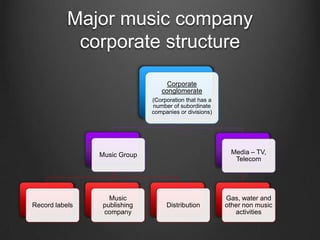
Major music company
            corporate structure

                                   Corporate
                                 conglomerate
                              (Corporation that has a
                              number of subordinate
                              companies or divisions)


                Music Group                              Media – TV,
                                                          Telecom


                   Music                                Gas, water and
Record labels    publishing        Distribution         other non music
                 company                                   activities
Major Label Artists


             Warner Bros
Universal                  Sony
Advantages of major labels

 Well financed – so can afford better production,
 distribution, marketing and manufacturing

 They can offer artists ability, prestige and top production
 resources.

BUT…

 Until the 360 deals were introduced labels were unable to
 gain any of the money that their artist made outside of
 their music. For example, fragrance, ringtones, concert
 revenues, merchandise sales.
The Independent Labels
Examples:

  No Limit Records

  Aftermath Records

  Priority Records

  Side One Dummy Records

  Fiction Records

  Way Out West
Advantages Of Independent
         Labels
They're more creative – They can find more raw talent,
use creative development, marketing and financing
tactics. They can also build better brand loyalty amongst
fans.

They can build better regional connections through
publicity and sales

They are not restricted by long corporate approval
processes and can understand artists and trends faster.
Independent Label Artists


               Jalapeno Records
Way Out West                      Close Harbor Records

Breakdown of Record Labels

  • 1.
    Record Labels Structure and breakdown
  • 2.
    Key Activities ofa Record Label Talent development Artist product marketing Handling the legal aspects of producing music Providing service to an artist Sales and distribution Marketing and promotions Providing service to the distributors and retailers
  • 3.
    Label types The Majors:big distribution and dominant market share The independent: these lack major distribution but they can be large or small ‘major minors’ Sub labels and imprints: these are separate companies or divisions distributed or owned by the major labels Specialty labels: these focus on non main stream distribution. For example, classical or gospel. They also use non traditional distribution.
  • 4.
    The Major Labels Examples: Universal Music Group -Which is a subsidiary of French global telecom/ entertainment. Sony Music Entertainment. This is a American based company which is related to Japanese electronics. Warner Music Group – Which is a US based and publically traded The major labels control approximately 70% of the music market and 80-90% of the US music market.
  • 5.
    Major music company corporate structure Corporate conglomerate (Corporation that has a number of subordinate companies or divisions) Music Group Media – TV, Telecom Music Gas, water and Record labels publishing Distribution other non music company activities
  • 6.
    Major Label Artists Warner Bros Universal Sony
  • 7.
    Advantages of majorlabels Well financed – so can afford better production, distribution, marketing and manufacturing They can offer artists ability, prestige and top production resources. BUT… Until the 360 deals were introduced labels were unable to gain any of the money that their artist made outside of their music. For example, fragrance, ringtones, concert revenues, merchandise sales.
  • 8.
    The Independent Labels Examples: No Limit Records Aftermath Records Priority Records Side One Dummy Records Fiction Records Way Out West
  • 9.
    Advantages Of Independent Labels They're more creative – They can find more raw talent, use creative development, marketing and financing tactics. They can also build better brand loyalty amongst fans. They can build better regional connections through publicity and sales They are not restricted by long corporate approval processes and can understand artists and trends faster.
  • 10.
    Independent Label Artists Jalapeno Records Way Out West Close Harbor Records