The One Stop Solution for Affordable Diagnostic Services
3
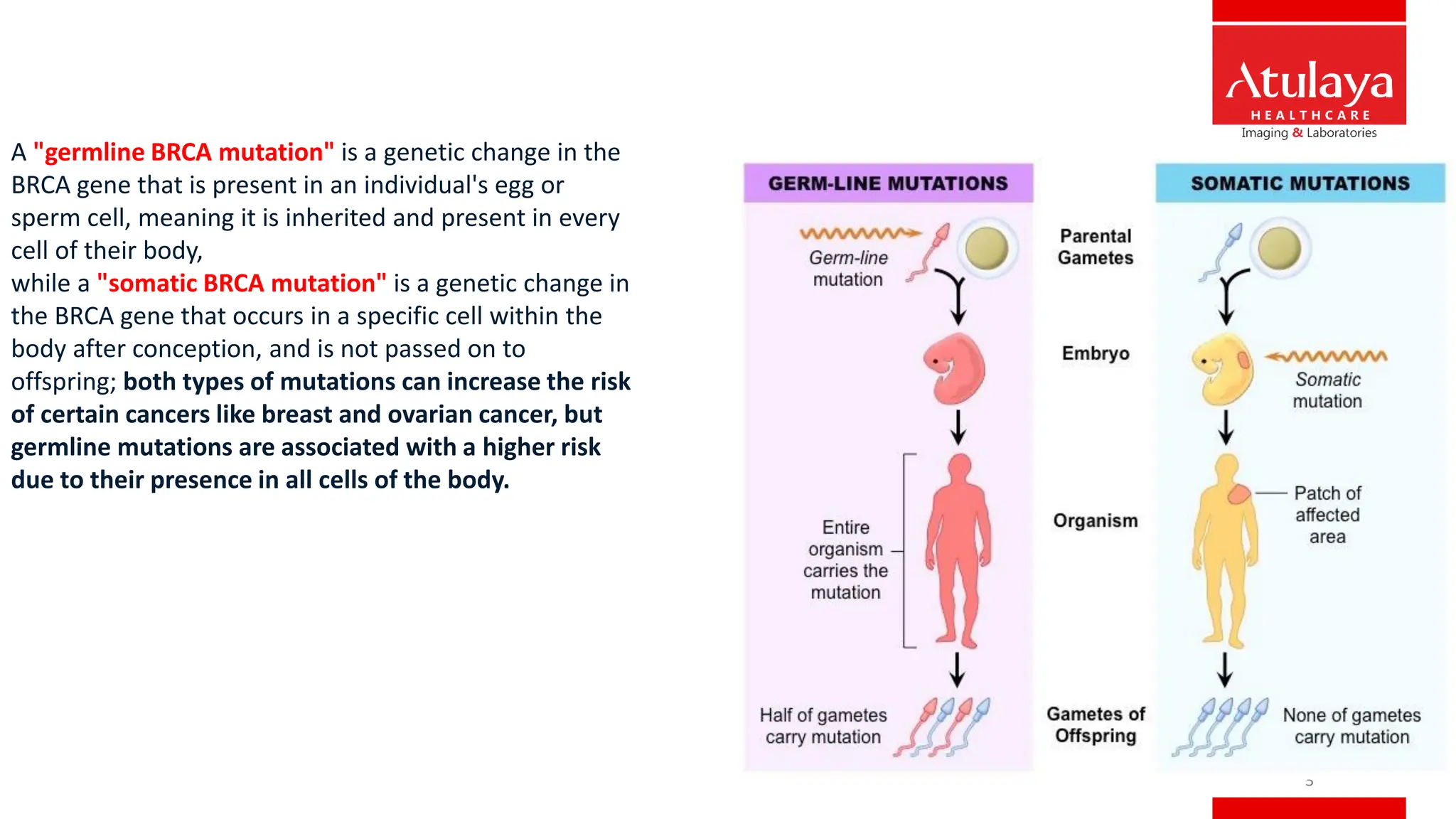
A "germline BRCA mutation" is a genetic change in the
BRCA gene that is present in an individual's egg or
sperm cell, meaning it is inherited and present in every
cell of their body,
while a "somatic BRCA mutation" is a genetic change in
the BRCA gene that occurs in a specific cell within the
body after conception, and is not passed on to
offspring; both types of mutations can increase the risk
of certain cancers like breast and ovarian cancer, but
germline mutations are associated with a higher risk
due to their presence in all cells of the body.
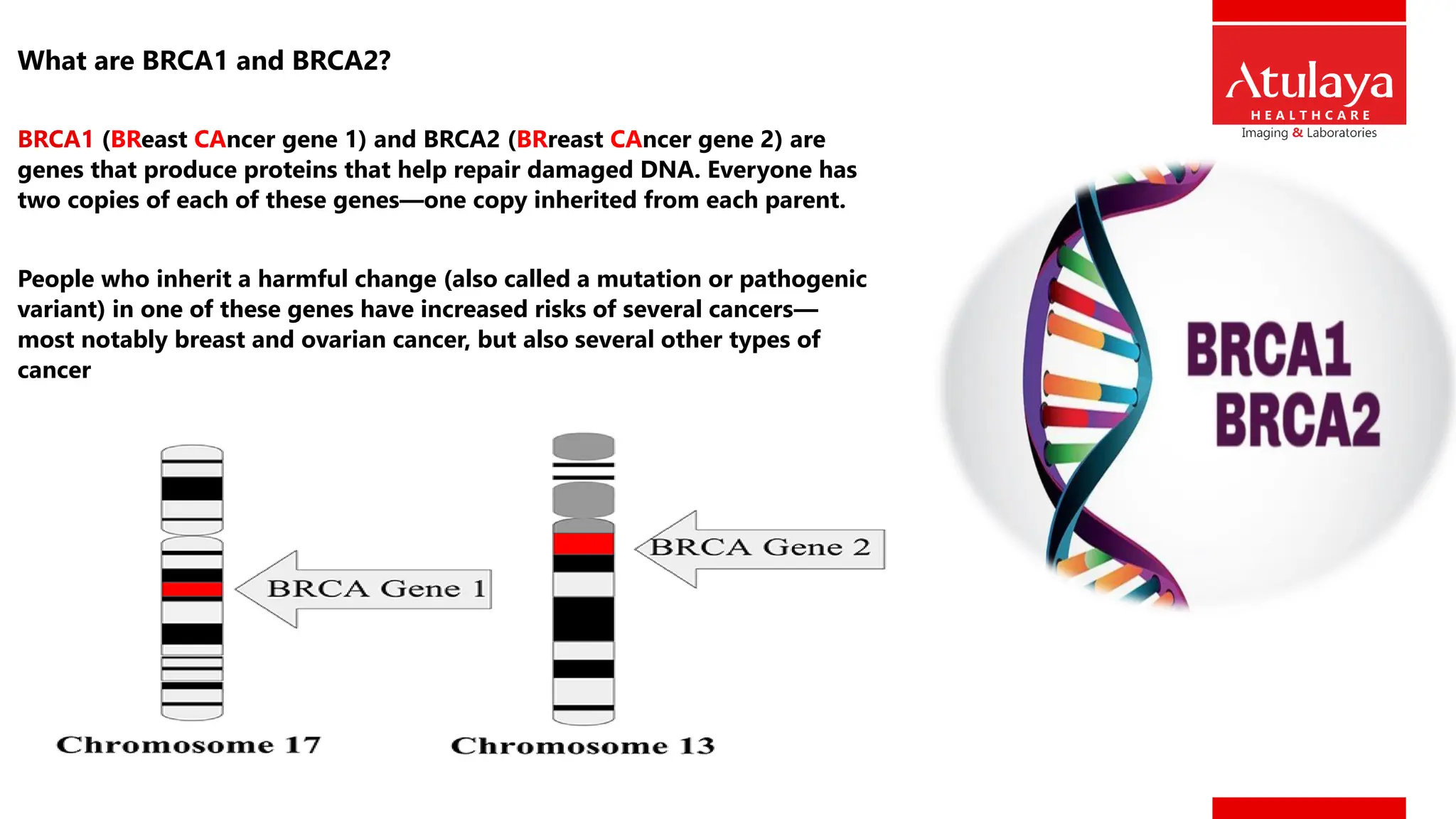
What are BRCA1 and BRCA2?
BRCA1 (BReast CAncer gene 1) and BRCA2 (BRreast CAncer gene 2) are
genes that produce proteins that help repair damaged DNA. Everyone has
two copies of each of these genes—one copy inherited from each parent.
People who inherit a harmful change (also called a mutation or pathogenic
variant) in one of these genes have increased risks of several cancers—
most notably breast and ovarian cancer, but also several other types of
cancer
5
Risk of Breast and other cancer’s with BRCA 1 & 2 mutations
6
7
8
9
10
11
Key points about BRCA1 and BRCA2 diagnosis:
•Testing method: A blood or saliva sample is collected for
analysis. which analyzes your DNA to identify any mutations in
the BRCA1 and BRCA2 genes, indicating a higher risk of
developing certain cancers like breast and ovarian cancer
•What it checks for: Mutations in the BRCA1 and BRCA2 genes
•Who should get tested: Individuals with a strong family history
of breast or ovarian cancer, particularly at a young age
•Positive result means: Increased risk of developing breast or
ovarian cancer
•Important considerations:
• Consult a genetic counselor to discuss family history
and potential implications of testing.
• If you have a positive result, discuss further
management options with your doctor, including
preventive measures like surgery or enhanced
screening.
12
13
14
. Identify Key Target Specialties
Focus on doctors who are most likely to encounter patients at risk for hereditary breast and
ovarian cancer:
•Oncologists (Medical, Surgical, and Radiation): For cancer diagnosis and treatment.
•Gynecologists: For patients with a family history of ovarian or breast cancer.
•Geneticists: For risk assessment and genetic counseling.
•General Practitioners/Family Physicians: They often see patients first and can guide them
for further evaluation.
•Endocrinologists: Involved in hormone therapy, often linked with cancer risk.
15

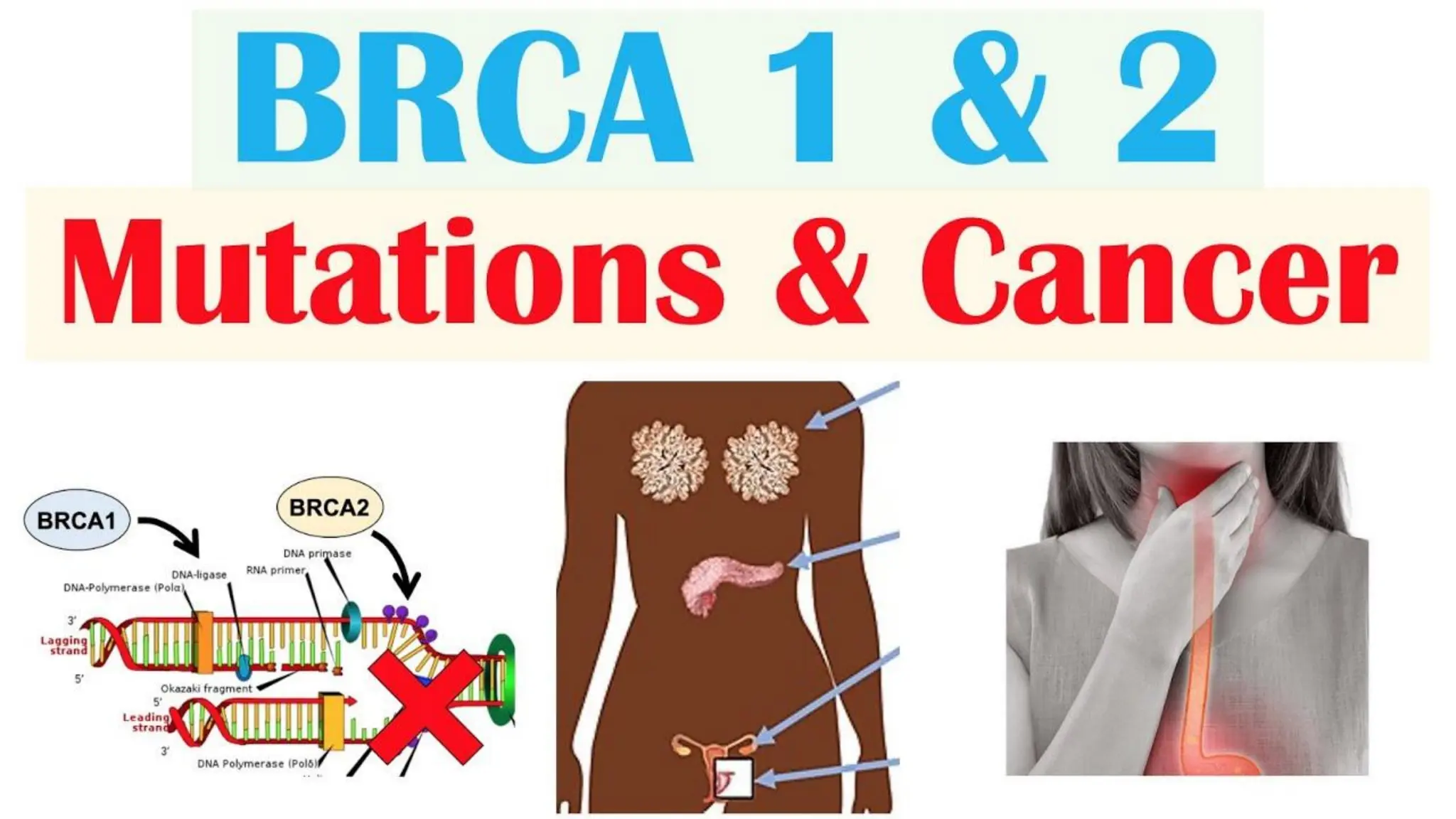
BRCA 1 & BRCA 2 Cancer Testing | Atulaya

  • 1.
    The One StopSolution for Affordable Diagnostic Services
  • 3.
    3 A "germline BRCAmutation" is a genetic change in the BRCA gene that is present in an individual's egg or sperm cell, meaning it is inherited and present in every cell of their body, while a "somatic BRCA mutation" is a genetic change in the BRCA gene that occurs in a specific cell within the body after conception, and is not passed on to offspring; both types of mutations can increase the risk of certain cancers like breast and ovarian cancer, but germline mutations are associated with a higher risk due to their presence in all cells of the body.
  • 4.
    What are BRCA1and BRCA2? BRCA1 (BReast CAncer gene 1) and BRCA2 (BRreast CAncer gene 2) are genes that produce proteins that help repair damaged DNA. Everyone has two copies of each of these genes—one copy inherited from each parent. People who inherit a harmful change (also called a mutation or pathogenic variant) in one of these genes have increased risks of several cancers— most notably breast and ovarian cancer, but also several other types of cancer
  • 5.
  • 6.
    Risk of Breastand other cancer’s with BRCA 1 & 2 mutations 6
  • 7.
  • 8.
  • 9.
  • 10.
  • 11.
    11 Key points aboutBRCA1 and BRCA2 diagnosis: •Testing method: A blood or saliva sample is collected for analysis. which analyzes your DNA to identify any mutations in the BRCA1 and BRCA2 genes, indicating a higher risk of developing certain cancers like breast and ovarian cancer •What it checks for: Mutations in the BRCA1 and BRCA2 genes •Who should get tested: Individuals with a strong family history of breast or ovarian cancer, particularly at a young age •Positive result means: Increased risk of developing breast or ovarian cancer •Important considerations: • Consult a genetic counselor to discuss family history and potential implications of testing. • If you have a positive result, discuss further management options with your doctor, including preventive measures like surgery or enhanced screening.
  • 12.
  • 13.
  • 14.
    14 . Identify KeyTarget Specialties Focus on doctors who are most likely to encounter patients at risk for hereditary breast and ovarian cancer: •Oncologists (Medical, Surgical, and Radiation): For cancer diagnosis and treatment. •Gynecologists: For patients with a family history of ovarian or breast cancer. •Geneticists: For risk assessment and genetic counseling. •General Practitioners/Family Physicians: They often see patients first and can guide them for further evaluation. •Endocrinologists: Involved in hormone therapy, often linked with cancer risk.
  • 15.