What’s Hot and Now
The cool stuff I’ve learned about since graduating
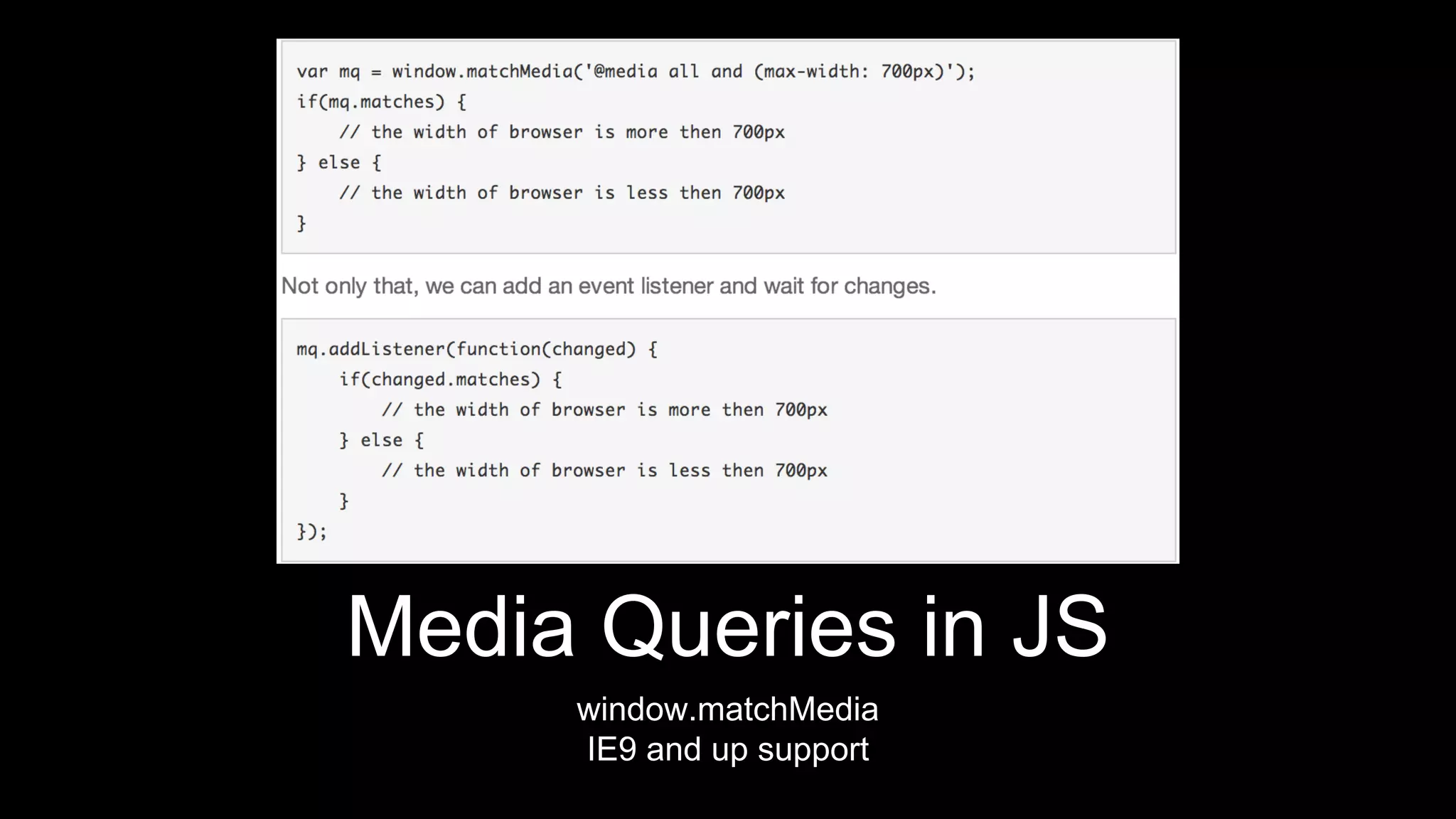
Media Queries in JS
window.matchMedia
IE9 and up support
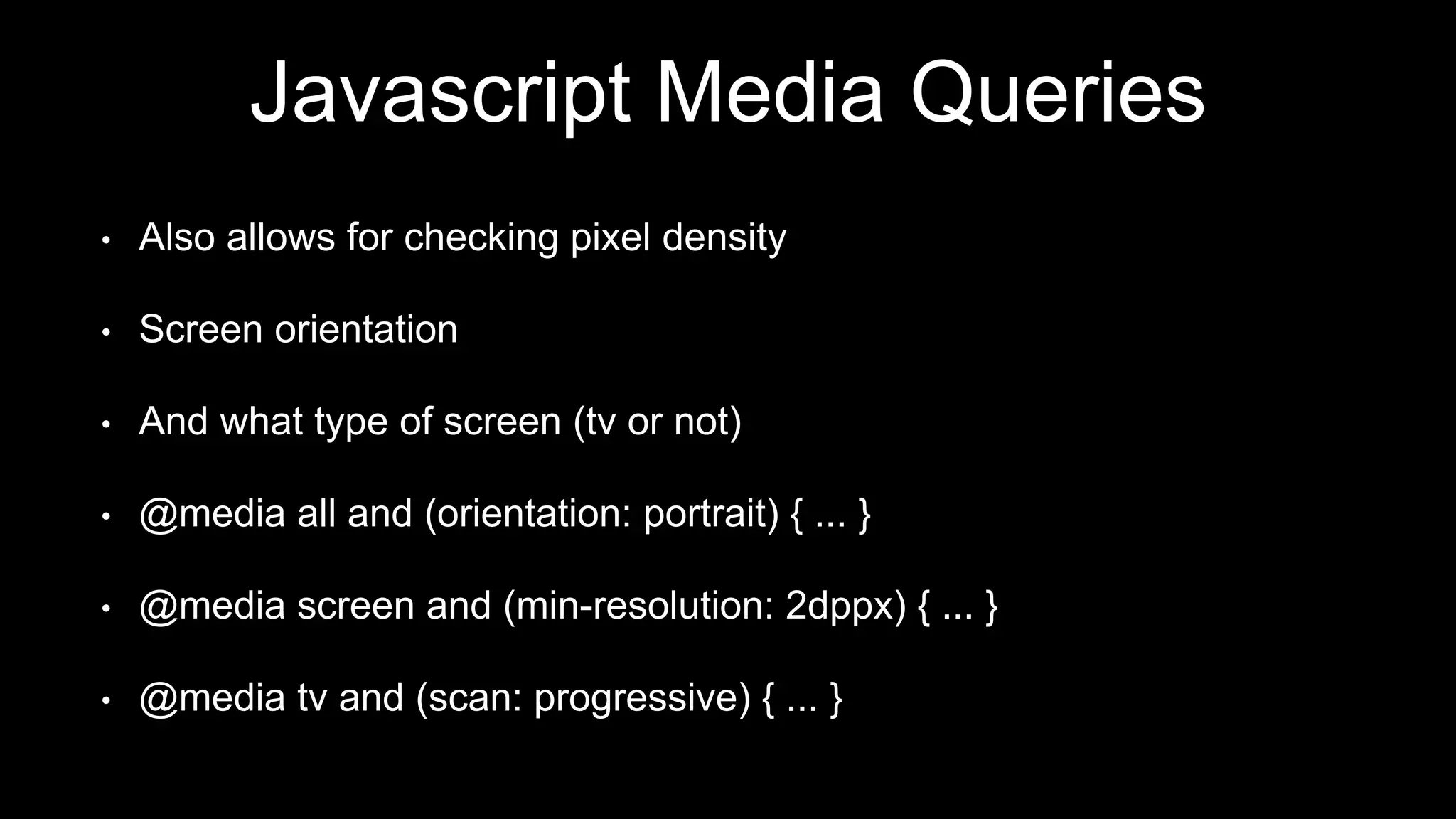
Javascript Media Queries
• Also allows for checking pixel density
• Screen orientation
• And what type of screen (tv or not)
• @media all and (orientation: portrait) { ... }
• @media screen and (min-resolution: 2dppx) { ... }
• @media tv and (scan: progressive) { ... }
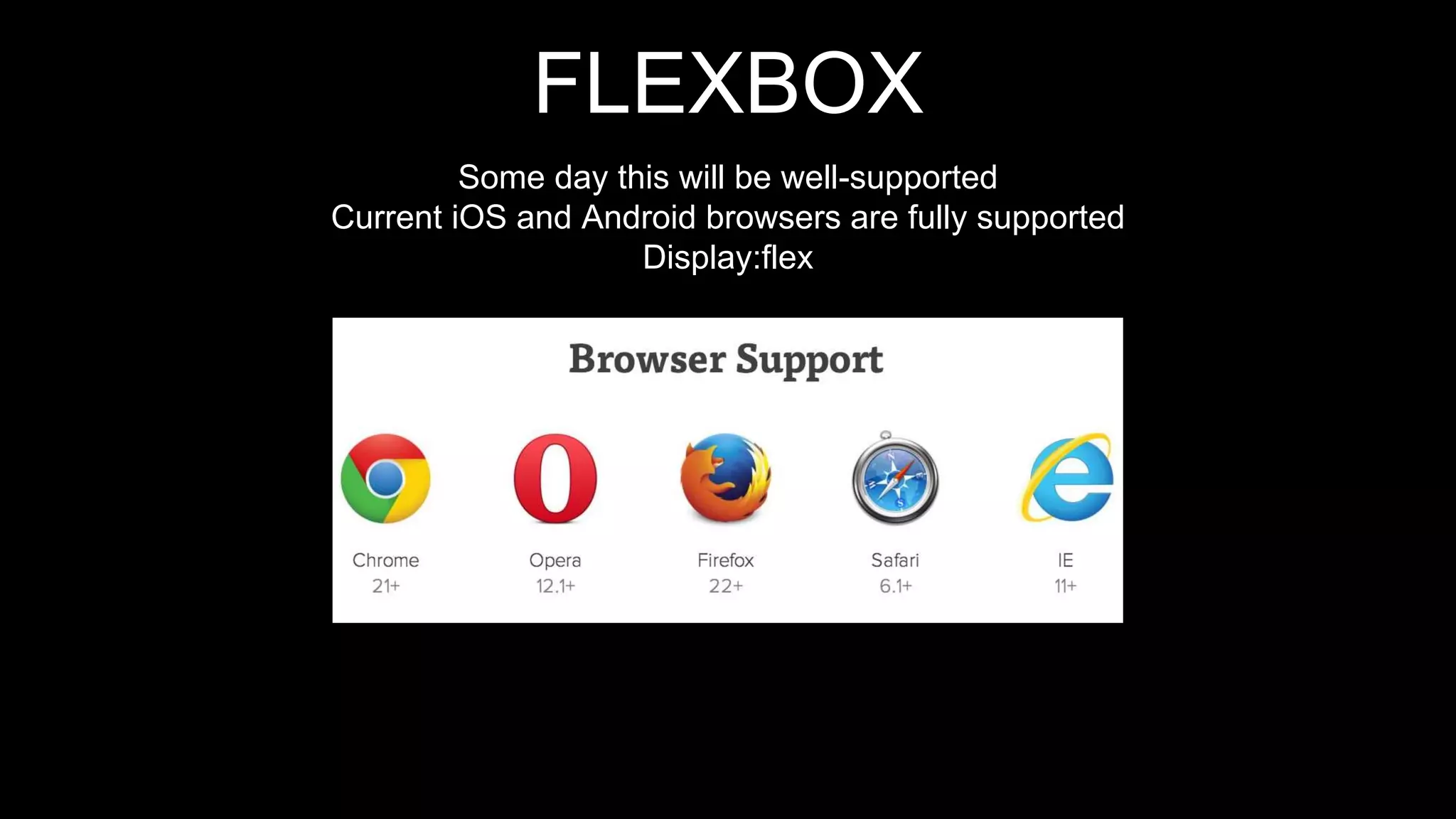
FLEXBOX
Some day this will be well-supported
Current iOS and Android browsers are fully supported
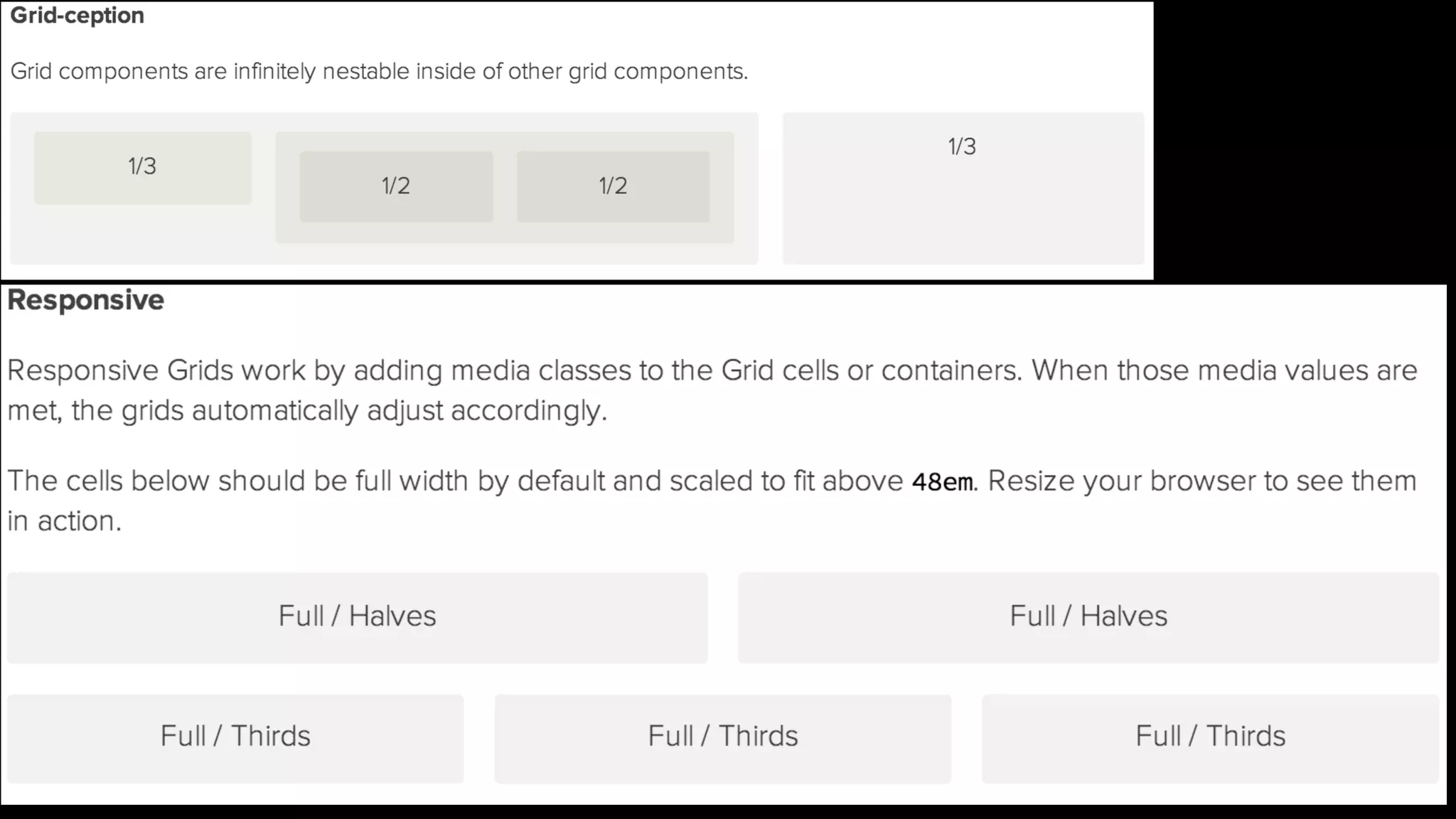
Display:flex
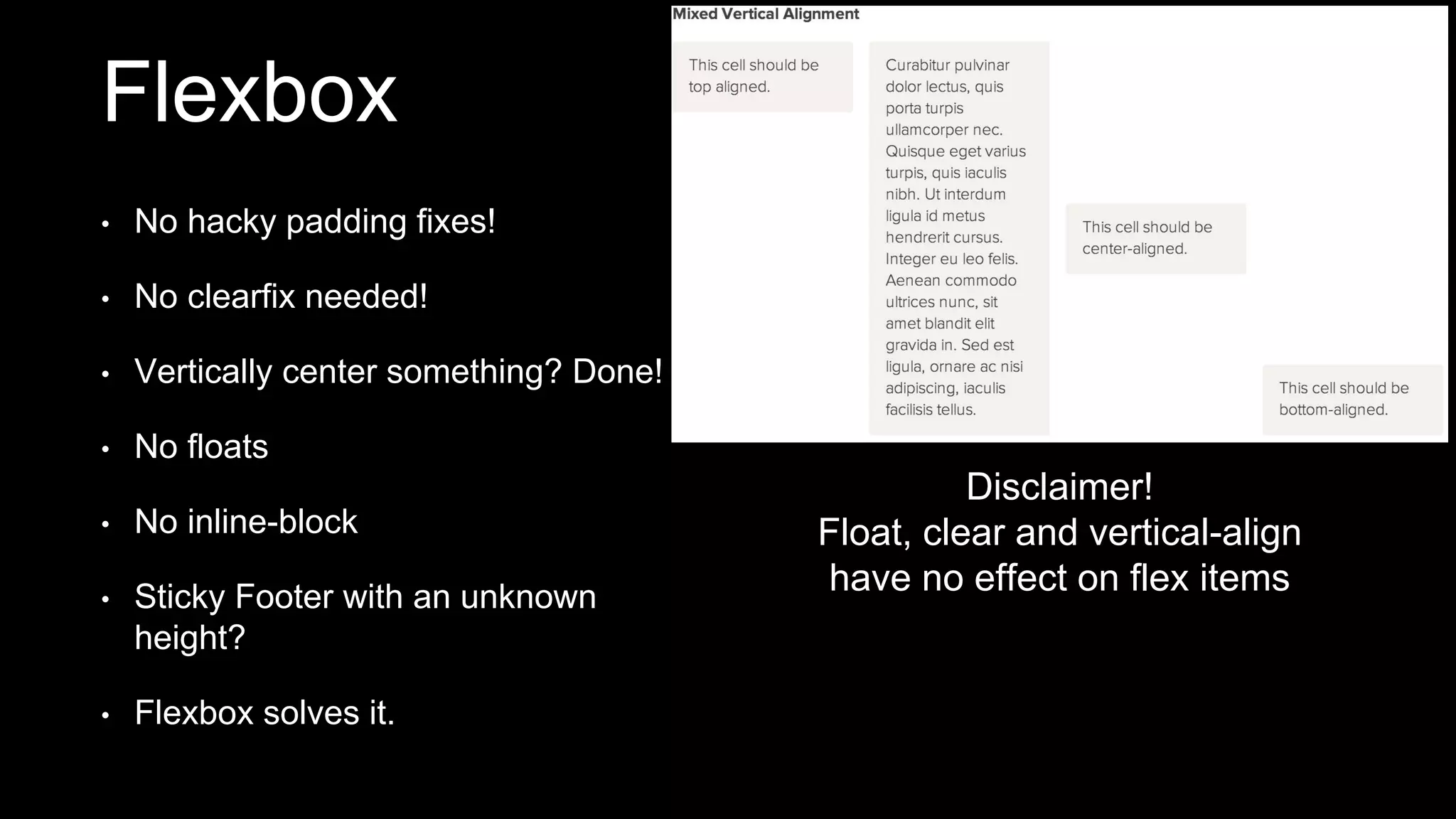
Flexbox
• No hacky padding fixes!
• No clearfix needed!
• Vertically center something? Done!
• No floats
• No inline-block
• Sticky Footer with an unknown
height?
• Flexbox solves it.
Disclaimer!
Float, clear and vertical-align
have no effect on flex items
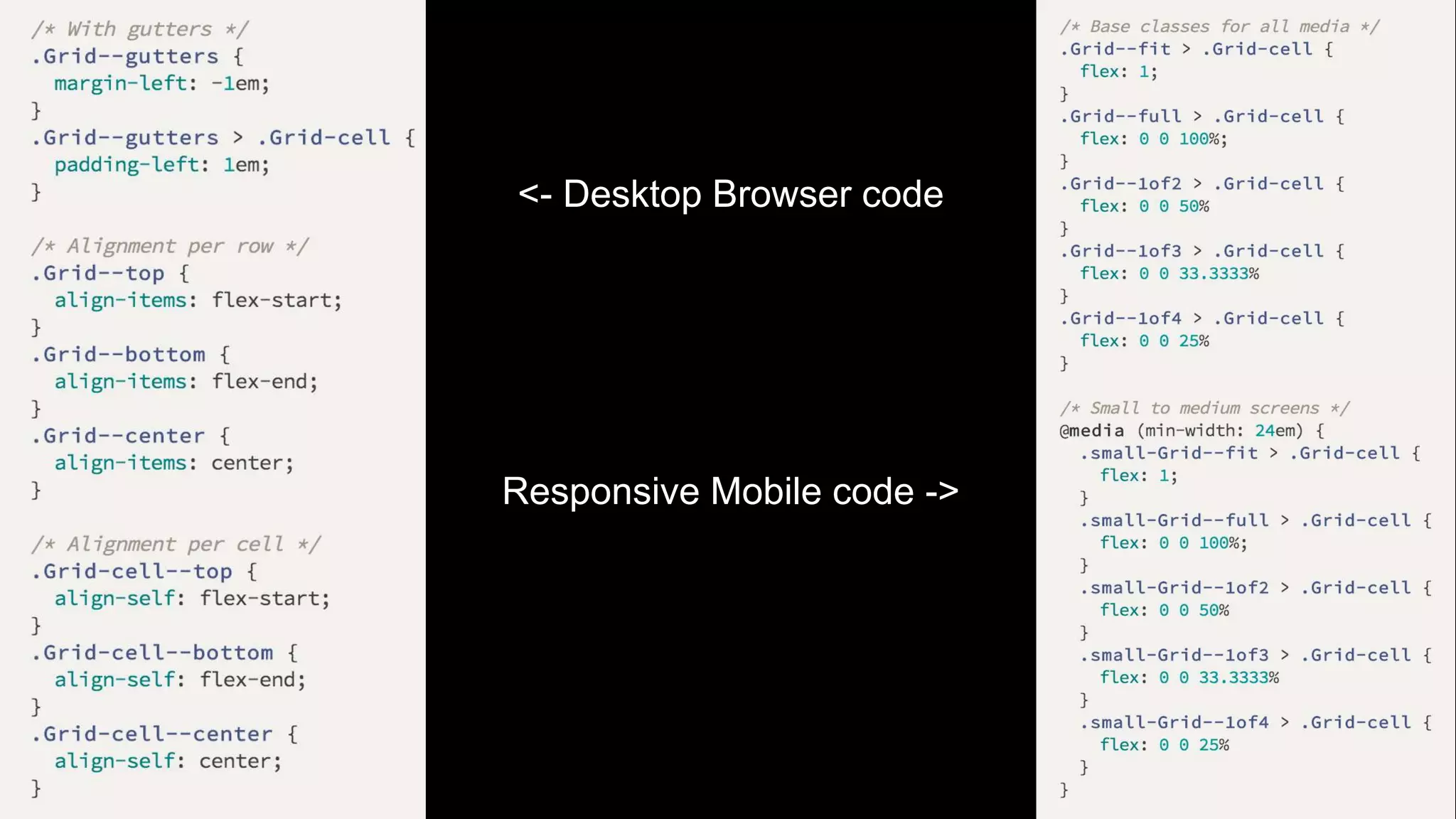
<- Desktop Browser code
Responsive Mobile code ->
Meteor
Front end, minimally opinionated, MVC, package-based framework
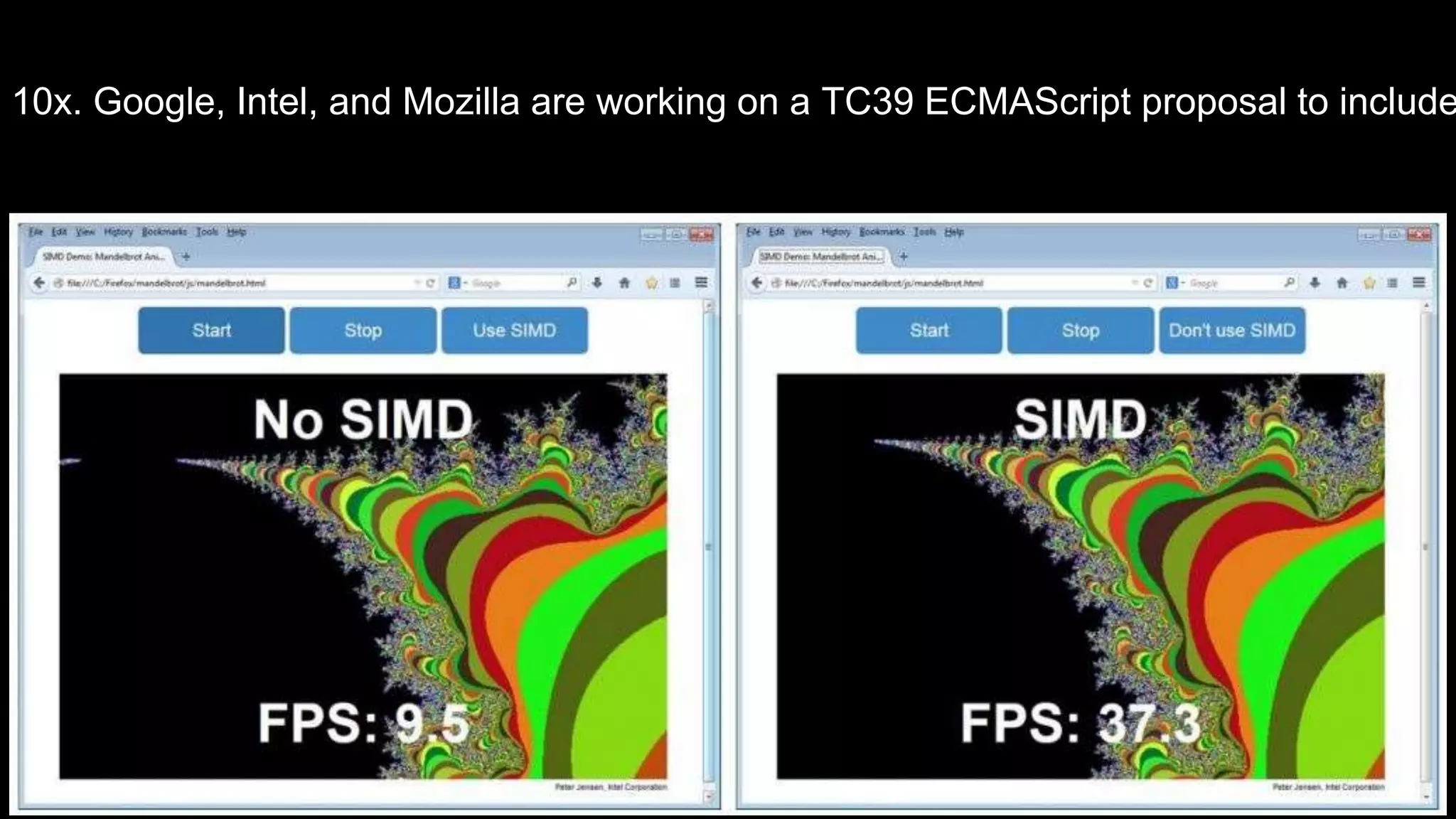
SIMD
• Single Instruction, Multiple Data
• Performs one operation on many items in parallel
• Huge speed increases for heavy computational processes
• Works anywhere javascript runs
o 10x. Google, Intel, and Mozilla are working on a TC39 ECMAScript proposal to include
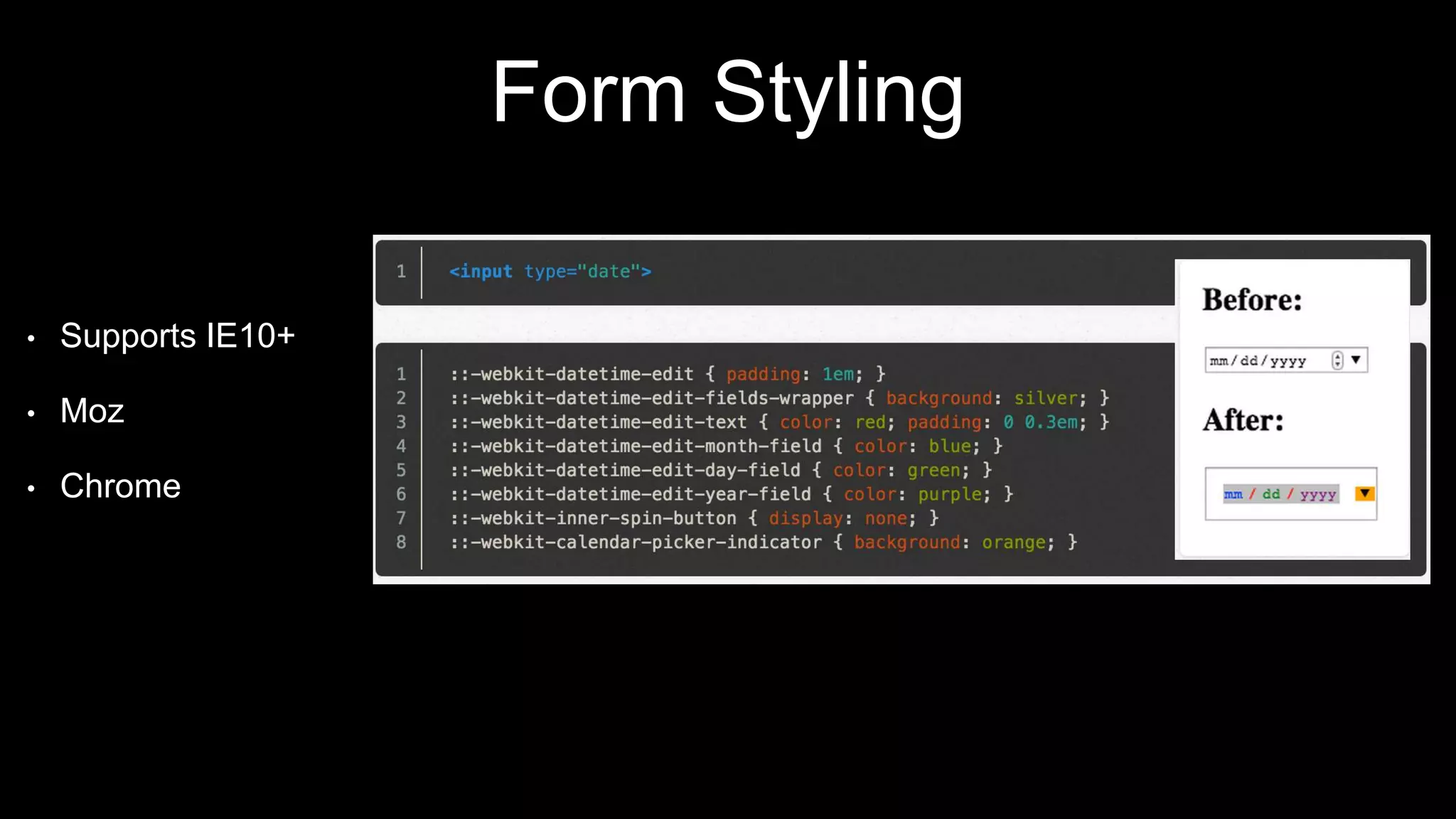
Form Styling
• Supports IE10+
• Moz
• Chrome
Real Time APIs
• Beacon Push uses Websockets and Comet to bypass traditional HTTP requests
• BrightContext uses real time feeds to process data on the fly, then outputs the processed data however you like (visualization,
store, alerts, another API etc)
• Fanout manages push notifications to every type of client that accepts them. It keeps up the persistent connections and you
just tell it what to do and when, then it does it for you.
• Pusher is similar to Beacon Push. They claim a 5ms routing time from your app to the client.
• PushWoosh is similar to Fanout, but offers more web-based analytics about what their API is doing for you.
• Realtime does a few things: Pub/sub messaging system and abstracts amazon’s AWS services through their simple REST
API. It also allows you to migrate from pusher and pub nub without changing your code.
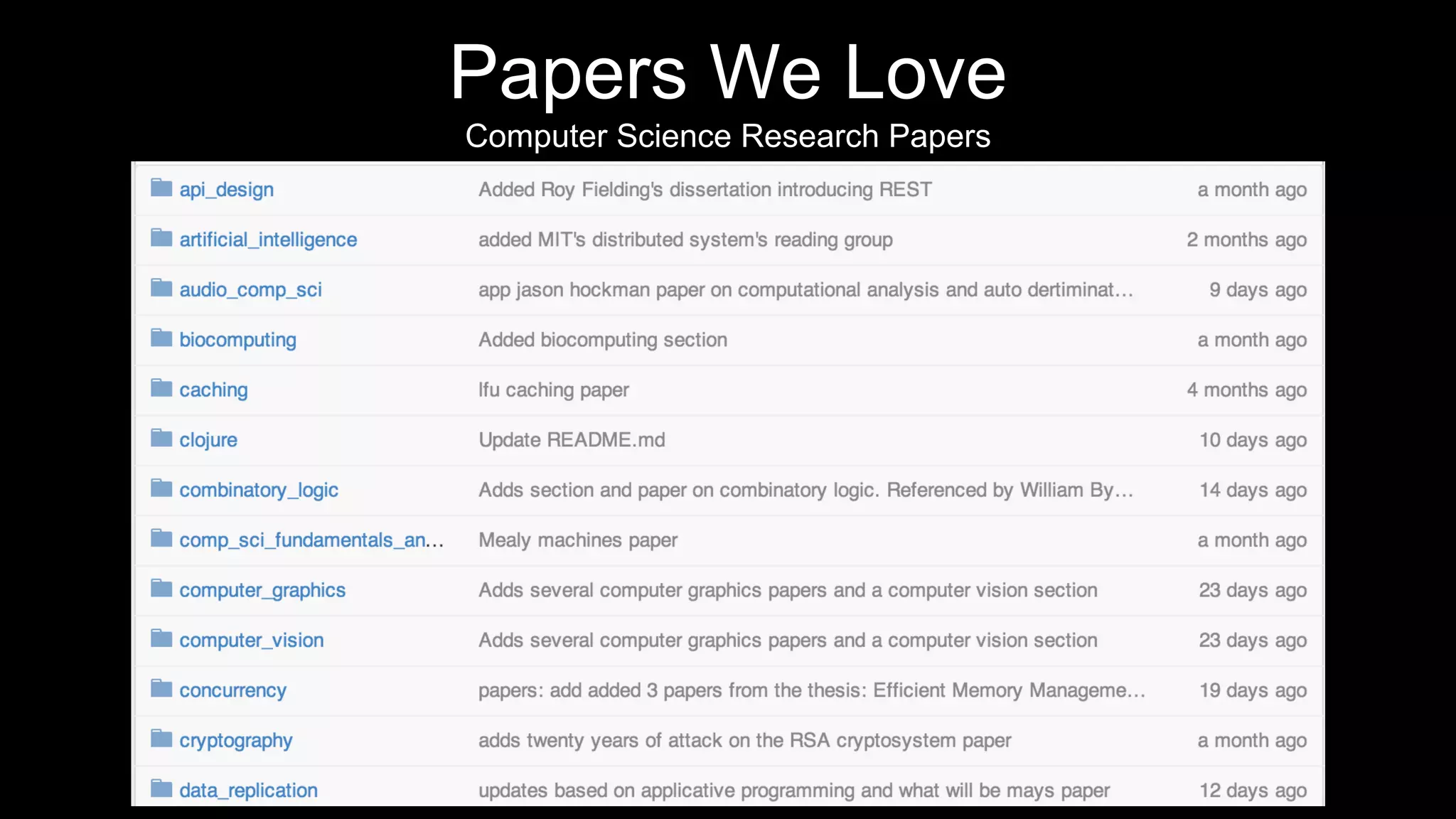
Papers We Love
Computer Science Research Papers
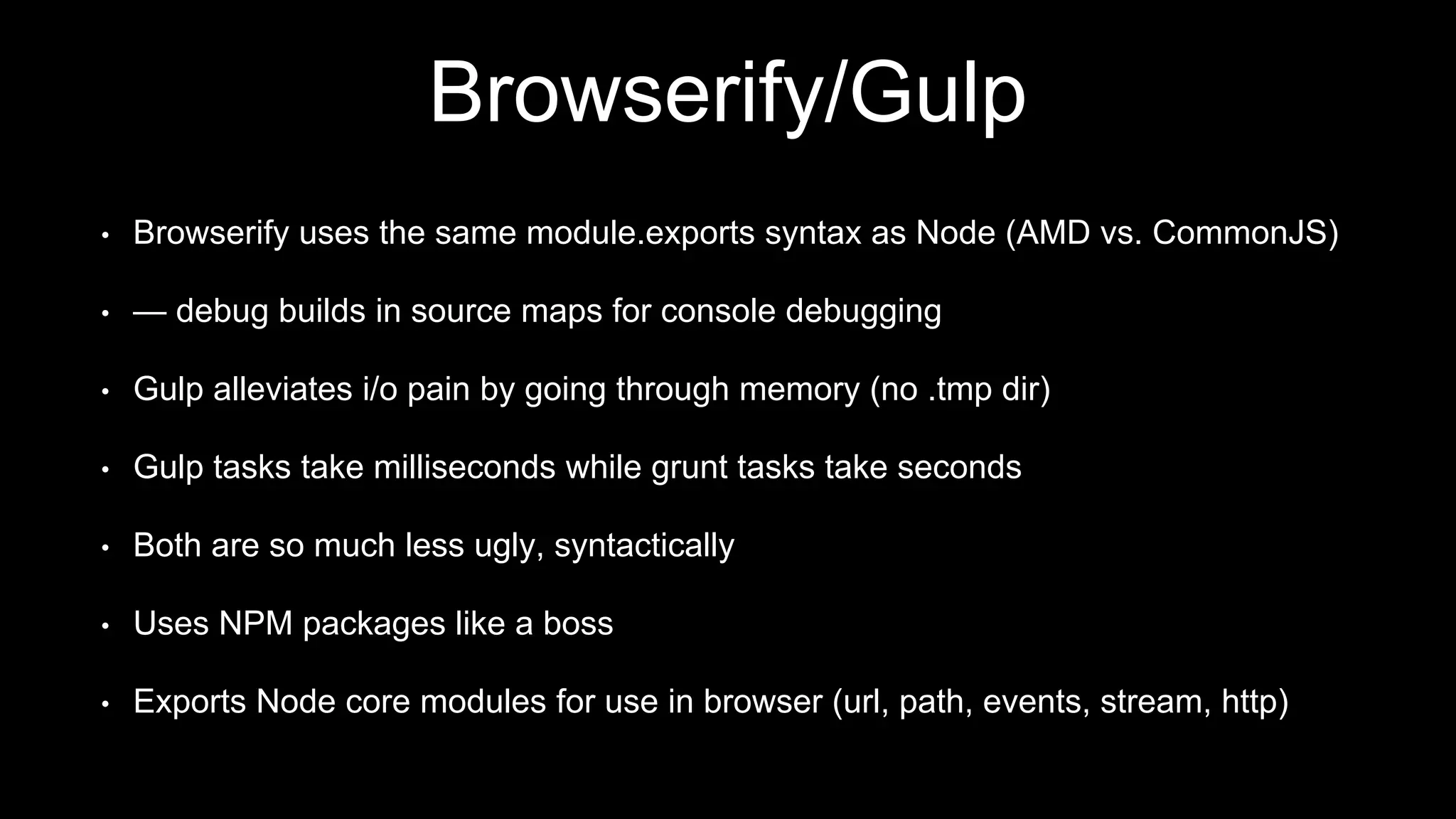
Browserify/Gulp
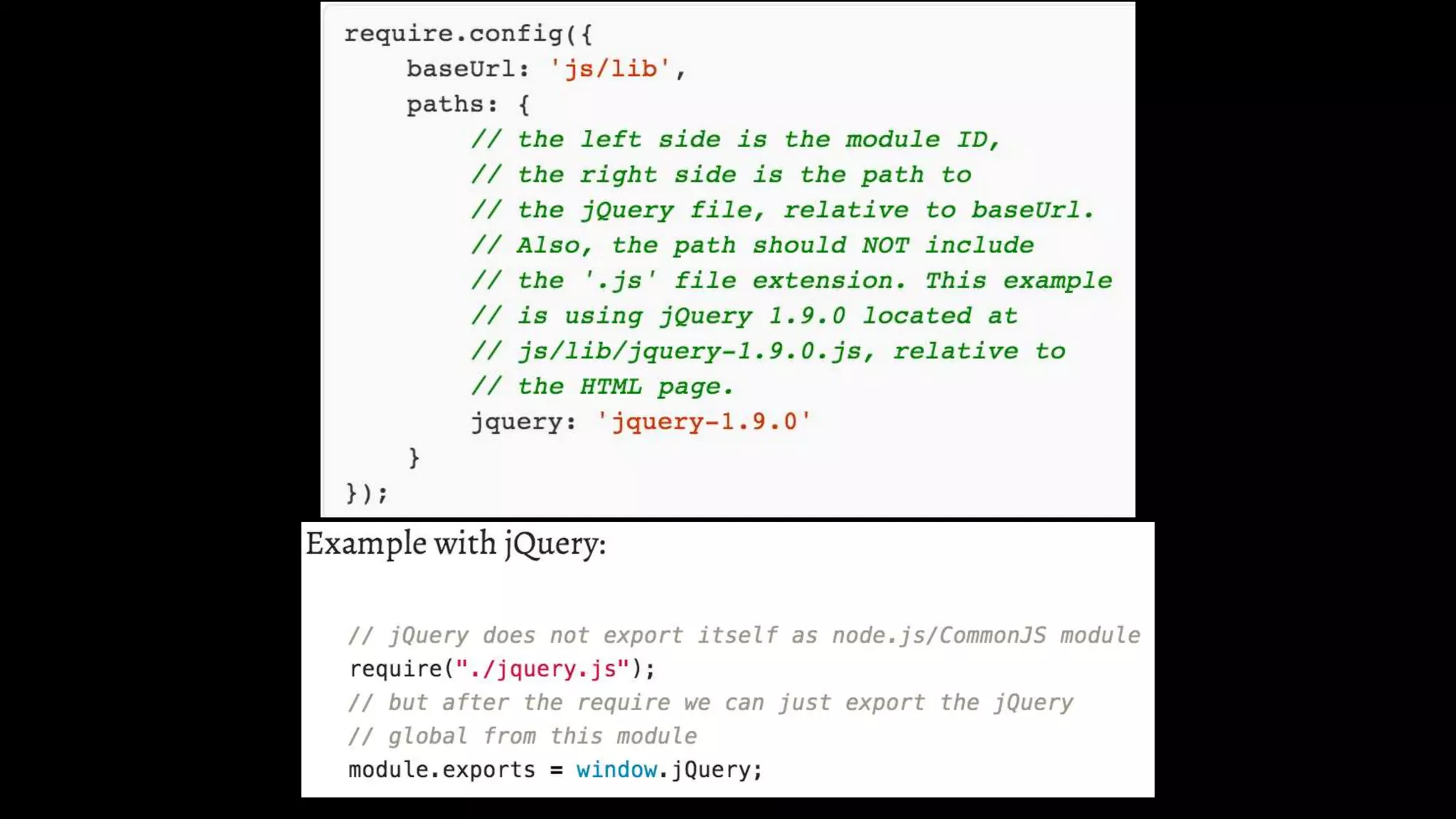
• Browserify uses the same module.exports syntax as Node (AMD vs. CommonJS)
• — debug builds in source maps for console debugging
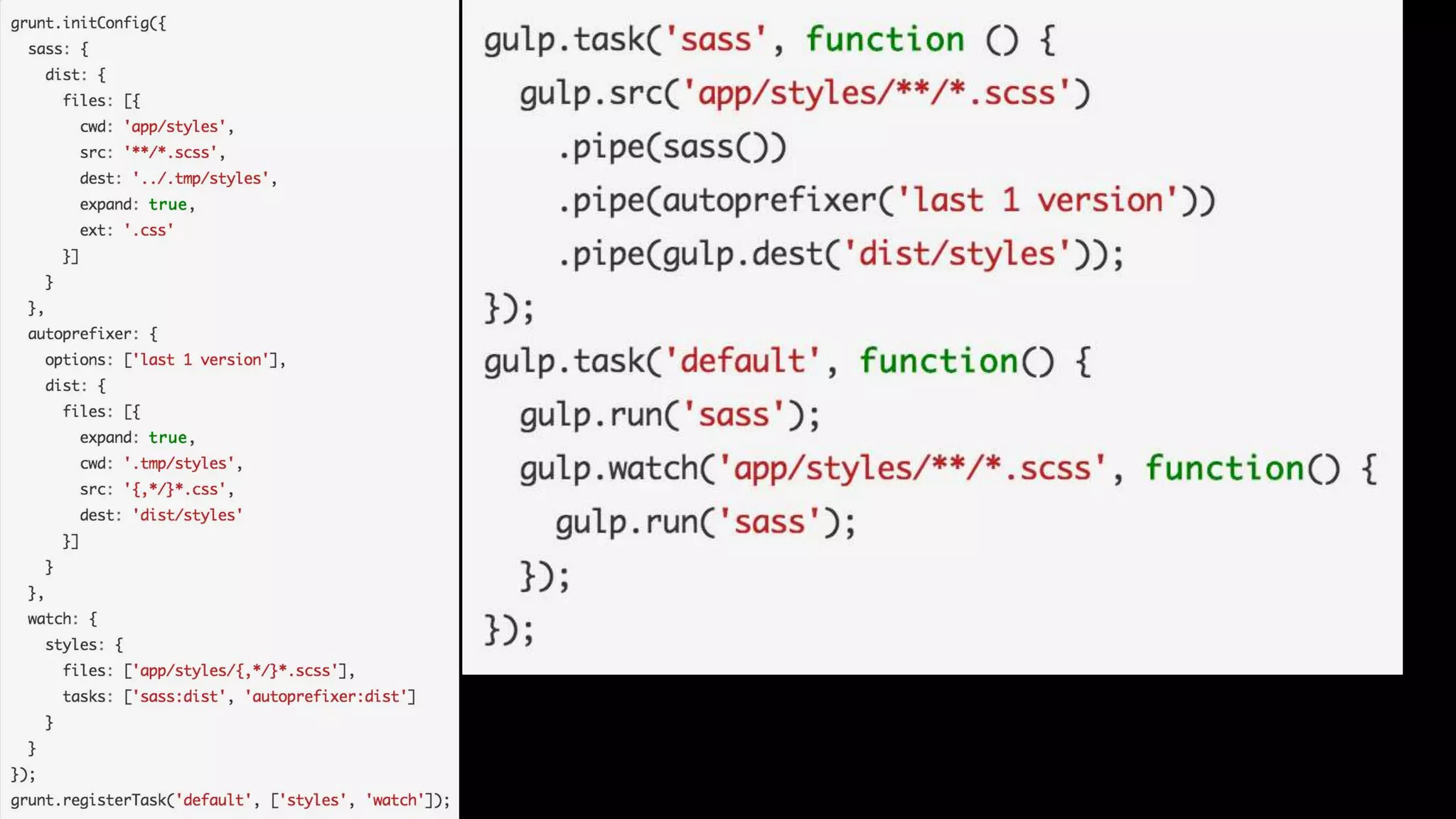
• Gulp alleviates i/o pain by going through memory (no .tmp dir)
• Gulp tasks take milliseconds while grunt tasks take seconds
• Both are so much less ugly, syntactically
• Uses NPM packages like a boss
• Exports Node core modules for use in browser (url, path, events, stream, http)
Boulder JS meet up presentation for April 16

Boulder JS meet up presentation for April 16

  • 1.
    What’s Hot andNow The cool stuff I’ve learned about since graduating
  • 2.
    Media Queries inJS window.matchMedia IE9 and up support
  • 3.
    Javascript Media Queries •Also allows for checking pixel density • Screen orientation • And what type of screen (tv or not) • @media all and (orientation: portrait) { ... } • @media screen and (min-resolution: 2dppx) { ... } • @media tv and (scan: progressive) { ... }
  • 4.
    FLEXBOX Some day thiswill be well-supported Current iOS and Android browsers are fully supported Display:flex
  • 5.
    Flexbox • No hackypadding fixes! • No clearfix needed! • Vertically center something? Done! • No floats • No inline-block • Sticky Footer with an unknown height? • Flexbox solves it. Disclaimer! Float, clear and vertical-align have no effect on flex items
  • 9.
    <- Desktop Browsercode Responsive Mobile code ->
  • 10.
    Meteor Front end, minimallyopinionated, MVC, package-based framework
  • 12.
    SIMD • Single Instruction,Multiple Data • Performs one operation on many items in parallel • Huge speed increases for heavy computational processes • Works anywhere javascript runs
  • 13.
    o 10x. Google,Intel, and Mozilla are working on a TC39 ECMAScript proposal to include
  • 14.
    Form Styling • SupportsIE10+ • Moz • Chrome
  • 15.
    Real Time APIs •Beacon Push uses Websockets and Comet to bypass traditional HTTP requests • BrightContext uses real time feeds to process data on the fly, then outputs the processed data however you like (visualization, store, alerts, another API etc) • Fanout manages push notifications to every type of client that accepts them. It keeps up the persistent connections and you just tell it what to do and when, then it does it for you. • Pusher is similar to Beacon Push. They claim a 5ms routing time from your app to the client. • PushWoosh is similar to Fanout, but offers more web-based analytics about what their API is doing for you. • Realtime does a few things: Pub/sub messaging system and abstracts amazon’s AWS services through their simple REST API. It also allows you to migrate from pusher and pub nub without changing your code.
  • 16.
    Papers We Love ComputerScience Research Papers
  • 17.
    Browserify/Gulp • Browserify usesthe same module.exports syntax as Node (AMD vs. CommonJS) • — debug builds in source maps for console debugging • Gulp alleviates i/o pain by going through memory (no .tmp dir) • Gulp tasks take milliseconds while grunt tasks take seconds • Both are so much less ugly, syntactically • Uses NPM packages like a boss • Exports Node core modules for use in browser (url, path, events, stream, http)