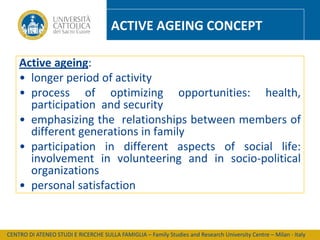
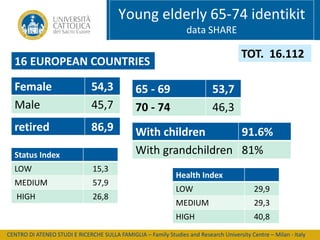
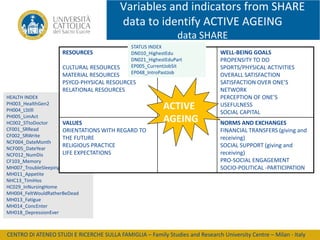
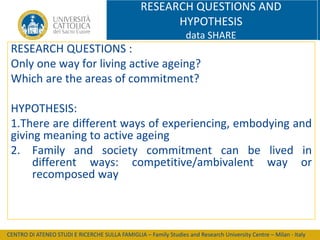
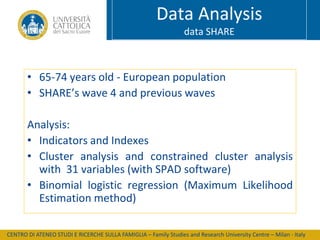
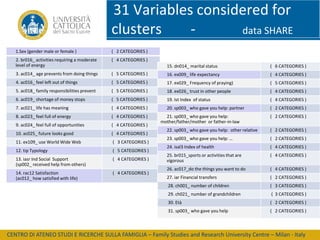
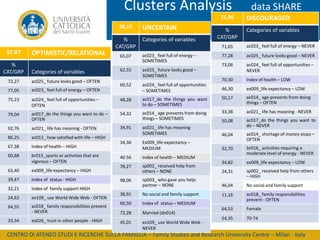
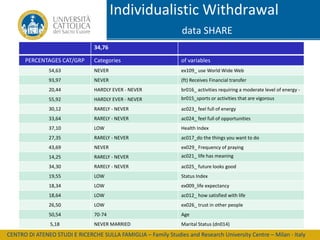
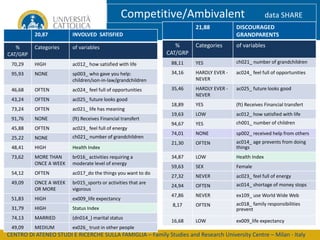
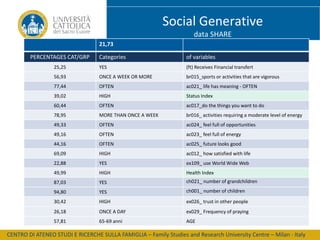
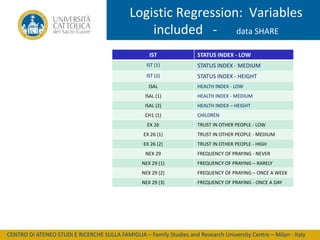
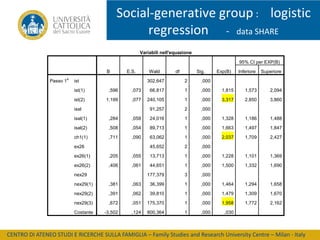
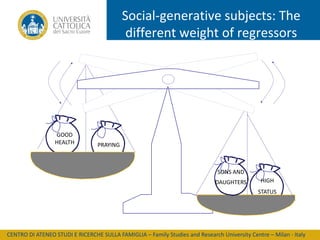
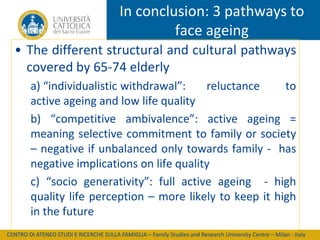
The document discusses the concept of active ageing, emphasizing the importance of health, participation, and intergenerational relationships in enhancing well-being among elderly individuals aged 65-74. It presents various indicators and research questions aimed at understanding different experiences of active ageing, identifying pathways such as 'individualistic withdrawal,' 'competitive ambivalence,' and 'social generativity.' The findings suggest that active engagement in social and family commitments can lead to a higher quality of life and better life satisfaction among older adults.