Drops of Life
                 By Tori Young, Connor Donnelly & Becca Buchanan


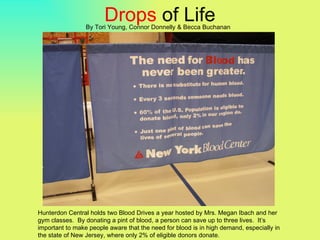
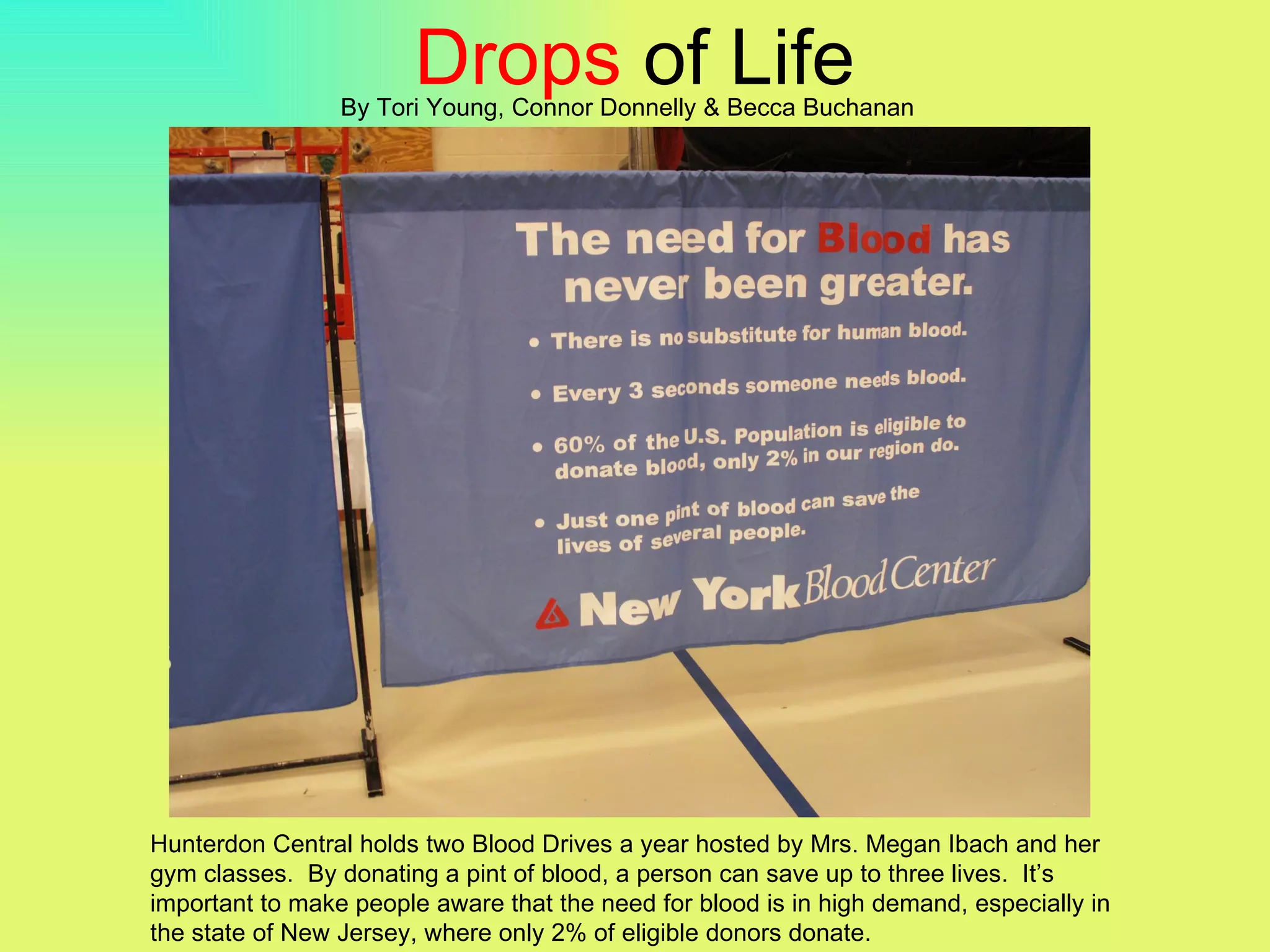
Hunterdon Central holds two Blood Drives a year hosted by Mrs. Megan Ibach and her
gym classes. By donating a pint of blood, a person can save up to three lives. It’s
important to make people aware that the need for blood is in high demand, especially in
the state of New Jersey, where only 2% of eligible donors donate.
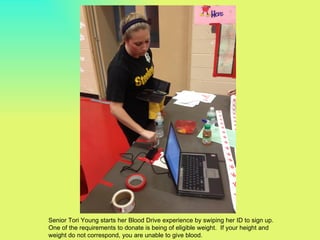
Senior Tori Young starts her Blood Drive experience by swiping her ID to sign up.
One of the requirements to donate is being of eligible weight. If your height and
weight do not correspond, you are unable to give blood.
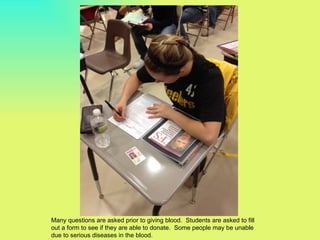
Many questions are asked prior to giving blood. Students are asked to fill
out a form to see if they are able to donate. Some people may be unable
due to serious diseases in the blood.
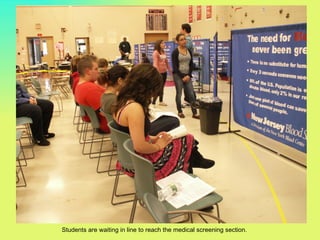
Students are waiting in line to reach the medical screening section.
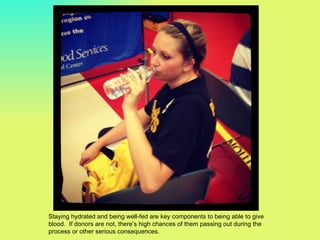
Staying hydrated and being well-fed are key components to being able to give
blood. If donors are not, there’s high chances of them passing out during the
process or other serious consequences.
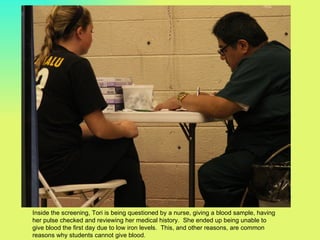
Inside the screening, Tori is being questioned by a nurse, giving a blood sample, having
her pulse checked and reviewing her medical history. She ended up being unable to
give blood the first day due to low iron levels. This, and other reasons, are common
reasons why students cannot give blood.
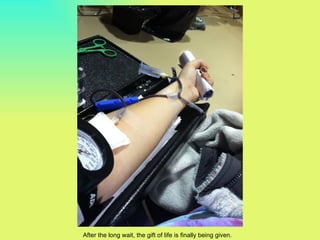
After the long wait, the gift of life is finally being given.
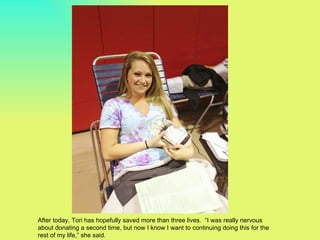
After today, Tori has hopefully saved more than three lives. “I was really nervous
about donating a second time, but now I know I want to continuing doing this for the
rest of my life,” she said.
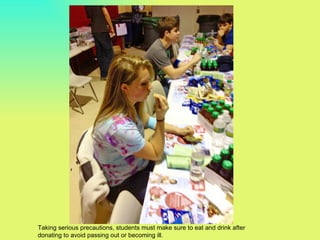
Taking serious precautions, students must make sure to eat and drink after
donating to avoid passing out or becoming ill.
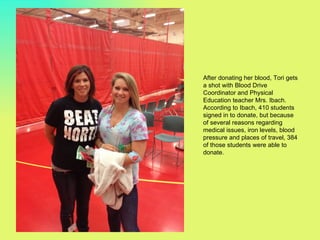
After donating her blood, Tori gets
a shot with Blood Drive
Coordinator and Physical
Education teacher Mrs. Ibach.
According to Ibach, 410 students
signed in to donate, but because
of several reasons regarding
medical issues, iron levels, blood
pressure and places of travel, 384
of those students were able to
donate.
Blood Drive

Blood Drive

  • 1.
    Drops of Life By Tori Young, Connor Donnelly & Becca Buchanan Hunterdon Central holds two Blood Drives a year hosted by Mrs. Megan Ibach and her gym classes. By donating a pint of blood, a person can save up to three lives. It’s important to make people aware that the need for blood is in high demand, especially in the state of New Jersey, where only 2% of eligible donors donate.
  • 2.
    Senior Tori Youngstarts her Blood Drive experience by swiping her ID to sign up. One of the requirements to donate is being of eligible weight. If your height and weight do not correspond, you are unable to give blood.
  • 3.
    Many questions areasked prior to giving blood. Students are asked to fill out a form to see if they are able to donate. Some people may be unable due to serious diseases in the blood.
  • 4.
    Students are waitingin line to reach the medical screening section.
  • 5.
    Staying hydrated andbeing well-fed are key components to being able to give blood. If donors are not, there’s high chances of them passing out during the process or other serious consequences.
  • 6.
    Inside the screening,Tori is being questioned by a nurse, giving a blood sample, having her pulse checked and reviewing her medical history. She ended up being unable to give blood the first day due to low iron levels. This, and other reasons, are common reasons why students cannot give blood.
  • 7.
    After the longwait, the gift of life is finally being given.
  • 8.
    After today, Torihas hopefully saved more than three lives. “I was really nervous about donating a second time, but now I know I want to continuing doing this for the rest of my life,” she said.
  • 9.
    Taking serious precautions,students must make sure to eat and drink after donating to avoid passing out or becoming ill.
  • 10.
    After donating herblood, Tori gets a shot with Blood Drive Coordinator and Physical Education teacher Mrs. Ibach. According to Ibach, 410 students signed in to donate, but because of several reasons regarding medical issues, iron levels, blood pressure and places of travel, 384 of those students were able to donate.