By: www.ProfitableInvestingTips.com
The blockchain and its distributed ledger
technology has moved far beyond the
cryptocurrency world. Businesses far and
wide are taking advantage of peer-to-peer
value transfer with exceptional fault
tolerance.
Because every participant gets an exact copy of
the same data, this allows for almost real-
time transfer of information or assets without
having to go through an intermediary.
However, there is a degree of blockchain
liquidity risk associated with distributed
ledger technology. It often has to do with
counterparty risk.
What Is Liquidity?
A simple way to explain liquidity in commercial
or interpersonal transactions is this. How
easy is it to convert an asset into cash? And
how easy is it to do so without affecting its
market value? In the world of traditional
finance this can be an issue with real estate,
stocks, fine art, or other collectables.
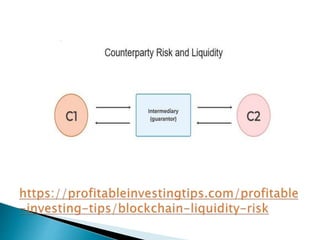
Part of the liquidity issue has to do with how
big the market is for a given asset. Another
part has do to with the buyer paying what
they promised when the time comes to pay.
In the stock market this is called counterparty
risk. It is handled by an intermediary who
guarantees the transaction and makes
payment even when one of the parties
defaults on their obligation.
Who Handles Blockchain Counterparty and
Liquidity Risk?
Intermediaries in traditional finance commonly
protect the parties in a deal or transaction
against counterparty risk. They typically are
involved in resolving disputes. No matter
what the terms of a smart contract are,
someone on the other side of the world may
not pay according to the terms of the
contract when payment is due.
There is no counterparty risk entity within the
blockchain system to help resolve disputes.
There is no entity in the blockchain system to
insure contracts against loss in such
situations. Folks like the Bank of International
Settlements have warned of this risk in the
blockchain system.
The Blockchain Helps Manage Risks
In many cases, use of blockchain technology
reduces or even eliminates business risk. IBM
explains the risk reduction benefits of
blockchain technology. A simple but very
important benefit is the reduction of
paperwork and therefore the reduction of
errors in an accounting system.
When everyone gets the same information
throughout the network, small but critical
errors do not seep in and create recurring
problems. The risk of fraud is virtually
eliminated in a system in which data is copied
to multiple locations so that one person
cannot change one record to order to steal
money or modify critical information.
How Can You Manage Blockchain Liquidity and
Counterparty Risks?
Counterparty and liquidity risks have been
around ever since people have made
agreements to buy and sell things. The
Romans said, let the buyer beware (emptor
caveat). In the current era we often say that if
a deal is too good to be true is very likely not
true and not a good deal. Blockchain
technology along with cryptocurrencies allow
us to do business with anyone, anywhere in
the world.
It does not allow us to vet them. In other
words, before entering into a business
arrangement with another party it is wise to
carry out a background review of the
company, individual, or other entity. As a rule
blockchain technology is of no help in doing
this. Common sense is very often the best
guide along with the willingness to walk away
from a deal that you cannot be absolutely
sure of.
For more insights and useful information about
investments and investing, visit
www.ProfitableInvestingTips.com.

Blockchain Liquidity Risk

  • 1.
  • 2.
    The blockchain andits distributed ledger technology has moved far beyond the cryptocurrency world. Businesses far and wide are taking advantage of peer-to-peer value transfer with exceptional fault tolerance.
  • 3.
    Because every participantgets an exact copy of the same data, this allows for almost real- time transfer of information or assets without having to go through an intermediary. However, there is a degree of blockchain liquidity risk associated with distributed ledger technology. It often has to do with counterparty risk.
  • 4.
  • 5.
    A simple wayto explain liquidity in commercial or interpersonal transactions is this. How easy is it to convert an asset into cash? And how easy is it to do so without affecting its market value? In the world of traditional finance this can be an issue with real estate, stocks, fine art, or other collectables.
  • 6.
    Part of theliquidity issue has to do with how big the market is for a given asset. Another part has do to with the buyer paying what they promised when the time comes to pay. In the stock market this is called counterparty risk. It is handled by an intermediary who guarantees the transaction and makes payment even when one of the parties defaults on their obligation.
  • 8.
    Who Handles BlockchainCounterparty and Liquidity Risk?
  • 9.
    Intermediaries in traditionalfinance commonly protect the parties in a deal or transaction against counterparty risk. They typically are involved in resolving disputes. No matter what the terms of a smart contract are, someone on the other side of the world may not pay according to the terms of the contract when payment is due.
  • 10.
    There is nocounterparty risk entity within the blockchain system to help resolve disputes. There is no entity in the blockchain system to insure contracts against loss in such situations. Folks like the Bank of International Settlements have warned of this risk in the blockchain system.
  • 11.
  • 12.
    In many cases,use of blockchain technology reduces or even eliminates business risk. IBM explains the risk reduction benefits of blockchain technology. A simple but very important benefit is the reduction of paperwork and therefore the reduction of errors in an accounting system.
  • 13.
    When everyone getsthe same information throughout the network, small but critical errors do not seep in and create recurring problems. The risk of fraud is virtually eliminated in a system in which data is copied to multiple locations so that one person cannot change one record to order to steal money or modify critical information.
  • 14.
    How Can YouManage Blockchain Liquidity and Counterparty Risks?
  • 15.
    Counterparty and liquidityrisks have been around ever since people have made agreements to buy and sell things. The Romans said, let the buyer beware (emptor caveat). In the current era we often say that if a deal is too good to be true is very likely not true and not a good deal. Blockchain technology along with cryptocurrencies allow us to do business with anyone, anywhere in the world.
  • 16.
    It does notallow us to vet them. In other words, before entering into a business arrangement with another party it is wise to carry out a background review of the company, individual, or other entity. As a rule blockchain technology is of no help in doing this. Common sense is very often the best guide along with the willingness to walk away from a deal that you cannot be absolutely sure of.
  • 17.
    For more insightsand useful information about investments and investing, visit www.ProfitableInvestingTips.com.