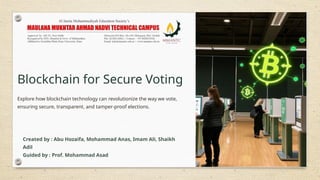
Blockchain for Secure Voting
Explore how blockchain technology can revolutionize the way we vote,
ensuring secure, transparent, and tamper-proof elections.
Created by : Abu Hozaifa, Mohammad Anas, Imam Ali, Shaikh
Adil
Guided by : Prof. Mohammad Asad
Table of Contents
1. Introduction to Blockchain
2. Limitations of Traditional Voting
3. Blockchain's Decentralized Benefits
4. Improved Voter Privacy
5. Tamper-Proof Voting Records
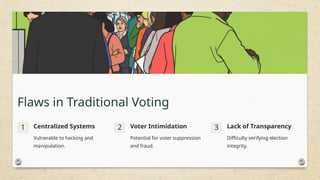
Flaws in Traditional Voting
1 Centralized Systems
Vulnerable to hacking and
manipulation.
2 Voter Intimidation
Potential for voter suppression
and fraud.
3 Lack of Transparency
Difficulty verifying election
integrity.
Blockchain's Democratic Advantages
Decentralized Network
No single point of failure or control.
Transparent Transactions
Voting records are publicly verifiable.
Tamper-Resistant
Votes cannot be altered or deleted.
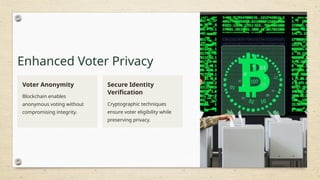
Enhanced Voter Privacy
Voter Anonymity
Blockchain enables
anonymous voting without
compromising integrity.
Secure Identity
Verification
Cryptographic techniques
ensure voter eligibility while
preserving privacy.
Blockchain Basics
Distributed Ledger
Blockchain is a decentralized,
transparent digital ledger.
Cryptography
Transactions are secured with
advanced cryptography.
Immutable Records
Data on the blockchain cannot be
altered.
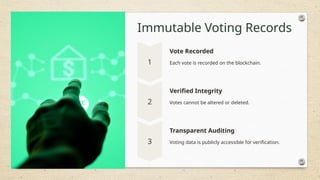
Immutable Voting Records
Vote Recorded
Each vote is recorded on the blockchain.
Verified Integrity
Votes cannot be altered or deleted.
Transparent Auditing
Voting data is publicly accessible for verification.
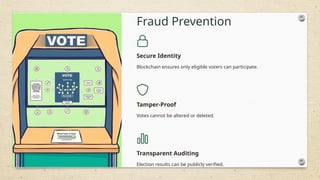
Fraud Prevention
Secure Identity
Blockchain ensures only eligible voters can participate.
Tamper-Proof
Votes cannot be altered or deleted.
Transparent Auditing
Election results can be publicly verified.
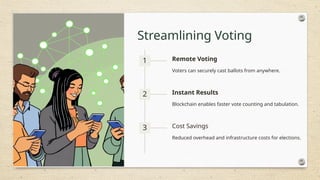
Streamlining Voting
1 Remote Voting
Voters can securely cast ballots from anywhere.
2 Instant Results
Blockchain enables faster vote counting and tabulation.
3 Cost Savings
Reduced overhead and infrastructure costs for elections.
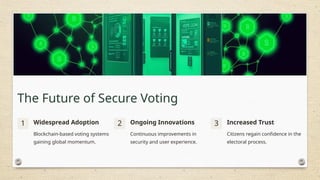
The Future of Secure Voting
1 Widespread Adoption
Blockchain-based voting systems
gaining global momentum.
2 Ongoing Innovations
Continuous improvements in
security and user experience.
3 Increased Trust
Citizens regain confidence in the
electoral process.

Blockchain-for-Secure-Voting system new.pptx

  • 1.
    Blockchain for SecureVoting Explore how blockchain technology can revolutionize the way we vote, ensuring secure, transparent, and tamper-proof elections. Created by : Abu Hozaifa, Mohammad Anas, Imam Ali, Shaikh Adil Guided by : Prof. Mohammad Asad
  • 2.
    Table of Contents 1.Introduction to Blockchain 2. Limitations of Traditional Voting 3. Blockchain's Decentralized Benefits 4. Improved Voter Privacy 5. Tamper-Proof Voting Records
  • 3.
    Flaws in TraditionalVoting 1 Centralized Systems Vulnerable to hacking and manipulation. 2 Voter Intimidation Potential for voter suppression and fraud. 3 Lack of Transparency Difficulty verifying election integrity.
  • 4.
    Blockchain's Democratic Advantages DecentralizedNetwork No single point of failure or control. Transparent Transactions Voting records are publicly verifiable. Tamper-Resistant Votes cannot be altered or deleted.
  • 5.
    Enhanced Voter Privacy VoterAnonymity Blockchain enables anonymous voting without compromising integrity. Secure Identity Verification Cryptographic techniques ensure voter eligibility while preserving privacy.
  • 6.
    Blockchain Basics Distributed Ledger Blockchainis a decentralized, transparent digital ledger. Cryptography Transactions are secured with advanced cryptography. Immutable Records Data on the blockchain cannot be altered.
  • 7.
    Immutable Voting Records VoteRecorded Each vote is recorded on the blockchain. Verified Integrity Votes cannot be altered or deleted. Transparent Auditing Voting data is publicly accessible for verification.
  • 8.
    Fraud Prevention Secure Identity Blockchainensures only eligible voters can participate. Tamper-Proof Votes cannot be altered or deleted. Transparent Auditing Election results can be publicly verified.
  • 9.
    Streamlining Voting 1 RemoteVoting Voters can securely cast ballots from anywhere. 2 Instant Results Blockchain enables faster vote counting and tabulation. 3 Cost Savings Reduced overhead and infrastructure costs for elections.
  • 10.
    The Future ofSecure Voting 1 Widespread Adoption Blockchain-based voting systems gaining global momentum. 2 Ongoing Innovations Continuous improvements in security and user experience. 3 Increased Trust Citizens regain confidence in the electoral process.