COURSE :
GROUP MEMBERS:
PROJECT
BACKGROUND
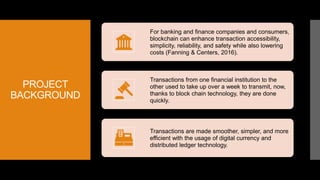
For banking and finance companies and consumers,
blockchain can enhance transaction accessibility,
simplicity, reliability, and safety while also lowering
costs (Fanning & Centers, 2016).
Transactions from one financial institution to the
other used to take up over a week to transmit, now,
thanks to block chain technology, they are done
quickly.
Transactions are made smoother, simpler, and more
efficient with the usage of digital currency and
distributed ledger technology.
PROJECT
BACKGROUND
For all parties concerned, block chain technology cuts a
substantial amount of time and resources. It has also
eliminated the need for intermediate and back-office workers
because transactions are processed promptly (Knezevic,,
2018).
The most significant benefit of block chain technology is
"cross-border payments," which is the concept of constructing
a worldwide network using blockchain that is both cost-
effective and completely accessible. It is reducing down costs
and giving additional benefits to customers (Smith & Dhillon,
2019).
DATA
SOURCES
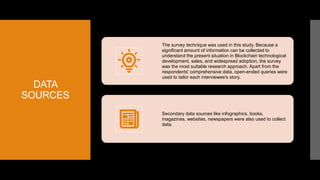
The survey technique was used in this study. Because a
significant amount of information can be collected to
understand the present situation in Blockchain technological
development, sales, and widespread adoption, the survey
was the most suitable research approach. Apart from the
respondents' comprehensive data, open-ended queries were
used to tailor each interviewee's story.
Secondary data sources like infographics, books,
magazines, websites, newspapers were also used to collect
data.
DATA
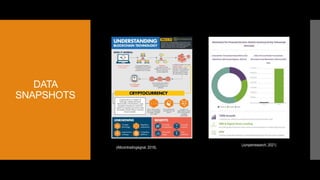
SNAPSHOTS
(Altcointradingsignal, 2018).
(Juniperresearch, 2021)
OBJECTIVES
THE INFLUENCE AND TRANSFORMATION OF
BLOCKCHAIN AND FINANCIAL TECHNOLOGY
RESPECTIVELY IN THE FINANCE SECTOR,
AS WELL AS THE MAIN ASPECTS OF SUCH
TECHNOLOGY.
UNDERSTANDING HOW BLOCKCHAINS CAN
BE USED TO REPLACE ANY COMMERCIAL
ACTIVITY BASED ON TRANSACTIONS IN
CURRENT ORGANIZATIONAL SYSTEMS,
WHICH UNDERPINS PRACTICALLY EVERY
CONSUMER BANKING OPERATION.
OBJECTIVES
Learning how Block chain technology will eliminate
significant data redundancy, which creates difficulties,
disputes, and misunderstanding in many facets of
financial sector.
The range of difficulties and concerns faced while
using Blockchain technology.
One goal of this study was to figure out what comprises
information hiders' views, normative beliefs, and individual's
behavioral control when it comes to Blockchain information
concealment. The researchers want to double-check that this is
a problem that affects all industries and nations. These
discussions could provide valuable information based on
knowledge of their industry, region, or even both. The research
of those three key causes of "knowledge hiding intentions"
could lead to a more in-depth insight.
Examining the findings for the most important research
questions.
To acquire a more in-depth grasp of what the
evidence implies, categorize the questions.
So, when it comes to bringing up a successful
final draft, we'll know exactly what information
we'll need to address the main questions.
Determining distinct demographic subgroups
by dividing the responses is one of the most
critical components of comprehending the
relevance of the data and figuring out what we
need to do to develop.
CHALLENGES
As the volume of transactions grows, the Blockchain gets more
comprehensive. Due to its complexity, encryption, and dispersed
architecture, experts believe that Blockchain transactions will
take some time to establish.
Programs based on blockchain technology are susceptible.
Blockchain is vulnerable to collusive self-centered miner
assaults, as well as a variety of other threats, demonstrating that
it is not completely safe.
Big data applications can have greater implementation and
operating requirements than long-term operational costs for
electronic money transactions and transaction records. The
amount of processing power necessary to run Blockchain is
increasing exponentially.
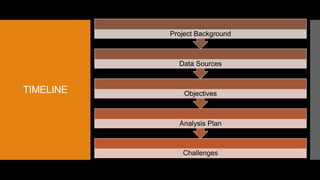
TIMELINE
Challenges
Analysis Plan
Objectives
Data Sources
Project Background
REFERENCES
 Altcointradingsignal. (2018). Retrieved 14 July 2021, from https://www.altcointradingsignal.com/wp-content/uploads/2018/06/altcoin-trading-
infographic-scaled.jpg
 Fanning, K., & Centers, D. P. (2016). Blockchain and its coming impact on financial services. Journal of Corporate
Accounting & Finance, 27(5), 53-57.
 Juniperresearch. (2021). Retrieved 14 July 2021, from https://www.juniperresearch.com/getmedia/ebd94c0b-7805-4d05-9670-
2486b562b6c5/blockchain-fintech-summary-and-key-takeaways-2019.png.aspx?width=850&height=1128&ext=.png
 Knezevic, D. (2018). Impact of blockchain technology platform in changing the financial sector and other
industries. Montenegrin Journal of Economics, 14(1), 109-120.
 Smith, K. J., & Dhillon, G. (2019). Assessing blockchain potential for improving the cybersecurity of financial
transactions. Managerial Finance.

Blockchain

  • 1.
  • 2.
    PROJECT BACKGROUND For banking andfinance companies and consumers, blockchain can enhance transaction accessibility, simplicity, reliability, and safety while also lowering costs (Fanning & Centers, 2016). Transactions from one financial institution to the other used to take up over a week to transmit, now, thanks to block chain technology, they are done quickly. Transactions are made smoother, simpler, and more efficient with the usage of digital currency and distributed ledger technology.
  • 3.
    PROJECT BACKGROUND For all partiesconcerned, block chain technology cuts a substantial amount of time and resources. It has also eliminated the need for intermediate and back-office workers because transactions are processed promptly (Knezevic,, 2018). The most significant benefit of block chain technology is "cross-border payments," which is the concept of constructing a worldwide network using blockchain that is both cost- effective and completely accessible. It is reducing down costs and giving additional benefits to customers (Smith & Dhillon, 2019).
  • 4.
    DATA SOURCES The survey techniquewas used in this study. Because a significant amount of information can be collected to understand the present situation in Blockchain technological development, sales, and widespread adoption, the survey was the most suitable research approach. Apart from the respondents' comprehensive data, open-ended queries were used to tailor each interviewee's story. Secondary data sources like infographics, books, magazines, websites, newspapers were also used to collect data.
  • 5.
  • 6.
    OBJECTIVES THE INFLUENCE ANDTRANSFORMATION OF BLOCKCHAIN AND FINANCIAL TECHNOLOGY RESPECTIVELY IN THE FINANCE SECTOR, AS WELL AS THE MAIN ASPECTS OF SUCH TECHNOLOGY. UNDERSTANDING HOW BLOCKCHAINS CAN BE USED TO REPLACE ANY COMMERCIAL ACTIVITY BASED ON TRANSACTIONS IN CURRENT ORGANIZATIONAL SYSTEMS, WHICH UNDERPINS PRACTICALLY EVERY CONSUMER BANKING OPERATION.
  • 7.
    OBJECTIVES Learning how Blockchain technology will eliminate significant data redundancy, which creates difficulties, disputes, and misunderstanding in many facets of financial sector. The range of difficulties and concerns faced while using Blockchain technology.
  • 8.
    One goal ofthis study was to figure out what comprises information hiders' views, normative beliefs, and individual's behavioral control when it comes to Blockchain information concealment. The researchers want to double-check that this is a problem that affects all industries and nations. These discussions could provide valuable information based on knowledge of their industry, region, or even both. The research of those three key causes of "knowledge hiding intentions" could lead to a more in-depth insight. Examining the findings for the most important research questions.
  • 9.
    To acquire amore in-depth grasp of what the evidence implies, categorize the questions. So, when it comes to bringing up a successful final draft, we'll know exactly what information we'll need to address the main questions. Determining distinct demographic subgroups by dividing the responses is one of the most critical components of comprehending the relevance of the data and figuring out what we need to do to develop.
  • 10.
    CHALLENGES As the volumeof transactions grows, the Blockchain gets more comprehensive. Due to its complexity, encryption, and dispersed architecture, experts believe that Blockchain transactions will take some time to establish. Programs based on blockchain technology are susceptible. Blockchain is vulnerable to collusive self-centered miner assaults, as well as a variety of other threats, demonstrating that it is not completely safe. Big data applications can have greater implementation and operating requirements than long-term operational costs for electronic money transactions and transaction records. The amount of processing power necessary to run Blockchain is increasing exponentially.
  • 11.
  • 12.
    REFERENCES  Altcointradingsignal. (2018).Retrieved 14 July 2021, from https://www.altcointradingsignal.com/wp-content/uploads/2018/06/altcoin-trading- infographic-scaled.jpg  Fanning, K., & Centers, D. P. (2016). Blockchain and its coming impact on financial services. Journal of Corporate Accounting & Finance, 27(5), 53-57.  Juniperresearch. (2021). Retrieved 14 July 2021, from https://www.juniperresearch.com/getmedia/ebd94c0b-7805-4d05-9670- 2486b562b6c5/blockchain-fintech-summary-and-key-takeaways-2019.png.aspx?width=850&height=1128&ext=.png  Knezevic, D. (2018). Impact of blockchain technology platform in changing the financial sector and other industries. Montenegrin Journal of Economics, 14(1), 109-120.  Smith, K. J., & Dhillon, G. (2019). Assessing blockchain potential for improving the cybersecurity of financial transactions. Managerial Finance.

Editor's Notes

  • #2 Title Slide
  • #3 Besides reducing costs, block chain technology can improve transaction transparency, ease, trustworthiness, and integrity. Block chain technology allows transactions between financial institutions to be completed instantly.
  • #4 For both of the sender and the recipient, blockchain transactions save a considerable amount of time. It also removed with the necessity for any sort of intermediary medium. Blockchain also facilitates cross-border commerce.
  • #5 Qualitative method is used to gather information because great amount of data can be collected using this approach. Also sources like infographics, statistical data from several websites, magazines are used to collect data.
  • #6 Data snapshots of infographic and blockchain used for financial services.
  • #7 Objective of this study is to demonstrate the influence of blockchain in financial transactions and industry. Also we understand how Blockchains can be used to replace any commercial activity based on transactions in current organizational systems.
  • #8 Other objectives includes, learning how blockchain reduces data duplicity and this works. Also the study discuss about the various issues and challenges regarding block chain.
  • #9 When it relates to information hiding, one of the objectives of this research was to determine out what constitutes data hiders' perspectives, moral views, and specific behavioral intention. Also as part of the analysis plan, we have examine the findings from the survey.
  • #10 Categorize the question that are asked in the survey according to their importance. This will help in grasping greater knowledge and information. Also we can determine subgroups according to their responses.
  • #11 Blockchain may take some time to establish itself as it is complicated in nature. Also blockchain technology is vulnerable and needs great processing power to execute.
  • #12 Timeline