DR.Shwetha.M.N
First year MDS
Bleeding Disorders and its
Applied aspect in Dentistry
Contents
• Introduction
• Common Bleeding Disorders
Hemophilia A
Hemophilia B
Von willebrand Disease
• Oral findings of Bleeding disorders
• Dental management in Bleeding disorders
• Conclusion
Introduction
Oral care providers must be aware of the impact of bleeding disorders on the management of dental
patients.
Initial recognition of a bleeding disorder, which may indicate the presence of a systemic pathologic
process, may occur in dental practice.
Furthermore, prophylactic, restorative and surgical dental care of patients with bleeding disorders is
best accomplished by practitioners who are knowledgeable about the pathology, complications and
treatment options associated with these conditions. We shall study the common bleeding disorders
and their effects on the delivery of oral health care.
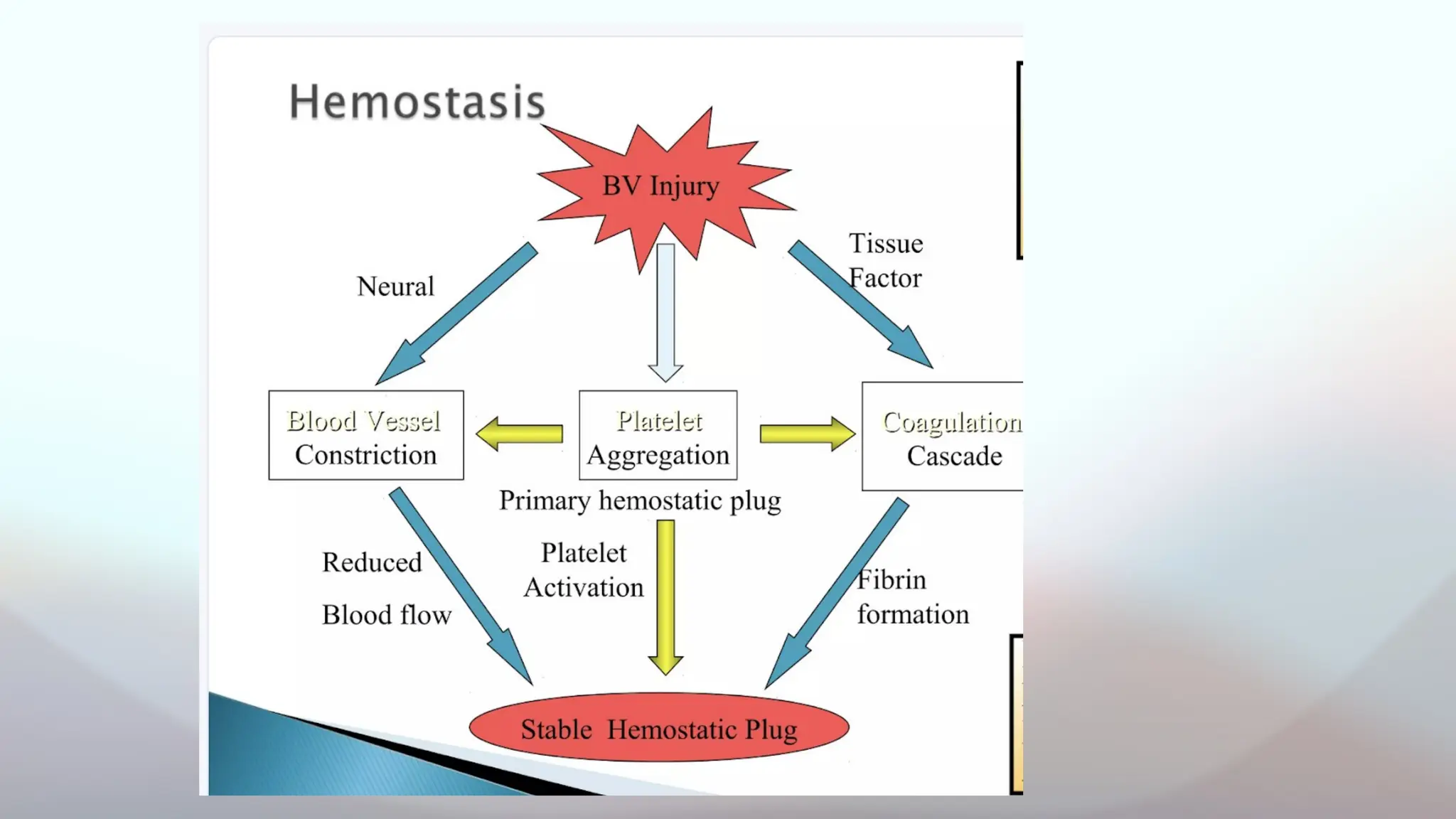
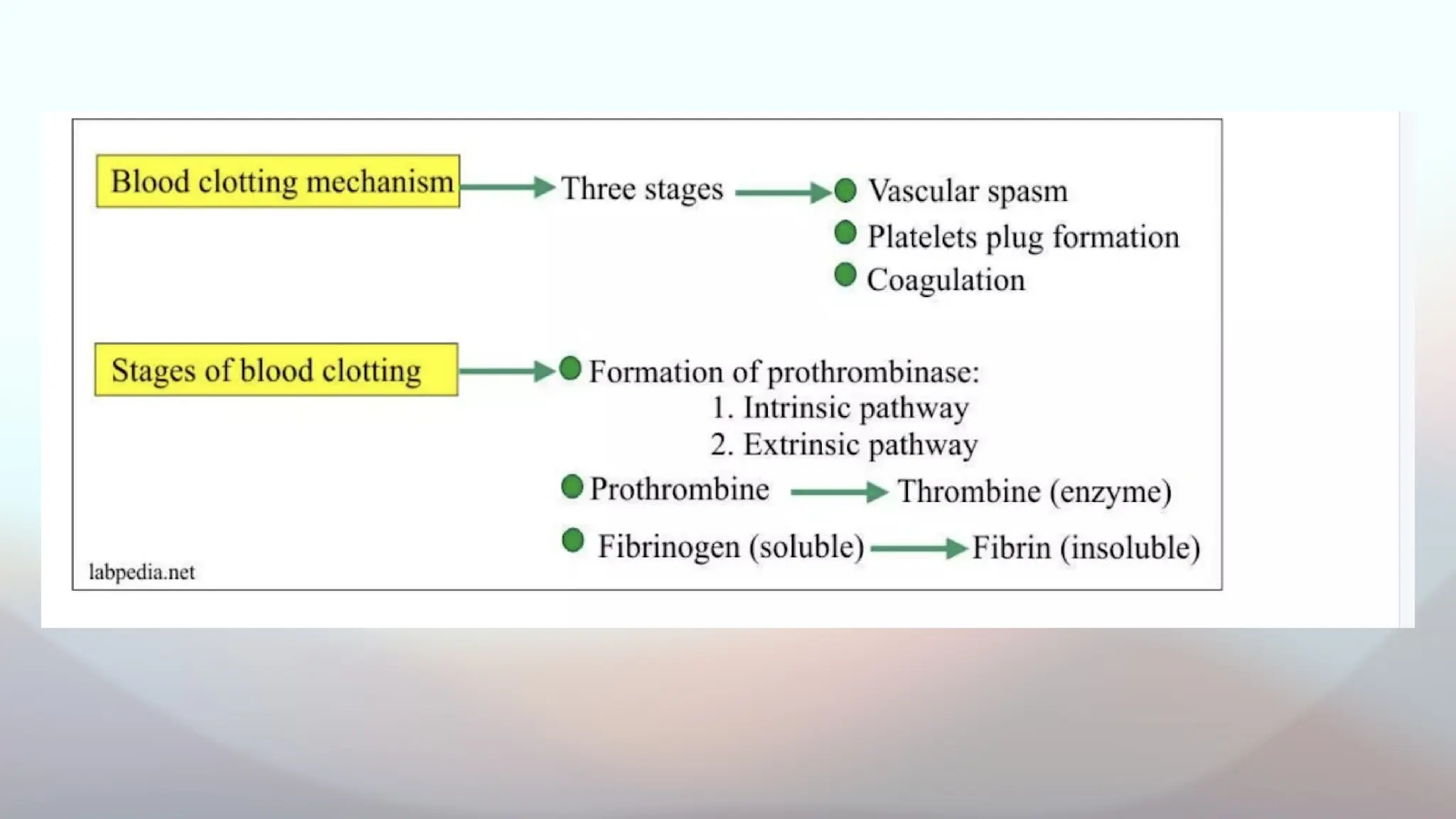
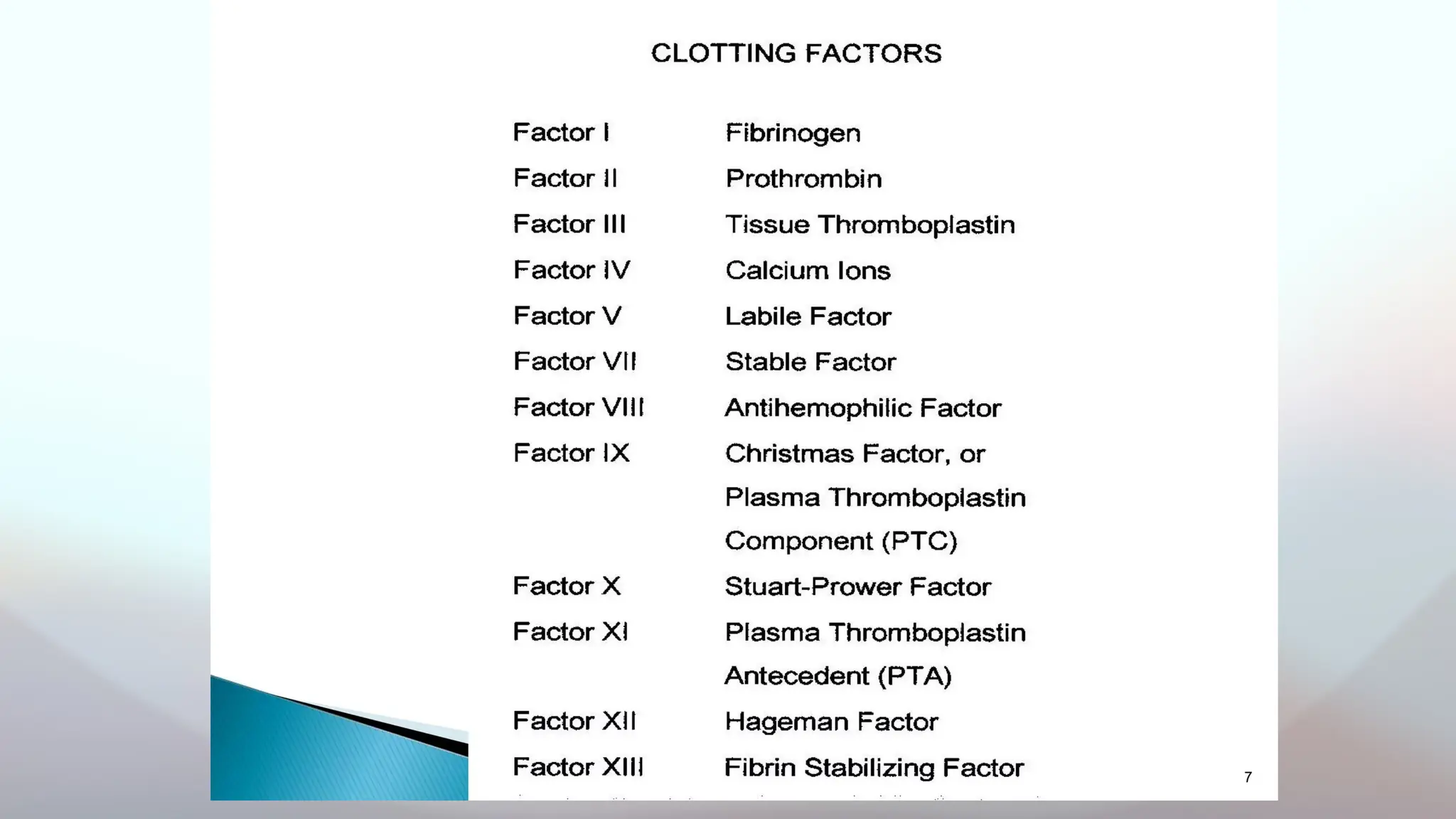
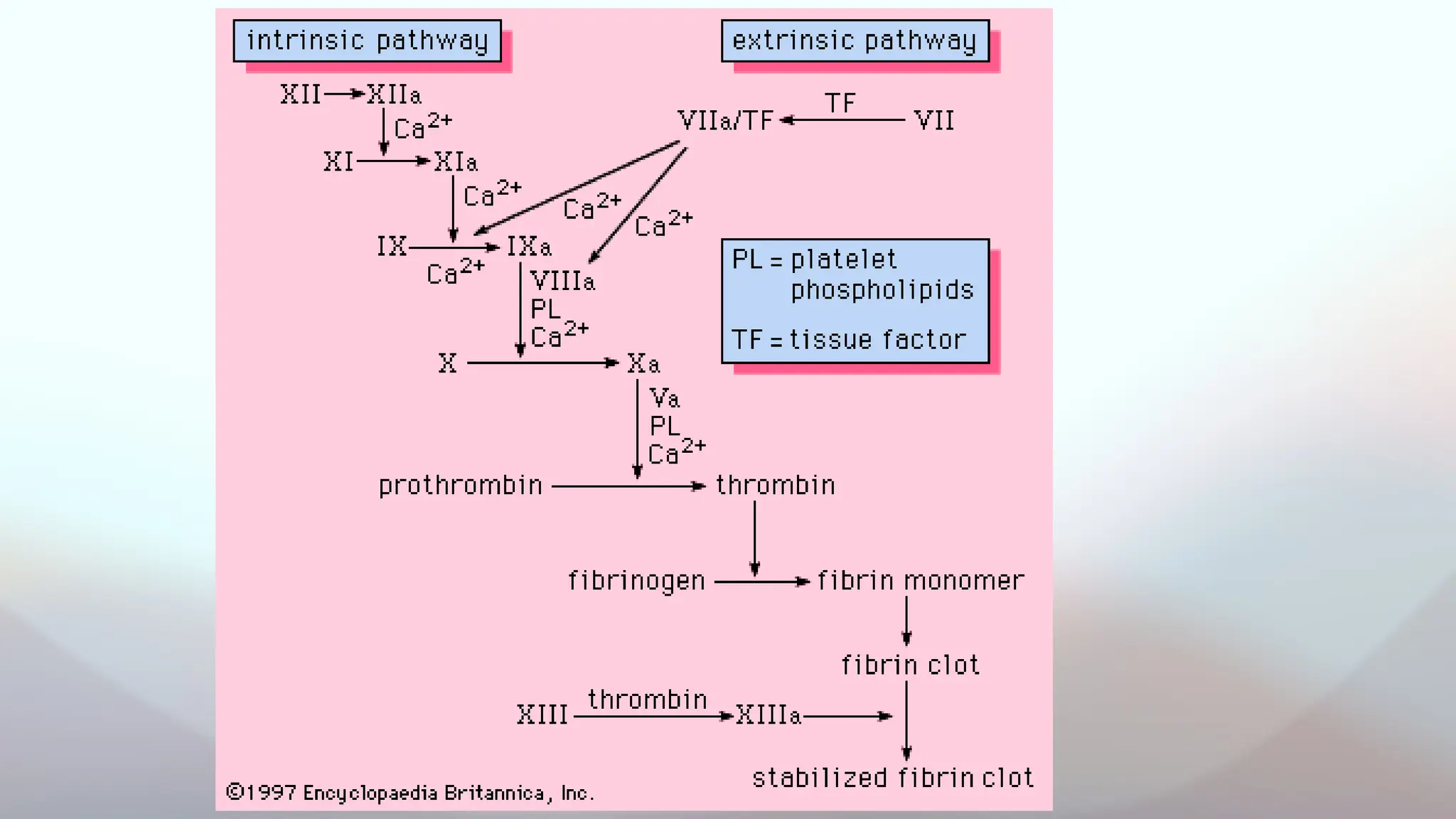
Bleeding disorders
• A Group of disorders characterized by defective Hemostasis and abnormal
Bleeding.
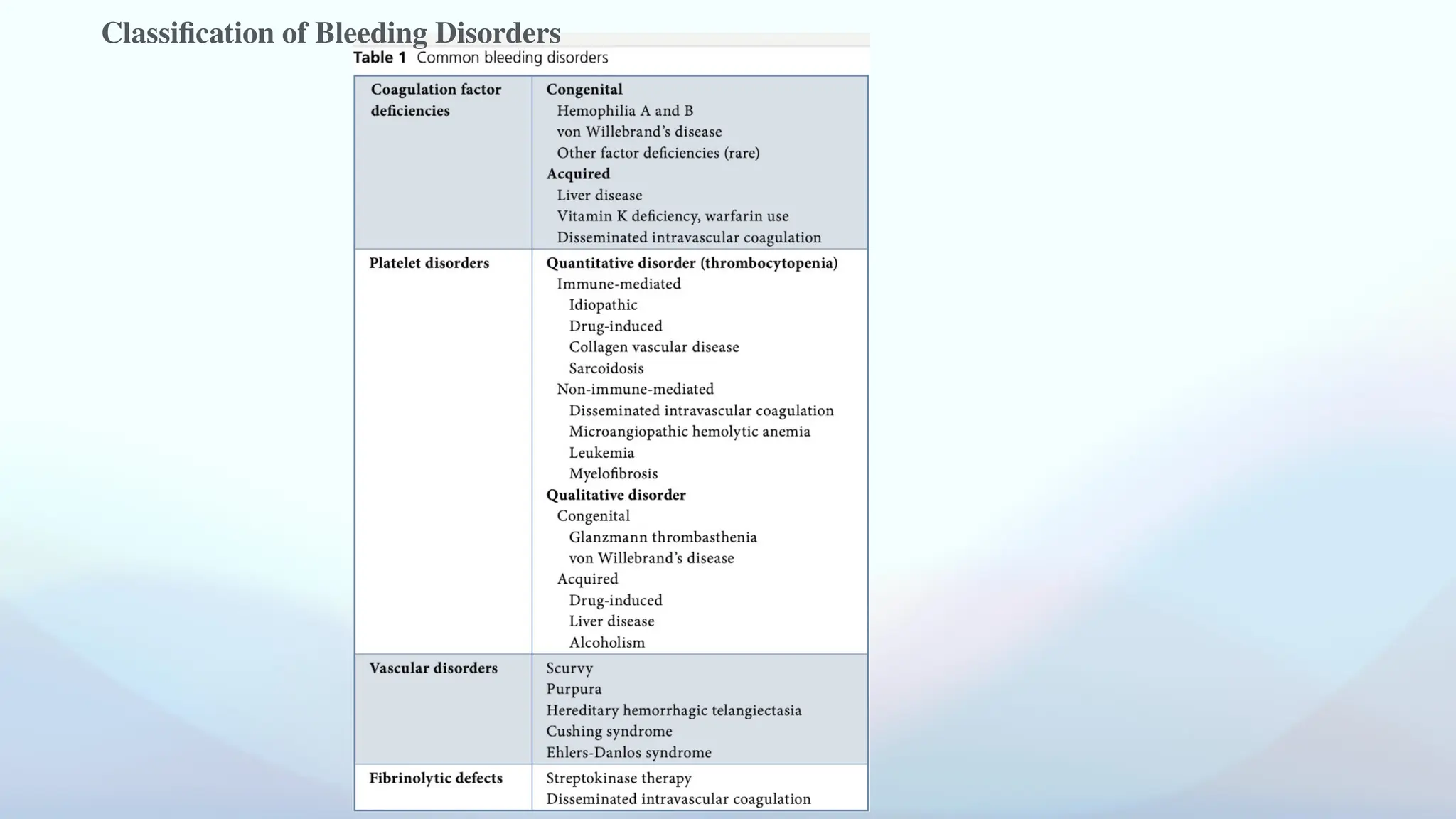
• Bleeding disorders can be classified as Coagulation factor deficiencies,
platelet dis-orders, vascular disorders or fibrinolytic defects
• Among the Congenital coagulation defects, hemophilia A, hemophilia
B(Christmas disease) and von Willebrand’s disease are the most common.
Classification of Bleeding Disorders
1.Coagulation Disorders
Congenital
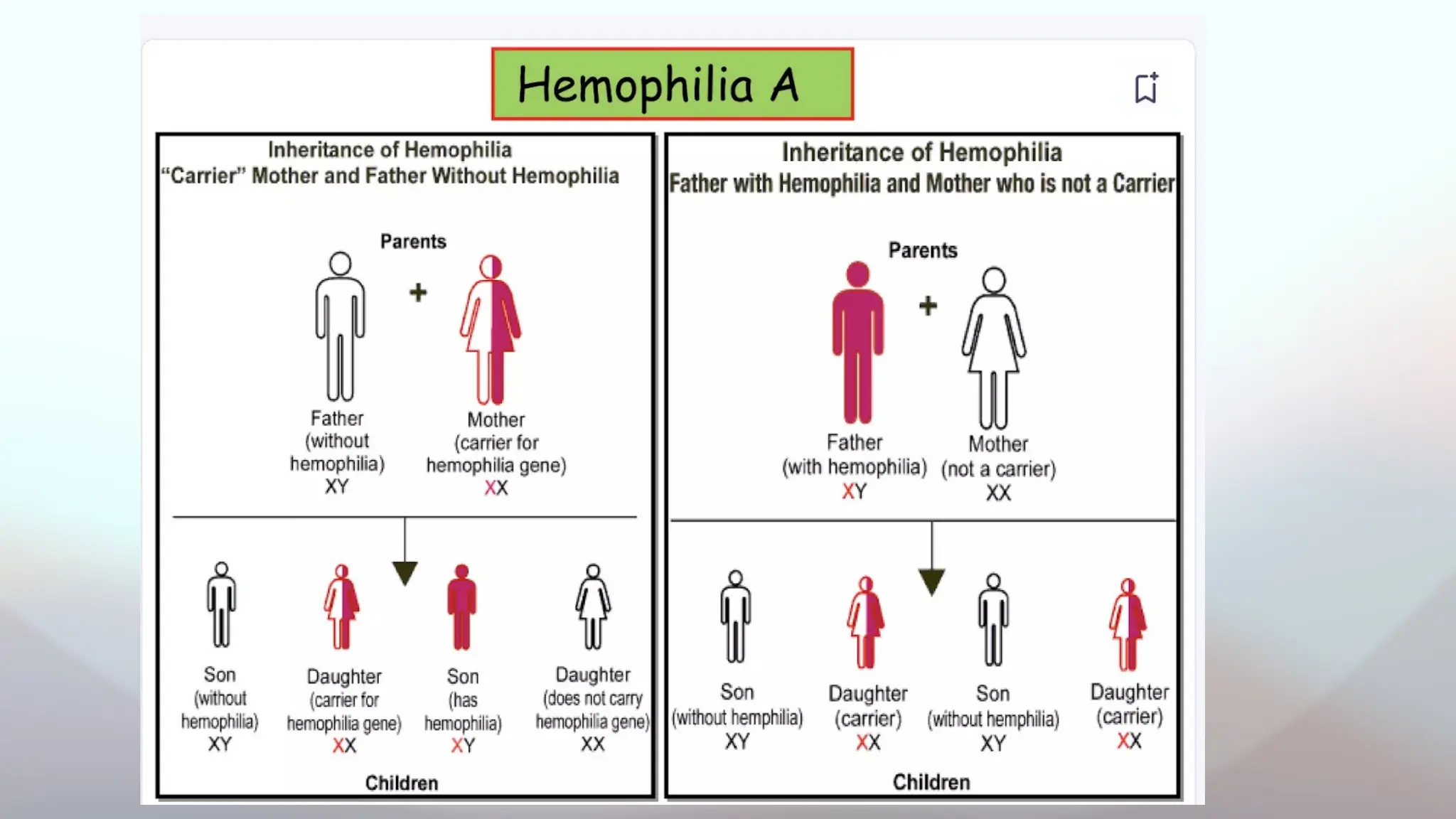
Haemophilia A
⋅ Deficiency of the Plasma protein factor VIII or anti-
hemophilic factor
⋅ Inherited X-linked recessive trait occurring in males, with a
prevalence of 1: 7500 males
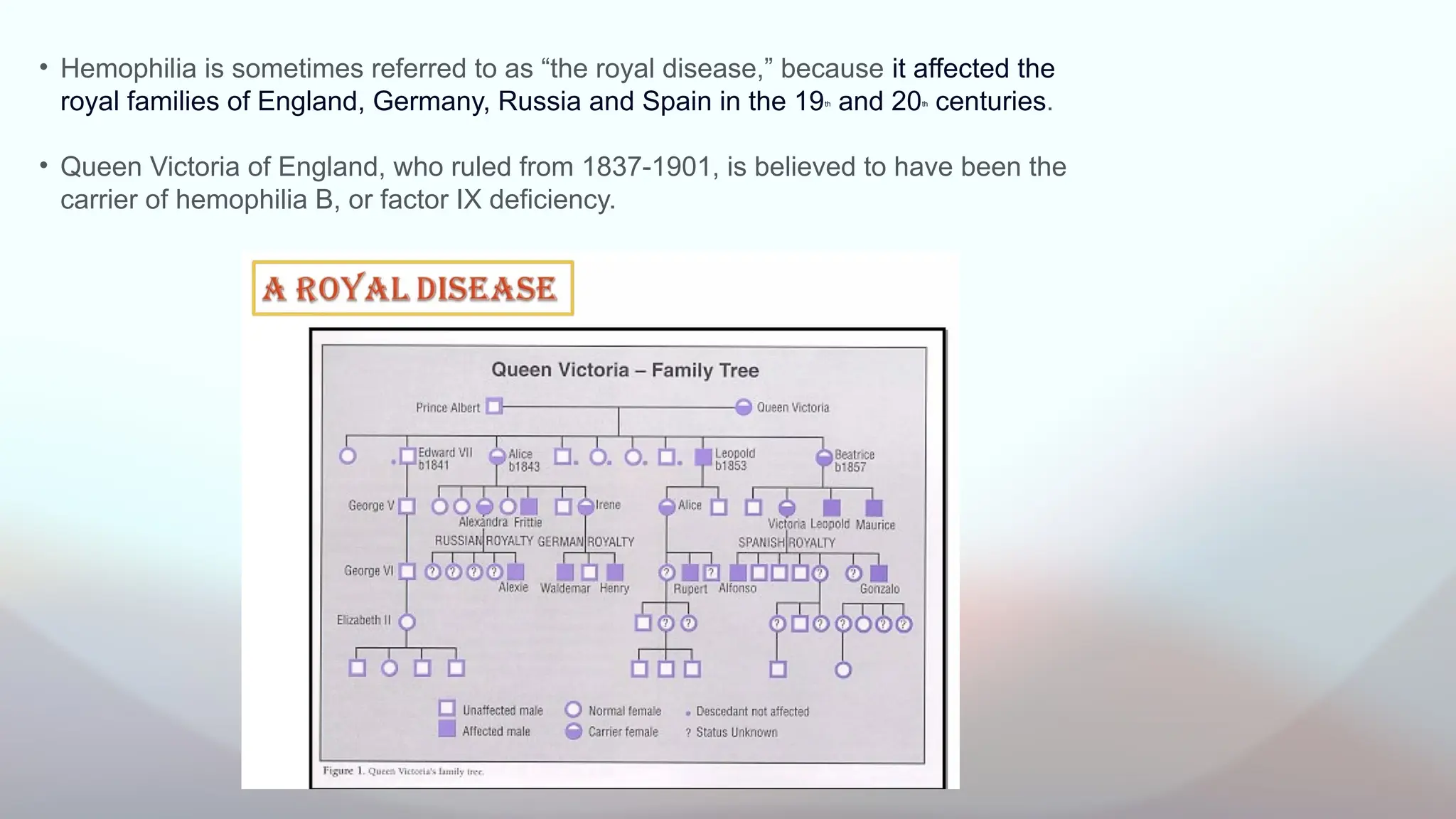
• Hemophilia is sometimes referred to as “the royal disease,” because it affected the
royal families of England, Germany, Russia and Spain in the 19th
and 20th
centuries.
• Queen Victoria of England, who ruled from 1837-1901, is believed to have been the
carrier of hemophilia B, or factor IX deficiency.
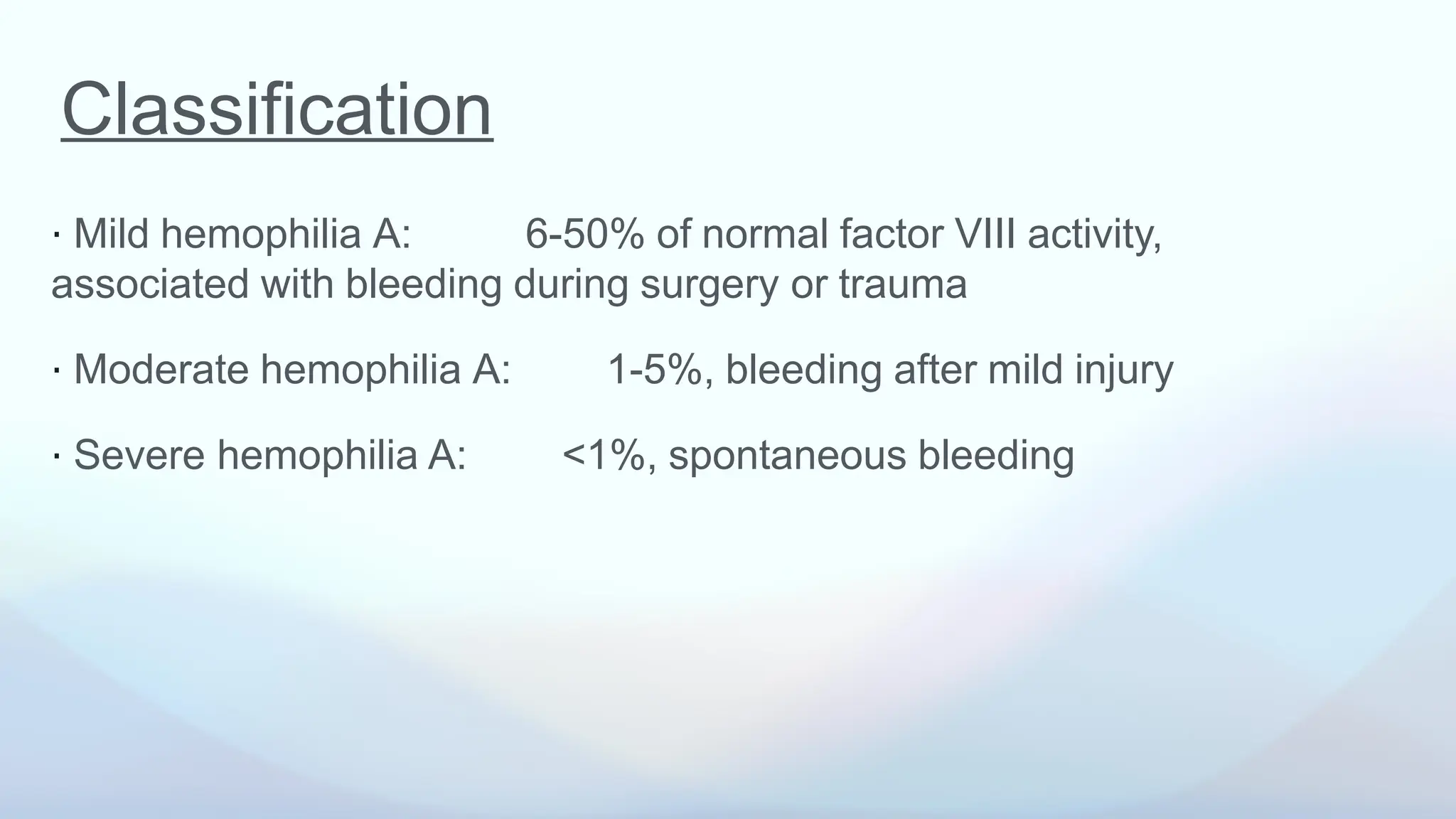
⋅ Mild hemophilia A: 6-50% of normal factor VIII activity,
associated with bleeding during surgery or trauma
⋅ Moderate hemophilia A: 1-5%, bleeding after mild injury
⋅ Severe hemophilia A: <1%, spontaneous bleeding
Classification
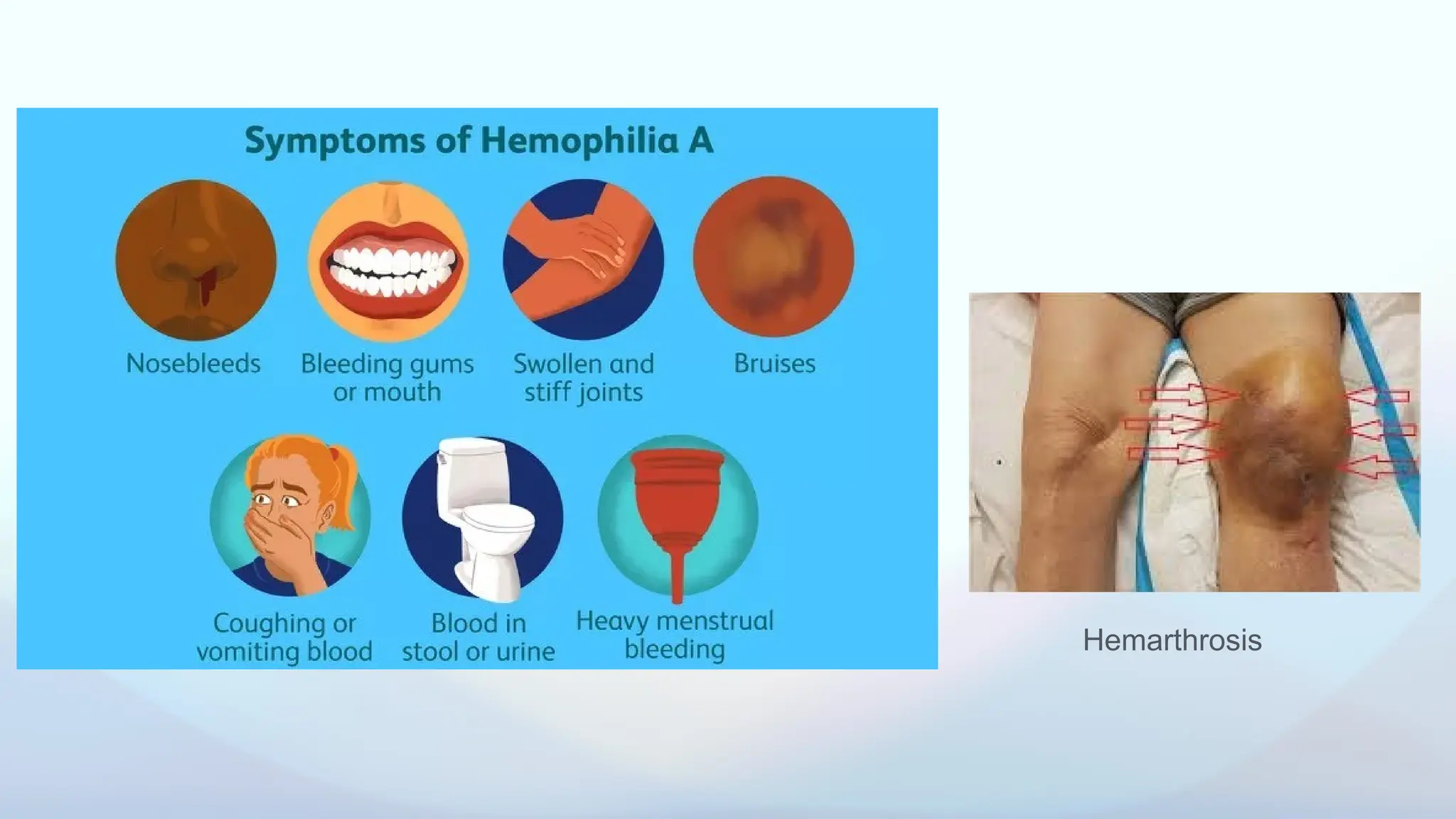
Hemarthrosis
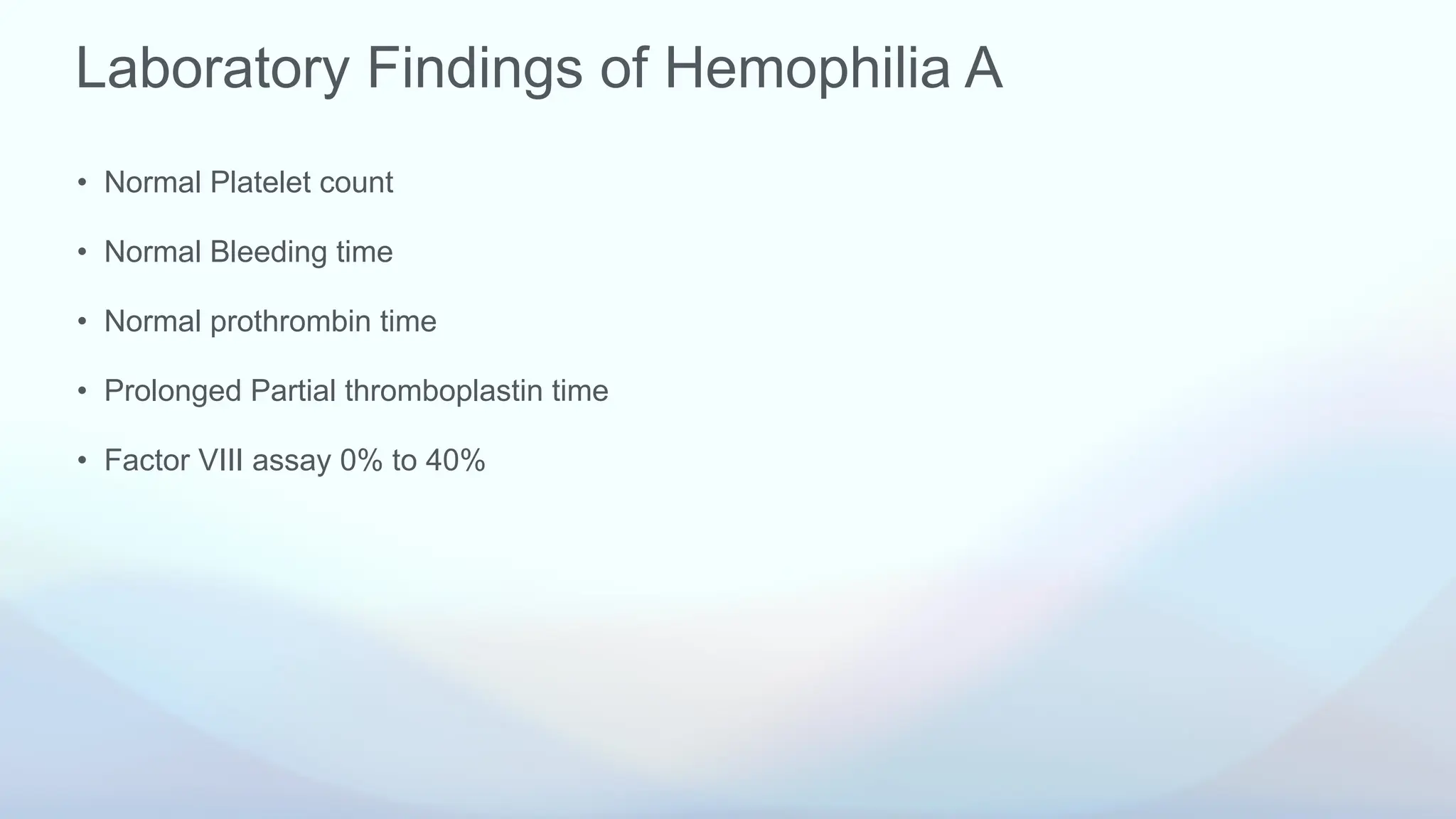
Laboratory Findings of Hemophilia A
• Normal Platelet count
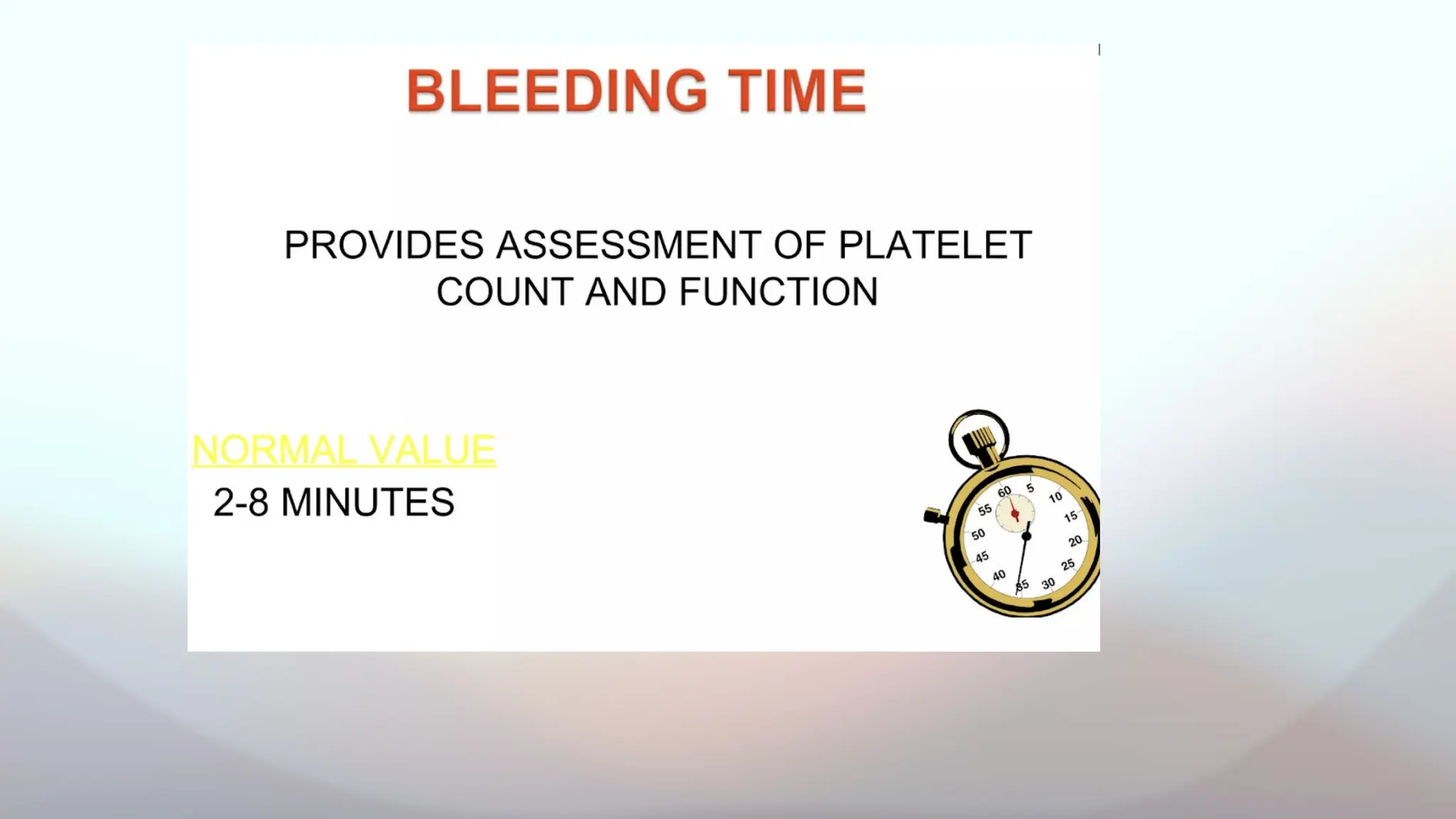
• Normal Bleeding time
• Normal prothrombin time
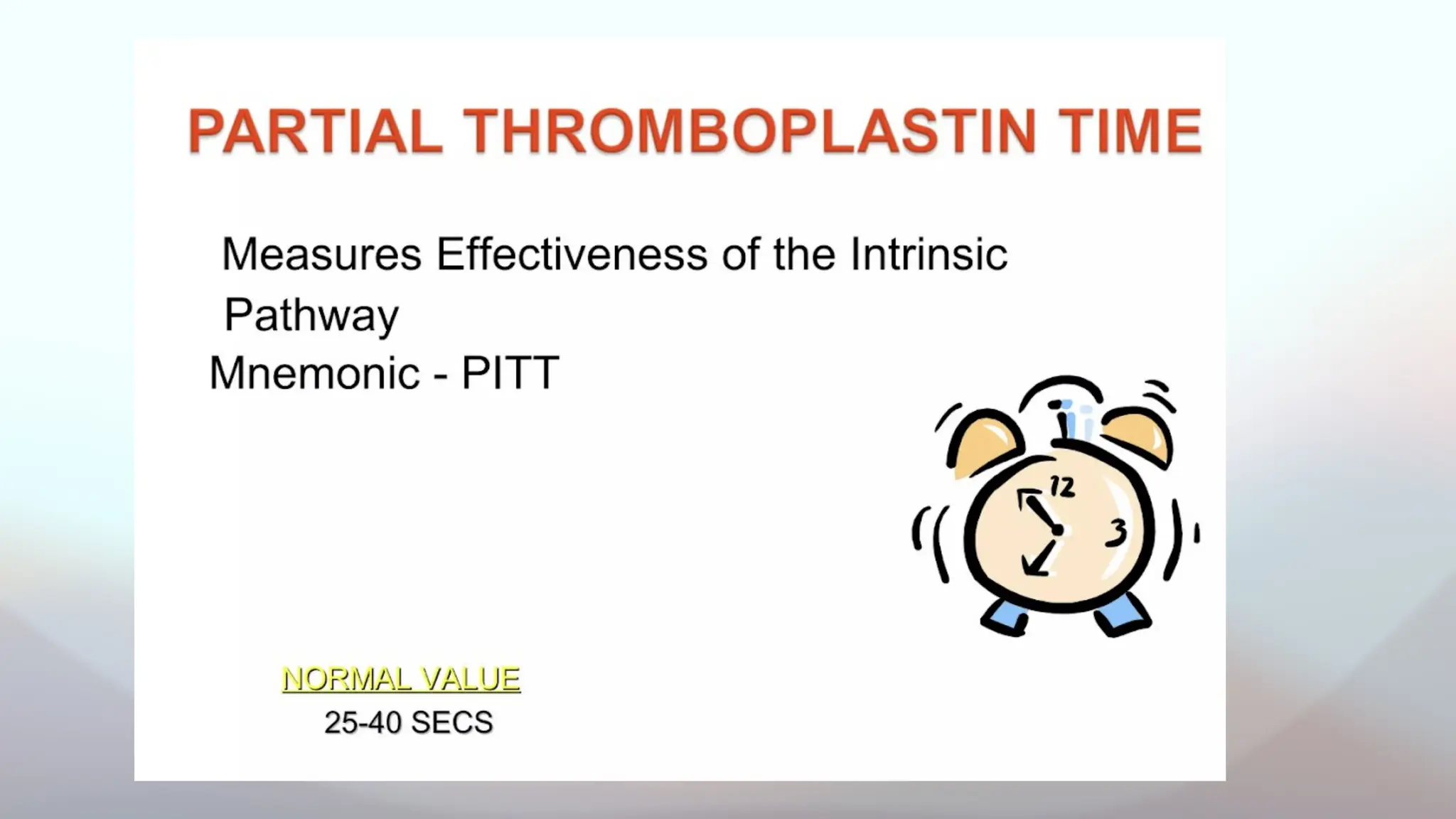
• Prolonged Partial thromboplastin time
• Factor VIII assay 0% to 40%
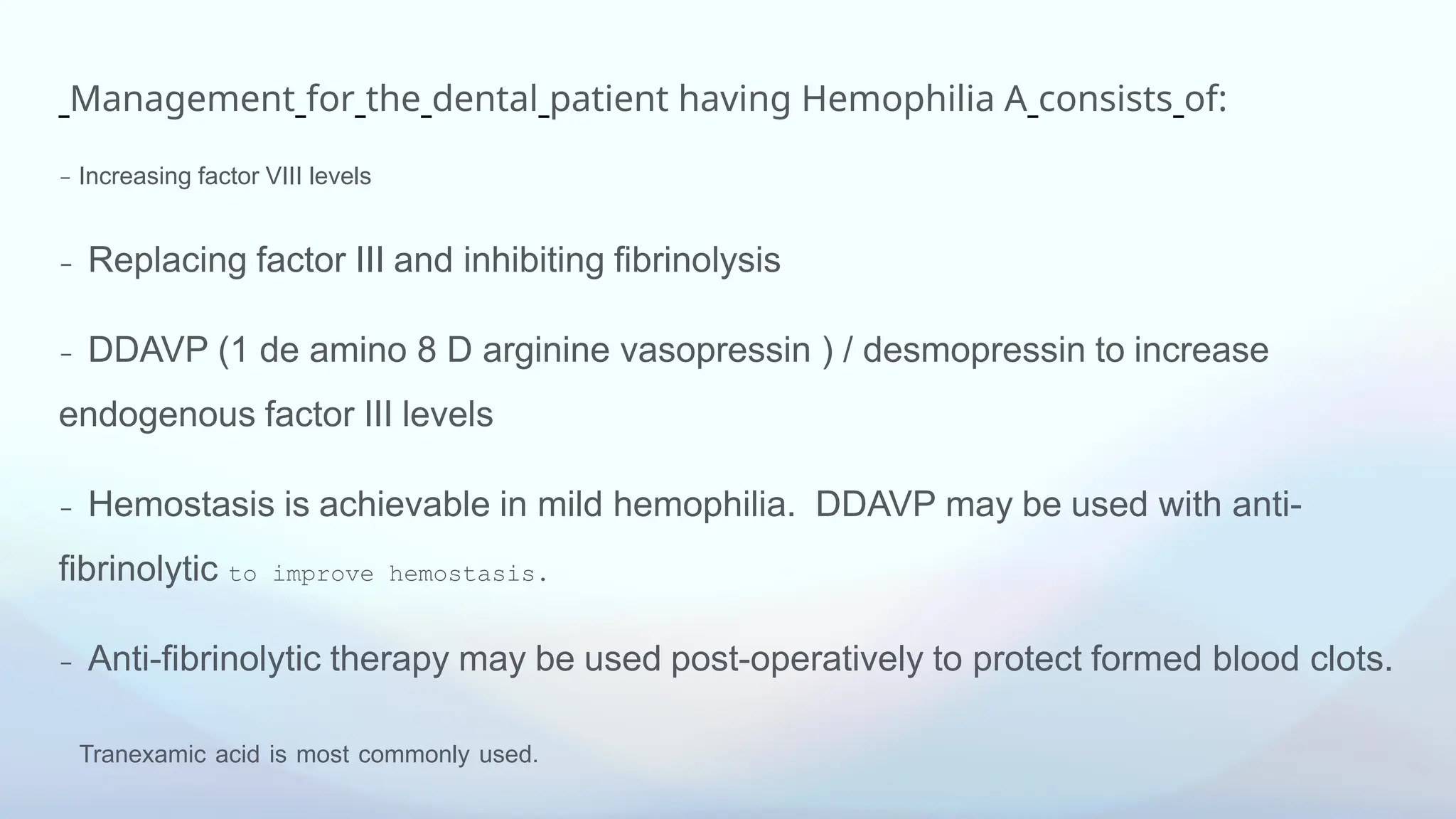
Management for the dental patient having Hemophilia A consists of:
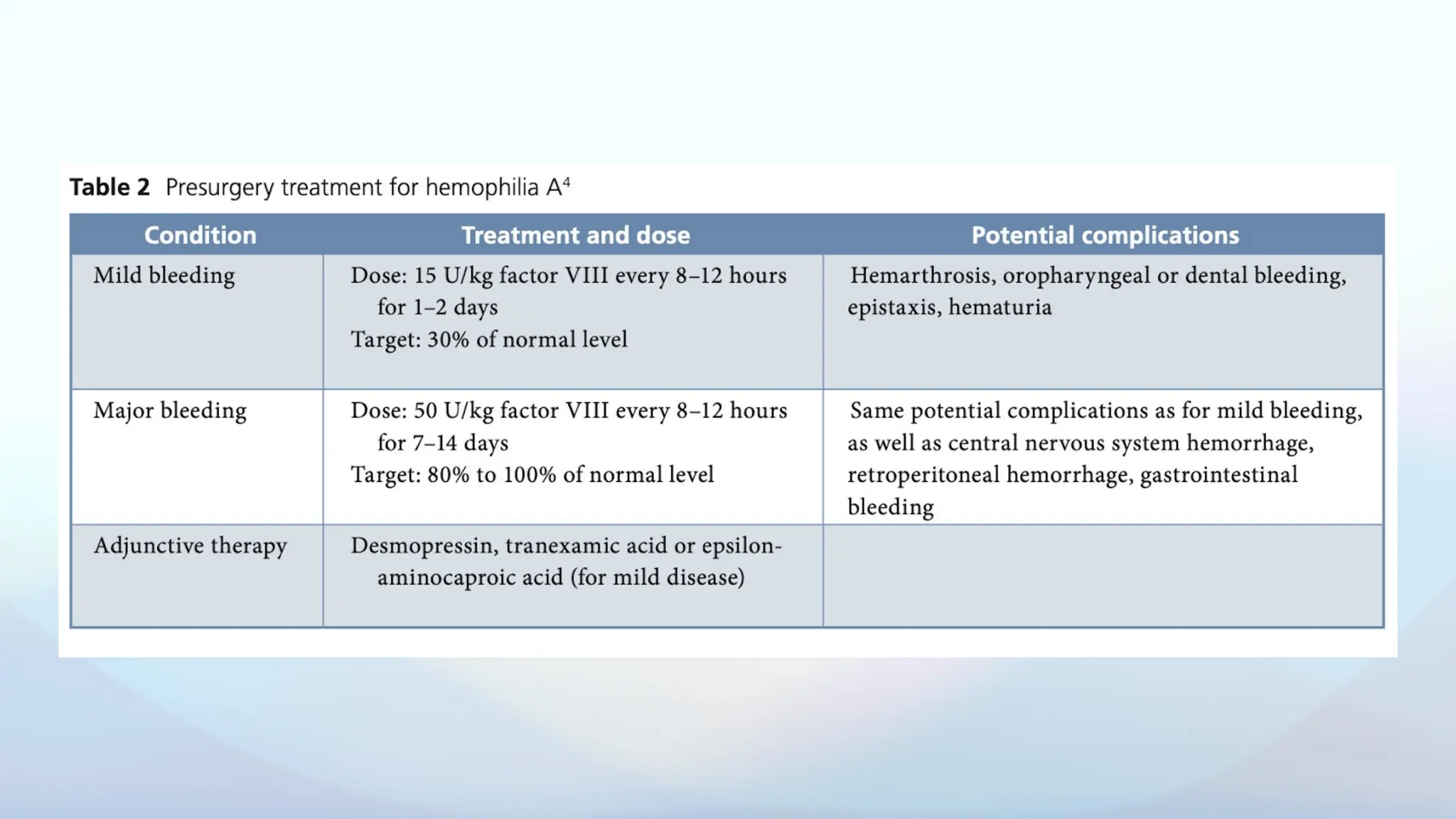
- Increasing factor VIII levels
- Replacing factor III and inhibiting fibrinolysis
- DDAVP (1 de amino 8 D arginine vasopressin ) / desmopressin to increase
endogenous factor III levels
- Hemostasis is achievable in mild hemophilia. DDAVP may be used with anti-
fibrinolytic to improve hemostasis.
- Anti-fibrinolytic therapy may be used post-operatively to protect formed blood clots.
Tranexamic acid is most commonly used.
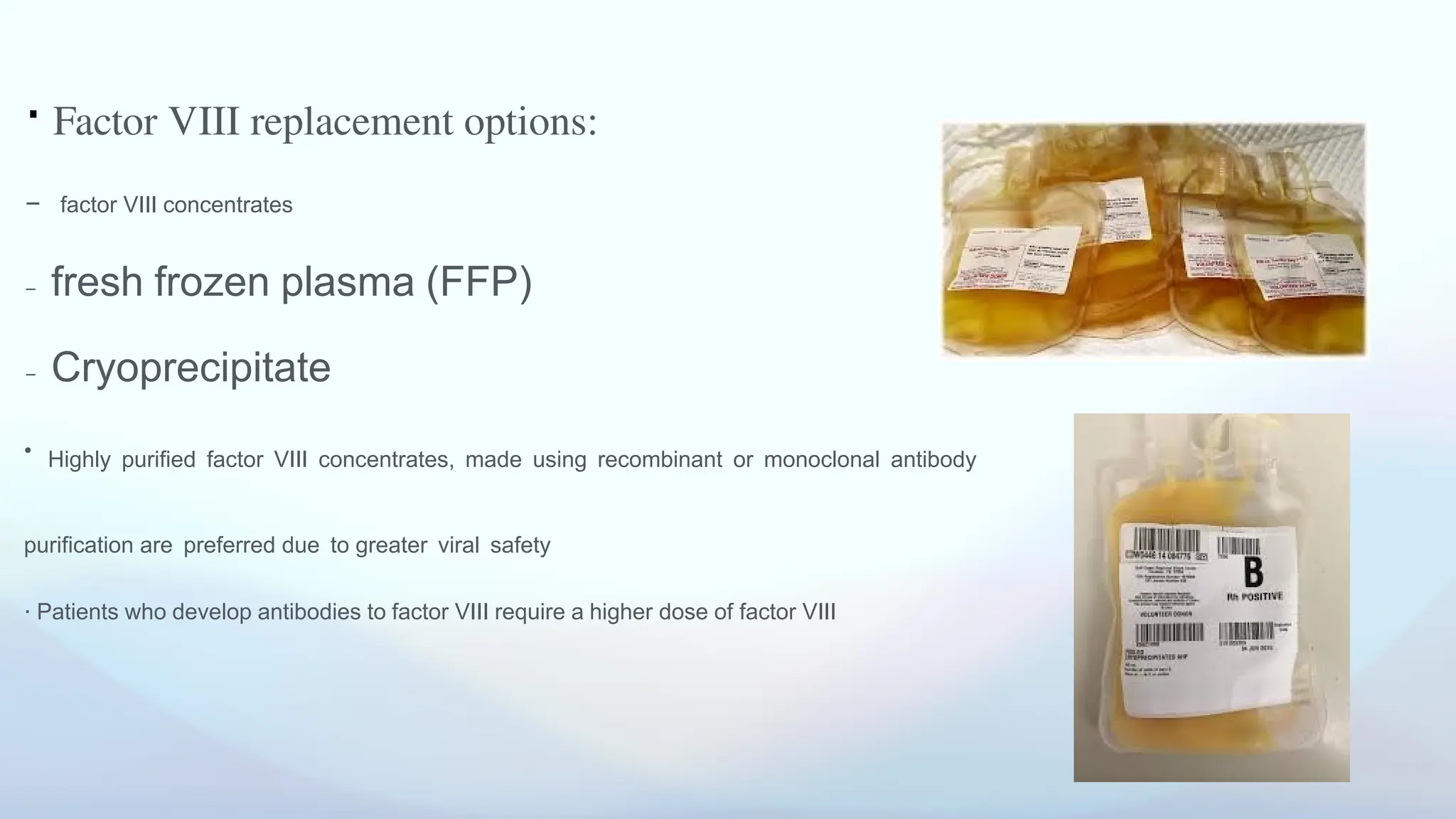
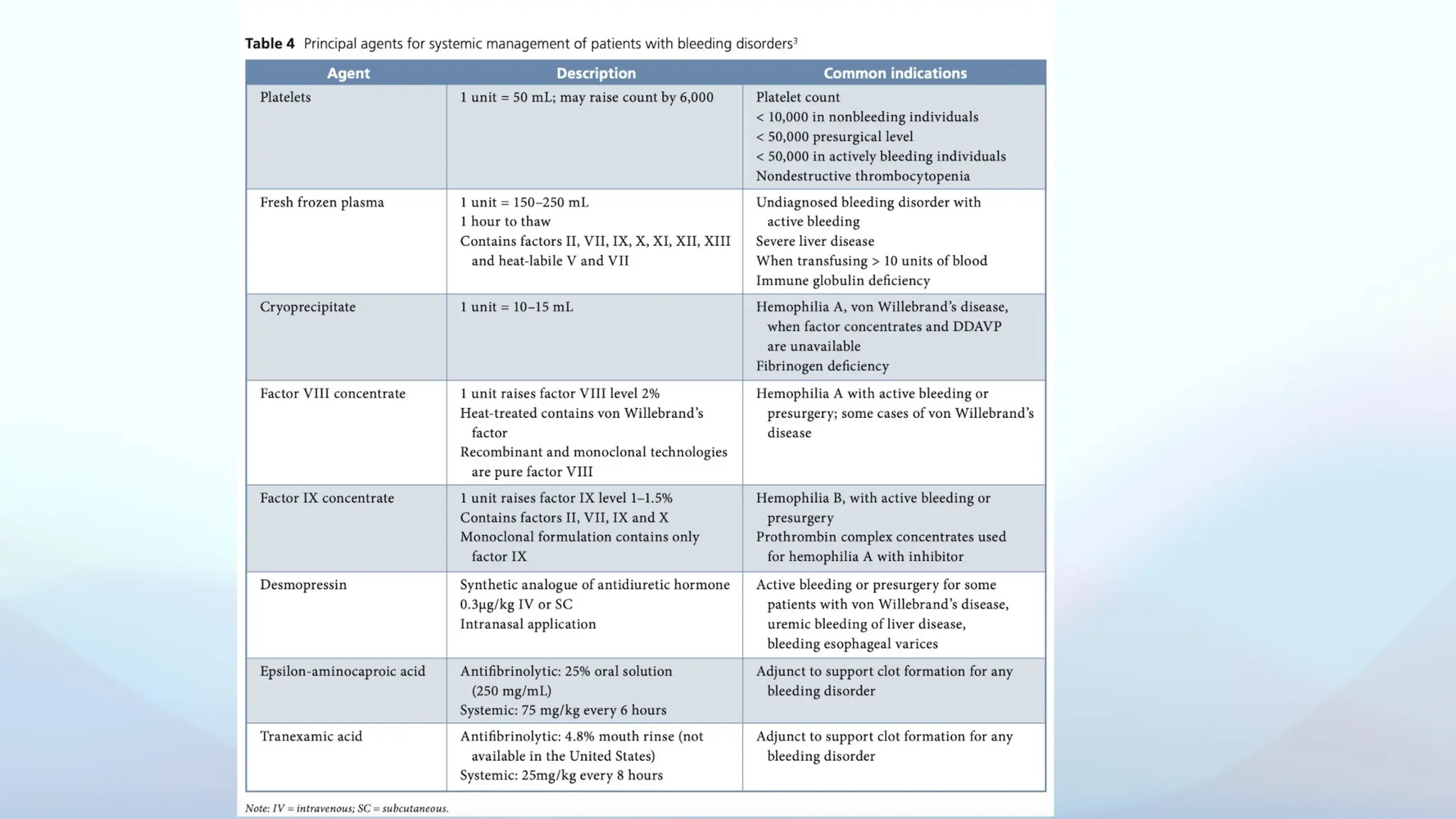
⋅ Factor VIII replacement options:
- factor VIII concentrates
- fresh frozen plasma (FFP)
- Cryoprecipitate
• Highly purified factor VIII concentrates, made using recombinant or monoclonal antibody
purification are preferred due to greater viral safety
⋅ Patients who develop antibodies to factor VIII require a higher dose of factor VIII
Hemophilia B
⋅ Factor IX deficiency or Christmas Factor
Uncommon than Hemophilia A …… 1: 34,500 Men
• Females are carriers
⋅ Managed using replacement therapy with highly purified virally inactive
factor IX concentrates
⋅ Prothrombin complex concentrates may also be used
Laboratory Findings of Hemophilia B
• Normal Platelet count
• Normal Bleeding time
• Normal prothrombin time
• Prolonged Partial thromboplastin time
• Factor IX assay 0% to 40%
Hemophilia C
• Factor XI deficiency
• Autosomal recessive inheritance
• Males and females equally affected
• Lab findings shows prolonged partial thromboplastin time
• Clinical features shows prolonged bleeding after surgery
Von Willebrand's disease
• Most common hereditary coagulation disorder - incidence of 1/10,000
• VonWillebrand factor is found in plasma, platelets,megakaryocytes, and
endothelial cells
• It serves as a carrier for coagulant part of factor VIII in the plasma
• Not sex linked , autosomal dominant
• Type I to Type IV and may vary in severity
• Prolonged bleeding time, possible prolonged partial thromboplastin time
Symptoms include easy bruising , epistaxis ,prolonged bleeding after surgery
Oral findings of Inherited bleeding disorders
• Hemosiderin (iron deposits) and other blood degradation products may cause brown
deposits on surface of teeth due to chronic bleeding
⋅ Patients with hemophilia may experience multiple oral bleeding
events in their life time. However
hemarthrosis of the temporomandibular joint is uncommon.
⋅ Dental caries and periodontal disease has a higher incidence in
bleeding disorder patients. This may be δυε το α φεαρ οφ βλεεδινγ ρεσυλτινγ ιν α
λαχκ οφ εφφεχτιϖε οραλ ηψγιενε ανδ προφεσσιοναλ χαρε
Dental Management
⋅ Dental management depends on the severity of the conditions and the planned procedure.
⋅ For minor surgical procedures for a patient with mild bleeding disorder, slight or no
modifications are required.
⋅ Patients with severe bleeding disorders will require restoration of the hemostatic system to
acceptable levels combined with local and adjunctive hemostatic measures.
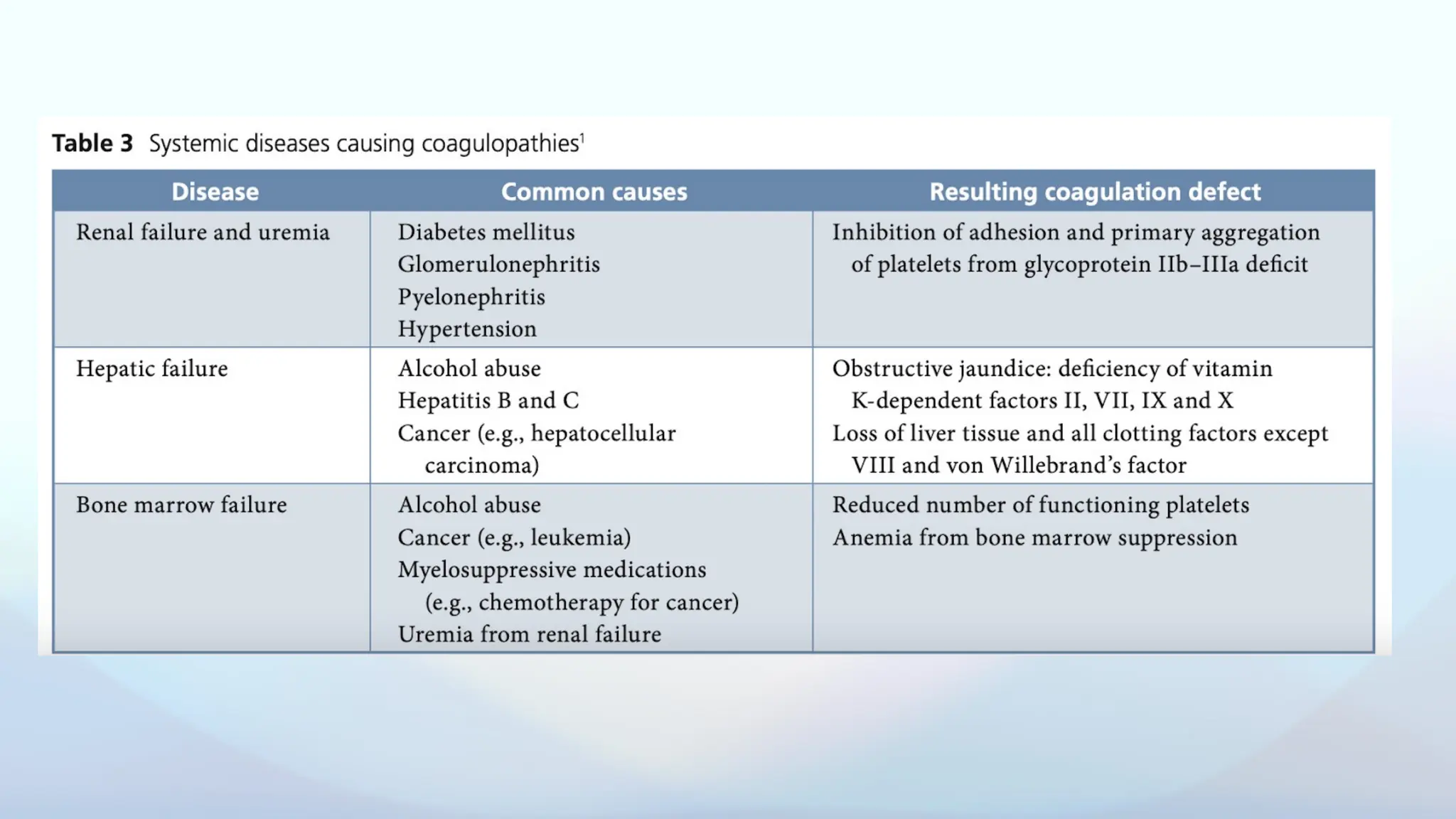
⋅ Patients with drug-induced coagulopathies may require discontinuation of the drug or dose
modification prior to procedure.
⋅ In instance of irreversible coagulopathies (liver failure), replacement of missing factors may
be necessary.
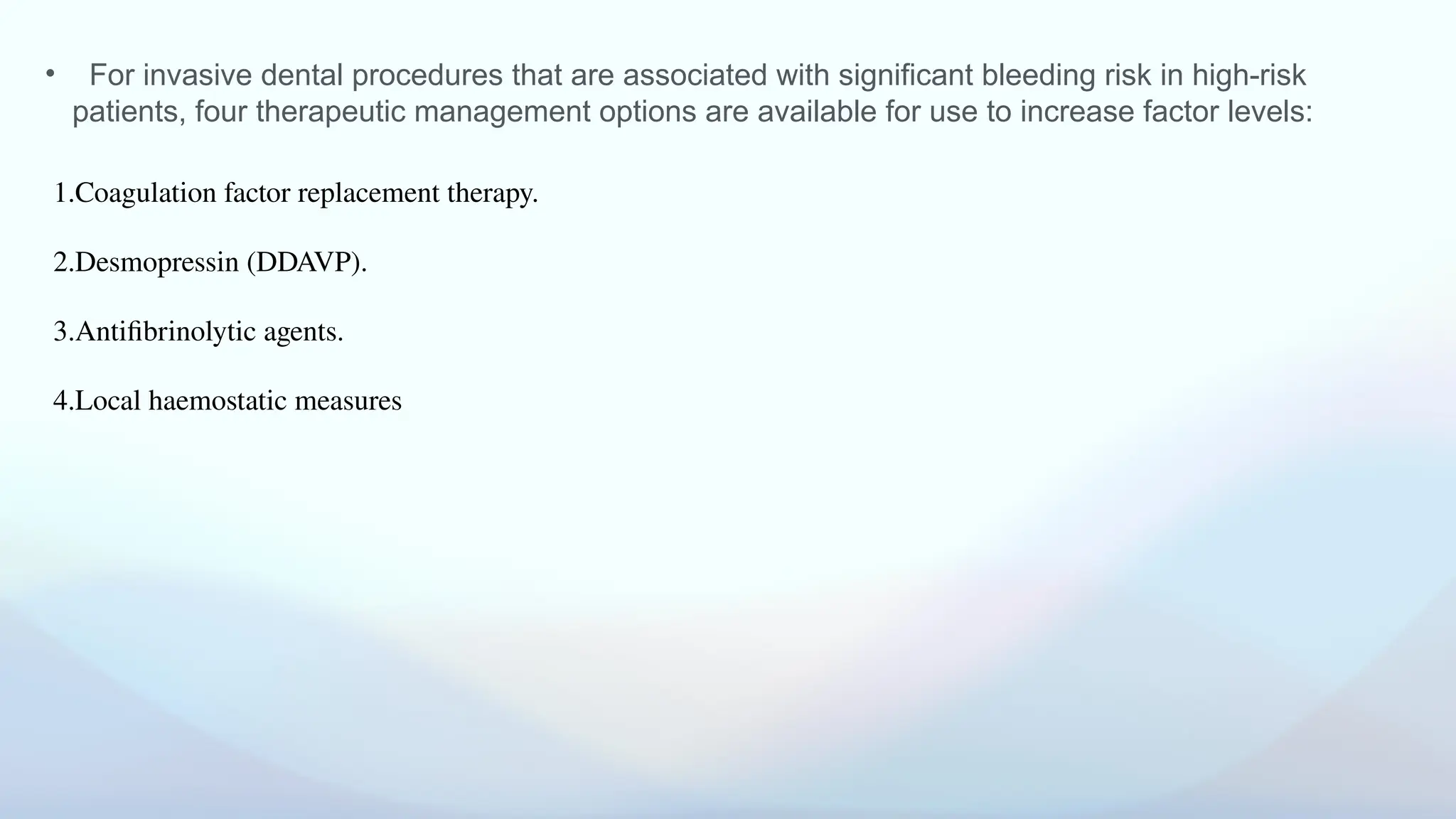
• For invasive dental procedures that are associated with significant bleeding risk in high-risk
patients, four therapeutic management options are available for use to increase factor levels:
1.Coagulation factor replacement therapy.
2.Desmopressin (DDAVP).
3.Antifibrinolytic agents.
4.Local haemostatic measures
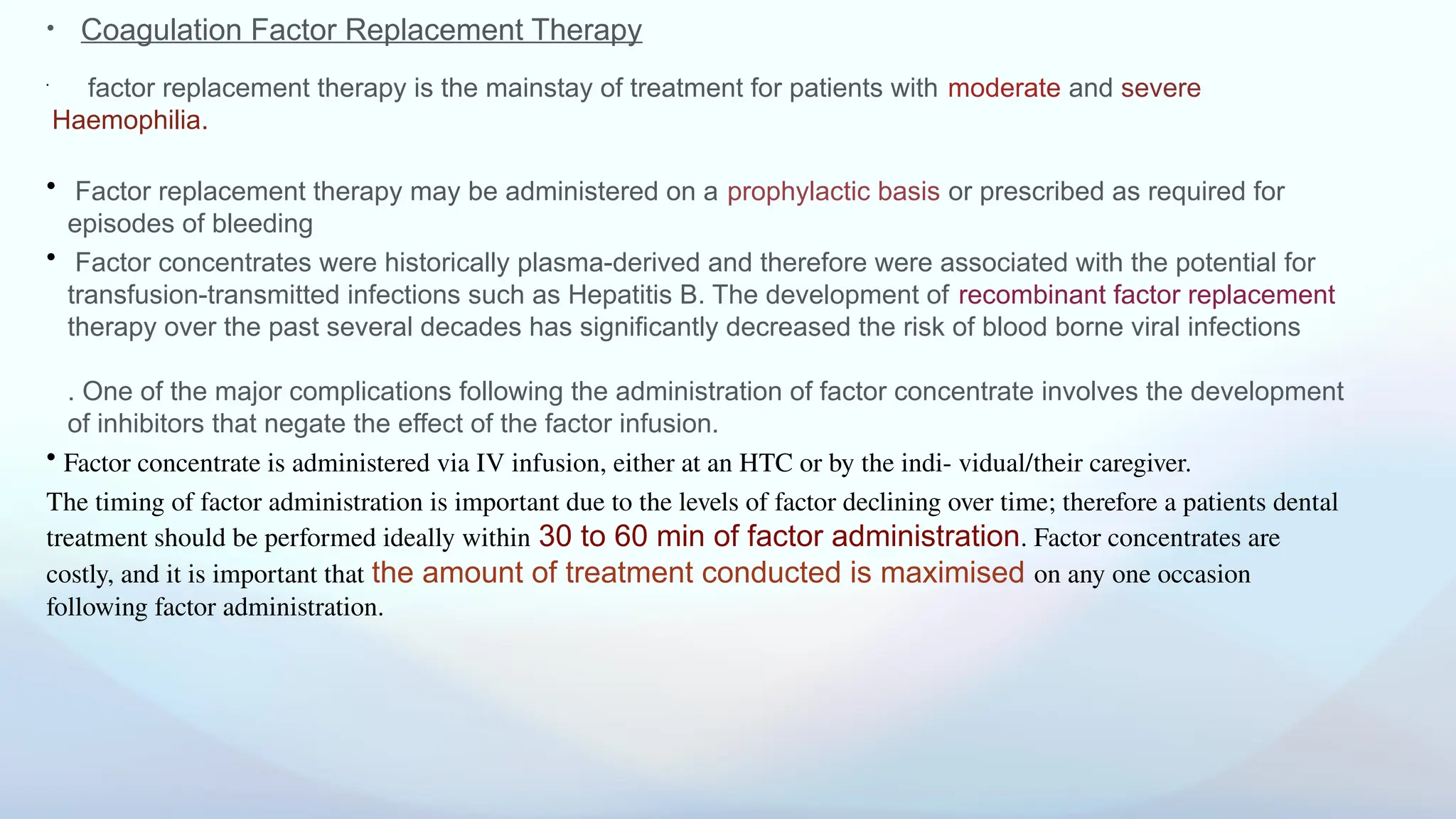
• Coagulation Factor Replacement Therapy
•
factor replacement therapy is the mainstay of treatment for patients with moderate and severe
Haemophilia.
• Factor replacement therapy may be administered on a prophylactic basis or prescribed as required for
episodes of bleeding
• Factor concentrates were historically plasma-derived and therefore were associated with the potential for
transfusion-transmitted infections such as Hepatitis B. The development of recombinant factor replacement
therapy over the past several decades has significantly decreased the risk of blood borne viral infections
. One of the major complications following the administration of factor concentrate involves the development
of inhibitors that negate the effect of the factor infusion.
• Factor concentrate is administered via IV infusion, either at an HTC or by the indi- vidual/their caregiver.
The timing of factor administration is important due to the levels of factor declining over time; therefore a patients dental
treatment should be performed ideally within 30 to 60 min of factor administration. Factor concentrates are
costly, and it is important that the amount of treatment conducted is maximised on any one occasion
following factor administration.
Desmopressin (DDAVP)
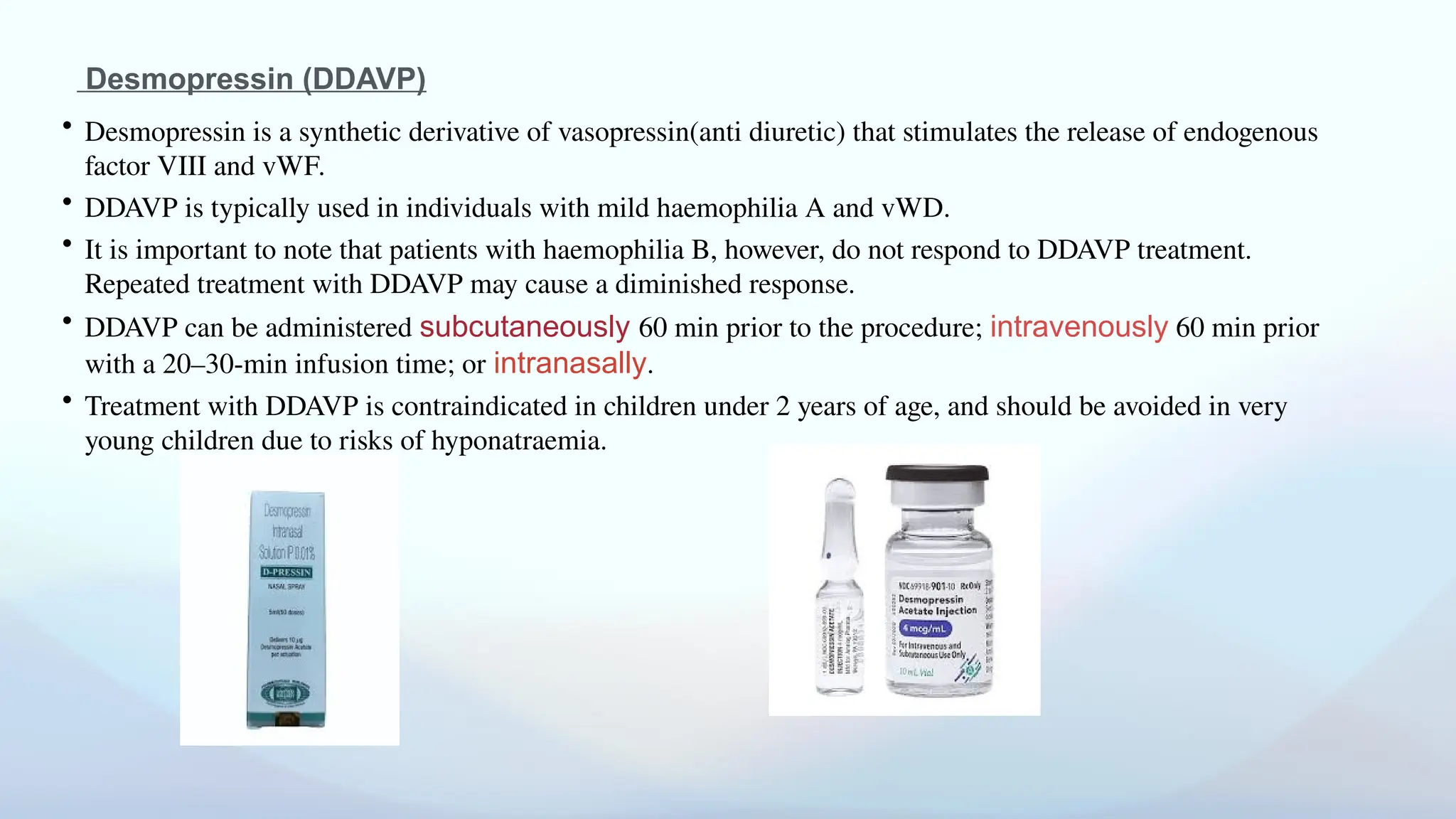
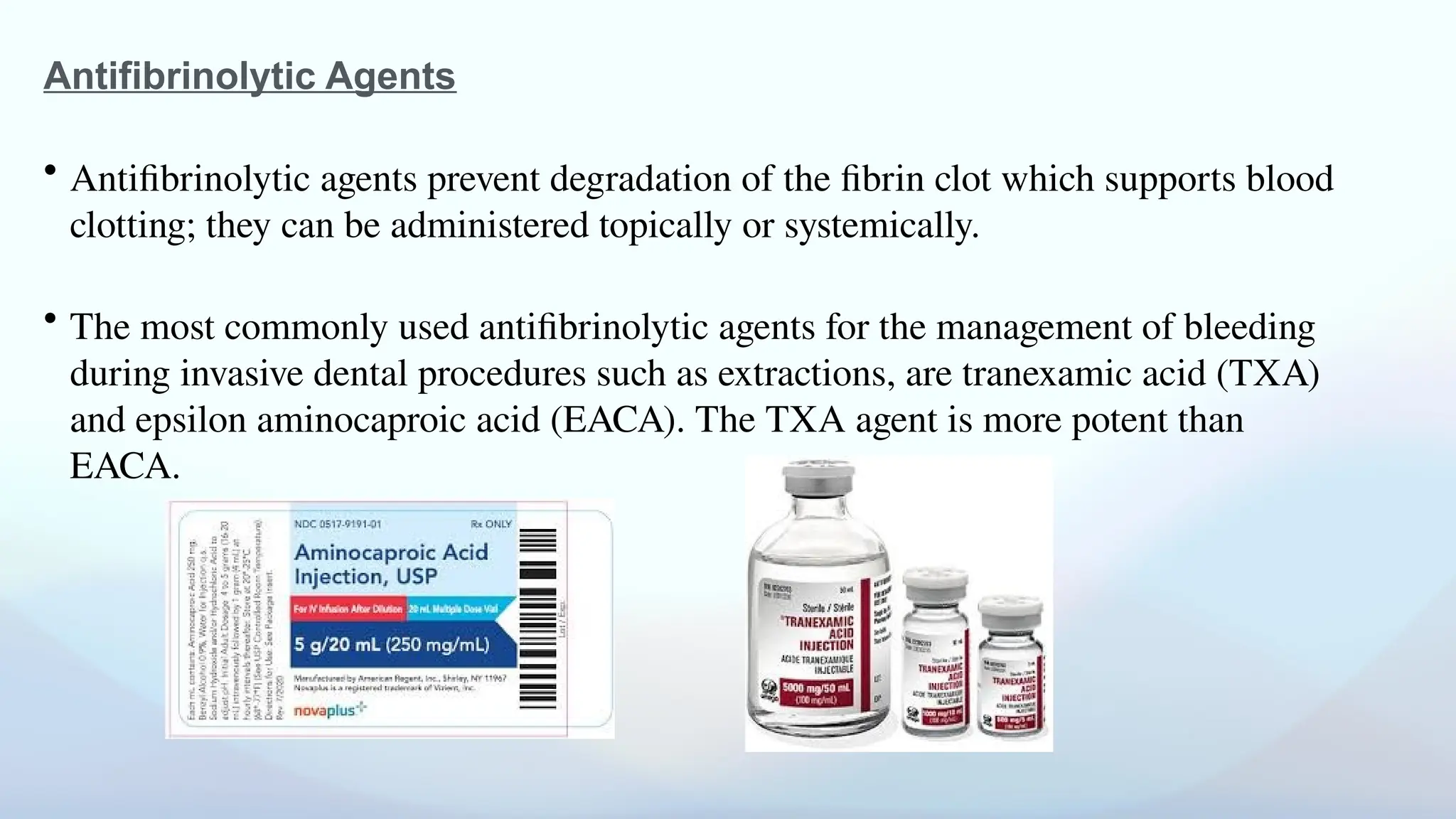
• Desmopressin is a synthetic derivative of vasopressin(anti diuretic) that stimulates the release of endogenous
factor VIII and vWF.
• DDAVP is typically used in individuals with mild haemophilia A and vWD.
• It is important to note that patients with haemophilia B, however, do not respond to DDAVP treatment.
Repeated treatment with DDAVP may cause a diminished response.
• DDAVP can be administered subcutaneously 60 min prior to the procedure; intravenously 60 min prior
with a 20–30-min infusion time; or intranasally.
• Treatment with DDAVP is contraindicated in children under 2 years of age, and should be avoided in very
young children due to risks of hyponatraemia.
Antifibrinolytic Agents
• Antifibrinolytic agents prevent degradation of the fibrin clot which supports blood
clotting; they can be administered topically or systemically.
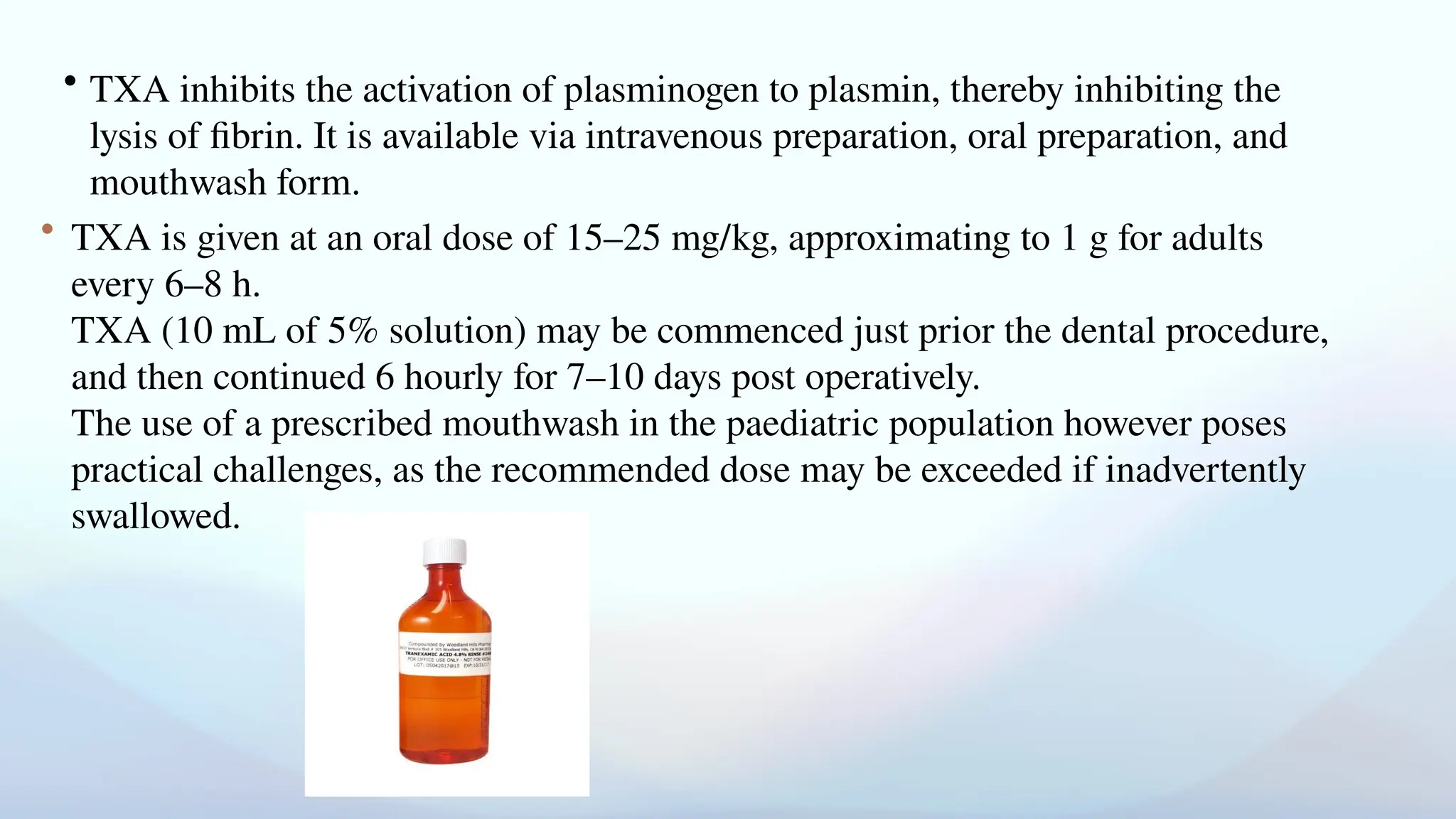
• The most commonly used antifibrinolytic agents for the management of bleeding
during invasive dental procedures such as extractions, are tranexamic acid (TXA)
and epsilon aminocaproic acid (EACA). The TXA agent is more potent than
EACA.
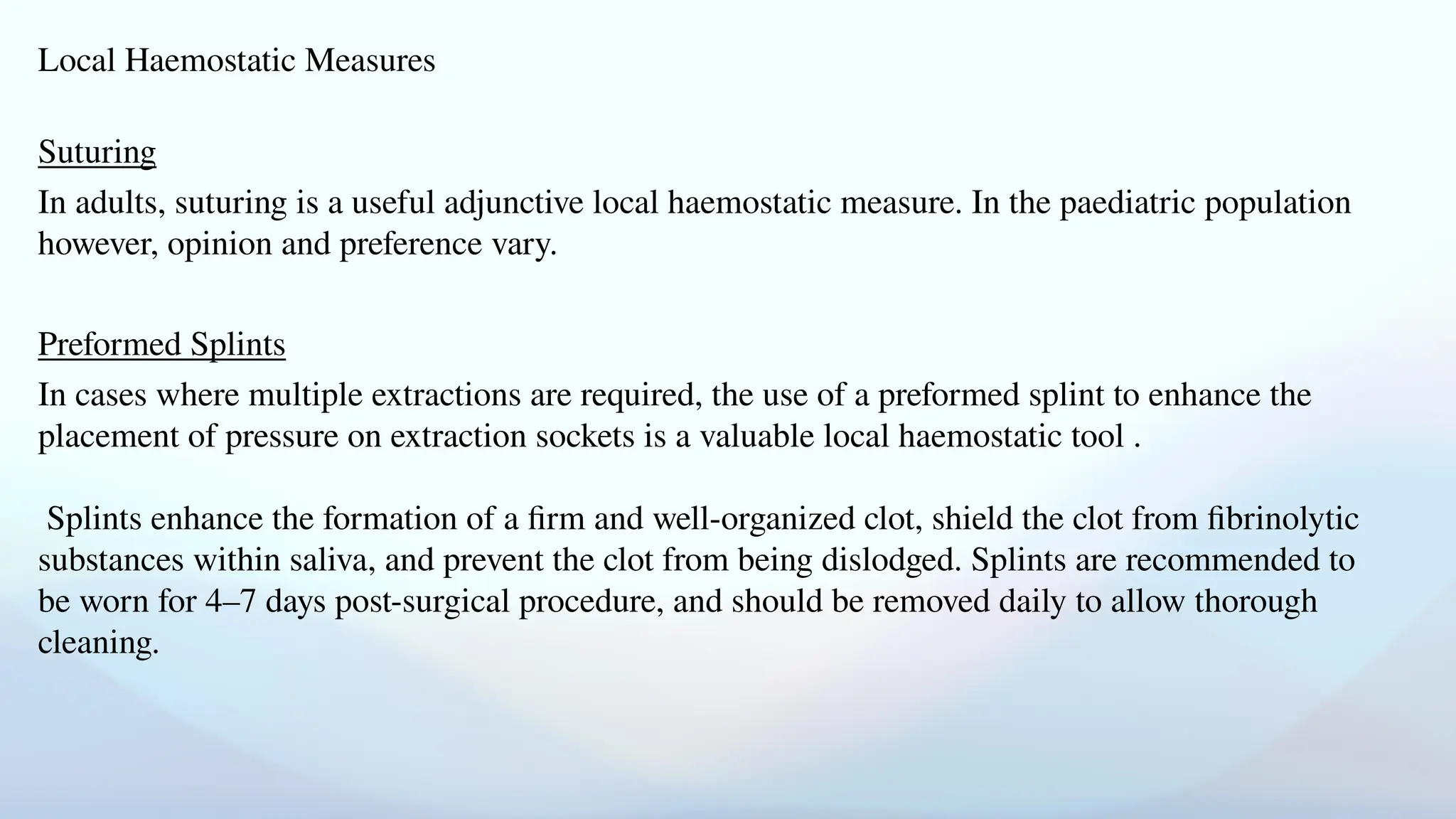
• TXA inhibits the activation of plasminogen to plasmin, thereby inhibiting the
lysis of fibrin. It is available via intravenous preparation, oral preparation, and
mouthwash form.
• TXA is given at an oral dose of 15–25 mg/kg, approximating to 1 g for adults
every 6–8 h.
TXA (10 mL of 5% solution) may be commenced just prior the dental procedure,
and then continued 6 hourly for 7–10 days post operatively.
The use of a prescribed mouthwash in the paediatric population however poses
practical challenges, as the recommended dose may be exceeded if inadvertently
swallowed.
Local Haemostatic Measures
Suturing
In adults, suturing is a useful adjunctive local haemostatic measure. In the paediatric population
however, opinion and preference vary.
Preformed Splints
In cases where multiple extractions are required, the use of a preformed splint to enhance the
placement of pressure on extraction sockets is a valuable local haemostatic tool .
Splints enhance the formation of a firm and well-organized clot, shield the clot from fibrinolytic
substances within saliva, and prevent the clot from being dislodged. Splints are recommended to
be worn for 4–7 days post-surgical procedure, and should be removed daily to allow thorough
cleaning.
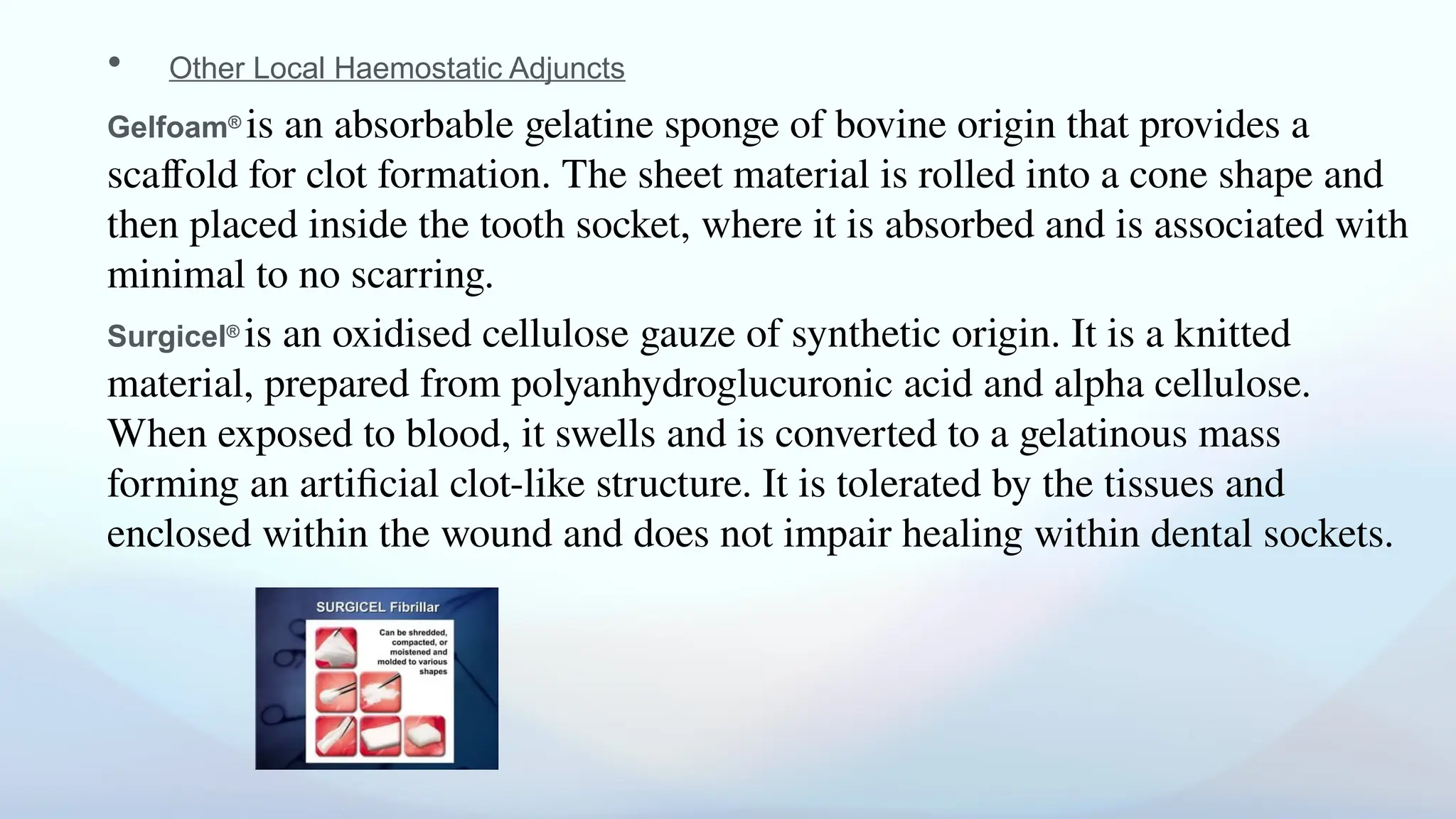
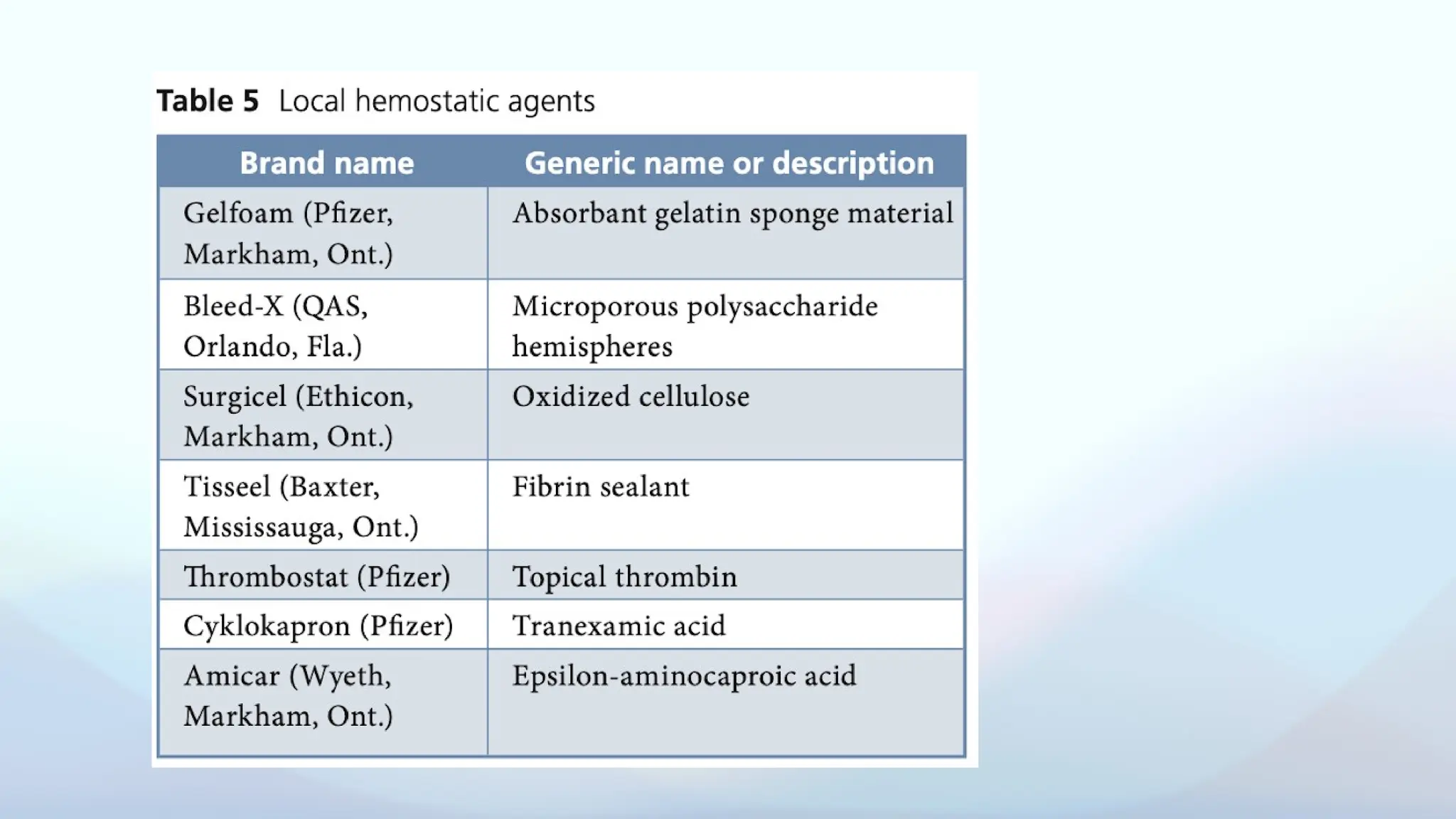
• Other Local Haemostatic Adjuncts
Gelfoam®
is an absorbable gelatine sponge of bovine origin that provides a
scaffold for clot formation. The sheet material is rolled into a cone shape and
then placed inside the tooth socket, where it is absorbed and is associated with
minimal to no scarring.
Surgicel®
is an oxidised cellulose gauze of synthetic origin. It is a knitted
material, prepared from polyanhydroglucuronic acid and alpha cellulose.
When exposed to blood, it swells and is converted to a gelatinous mass
forming an artificial clot-like structure. It is tolerated by the tissues and
enclosed within the wound and does not impair healing within dental sockets.
Fibrin glue is a topical biological adhesive. Its primary effective is by
mimicking the final pathway of the coagulation cascade,
Bone wax is a management option for controlling bleeding within cancellous
bone. It is comprised of, paraffin, beeswax, and a softening agent.
Pain Control
⋅ Nerve-block anesthetic injections should be avoided in patients with coagulopathies.
• The area of injection is highly vascularized, which carries a risk of hematoma formation. An inferior alveolar nerve
block may result in extravasation of blood into the oropharynx, which can produce gross swelling, pain,
dysphagia,respiratory obstruction and death from asphyxia. Commonly used dental blocks require minimum
clottingfactor levels of 20-30%.
⋅ When appropriate, anesthesia should be limited to infiltration and intraligamentary injections.
•Vasoconstrictor should be used to minimize bleeding.
⋅ Alternative techniques such as sedation with benzodiazepine or nitrous oxide may be
employed to
minimize the need for regional anesthesia.
• Patients with severe disorders or those requiring extensive treatment with factor replacement may be treated in a
hospital under general anesthesia ( oral intubation preferred over nasal intubation)
• The use of long acting LA such as bupivacaine hydrochloride may be a suitable option for not only haemostasis but
also post operative analgesia, giving up to 8–10 h of pain control following the dental procedure.
This may not be suitable for all paediatric patients however, and it is important that if used, parents and caregivers
are aware of the risk of inadvertant self-trauma, such as lip, cheek and tongue biting while anesthetised.
Oral Surgery
⋅ Surgery carries the highest risk of bleeding
⋅ For Coagulopathies, transfusion of appropriate factor to 50-100% of normal levels is recommended
for single bolus infusion in an outpatient setting
Minor oral surgical treatment, including routine exodontia, should be carefully planned to minimise the
risk of bleeding and haematoma formation in individuals with IBD. Treatment must planned
be in discussion with the patients haematologist/HTC.
Surgical techniques should be adapted to decrease the risk of intra-operative and post-operative
haemorrhage. This may include limiting the number of dental extractions in one session,
⋅ Local hemostatic agents and techniques may be used to assist in hemostasis. Topical fibrin glue can
reduce the amount of factor replacement needed when used along with anti-fibrinolytic agents.
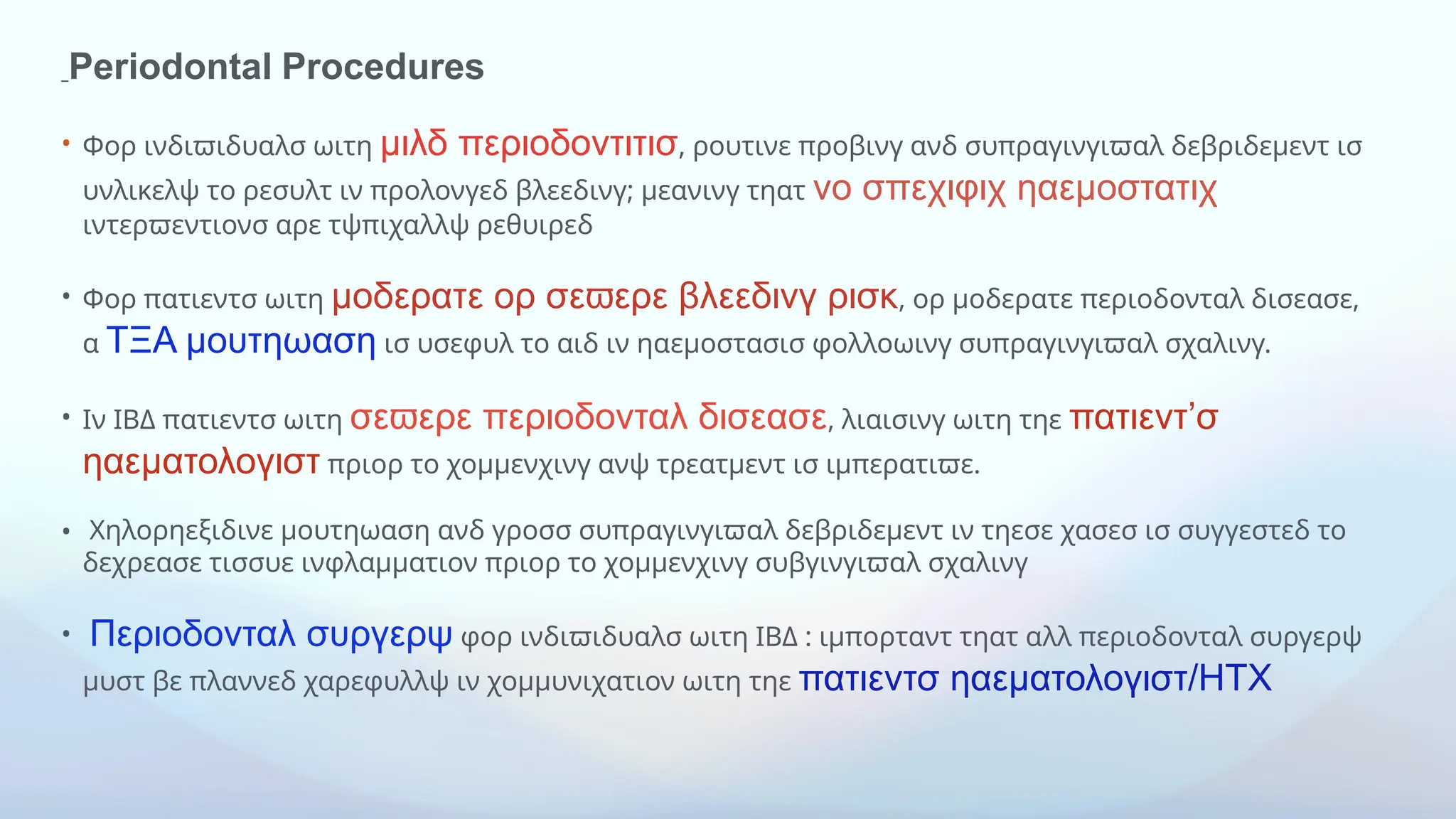
Periodontal Procedures
• Φορ ινδιϖιδυαλσ ωιτη μιλδ περιοδοντιτισ, ρουτινε προβινγ ανδ συπραγινγιϖαλ δεβριδεμεντ ισ
υνλικελψ το ρεσυλτ ιν προλονγεδ βλεεδινγ; μεανινγ τηατ νο σπεχιφιχ ηαεμοστατιχ
ιντερϖεντιονσ αρε τψπιχαλλψ ρεθυιρεδ
• Φορ πατιεντσ ωιτη μοδερατε ορ σε ερε βλεεδινγ ρισκ
ϖ , ορ μοδερατε περιοδονταλ δισεασε,
α ΤΞΑ μουτηωαση ισ υσεφυλ το αιδ ιν ηαεμοστασισ φολλοωινγ συπραγινγιϖαλ σχαλινγ.
• Ιν ΙΒΔ πατιεντσ ωιτη σε ερε περιοδονταλ δισεασε
ϖ , λιαισινγ ωιτη τηε πατιεντ’σ
ηαεματολογιστ πριορ το χομμενχινγ ανψ τρεατμεντ ισ ιμπερατιϖε.
• Χηλορηεξιδινε μουτηωαση ανδ γροσσ συπραγινγιϖαλ δεβριδεμεντ ιν τηεσε χασεσ ισ συγγεστεδ το
δεχρεασε τισσυε ινφλαμματιον πριορ το χομμενχινγ συβγινγιϖαλ σχαλινγ
• Περιοδονταλ συργερψ φορ ινδιϖιδυαλσ ωιτη ΙΒΔ : ιμπορταντ τηατ αλλ περιοδονταλ συργερψ
μυστ βε πλαννεδ χαρεφυλλψ ιν χομμυνιχατιον ωιτη τηε πατιεντσ ηαεματολογιστ/ΗΤΧ
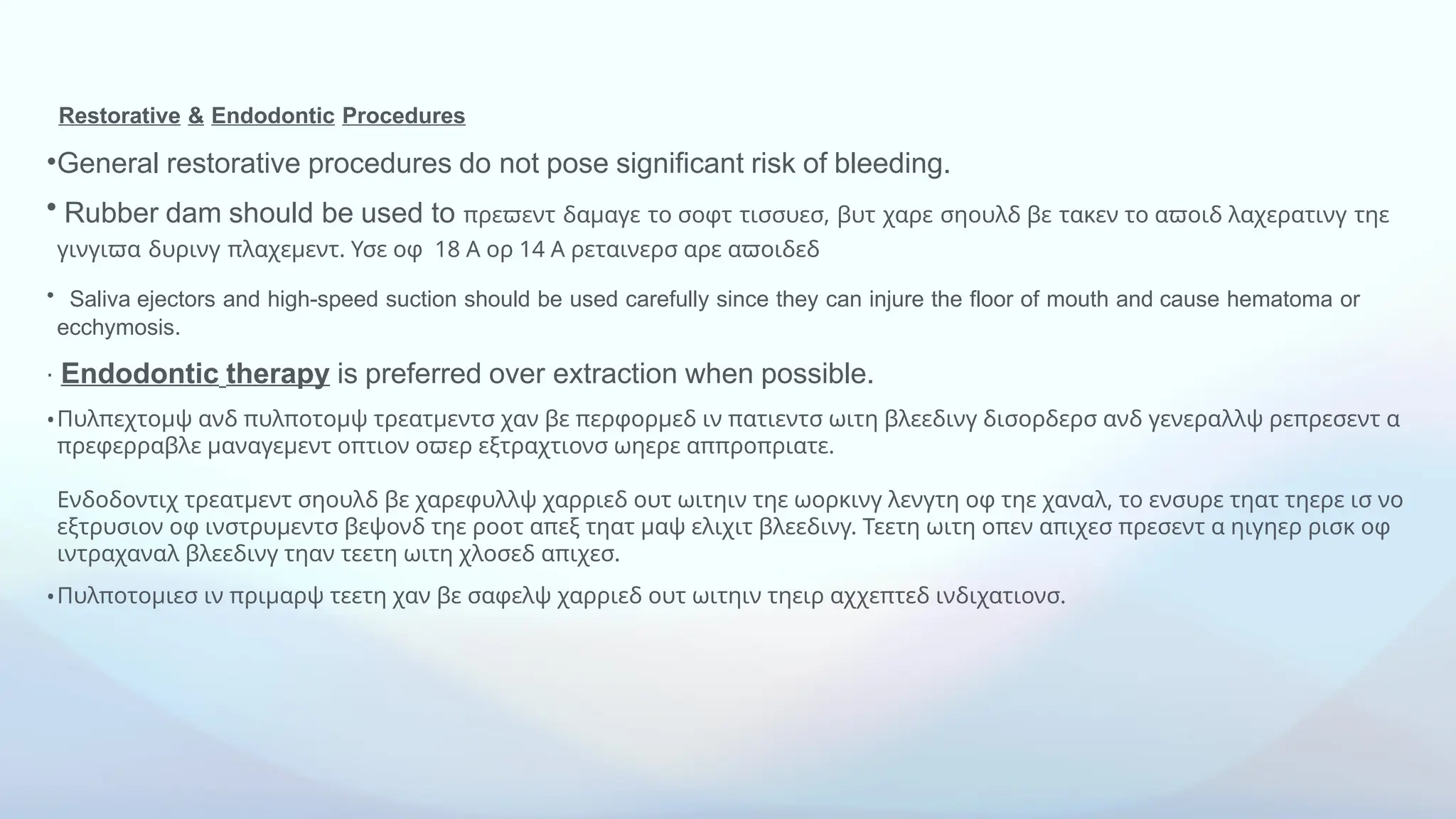
Restorative & Endodontic Procedures
•General restorative procedures do not pose significant risk of bleeding.
• Rubber dam should be used to πρεϖεντ δαμαγε το σοφτ τισσυεσ, βυτ χαρε σηουλδ βε τακεν το αϖοιδ λαχερατινγ τηε
γινγιϖα δυρινγ 18 14
πλαχεμεντ. Υσε οφ Α ορ Α ρεταινερσ αρε αϖοιδεδ
• Saliva ejectors and high-speed suction should be used carefully since they can injure the floor of mouth and cause hematoma or
ecchymosis.
⋅ Endodontic therapy is preferred over extraction when possible.
•Πυλπεχτομψ ανδ πυλποτομψ τρεατμεντσ χαν βε περφορμεδ ιν πατιεντσ ωιτη βλεεδινγ δισορδερσ ανδ γενεραλλψ ρεπρεσεντ α
πρεφερραβλε μαναγεμεντ οπτιον οϖερ εξτραχτιονσ ωηερε αππροπριατε.
Ενδοδοντιχ τρεατμεντ σηουλδ βε χαρεφυλλψ χαρριεδ ουτ ωιτηιν τηε ωορκινγ λενγτη οφ τηε χαναλ, το ενσυρε τηατ τηερε ισ νο
εξτρυσιον οφ ινστρυμεντσ βεψονδ τηε ροοτ απεξ τηατ μαψ ελιχιτ βλεεδινγ. Τεετη ωιτη οπεν απιχεσ πρεσεντ α ηιγηερ ρισκ οφ
ιντραχαναλ βλεεδινγ τηαν τεετη ωιτη χλοσεδ απιχεσ.
•Πυλποτομιεσ ιν πριμαρψ τεετη χαν βε σαφελψ χαρριεδ ουτ ωιτηιν τηειρ αχχεπτεδ ινδιχατιονσ.
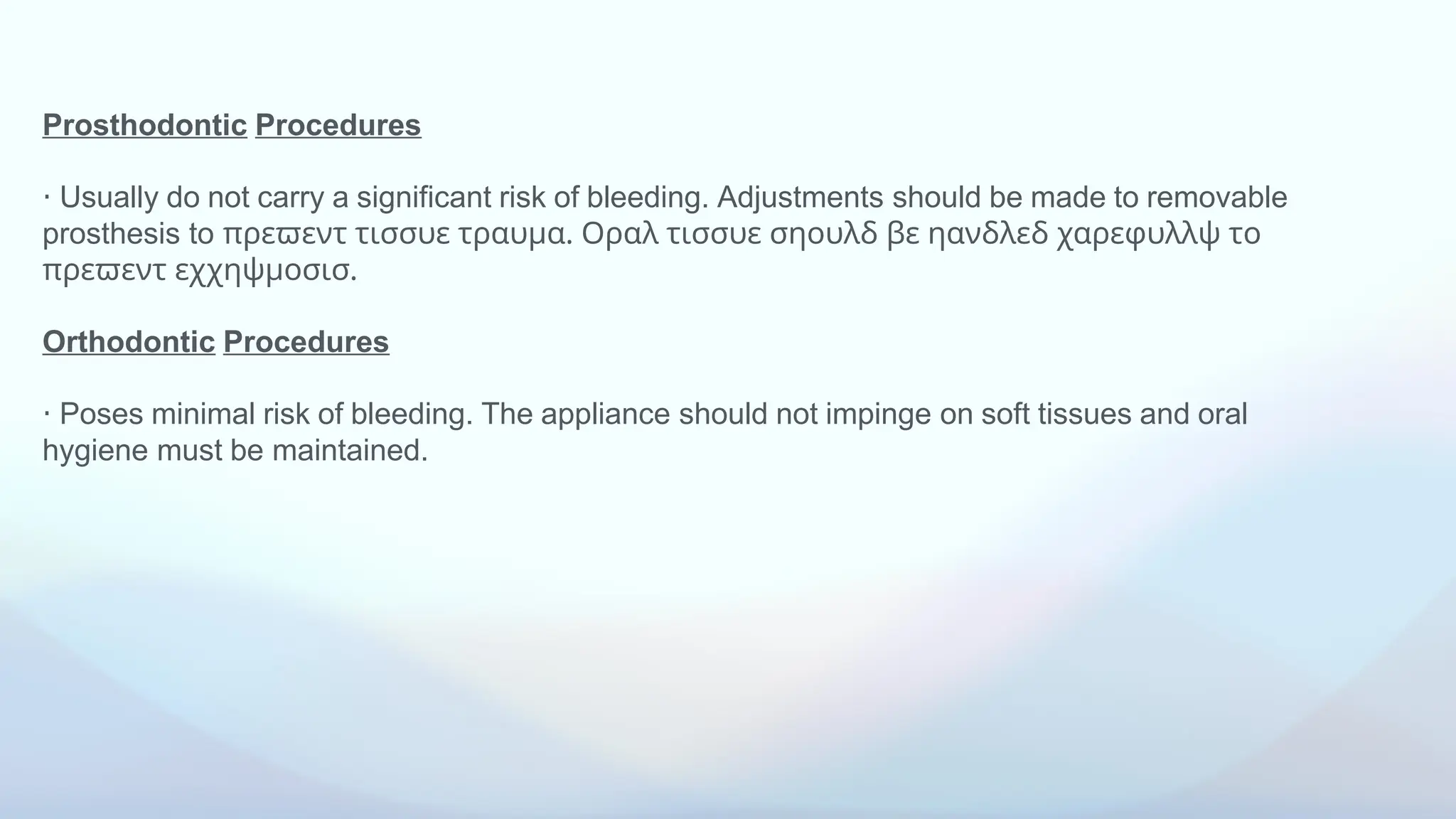
Prosthodontic Procedures
⋅ Usually do not carry a significant risk of bleeding. Adjustments should be made to removable
prosthesis to πρεϖεντ τισσυε τραυμα. Οραλ τισσυε σηουλδ βε ηανδλεδ χαρεφυλλψ το
πρεϖεντ εχχηψμοσισ.
Orthodontic Procedures
⋅ Poses minimal risk of bleeding. The appliance should not impinge on soft tissues and oral
hygiene must be maintained.
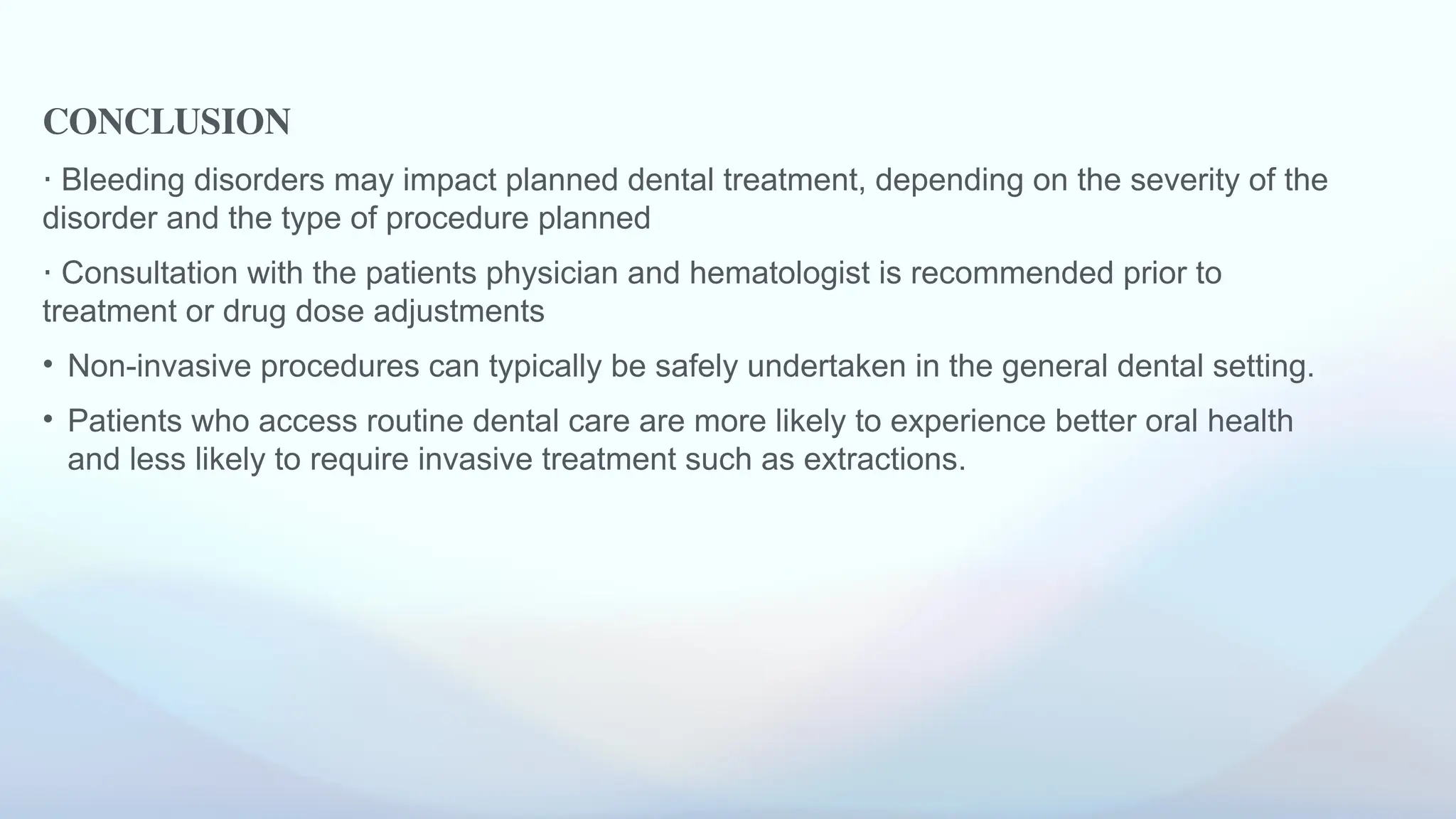
. Αναλγεσια ανδ Αντιβιοτιχ Χονσιδερατιονσ
• Post procedural dental pain can typically be managed with simple analgesia, with paracetamol being
the mainstay medication to manage dental pain in paediatric patients with IBD.
• NSAIDs such as aspirin should not be used due to the risk of adverse affects on platelet aggregation.
• Based on the current literature, there is insufficient evidence to support the use of prophylactic
antibiotics prior to dental extractions in IBD patients. There are no contraindications to any type
of antibiotics used for patients with IBD.
• If a significant risk of infection is considered, the provision of prophylactic antibiotics should be
discussed with the patients haematologist on a case by case basis.
CONCLUSION
⋅ Bleeding disorders may impact planned dental treatment, depending on the severity of the
disorder and the type of procedure planned
⋅ Consultation with the patients physician and hematologist is recommended prior to
treatment or drug dose adjustments
• Non-invasive procedures can typically be safely undertaken in the general dental setting.
• Patients who access routine dental care are more likely to experience better oral health
and less likely to require invasive treatment such as extractions.
References
•Protocols for Oral Health Management of Paediatric Patients with Inherited Bleeding
Disorders: A Narrative Review
• Bleeding Disorders of Importance in Dental Care and Related Patient Management
Anurag Gupta, BDS; Joel B. Epstein, DMD, MSD, FRCD(C); Robert J. Cabay, MD, DDS
• Shobha Tandon Paediatric Dentistry 3rd/2018
Thank you
DR.SHWETHA.M.N
Session 2
Bleeding disorders due to
Platelets origin
Contents
• Introduction
• Thrombocytopenias
Drug induced Thrombocytopenia
Immune thrombocytopenic purpura (ITP)
• Thrombocytosis
• Disorders of Platelet Function
Hereditary
Acquired
• Case Reports
• Conclusion
• Platelet disorders may be due to reduction or increased number, or defective functions.
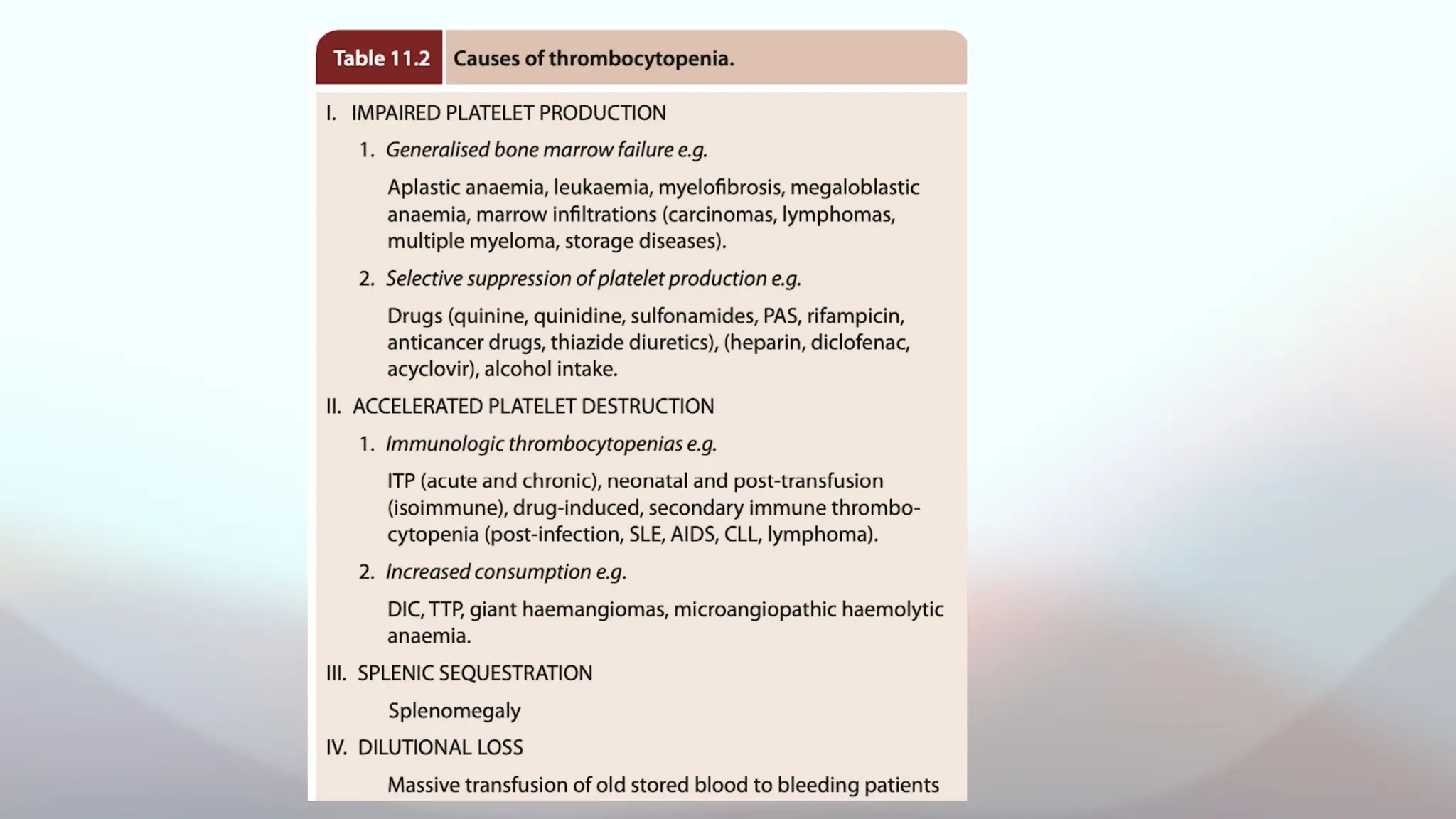
• Thrombocytopenia may result from impaired production, accelerated
destruction, splenic sequestration or dilutional loss.
• Idiopathic (or immune) thrombocytopenic purpura (ITP), is characterised by
immunologic destruction of platelets and normal or increased
megakaryocytes in the bone marrow. It may be acute or chronic.
• Thrombotic thrombocytopenic purpura (TTP) and haemo­lytic­
uraemic
syndrome have thrombocytopenia and hyaline fibrin microthrombi within the
microvasculature throughout the body.
• Defective platelet functions may be hereditary (platelet adhesion,
aggregation, release reaction) or acquired (aspirin, uraemia, liver disease etc).
Introduction
Disorders of platelets produce bleeding disorders by one of the following 3
mechanisms:
A. Due to reduction in the number of platelets i.e. various forms of
thrombocytopenias.
B.Due to rise in platelet count i.e. thrombocytosis.
C. Due to defective platelet functions.
A. THROMBOCYTOPENIAS
Thrombocytopenia is defined as a reduction in the peripheral blood platelet
count below the lower limit of normal i.e. below 150,000/μl.
Thrombocytopenia is associated with abnormal bleeding that includes
spontaneous skin purpura and mucosal haemorrhages as well as prolonged
bleeding after trauma.
However, spontaneous haemorrhagic tendency becomes clinically evident only
after severe depletion of the platelet count to level below 20,000/μl.
• Thrombocytopenia may result from 4 main groups of causes:
1. Impaired platelet production
2. Accelerated platelet destruction
3. Splenic sequestration
4. Dilutional loss
• Three of the common and important causes—
Drug-induced thrombocytopenia,
Idiopathic thrombocytopenic purpura (ITP), and
thrombotic thrombocytopenic purpura (TTP),
Drug-induced Thrombocytopenia
• Many commonly used drugs cause thrombocytopenia by depressing
megakaryocyte production.
• In most cases, an immune mechanism by formation of drug-antibody
complexes is implicated in which the platelet is damaged as an ‘innocent
bystander’
• Commonly used drugs and includes: chemotherapeutic agents (alkylating
agents, anthracyclines, antimetabolites), certain antibiotics (sulfonamides,
PAS, rifampicin, penicillins), drugs used in cardiovascular diseases
(digitoxin, thiazide diuretics), diclofenac, acyclovir, heparin and excessive
consumption of ethanol.
• Clinically, the patient presents with acute purpura. The platelet count
is markedly lowered, often below 10,000/μl
The immediate treatment is to stop or replace the suspected drug with
instruction to the patient to avoid taking the offending drug in future.
Occasional patients may require temporary support with glucocorticoids,
plasmapheresis or platelet transfusions.
• Heparin-induced Thrombocytopenia
Thrombocytopenia due to administration of heparin is distinct
from that caused by other drugs in following ways:
i) Thrombocytopenia is generally not so severe to fall to level
below 20,000/μl.
ii) Unlike drug-induced thrombocytopenia, heparin-induced
thrombocytopenia is not associated with bleeding but instead
these patients are more prone to develop thrombosis.
The underlying mechanism of heparin-induced thrombocytopenia is formation
of antibody against platelet factor 4 (PF-4)-heparin complex. This specific antibody
activates the endothelial cells and initiates thrombus formation.
It occurs in a small proportion of cases after the patient has received heparin
for 5-10 days.
Diagnosis is made by a combination of laboratory and clinical features with 4
Ts: thrombocytopenia, thrombosis, time of fall of platelet count, absence of
other causes of thrombocytopenia
• Immune Thrombocytopenic Purpura (ITP)
Idiopathic (or immune) thrombocytopenic purpura (ITP), is characterised by
immunologic destruction of platelets and normal or increased megakaryocytes
in the bone marrow.
PATHOGENESIS On the basis of duration of illness, ITP is classified into acute
and chronic forms, both of which have different pathogenesis.
• Acute ITP This is a self-limited disorder, seen most frequently in children
following recovery from a viral illness (e.g. hepatitis C, infectious
mononucleosis, CMV infection, HIV infection) or an upper respiratory
illness.
• The onset of acute ITP is sudden and severe thrombocytopenia but
recovery occurs within a few weeks to 6 months.
• The mechanism of acute ITP is by formation of immune complexes
containing viral antigens, and by formation of antibodies against viral antigens
which crossreact with platelets and lead to their immunologic
destruction.
• Chronic ITP Chronic ITP occurs more commonly in adults, particularly in women of child-bearing age (20-
40 years). The disorder develops insidiously and persists for several years. Though chronic ITP is idiopathic,
similar immunologic thrombocytopenia may be seen in association with SLE, AIDS and autoimmune
thyroiditis.
• The pathogenesis of chronic ITP is explained by formation of anti-platelet autoantibodies, usually by
platelet-associated IgG humoral antibodies synthesised mainly in the spleen.
• These antibodies are directed against target antigens on the platelet glycoproteins, Gp IIb-IIIa and Gp Ib-IX
complex. Some of the antibodies directed against platelet surface also interfere in their function.
• The mechanism of platelet destruction is similar to that seen in autoimmune haemolytic anaemias. Sensitised
platelets are destroyed mainly in the spleen and rendered susceptible to phagocytosis by cells of the
reticuloendothelial system
CLINICAL FEATURES The clinical manifestation of ITP may develop abruptly in cases
of acute ITP, or the onset may be insidious as occurs in majority of cases of chronic
ITP.
The usual manifestations are petechial haemorrhages, easy bruising, and mucosal
bleeding such as menorrhagia in women, nasal bleeding, bleeding from gums,
melaena and haematuria.
Intra- cranial haemorrhage is, however, rare. Splenomegaly and hepatomegaly may
occur in cases with chronic ITP but lymphadenopathy is quite uncommon in either
type of ITP.
• LABORATORY FINDINGS The diagnosis of ITP can be suspected on clinical features after excluding
the known causes of thrombocytopenia and is supported by the following haematologic findings:
1. Platelet count is markedly reduced, usually in the range of 10,000-50,000/μl.
2. Blood film shows only occasional platelets which are often large in size
3.Bone marrow shows increased number of megakaryocytes which have large non-
lobulated single nuclei and may have reduced cytoplasmic granularity and presence of
vacuoles
4.With sensitive techniques, anti-platelet IgG antibody can be demonstrated on platelet
surface or in the serum of patients.
5. Platelet survival studies reveal markedly reduced platelet lifespan, sometimes less than
one hour, as compared with normal lifespan of 7-10 days.
• PRINCIPLES OF TREATMENT OF ITP Spontaneous recovery occurs in 90% cases of acute
ITP, while only less than 10% cases of chronic ITP recover spontaneously.
• Treatment is directed at reducing the level and source of autoantibodies and reducing the rate of
destruction of sensitised platelets.
• This is possible by corticosteroid therapy, immunosuppressive drugs (e.g. vincristine,
cyclophosphamide and azathioprine) and splenectomy.
• Beneficial effects of splenectomy in chronic ITP are due to both removal of the major site of platelet
destruction and the major source of autoantibody synthesis.
• Platelet transfusions are helpful as a palliative measure only in patients with severe haemorrhage.
• Thrombotic Thrombocytopenic Purpura (TTP) and Haemolytic-Uraemic Syndrome (HUS)
are a group of thrombotic microangiopathies which are essentially characterised
by triad of thrombocytopenia, microangiopathic haemolytic anaemia and formation of hyaline fibrin
microthrombi within the microvasculature throughout the body.
These are often fulminant and lethal disorders occurring in young adults. The
intravascular microthrombi are composed predominantly of platelets and fibrin.
The widespread presence of these platelet microthrombi is responsible for
thrombocytopenia due to increased consumption of platelets, microangiopathic
haemolytic anaemia and protean clinical manifestations involving different organs
and tissues throughout the body.
• PATHOGENESIS Unlike DIC, a clinicopathologically related condition,
activation of the clotting system is not the primary event in formation of
microthrombi. TTP is initiated by endothelial injury followed by release of von
Willebrand factor and other procoagulant material from endothelial cells,
leading to the formation of microthrombi. Trigger for the endothelial injury
comes from immunologic damage by diverse conditions such as in pregnancy,
metastatic cancer, high-doze chemotherapy, HIV infection, and mitomycin C.
• CLINICAL FEATURES The clinical manifestations of TTP are due to microthrombi
in the arterioles, capillaries and venules throughout the body. Besides features of
thrombocytopenia and microangiopathic haemolytic anaemia, characteristic findings
include fever, transient neurologic deficits and renal failure. The spleen may be palpable
• LABORATORY FINDINGS The diagnosis can be made from the following findings:
1. Thrombocytopenia.
2.Microangiopathic haemolytic anaemia with negative Coombs’ test.
3. Leucocytosis, sometimes with leukaemoid reaction.
4.Bone marrow examination reveals normal or slightly increased megakaryocytes
accompanied with some myeloid hyperplasia.
5.Diagnosis is, however, established by examination of biopsy (e.g. from gingiva) which
demonstrates typical microthrombi in arterioles, capillaries and venules, unassociated
with any inflammatory changes in the vessel wall.
• B. THROMBOCYTOSIS
Thrombocytosis is defined as platelet count in excess of 4,00,000/μl.
Secondary or reactive thrombocytosis can occur following massive haemorrhage,
iron deficiency, severe sepsis, marked inflammation, disseminated cancers,
haemolysis, or following splenectomy.
Thrombocytosis causes bleeding or thrombosis but how it produces is not clearly
known.
As such, transitory and secondary thrombocytosis does not require any separate
treatment other than treating the cause.
C. DISORDERS OF PLATELET FUNCTIONS
Defective platelet function is suspected in patients who show skin and
mucosal haemorrhages and have prolonged bleeding time but a normal platelet
count.
These disorders may be hereditary or acquired.
• Hereditary Disorders
Depending upon the predominant functional abnormality, inherited disorders
of platelet functions are classified into the following 3 groups:
1. DEFECTIVE PLATELET ADHESION These are as under:
i) Bernard-Soulier syndrome is an autosomal recessive disorder with inherited
deficiency of a platelet membrane glycoprotein which is essential for adhesion
of platelets to vessel wall.
ii) In von Willebrand’s disease, there is defective platelet adhesion as well as
deficiency of factor VIII.
2. DEFECTIVE PLATELET AGGREGATION In thromba- sthenia (Glanzmann’s disease), there
is failure of primary platelet aggregation with ADP or collagen due to
inherited deficiency of two of platelet membrane glycoproteins.
• 3. DISORDERS OF PLATELET RELEASE REACTION These disorders are characterised by
normal initial aggregation of platelets with ADP or collagen but the subsequent release of ADP,
prostaglandins and 5-HT is defective due to complex intrinsic deficiencies.
• Acquired Disorders
Acquired defects of platelet functions include the following clinically significant
examples:
1. ASPIRIN THERAPY Prolonged use of aspirin leads to easy bruising and abnormal
bleeding time. This is because aspirin inhibits the enzyme cyclooxygenase, and
thereby suppresses the synthesis of prostaglandins which are involved in platelet
aggregation as well as release reaction. The anti-platelet effect of aspirin is clinically
applied in preventing major thrombo- embolic disease in recurrent myocardial
infarction.
2. OTHERS Several other acquired disorders are associated with various
abnormalities in platelet functions at different levels. These include: uraemia, liver
disease, multiple myeloma, Waldenström’s macroglobulinaemia and various
myeloproliferative disorders.
• CASE REPORT
A 4 year-old girl reported to the Department of Pedodontics and Preventive Dentistry at AB
Shetty Memorial Institute of Dental Sciences, Mangalore, India with a swelling in the gums
(limited to gingiva) on the lower left side of her jaw.
It had been present for a period of ten days. The swelling was associated with pain and un-
controllable bleeding. The bleeding began two days prior to the child’s visit to the dental
operatory, for which a physician was consulted and tranexamic acid was administered
immediately as nasal drops.
Medical history revealed a subgaleal hematoma after trauma to the occipital region at the age of
two, and uncontrolled bleeding for 3 consecutive days.
Furthermore, an injury to the anterior faucial pillar of the tonsil at the age of three resulted in
continuous bleeding and led to an increased suspicion of a bleeding disorder.
There was no history of consanguineous marriages in the family. The child’s diet history revealed
a cariogenic dietary pattern, with inadequate oral hygiene measures.
• On general physical examination, ecchymosis on the trunk as well as the upper and lower
limbs was observed (Fig 1).
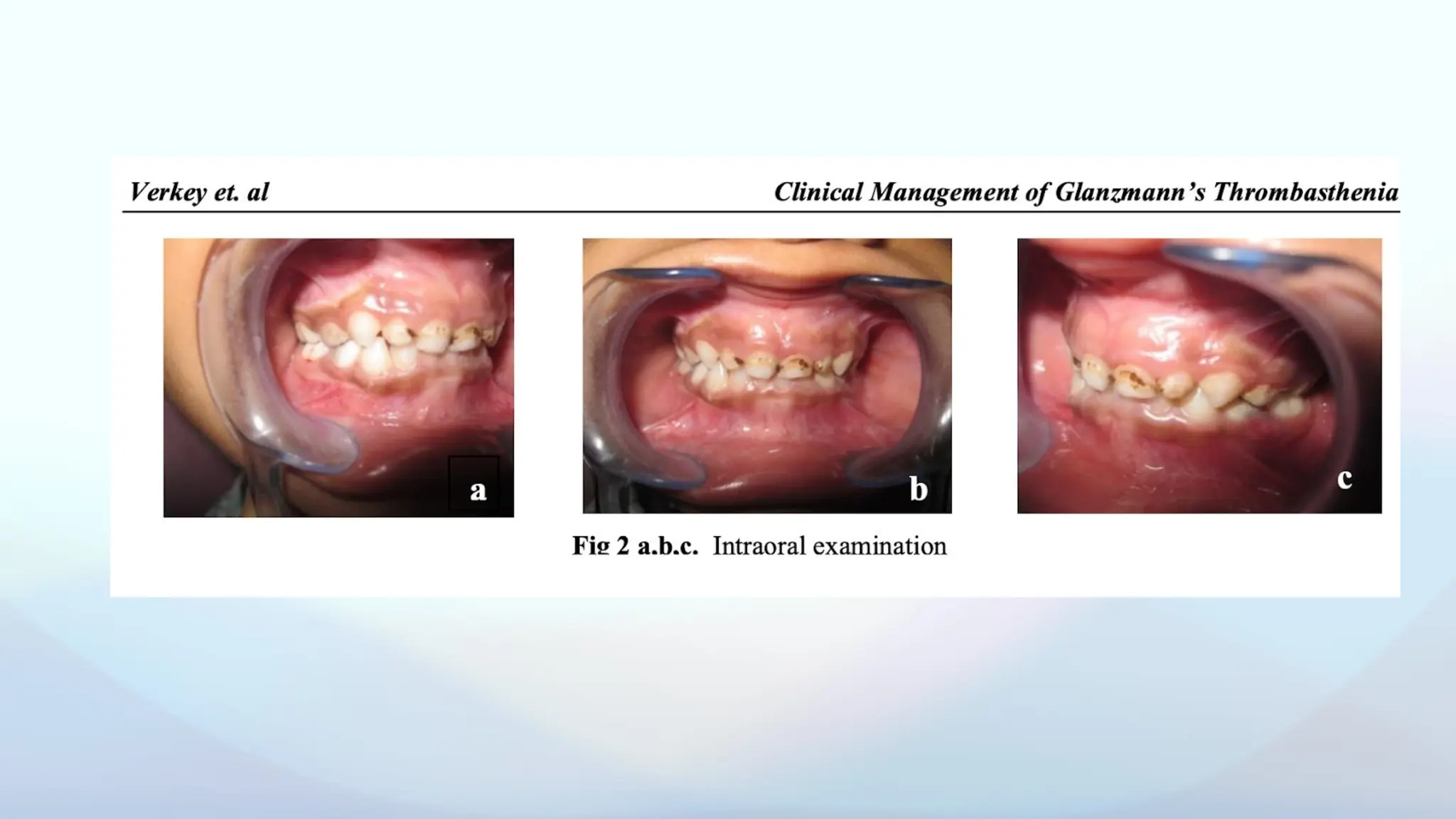
• Intraoral examination revealed a periapical abscess in the left lower primary molar (Fig 2) with
a deep carious lesion in the contralateral tooth. Dentinal caries were present in the primary
maxillary incisors (Fig 2) and molars along with primary mandibular second molars (Fig 2).
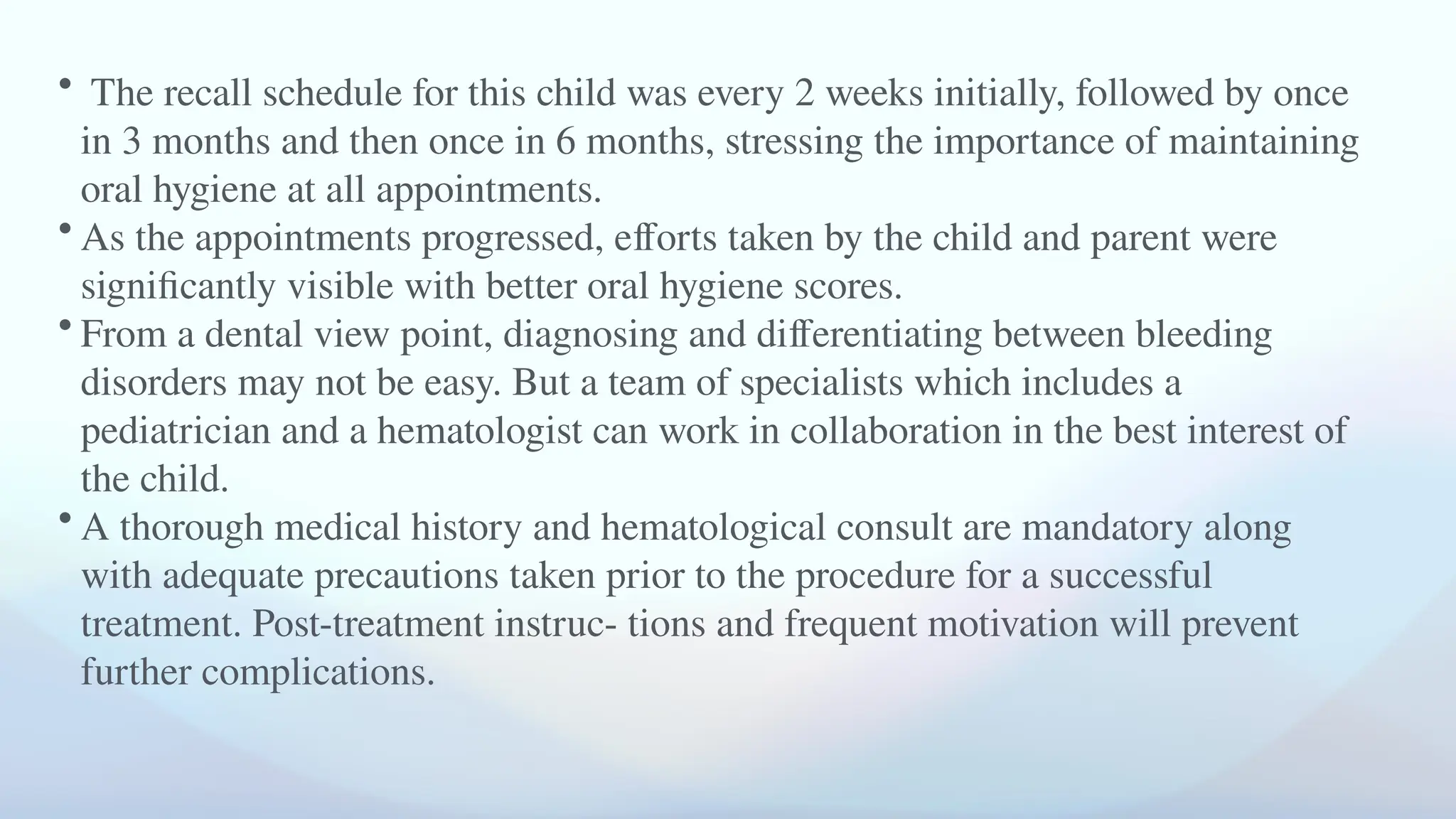
• The right and left primary mandibular first molars had deep carious lesions causing coronal
destruction, radicular resorption and furcation radiolucencies (Fig 3).
• Individual intraoral periapical radiographs were obtained with foam coated over the X ray
holder to prevent injury to the mucosa. This was the child’s first dental experience.The child
belonged to the uncooperative group (Frankel’s behavior rating scale-definitely negative) and
repeated attempts to achieve the desired behavior with usual nonpharmacological techniques
failed. Hence, treatment under general anesthesia was considered the best option for this child.
• In addition, the need for repeated lengthy den- tal appointments and her medical condition
warranted transfusions; which further justified treatment under general anesthesia.
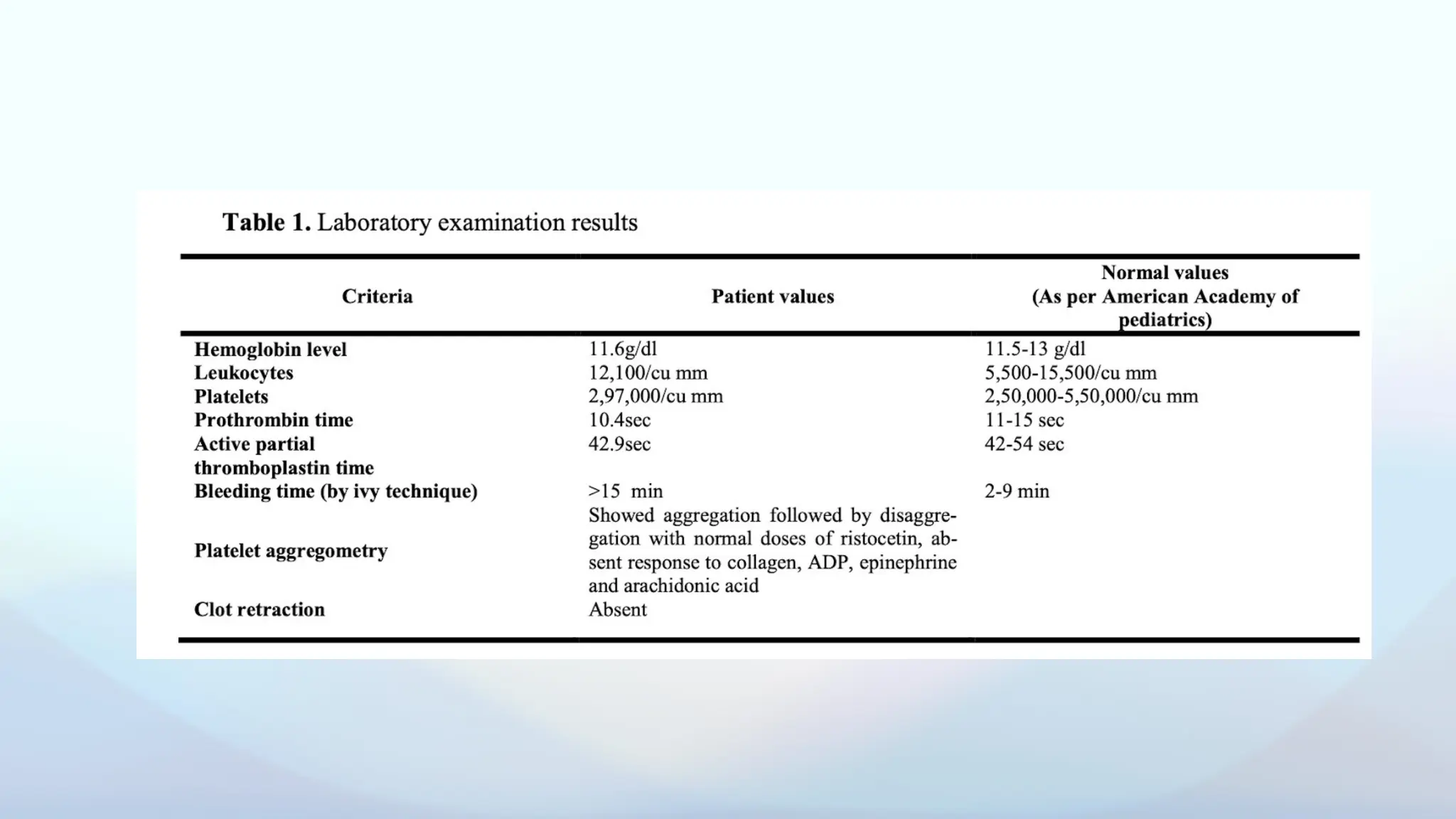
• A detailed hematological investigation re- vealed the following values as shown in Table 1:
Factor VIII (100%), IX (80%), XII (87%) and fibrinogen (277 mg %) were found to be within
normal levels, with borderline low levels of factor IX.
• Normal platelet counts, prolonged bleeding times, and abnormal platelet aggregation along
with clinical signs and history of frequent superficial bruises and prolonged mucocutaneous
bleeding led to the diagnosis of Glanzmann’s thrombasthenia.
• To provide the best care, an interdisciplinary approach was pursued with a team consisting of
pediatric dentists, pediatricians and anesthesiologists. Complete oral rehabilitation was planned
under general anesthesia with all considerations required for an interdisciplinary approach.
• Management:
The treatment was divided into 2 phases, namely, the medical phase and the dental phase. The
bleeding time was recorded prior to the procedure and was not within the normal limits
• Reckoning the patient’s past medical history, the pediatricians recommended 1 unit of plate- let
transfusion 2 hours preoperatively and 1 unit postoperatively as blood loss was anticipated.
• Special caution was taken during nasal intubation to prevent bleeding from the end vessels present
in the nasal epithelium. A smaller size intubation tube was slowly inserted by the anesthetist with
utmost care.
• Treatment performed:
The dental phase consisted of multiple esthetic restorations for the anterior teeth with strip crown
and restorative procedures for posterior decayed teeth.
• Glass ionomer cements (GC, Type IX) and posterior composite resin (3M, ESPE) were the
materials of choice for the restorative procedures.
• The local anesthetic used for the surgical procedure was lignocaine 2% with adrenaline; which was
administered via infiltration technique prior to the extractions of the primary mandibular first molars.
• Local measures taken to prevent any inadvertent bleeding from the soft tissues included wrapping of the bite
block in cotton, careful positioning of the mouth mirror and other instruments used, avoiding nerve
blocks,using the infiltration technique with insulin syringes and prevention of hematoma.
• During the procedure there was bleeding from the extraction sockets; which were brought under control with
the help of gauze soaked in tranexamic acid solution and pastes made of tranexamic acid tablets mixed with
water; which were placed repeatedly into the socket.
A total of 4 tablets and 3 vials were used as per the recommendations of the pediatrician so as to not exceed the
maximum permissible dose (recommended dose in children 50-100 mg/kg) [8]. The patient was advised to
main- tain “Nothing Per Oral” (NPO) for 24 hours to prevent any injury to the extraction socket.
• Brushing and rinsing was not recommended for 24 hours, but gentle use of wet gauze was advised for hygiene.
The patient was asked to refrain from consumption of hard and fibrous food, and have only pureed
food/soups/tender coconut water for 2 days post-surgery.
• To prevent dehydration, an IV line was maintained during the NPO
status. An antibiotic prescription of Augmentin (amoxicillin + clavulanic
acid, 30 mg/kg body weight) for 5 days and acetaminophen (15 mg/kg)
were recommended.
• At 2 weeks post-procedure, the socket area was examined to confirm
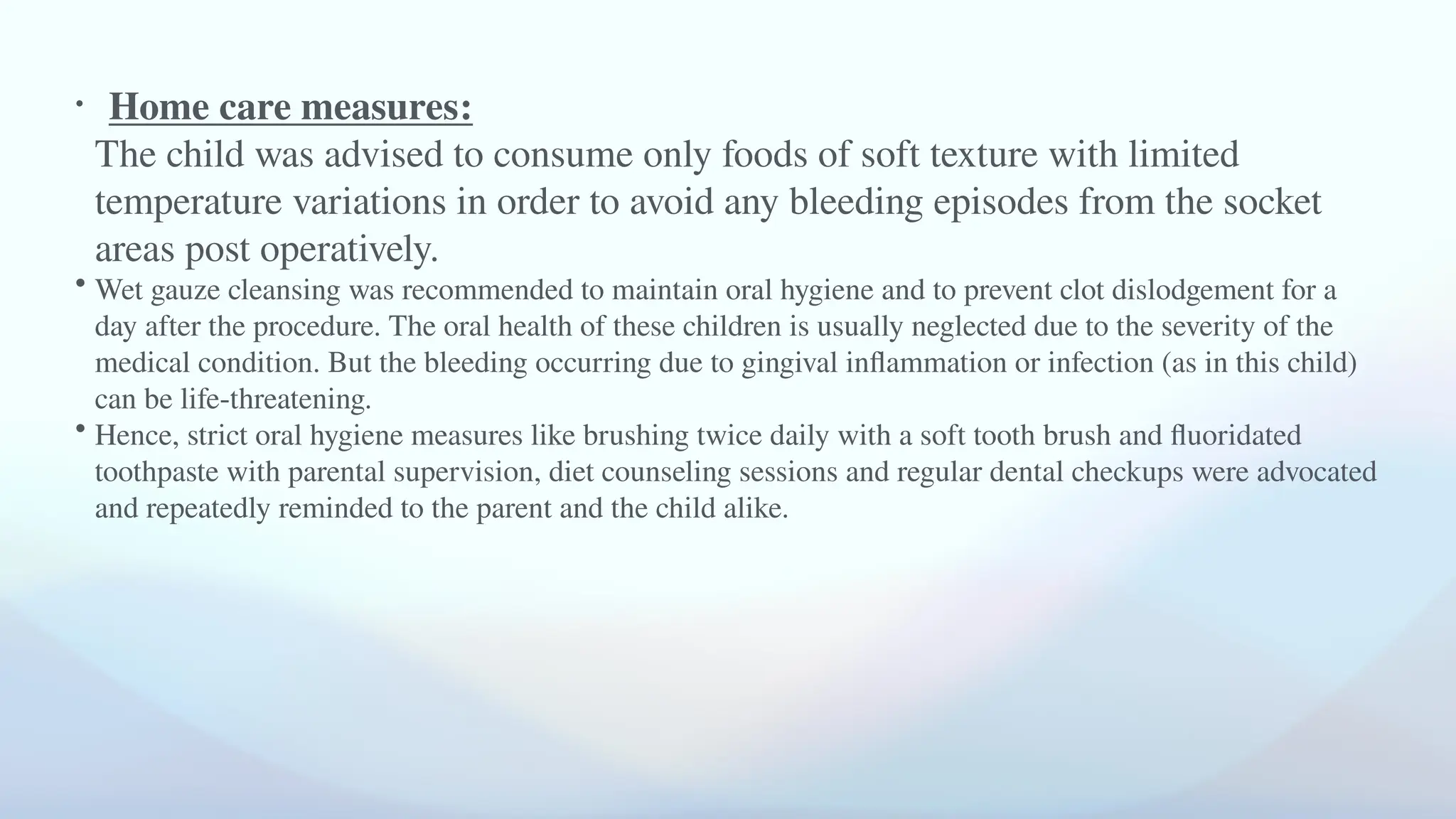
adequate healing, after which a bonded space maintainer was given for the
first primary molar in the right quadrant, followed by the same in the left
quadrant for the contralateral tooth the next week. At the end of 3- and 6-
month follow ups, the space maintainers were intact in the oral cavity.
• DISCUSSION
• GT is a rare, autosomal recessive, hemorrhagic disorder characterized by prolonged bleed- ing
time, defective aggregation of platelets and impaired clot retraction.
• The common features of GT are bruising, epistaxis, gingival hemorrhage and menorrhagia.
• Bruising typically occurs after minor trauma. Typical laboratory tests of patients with
Glanzmann’s thrombasthenia show prolonged bleeding time, decreased or absent clot
retraction, and abnormal platelet aggregation responses to physiologic stimuli; all of which
stood true for this patient.
• The uncontrolled bleeding episodes from the abscess in the oral cavity and ecchymotic
patches further confirmed the medical condition in this child.
However, there were no reports of individuals with tendency to prolonged and spontaneous
bleeding and hemorrhage, nor consanguineous marriages in her family.
• The role of the dentist begins with preventive therapy, educating the patient to maintain a
good oral hygiene and to prevent inadvertent bleeding from the oral cavity after dental
treatment Platelet transfusion is essential prior to any dental procedure that would involve
the risk of hemorrhage
• The administration of platelets in these patients is to control bleeding and to make up for the
excessive loss of blood
Every transfusion increases the possibility of the alloimmunization, thus increasing the
susceptibility to a massive hemorrhage.
• Bearing these consequences in mind and the severity of the condition in this child, 1 unit was
transfused prior to the procedure to prevent excessive bleeding.
• The bleeding time values assessed prior to the procedure (after administration of platelets) by Ivy
technique was within normal limits (3mins). In spite of this and taking prudent local preventive
measures against any inadvertent bleeding, post-extraction bleeding was difficult to control.
• The tooth colored restorations were used as good isolation was possible during the procedures
under general anesthesia. The extractions of the mandibular first molars were advised because of
the resorbing roots, thus questioning the efficacy of a radicular pulp therapy. Adequate tooth
material in the anterior teeth justified the use of strip crowns for maximum esthetics.
Space management:
•Due to early extraction of the primary first molars, space loss was of concern in this child in the lower
arch to maintain a mesial step molar relation on both sides.
•Convention- al space maintainers such as a band and loop appliance would cause trauma to the tissues
during the banding procedure promoting a bleeding episode, hence, a fiber reinforced composite resin
space maintainer (Ribbond) was preferred.
•The parents were advised about the importance of space maintenance at this age to prevent further
malocclusions in this child. A space maintainer was bonded after surgery, once healing was
adequate.The child was introduced to one space maintainer at a time to check for compliance with the
same.
• Complication management:
The bleeding disorder was responsive only to Tranexamic acid. Hence this was the drug of choice used
throughout the procedure to control the bleeding episodes pre and post- extractions (dose-50-100 mg/kg
body weight), since the action of local pressure or local hemostatics like cellulose, Oxycel or collagen to
control the bleeding would be limited in this child.
• The gauze pieces soaked in tranexamic acid /paste were always tied to floss for easy retrieval with
constant lubrication of the lips to prevent any trauma and hence bleeding.
• One unit platelets was also administered postoperatively to compensate for the blood loss that
occurred.Whole blood transfusion was not advised by the consultant pediatrician as the child showed no
signs of shock post operatively.
• The recall schedule for this child was every 2 weeks initially, followed by once
in 3 months and then once in 6 months, stressing the importance of maintaining
oral hygiene at all appointments.
• As the appointments progressed, efforts taken by the child and parent were
significantly visible with better oral hygiene scores.
• From a dental view point, diagnosing and differentiating between bleeding
disorders may not be easy. But a team of specialists which includes a
pediatrician and a hematologist can work in collaboration in the best interest of
the child.
• A thorough medical history and hematological consult are mandatory along
with adequate precautions taken prior to the procedure for a successful
treatment. Post-treatment instruc- tions and frequent motivation will prevent
further complications.
• Home care measures:
The child was advised to consume only foods of soft texture with limited
temperature variations in order to avoid any bleeding episodes from the socket
areas post operatively.
• Wet gauze cleansing was recommended to maintain oral hygiene and to prevent clot dislodgement for a
day after the procedure. The oral health of these children is usually neglected due to the severity of the
medical condition. But the bleeding occurring due to gingival inflammation or infection (as in this child)
can be life-threatening.
• Hence, strict oral hygiene measures like brushing twice daily with a soft tooth brush and fluoridated
toothpaste with parental supervision, diet counseling sessions and regular dental checkups were advocated
and repeatedly reminded to the parent and the child alike.
From a dental view point, diagnosing and differentiating between bleeding disorders may not be easy. But
a team of specialists which includes a pediatrician and a hematologist can work in collaboration in the best
interest of the child. A thorough medical history and hemato- logical consult are mandatory along with
adequate precautions taken prior to the procedure for a successful treatment. Post-treatment in- structions
and frequent motivation will prevent further complications.
Conclusion

bleedingdisorder 1 & 2 session ppt.pptx

  • 1.
    DR.Shwetha.M.N First year MDS BleedingDisorders and its Applied aspect in Dentistry
  • 2.
    Contents • Introduction • CommonBleeding Disorders Hemophilia A Hemophilia B Von willebrand Disease • Oral findings of Bleeding disorders • Dental management in Bleeding disorders • Conclusion
  • 3.
    Introduction Oral care providersmust be aware of the impact of bleeding disorders on the management of dental patients. Initial recognition of a bleeding disorder, which may indicate the presence of a systemic pathologic process, may occur in dental practice. Furthermore, prophylactic, restorative and surgical dental care of patients with bleeding disorders is best accomplished by practitioners who are knowledgeable about the pathology, complications and treatment options associated with these conditions. We shall study the common bleeding disorders and their effects on the delivery of oral health care.
  • 4.
    Bleeding disorders • AGroup of disorders characterized by defective Hemostasis and abnormal Bleeding. • Bleeding disorders can be classified as Coagulation factor deficiencies, platelet dis-orders, vascular disorders or fibrinolytic defects • Among the Congenital coagulation defects, hemophilia A, hemophilia B(Christmas disease) and von Willebrand’s disease are the most common.
  • 9.
  • 15.
    1.Coagulation Disorders Congenital Haemophilia A ⋅Deficiency of the Plasma protein factor VIII or anti- hemophilic factor ⋅ Inherited X-linked recessive trait occurring in males, with a prevalence of 1: 7500 males
  • 16.
    • Hemophilia issometimes referred to as “the royal disease,” because it affected the royal families of England, Germany, Russia and Spain in the 19th and 20th centuries. • Queen Victoria of England, who ruled from 1837-1901, is believed to have been the carrier of hemophilia B, or factor IX deficiency.
  • 18.
    ⋅ Mild hemophiliaA: 6-50% of normal factor VIII activity, associated with bleeding during surgery or trauma ⋅ Moderate hemophilia A: 1-5%, bleeding after mild injury ⋅ Severe hemophilia A: <1%, spontaneous bleeding Classification
  • 19.
  • 20.
    Laboratory Findings ofHemophilia A • Normal Platelet count • Normal Bleeding time • Normal prothrombin time • Prolonged Partial thromboplastin time • Factor VIII assay 0% to 40%
  • 22.
    Management for thedental patient having Hemophilia A consists of: - Increasing factor VIII levels - Replacing factor III and inhibiting fibrinolysis - DDAVP (1 de amino 8 D arginine vasopressin ) / desmopressin to increase endogenous factor III levels - Hemostasis is achievable in mild hemophilia. DDAVP may be used with anti- fibrinolytic to improve hemostasis. - Anti-fibrinolytic therapy may be used post-operatively to protect formed blood clots. Tranexamic acid is most commonly used.
  • 23.
    ⋅ Factor VIIIreplacement options: - factor VIII concentrates - fresh frozen plasma (FFP) - Cryoprecipitate • Highly purified factor VIII concentrates, made using recombinant or monoclonal antibody purification are preferred due to greater viral safety ⋅ Patients who develop antibodies to factor VIII require a higher dose of factor VIII
  • 24.
    Hemophilia B ⋅ FactorIX deficiency or Christmas Factor Uncommon than Hemophilia A …… 1: 34,500 Men • Females are carriers ⋅ Managed using replacement therapy with highly purified virally inactive factor IX concentrates ⋅ Prothrombin complex concentrates may also be used
  • 25.
    Laboratory Findings ofHemophilia B • Normal Platelet count • Normal Bleeding time • Normal prothrombin time • Prolonged Partial thromboplastin time • Factor IX assay 0% to 40%
  • 26.
    Hemophilia C • FactorXI deficiency • Autosomal recessive inheritance • Males and females equally affected • Lab findings shows prolonged partial thromboplastin time • Clinical features shows prolonged bleeding after surgery
  • 27.
    Von Willebrand's disease •Most common hereditary coagulation disorder - incidence of 1/10,000 • VonWillebrand factor is found in plasma, platelets,megakaryocytes, and endothelial cells • It serves as a carrier for coagulant part of factor VIII in the plasma • Not sex linked , autosomal dominant • Type I to Type IV and may vary in severity • Prolonged bleeding time, possible prolonged partial thromboplastin time Symptoms include easy bruising , epistaxis ,prolonged bleeding after surgery
  • 28.
    Oral findings ofInherited bleeding disorders • Hemosiderin (iron deposits) and other blood degradation products may cause brown deposits on surface of teeth due to chronic bleeding ⋅ Patients with hemophilia may experience multiple oral bleeding events in their life time. However hemarthrosis of the temporomandibular joint is uncommon. ⋅ Dental caries and periodontal disease has a higher incidence in bleeding disorder patients. This may be δυε το α φεαρ οφ βλεεδινγ ρεσυλτινγ ιν α λαχκ οφ εφφεχτιϖε οραλ ηψγιενε ανδ προφεσσιοναλ χαρε
  • 29.
    Dental Management ⋅ Dentalmanagement depends on the severity of the conditions and the planned procedure. ⋅ For minor surgical procedures for a patient with mild bleeding disorder, slight or no modifications are required. ⋅ Patients with severe bleeding disorders will require restoration of the hemostatic system to acceptable levels combined with local and adjunctive hemostatic measures. ⋅ Patients with drug-induced coagulopathies may require discontinuation of the drug or dose modification prior to procedure. ⋅ In instance of irreversible coagulopathies (liver failure), replacement of missing factors may be necessary.
  • 31.
    • For invasivedental procedures that are associated with significant bleeding risk in high-risk patients, four therapeutic management options are available for use to increase factor levels: 1.Coagulation factor replacement therapy. 2.Desmopressin (DDAVP). 3.Antifibrinolytic agents. 4.Local haemostatic measures
  • 32.
    • Coagulation FactorReplacement Therapy • factor replacement therapy is the mainstay of treatment for patients with moderate and severe Haemophilia. • Factor replacement therapy may be administered on a prophylactic basis or prescribed as required for episodes of bleeding • Factor concentrates were historically plasma-derived and therefore were associated with the potential for transfusion-transmitted infections such as Hepatitis B. The development of recombinant factor replacement therapy over the past several decades has significantly decreased the risk of blood borne viral infections . One of the major complications following the administration of factor concentrate involves the development of inhibitors that negate the effect of the factor infusion. • Factor concentrate is administered via IV infusion, either at an HTC or by the indi- vidual/their caregiver. The timing of factor administration is important due to the levels of factor declining over time; therefore a patients dental treatment should be performed ideally within 30 to 60 min of factor administration. Factor concentrates are costly, and it is important that the amount of treatment conducted is maximised on any one occasion following factor administration.
  • 33.
    Desmopressin (DDAVP) • Desmopressinis a synthetic derivative of vasopressin(anti diuretic) that stimulates the release of endogenous factor VIII and vWF. • DDAVP is typically used in individuals with mild haemophilia A and vWD. • It is important to note that patients with haemophilia B, however, do not respond to DDAVP treatment. Repeated treatment with DDAVP may cause a diminished response. • DDAVP can be administered subcutaneously 60 min prior to the procedure; intravenously 60 min prior with a 20–30-min infusion time; or intranasally. • Treatment with DDAVP is contraindicated in children under 2 years of age, and should be avoided in very young children due to risks of hyponatraemia.
  • 34.
    Antifibrinolytic Agents • Antifibrinolyticagents prevent degradation of the fibrin clot which supports blood clotting; they can be administered topically or systemically. • The most commonly used antifibrinolytic agents for the management of bleeding during invasive dental procedures such as extractions, are tranexamic acid (TXA) and epsilon aminocaproic acid (EACA). The TXA agent is more potent than EACA.
  • 35.
    • TXA inhibitsthe activation of plasminogen to plasmin, thereby inhibiting the lysis of fibrin. It is available via intravenous preparation, oral preparation, and mouthwash form. • TXA is given at an oral dose of 15–25 mg/kg, approximating to 1 g for adults every 6–8 h. TXA (10 mL of 5% solution) may be commenced just prior the dental procedure, and then continued 6 hourly for 7–10 days post operatively. The use of a prescribed mouthwash in the paediatric population however poses practical challenges, as the recommended dose may be exceeded if inadvertently swallowed.
  • 36.
    Local Haemostatic Measures Suturing Inadults, suturing is a useful adjunctive local haemostatic measure. In the paediatric population however, opinion and preference vary. Preformed Splints In cases where multiple extractions are required, the use of a preformed splint to enhance the placement of pressure on extraction sockets is a valuable local haemostatic tool . Splints enhance the formation of a firm and well-organized clot, shield the clot from fibrinolytic substances within saliva, and prevent the clot from being dislodged. Splints are recommended to be worn for 4–7 days post-surgical procedure, and should be removed daily to allow thorough cleaning.
  • 37.
    • Other LocalHaemostatic Adjuncts Gelfoam® is an absorbable gelatine sponge of bovine origin that provides a scaffold for clot formation. The sheet material is rolled into a cone shape and then placed inside the tooth socket, where it is absorbed and is associated with minimal to no scarring. Surgicel® is an oxidised cellulose gauze of synthetic origin. It is a knitted material, prepared from polyanhydroglucuronic acid and alpha cellulose. When exposed to blood, it swells and is converted to a gelatinous mass forming an artificial clot-like structure. It is tolerated by the tissues and enclosed within the wound and does not impair healing within dental sockets.
  • 38.
    Fibrin glue isa topical biological adhesive. Its primary effective is by mimicking the final pathway of the coagulation cascade, Bone wax is a management option for controlling bleeding within cancellous bone. It is comprised of, paraffin, beeswax, and a softening agent.
  • 40.
    Pain Control ⋅ Nerve-blockanesthetic injections should be avoided in patients with coagulopathies. • The area of injection is highly vascularized, which carries a risk of hematoma formation. An inferior alveolar nerve block may result in extravasation of blood into the oropharynx, which can produce gross swelling, pain, dysphagia,respiratory obstruction and death from asphyxia. Commonly used dental blocks require minimum clottingfactor levels of 20-30%. ⋅ When appropriate, anesthesia should be limited to infiltration and intraligamentary injections. •Vasoconstrictor should be used to minimize bleeding. ⋅ Alternative techniques such as sedation with benzodiazepine or nitrous oxide may be employed to minimize the need for regional anesthesia. • Patients with severe disorders or those requiring extensive treatment with factor replacement may be treated in a hospital under general anesthesia ( oral intubation preferred over nasal intubation) • The use of long acting LA such as bupivacaine hydrochloride may be a suitable option for not only haemostasis but also post operative analgesia, giving up to 8–10 h of pain control following the dental procedure. This may not be suitable for all paediatric patients however, and it is important that if used, parents and caregivers are aware of the risk of inadvertant self-trauma, such as lip, cheek and tongue biting while anesthetised.
  • 41.
    Oral Surgery ⋅ Surgerycarries the highest risk of bleeding ⋅ For Coagulopathies, transfusion of appropriate factor to 50-100% of normal levels is recommended for single bolus infusion in an outpatient setting Minor oral surgical treatment, including routine exodontia, should be carefully planned to minimise the risk of bleeding and haematoma formation in individuals with IBD. Treatment must planned be in discussion with the patients haematologist/HTC. Surgical techniques should be adapted to decrease the risk of intra-operative and post-operative haemorrhage. This may include limiting the number of dental extractions in one session, ⋅ Local hemostatic agents and techniques may be used to assist in hemostasis. Topical fibrin glue can reduce the amount of factor replacement needed when used along with anti-fibrinolytic agents.
  • 42.
    Periodontal Procedures • Φορινδιϖιδυαλσ ωιτη μιλδ περιοδοντιτισ, ρουτινε προβινγ ανδ συπραγινγιϖαλ δεβριδεμεντ ισ υνλικελψ το ρεσυλτ ιν προλονγεδ βλεεδινγ; μεανινγ τηατ νο σπεχιφιχ ηαεμοστατιχ ιντερϖεντιονσ αρε τψπιχαλλψ ρεθυιρεδ • Φορ πατιεντσ ωιτη μοδερατε ορ σε ερε βλεεδινγ ρισκ ϖ , ορ μοδερατε περιοδονταλ δισεασε, α ΤΞΑ μουτηωαση ισ υσεφυλ το αιδ ιν ηαεμοστασισ φολλοωινγ συπραγινγιϖαλ σχαλινγ. • Ιν ΙΒΔ πατιεντσ ωιτη σε ερε περιοδονταλ δισεασε ϖ , λιαισινγ ωιτη τηε πατιεντ’σ ηαεματολογιστ πριορ το χομμενχινγ ανψ τρεατμεντ ισ ιμπερατιϖε. • Χηλορηεξιδινε μουτηωαση ανδ γροσσ συπραγινγιϖαλ δεβριδεμεντ ιν τηεσε χασεσ ισ συγγεστεδ το δεχρεασε τισσυε ινφλαμματιον πριορ το χομμενχινγ συβγινγιϖαλ σχαλινγ • Περιοδονταλ συργερψ φορ ινδιϖιδυαλσ ωιτη ΙΒΔ : ιμπορταντ τηατ αλλ περιοδονταλ συργερψ μυστ βε πλαννεδ χαρεφυλλψ ιν χομμυνιχατιον ωιτη τηε πατιεντσ ηαεματολογιστ/ΗΤΧ
  • 43.
    Restorative & EndodonticProcedures •General restorative procedures do not pose significant risk of bleeding. • Rubber dam should be used to πρεϖεντ δαμαγε το σοφτ τισσυεσ, βυτ χαρε σηουλδ βε τακεν το αϖοιδ λαχερατινγ τηε γινγιϖα δυρινγ 18 14 πλαχεμεντ. Υσε οφ Α ορ Α ρεταινερσ αρε αϖοιδεδ • Saliva ejectors and high-speed suction should be used carefully since they can injure the floor of mouth and cause hematoma or ecchymosis. ⋅ Endodontic therapy is preferred over extraction when possible. •Πυλπεχτομψ ανδ πυλποτομψ τρεατμεντσ χαν βε περφορμεδ ιν πατιεντσ ωιτη βλεεδινγ δισορδερσ ανδ γενεραλλψ ρεπρεσεντ α πρεφερραβλε μαναγεμεντ οπτιον οϖερ εξτραχτιονσ ωηερε αππροπριατε. Ενδοδοντιχ τρεατμεντ σηουλδ βε χαρεφυλλψ χαρριεδ ουτ ωιτηιν τηε ωορκινγ λενγτη οφ τηε χαναλ, το ενσυρε τηατ τηερε ισ νο εξτρυσιον οφ ινστρυμεντσ βεψονδ τηε ροοτ απεξ τηατ μαψ ελιχιτ βλεεδινγ. Τεετη ωιτη οπεν απιχεσ πρεσεντ α ηιγηερ ρισκ οφ ιντραχαναλ βλεεδινγ τηαν τεετη ωιτη χλοσεδ απιχεσ. •Πυλποτομιεσ ιν πριμαρψ τεετη χαν βε σαφελψ χαρριεδ ουτ ωιτηιν τηειρ αχχεπτεδ ινδιχατιονσ.
  • 44.
    Prosthodontic Procedures ⋅ Usuallydo not carry a significant risk of bleeding. Adjustments should be made to removable prosthesis to πρεϖεντ τισσυε τραυμα. Οραλ τισσυε σηουλδ βε ηανδλεδ χαρεφυλλψ το πρεϖεντ εχχηψμοσισ. Orthodontic Procedures ⋅ Poses minimal risk of bleeding. The appliance should not impinge on soft tissues and oral hygiene must be maintained.
  • 45.
    . Αναλγεσια ανδΑντιβιοτιχ Χονσιδερατιονσ • Post procedural dental pain can typically be managed with simple analgesia, with paracetamol being the mainstay medication to manage dental pain in paediatric patients with IBD. • NSAIDs such as aspirin should not be used due to the risk of adverse affects on platelet aggregation. • Based on the current literature, there is insufficient evidence to support the use of prophylactic antibiotics prior to dental extractions in IBD patients. There are no contraindications to any type of antibiotics used for patients with IBD. • If a significant risk of infection is considered, the provision of prophylactic antibiotics should be discussed with the patients haematologist on a case by case basis.
  • 46.
    CONCLUSION ⋅ Bleeding disordersmay impact planned dental treatment, depending on the severity of the disorder and the type of procedure planned ⋅ Consultation with the patients physician and hematologist is recommended prior to treatment or drug dose adjustments • Non-invasive procedures can typically be safely undertaken in the general dental setting. • Patients who access routine dental care are more likely to experience better oral health and less likely to require invasive treatment such as extractions.
  • 47.
    References •Protocols for OralHealth Management of Paediatric Patients with Inherited Bleeding Disorders: A Narrative Review • Bleeding Disorders of Importance in Dental Care and Related Patient Management Anurag Gupta, BDS; Joel B. Epstein, DMD, MSD, FRCD(C); Robert J. Cabay, MD, DDS • Shobha Tandon Paediatric Dentistry 3rd/2018
  • 48.
  • 49.
  • 50.
    Contents • Introduction • Thrombocytopenias Druginduced Thrombocytopenia Immune thrombocytopenic purpura (ITP) • Thrombocytosis • Disorders of Platelet Function Hereditary Acquired • Case Reports • Conclusion
  • 51.
    • Platelet disordersmay be due to reduction or increased number, or defective functions. • Thrombocytopenia may result from impaired production, accelerated destruction, splenic sequestration or dilutional loss. • Idiopathic (or immune) thrombocytopenic purpura (ITP), is characterised by immunologic destruction of platelets and normal or increased megakaryocytes in the bone marrow. It may be acute or chronic. • Thrombotic thrombocytopenic purpura (TTP) and haemo­lytic­ uraemic syndrome have thrombocytopenia and hyaline fibrin microthrombi within the microvasculature throughout the body. • Defective platelet functions may be hereditary (platelet adhesion, aggregation, release reaction) or acquired (aspirin, uraemia, liver disease etc). Introduction
  • 52.
    Disorders of plateletsproduce bleeding disorders by one of the following 3 mechanisms: A. Due to reduction in the number of platelets i.e. various forms of thrombocytopenias. B.Due to rise in platelet count i.e. thrombocytosis. C. Due to defective platelet functions.
  • 53.
    A. THROMBOCYTOPENIAS Thrombocytopenia isdefined as a reduction in the peripheral blood platelet count below the lower limit of normal i.e. below 150,000/μl. Thrombocytopenia is associated with abnormal bleeding that includes spontaneous skin purpura and mucosal haemorrhages as well as prolonged bleeding after trauma. However, spontaneous haemorrhagic tendency becomes clinically evident only after severe depletion of the platelet count to level below 20,000/μl.
  • 54.
    • Thrombocytopenia mayresult from 4 main groups of causes: 1. Impaired platelet production 2. Accelerated platelet destruction 3. Splenic sequestration 4. Dilutional loss
  • 56.
    • Three ofthe common and important causes— Drug-induced thrombocytopenia, Idiopathic thrombocytopenic purpura (ITP), and thrombotic thrombocytopenic purpura (TTP),
  • 57.
    Drug-induced Thrombocytopenia • Manycommonly used drugs cause thrombocytopenia by depressing megakaryocyte production. • In most cases, an immune mechanism by formation of drug-antibody complexes is implicated in which the platelet is damaged as an ‘innocent bystander’ • Commonly used drugs and includes: chemotherapeutic agents (alkylating agents, anthracyclines, antimetabolites), certain antibiotics (sulfonamides, PAS, rifampicin, penicillins), drugs used in cardiovascular diseases (digitoxin, thiazide diuretics), diclofenac, acyclovir, heparin and excessive consumption of ethanol.
  • 58.
    • Clinically, thepatient presents with acute purpura. The platelet count is markedly lowered, often below 10,000/μl The immediate treatment is to stop or replace the suspected drug with instruction to the patient to avoid taking the offending drug in future. Occasional patients may require temporary support with glucocorticoids, plasmapheresis or platelet transfusions.
  • 59.
    • Heparin-induced Thrombocytopenia Thrombocytopeniadue to administration of heparin is distinct from that caused by other drugs in following ways: i) Thrombocytopenia is generally not so severe to fall to level below 20,000/μl. ii) Unlike drug-induced thrombocytopenia, heparin-induced thrombocytopenia is not associated with bleeding but instead these patients are more prone to develop thrombosis.
  • 60.
    The underlying mechanismof heparin-induced thrombocytopenia is formation of antibody against platelet factor 4 (PF-4)-heparin complex. This specific antibody activates the endothelial cells and initiates thrombus formation. It occurs in a small proportion of cases after the patient has received heparin for 5-10 days. Diagnosis is made by a combination of laboratory and clinical features with 4 Ts: thrombocytopenia, thrombosis, time of fall of platelet count, absence of other causes of thrombocytopenia
  • 61.
    • Immune ThrombocytopenicPurpura (ITP) Idiopathic (or immune) thrombocytopenic purpura (ITP), is characterised by immunologic destruction of platelets and normal or increased megakaryocytes in the bone marrow. PATHOGENESIS On the basis of duration of illness, ITP is classified into acute and chronic forms, both of which have different pathogenesis.
  • 62.
    • Acute ITPThis is a self-limited disorder, seen most frequently in children following recovery from a viral illness (e.g. hepatitis C, infectious mononucleosis, CMV infection, HIV infection) or an upper respiratory illness. • The onset of acute ITP is sudden and severe thrombocytopenia but recovery occurs within a few weeks to 6 months. • The mechanism of acute ITP is by formation of immune complexes containing viral antigens, and by formation of antibodies against viral antigens which crossreact with platelets and lead to their immunologic destruction.
  • 63.
    • Chronic ITPChronic ITP occurs more commonly in adults, particularly in women of child-bearing age (20- 40 years). The disorder develops insidiously and persists for several years. Though chronic ITP is idiopathic, similar immunologic thrombocytopenia may be seen in association with SLE, AIDS and autoimmune thyroiditis. • The pathogenesis of chronic ITP is explained by formation of anti-platelet autoantibodies, usually by platelet-associated IgG humoral antibodies synthesised mainly in the spleen. • These antibodies are directed against target antigens on the platelet glycoproteins, Gp IIb-IIIa and Gp Ib-IX complex. Some of the antibodies directed against platelet surface also interfere in their function. • The mechanism of platelet destruction is similar to that seen in autoimmune haemolytic anaemias. Sensitised platelets are destroyed mainly in the spleen and rendered susceptible to phagocytosis by cells of the reticuloendothelial system
  • 64.
    CLINICAL FEATURES Theclinical manifestation of ITP may develop abruptly in cases of acute ITP, or the onset may be insidious as occurs in majority of cases of chronic ITP. The usual manifestations are petechial haemorrhages, easy bruising, and mucosal bleeding such as menorrhagia in women, nasal bleeding, bleeding from gums, melaena and haematuria. Intra- cranial haemorrhage is, however, rare. Splenomegaly and hepatomegaly may occur in cases with chronic ITP but lymphadenopathy is quite uncommon in either type of ITP.
  • 65.
    • LABORATORY FINDINGSThe diagnosis of ITP can be suspected on clinical features after excluding the known causes of thrombocytopenia and is supported by the following haematologic findings: 1. Platelet count is markedly reduced, usually in the range of 10,000-50,000/μl. 2. Blood film shows only occasional platelets which are often large in size 3.Bone marrow shows increased number of megakaryocytes which have large non- lobulated single nuclei and may have reduced cytoplasmic granularity and presence of vacuoles 4.With sensitive techniques, anti-platelet IgG antibody can be demonstrated on platelet surface or in the serum of patients. 5. Platelet survival studies reveal markedly reduced platelet lifespan, sometimes less than one hour, as compared with normal lifespan of 7-10 days.
  • 66.
    • PRINCIPLES OFTREATMENT OF ITP Spontaneous recovery occurs in 90% cases of acute ITP, while only less than 10% cases of chronic ITP recover spontaneously. • Treatment is directed at reducing the level and source of autoantibodies and reducing the rate of destruction of sensitised platelets. • This is possible by corticosteroid therapy, immunosuppressive drugs (e.g. vincristine, cyclophosphamide and azathioprine) and splenectomy. • Beneficial effects of splenectomy in chronic ITP are due to both removal of the major site of platelet destruction and the major source of autoantibody synthesis. • Platelet transfusions are helpful as a palliative measure only in patients with severe haemorrhage.
  • 67.
    • Thrombotic ThrombocytopenicPurpura (TTP) and Haemolytic-Uraemic Syndrome (HUS) are a group of thrombotic microangiopathies which are essentially characterised by triad of thrombocytopenia, microangiopathic haemolytic anaemia and formation of hyaline fibrin microthrombi within the microvasculature throughout the body. These are often fulminant and lethal disorders occurring in young adults. The intravascular microthrombi are composed predominantly of platelets and fibrin. The widespread presence of these platelet microthrombi is responsible for thrombocytopenia due to increased consumption of platelets, microangiopathic haemolytic anaemia and protean clinical manifestations involving different organs and tissues throughout the body.
  • 68.
    • PATHOGENESIS UnlikeDIC, a clinicopathologically related condition, activation of the clotting system is not the primary event in formation of microthrombi. TTP is initiated by endothelial injury followed by release of von Willebrand factor and other procoagulant material from endothelial cells, leading to the formation of microthrombi. Trigger for the endothelial injury comes from immunologic damage by diverse conditions such as in pregnancy, metastatic cancer, high-doze chemotherapy, HIV infection, and mitomycin C.
  • 69.
    • CLINICAL FEATURESThe clinical manifestations of TTP are due to microthrombi in the arterioles, capillaries and venules throughout the body. Besides features of thrombocytopenia and microangiopathic haemolytic anaemia, characteristic findings include fever, transient neurologic deficits and renal failure. The spleen may be palpable • LABORATORY FINDINGS The diagnosis can be made from the following findings: 1. Thrombocytopenia. 2.Microangiopathic haemolytic anaemia with negative Coombs’ test. 3. Leucocytosis, sometimes with leukaemoid reaction. 4.Bone marrow examination reveals normal or slightly increased megakaryocytes accompanied with some myeloid hyperplasia. 5.Diagnosis is, however, established by examination of biopsy (e.g. from gingiva) which demonstrates typical microthrombi in arterioles, capillaries and venules, unassociated with any inflammatory changes in the vessel wall.
  • 70.
    • B. THROMBOCYTOSIS Thrombocytosisis defined as platelet count in excess of 4,00,000/μl. Secondary or reactive thrombocytosis can occur following massive haemorrhage, iron deficiency, severe sepsis, marked inflammation, disseminated cancers, haemolysis, or following splenectomy. Thrombocytosis causes bleeding or thrombosis but how it produces is not clearly known. As such, transitory and secondary thrombocytosis does not require any separate treatment other than treating the cause.
  • 71.
    C. DISORDERS OFPLATELET FUNCTIONS Defective platelet function is suspected in patients who show skin and mucosal haemorrhages and have prolonged bleeding time but a normal platelet count. These disorders may be hereditary or acquired.
  • 72.
    • Hereditary Disorders Dependingupon the predominant functional abnormality, inherited disorders of platelet functions are classified into the following 3 groups: 1. DEFECTIVE PLATELET ADHESION These are as under: i) Bernard-Soulier syndrome is an autosomal recessive disorder with inherited deficiency of a platelet membrane glycoprotein which is essential for adhesion of platelets to vessel wall. ii) In von Willebrand’s disease, there is defective platelet adhesion as well as deficiency of factor VIII. 2. DEFECTIVE PLATELET AGGREGATION In thromba- sthenia (Glanzmann’s disease), there is failure of primary platelet aggregation with ADP or collagen due to inherited deficiency of two of platelet membrane glycoproteins.
  • 73.
    • 3. DISORDERSOF PLATELET RELEASE REACTION These disorders are characterised by normal initial aggregation of platelets with ADP or collagen but the subsequent release of ADP, prostaglandins and 5-HT is defective due to complex intrinsic deficiencies.
  • 74.
    • Acquired Disorders Acquireddefects of platelet functions include the following clinically significant examples: 1. ASPIRIN THERAPY Prolonged use of aspirin leads to easy bruising and abnormal bleeding time. This is because aspirin inhibits the enzyme cyclooxygenase, and thereby suppresses the synthesis of prostaglandins which are involved in platelet aggregation as well as release reaction. The anti-platelet effect of aspirin is clinically applied in preventing major thrombo- embolic disease in recurrent myocardial infarction. 2. OTHERS Several other acquired disorders are associated with various abnormalities in platelet functions at different levels. These include: uraemia, liver disease, multiple myeloma, Waldenström’s macroglobulinaemia and various myeloproliferative disorders.
  • 76.
    • CASE REPORT A4 year-old girl reported to the Department of Pedodontics and Preventive Dentistry at AB Shetty Memorial Institute of Dental Sciences, Mangalore, India with a swelling in the gums (limited to gingiva) on the lower left side of her jaw. It had been present for a period of ten days. The swelling was associated with pain and un- controllable bleeding. The bleeding began two days prior to the child’s visit to the dental operatory, for which a physician was consulted and tranexamic acid was administered immediately as nasal drops. Medical history revealed a subgaleal hematoma after trauma to the occipital region at the age of two, and uncontrolled bleeding for 3 consecutive days. Furthermore, an injury to the anterior faucial pillar of the tonsil at the age of three resulted in continuous bleeding and led to an increased suspicion of a bleeding disorder. There was no history of consanguineous marriages in the family. The child’s diet history revealed a cariogenic dietary pattern, with inadequate oral hygiene measures.
  • 77.
    • On generalphysical examination, ecchymosis on the trunk as well as the upper and lower limbs was observed (Fig 1). • Intraoral examination revealed a periapical abscess in the left lower primary molar (Fig 2) with a deep carious lesion in the contralateral tooth. Dentinal caries were present in the primary maxillary incisors (Fig 2) and molars along with primary mandibular second molars (Fig 2). • The right and left primary mandibular first molars had deep carious lesions causing coronal destruction, radicular resorption and furcation radiolucencies (Fig 3). • Individual intraoral periapical radiographs were obtained with foam coated over the X ray holder to prevent injury to the mucosa. This was the child’s first dental experience.The child belonged to the uncooperative group (Frankel’s behavior rating scale-definitely negative) and repeated attempts to achieve the desired behavior with usual nonpharmacological techniques failed. Hence, treatment under general anesthesia was considered the best option for this child.
  • 79.
    • In addition,the need for repeated lengthy den- tal appointments and her medical condition warranted transfusions; which further justified treatment under general anesthesia. • A detailed hematological investigation re- vealed the following values as shown in Table 1: Factor VIII (100%), IX (80%), XII (87%) and fibrinogen (277 mg %) were found to be within normal levels, with borderline low levels of factor IX. • Normal platelet counts, prolonged bleeding times, and abnormal platelet aggregation along with clinical signs and history of frequent superficial bruises and prolonged mucocutaneous bleeding led to the diagnosis of Glanzmann’s thrombasthenia. • To provide the best care, an interdisciplinary approach was pursued with a team consisting of pediatric dentists, pediatricians and anesthesiologists. Complete oral rehabilitation was planned under general anesthesia with all considerations required for an interdisciplinary approach.
  • 81.
    • Management: The treatmentwas divided into 2 phases, namely, the medical phase and the dental phase. The bleeding time was recorded prior to the procedure and was not within the normal limits • Reckoning the patient’s past medical history, the pediatricians recommended 1 unit of plate- let transfusion 2 hours preoperatively and 1 unit postoperatively as blood loss was anticipated. • Special caution was taken during nasal intubation to prevent bleeding from the end vessels present in the nasal epithelium. A smaller size intubation tube was slowly inserted by the anesthetist with utmost care. • Treatment performed: The dental phase consisted of multiple esthetic restorations for the anterior teeth with strip crown and restorative procedures for posterior decayed teeth. • Glass ionomer cements (GC, Type IX) and posterior composite resin (3M, ESPE) were the materials of choice for the restorative procedures.
  • 82.
    • The localanesthetic used for the surgical procedure was lignocaine 2% with adrenaline; which was administered via infiltration technique prior to the extractions of the primary mandibular first molars. • Local measures taken to prevent any inadvertent bleeding from the soft tissues included wrapping of the bite block in cotton, careful positioning of the mouth mirror and other instruments used, avoiding nerve blocks,using the infiltration technique with insulin syringes and prevention of hematoma. • During the procedure there was bleeding from the extraction sockets; which were brought under control with the help of gauze soaked in tranexamic acid solution and pastes made of tranexamic acid tablets mixed with water; which were placed repeatedly into the socket. A total of 4 tablets and 3 vials were used as per the recommendations of the pediatrician so as to not exceed the maximum permissible dose (recommended dose in children 50-100 mg/kg) [8]. The patient was advised to main- tain “Nothing Per Oral” (NPO) for 24 hours to prevent any injury to the extraction socket. • Brushing and rinsing was not recommended for 24 hours, but gentle use of wet gauze was advised for hygiene. The patient was asked to refrain from consumption of hard and fibrous food, and have only pureed food/soups/tender coconut water for 2 days post-surgery.
  • 83.
    • To preventdehydration, an IV line was maintained during the NPO status. An antibiotic prescription of Augmentin (amoxicillin + clavulanic acid, 30 mg/kg body weight) for 5 days and acetaminophen (15 mg/kg) were recommended. • At 2 weeks post-procedure, the socket area was examined to confirm adequate healing, after which a bonded space maintainer was given for the first primary molar in the right quadrant, followed by the same in the left quadrant for the contralateral tooth the next week. At the end of 3- and 6- month follow ups, the space maintainers were intact in the oral cavity.
  • 84.
    • DISCUSSION • GTis a rare, autosomal recessive, hemorrhagic disorder characterized by prolonged bleed- ing time, defective aggregation of platelets and impaired clot retraction. • The common features of GT are bruising, epistaxis, gingival hemorrhage and menorrhagia. • Bruising typically occurs after minor trauma. Typical laboratory tests of patients with Glanzmann’s thrombasthenia show prolonged bleeding time, decreased or absent clot retraction, and abnormal platelet aggregation responses to physiologic stimuli; all of which stood true for this patient.
  • 85.
    • The uncontrolledbleeding episodes from the abscess in the oral cavity and ecchymotic patches further confirmed the medical condition in this child. However, there were no reports of individuals with tendency to prolonged and spontaneous bleeding and hemorrhage, nor consanguineous marriages in her family. • The role of the dentist begins with preventive therapy, educating the patient to maintain a good oral hygiene and to prevent inadvertent bleeding from the oral cavity after dental treatment Platelet transfusion is essential prior to any dental procedure that would involve the risk of hemorrhage
  • 86.
    • The administrationof platelets in these patients is to control bleeding and to make up for the excessive loss of blood Every transfusion increases the possibility of the alloimmunization, thus increasing the susceptibility to a massive hemorrhage. • Bearing these consequences in mind and the severity of the condition in this child, 1 unit was transfused prior to the procedure to prevent excessive bleeding. • The bleeding time values assessed prior to the procedure (after administration of platelets) by Ivy technique was within normal limits (3mins). In spite of this and taking prudent local preventive measures against any inadvertent bleeding, post-extraction bleeding was difficult to control. • The tooth colored restorations were used as good isolation was possible during the procedures under general anesthesia. The extractions of the mandibular first molars were advised because of the resorbing roots, thus questioning the efficacy of a radicular pulp therapy. Adequate tooth material in the anterior teeth justified the use of strip crowns for maximum esthetics.
  • 87.
    Space management: •Due toearly extraction of the primary first molars, space loss was of concern in this child in the lower arch to maintain a mesial step molar relation on both sides. •Convention- al space maintainers such as a band and loop appliance would cause trauma to the tissues during the banding procedure promoting a bleeding episode, hence, a fiber reinforced composite resin space maintainer (Ribbond) was preferred. •The parents were advised about the importance of space maintenance at this age to prevent further malocclusions in this child. A space maintainer was bonded after surgery, once healing was adequate.The child was introduced to one space maintainer at a time to check for compliance with the same.
  • 88.
    • Complication management: Thebleeding disorder was responsive only to Tranexamic acid. Hence this was the drug of choice used throughout the procedure to control the bleeding episodes pre and post- extractions (dose-50-100 mg/kg body weight), since the action of local pressure or local hemostatics like cellulose, Oxycel or collagen to control the bleeding would be limited in this child. • The gauze pieces soaked in tranexamic acid /paste were always tied to floss for easy retrieval with constant lubrication of the lips to prevent any trauma and hence bleeding. • One unit platelets was also administered postoperatively to compensate for the blood loss that occurred.Whole blood transfusion was not advised by the consultant pediatrician as the child showed no signs of shock post operatively.
  • 89.
    • The recallschedule for this child was every 2 weeks initially, followed by once in 3 months and then once in 6 months, stressing the importance of maintaining oral hygiene at all appointments. • As the appointments progressed, efforts taken by the child and parent were significantly visible with better oral hygiene scores. • From a dental view point, diagnosing and differentiating between bleeding disorders may not be easy. But a team of specialists which includes a pediatrician and a hematologist can work in collaboration in the best interest of the child. • A thorough medical history and hematological consult are mandatory along with adequate precautions taken prior to the procedure for a successful treatment. Post-treatment instruc- tions and frequent motivation will prevent further complications.
  • 90.
    • Home caremeasures: The child was advised to consume only foods of soft texture with limited temperature variations in order to avoid any bleeding episodes from the socket areas post operatively. • Wet gauze cleansing was recommended to maintain oral hygiene and to prevent clot dislodgement for a day after the procedure. The oral health of these children is usually neglected due to the severity of the medical condition. But the bleeding occurring due to gingival inflammation or infection (as in this child) can be life-threatening. • Hence, strict oral hygiene measures like brushing twice daily with a soft tooth brush and fluoridated toothpaste with parental supervision, diet counseling sessions and regular dental checkups were advocated and repeatedly reminded to the parent and the child alike.
  • 91.
    From a dentalview point, diagnosing and differentiating between bleeding disorders may not be easy. But a team of specialists which includes a pediatrician and a hematologist can work in collaboration in the best interest of the child. A thorough medical history and hemato- logical consult are mandatory along with adequate precautions taken prior to the procedure for a successful treatment. Post-treatment in- structions and frequent motivation will prevent further complications. Conclusion

Editor's Notes

  • #5 Hemostasis is a series of events, thats causes spontaneous arrest of bleeding
  • #6 Coagulation of blood occurs by interaction of intrinsic and extrinsic factors in clotting casacade defect in any of this stage leads to failure of hemostasis n leads to bleeding disorders