Black Box
Samsung: Inspire the world, Create the future
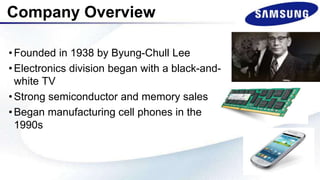
•Founded in 1938 by Byung-Chull Lee
•Electronics division began with a black-and-
white TV
•Strong semiconductor and memory sales
•Began manufacturing cell phones in the
1990s
Company Overview
Company Overview
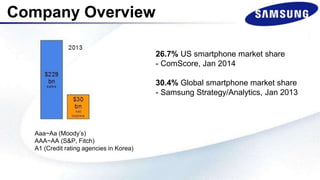
26.7% US smartphone market share
- ComScore, Jan 2014
30.4% Global smartphone market share
- Samsung Strategy/Analytics, Jan 2013
Aaa~Aa (Moody’s)
AAA~AA (S&P, Fitch)
A1 (Credit rating agencies in Korea)
Industry Analysis
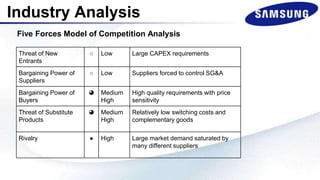
Five Forces Model of Competition Analysis
Threat of New
Entrants
â—‹ Low Large CAPEX requirements
Bargaining Power of
Suppliers
â—‹ Low Suppliers forced to control SG&A
Bargaining Power of
Buyers
â—• Medium
High
High quality requirements with price
sensitivity
Threat of Substitute
Products
â—• Medium
High
Relatively low switching costs and
complementary goods
Rivalry â—Ź High Large market demand saturated by
many different suppliers
Industry Analysis
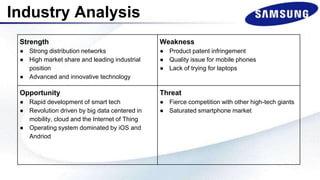
Strength
â—Ź Strong distribution networks
â—Ź High market share and leading industrial
position
â—Ź Advanced and innovative technology
Weakness
â—Ź Product patent infringement
â—Ź Quality issue for mobile phones
â—Ź Lack of trying for laptops
Opportunity
â—Ź Rapid development of smart tech
â—Ź Revolution driven by big data centered in
mobility, cloud and the Internet of Thing
â—Ź Operating system dominated by iOS and
Andriod
Threat
â—Ź Fierce competition with other high-tech giants
â—Ź Saturated smartphone market
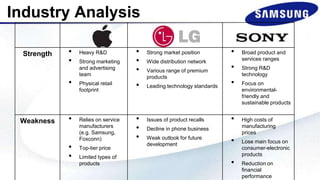
Strength • Heavy R&D
• Strong marketing
and advertising
team
• Physical retail
footprint
• Strong market position
• Wide distribution network
• Various range of premium
products
• Leading technology standards
• Broad product and
services ranges
• Strong R&D
technology
• Focus on
environmental-
friendly and
sustainable products
Weakness • Relies on service
manufacturers
(e.g. Samsung,
Foxconn)
• Top-tier price
• Limited types of
products
• Issues of product recalls
• Decline in phone business
• Weak outlook for future
development
• High costs of
manufacturing
prices
• Lose main focus on
consumer-electronic
products
• Reduction on
financial
performance
Industry Analysis
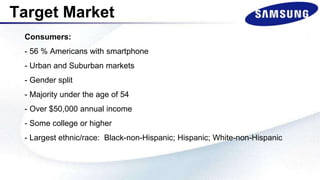
Target Market
Consumers:
- 56 % Americans with smartphone
- Urban and Suburban markets
- Gender split
- Majority under the age of 54
- Over $50,000 annual income
- Some college or higher
- Largest ethnic/race: Black-non-Hispanic; Hispanic; White-non-Hispanic
Target Market
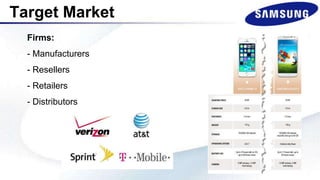
Firms:
- Manufacturers
- Resellers
- Retailers
- Distributors
Key Issues
• High degree of competition in virtually all markets
• Patent infringement
• Heavy R&D costs
• Trust crisis
• Weak outlook for new market and product expansion
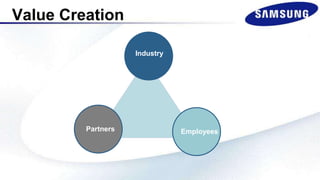
Value Creation
Inspire
Communities
New
Technology
Innovative
products
Creative
Solutions
Industry
Partners Employees
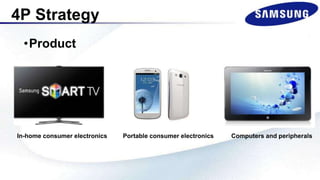
•Product
4P Strategy
In-home consumer electronics Portable consumer electronics Computers and peripherals
•Pricing
- Products for prices that suit for real quality
- Adopt Price Sensitive strategy
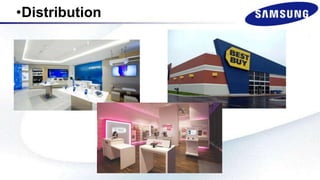
•Distribution
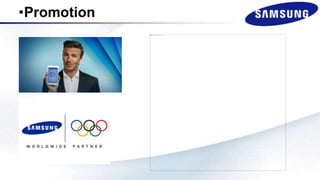
•Promotion
Strategic Alternatives
•Product Development
- Add New Features
- Improve Quality
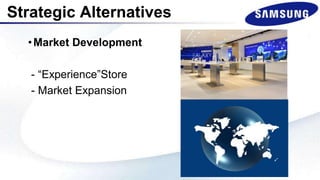
•Market Development
- “Experience”Store
- Market Expansion
Strategic Alternatives
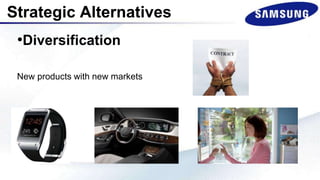
•Diversification
New products with new markets
Our Strategy
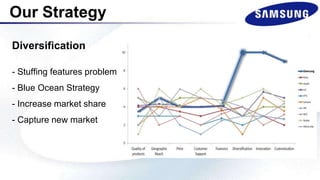
Diversification
- Stuffing features problem
- Blue Ocean Strategy
- Increase market share
- Capture new market
Tactics
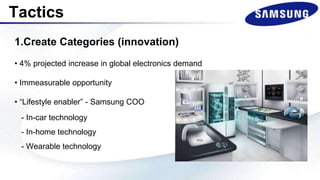
1.Create Categories (innovation)
• 4% projected increase in global electronics demand
• Immeasurable opportunity
• “Lifestyle enabler” - Samsung COO
- In-car technology
- In-home technology
- Wearable technology
Tactics
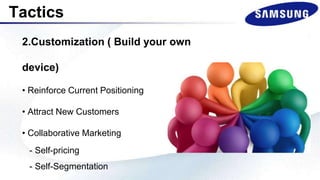
2.Customization ( Build your own
device)
• Reinforce Current Positioning
• Attract New Customers
• Collaborative Marketing
- Self-pricing
- Self-Segmentation
Risks
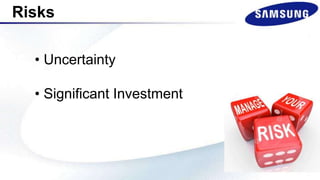
• Uncertainty
• Significant Investment
Measuring Implementation
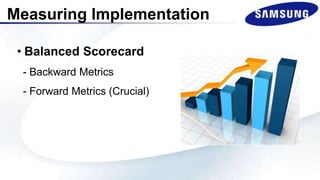
• Balanced Scorecard
- Backward Metrics
- Forward Metrics (Crucial)
Thank You!
Q&A

Black Box presentation Final