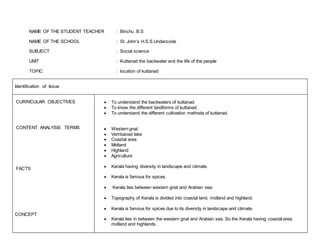
NAME OF THE STUDENT TEACHER : Binchu .B.S 
NAME OF THE SCHOOL : St. John’s H.S.S.Undancode 
SUBJECT : Social science 
UNIT : Kuttanad the backwater and the life of the people 
TOPIC : location of kuttanad 
Identification of Issue 
CURRICULAR OBJECTIVES 
CONTENT ANALYSIS TERMS 
FACTS 
CONCEPT 
 To understand the backwaters of kuttanad. 
 To know the different landforms of kuttanad. 
 To understand the different cultivation methods of kuttanad. 
 Western gnat 
 Vembanad lake 
 Coastal area 
 Midland 
 Highland 
 Agriculture 
 Kerala having diversity in landscape and climate. 
 Kerala is famous for spices. 
 Kerala lies between western gnat and Arabian sea. 
 Topography of Kerala is divided into coastal land, midland and highland. 
 Kerala is famous for spices due to its diversity in landscape and climate. 
 Kerala lies in between the western gnat and Arabian sea. So the Kerala having coastal area, 
midland and highlands.
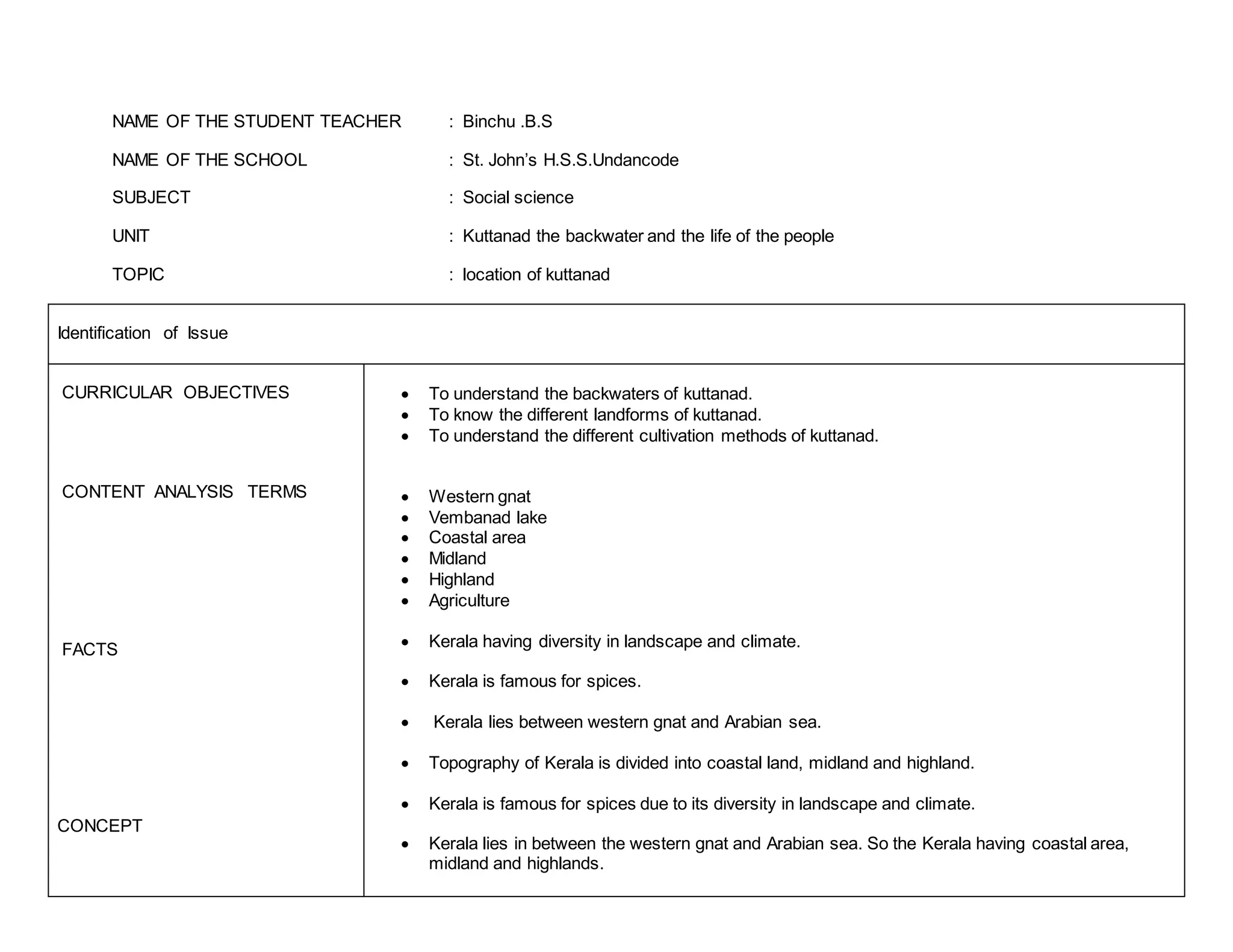
VALUE AND ATTITUDES 
PRE – REQUSITE 
ENTRY BEHAVIOUR 
LEARNING MATERIAL 
REFERENCE 
 Vembanad lake is the biggest backwater in Kerala. 
 Kuttanad is lying below the sea level. 
 The cultivation in Kuttanad was taking place once in two or three years. 
 During summer the flow of fresh water decreases and saline water enters the low-lying from the 
sea. The salinity causes scarcity of drinking water and damages agriculture. 
 The pupil gets awareness about the land areas of Island as below sea level 
 The get awareness about the conservation of nature. 
 To known that Kerala having different topography. 
 To known about the land areas seeing below sea levels. 
 They are aware about Kerala topography and climate. 
 The student aware about different type of cultivation. 
 Chart showing location of kuttanad in Kerala. 
 8th standard social science text book 
CLASS ROOM INTERACTION PROCEDURE 
EXPECTED / ACTUAL RESPONSE 
INTRODUCTION :- Teacher asking some questions to the students, which state of India is known as 
God’s own country? Why? Can you say some of the tourist destinations in Kerala? 
 Rice granary of Kerala – 37% rice cultivation. 
 Situated near vembanad lake – 34 lakes are seen in Kerala. 
Kerala 
Tourist destination 
Kuttanad, Alappuzha, Kochi, Kovalam etc.
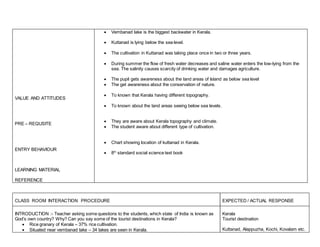
PRESENTATION 
Kerala state lies along the Eastern part of Arabian sea and in the Southern tip of the Indian sub 
continent. 
Diversity in landscape and climate are the specialties of Kerala. The topography of Kerala can 
be divided into three mainly coastal area, midland and highland. 
Vembanad lake is the biggest backwater in Kerala. This region spread over the land of the 
backwater. More or less half of the area lying below sea level. 
Pampa, Muvattupuzha, Meenachil, Manimala and Achankovil flows through Kuttanad and join 
the Vembanad lake. During monsoon rivers get over flows causing the floods in the Kuttanad region. 
During summer the flow of fresh water decrease and saline water enters the low-laying region from the 
sea. The salinity causes scarcity of drinking water and damages agriculture. 
Activity . 1 
By making the students into bench wise teacher asked student to write down the problems 
faced by the people of kuttanad? 
Pupil listening carefully. 
By observing the chart pupil and 
understanding the location of Kuttanad. 
Observing the chart showing kuttanad.
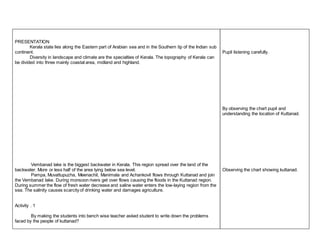
Consolidation 
 During mansoon these rivers bring large amount of water to vembanad lake causing the flood in 
the kuttanad region. 
 During summer the flow of fresh water decreases and saline water enters into the low-lying 
region from the sea. 
 The salinity causes scarcity of drinking water and damages to agriculture. 
Activity 2 
Student observe given activity cards and write down the notes 
Write about the importance of Kerala topography and climate? 
Key points 
Location 
Types of cultivation 
Climate 
Consolidation 
The Kerala is located in equatorial region lies along the Lakshadweep 
Sea in west and Tamilnadu in east. Kuttanad is situated in the south western coast of Kerala. 
Vembanad lake is the biggest backwater in Kerala. 
Conclusion 
Diversity in landscape and climate are the specialties of Kerala. Kerala is situated between 
western Ghats in the east and Arabian sea in the west. The topography can be divided into coastal 
area, midland and highland.
REVIEW QUESTIONS 
1. Which is largest backwater of Kerala? 
2. The locations of Kerala is situated in which part of Indian sub comfiest? 
3. Which are the major rivers flow to vembanad lake? 
4. What are problems faced by people during mansoon? 
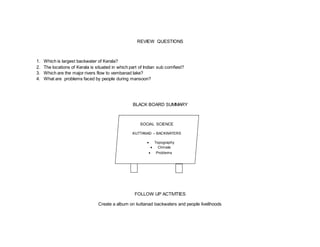
BLACK BOARD SUMMARY 
SOCIAL SCIENCE 
KUTTANAD – BACKWATERS 
 Topography 
 Climate 
 Problems 
FOLLOW UP ACTIVITIES 
 
Create a album on kuttanad backwaters and people livelihoods

Binchu

  • 1.
    NAME OF THESTUDENT TEACHER : Binchu .B.S NAME OF THE SCHOOL : St. John’s H.S.S.Undancode SUBJECT : Social science UNIT : Kuttanad the backwater and the life of the people TOPIC : location of kuttanad Identification of Issue CURRICULAR OBJECTIVES CONTENT ANALYSIS TERMS FACTS CONCEPT  To understand the backwaters of kuttanad.  To know the different landforms of kuttanad.  To understand the different cultivation methods of kuttanad.  Western gnat  Vembanad lake  Coastal area  Midland  Highland  Agriculture  Kerala having diversity in landscape and climate.  Kerala is famous for spices.  Kerala lies between western gnat and Arabian sea.  Topography of Kerala is divided into coastal land, midland and highland.  Kerala is famous for spices due to its diversity in landscape and climate.  Kerala lies in between the western gnat and Arabian sea. So the Kerala having coastal area, midland and highlands.
  • 2.
    VALUE AND ATTITUDES PRE – REQUSITE ENTRY BEHAVIOUR LEARNING MATERIAL REFERENCE  Vembanad lake is the biggest backwater in Kerala.  Kuttanad is lying below the sea level.  The cultivation in Kuttanad was taking place once in two or three years.  During summer the flow of fresh water decreases and saline water enters the low-lying from the sea. The salinity causes scarcity of drinking water and damages agriculture.  The pupil gets awareness about the land areas of Island as below sea level  The get awareness about the conservation of nature.  To known that Kerala having different topography.  To known about the land areas seeing below sea levels.  They are aware about Kerala topography and climate.  The student aware about different type of cultivation.  Chart showing location of kuttanad in Kerala.  8th standard social science text book CLASS ROOM INTERACTION PROCEDURE EXPECTED / ACTUAL RESPONSE INTRODUCTION :- Teacher asking some questions to the students, which state of India is known as God’s own country? Why? Can you say some of the tourist destinations in Kerala?  Rice granary of Kerala – 37% rice cultivation.  Situated near vembanad lake – 34 lakes are seen in Kerala. Kerala Tourist destination Kuttanad, Alappuzha, Kochi, Kovalam etc.
  • 3.
    PRESENTATION Kerala statelies along the Eastern part of Arabian sea and in the Southern tip of the Indian sub continent. Diversity in landscape and climate are the specialties of Kerala. The topography of Kerala can be divided into three mainly coastal area, midland and highland. Vembanad lake is the biggest backwater in Kerala. This region spread over the land of the backwater. More or less half of the area lying below sea level. Pampa, Muvattupuzha, Meenachil, Manimala and Achankovil flows through Kuttanad and join the Vembanad lake. During monsoon rivers get over flows causing the floods in the Kuttanad region. During summer the flow of fresh water decrease and saline water enters the low-laying region from the sea. The salinity causes scarcity of drinking water and damages agriculture. Activity . 1 By making the students into bench wise teacher asked student to write down the problems faced by the people of kuttanad? Pupil listening carefully. By observing the chart pupil and understanding the location of Kuttanad. Observing the chart showing kuttanad.
  • 4.
    Consolidation  Duringmansoon these rivers bring large amount of water to vembanad lake causing the flood in the kuttanad region.  During summer the flow of fresh water decreases and saline water enters into the low-lying region from the sea.  The salinity causes scarcity of drinking water and damages to agriculture. Activity 2 Student observe given activity cards and write down the notes Write about the importance of Kerala topography and climate? Key points Location Types of cultivation Climate Consolidation The Kerala is located in equatorial region lies along the Lakshadweep Sea in west and Tamilnadu in east. Kuttanad is situated in the south western coast of Kerala. Vembanad lake is the biggest backwater in Kerala. Conclusion Diversity in landscape and climate are the specialties of Kerala. Kerala is situated between western Ghats in the east and Arabian sea in the west. The topography can be divided into coastal area, midland and highland.
  • 5.
    REVIEW QUESTIONS 1.Which is largest backwater of Kerala? 2. The locations of Kerala is situated in which part of Indian sub comfiest? 3. Which are the major rivers flow to vembanad lake? 4. What are problems faced by people during mansoon? BLACK BOARD SUMMARY SOCIAL SCIENCE KUTTANAD – BACKWATERS  Topography  Climate  Problems FOLLOW UP ACTIVITIES  Create a album on kuttanad backwaters and people livelihoods