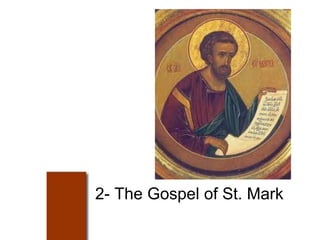
2- The Gospel of St. Mark
1. Author
 Attributed from the 2nd century
 A disciple of Jesus from the very
beginning
 Probably Peter’s secretary
 Based on the stories of the
disciples, mainly Peter (not an
eyewitness)
 The “young man covered with a
sheet who followed Jesus after
being caught”.
 Also accompanied Paul and
Barnabas
2. Sources, Date, Place and Recipiens
SOURCES:
• Stories from eyewitnesses
• “Logia Iesu”
DATE: around 50-60
- but other theories: around 40
PLACE: Rome
RECIPIENS: Christians from the pagan world:
• Not too much interest to the issues of the Mosaic Law
• Careful to explain Jewish customs, unknown for the readers
3. Language and literary style
 LANGUAGE: Greek. To be open to the gentils.
 LITERARY STYLE:
 The shortest of the 4 Gospels
 Arcaic style
 Clearly based in oral tradition
 The beginner of the genre “Gospel”
 Not a “classical” historical book
 Not enough space to Jesus’ origin and personality
 Contradictions in time and space
 Lack of coherence in the main characters
Because:
 consist of the historicization or narration of
the kerygma: Jesus died and resurrected
to save us.
 But still, historical!
4. The “Mesianic secret”
 “Mesianic secret”: Confession of messianism and
divinity of Jesus
 Mark: frequency with which Jesus instructs certain
characters (unclean spirits, demons, benefited by
some miracle, disciples ...) to silent and not unveil
his identity
…until his resurrection.
Mc 1,25 Mc 7,24
Mc 1,34 Mc 8,26
Mc 1,43 Mc 8,30
Mc 3,12 Mc 9.9
Mc 5,43
5. Main content of St. Mark’s Gospel (I)
 Main message: Jesus Christ is the
Son of God
 This has been declared by:
 God the Father (Baptism and
Transfiguration)
 Even the unclean spirits throgh
possessed men
 Jesus Himself, teaching and acting:
 With power: over spirits, men,
diseases, death, nature
 Authority over: the Law and jewish
institutions, his enemies, the sin
6. Main content of St. Mark’s Gospel (II)
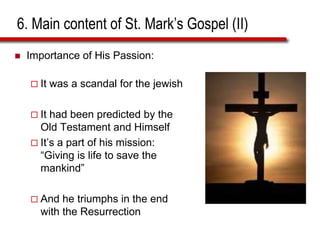
 Importance of His Passion:
 It was a scandal for the jewish
 It had been predicted by the
Old Testament and Himself
 It’s a part of his mission:
“Giving is life to save the
mankind”
 And he triumphs in the end
with the Resurrection
7. Summarizing
 Few speeches and more interested in
Jesus’s actions
 Stories with a lot of details that show
Jesus’ humanity
 After this, he leads us to the “Secret”
 The Secret is revealed in the Passion and
Resurrection
 The Messiah is not the jewish one
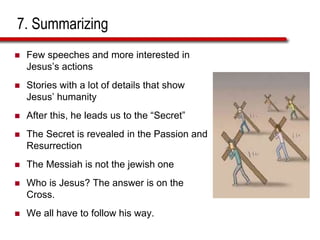
 Who is Jesus? The answer is on the
Cross.
 We all have to follow his way.
THE END
Questions?

Bible course -st mark

  • 1.
    2- The Gospelof St. Mark
  • 2.
    1. Author  Attributedfrom the 2nd century  A disciple of Jesus from the very beginning  Probably Peter’s secretary  Based on the stories of the disciples, mainly Peter (not an eyewitness)  The “young man covered with a sheet who followed Jesus after being caught”.  Also accompanied Paul and Barnabas
  • 3.
    2. Sources, Date,Place and Recipiens SOURCES: • Stories from eyewitnesses • “Logia Iesu” DATE: around 50-60 - but other theories: around 40 PLACE: Rome RECIPIENS: Christians from the pagan world: • Not too much interest to the issues of the Mosaic Law • Careful to explain Jewish customs, unknown for the readers
  • 4.
    3. Language andliterary style  LANGUAGE: Greek. To be open to the gentils.  LITERARY STYLE:  The shortest of the 4 Gospels  Arcaic style  Clearly based in oral tradition  The beginner of the genre “Gospel”  Not a “classical” historical book  Not enough space to Jesus’ origin and personality  Contradictions in time and space  Lack of coherence in the main characters Because:  consist of the historicization or narration of the kerygma: Jesus died and resurrected to save us.  But still, historical!
  • 5.
    4. The “Mesianicsecret”  “Mesianic secret”: Confession of messianism and divinity of Jesus  Mark: frequency with which Jesus instructs certain characters (unclean spirits, demons, benefited by some miracle, disciples ...) to silent and not unveil his identity …until his resurrection. Mc 1,25 Mc 7,24 Mc 1,34 Mc 8,26 Mc 1,43 Mc 8,30 Mc 3,12 Mc 9.9 Mc 5,43
  • 6.
    5. Main contentof St. Mark’s Gospel (I)  Main message: Jesus Christ is the Son of God  This has been declared by:  God the Father (Baptism and Transfiguration)  Even the unclean spirits throgh possessed men  Jesus Himself, teaching and acting:  With power: over spirits, men, diseases, death, nature  Authority over: the Law and jewish institutions, his enemies, the sin
  • 7.
    6. Main contentof St. Mark’s Gospel (II)  Importance of His Passion:  It was a scandal for the jewish  It had been predicted by the Old Testament and Himself  It’s a part of his mission: “Giving is life to save the mankind”  And he triumphs in the end with the Resurrection
  • 8.
    7. Summarizing  Fewspeeches and more interested in Jesus’s actions  Stories with a lot of details that show Jesus’ humanity  After this, he leads us to the “Secret”  The Secret is revealed in the Passion and Resurrection  The Messiah is not the jewish one  Who is Jesus? The answer is on the Cross.  We all have to follow his way.
  • 9.