The Fantastic Fish ShopBy:Erin BalleyJ’aimeHolderbaumLisa Lam-Wilson
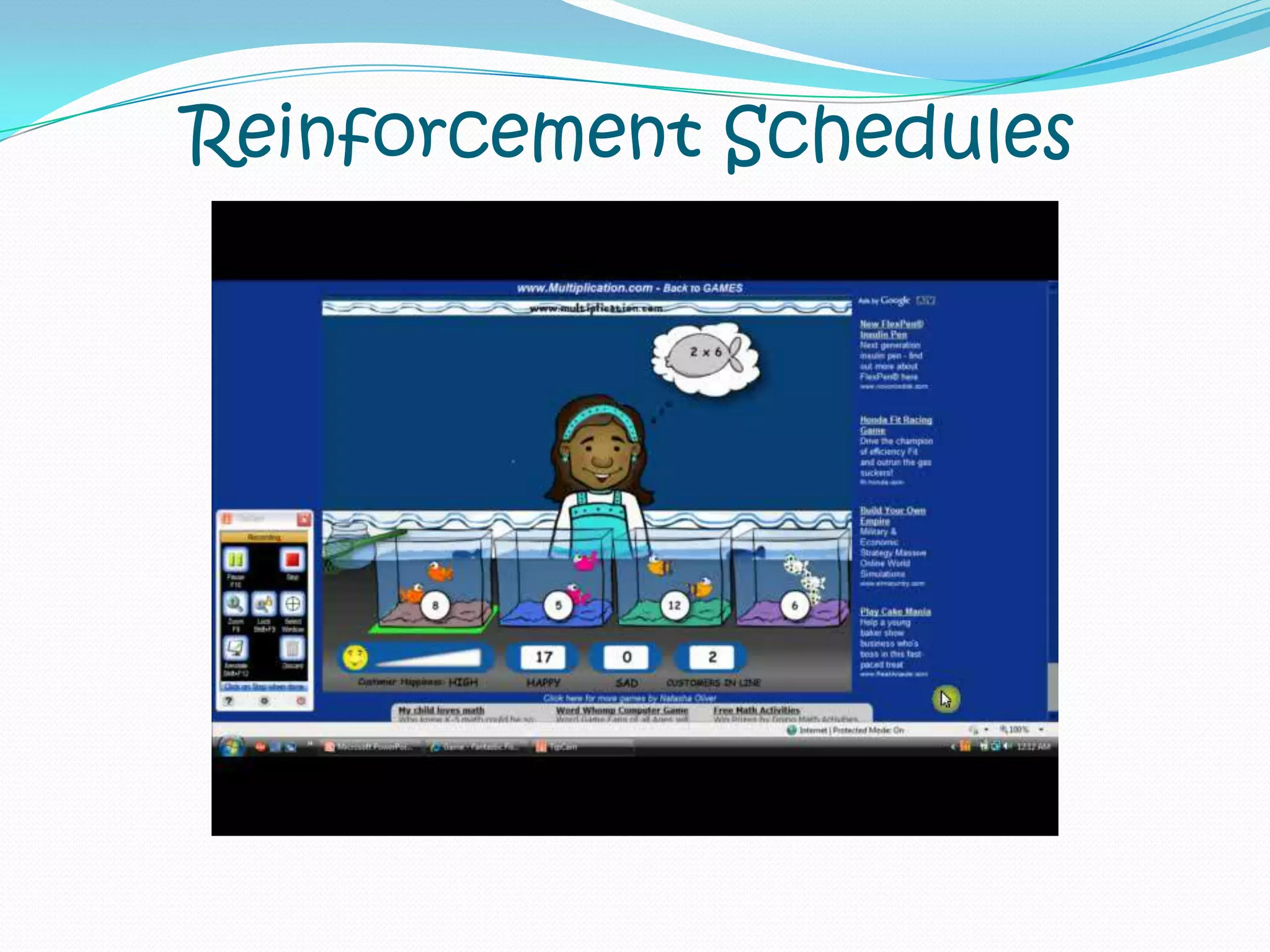
Drill and Practice multiplication gameFound at multiplication.comhttp://multiplication.com/flashgames/FishShop.htm
Operant ConditioningA process of changing behavior by rewarding or punishing a subject each time an action is performed until the subject associates the action with pleasure or distress.Reinforcement SchedulesPositive and Negative ReinforcementPositive and Negative Punishmenthttp://dictionary.reference.com/browse/operant%20conditioning
Reinforcement SchedulesContinuous Reinforcement:  Given EVERY timePartial Reinforcement:  Given only PART of the time.Fixed Ratio:  reinforcement is given after a specific # of responses.http://psychology.about.com/od/behavioralpsychology/a/schedules.htm
Reinforcement Schedules
Positive Reinforcement To strengthen by providing a positive stimulus that increases the probability of a specific response
 Praise and Rewardshttp://allpsych.com/psychology101/reinforcement.html
Negative ReinforcementTaking something negative away in order to increase a responseWhen a negative stimulus is eliminated, it will likely increase the chances that a student will complete the task correctly.http://allpsych.com/psychology101/reinforcement.html
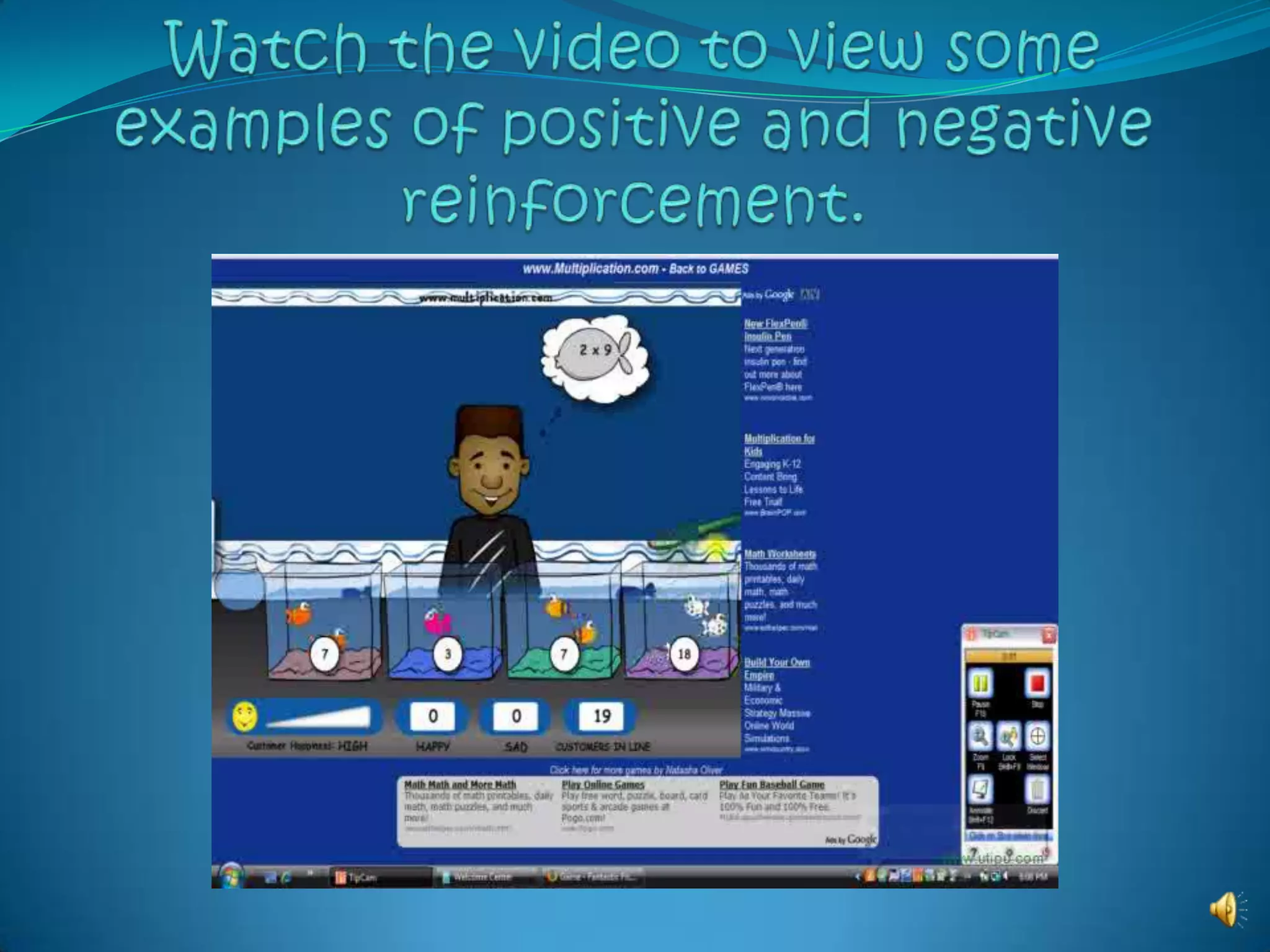
Watch the video to view some examples of positive and negative reinforcement.
Webster’s Definition: pun·ish·mentPronunciation: \ˈpə-nish-mənt\ Function: nounDate: 15th century1: the act of punishing2 a: suffering, pain, or loss that serves as retribution b: a penalty inflicted on an offender through judicial procedure 3: severe, rough, or disastrous treatmenthttp://www.merriam-webster.com/dictionary/punishment
In Skinner’s Behaviorism:	Punishment is a procedure in which responses are followed by either:(a) the removal of a positive reinforcer, or (b) the presentation of a negative reinforcer (or aversive stimulus).http://findarticles.com/p/articles/mi_6884/is_1_6/ai_n28321088/
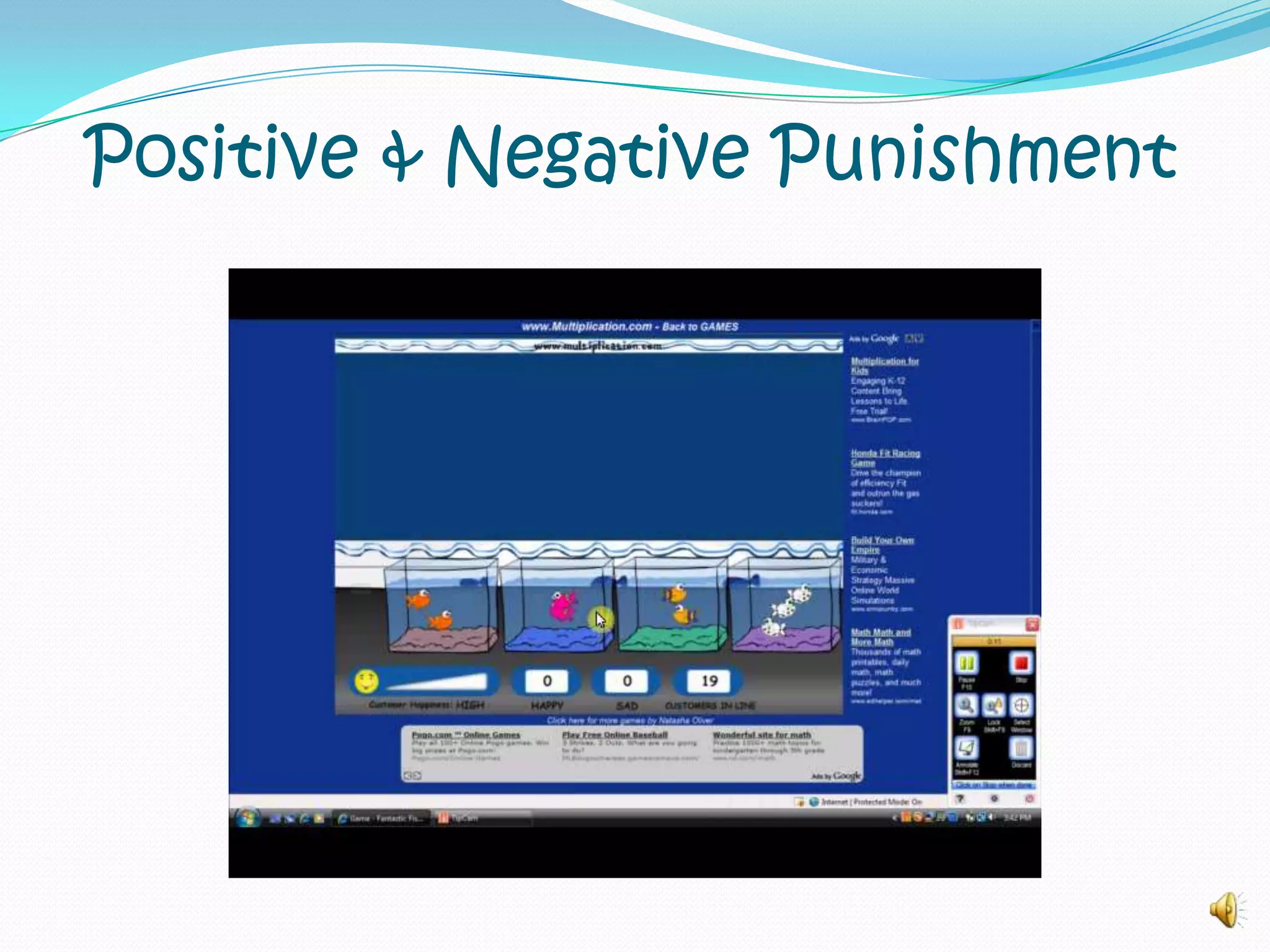
Positive & Negative Punishment

Behaviorisms in The Fantastic Fish Shop

  • 1.
    The Fantastic FishShopBy:Erin BalleyJ’aimeHolderbaumLisa Lam-Wilson
  • 2.
    Drill and Practicemultiplication gameFound at multiplication.comhttp://multiplication.com/flashgames/FishShop.htm
  • 3.
    Operant ConditioningA processof changing behavior by rewarding or punishing a subject each time an action is performed until the subject associates the action with pleasure or distress.Reinforcement SchedulesPositive and Negative ReinforcementPositive and Negative Punishmenthttp://dictionary.reference.com/browse/operant%20conditioning
  • 4.
    Reinforcement SchedulesContinuous Reinforcement: Given EVERY timePartial Reinforcement: Given only PART of the time.Fixed Ratio: reinforcement is given after a specific # of responses.http://psychology.about.com/od/behavioralpsychology/a/schedules.htm
  • 5.
  • 6.
    Positive Reinforcement Tostrengthen by providing a positive stimulus that increases the probability of a specific response
  • 7.
    Praise andRewardshttp://allpsych.com/psychology101/reinforcement.html
  • 8.
    Negative ReinforcementTaking somethingnegative away in order to increase a responseWhen a negative stimulus is eliminated, it will likely increase the chances that a student will complete the task correctly.http://allpsych.com/psychology101/reinforcement.html
  • 9.
    Watch the videoto view some examples of positive and negative reinforcement.
  • 10.
    Webster’s Definition: pun·ish·mentPronunciation: \ˈpə-nish-mənt\Function: nounDate: 15th century1: the act of punishing2 a: suffering, pain, or loss that serves as retribution b: a penalty inflicted on an offender through judicial procedure 3: severe, rough, or disastrous treatmenthttp://www.merriam-webster.com/dictionary/punishment
  • 11.
    In Skinner’s Behaviorism: Punishmentis a procedure in which responses are followed by either:(a) the removal of a positive reinforcer, or (b) the presentation of a negative reinforcer (or aversive stimulus).http://findarticles.com/p/articles/mi_6884/is_1_6/ai_n28321088/
  • 12.
  • 13.
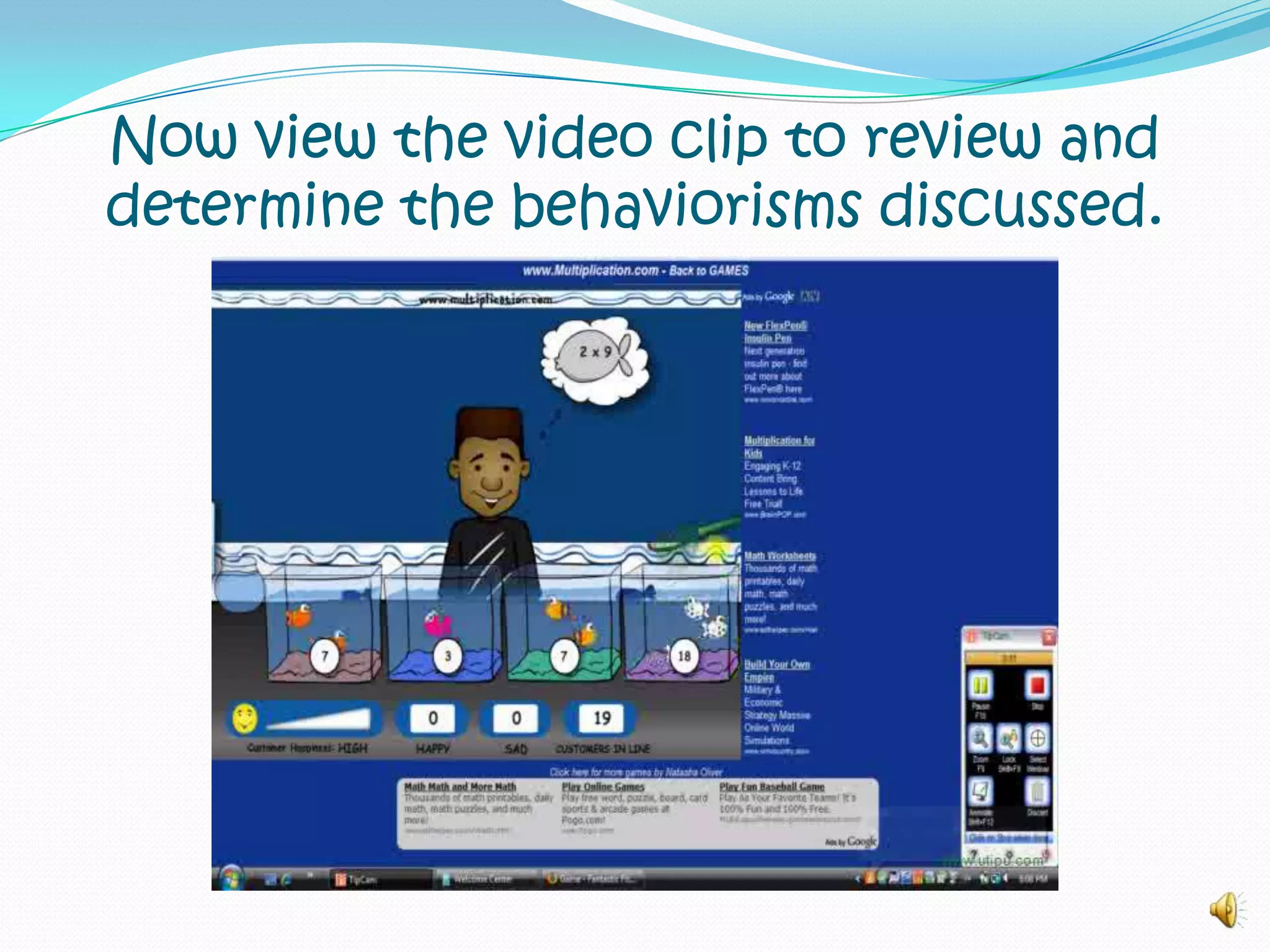
    Now view thevideo clip to review and determine the behaviorisms discussed.

Editor's Notes

  • #5 When using Operant Behavior, there are two types of reinforcement schedules…continuous and partial. Continuous Reinforcement is given every time the desired behavior happens. Partial Reinforcement is only given some of the time that the desired behavior happens. There are also 4 sub-schedules of partial reinforcement, one of which is Fixed Ratio, where reinforcement is given after a specific # of responses.
  • #6 This software clip shows the student receiving reinforcement after EVERY customer they help….which is a continuous schedule. It also shows a fixed ratio schedule, by giving reinforcement after they help all of the customers in line.