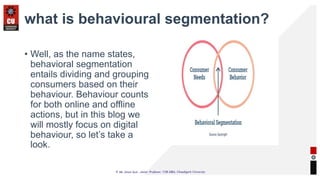
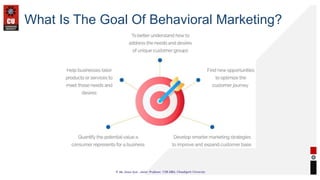
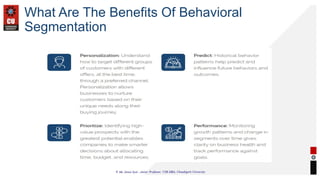
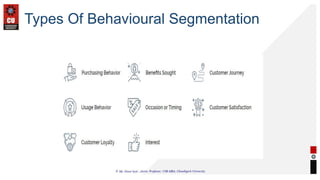
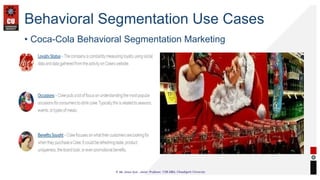
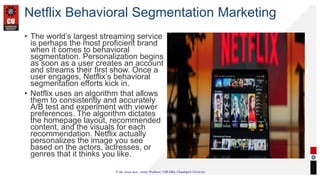
This document provides an overview of behavioral segmentation in marketing analytics. It defines behavioral segmentation as dividing customers into groups based on their online and offline actions. Examples of behavioral data used include time spent on a website, bounce rate, purchase history, and items viewed. The document then discusses how behavioral segmentation has evolved over time and become a key focus since 2000. It explores the benefits of behavioral segmentation for personalizing marketing and staying competitive. Examples are provided of how Coca-Cola and Netflix successfully implement behavioral segmentation. Key references on the topic are also listed.