Managing health in the face of 
     changing climate
         Ruth Clements
Challenges associated with climate 
             change
• Economic – more people to feed, but not an 
  elastic demand. Pressure on cost of 
  production and efficiency.
• Adaptation – be that cycles of change, 
  increased volatility or overall change.
• Mitigation – what might we be required to do 
  to reduce the carbon footprint:
  – Intensify
  – De‐intensify
  – Integrated farming
Disease and ill health costs ...
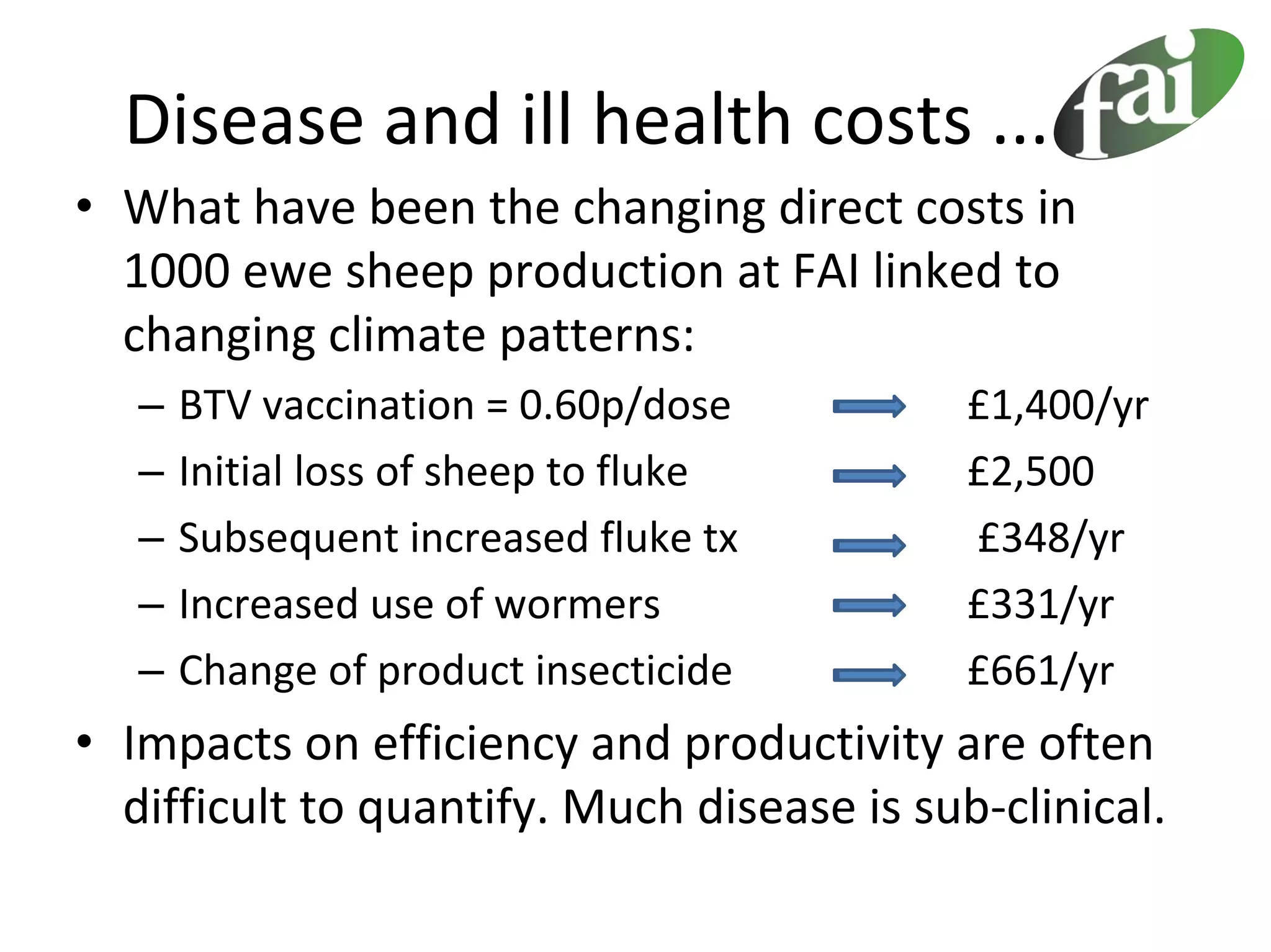
• What have been the changing direct costs in 
  1000 ewe sheep production at FAI linked to 
  changing climate patterns:
   –   BTV vaccination = 0.60p/dose                     £1,400/yr
   –   Initial loss of sheep to fluke                   £2,500 
   –   Subsequent increased fluke tx                    £348/yr
   –   Increased use of wormers                         £331/yr
   –   Change of product insecticide                    £661/yr
• Impacts on efficiency and productivity are often 
  difficult to quantify. Much disease is sub‐clinical.
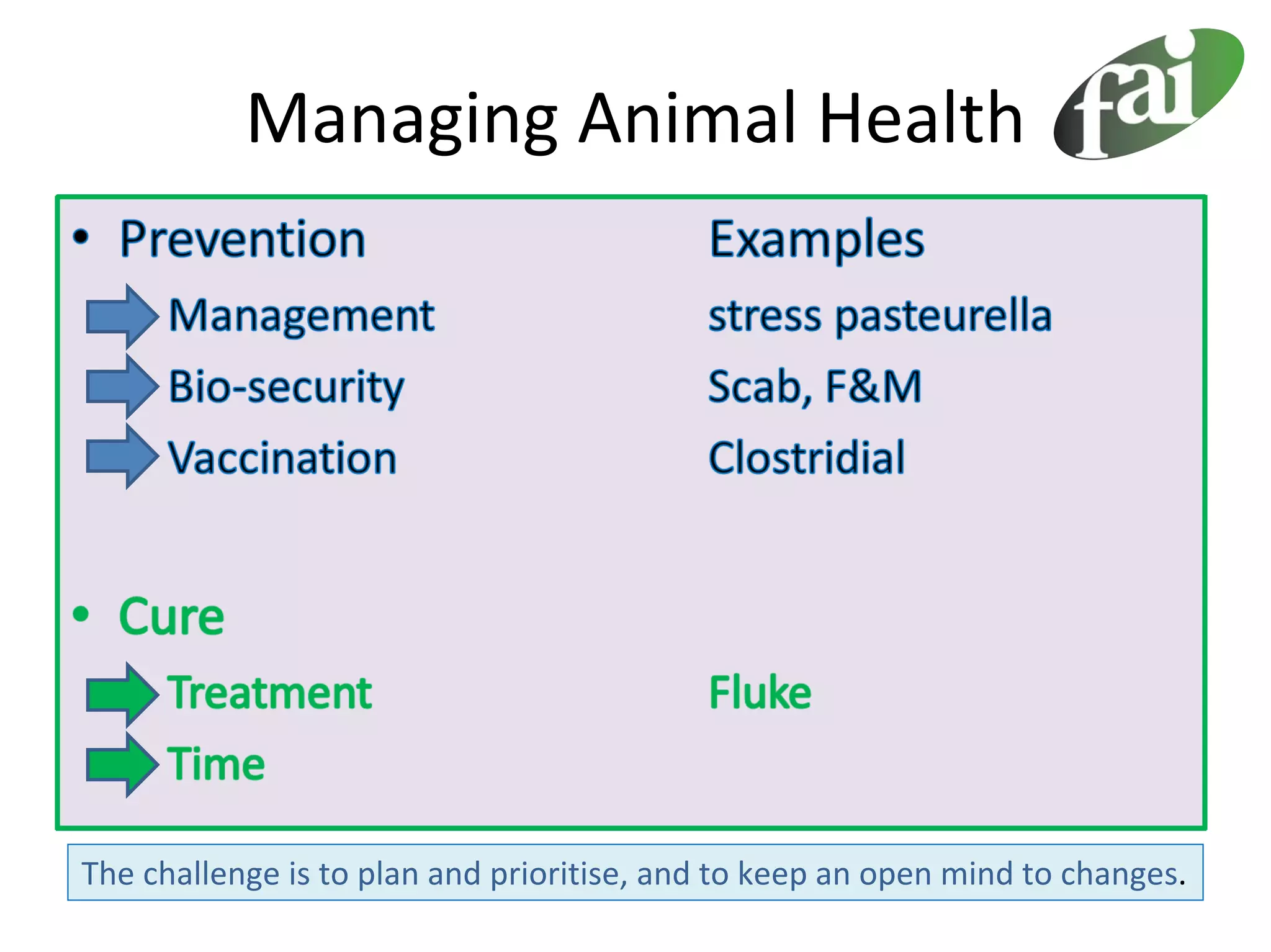
Managing Animal Health


The challenge is to plan and prioritise, and to keep an open mind to changes.
Managing health
• Encouraging tolerance to disease can be very 
  useful.
  – Adaptive breeding
• Managing environment and modifying husbandry 
  methods.
• Working on optimal nutrition, particularly micro‐
  nutrients.
• Quantifying the current situation 
  – Knowing where you stand, and what the national 
    picture is
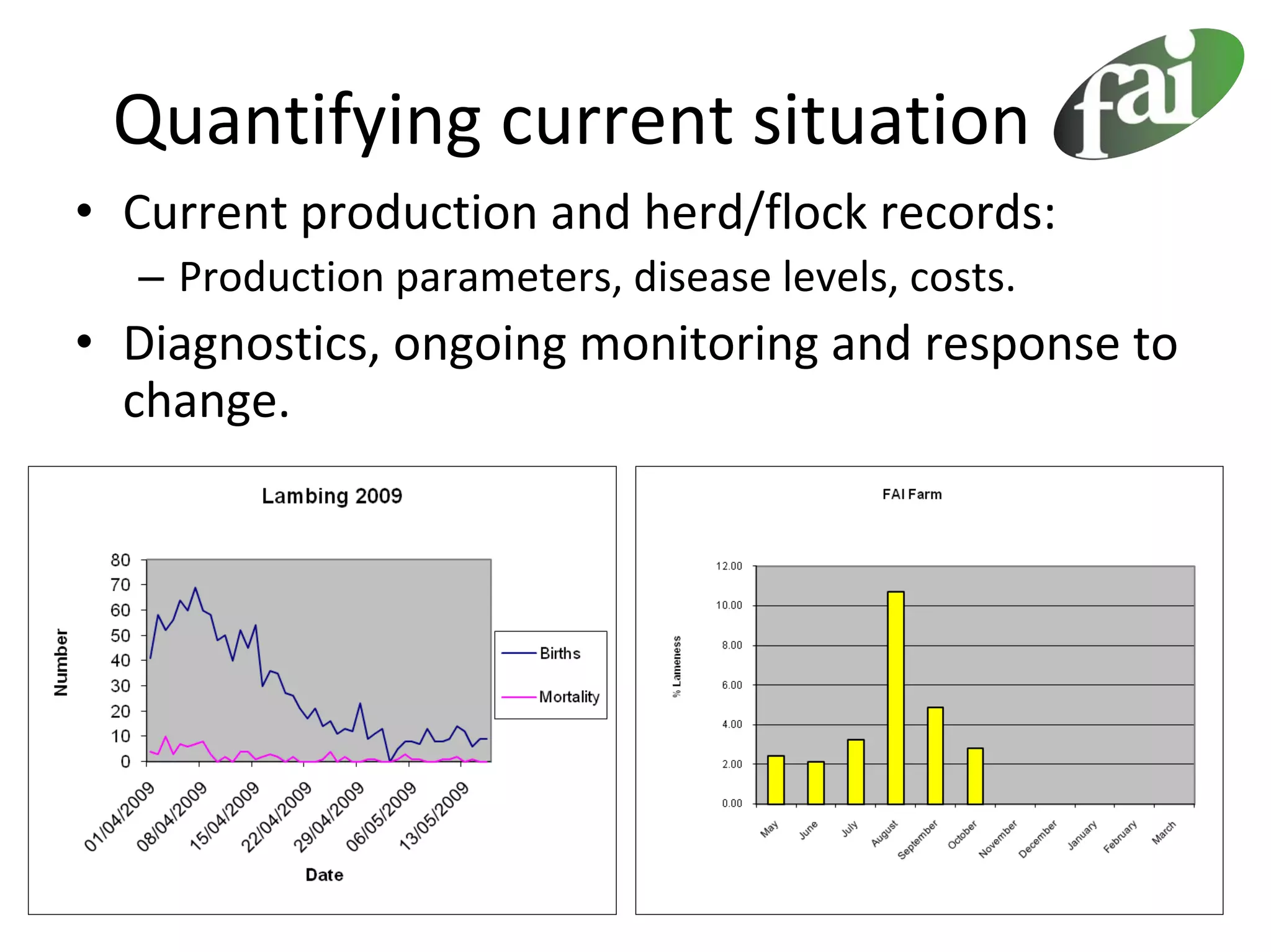
Quantifying current situation
• Current production and herd/flock records:
  – Production parameters, disease levels, costs.
• Diagnostics, ongoing monitoring and response to 
  change.
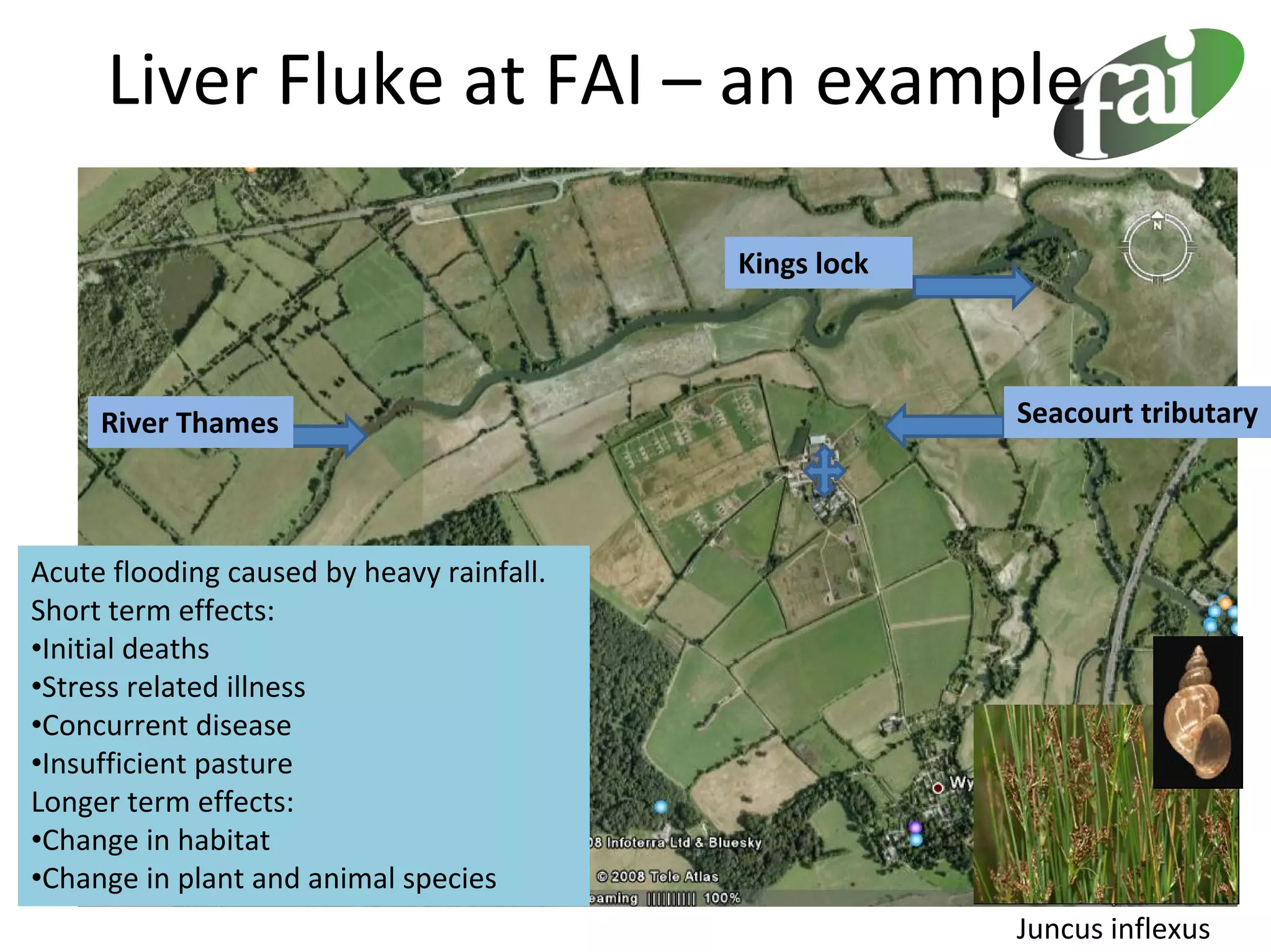
Liver Fluke at FAI – an example

                                           Kings lock


     River Thames                                       Seacourt tributary


Acute flooding caused by heavy rainfall.
Short term effects:
•Initial deaths
•Stress related illness
•Concurrent disease
•Insufficient pasture
Longer term effects:
•Change in habitat
•Change in plant and animal species
                                                        Juncus inflexus
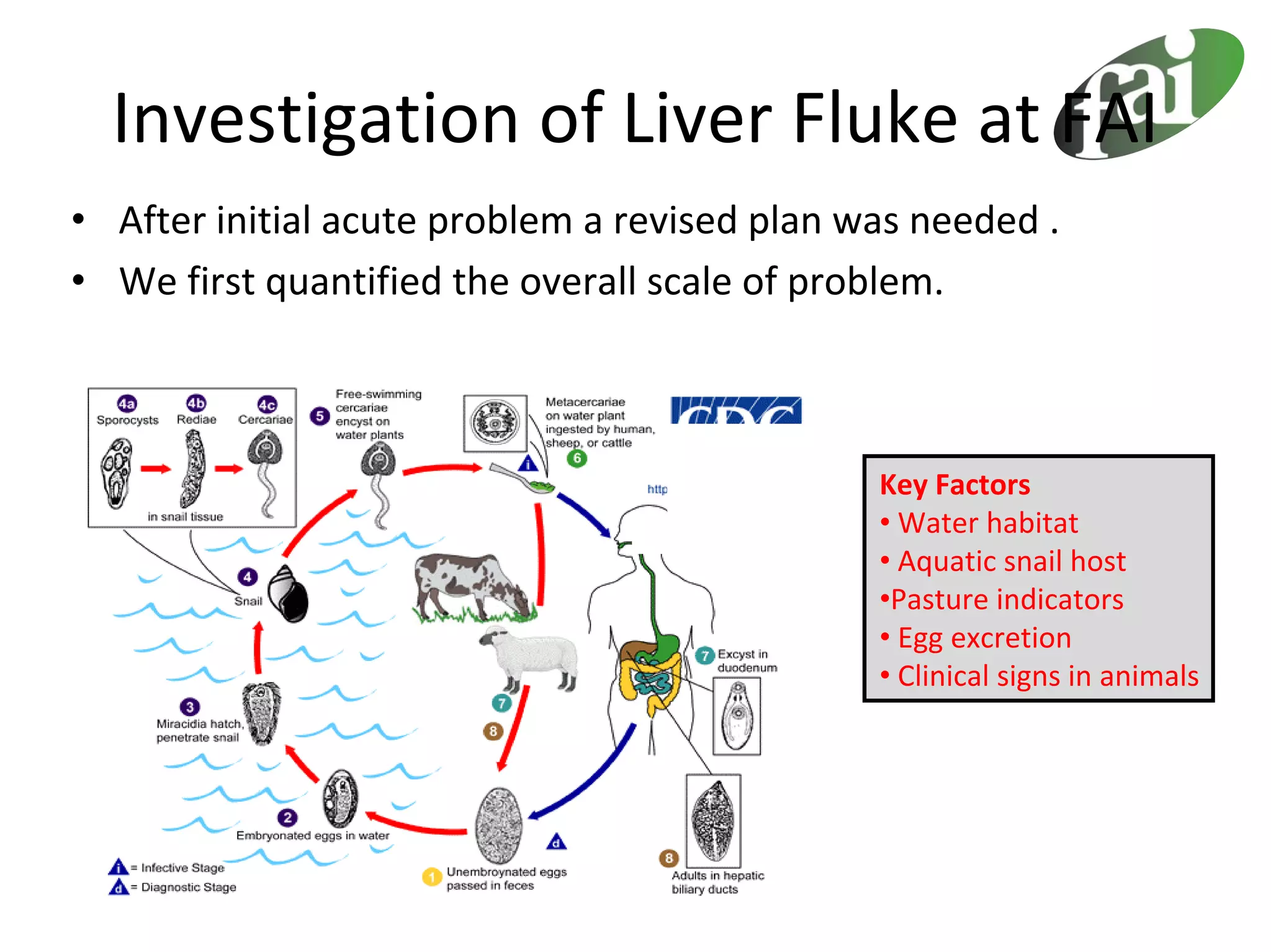
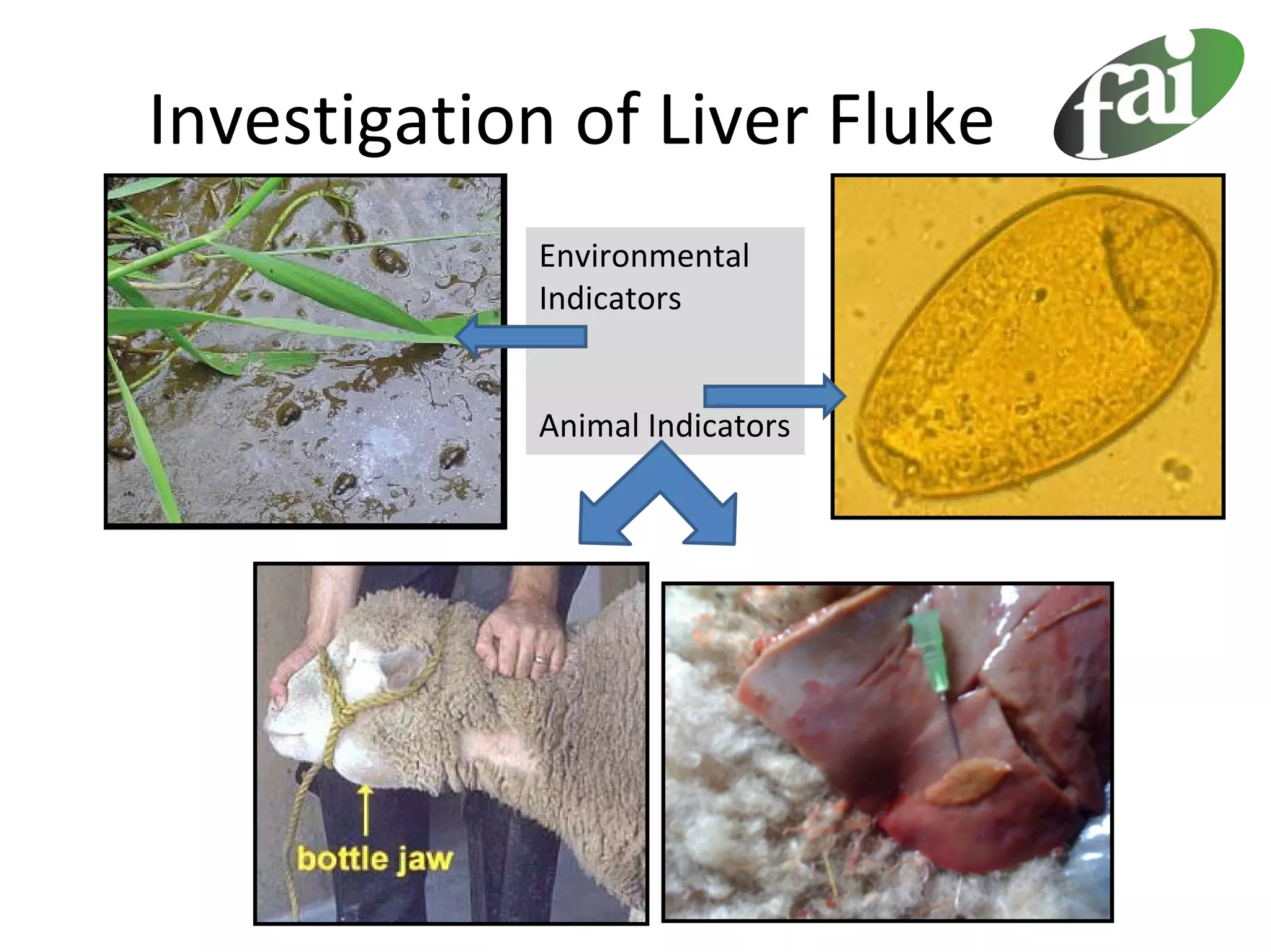
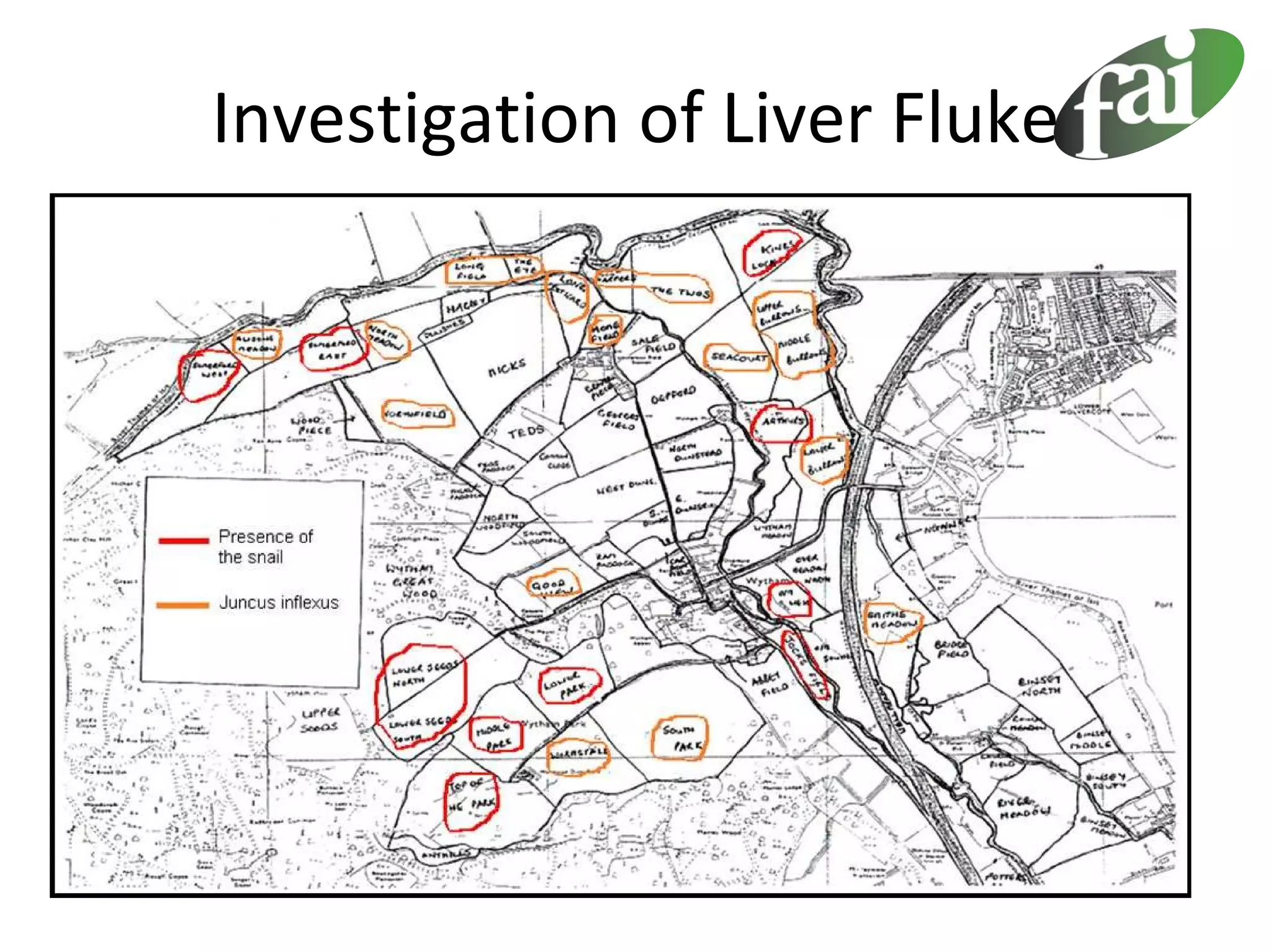
Investigation of Liver Fluke at FAI
• After initial acute problem a revised plan was needed .
• We first quantified the overall scale of problem.


                                              Key Factors
                                              • Water habitat
                                              • Aquatic snail host
                                              •Pasture indicators
                                              • Egg excretion
                                              • Clinical signs in animals
Investigation of Liver Fluke
            Environmental 
            Indicators


            Animal Indicators
Investigation of Liver Fluke
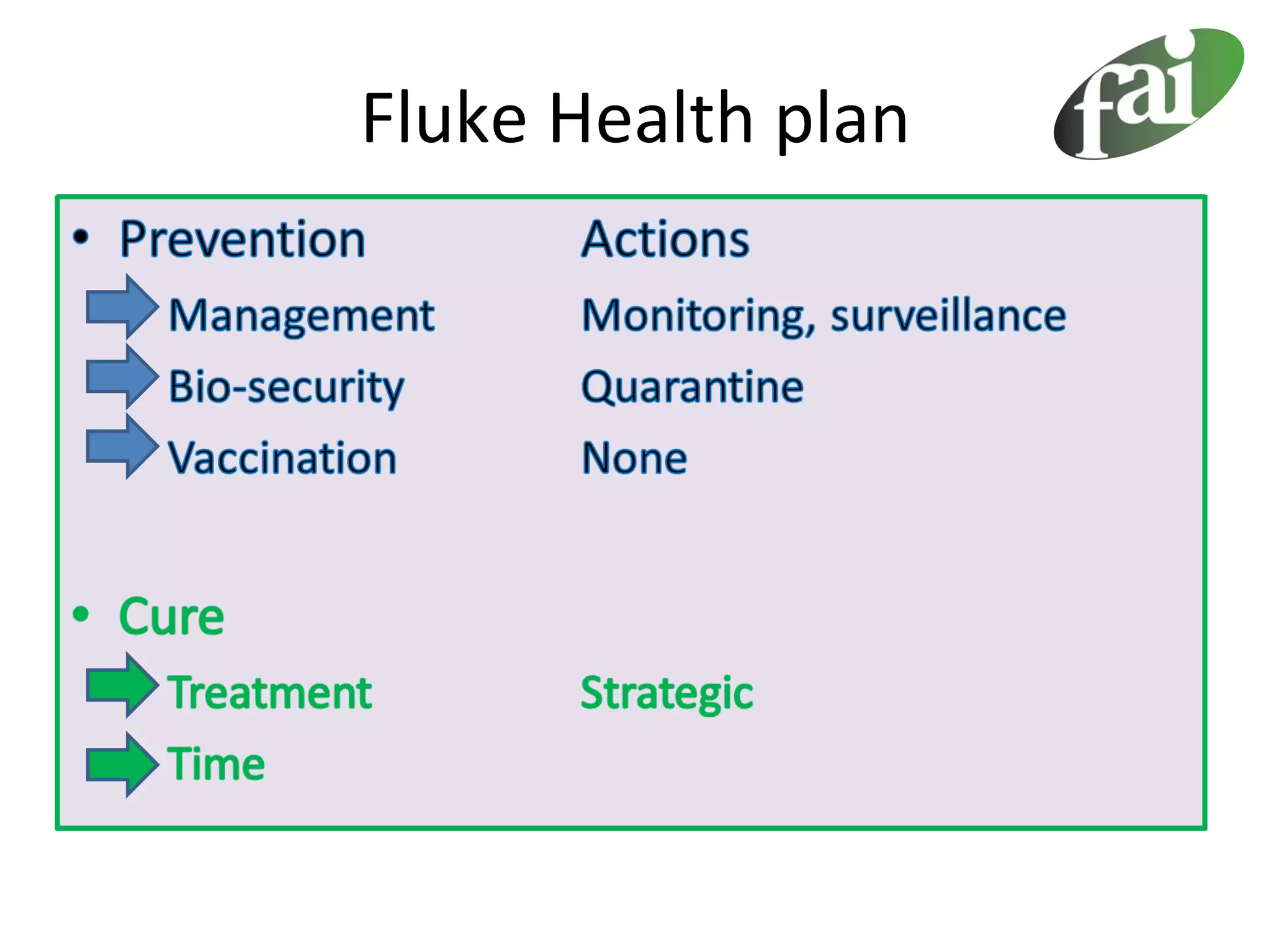
Fluke Health plan
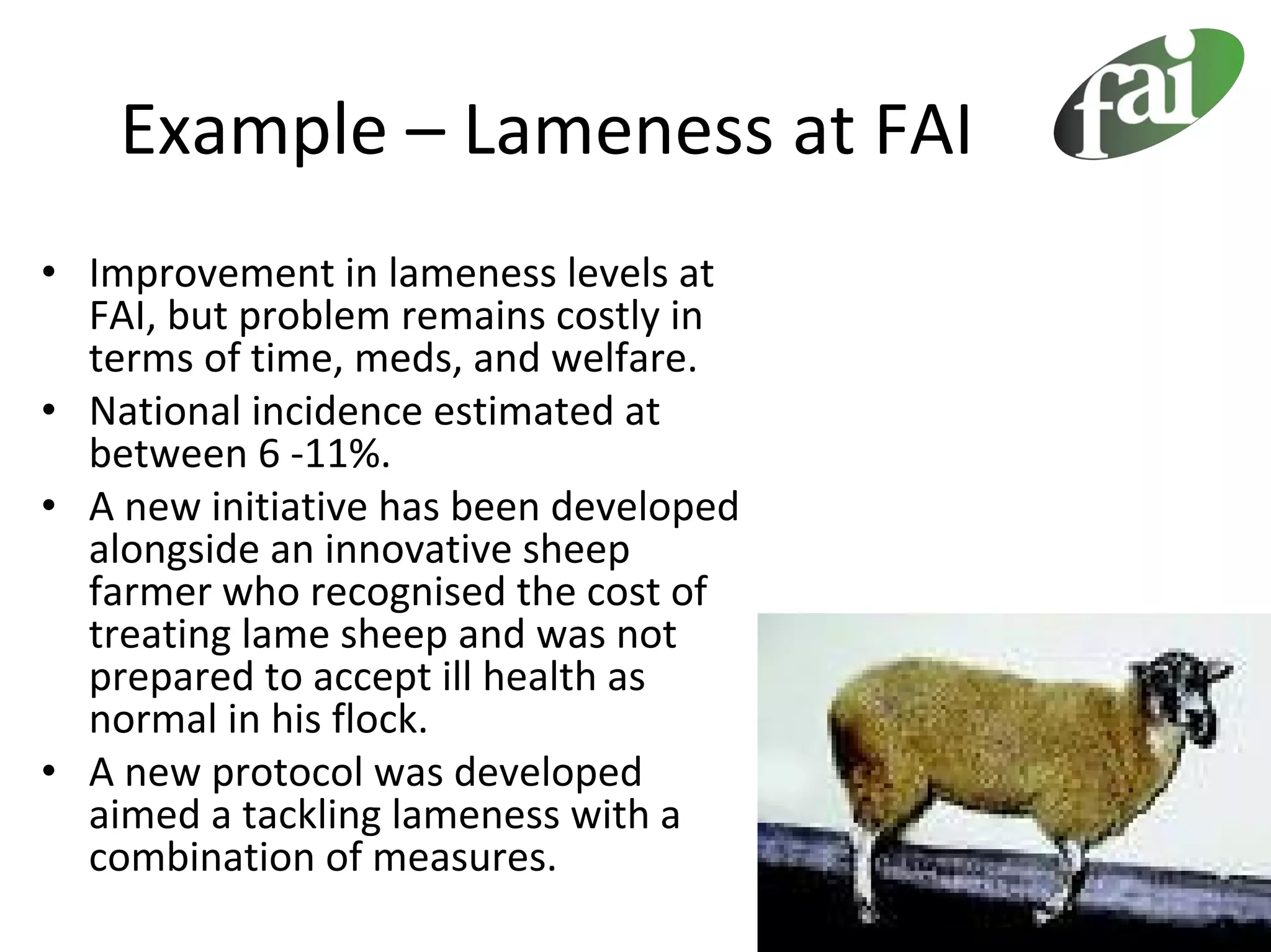
Example – Lameness at FAI
• Improvement in lameness levels at 
  FAI, but problem remains costly in 
  terms of time, meds, and welfare.
• National incidence estimated at 
  between 6 ‐11%.
• A new initiative has been developed 
  alongside an innovative sheep 
  farmer who recognised the cost of 
  treating lame sheep and was not 
  prepared to accept ill health as 
  normal in his flock.
• A new protocol was developed 
  aimed a tackling lameness with a 
  combination of measures.
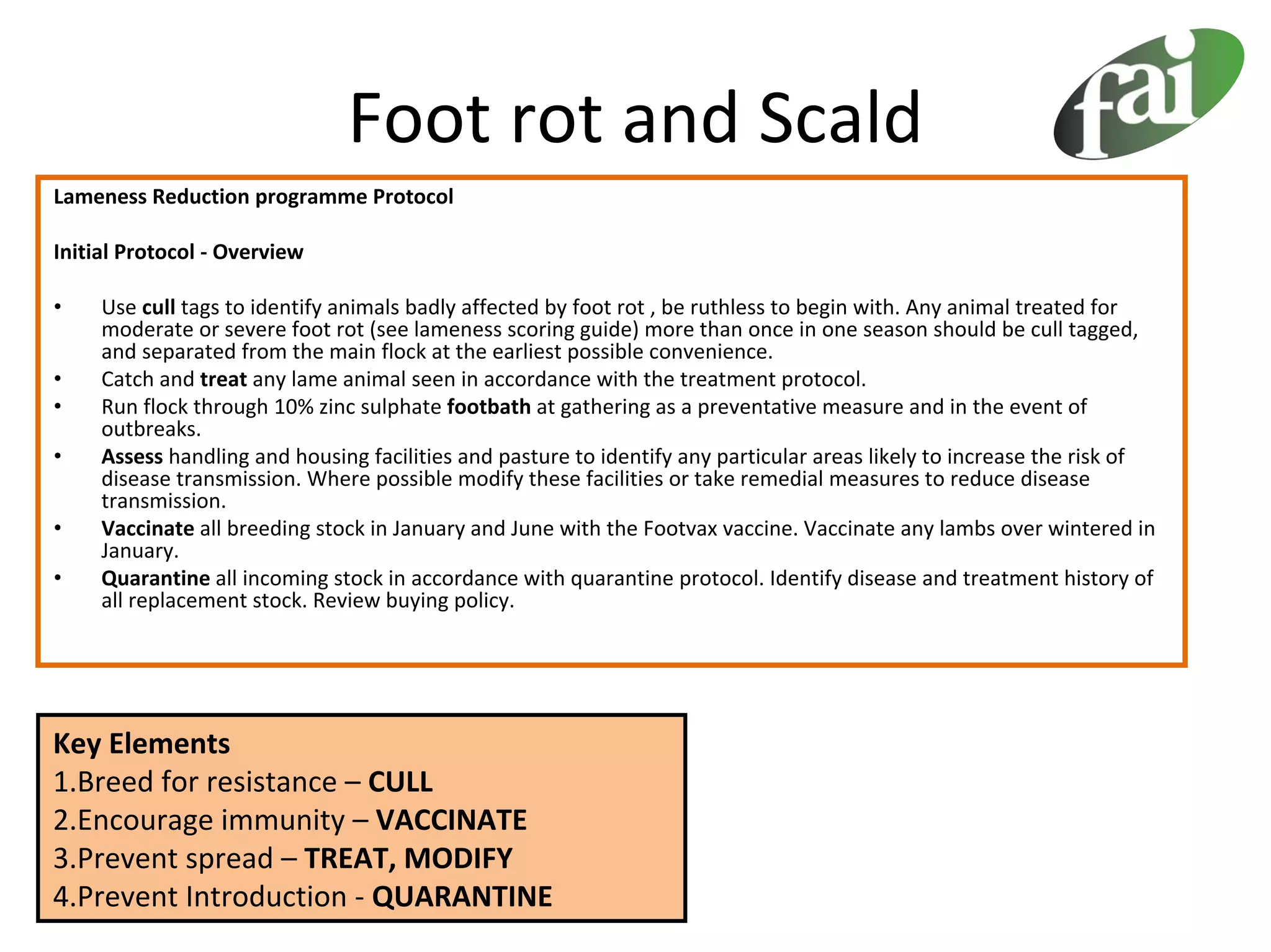
Foot rot and Scald
Lameness Reduction programme Protocol

Initial Protocol ‐ Overview

•    Use cull tags to identify animals badly affected by foot rot , be ruthless to begin with. Any animal treated for 
     moderate or severe foot rot (see lameness scoring guide) more than once in one season should be cull tagged, 
     and separated from the main flock at the earliest possible convenience.
•    Catch and treat any lame animal seen in accordance with the treatment protocol.
•    Run flock through 10% zinc sulphate footbath at gathering as a preventative measure and in the event of 
     outbreaks.
•    Assess handling and housing facilities and pasture to identify any particular areas likely to increase the risk of 
     disease transmission. Where possible modify these facilities or take remedial measures to reduce disease 
     transmission.
•    Vaccinate all breeding stock in January and June with the Footvax vaccine. Vaccinate any lambs over wintered in 
     January.
•    Quarantine all incoming stock in accordance with quarantine protocol. Identify disease and treatment history of 
     all replacement stock. Review buying policy.


Key Elements
1.Breed for resistance – CULL
2.Encourage immunity – VACCINATE
3.Prevent spread – TREAT, MODIFY
4.Prevent Introduction ‐ QUARANTINE
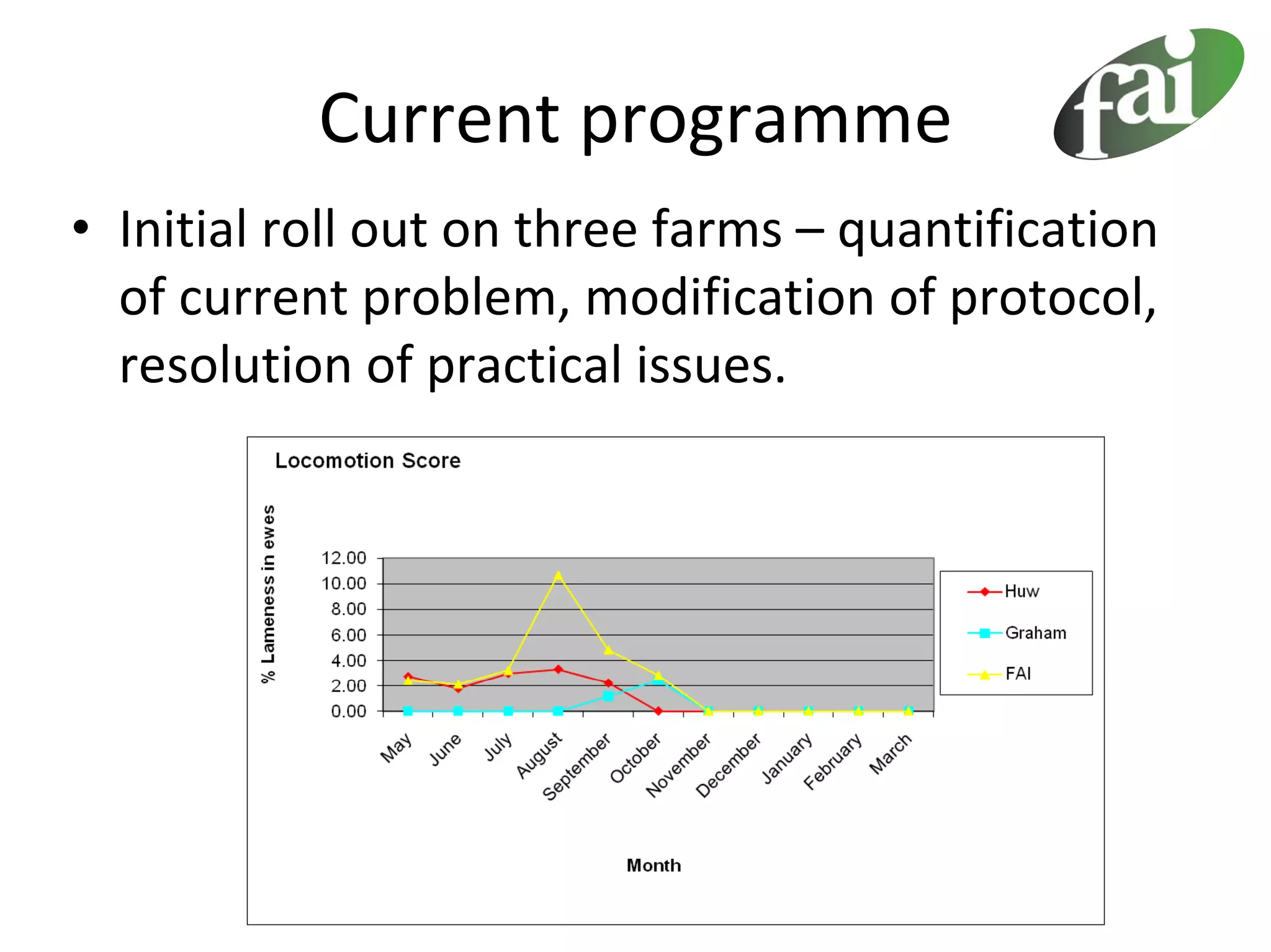
Current programme
• Initial roll out on three farms – quantification 
  of current problem, modification of protocol, 
  resolution of practical issues.
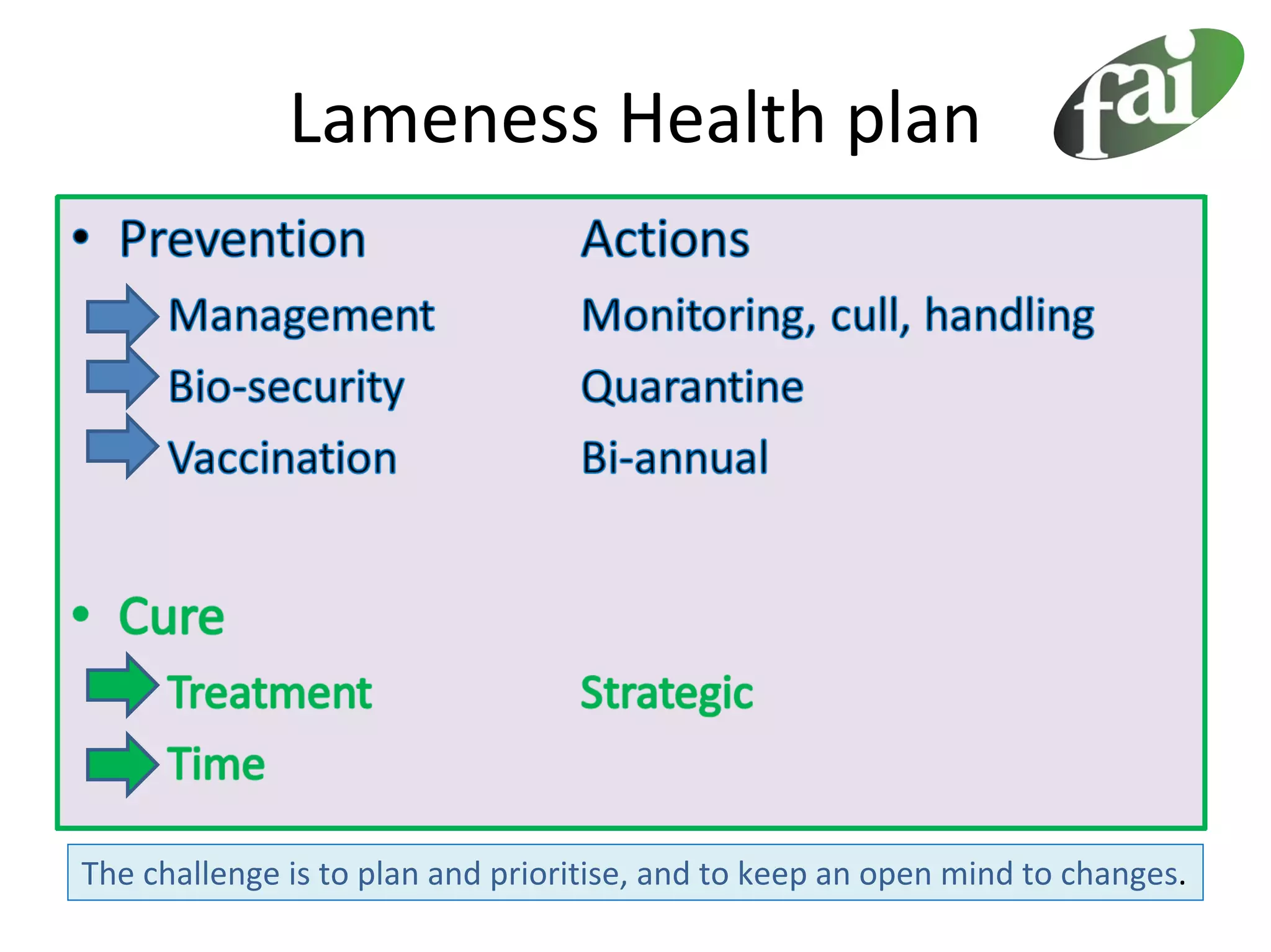
Lameness Health plan


The challenge is to plan and prioritise, and to keep an open mind to changes.
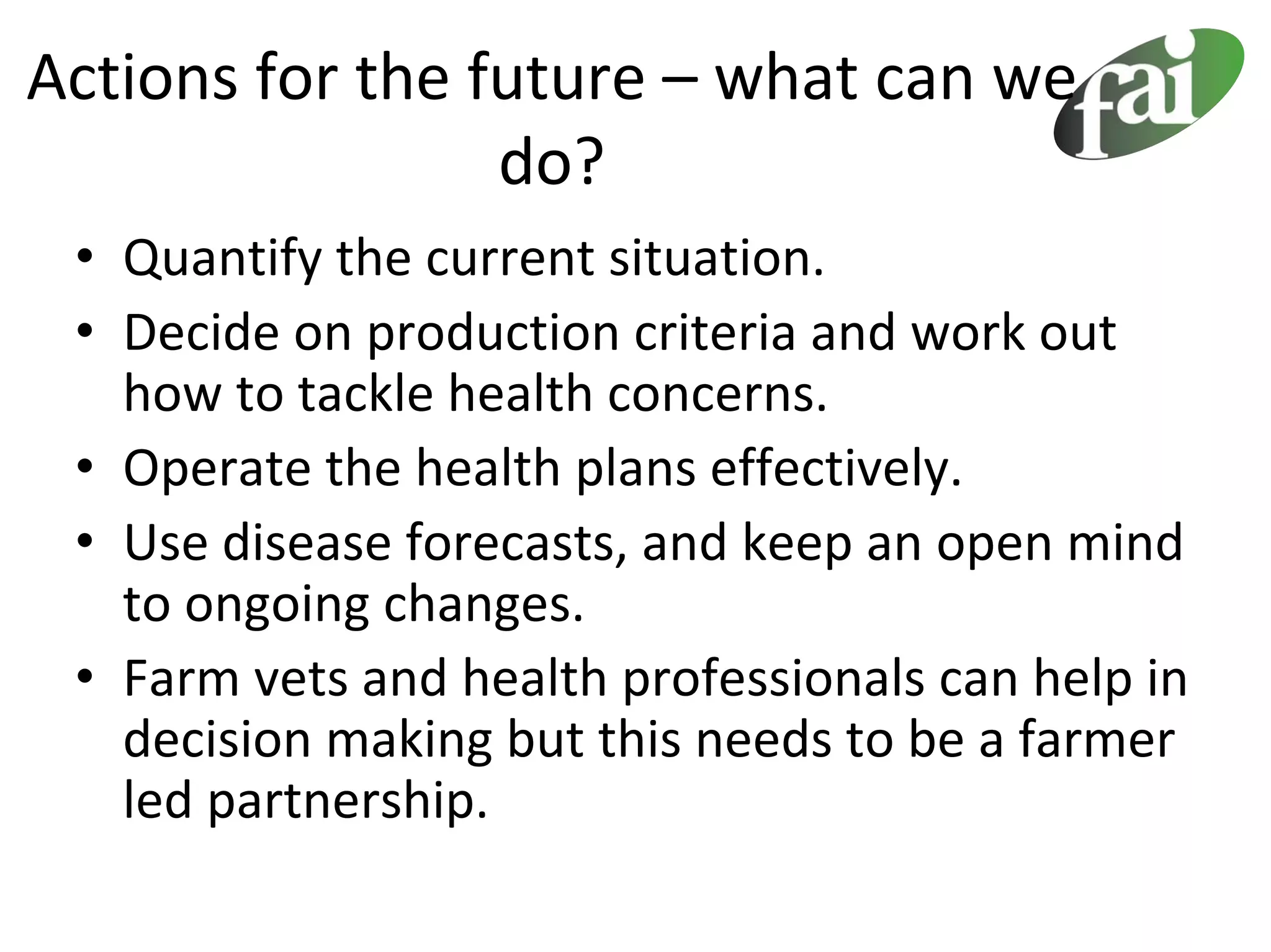
Actions for the future – what can we 
                 do?
 • Quantify the current situation.
 • Decide on production criteria and work out 
   how to tackle health concerns.
 • Operate the health plans effectively.
 • Use disease forecasts, and keep an open mind 
   to ongoing changes.
 • Farm vets and health professionals can help in 
   decision making but this needs to be a farmer 
   led partnership.
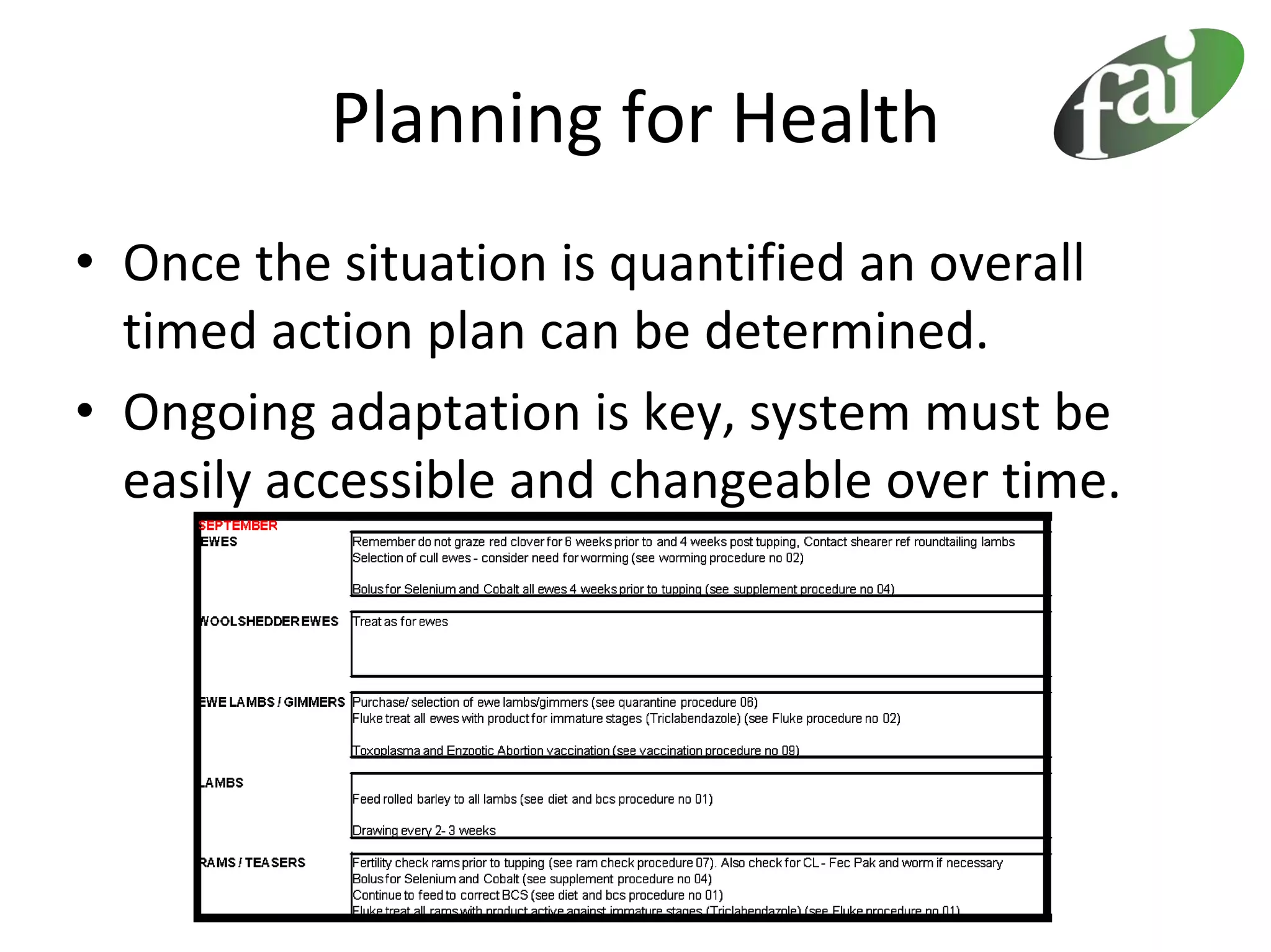
Planning for Health
• Once the situation is quantified an overall 
  timed action plan can be determined.
• Ongoing adaptation is key, system must be 
  easily accessible and changeable over time.

Beef and Sheep: Managing health in the face of changing climate - Ruth Clements (FAI)