*NO Animals allowed on the beach (no cats, dogs, horses, etc.)
*NO Alcoholic beverages.
*NO Smoking.
*NO Driving or parking on sand or bike path.
*NO Disturbances.
*BEWARE OF Diving in Shallow Water.
*REMEMBER: Always swim near a lifeguard.
*During Covid-19:
1. More than 6 feet physical distance from others at all times (except
between members of same household)
2. Face coverings, when out of the water (except for children under age
2)
3. Stay at home if you, or someone you live with, is sick
4. No Other group or organized sports, Gatherings or events
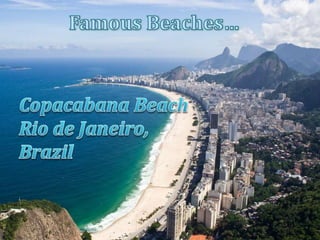
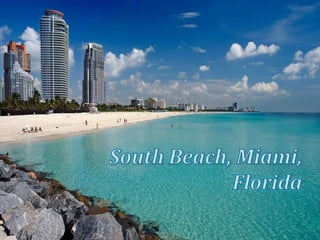
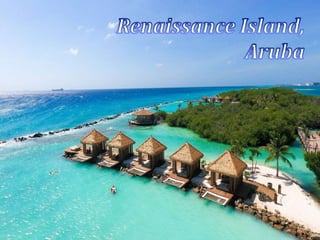
Beaches are an important part of American life.
In addition to the range of recreational
opportunities they offer, beaches provide unique
habitats for a variety of plants and animals.
Beaches provide protection to residents living
near the ocean by acting as a buffer against the
high winds and waves of powerful storms, and help
drive economic activity important to nearby
communities.
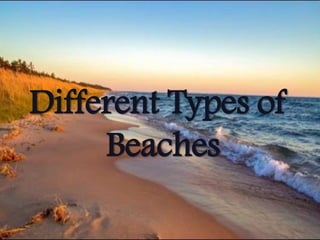
Different Types of
Beaches
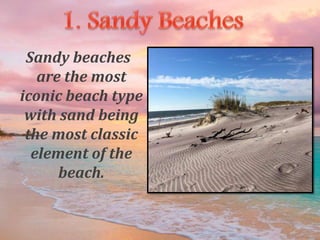
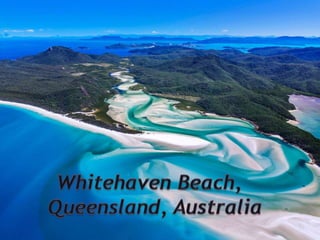
Sandy beaches
are the most
iconic beach type
with sand being
the most classic
element of the
beach.
WHITE SAND BEACH
PINK SAND BEACHES
ORANGE SAND BEACHES
BLACK SAND BEACHES
*It’s very common
for beaches to
wash up empty
shells on the
shores.
*There are beaches
that wash up
seashells in bulks.
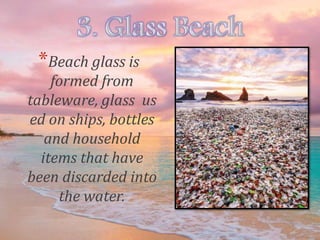
*Beach glass is
formed from
tableware, glass us
ed on ships, bottles
and household
items that have
been discarded into
the water.
*Rocky beaches are
created by the
eroding of coastal
cliffs. These cliffs
are crumbled into
different sizes of
rocks along the
shoreline.
*They usually occur in
almost every coastal
area where the waves
break against a rock
cliff. The continuous
striking of waves on the
cliff makes the rock
weaker. Over time, these
rocks begin to erode,
causing humongous
inland caving.
Eventually, these cliffs
form a hole, commonly
called “blowholes”.
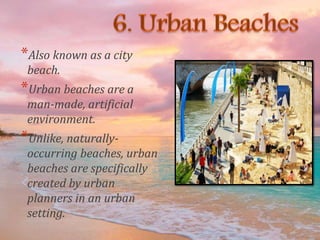
*Also known as a city
beach.
*Urban beaches are a
man-made, artificial
environment.
*Unlike, naturally-
occurring beaches, urban
beaches are specifically
created by urban
planners in an urban
setting.
BED AND
BREAKFAST
MADE BY
ANJALI SHARMA

Beach Tourism

  • 3.
    *NO Animals allowedon the beach (no cats, dogs, horses, etc.) *NO Alcoholic beverages. *NO Smoking. *NO Driving or parking on sand or bike path. *NO Disturbances. *BEWARE OF Diving in Shallow Water. *REMEMBER: Always swim near a lifeguard. *During Covid-19: 1. More than 6 feet physical distance from others at all times (except between members of same household) 2. Face coverings, when out of the water (except for children under age 2) 3. Stay at home if you, or someone you live with, is sick 4. No Other group or organized sports, Gatherings or events
  • 6.
    Beaches are animportant part of American life. In addition to the range of recreational opportunities they offer, beaches provide unique habitats for a variety of plants and animals. Beaches provide protection to residents living near the ocean by acting as a buffer against the high winds and waves of powerful storms, and help drive economic activity important to nearby communities.
  • 7.
  • 8.
    Sandy beaches are themost iconic beach type with sand being the most classic element of the beach.
  • 9.
    WHITE SAND BEACH PINKSAND BEACHES ORANGE SAND BEACHES BLACK SAND BEACHES
  • 10.
    *It’s very common forbeaches to wash up empty shells on the shores. *There are beaches that wash up seashells in bulks.
  • 11.
    *Beach glass is formedfrom tableware, glass us ed on ships, bottles and household items that have been discarded into the water.
  • 12.
    *Rocky beaches are createdby the eroding of coastal cliffs. These cliffs are crumbled into different sizes of rocks along the shoreline.
  • 13.
    *They usually occurin almost every coastal area where the waves break against a rock cliff. The continuous striking of waves on the cliff makes the rock weaker. Over time, these rocks begin to erode, causing humongous inland caving. Eventually, these cliffs form a hole, commonly called “blowholes”.
  • 14.
    *Also known asa city beach. *Urban beaches are a man-made, artificial environment. *Unlike, naturally- occurring beaches, urban beaches are specifically created by urban planners in an urban setting.
  • 15.
  • 41.