Experience and
Education,
School and
Community.
AGENDA
• Housekeeping
• Read Aloud: Through The Cracks by Carolyn Sollman
• Constructivism
• Theories of Connelly and Clandinin
• Introduction to Schwab
• Field Placement “Look Fors”
• Break
• Chronicles: Kaitlin, Piper and Prabhjot
• Triad work session
• Looking ahead to next week
HOUSEKEEPING
• Good content in your letters
• Keep the focus on sharing of experiences – your narrative – your stories!
• Remember your letters are to the members of your triad.
• Quick grammar lesson Appositive phrases, run-on sentence, use of the comma,
etc.
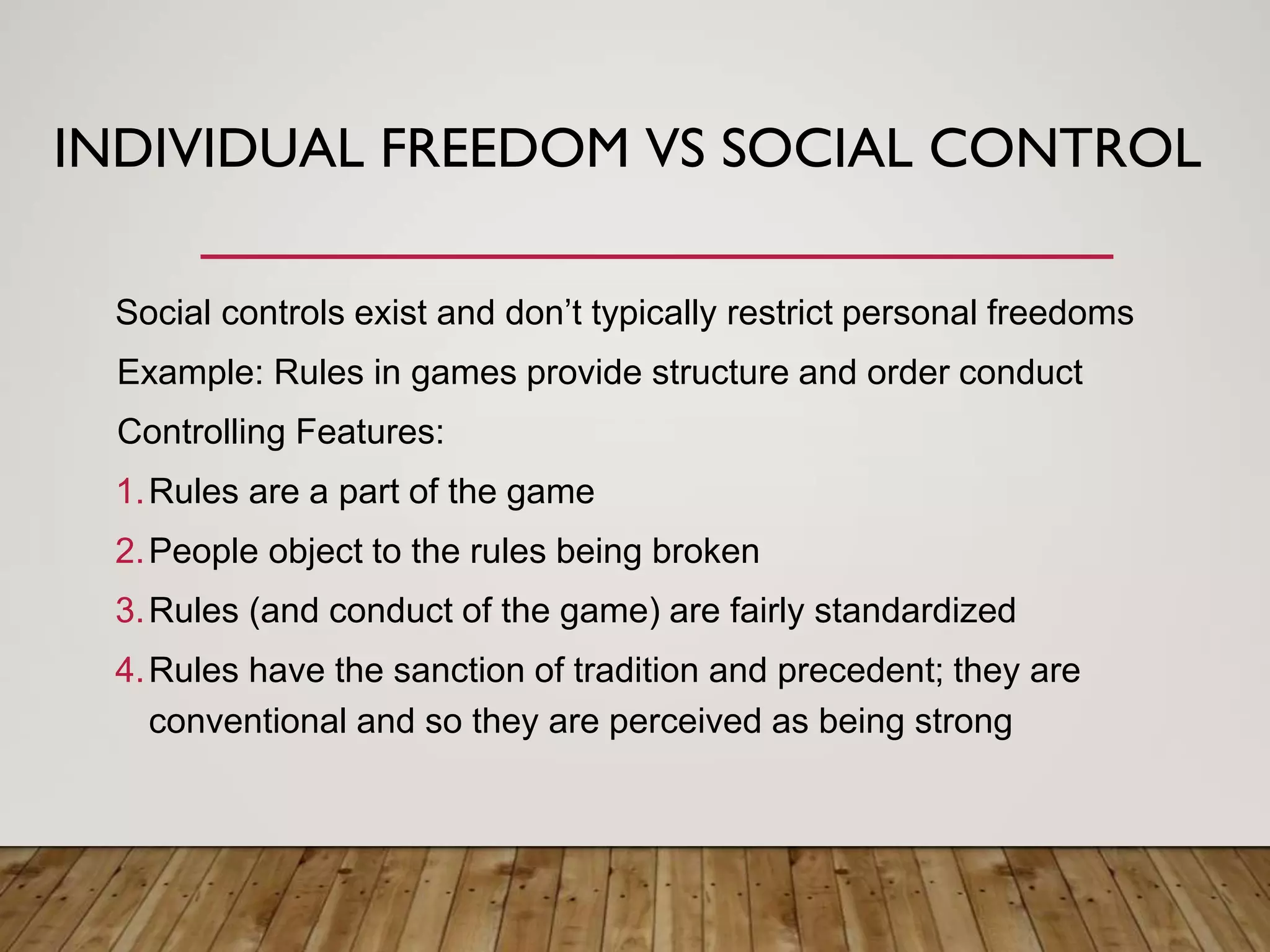
INDIVIDUAL FREEDOM VS SOCIAL CONTROL
Social controls exist and don’t typically restrict personal freedoms
Example: Rules in games provide structure and order conduct
Controlling Features:
1.Rules are a part of the game
2.People object to the rules being broken
3.Rules (and conduct of the game) are fairly standardized
4.Rules have the sanction of tradition and precedent; they are
conventional and so they are perceived as being strong
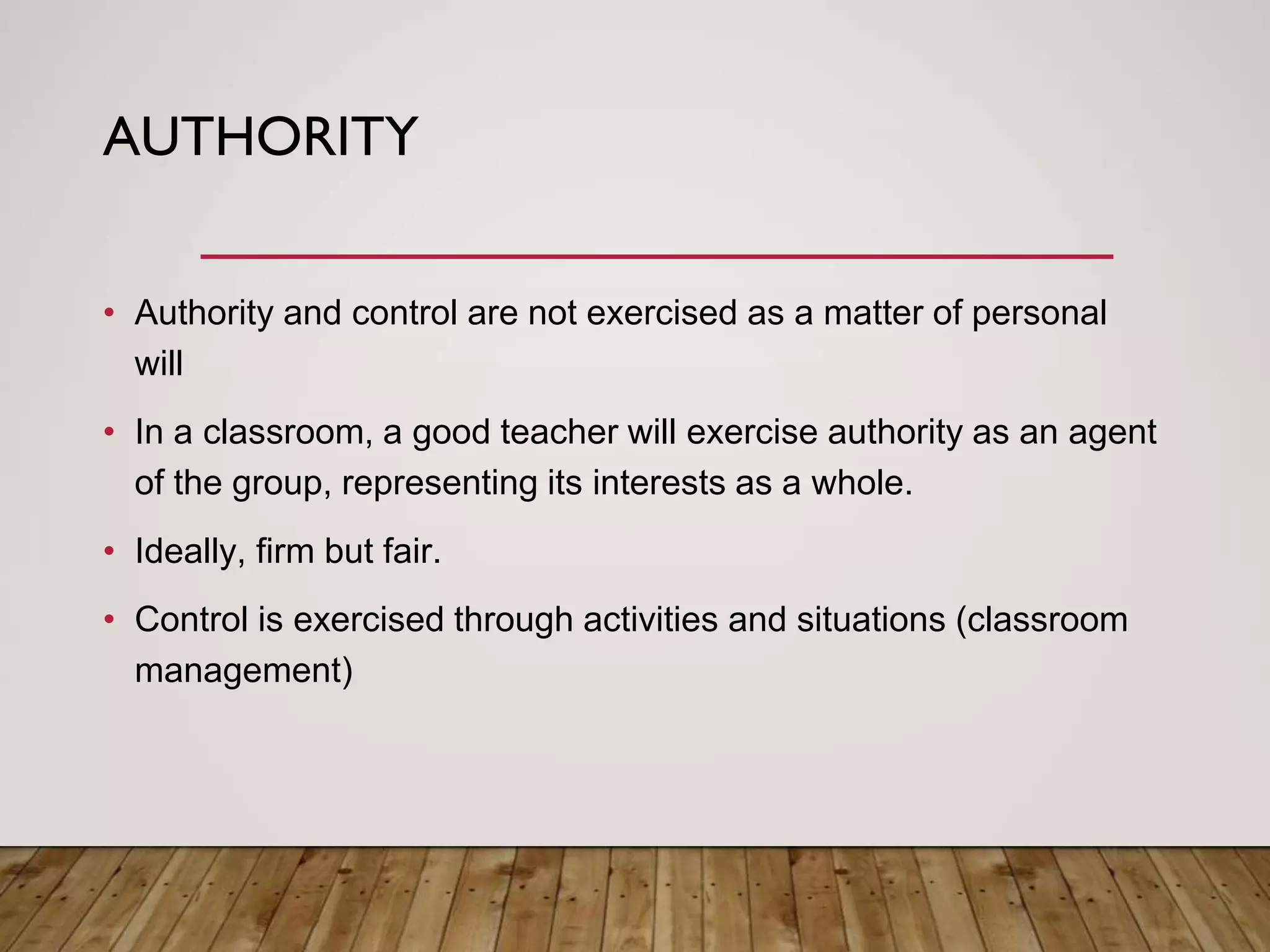
AUTHORITY
• Authority and control are not exercised as a matter of personal
will
• In a classroom, a good teacher will exercise authority as an agent
of the group, representing its interests as a whole.
• Ideally, firm but fair.
• Control is exercised through activities and situations (classroom
management)
CLASSROOM MANAGEMENT
• Fewer issues arise if everyone is contributing and the activities facilitate
control
• There will always be exceptions to the rule – look for underlying reasons
and avoid negative reinforcement
• Care enough to prepare – planning is flexible but purposeful
• “Teachers can arrange conditions that are conducive to community
activity and to organization which exercises control over individual
impulses by the mere fact that all are engaged in communal projects.”
CLASSROOM MANAGEMENT
• Education is based on experience and educative experience is
social – teacher is not boss, but facilitator
• Good manners grease the wheels and reduce friction between
people
• Keep routines and rituals appropriate to the group or situation, so
they don’t become empty or hollow
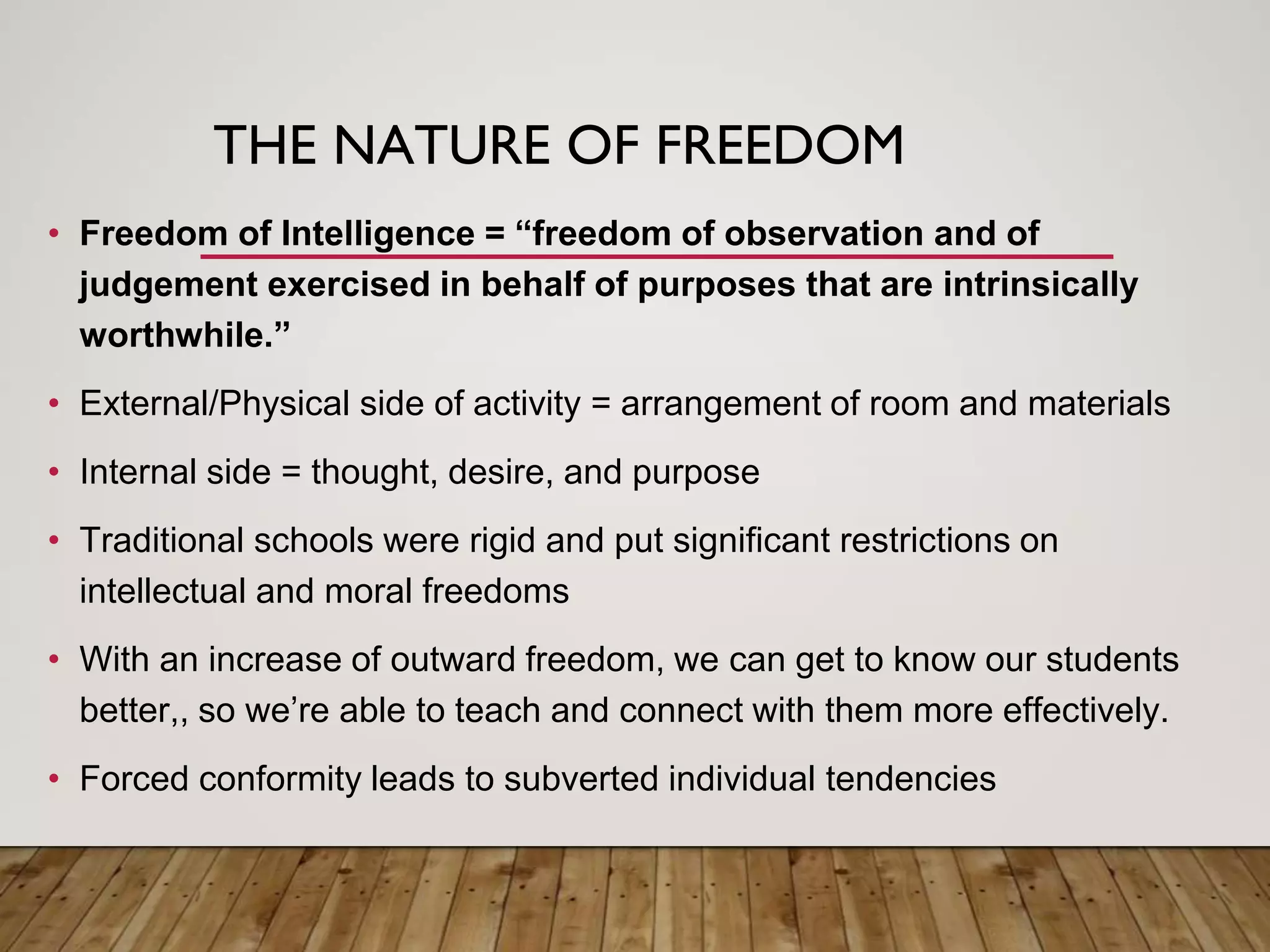
THE NATURE OF FREEDOM
• Freedom of Intelligence = “freedom of observation and of
judgement exercised in behalf of purposes that are intrinsically
worthwhile.”
• External/Physical side of activity = arrangement of room and materials
• Internal side = thought, desire, and purpose
• Traditional schools were rigid and put significant restrictions on
intellectual and moral freedoms
• With an increase of outward freedom, we can get to know our students
better,, so we’re able to teach and connect with them more effectively.
• Forced conformity leads to subverted individual tendencies
OUR GOAL FOR OUR COURSE:
• In this course, we are trying to emphasize the importance of your
story and examining the stories of others. Sharing of experiences
helps us understand, interpret, analyze and create broader
worldviews
• NARRATIVE INQUIRY IS A WAY OF UNDERSTANDING
EXPERIENCES AS LIVED AND AS TOLD THROUGH STORIES.
• We are trying to create continuity of experience and active learning,
and by doing so, to model Dewey!
BY:
CAROLYN SOLLMAN
MAKING THE CONNECTIONS
• Think-Pair-Share
• Temporality: How was this factor relevant to Stella and
Christopher?
• Sociality: Consider the teachers sociality at the beginning of the
book! What might have shaped their sociality?
• Place: Consider the teachers sociality at the beginning of the
book! What might have shaped their sociality?
• Can you make any personal connections to this story
and, by extension, the theories?
CONSTRUCTIVISM
• An approach to learning and teaching that
encourages learners to take an active role in
their learning
• The learner constructs new knowledge based
on prior knowledge to build an understanding
and to make sense of new information
• Students experience successful learning when
they are actively engaged
• Students need to construct knowledge for
themselves – self discovery
IN A “CONSTRUCTIVIST
CLASSROOM”
STUDENTS SHOULD:
• Be given numerous opportunities to explore ideas
(phenomena) individually and most often in social contexts
(ie. with others)
• Employ problem-solving skills in order to revise their
original thinking
• Engage in exploration to gain new meaning and
understanding through considering views of others and set
against their own
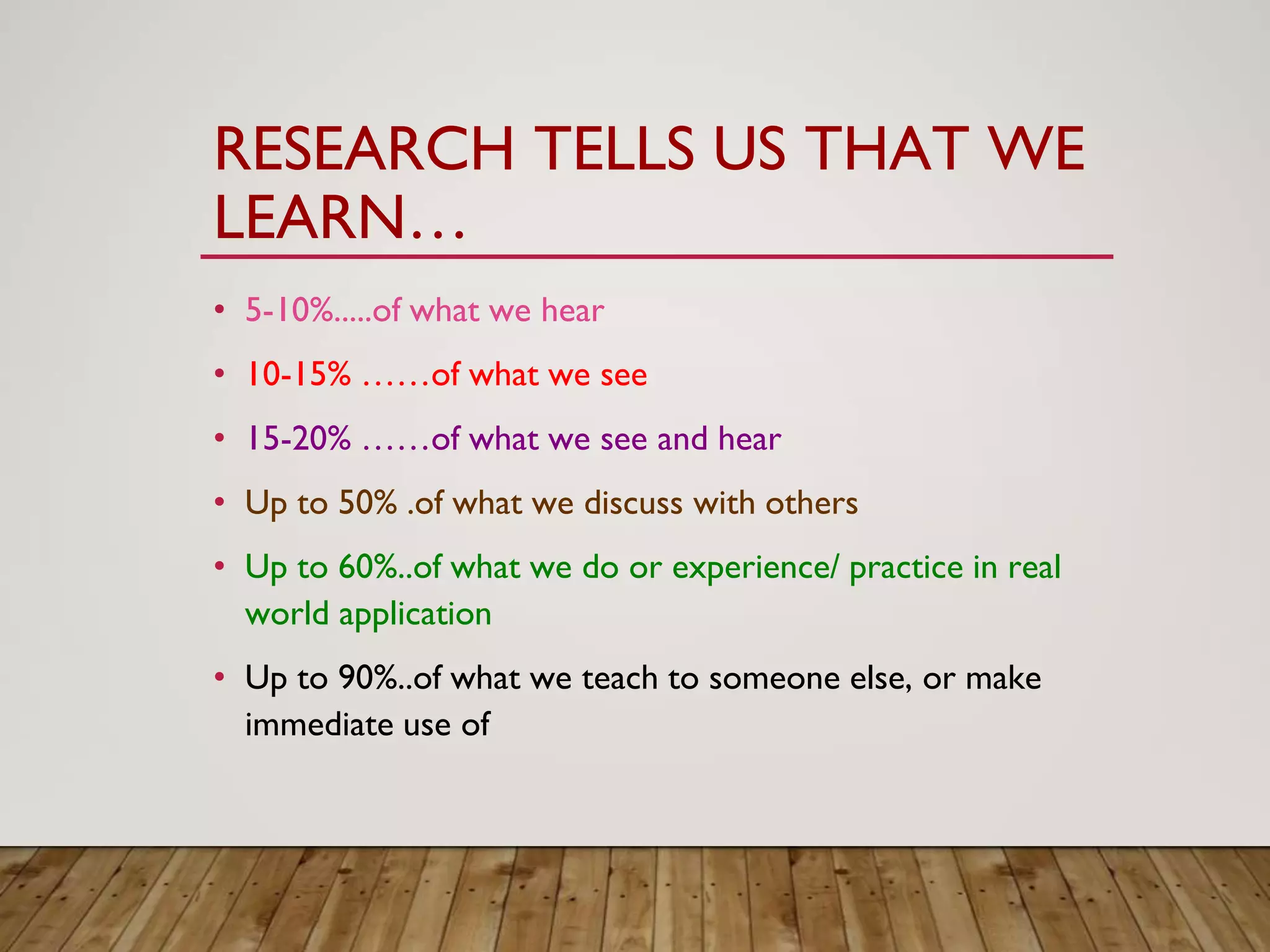
RESEARCH TELLS US THAT WE
LEARN…
• 5-10%.....of what we hear
• 10-15% ……of what we see
• 15-20% ……of what we see and hear
• Up to 50% .of what we discuss with others
• Up to 60%..of what we do or experience/ practice in real
world application
• Up to 90%..of what we teach to someone else, or make
immediate use of
SCHWAB
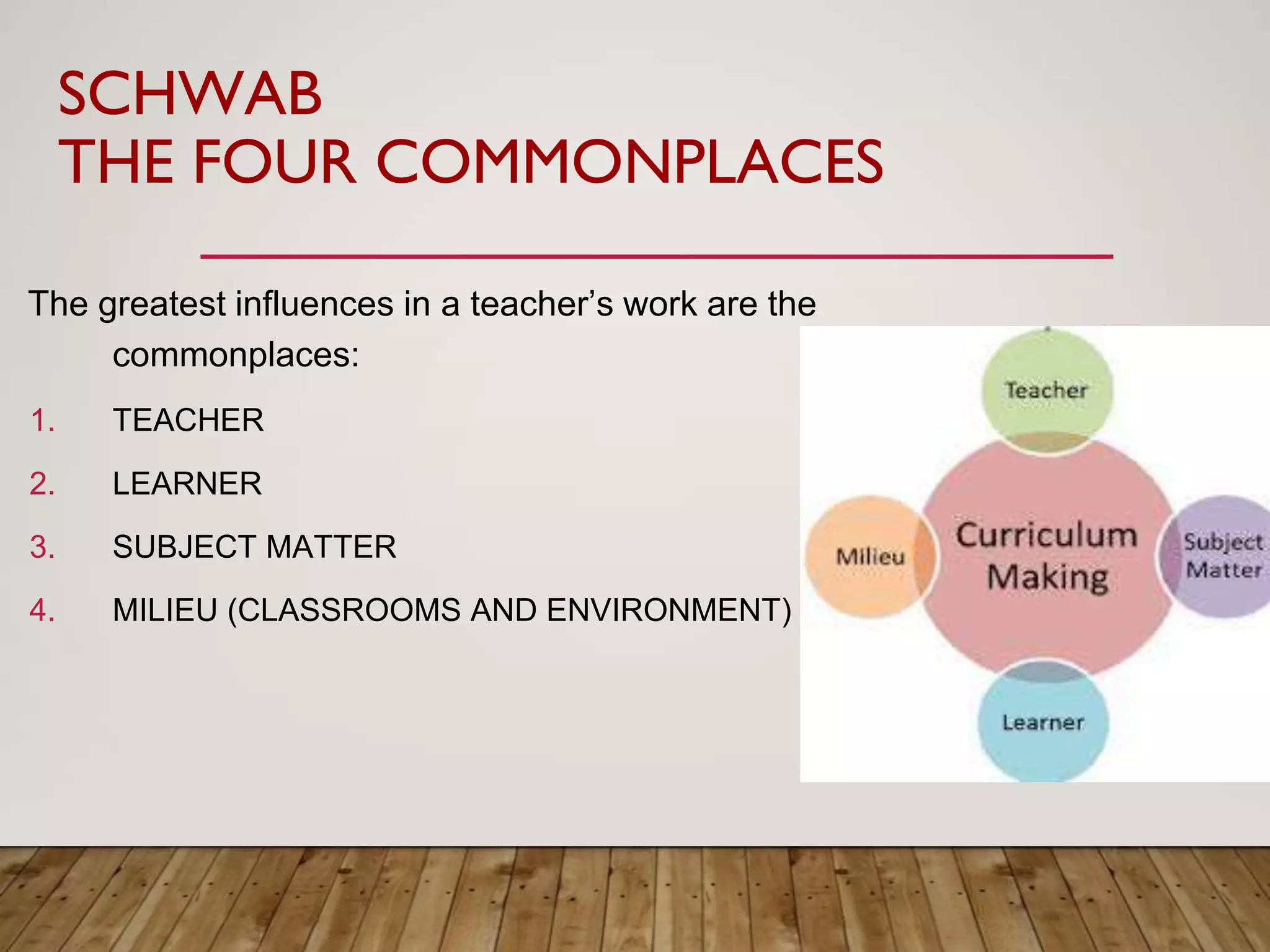
THE FOUR COMMONPLACES
The greatest influences in a teacher’s work are the
commonplaces:
1. TEACHER
2. LEARNER
3. SUBJECT MATTER
4. MILIEU (CLASSROOMS AND ENVIRONMENT)
ACTIVITY TO UNDERSTAND SCHWAB
• Get into groups of 5
• You will become an expert and together plan a lesson
• Each of you will receive a card with the information you
need as that expert.
• Take 5 minutes on your own to prepare
• You will have 15 minutes to create a lesson together
DOODLING IN MATH: SPIRALS, FIBONACCI, AND BEING A
PLANT
HTTPS://YOUTU.BE/AHXIMUKSXX0
Expanding the learning!
https://www.goldennumber.net/leonardo-da-vinci-golden-ratio-art/
Want to explore some other cool ideas:
https://youtu.be/ay8OMOsf6AQ
https://www.ibm.com/ibm/history/ibm100/us/en/icons/fractal/
https://www.bbc.com/news/magazine-11564766
Fractals and Star Wars and the movies https://youtu.be/c-
8HBwxbBDI
YOUR FIELD PLACEMENT
When reading or in your placement consider:
• Observing the 4 commonplaces
• Observing using a narrative lens by thinking of
temporality, sociality and place
• Don’t judge the teacher, students, place…make
observations using wonderings, questions, positive
language etc.
Ponder how might a teacher deliberately make
decisions regarding teaching by looking closely at the
above!! ☺
ORAL CHRONICLE
PRESENTATIONS
• Kaitlin Honan
• Piper Roobroeck
• Prabhjot Hothi
LOOKING AHEAD TO NEXT WEEK
• What Does it Mean to be a Teacher?
• Standards of Teaching Practice
• Ethical Standards of Practice
• Relationship as Moral Agency: TRIC method
• Readings:
• Standards of Practice. OCT
• Ciuffetelli Parker (2008)

Bceduc8 p15 session 3 (1)

  • 1.
  • 2.
    AGENDA • Housekeeping • ReadAloud: Through The Cracks by Carolyn Sollman • Constructivism • Theories of Connelly and Clandinin • Introduction to Schwab • Field Placement “Look Fors” • Break • Chronicles: Kaitlin, Piper and Prabhjot • Triad work session • Looking ahead to next week
  • 3.
    HOUSEKEEPING • Good contentin your letters • Keep the focus on sharing of experiences – your narrative – your stories! • Remember your letters are to the members of your triad. • Quick grammar lesson Appositive phrases, run-on sentence, use of the comma, etc.
  • 4.
    INDIVIDUAL FREEDOM VSSOCIAL CONTROL Social controls exist and don’t typically restrict personal freedoms Example: Rules in games provide structure and order conduct Controlling Features: 1.Rules are a part of the game 2.People object to the rules being broken 3.Rules (and conduct of the game) are fairly standardized 4.Rules have the sanction of tradition and precedent; they are conventional and so they are perceived as being strong
  • 5.
    AUTHORITY • Authority andcontrol are not exercised as a matter of personal will • In a classroom, a good teacher will exercise authority as an agent of the group, representing its interests as a whole. • Ideally, firm but fair. • Control is exercised through activities and situations (classroom management)
  • 6.
    CLASSROOM MANAGEMENT • Fewerissues arise if everyone is contributing and the activities facilitate control • There will always be exceptions to the rule – look for underlying reasons and avoid negative reinforcement • Care enough to prepare – planning is flexible but purposeful • “Teachers can arrange conditions that are conducive to community activity and to organization which exercises control over individual impulses by the mere fact that all are engaged in communal projects.”
  • 7.
    CLASSROOM MANAGEMENT • Educationis based on experience and educative experience is social – teacher is not boss, but facilitator • Good manners grease the wheels and reduce friction between people • Keep routines and rituals appropriate to the group or situation, so they don’t become empty or hollow
  • 8.
    THE NATURE OFFREEDOM • Freedom of Intelligence = “freedom of observation and of judgement exercised in behalf of purposes that are intrinsically worthwhile.” • External/Physical side of activity = arrangement of room and materials • Internal side = thought, desire, and purpose • Traditional schools were rigid and put significant restrictions on intellectual and moral freedoms • With an increase of outward freedom, we can get to know our students better,, so we’re able to teach and connect with them more effectively. • Forced conformity leads to subverted individual tendencies
  • 9.
    OUR GOAL FOROUR COURSE: • In this course, we are trying to emphasize the importance of your story and examining the stories of others. Sharing of experiences helps us understand, interpret, analyze and create broader worldviews • NARRATIVE INQUIRY IS A WAY OF UNDERSTANDING EXPERIENCES AS LIVED AND AS TOLD THROUGH STORIES. • We are trying to create continuity of experience and active learning, and by doing so, to model Dewey!
  • 10.
  • 11.
    MAKING THE CONNECTIONS •Think-Pair-Share • Temporality: How was this factor relevant to Stella and Christopher? • Sociality: Consider the teachers sociality at the beginning of the book! What might have shaped their sociality? • Place: Consider the teachers sociality at the beginning of the book! What might have shaped their sociality? • Can you make any personal connections to this story and, by extension, the theories?
  • 12.
    CONSTRUCTIVISM • An approachto learning and teaching that encourages learners to take an active role in their learning • The learner constructs new knowledge based on prior knowledge to build an understanding and to make sense of new information • Students experience successful learning when they are actively engaged • Students need to construct knowledge for themselves – self discovery
  • 13.
    IN A “CONSTRUCTIVIST CLASSROOM” STUDENTSSHOULD: • Be given numerous opportunities to explore ideas (phenomena) individually and most often in social contexts (ie. with others) • Employ problem-solving skills in order to revise their original thinking • Engage in exploration to gain new meaning and understanding through considering views of others and set against their own
  • 14.
    RESEARCH TELLS USTHAT WE LEARN… • 5-10%.....of what we hear • 10-15% ……of what we see • 15-20% ……of what we see and hear • Up to 50% .of what we discuss with others • Up to 60%..of what we do or experience/ practice in real world application • Up to 90%..of what we teach to someone else, or make immediate use of
  • 15.
    SCHWAB THE FOUR COMMONPLACES Thegreatest influences in a teacher’s work are the commonplaces: 1. TEACHER 2. LEARNER 3. SUBJECT MATTER 4. MILIEU (CLASSROOMS AND ENVIRONMENT)
  • 16.
    ACTIVITY TO UNDERSTANDSCHWAB • Get into groups of 5 • You will become an expert and together plan a lesson • Each of you will receive a card with the information you need as that expert. • Take 5 minutes on your own to prepare • You will have 15 minutes to create a lesson together
  • 17.
    DOODLING IN MATH:SPIRALS, FIBONACCI, AND BEING A PLANT HTTPS://YOUTU.BE/AHXIMUKSXX0
  • 18.
    Expanding the learning! https://www.goldennumber.net/leonardo-da-vinci-golden-ratio-art/ Wantto explore some other cool ideas: https://youtu.be/ay8OMOsf6AQ https://www.ibm.com/ibm/history/ibm100/us/en/icons/fractal/ https://www.bbc.com/news/magazine-11564766 Fractals and Star Wars and the movies https://youtu.be/c- 8HBwxbBDI
  • 19.
    YOUR FIELD PLACEMENT Whenreading or in your placement consider: • Observing the 4 commonplaces • Observing using a narrative lens by thinking of temporality, sociality and place • Don’t judge the teacher, students, place…make observations using wonderings, questions, positive language etc. Ponder how might a teacher deliberately make decisions regarding teaching by looking closely at the above!! ☺
  • 21.
    ORAL CHRONICLE PRESENTATIONS • KaitlinHonan • Piper Roobroeck • Prabhjot Hothi
  • 22.
    LOOKING AHEAD TONEXT WEEK • What Does it Mean to be a Teacher? • Standards of Teaching Practice • Ethical Standards of Practice • Relationship as Moral Agency: TRIC method • Readings: • Standards of Practice. OCT • Ciuffetelli Parker (2008)