BBWF Highlights
Matthias Linder, CTO Magyar Telekom
Real World Convergence


Broadband World Forum
www.alanquayle.com/blog


                          © 2011 Alan Quayle Business and Service Development
BBWF Highlight: Matthias Linder, CTO Magyar Telekom
Real World Convergence
•   Matthias gave a great, open and frank presentation on their experiences around
    convergence (many suppliers/consultants call it business transformation to make it
    sound more expensive.)
•   The key to success in convergence isn’t about technology, its primarily about people
    (organizations) and process. The objective of convergence isn’t fancy services (that’s
    a by-product) its operational cost savings.
•   The critical thing Magyar did was to consolidate the organizations and processes first,
    before they focused on technology.
•   In the following slides Matthias sets out the steps in their convergence project, a great
    template for any operator looking at their failed business transformation project and
    a $10m+ hole in their pocket.


 The following slides are a clear and to the point explanation of a real-world convergence
  project. Many use the term business transformation as it sounds more expensive. The
bottom-line is its about converging (consolidating) organizations, processes and networks.
This is the starting point, not technology, and the failure point in every convergence
(business transformation) project I’ve reviewed. It is not easy, but must be done to achieve
                                         any savings.
The silo’ed nature of telcos means the transport network has multiple overlapping layers.
 Without a consolidated team, people fight to keep their bit of the network running. By
consolidating the teams first, they then focus on how to minimize the effort and spend in
                                   running the network.
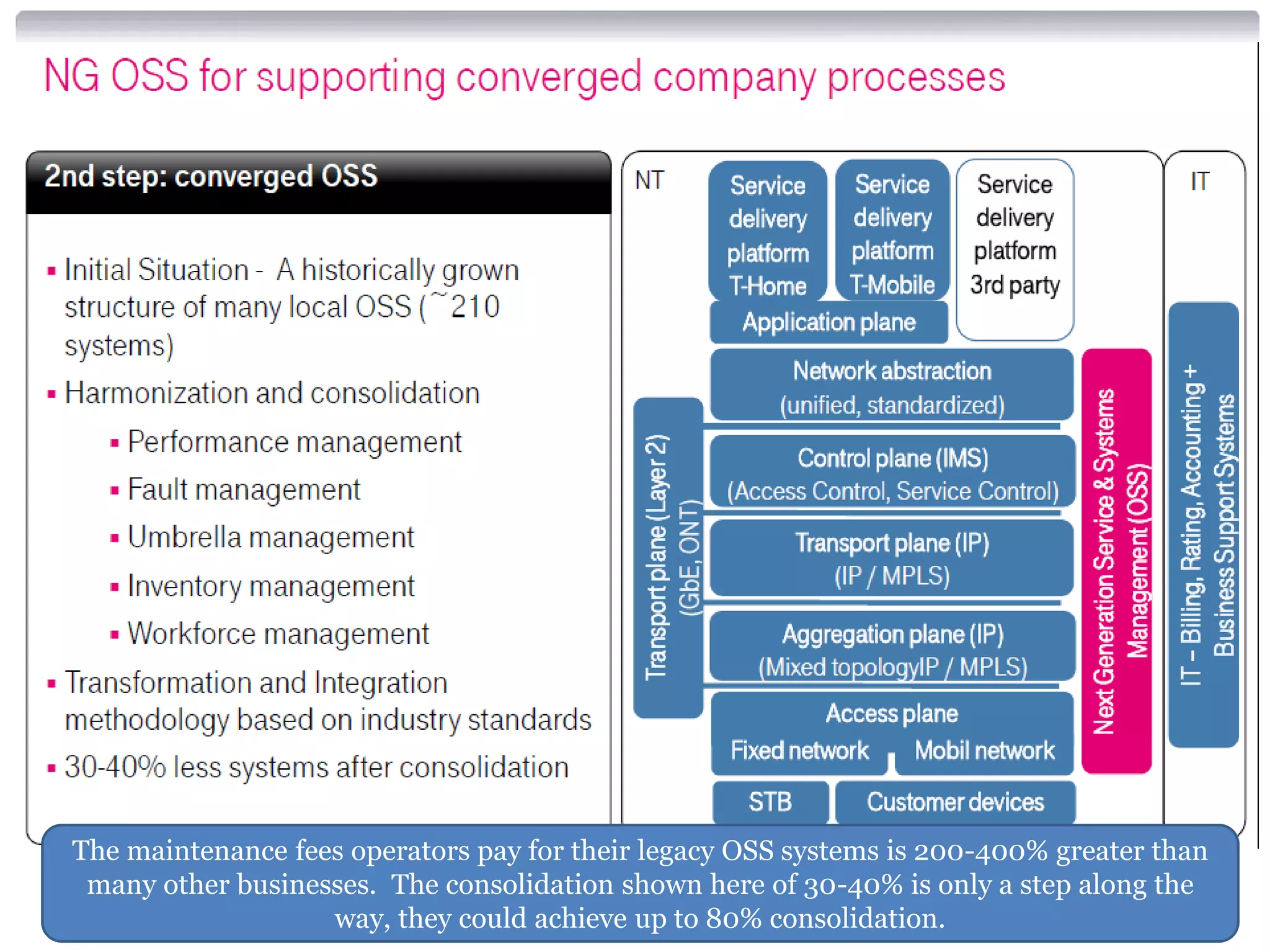
The maintenance fees operators pay for their legacy OSS systems is 200-400% greater than
 many other businesses. The consolidation shown here of 30-40% is only a step along the
                   way, they could achieve up to 80% consolidation.
A common core is essential, and should also be the target for the metro / aggregation part of
  the network. IP / Ethernet dominates; gone is ATM, SDH, FR, and the many other telco
                     specials – the network has adopted IT technology.
As discussed in the IMS report I did several years ago, IMS is used in the core not the edge.
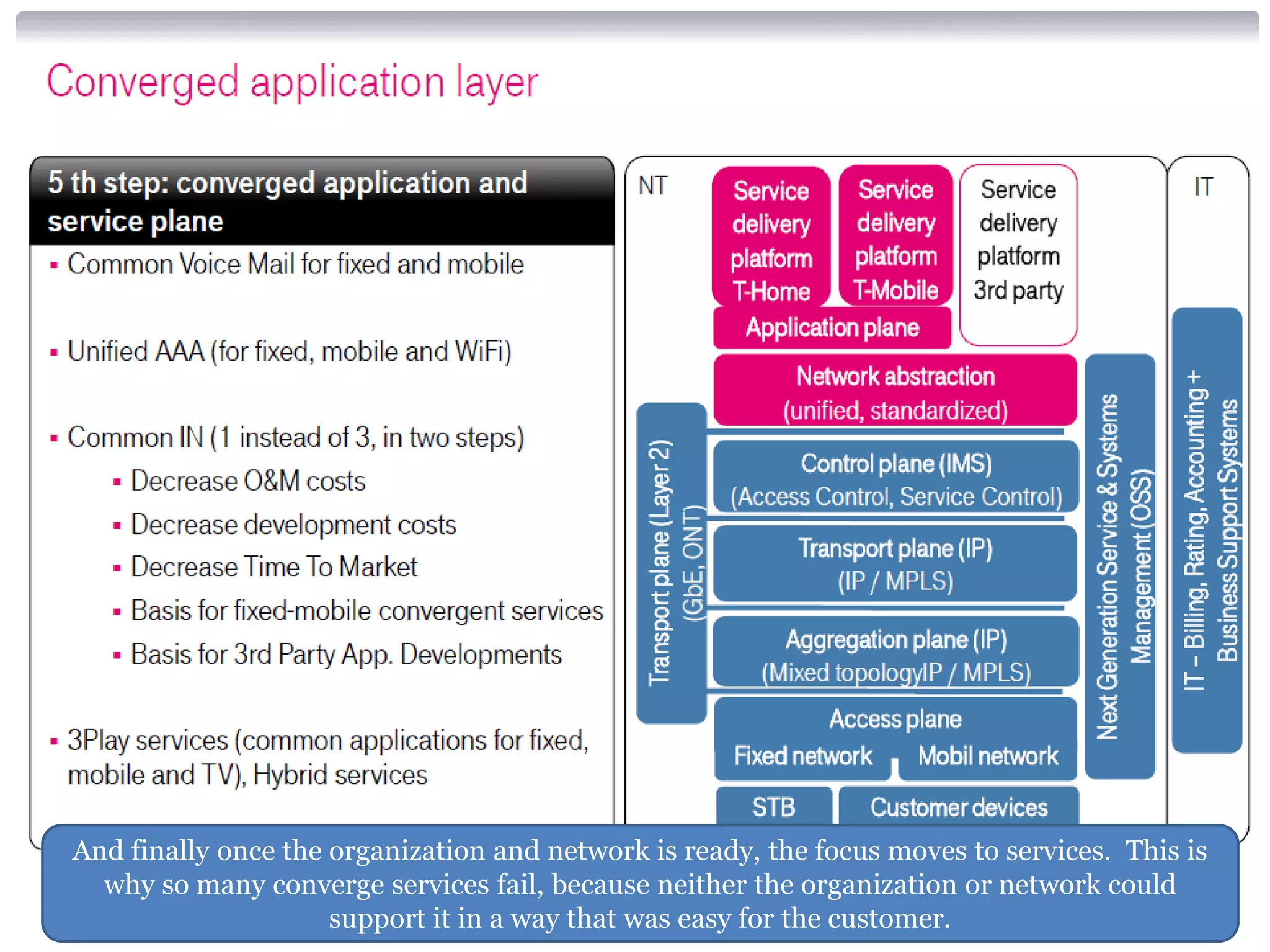
And finally once the organization and network is ready, the focus moves to services. This is
  why so many converge services fail, because neither the organization or network could
                     support it in a way that was easy for the customer.

BBWF Highlight Magyar Telekom

  • 1.
    BBWF Highlights Matthias Linder,CTO Magyar Telekom Real World Convergence Broadband World Forum www.alanquayle.com/blog © 2011 Alan Quayle Business and Service Development
  • 2.
    BBWF Highlight: MatthiasLinder, CTO Magyar Telekom Real World Convergence • Matthias gave a great, open and frank presentation on their experiences around convergence (many suppliers/consultants call it business transformation to make it sound more expensive.) • The key to success in convergence isn’t about technology, its primarily about people (organizations) and process. The objective of convergence isn’t fancy services (that’s a by-product) its operational cost savings. • The critical thing Magyar did was to consolidate the organizations and processes first, before they focused on technology. • In the following slides Matthias sets out the steps in their convergence project, a great template for any operator looking at their failed business transformation project and a $10m+ hole in their pocket. The following slides are a clear and to the point explanation of a real-world convergence project. Many use the term business transformation as it sounds more expensive. The bottom-line is its about converging (consolidating) organizations, processes and networks.
  • 3.
    This is thestarting point, not technology, and the failure point in every convergence (business transformation) project I’ve reviewed. It is not easy, but must be done to achieve any savings.
  • 4.
    The silo’ed natureof telcos means the transport network has multiple overlapping layers. Without a consolidated team, people fight to keep their bit of the network running. By consolidating the teams first, they then focus on how to minimize the effort and spend in running the network.
  • 5.
    The maintenance feesoperators pay for their legacy OSS systems is 200-400% greater than many other businesses. The consolidation shown here of 30-40% is only a step along the way, they could achieve up to 80% consolidation.
  • 6.
    A common coreis essential, and should also be the target for the metro / aggregation part of the network. IP / Ethernet dominates; gone is ATM, SDH, FR, and the many other telco specials – the network has adopted IT technology.
  • 7.
    As discussed inthe IMS report I did several years ago, IMS is used in the core not the edge.
  • 8.
    And finally oncethe organization and network is ready, the focus moves to services. This is why so many converge services fail, because neither the organization or network could support it in a way that was easy for the customer.