BBC Backstage 2009Rain Ashford, technologistBBC Research & development
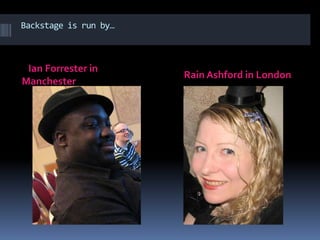
Backstage is run by…   Ian Forrester in Manchester                                      Rain Ashford in London
What is Backstage and what go we get up to? the BBC’s developer network
 encourage & support UK developers
 a license similar to CC non-commercial
 champion ‘open culture’ around the BBC, releasing data, feeds & APIs
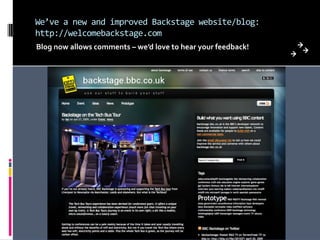
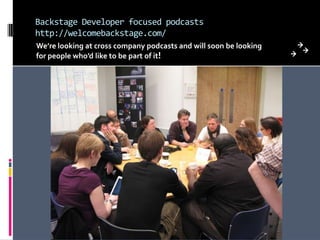
 a community  We’ve a new and improved Backstage website/blog: http://welcomebackstage.comBlog now allows comments – we’d love to hear your feedback!
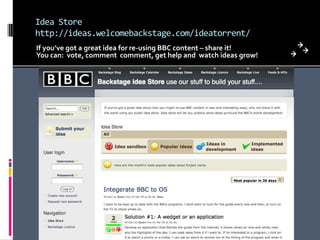
Idea Store http://ideas.welcomebackstage.com/ideatorrent/If you’ve got a great idea for re-using BBC content – share it!You can:  vote, comment  comment, get help and  watch ideas grow!
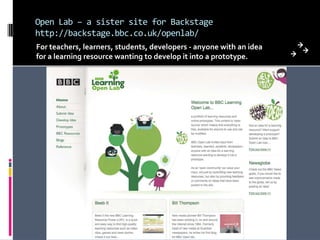
Open Lab – a sister site for Backstagehttp://backstage.bbc.co.uk/openlab/For teachers, learners, students, developers - anyone with an idea for a learning resource wanting to develop it into a prototype.
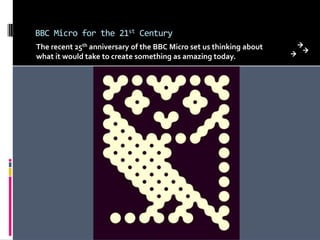
BBC Micro for the 21st CenturyThe recent 25th anniversary of the BBC Micro set us thinking about what it would take to create something as amazing today.
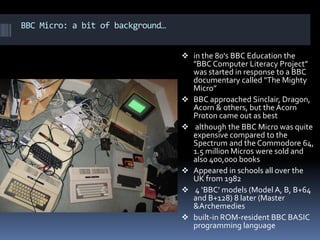
BBC Micro: a bit of background…in the 80's BBC Education the "BBC Computer Literacy Project”  was started in response to a BBC documentary called "The Mighty Micro”
BBC approached Sinclair, Dragon, Acorn & others, but the Acorn Proton came out as best
 although the BBC Micro was quite expensive compared to the Spectrum and the Commodore 64, 1.5 million Micros were sold and also 400,000 books
Appeared in schools all over the UK from 1982
 4 ‘BBC’ models (Model A, B, B+64 and B+128) 8 later (Master & Archemedies
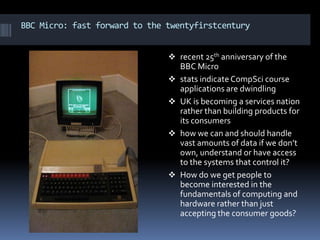
built-in ROM-resident BBC BASIC programming languageBBC Micro: fast forward to the twentyfirstcenturyrecent 25th anniversary of the BBC Micro
stats indicate CompSci course applications are dwindling
UK is becoming a services nation rather than building products for its consumers
how we can and should handle vast amounts of data if we don’t own, understand or have access to the systems that control it?
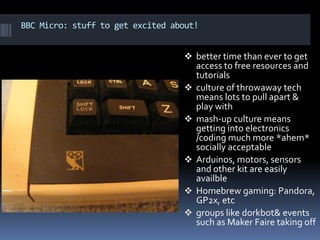
How do we get people to become interested in the fundamentals of computing and hardware rather than just accepting the consumer goods?BBC Micro: stuff to get excited about!better time than ever to get access to free resources and tutorials
culture of throwaway tech means lots to pull apart & play with
mash-up culture means getting into electronics /coding much more *ahem* socially acceptable
Arduinos, motors, sensors and other kit are easily availble
Homebrew gaming: Pandora, GP2x, etc
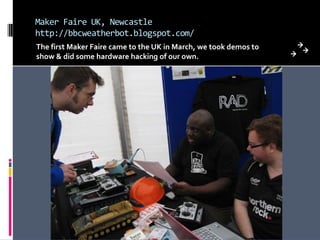
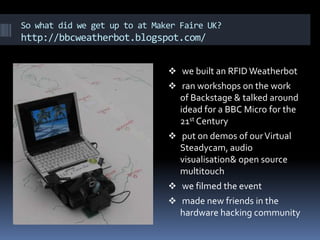
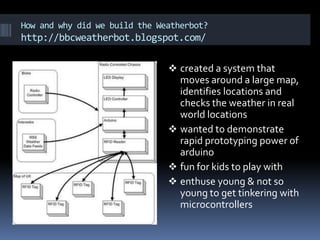
groups like dorkbot & events such as Maker Faire taking offMaker Faire UK, Newcastlehttp://bbcweatherbot.blogspot.com/The first Maker Faire came to the UK in March, we took demos to show & did some hardware hacking of our own.

BBC Backstage 2009

  • 1.
    BBC Backstage 2009RainAshford, technologistBBC Research & development
  • 2.
    Backstage is runby… Ian Forrester in Manchester Rain Ashford in London
  • 3.
    What is Backstageand what go we get up to? the BBC’s developer network
  • 4.
    encourage &support UK developers
  • 5.
    a licensesimilar to CC non-commercial
  • 6.
    champion ‘openculture’ around the BBC, releasing data, feeds & APIs
  • 7.
    a community We’ve a new and improved Backstage website/blog: http://welcomebackstage.comBlog now allows comments – we’d love to hear your feedback!
  • 8.
    Idea Store http://ideas.welcomebackstage.com/ideatorrent/Ifyou’ve got a great idea for re-using BBC content – share it!You can: vote, comment comment, get help and watch ideas grow!
  • 9.
    Open Lab –a sister site for Backstagehttp://backstage.bbc.co.uk/openlab/For teachers, learners, students, developers - anyone with an idea for a learning resource wanting to develop it into a prototype.
  • 10.
    BBC Micro forthe 21st CenturyThe recent 25th anniversary of the BBC Micro set us thinking about what it would take to create something as amazing today.
  • 11.
    BBC Micro: abit of background…in the 80's BBC Education the "BBC Computer Literacy Project” was started in response to a BBC documentary called "The Mighty Micro”
  • 12.
    BBC approached Sinclair,Dragon, Acorn & others, but the Acorn Proton came out as best
  • 13.
    although theBBC Micro was quite expensive compared to the Spectrum and the Commodore 64, 1.5 million Micros were sold and also 400,000 books
  • 14.
    Appeared in schoolsall over the UK from 1982
  • 15.
    4 ‘BBC’models (Model A, B, B+64 and B+128) 8 later (Master & Archemedies
  • 16.
    built-in ROM-resident BBCBASIC programming languageBBC Micro: fast forward to the twentyfirstcenturyrecent 25th anniversary of the BBC Micro
  • 17.
    stats indicate CompScicourse applications are dwindling
  • 18.
    UK is becominga services nation rather than building products for its consumers
  • 19.
    how we canand should handle vast amounts of data if we don’t own, understand or have access to the systems that control it?
  • 20.
    How do weget people to become interested in the fundamentals of computing and hardware rather than just accepting the consumer goods?BBC Micro: stuff to get excited about!better time than ever to get access to free resources and tutorials
  • 21.
    culture of throwawaytech means lots to pull apart & play with
  • 22.
    mash-up culture meansgetting into electronics /coding much more *ahem* socially acceptable
  • 23.
    Arduinos, motors, sensorsand other kit are easily availble
  • 24.
  • 25.
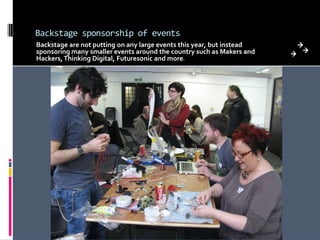
    groups like dorkbot& events such as Maker Faire taking offMaker Faire UK, Newcastlehttp://bbcweatherbot.blogspot.com/The first Maker Faire came to the UK in March, we took demos to show & did some hardware hacking of our own.