www.bayareaeconomy.org
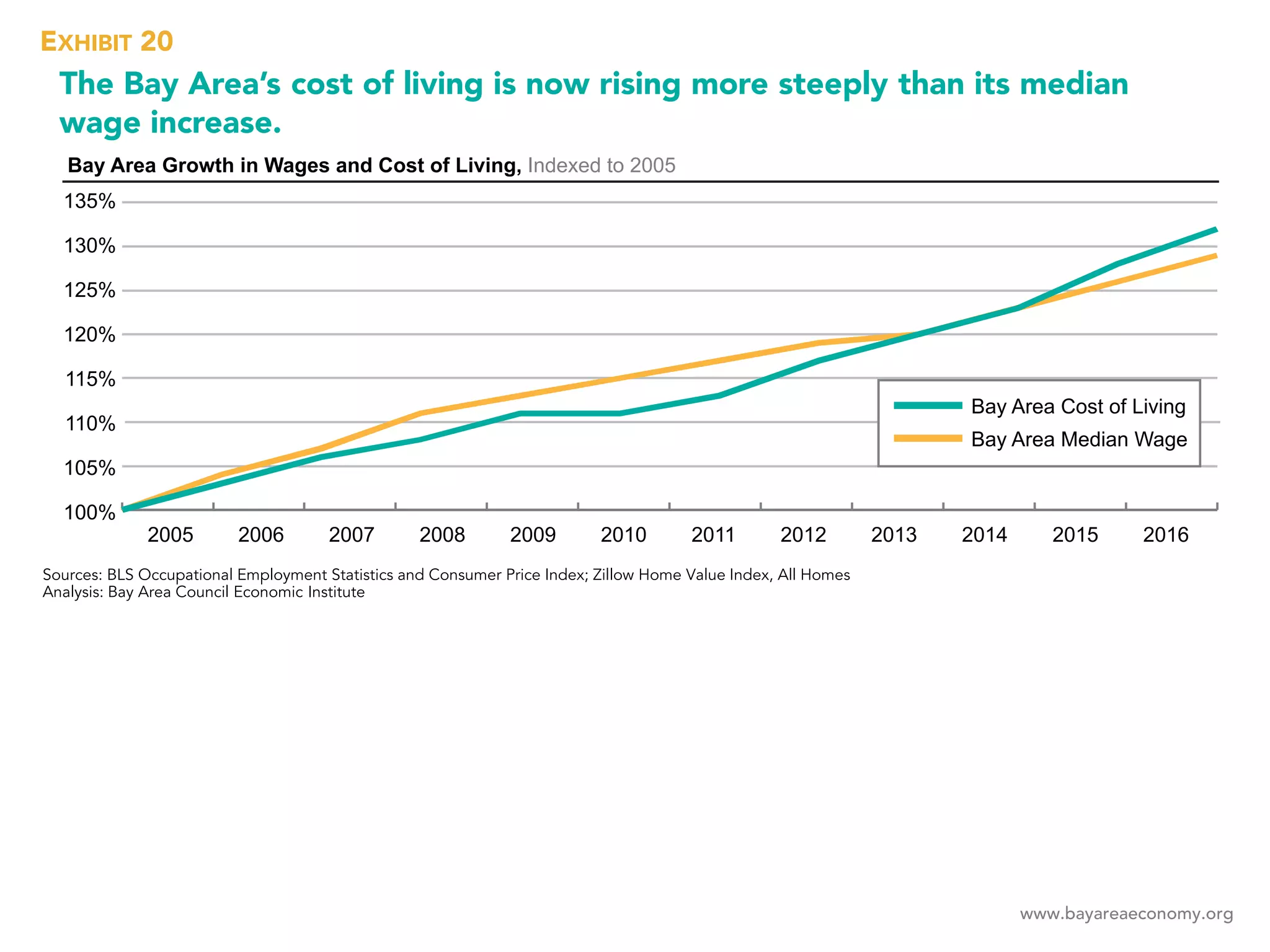
The Bay Area’s cost of living is now rising more steeply than its median
wage increase.
Bay Area Growth in Wages and Cost of Living, Indexed to 2005
100%
105%
110%
115%
120%
125%
130%
135%
201620152014201320122011201020092008200720062005
Bay Area Cost of Living
Bay Area Median Wage
EXHIBIT 20
Sources: BLS Occupational Employment Statistics and Consumer Price Index; Zillow Home Value Index, All Homes
Analysis: Bay Area Council Economic Institute
www.bayareaeconomy.org
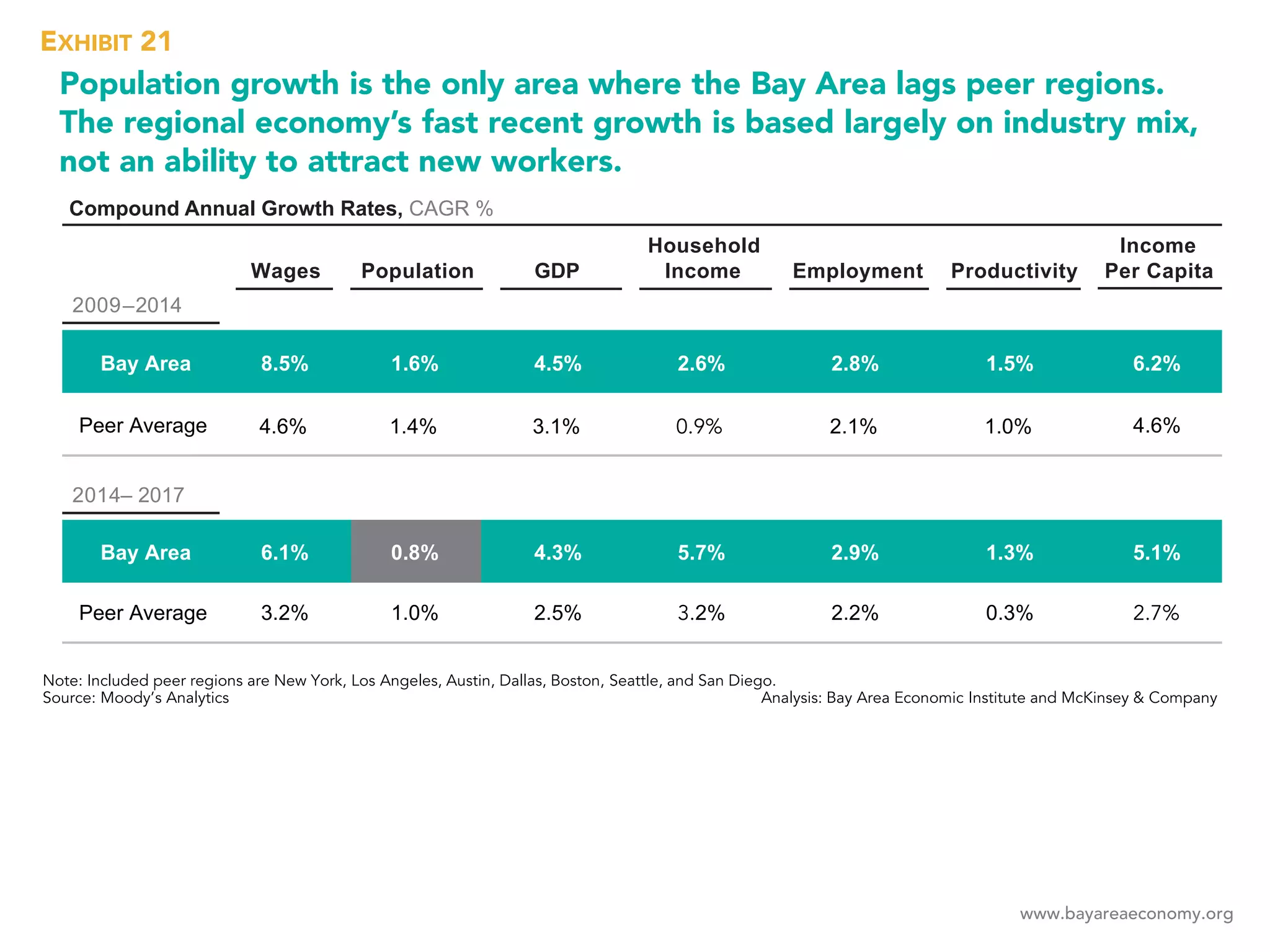
Population growth is the only area where the Bay Area lags peer regions.
The regional economy’s fast recent growth is based largely on industry mix,
not an ability to attract new workers.
Wages Population
Household
Income Employment Productivity
Income
Per Capita
2009–2014
Bay Area 8.5% 1.6% 4.5% 2.6% 2.8% 1.5% 6.2%
Peer Average 4.6%
2014– 2017
Bay Area 6.1% 0.8% 4.3% 5.7% 2.9% 1.3% 5.1%
Peer Average 3.2% 1.0% 2.5% 3.2% 2.2% 0.3% 2.7%
GDP
Compound Annual Growth Rates, CAGR %
4.6% 1.4% 3.1% 0.9% 2.1% 1.0%
EXHIBIT 21
Note: Included peer regions are New York, Los Angeles, Austin, Dallas, Boston, Seattle, and San Diego.
Source: Moody’s Analytics Analysis: Bay Area Economic Institute and McKinsey & Company
www.bayareaeconomy.org
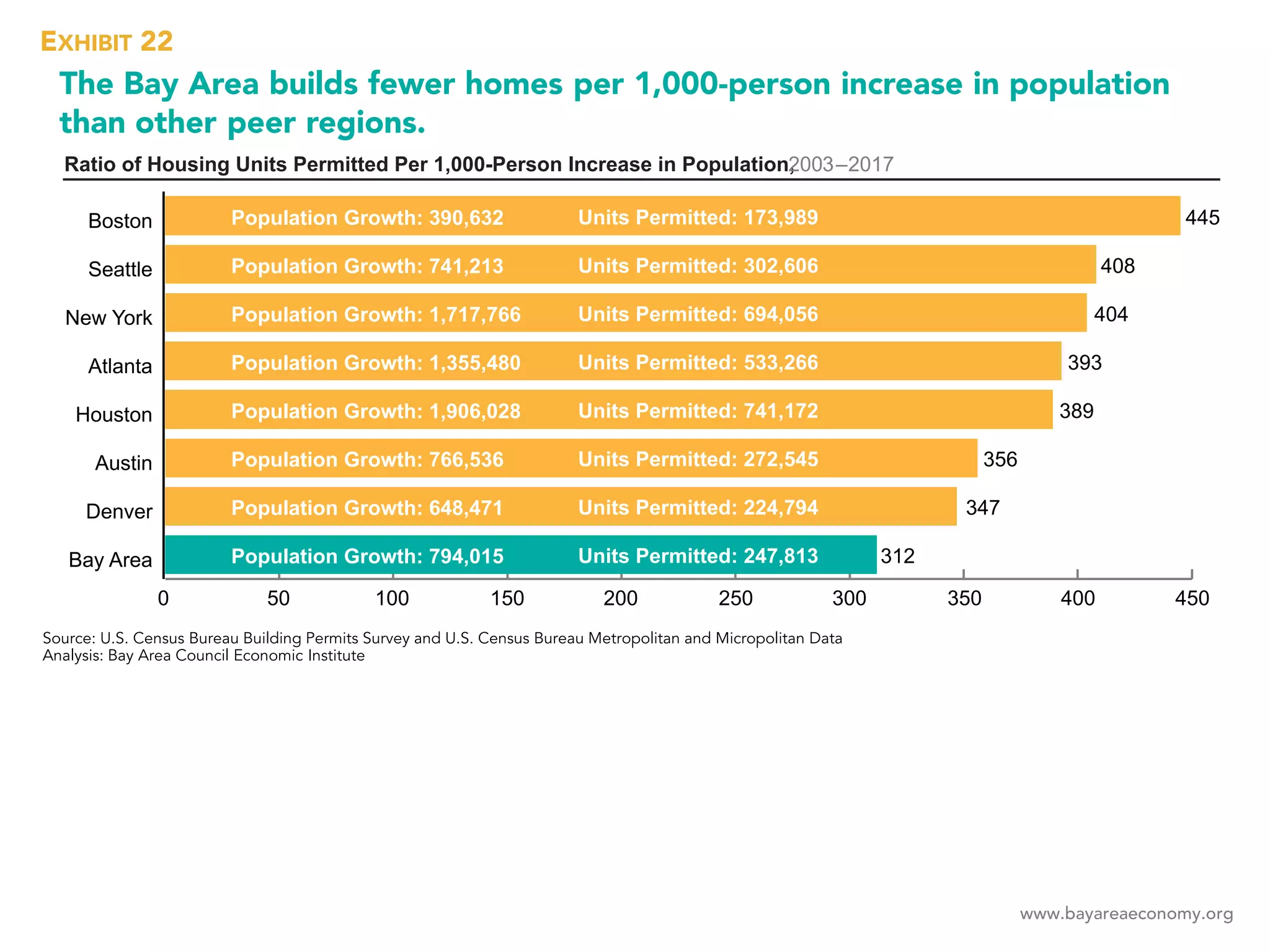
The Bay Area builds fewer homes per 1,000-person increase in population
than other peer regions.
Ratio of Housing Units Permitted Per 1,000-Person Increase in Population,2003–2017
0 50 100 150 200 250 300 350 400 450
Bay Area
Denver
Austin
Houston
Atlanta
New York
Seattle
Boston Population Growth: 390,632
Population Growth: 741,213
Population Growth: 1,717,766
Population Growth: 1,355,480
Population Growth: 1,906,028
Population Growth: 766,536
Population Growth: 648,471
Population Growth: 794,015
Units Permitted: 173,989
Units Permitted: 302,606
Units Permitted: 694,056
Units Permitted: 533,266
Units Permitted: 741,172
Units Permitted: 272,545
Units Permitted: 224,794
Units Permitted: 247,813
445
408
404
393
389
356
347
312
EXHIBIT 22
Source: U.S. Census Bureau Building Permits Survey and U.S. Census Bureau Metropolitan and Micropolitan Data
Analysis: Bay Area Council Economic Institute
www.bayareaeconomy.org
The Bay Area’s percentages of housing-cost-burdened households are
exceeded only by Los Angeles and the New York Metro.
EXHIBIT 23
Source: U.S. Census Bureau American Community Survey Analysis: Bay Area Council Economic Institute
www.bayareaeconomy.org
Shown in red on the map, 63,500 acres of the Bay Area’s open space are at
high risk of development.
EXHIBIT 24
Source: Adapted from Greenbelt Alliance, At Risk: The Bay Area Greenbelt, January 2017
www.bayareaeconomy.org
California is off track in the race to meet its 2030 and 2050 climate goals.
California Total Greenhouse Gas Emissions, MMtCO2e per year
1990 2000 2010 2020 2030 2040 2050
300
500
450
400
350
250
200
150
100
50
0
2020 Target
2030 Goal
2050 Goal
Current Trajectory
EXHIBIT 25
Note: MMtCO2e = million metric tons of carbon dioxide equivalents
Source: California Air Resources Board Analysis: Bay Area Council Economic Institute
www.bayareaeconomy.org
Median household incomes are substantially higher within the Bay Area’s
inner core than they are across the broader Northern California Megaregion.
EXHIBIT 26
Source: U.S. Census Bureau American Community Survey 2016 Analysis: Bay Area Council Economic Institute
Santa Rosa
San Rafael
San
Francisco
Oakland
Berkeley
Concord
Hayward
Fremont
San Jose
Sunnyvale
San
Mateo
Vallejo
Fairfield
Vacaville
Napa
Gilroy
MedianHousehold Income
intheBayArea, 2016
More than $82,000
$53,001 - $68,000
$68,001 - $82,000
$24,000 or less
$24,001 - $39,000
$39,001 - $53,000
San
Francisco
Merced
Los Banos
Soledad
Salinas
Watsonville
GilroySanta
Cruz
Fremont
San JoseSunnyvale
San Rafael
San
Mateo
Concord
Napa
Santa Rosa
Oakland Manteca
Stockton
Hayward
Modesto
Sacramento
Galt
Vacaville
Fairfield
Vallejo
Berkeley
King City
South Lake
Tahoe
More than $82,000
$53,001 - $68,000
$68,001 - $82,000
$24,000 or less
$24,001 - $39,000
$39,001 - $53,000
Median
Household
Income
in the
Northern
California
Megaregion, 2016
www.bayareaeconomy.org
Substantial inequities in Bay Area median household incomes also correlate
with ethnicity.
Bay Area Median Household Incomes by Ethnicity, 2016
0 $30,000 $60,000 $90,000 $120,000 $150,000
African-American
Hispanic
Asian
White $122,700
$132,900
$83,000
$69,400
EXHIBIT 27
Source: U.S. Census Bureau American Community Survey 2016 Analysis: Bay Area Council Economic Institute
www.bayareaeconomy.org
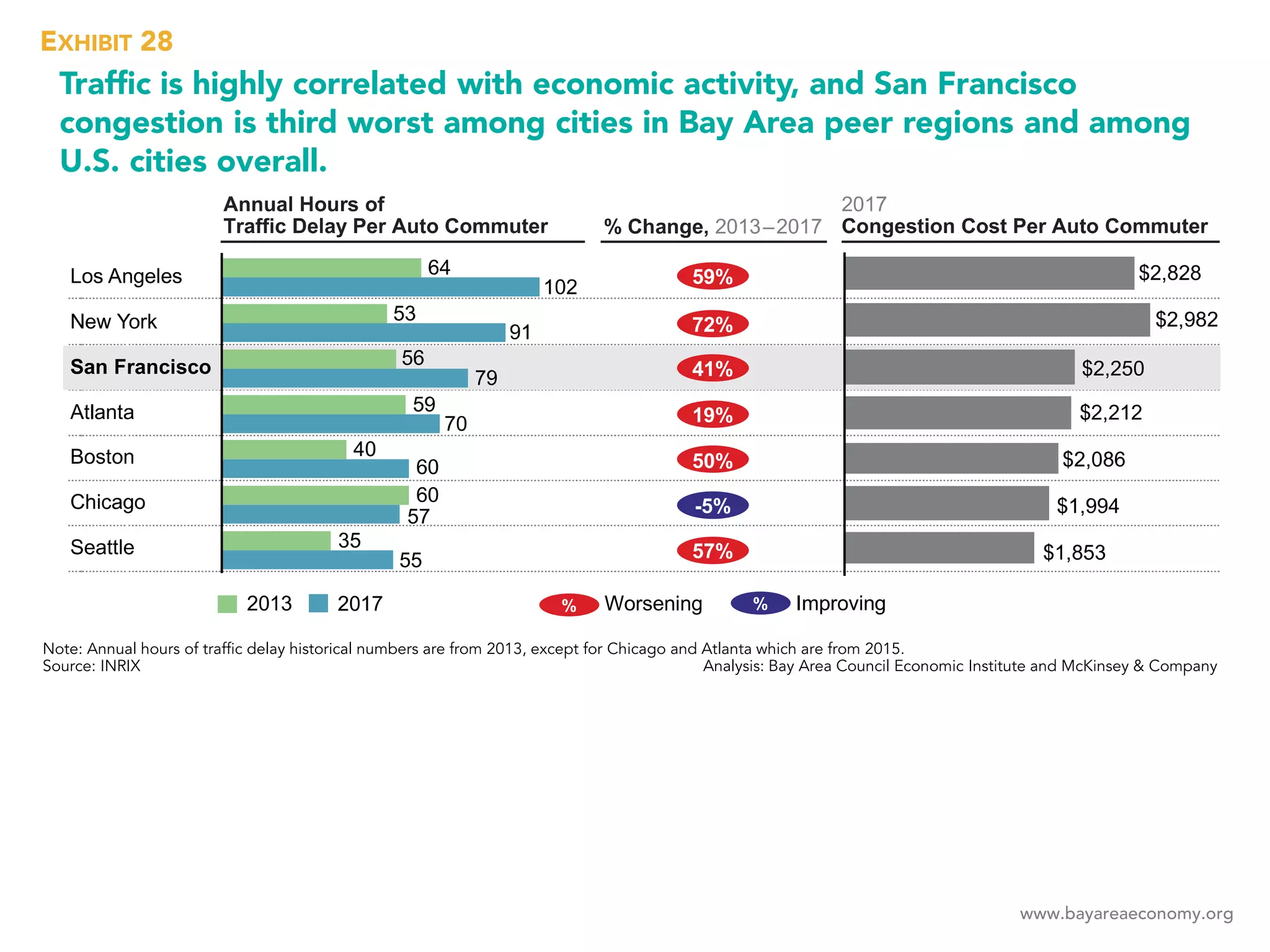
Traffic is highly correlated with economic activity, and San Francisco
congestion is third worst among cities in Bay Area peer regions and among
U.S. cities overall.
EXHIBIT 28
Note: Annual hours of traffic delay historical numbers are from 2013, except for Chicago and Atlanta which are from 2015.
Source: INRIX Analysis: Bay Area Council Economic Institute and McKinsey & Company

Bay Area Economic Profile Chapter 3

  • 1.
    www.bayareaeconomy.org The Bay Area’scost of living is now rising more steeply than its median wage increase. Bay Area Growth in Wages and Cost of Living, Indexed to 2005 100% 105% 110% 115% 120% 125% 130% 135% 201620152014201320122011201020092008200720062005 Bay Area Cost of Living Bay Area Median Wage EXHIBIT 20 Sources: BLS Occupational Employment Statistics and Consumer Price Index; Zillow Home Value Index, All Homes Analysis: Bay Area Council Economic Institute
  • 2.
    www.bayareaeconomy.org Population growth isthe only area where the Bay Area lags peer regions. The regional economy’s fast recent growth is based largely on industry mix, not an ability to attract new workers. Wages Population Household Income Employment Productivity Income Per Capita 2009–2014 Bay Area 8.5% 1.6% 4.5% 2.6% 2.8% 1.5% 6.2% Peer Average 4.6% 2014– 2017 Bay Area 6.1% 0.8% 4.3% 5.7% 2.9% 1.3% 5.1% Peer Average 3.2% 1.0% 2.5% 3.2% 2.2% 0.3% 2.7% GDP Compound Annual Growth Rates, CAGR % 4.6% 1.4% 3.1% 0.9% 2.1% 1.0% EXHIBIT 21 Note: Included peer regions are New York, Los Angeles, Austin, Dallas, Boston, Seattle, and San Diego. Source: Moody’s Analytics Analysis: Bay Area Economic Institute and McKinsey & Company
  • 3.
    www.bayareaeconomy.org The Bay Areabuilds fewer homes per 1,000-person increase in population than other peer regions. Ratio of Housing Units Permitted Per 1,000-Person Increase in Population,2003–2017 0 50 100 150 200 250 300 350 400 450 Bay Area Denver Austin Houston Atlanta New York Seattle Boston Population Growth: 390,632 Population Growth: 741,213 Population Growth: 1,717,766 Population Growth: 1,355,480 Population Growth: 1,906,028 Population Growth: 766,536 Population Growth: 648,471 Population Growth: 794,015 Units Permitted: 173,989 Units Permitted: 302,606 Units Permitted: 694,056 Units Permitted: 533,266 Units Permitted: 741,172 Units Permitted: 272,545 Units Permitted: 224,794 Units Permitted: 247,813 445 408 404 393 389 356 347 312 EXHIBIT 22 Source: U.S. Census Bureau Building Permits Survey and U.S. Census Bureau Metropolitan and Micropolitan Data Analysis: Bay Area Council Economic Institute
  • 4.
    www.bayareaeconomy.org The Bay Area’spercentages of housing-cost-burdened households are exceeded only by Los Angeles and the New York Metro. EXHIBIT 23 Source: U.S. Census Bureau American Community Survey Analysis: Bay Area Council Economic Institute
  • 5.
    www.bayareaeconomy.org Shown in redon the map, 63,500 acres of the Bay Area’s open space are at high risk of development. EXHIBIT 24 Source: Adapted from Greenbelt Alliance, At Risk: The Bay Area Greenbelt, January 2017
  • 6.
    www.bayareaeconomy.org California is offtrack in the race to meet its 2030 and 2050 climate goals. California Total Greenhouse Gas Emissions, MMtCO2e per year 1990 2000 2010 2020 2030 2040 2050 300 500 450 400 350 250 200 150 100 50 0 2020 Target 2030 Goal 2050 Goal Current Trajectory EXHIBIT 25 Note: MMtCO2e = million metric tons of carbon dioxide equivalents Source: California Air Resources Board Analysis: Bay Area Council Economic Institute
  • 7.
    www.bayareaeconomy.org Median household incomesare substantially higher within the Bay Area’s inner core than they are across the broader Northern California Megaregion. EXHIBIT 26 Source: U.S. Census Bureau American Community Survey 2016 Analysis: Bay Area Council Economic Institute Santa Rosa San Rafael San Francisco Oakland Berkeley Concord Hayward Fremont San Jose Sunnyvale San Mateo Vallejo Fairfield Vacaville Napa Gilroy MedianHousehold Income intheBayArea, 2016 More than $82,000 $53,001 - $68,000 $68,001 - $82,000 $24,000 or less $24,001 - $39,000 $39,001 - $53,000 San Francisco Merced Los Banos Soledad Salinas Watsonville GilroySanta Cruz Fremont San JoseSunnyvale San Rafael San Mateo Concord Napa Santa Rosa Oakland Manteca Stockton Hayward Modesto Sacramento Galt Vacaville Fairfield Vallejo Berkeley King City South Lake Tahoe More than $82,000 $53,001 - $68,000 $68,001 - $82,000 $24,000 or less $24,001 - $39,000 $39,001 - $53,000 Median Household Income in the Northern California Megaregion, 2016
  • 8.
    www.bayareaeconomy.org Substantial inequities inBay Area median household incomes also correlate with ethnicity. Bay Area Median Household Incomes by Ethnicity, 2016 0 $30,000 $60,000 $90,000 $120,000 $150,000 African-American Hispanic Asian White $122,700 $132,900 $83,000 $69,400 EXHIBIT 27 Source: U.S. Census Bureau American Community Survey 2016 Analysis: Bay Area Council Economic Institute
  • 9.
    www.bayareaeconomy.org Traffic is highlycorrelated with economic activity, and San Francisco congestion is third worst among cities in Bay Area peer regions and among U.S. cities overall. EXHIBIT 28 Note: Annual hours of traffic delay historical numbers are from 2013, except for Chicago and Atlanta which are from 2015. Source: INRIX Analysis: Bay Area Council Economic Institute and McKinsey & Company