Human needs
By
Arifa Akhtar
BS (Nursing) Generic
Outline
 Define basic human needs
 Discuss basis of nursing practices
 Define World health organization
Maslow hierarchy theory
 Maslow’s hierarchy of needs is a
motivational theory in psychology
comprising a five-tier model of
human needs, often depicted as
hierarchical levels within a
pyramid.
Basic human needs
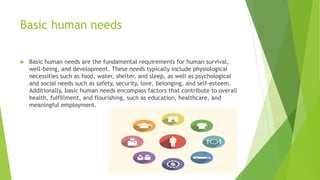
 Basic human needs are the fundamental requirements for human survival,
well-being, and development. These needs typically include physiological
necessities such as food, water, shelter, and sleep, as well as psychological
and social needs such as safety, security, love, belonging, and self-esteem.
Additionally, basic human needs encompass factors that contribute to overall
health, fulfillment, and flourishing, such as education, healthcare, and
meaningful employment.
Basic human needs in nursing goal
 In nursing, goals related to basic human needs often focus on promoting health,
preventing illness, and providing holistic care to individuals. These goals can
include:

 1. **Meeting Physiological Needs**: Ensuring patients have access to adequate
nutrition, hydration, rest, and a safe environment to promote physical well-being.

 2. **Promoting Safety and Security**: Creating a safe and secure environment to
prevent accidents, injuries, and infections, and providing interventions to address
patient concerns about their safety.

 3. **Supporting Emotional and Psychological Needs**: Addressing patient fears,
anxieties, and emotional distress by providing comfort, empathy, and emotional
support.
Basic human needs in nursing goal
 Continue…

 4. **Fostering Social Interaction and Belonging**: Encouraging socialization and interpersonal
connections to prevent isolation and promote a sense of belonging and community.

 5. **Facilitating Self-Esteem and Self-Actualization**: Supporting patients in achieving their
highest potential by promoting self-esteem, autonomy, and personal growth.

 6. **Educating and Empowering**: Providing patients with information and resources to make
informed decisions about their health, empowering them to take an active role in their care.

 7. **Preventing Disease and Promoting Health**: Implementing preventive measures such as
vaccinations, screenings, and health education to reduce the risk of illness and promote
overall well-being.
Nursing practices
 The basis of nursing practices lies in the core principles and values that guide
the profession. Include:
 1. Holistic Care
 2. Patient-Centered Care
 3. Evidence-Based Practice
 4. Ethical Practice
 5. Cultural Competence
 6. Collaboration
 7. Continuing Education
World health organization
 The World Health Organization (WHO) is a specialized agency of the United
Nations responsible for international public health. It was established in 1948
and is headquartered in Geneva, Switzerland. The WHO coordinates
international efforts to prevent and control disease outbreaks, promotes
health equity, provides technical assistance and support to countries, sets
international health standards, and conducts research to address global
health challenges. Its primary goal is to ensure that all people attain the
highest possible level of health.
Reference
 “Fundamentals of Nursing” by Patricia A. Potter, Anne Griffin Perry, Patricia
Stockert, and Amy Hall: This textbook covers the fundamental concepts and
skills of nursing practice, including assessment, nursing process, and basic
nursing interventions.
Basic human needs11.pptx Nion College ❤❤

Basic human needs11.pptx Nion College ❤❤

  • 1.
  • 2.
    Outline  Define basichuman needs  Discuss basis of nursing practices  Define World health organization
  • 3.
    Maslow hierarchy theory Maslow’s hierarchy of needs is a motivational theory in psychology comprising a five-tier model of human needs, often depicted as hierarchical levels within a pyramid.
  • 4.
    Basic human needs Basic human needs are the fundamental requirements for human survival, well-being, and development. These needs typically include physiological necessities such as food, water, shelter, and sleep, as well as psychological and social needs such as safety, security, love, belonging, and self-esteem. Additionally, basic human needs encompass factors that contribute to overall health, fulfillment, and flourishing, such as education, healthcare, and meaningful employment.
  • 5.
    Basic human needsin nursing goal  In nursing, goals related to basic human needs often focus on promoting health, preventing illness, and providing holistic care to individuals. These goals can include:   1. **Meeting Physiological Needs**: Ensuring patients have access to adequate nutrition, hydration, rest, and a safe environment to promote physical well-being.   2. **Promoting Safety and Security**: Creating a safe and secure environment to prevent accidents, injuries, and infections, and providing interventions to address patient concerns about their safety.   3. **Supporting Emotional and Psychological Needs**: Addressing patient fears, anxieties, and emotional distress by providing comfort, empathy, and emotional support.
  • 6.
    Basic human needsin nursing goal  Continue…   4. **Fostering Social Interaction and Belonging**: Encouraging socialization and interpersonal connections to prevent isolation and promote a sense of belonging and community.   5. **Facilitating Self-Esteem and Self-Actualization**: Supporting patients in achieving their highest potential by promoting self-esteem, autonomy, and personal growth.   6. **Educating and Empowering**: Providing patients with information and resources to make informed decisions about their health, empowering them to take an active role in their care.   7. **Preventing Disease and Promoting Health**: Implementing preventive measures such as vaccinations, screenings, and health education to reduce the risk of illness and promote overall well-being.
  • 7.
    Nursing practices  Thebasis of nursing practices lies in the core principles and values that guide the profession. Include:  1. Holistic Care  2. Patient-Centered Care  3. Evidence-Based Practice  4. Ethical Practice  5. Cultural Competence  6. Collaboration  7. Continuing Education
  • 9.
    World health organization The World Health Organization (WHO) is a specialized agency of the United Nations responsible for international public health. It was established in 1948 and is headquartered in Geneva, Switzerland. The WHO coordinates international efforts to prevent and control disease outbreaks, promotes health equity, provides technical assistance and support to countries, sets international health standards, and conducts research to address global health challenges. Its primary goal is to ensure that all people attain the highest possible level of health.
  • 10.
    Reference  “Fundamentals ofNursing” by Patricia A. Potter, Anne Griffin Perry, Patricia Stockert, and Amy Hall: This textbook covers the fundamental concepts and skills of nursing practice, including assessment, nursing process, and basic nursing interventions.