SHORT STORY
WRITING
The Basic Elements
The Basic Elements
 There are five basic elements of short stories:
 Setting
 Characters
 Conflict
 Climax
 Resolution
Setting
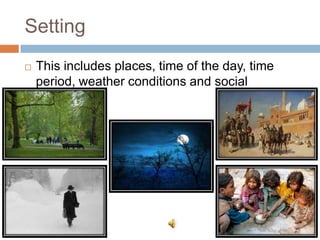
 This includes places, time of the day, time
period, weather conditions and social
conditions.
Characters
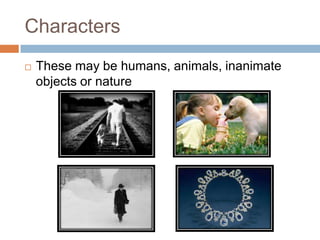
 These may be humans, animals, inanimate
objects or nature
Types of Characters
 Main Characters
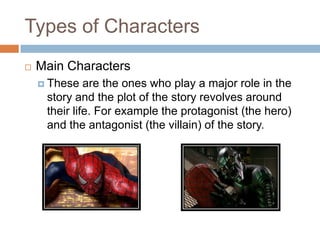
 These are the ones who play a major role in the
story and the plot of the story revolves around
their life. For example the protagonist (the hero)
and the antagonist (the villain) of the story.
Types of Characters
 Minor Characters
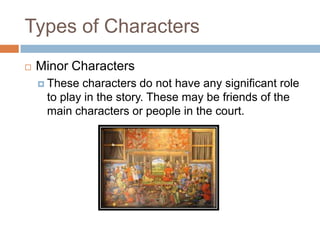
 These characters do not have any significant role
to play in the story. These may be friends of the
main characters or people in the court.
Conflict
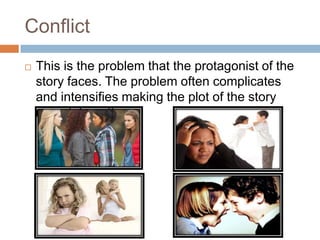
 This is the problem that the protagonist of the
story faces. The problem often complicates
and intensifies making the plot of the story
more interesting.
Types of Conflict
 There are two types of conflict: external and
internal
 External Conflict is when other characters in the
story cause problems for the protagonist.
 External conflict may be categorized as :
 Man versus man
 Man versus nature
 Man versus animals
 Man versus super natural
Types of Conflict (continued)
 Internal Conflict is when the protagonist causes
problems for themselves.
 This type of conflict may be caused due to :
 Fear
 Lack of confidence
 Indecisiveness
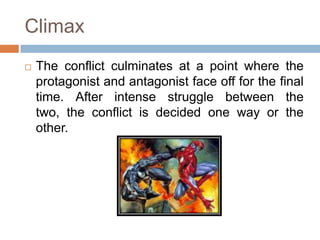
Climax
 The conflict culminates at a point where the
protagonist and antagonist face off for the final
time. After intense struggle between the
two, the conflict is decided one way or the
other.
Resolution
 This is the ending of the story where the
reader gets to know about the final outcome of
the story. All the loose ends are tied up and all
the questions that may have arisen in the
readers’ minds are answered.

Basic elements

  • 1.
  • 2.
    The Basic Elements There are five basic elements of short stories:  Setting  Characters  Conflict  Climax  Resolution
  • 3.
    Setting  This includesplaces, time of the day, time period, weather conditions and social conditions.
  • 4.
    Characters  These maybe humans, animals, inanimate objects or nature
  • 5.
    Types of Characters Main Characters  These are the ones who play a major role in the story and the plot of the story revolves around their life. For example the protagonist (the hero) and the antagonist (the villain) of the story.
  • 6.
    Types of Characters Minor Characters  These characters do not have any significant role to play in the story. These may be friends of the main characters or people in the court.
  • 7.
    Conflict  This isthe problem that the protagonist of the story faces. The problem often complicates and intensifies making the plot of the story more interesting.
  • 8.
    Types of Conflict There are two types of conflict: external and internal  External Conflict is when other characters in the story cause problems for the protagonist.  External conflict may be categorized as :  Man versus man  Man versus nature  Man versus animals  Man versus super natural
  • 9.
    Types of Conflict(continued)  Internal Conflict is when the protagonist causes problems for themselves.  This type of conflict may be caused due to :  Fear  Lack of confidence  Indecisiveness
  • 10.
    Climax  The conflictculminates at a point where the protagonist and antagonist face off for the final time. After intense struggle between the two, the conflict is decided one way or the other.
  • 11.
    Resolution  This isthe ending of the story where the reader gets to know about the final outcome of the story. All the loose ends are tied up and all the questions that may have arisen in the readers’ minds are answered.