News production for smartphones and
tablets on the Brazilian newspaper scene
Adriana Barsotti
TWO SCREENS
TWO PATHS:
Teacher of Digital Journalism at Ibmec University
PhD candidate, Catholic University of Rio de Janeiro (PUC-Rio)
smartphones vs. tablets
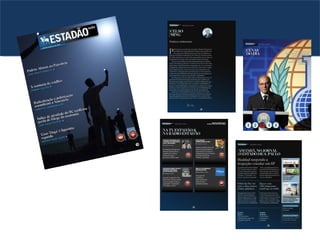
tablet-specific products
case study
some questions
1. Have smartphones and tablets changed the
production routines in newsrooms?
If so, how?
2. Have these devices led to changes in journalistic
language?
If so, how?
some numbers
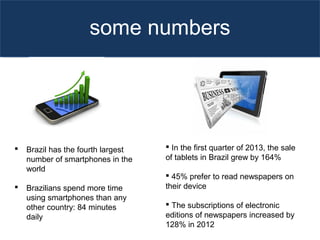
 In the first quarter of 2013, the sale
of tablets in Brazil grew by 164%
 45% prefer to read newspapers on
their device
 The subscriptions of electronic
editions of newspapers increased by
128% in 2012
 Brazil has the fourth largest
number of smartphones in the
world
 Brazilians spend more time
using smartphones than any
other country: 84 minutes
daily
methodology
 One-week content analysis and in-depth interviews
 Hypothesis: journalism for tablets is imposing limits on integrated
newsrooms and is creating a new language
 The tablet is not seen as
another distribution channel
for non-stop content
 It has been explored as a
new medium
results
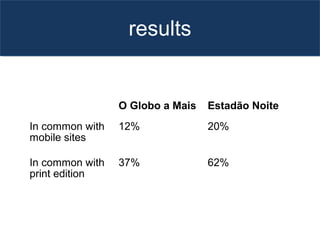
O Globo a Mais Estadão Noite
In common with
mobile sites
12% 20%
In common with
print edition
37% 62%
the answers
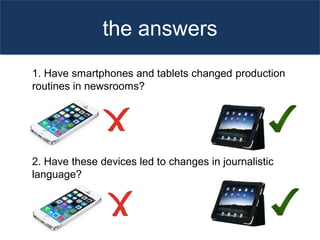
1. Have smartphones and tablets changed production
routines in newsrooms?
2. Have these devices led to changes in journalistic
language?
E o jornalismo com isso? Jornais no
celular: 2008
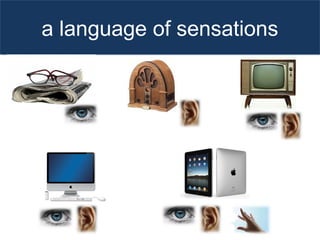
a language of sensationsa language of sensations
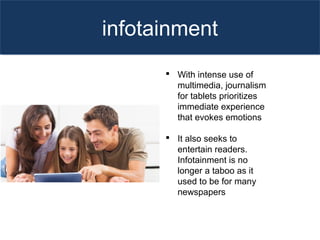
infotainment
 With intense use of
multimedia, journalism
for tablets prioritizes
immediate experience
that evokes emotions
 It also seeks to
entertain readers.
Infotainment is no
longer a taboo as it
used to be for many
newspapers
some examples
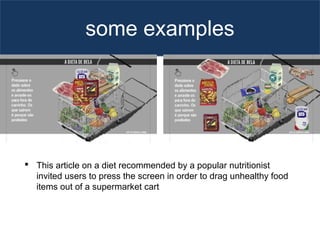
 This article on a diet recommended by a popular nutritionist
invited users to press the screen in order to drag unhealthy food
items out of a supermarket cart
some examples
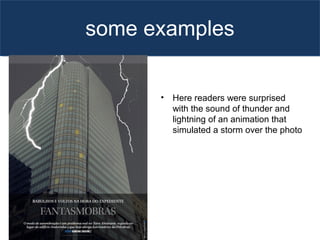
• Here readers were surprised
with the sound of thunder and
lightning of an animation that
simulated a storm over the photo
some examples
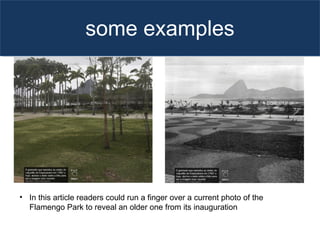
• In this article readers could run a finger over a current photo of the
Flamengo Park to reveal an older one from its inauguration
some examples
 And here readers were
surprised with the sound of
shots and the effect of shattered
glass
final remarks
 Tactility has brought changes to
journalism
 Technology is already on the way to
digitally simulating smell and taste
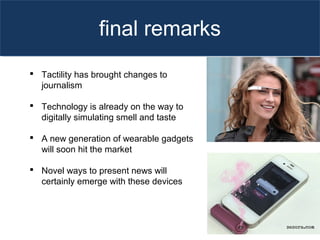
 A new generation of wearable gadgets
will soon hit the market
 Novel ways to present news will
certainly emerge with these devices
THANK YOU
Adriana Barsotti
Teacher of Digital Journalism at Ibmec University
PhD candidate at the Catholic University of Rio de Janeiro (PUC-Rio)
email: barsotti.adriana@gmail.com
Twitter: @adrianabarsotti
Facebook: www.facebook.com/adrianabarsotti.1

Barsotti

  • 1.
    News production forsmartphones and tablets on the Brazilian newspaper scene Adriana Barsotti TWO SCREENS TWO PATHS: Teacher of Digital Journalism at Ibmec University PhD candidate, Catholic University of Rio de Janeiro (PUC-Rio)
  • 2.
  • 3.
  • 4.
  • 7.
    some questions 1. Havesmartphones and tablets changed the production routines in newsrooms? If so, how? 2. Have these devices led to changes in journalistic language? If so, how?
  • 8.
    some numbers  Inthe first quarter of 2013, the sale of tablets in Brazil grew by 164%  45% prefer to read newspapers on their device  The subscriptions of electronic editions of newspapers increased by 128% in 2012  Brazil has the fourth largest number of smartphones in the world  Brazilians spend more time using smartphones than any other country: 84 minutes daily
  • 9.
    methodology  One-week contentanalysis and in-depth interviews  Hypothesis: journalism for tablets is imposing limits on integrated newsrooms and is creating a new language  The tablet is not seen as another distribution channel for non-stop content  It has been explored as a new medium
  • 10.
    results O Globo aMais Estadão Noite In common with mobile sites 12% 20% In common with print edition 37% 62%
  • 11.
    the answers 1. Havesmartphones and tablets changed production routines in newsrooms? 2. Have these devices led to changes in journalistic language?
  • 12.
    E o jornalismocom isso? Jornais no celular: 2008 a language of sensationsa language of sensations
  • 13.
    infotainment  With intenseuse of multimedia, journalism for tablets prioritizes immediate experience that evokes emotions  It also seeks to entertain readers. Infotainment is no longer a taboo as it used to be for many newspapers
  • 14.
    some examples  Thisarticle on a diet recommended by a popular nutritionist invited users to press the screen in order to drag unhealthy food items out of a supermarket cart
  • 15.
    some examples • Herereaders were surprised with the sound of thunder and lightning of an animation that simulated a storm over the photo
  • 16.
    some examples • Inthis article readers could run a finger over a current photo of the Flamengo Park to reveal an older one from its inauguration
  • 17.
    some examples  Andhere readers were surprised with the sound of shots and the effect of shattered glass
  • 18.
    final remarks  Tactilityhas brought changes to journalism  Technology is already on the way to digitally simulating smell and taste  A new generation of wearable gadgets will soon hit the market  Novel ways to present news will certainly emerge with these devices
  • 19.
    THANK YOU Adriana Barsotti Teacherof Digital Journalism at Ibmec University PhD candidate at the Catholic University of Rio de Janeiro (PUC-Rio) email: barsotti.adriana@gmail.com Twitter: @adrianabarsotti Facebook: www.facebook.com/adrianabarsotti.1