Submitted By- Manshikha Singh
Indian Institute of Management Sirmaur
Managing Change in
Organizations: HR’s
Role and Strategies
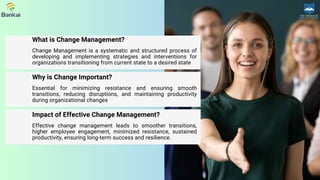
Change Management is a systematic and structured process of
developing and implementing strategies and interventions for
organizations transitioning from current state to a desired state
What is Change Management?
Essential for minimizing resistance and ensuring smooth
transitions, reducing disruptions, and maintaining productivity
during organizational changes
Why is Change Important?
Effective change management leads to smoother transitions,
higher employee engagement, minimized resistance, sustained
productivity, ensuring long-term success and resilience.
Impact of Effective Change Management?
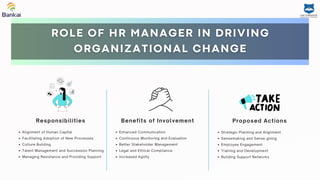
Responsibilities
Alignment of Human Capital
Facilitating Adoption of New Processes
Culture Building
Talent Management and Succession Planning
Managing Resistance and Providing Support
Benefits of Involvement
Enhanced Communication
Continuous Monitoring and Evaluation
Better Stakeholder Management
Legal and Ethical Compliance
Increased Agility
Proposed Actions
Strategic Planning and Alignment
Sensemaking and Sense giving
Employee Engagement
Training and Development
Building Support Networks
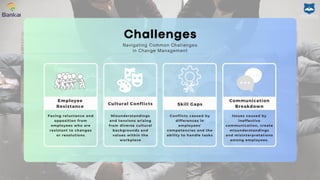
Facing reluctance and
opposition from
employees who are
resistant to changes
or resolutions
Communication
Breakdown
Skill Gaps
Cultural Conflicts
Employee
Resistance
Navigating Common Challenges
in Change Management
Challenges
Misunderstandings
and tensions arising
from diverse cultural
backgrounds and
values within the
workplace
Conflicts caused by
differences in
employees'
competencies and the
ability to handle tasks
Issues caused by
ineffective
communication, create
misunderstandings
and misinterpretations
among employees.
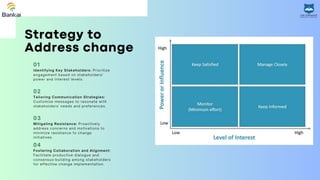
Strategy to
Address change
Identifying Key Stakeholders: Prioritize
engagement based on stakeholders'
power and interest levels.
01
Tailoring Communication Strategies:
Customize messages to resonate with
stakeholders' needs and preferences.
02
Mitigating Resistance: Proactively
address concerns and motivations to
minimize resistance to change
initiatives.
03
Fostering Collaboration and Alignment:
Facilitate productive dialogue and
consensus-building among stakeholders
for effective change implementation.
04
H
O
W
T
O
T
A
C
K
L
E
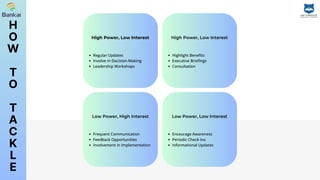
Frequent Communication
Feedback Opportunities
Involvement in Implementation
Low Power, High Interest
Highlight Benefits
Executive Briefings
Consultation
High Power, Low Interest
Encourage Awareness
Periodic Check-Ins
Informational Updates
Low Power, Low Interest
Regular Updates
Involve in Decision-Making
Leadership Workshops
High Power, Low Interest
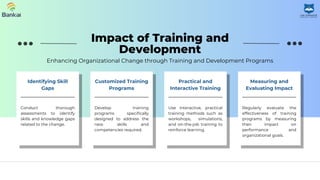
Impact of Training and
Development
Enhancing Organizational Change through Training and Development Programs
Conduct thorough
assessments to identify
skills and knowledge gaps
related to the change.
Develop training
programs specifically
designed to address the
new skills and
competencies required.
Use interactive, practical
training methods such as
workshops, simulations,
and on-the-job training to
reinforce learning.
Regularly evaluate the
effectiveness of training
programs by measuring
their impact on
performance and
organizational goals.
Identifying Skill
Gaps
Customized Training
Programs
Practical and
Interactive Training
Measuring and
Evaluating Impact
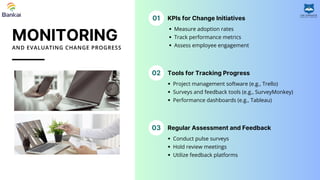
MONITORING
AND EVALUATING CHANGE PROGRESS
01 KPIs for Change Initiatives
Measure adoption rates
Track performance metrics
Assess employee engagement
02 Tools for Tracking Progress
Project management software (e.g., Trello)
Surveys and feedback tools (e.g., SurveyMonkey)
Performance dashboards (e.g., Tableau)
03 Regular Assessment and Feedback
Conduct pulse surveys
Hold review meetings
Utilize feedback platforms
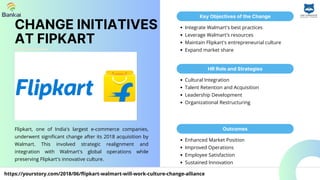
Key Objectives of the Change
HR Role and Strategies
Outcomes
Enhanced Market Position
Improved Operations
Employee Satisfaction
Sustained Innovation
CHANGE INITIATIVES
AT FIPKART
Flipkart, one of India's largest e-commerce companies,
underwent significant change after its 2018 acquisition by
Walmart. This involved strategic realignment and
integration with Walmart's global operations while
preserving Flipkart's innovative culture.
Integrate Walmart's best practices
Leverage Walmart's resources
Maintain Flipkart's entrepreneurial culture
Expand market share
Cultural Integration
Talent Retention and Acquisition
Leadership Development
Organizational Restructuring
https://yourstory.com/2018/06/flipkart-walmart-will-work-culture-change-alliance
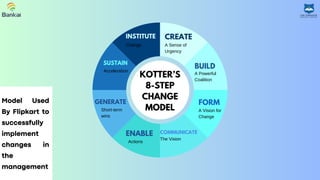
CREATE
BUILD
FORM
COMMUNICATE
ENABLE
GENERATE
SUSTAIN
INSTITUTE
A Sense of
Urgency
A Powerful
Coalition
A Vision for
Change
The Vision
Actions
Short-term
wins
Acceleration
Change
KOTTER’S
8-STEP
CHANGE
MODEL
Model Used
By Flipkart to
successfully
implement
changes in
the
management
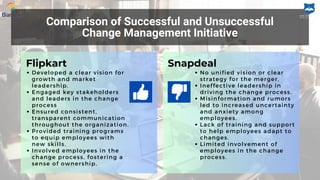
Comparison of Successful and Unsuccessful
Change Management Initiative
Developed a clear vision for
growth and market
leadership.
Engaged key stakeholders
and leaders in the change
process
Ensured consistent,
transparent communication
throughout the organization.
Provided training programs
to equip employees with
new skills.
Involved employees in the
change process, fostering a
sense of ownership.
No unified vision or clear
strategy for the merger.
Ineffective leadership in
driving the change process.
Misinformation and rumors
led to increased uncertainty
and anxiety among
employees.
Lack of training and support
to help employees adapt to
changes.
Limited involvement of
employees in the change
process.
Flipkart Snapdeal
THANK YOU

Bankaai- Managing Change in Organisation

  • 1.
    Submitted By- ManshikhaSingh Indian Institute of Management Sirmaur Managing Change in Organizations: HR’s Role and Strategies
  • 2.
    Change Management isa systematic and structured process of developing and implementing strategies and interventions for organizations transitioning from current state to a desired state What is Change Management? Essential for minimizing resistance and ensuring smooth transitions, reducing disruptions, and maintaining productivity during organizational changes Why is Change Important? Effective change management leads to smoother transitions, higher employee engagement, minimized resistance, sustained productivity, ensuring long-term success and resilience. Impact of Effective Change Management?
  • 3.
    Responsibilities Alignment of HumanCapital Facilitating Adoption of New Processes Culture Building Talent Management and Succession Planning Managing Resistance and Providing Support Benefits of Involvement Enhanced Communication Continuous Monitoring and Evaluation Better Stakeholder Management Legal and Ethical Compliance Increased Agility Proposed Actions Strategic Planning and Alignment Sensemaking and Sense giving Employee Engagement Training and Development Building Support Networks
  • 4.
    Facing reluctance and oppositionfrom employees who are resistant to changes or resolutions Communication Breakdown Skill Gaps Cultural Conflicts Employee Resistance Navigating Common Challenges in Change Management Challenges Misunderstandings and tensions arising from diverse cultural backgrounds and values within the workplace Conflicts caused by differences in employees' competencies and the ability to handle tasks Issues caused by ineffective communication, create misunderstandings and misinterpretations among employees.
  • 5.
    Strategy to Address change IdentifyingKey Stakeholders: Prioritize engagement based on stakeholders' power and interest levels. 01 Tailoring Communication Strategies: Customize messages to resonate with stakeholders' needs and preferences. 02 Mitigating Resistance: Proactively address concerns and motivations to minimize resistance to change initiatives. 03 Fostering Collaboration and Alignment: Facilitate productive dialogue and consensus-building among stakeholders for effective change implementation. 04
  • 6.
    H O W T O T A C K L E Frequent Communication Feedback Opportunities Involvementin Implementation Low Power, High Interest Highlight Benefits Executive Briefings Consultation High Power, Low Interest Encourage Awareness Periodic Check-Ins Informational Updates Low Power, Low Interest Regular Updates Involve in Decision-Making Leadership Workshops High Power, Low Interest
  • 7.
    Impact of Trainingand Development Enhancing Organizational Change through Training and Development Programs Conduct thorough assessments to identify skills and knowledge gaps related to the change. Develop training programs specifically designed to address the new skills and competencies required. Use interactive, practical training methods such as workshops, simulations, and on-the-job training to reinforce learning. Regularly evaluate the effectiveness of training programs by measuring their impact on performance and organizational goals. Identifying Skill Gaps Customized Training Programs Practical and Interactive Training Measuring and Evaluating Impact
  • 8.
    MONITORING AND EVALUATING CHANGEPROGRESS 01 KPIs for Change Initiatives Measure adoption rates Track performance metrics Assess employee engagement 02 Tools for Tracking Progress Project management software (e.g., Trello) Surveys and feedback tools (e.g., SurveyMonkey) Performance dashboards (e.g., Tableau) 03 Regular Assessment and Feedback Conduct pulse surveys Hold review meetings Utilize feedback platforms
  • 9.
    Key Objectives ofthe Change HR Role and Strategies Outcomes Enhanced Market Position Improved Operations Employee Satisfaction Sustained Innovation CHANGE INITIATIVES AT FIPKART Flipkart, one of India's largest e-commerce companies, underwent significant change after its 2018 acquisition by Walmart. This involved strategic realignment and integration with Walmart's global operations while preserving Flipkart's innovative culture. Integrate Walmart's best practices Leverage Walmart's resources Maintain Flipkart's entrepreneurial culture Expand market share Cultural Integration Talent Retention and Acquisition Leadership Development Organizational Restructuring https://yourstory.com/2018/06/flipkart-walmart-will-work-culture-change-alliance
  • 10.
    CREATE BUILD FORM COMMUNICATE ENABLE GENERATE SUSTAIN INSTITUTE A Sense of Urgency APowerful Coalition A Vision for Change The Vision Actions Short-term wins Acceleration Change KOTTER’S 8-STEP CHANGE MODEL Model Used By Flipkart to successfully implement changes in the management
  • 11.
    Comparison of Successfuland Unsuccessful Change Management Initiative Developed a clear vision for growth and market leadership. Engaged key stakeholders and leaders in the change process Ensured consistent, transparent communication throughout the organization. Provided training programs to equip employees with new skills. Involved employees in the change process, fostering a sense of ownership. No unified vision or clear strategy for the merger. Ineffective leadership in driving the change process. Misinformation and rumors led to increased uncertainty and anxiety among employees. Lack of training and support to help employees adapt to changes. Limited involvement of employees in the change process. Flipkart Snapdeal
  • 12.