NAF LEVEL 2 – UNIT 4 GRAMMAR
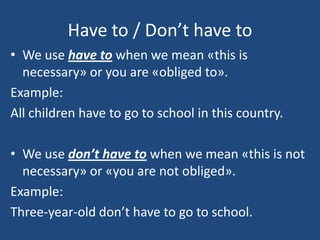
Have to / Don’t have to
• We use have to when we mean «this is
necessary» or you are «obliged to».
Example:
All children have to go to school in this country.
• We use don’t have to when we mean «this is not
necessary» or «you are not obliged».
Example:
Three-year-old don’t have to go to school.
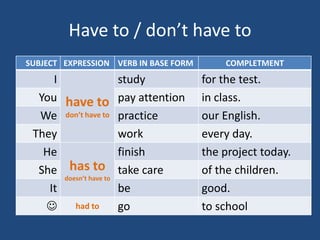
Have to / don’t have to
SUBJECT EXPRESSION VERB IN BASE FORM COMPLETMENT
I
have to
don’t have to
study for the test.
You pay attention in class.
We practice our English.
They work every day.
He
has to
doesn’t have to
finish the project today.
She take care of the children.
It be good.
 had to go to school
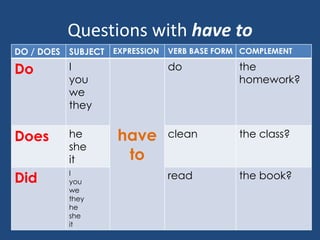
Questions with have to
DO / DOES SUBJECT EXPRESSION VERB BASE FORM COMPLEMENT
Do I
you
we
they
have
to
do the
homework?
Does he
she
it
clean the class?
Did I
you
we
they
he
she
it
read the book?
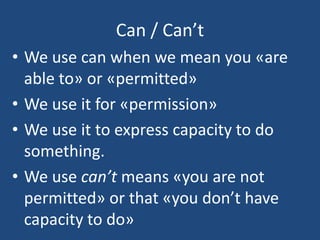
Can / Can’t
• We use can when we mean you «are
able to» or «permitted»
• We use it for «permission»
• We use it to express capacity to do
something.
• We use can’t means «you are not
permitted» or that «you don’t have
capacity to do»
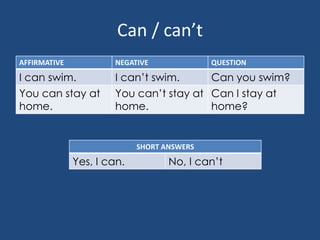
Can / can’t
AFFIRMATIVE NEGATIVE QUESTION
I can swim. I can’t swim. Can you swim?
You can stay at
home.
You can’t stay at
home.
Can I stay at
home?
SHORT ANSWERS
Yes, I can. No, I can’t
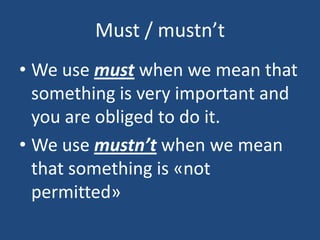
Must / mustn’t
• We use must when we mean that
something is very important and
you are obliged to do it.
• We use mustn’t when we mean
that something is «not
permitted»
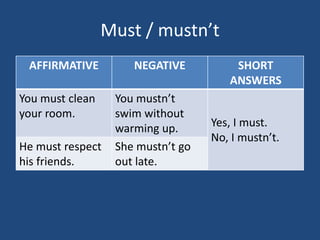
Must / mustn’t
AFFIRMATIVE NEGATIVE SHORT
ANSWERS
You must clean
your room.
You mustn’t
swim without
warming up. Yes, I must.
No, I mustn’t.
He must respect
his friends.
She mustn’t go
out late.

Auxiliaries unit 4

  • 1.
    NAF LEVEL 2– UNIT 4 GRAMMAR
  • 2.
    Have to /Don’t have to • We use have to when we mean «this is necessary» or you are «obliged to». Example: All children have to go to school in this country. • We use don’t have to when we mean «this is not necessary» or «you are not obliged». Example: Three-year-old don’t have to go to school.
  • 3.
    Have to /don’t have to SUBJECT EXPRESSION VERB IN BASE FORM COMPLETMENT I have to don’t have to study for the test. You pay attention in class. We practice our English. They work every day. He has to doesn’t have to finish the project today. She take care of the children. It be good.  had to go to school
  • 4.
    Questions with haveto DO / DOES SUBJECT EXPRESSION VERB BASE FORM COMPLEMENT Do I you we they have to do the homework? Does he she it clean the class? Did I you we they he she it read the book?
  • 5.
    Can / Can’t •We use can when we mean you «are able to» or «permitted» • We use it for «permission» • We use it to express capacity to do something. • We use can’t means «you are not permitted» or that «you don’t have capacity to do»
  • 6.
    Can / can’t AFFIRMATIVENEGATIVE QUESTION I can swim. I can’t swim. Can you swim? You can stay at home. You can’t stay at home. Can I stay at home? SHORT ANSWERS Yes, I can. No, I can’t
  • 7.
    Must / mustn’t •We use must when we mean that something is very important and you are obliged to do it. • We use mustn’t when we mean that something is «not permitted»
  • 8.
    Must / mustn’t AFFIRMATIVENEGATIVE SHORT ANSWERS You must clean your room. You mustn’t swim without warming up. Yes, I must. No, I mustn’t. He must respect his friends. She mustn’t go out late.