Automated Ultrasonic Testing: Principles,
Advantages & Disadvantage
Table of Content
● Automated Ultrasonic Testing
● Working Principle of AUT
● Advantages of Automated Ultrasonic Testing
● Disadvantages of Automated Ultrasonic Testing
● Techniques used in Automated Ultrasonic Testing and their Applications
● Key Takeaways
“Automation is the key to unlocking human potential.” This quote by Elon
Musk highlights the importance of using technology and machinery to carry
out operations without the need for human interference. Ultrasonic Testing is
an NDT process that uses high-frequency ultrasound waves to detect and
assess flaws and deformities in a subject under inspection. Ultrasonic Testing
was historically primarily a manual process where technicians would use
handheld ultrasonic devices to inspect materials for defects. This resulted in
challenges related to subjectivity, labor-intensiveness, limited speed, and the
influence of human factors. The need for Automation in Ultrasonic Testing
became evident to address these challenges, leading to the emergence of the
Automated Ultrasonic Testing machine.
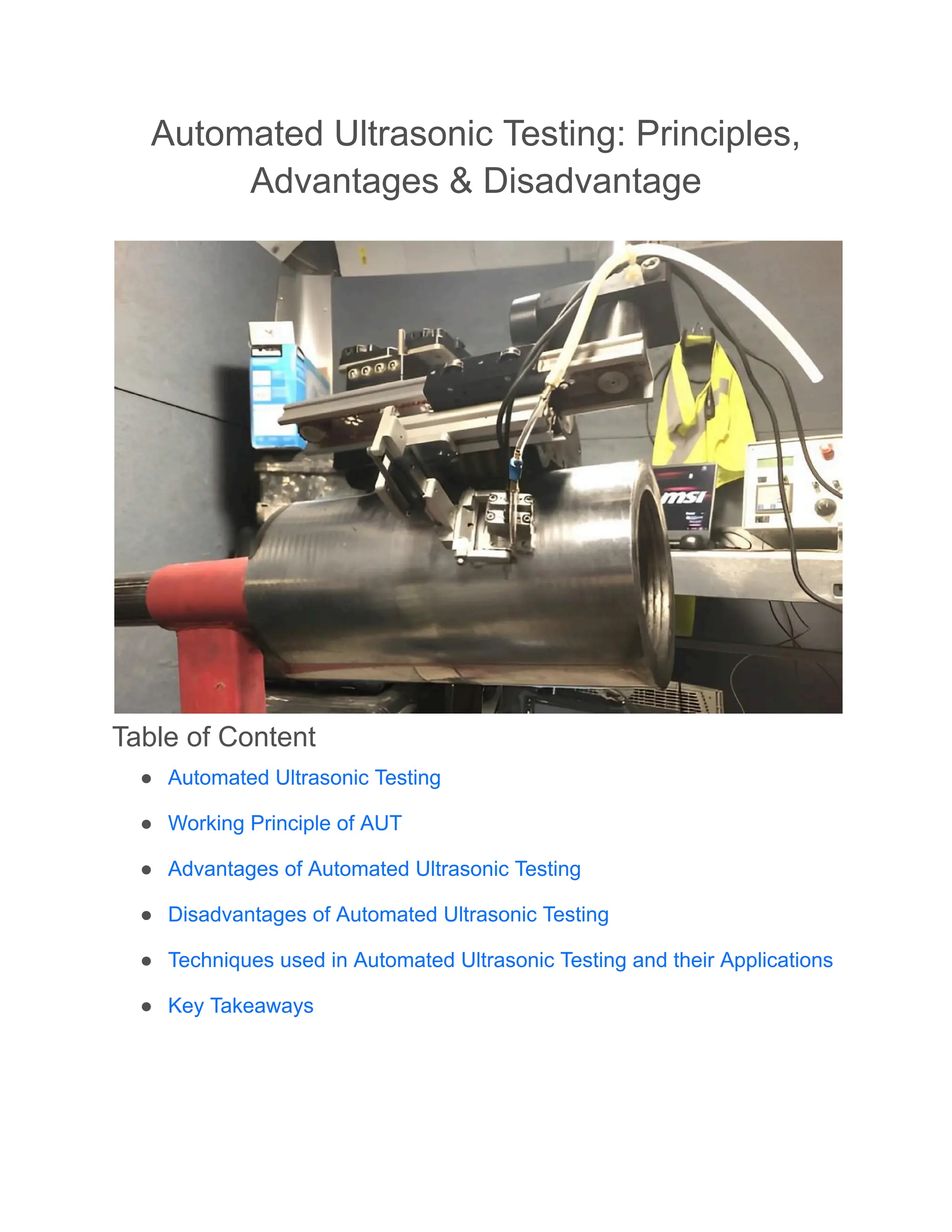
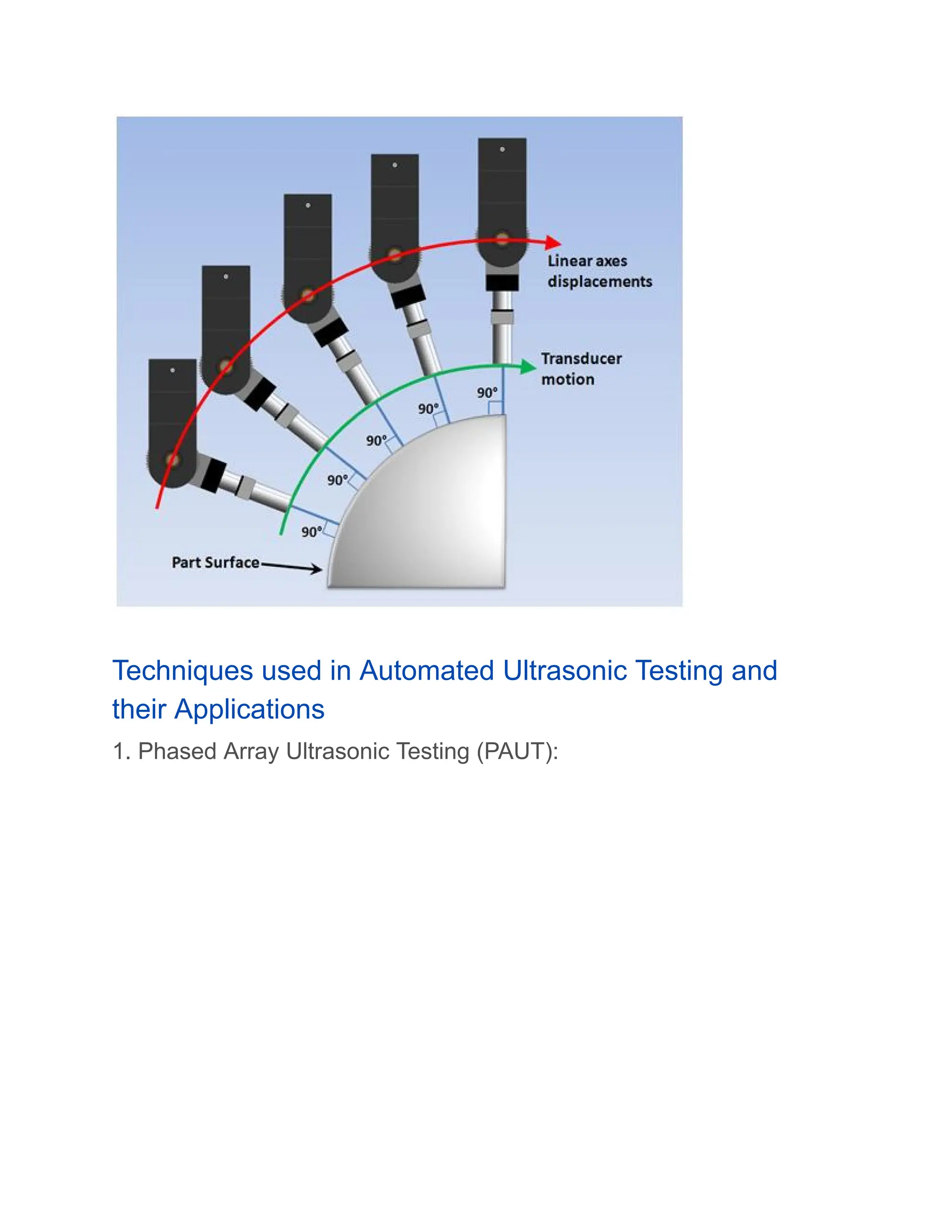
Automation in UT involves the use of mechanized systems that can precisely
control the position, movement, and orientation of ultrasonic transducers,
ensuring consistent and thorough material coverage. AUT, which stands for
Automatic Ultrasonic Testing, has transformed defect detection by automating
the inspection process, improving its speed and reliability. AUT systems offer
several advantages, including enhanced consistency, increased inspection
speed and efficiency, systematic data recording, and the ability to inspect
complex geometries. Automation was needed in the field of UT due to the
limitations associated with manual testing, and the introduction of AUT has
significantly improved the reliability and efficiency of defect detection, making
it an invaluable tool in various industries.
What is Automated Ultrasonic Testing (AUT)?
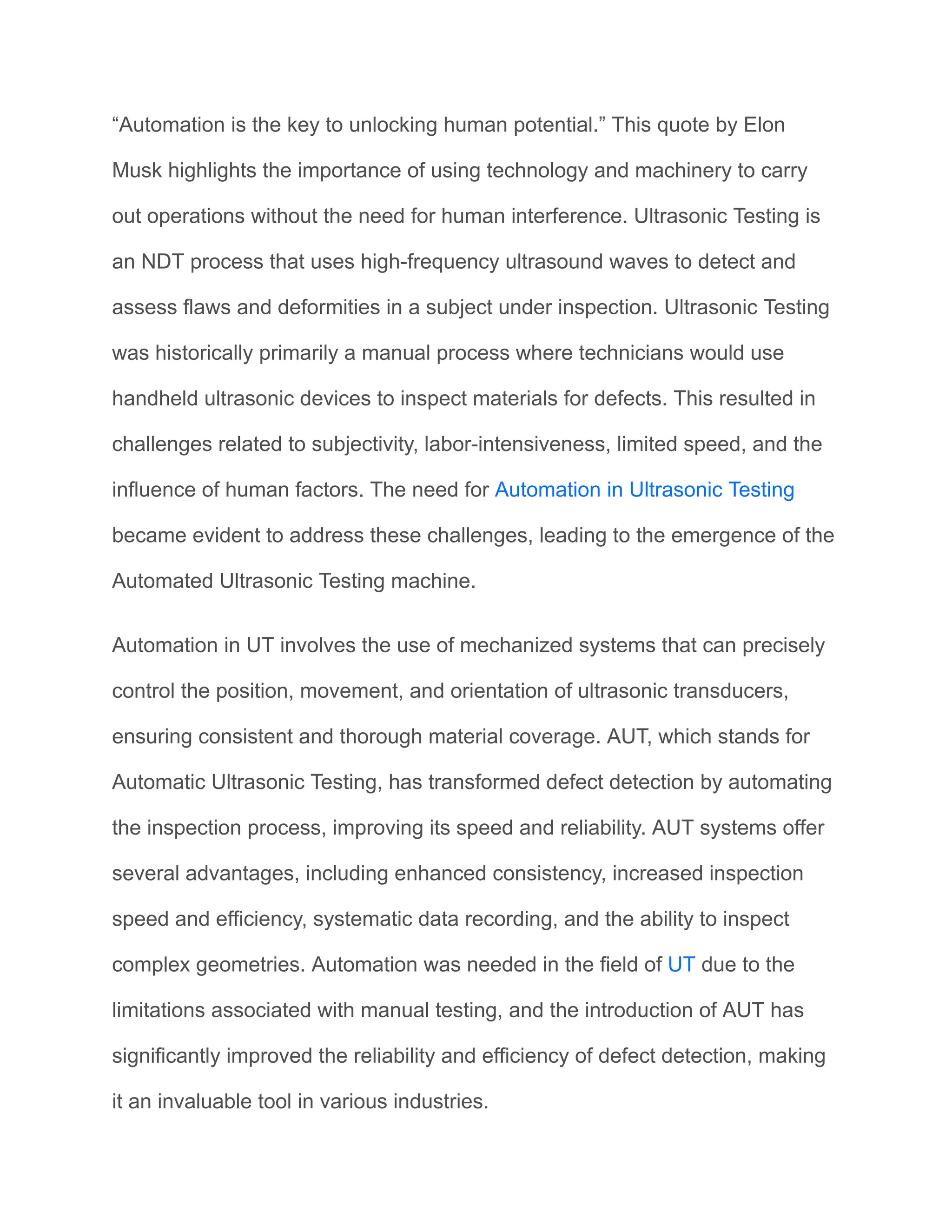
AUT stands for "Automated Ultrasonic Inspection" in the field of NDT. The
term emphasizes the integration of automation in the ultrasonic testing
process. AUT is a sophisticated NDT Technique used to inspect materials for
defects or flaws, commonly in various industries where quality assurance and
safety are paramount. Automated UT inspection utilizes robotic scanning
devices, new-age transducers, and advanced data analysis software, making
it a viable option for inspecting a diverse range of materials and components.
AUT improves the accuracy and efficiency of material inspections. Various
industries such as oil and gas, Aerospace Industry, manufacturing, and
construction employ AUT Testing for their troubleshooting requirements. In
these domains, AUT plays a vital role in upholding the safety and structural
integrity of important components, pipelines, welds, and other critical
infrastructure.
Read More: Everything About Automated Ultrasonic Testing (AUT)
What is the working Principle of Ultrasonic Testing?
Automated Ultrasound Testing utilizes high-frequency sound waves, much like
traditional UT, to penetrate materials and evaluate their internal structure.
These sound waves are generated by transducers, and the echoes are
recorded and analyzed. The key difference is the automation aspect. AUT
systems employ mechanized scanners and advanced software to precisely
control the position, movement, and orientation of the Ultrasonic Transducers.
This ensures comprehensive and consistent coverage of the material,
resulting in accurate and reliable defect detection.
Automation in AUT is achieved using computer-controlled scanners that move
the ultrasonic transducers precisely across the material being inspected.
Advanced software manages the scanning process and collects data, while
algorithms analyze the data to detect defects. Automation ensures uniform
coverage, reduces the potential for human error, and increases the speed of
inspections. Industries that require high levels of safety and quality control,
along with the need for efficient and reliable defect detection, often turn to
AUT for NDT UT testing.
These industries include the Oil and Gas Industry, where pipelines need to be
regularly inspected for corrosion and weld integrity. The aerospace sector
relies on AUT to examine critical components for structural soundness.
Manufacturing and construction industries also utilize AUT for quality
assurance in various applications.
Advantages of Automated Ultrasonic Testing
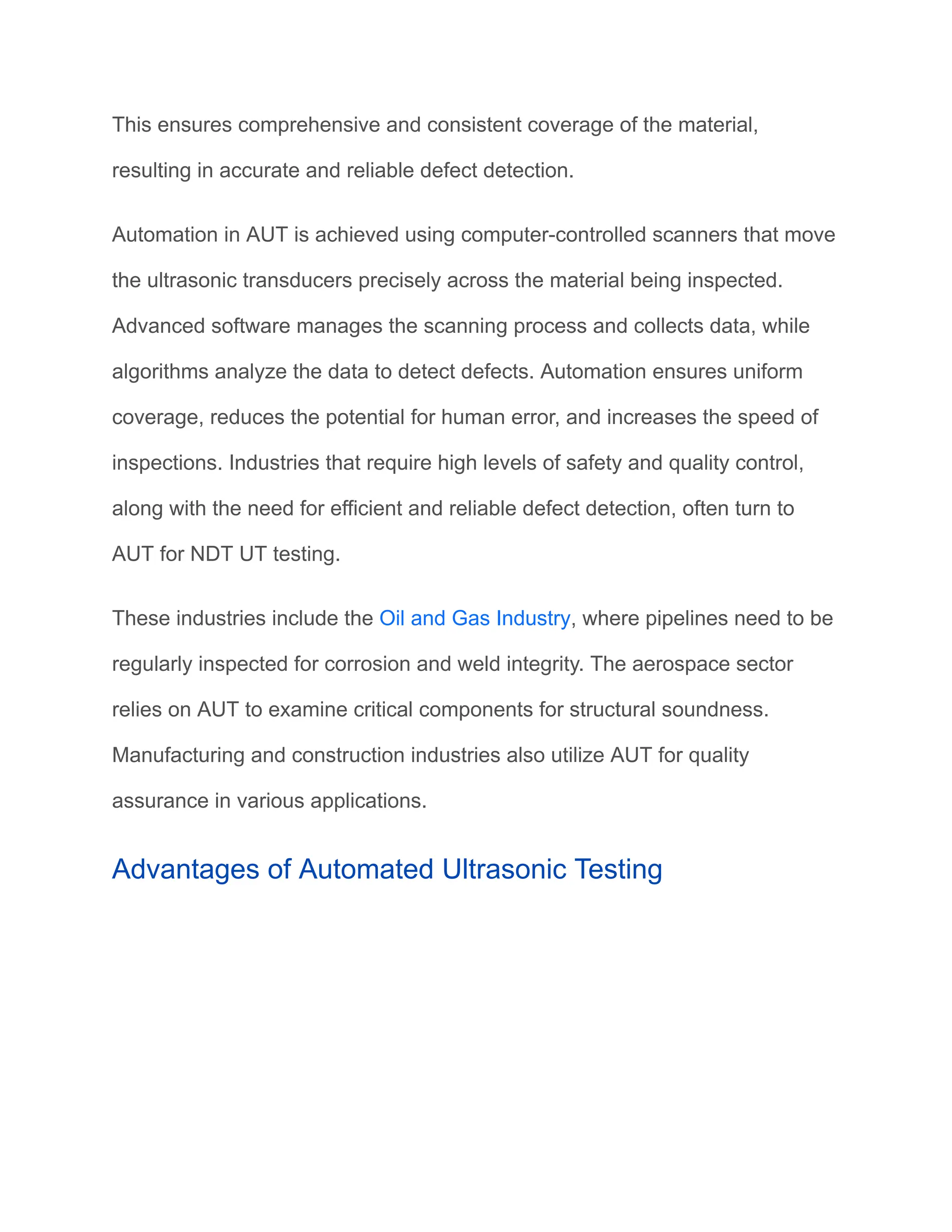
Much like many other automated processes, Automated Ultrasonic Testing
comes with a plethora of benefits, some of which include:
1. Improved Efficiency:
AUT automates the ultrasonic inspection process, significantly reducing the
time required for inspections. Mechanized scanners in automated UT
inspections can perform inspections at a faster pace compared to manual
testing, making it ideal for industries where efficiency is crucial.
2. Enhanced Operational Efficiency:
Automation in ultrasonic testing eliminates the potential for human errors and
inconsistencies that can occur in manual ultrasonic inspections. This results in
more precise defect detection and measurement.
3. Precision and Accuracy Through Automation:
AUT, in the context of NDT, focuses on automating the ultrasonic inspection
process. It combines mechanized scanning systems with advanced
instrumentation and data analysis to improve the efficiency, speed, and
consistency of inspections, including automated UT testing.
4. Versatility:
The automated ultrasonic testing technique is highly versatile and can be
applied to a wide range of materials and components. Whether it's inspecting
welds in pipelines or critical components in aerospace, automated ultrasonic
testing can adapt to various inspection requirements.
5. Comprehensive Material Coverage:
AUT ensures consistent and thorough coverage of the material being
inspected. The mechanized systems in automated ultrasound testing can
navigate complex geometries and hard-to-reach areas, leaving no room for
undetected defects.
6. Data Recording and Analysis:
Automated Ultrasonic Testing systems, including automated ultrasonic testing
machines, can systematically record and store inspection data. Advanced
software then analyzes this data, making it easier for NDT operators to
interpret results and track changes over time.
7. Increased Safety:
In industries such as the Oil and Gas Industry, where safety is paramount,
AUT plays a crucial role in ensuring the Structural Integrity of Pipelines and
components, reducing the risk of catastrophic failures.
8. Balancing Cost-Efficiency:
While the initial investment in AUT technology, including automated
ultrasound testing, can be substantial, the long-term cost-effectiveness stems
from the reduced need for skilled, manual labour, and faster inspection times,
resulting in reduced downtime.
9. Consistency:
AUT ensures that inspection results are consistent and independent of
operator skill levels. This reliability is essential for industries where quality
control and safety standards are critical.
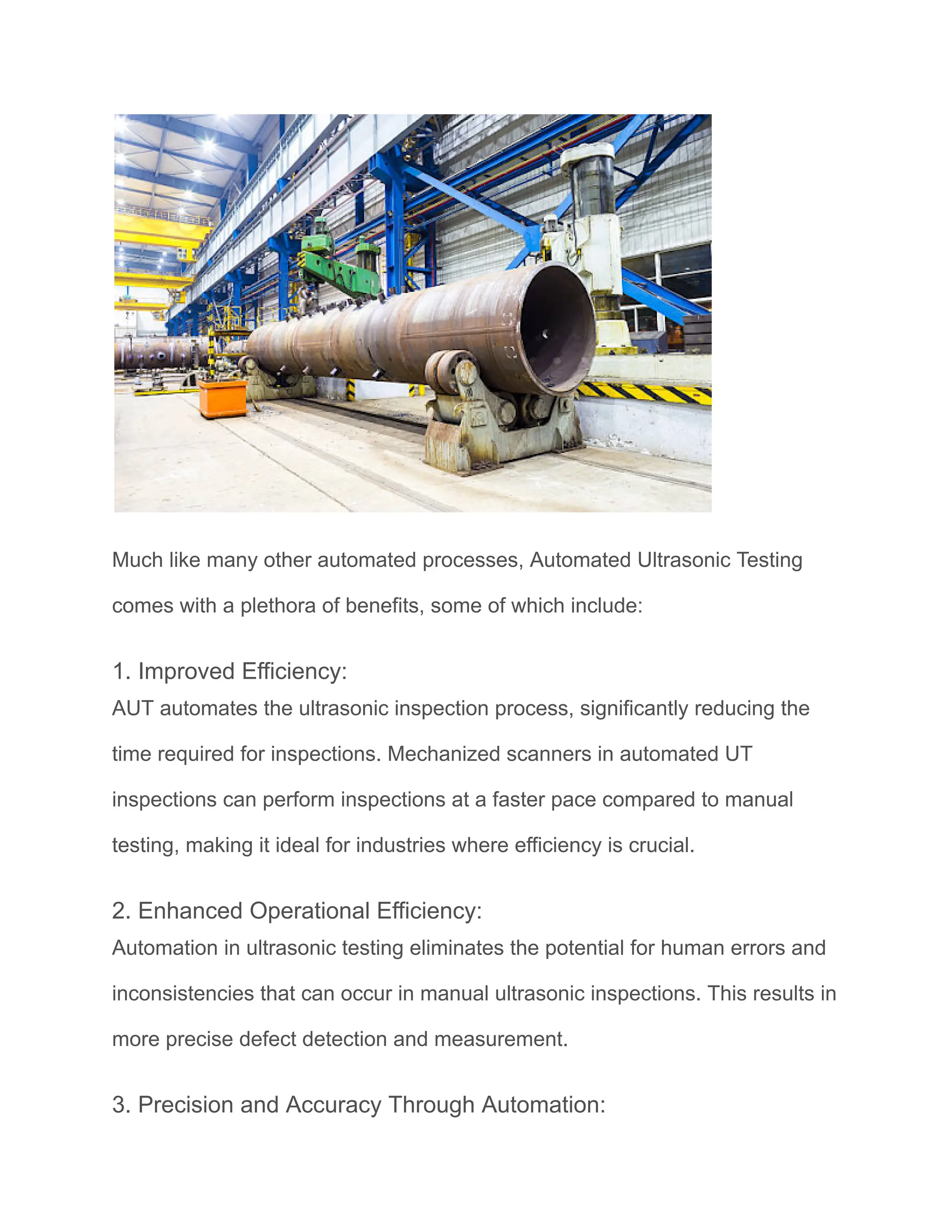
Disadvantages of Automated Ultrasonic Testing
Despite providing convenience to testing procedures and having multiple
advantages, Automated Ultrasonic Testing also comes with many drawbacks.
These drawbacks include the following:
1. Complex Implementation Process:
The implementation of automated ultrasonic testing, with the requirement for
specialized equipment and software, can pose an initial financial hurdle. In
contrast, traditional UT, relying on handheld transducers, often has a more
cost-effective entry point.
2. Limited Adaptability:
AUT may exhibit limited adaptability to unconventional materials or intricate
geometries, whereas manual UT, with its operator-driven flexibility, can be
tailored to a wider range of inspection scenarios.
3. Maintenance and Repair Costs:
The upkeep and repair of Automated Ultrasonic Testing machines may be
costly due to their intricate nature. In contrast, traditional UT equipment is
generally simpler, making maintenance more straightforward and
budget-friendly.
4. Operator Experience:
While AUT reduces the impact of operator skill variations during inspections, it
still necessitates skilled personnel for machine setup, maintenance, and data
analysis, unlike traditional UT, where the operator's expertise primarily
influences the inspection process itself.
5. Navigating the Learning Curve:
The implementation of Automated Ultrasonic Testing may require a learning
curve for personnel, encompassing training and adjustment periods. In
contrast, traditional UT is often more intuitive for experienced NDT
Technicians.
6. Size and Portability of the Equipment:
Automated ultrasonic testing systems are typically bulkier and less portable,
limiting their application in scenarios where mobility is crucial compared to the
more compact and mobile nature of traditional UT equipment.
7. Cost-Efficiency:
Traditional UT, with its lower initial costs and reduced reliance on complex
automated machinery, can be a more cost-effective choice compared to AUT
which has higher initial costs, particularly for smaller-scale or sporadic
inspection needs.
Techniques used in Automated Ultrasonic Testing and
their Applications
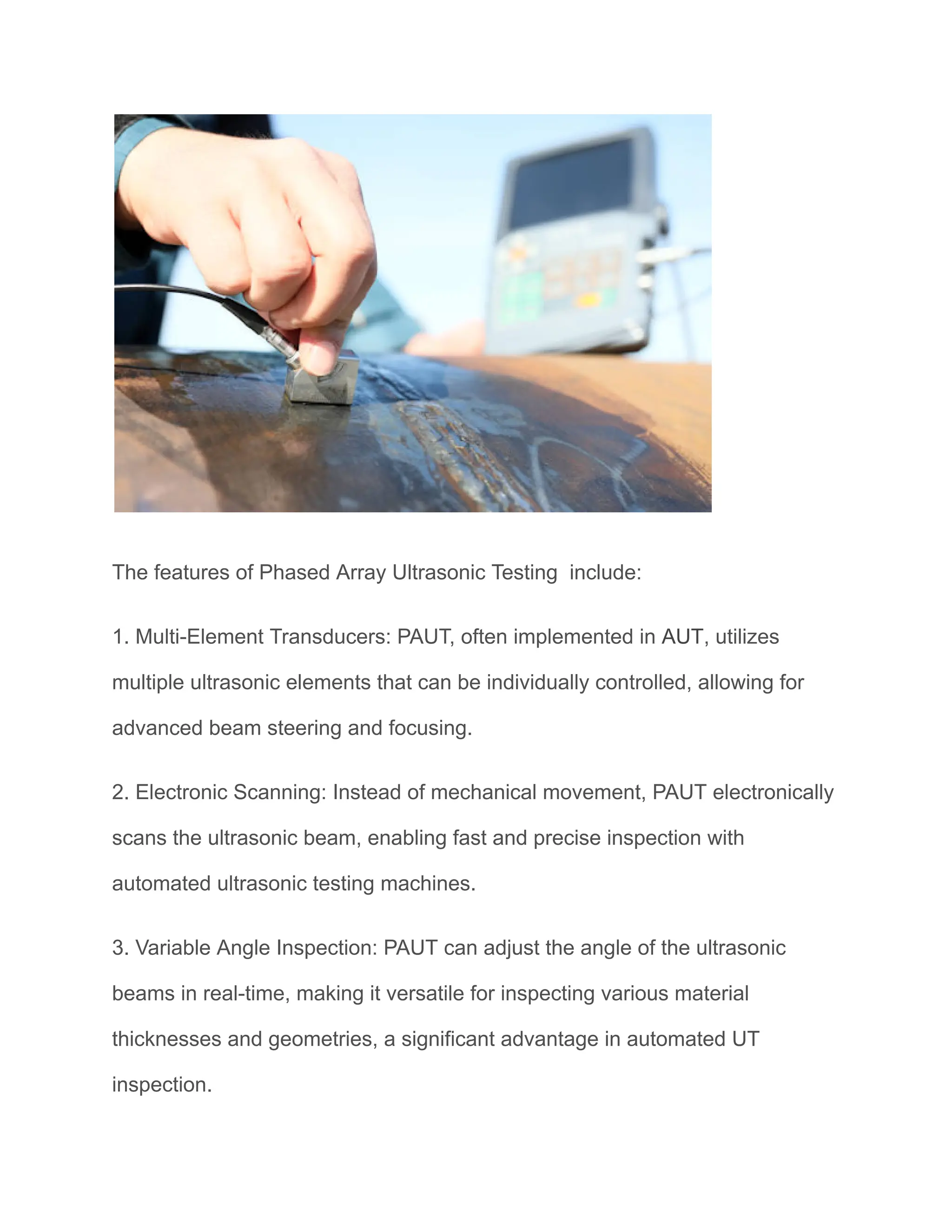
1. Phased Array Ultrasonic Testing (PAUT):
The features of Phased Array Ultrasonic Testing include:
1. Multi-Element Transducers: PAUT, often implemented in AUT, utilizes
multiple ultrasonic elements that can be individually controlled, allowing for
advanced beam steering and focusing.
2. Electronic Scanning: Instead of mechanical movement, PAUT electronically
scans the ultrasonic beam, enabling fast and precise inspection with
automated ultrasonic testing machines.
3. Variable Angle Inspection: PAUT can adjust the angle of the ultrasonic
beams in real-time, making it versatile for inspecting various material
thicknesses and geometries, a significant advantage in automated UT
inspection.
4. Flexible Defect Sizing: PAUT, integrated with AUT Techniques, provides the
ability to size and characterize defects more accurately compared to
conventional ultrasonic testing.
5. Data Recording: It records inspection data, making it useful for historical
analysis and long-term quality assurance in automated ultrasonic testing.
6. Advanced Reporting: PAUT systems often include comprehensive reporting
capabilities for documenting inspection results, essential in auto Ultrasonic
Testing Applications.
7. Data Visualization: It provides detailed visual representations of the
inspected area, enhancing defect detection and analysis in automated UT
testing processes.
PAUT works by sending a series of ultrasonic pulses into the material being
inspected. Adjusting the timing and phase of each transducer element
controls the direction and focus of the ultrasonic beams, crucial in AUT. This
electronic scanning allows for thorough coverage of the material. The
reflected signals are analyzed to detect and characterize defects, a key
element in auto UT.
Phased Array Ultrasonic Testing is ideally used in the Aerospace Industry,
petrochemical, and power generation industries, where it offers the capability
to inspect complex structures, welds, and materials with varying thicknesses
efficiently, especially when automated ultrasonic testing machines are
employed.
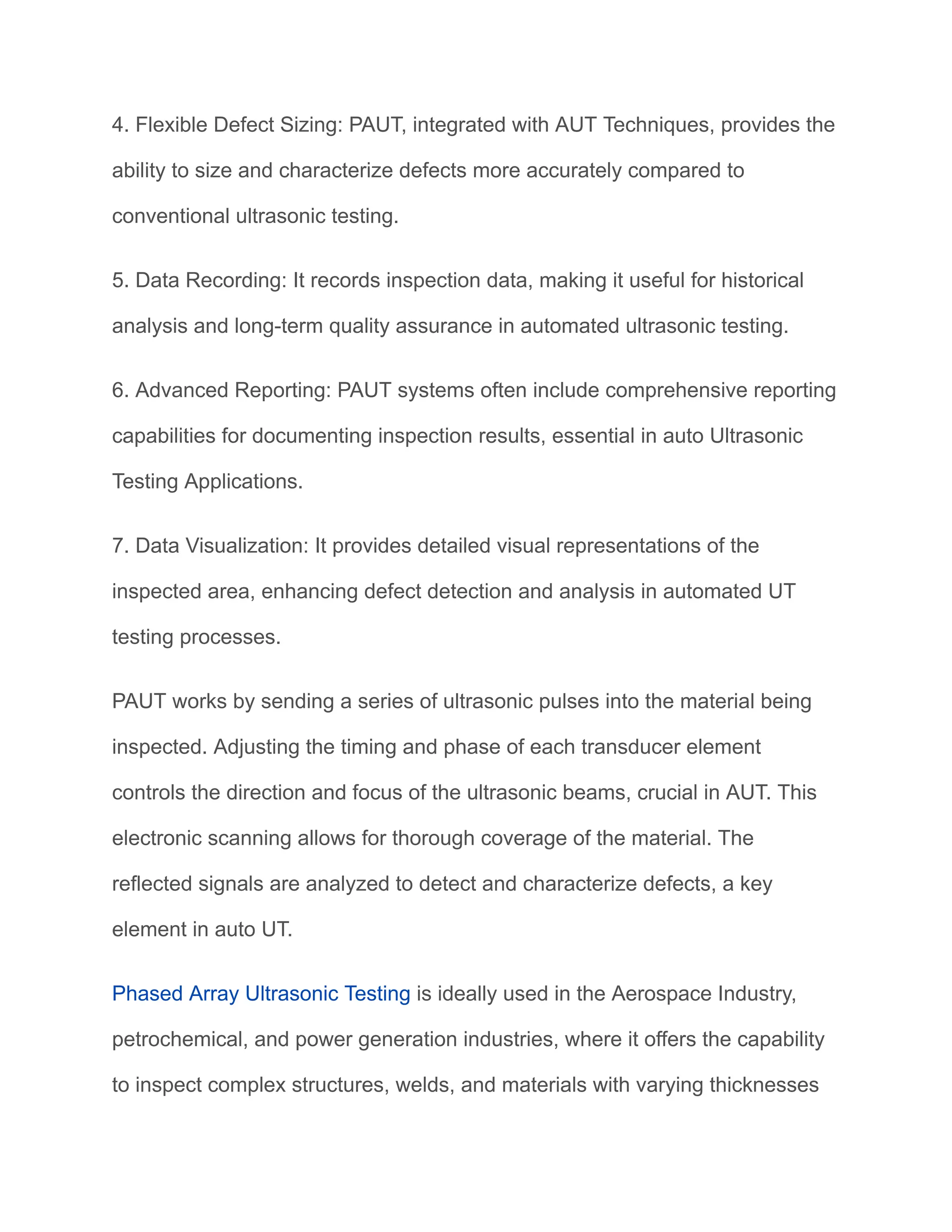
2. Rapid Ultrasonic Gridding (RUG)
Rapid Ultrasonic Gridding (RUG), often known as AUT or auto UT, is a
systematic inspection method used for weld examinations. It utilizes
automated systems to create a grid-like scanning pattern, ensuring thorough
coverage and consistent testing of materials. RUG's efficiency and precision
make it ideal for quality control in various industries, including aerospace,
automotive, and construction.
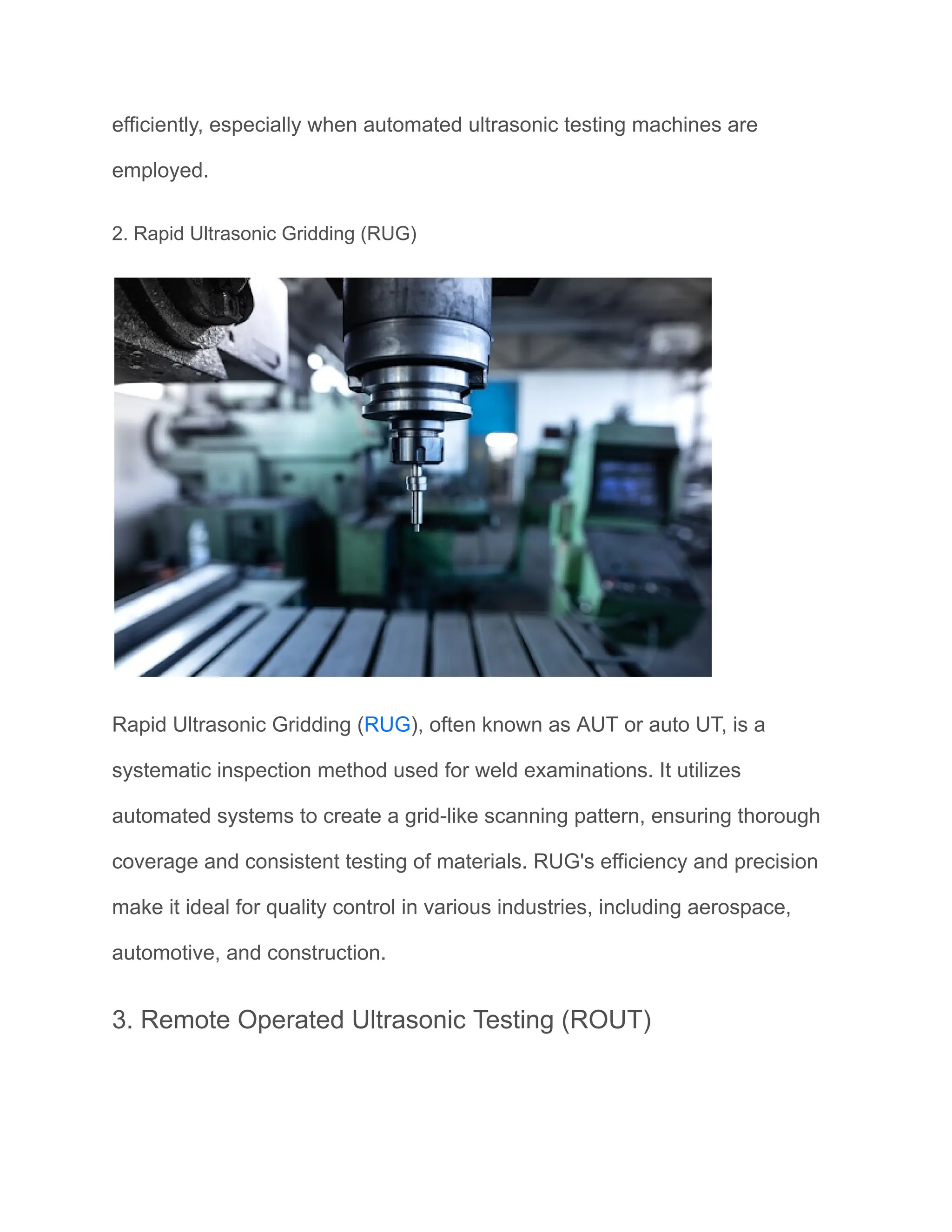
3. Remote Operated Ultrasonic Testing (ROUT)
Remote Operation in ROUT is marked by its safety, as it involves automated
systems that can be controlled from a safe distance, ensuring inspections in
challenging environments, such as high-temperature areas, confined spaces,
or those with potential exposure to hazardous materials. These AUT Methods
offer precise, consistent testing by allowing the programming of specific
scanning patterns to thoroughly examine areas of interest. ROUT uses
remote-controlled systems with Ultrasonic Transducers to inspect materials
from a safe distance, collecting and analyzing data to identify defects. ROUT
is applied in hazardous or remote locations for inspecting Pipelines, nuclear
facilities, aerospace components, and other challenging environments.
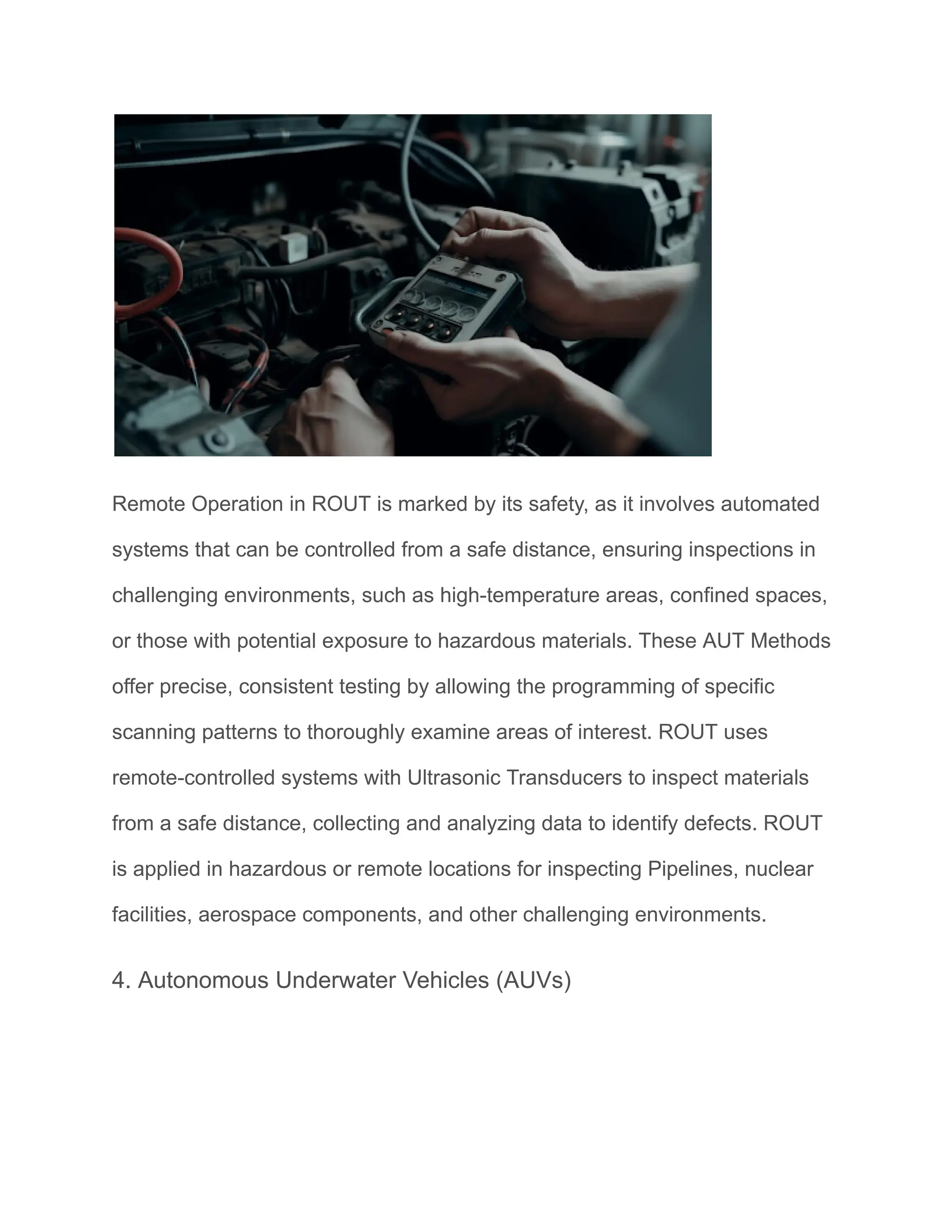
4. Autonomous Underwater Vehicles (AUVs)
One of the many techniques used in AUT is the use of Autonomous
Underwater Vehicles. These are viable options when the structural integrity of
submerged structures like offshore platforms, Pipelines, and underwater welds
needs to be tested.
The features of AUVs include:
Underwater Inspection: AUVs can operate in underwater conditions,
permitting the inspection of submerged structures without the need for human
divers.
Advanced Navigation: They are equipped with advanced navigation systems
that allow them to navigate complex underwater terrains and structures.
Real-time Data Transmission: AUVs can transmit inspection data in real-time
to the surface, enabling immediate analysis and decision-making.
Multiple Sensors: In addition to Ultrasonic Transducers, these AUVs often
incorporate other sensors like cameras and sonar for a comprehensive
inspection.
AUVs are programmed to follow a pre-determined path while conducting
ultrasonic inspections. They use their sensors and automated systems to
detect and evaluate defects in underwater structures. The data collected is
transmitted in real-time to the surface or stored for later analysis. AUVs are
used for Inspecting underwater Pipelines, risers, and platforms in the offshore
oil and gas industry. They are also employed to assess the condition of
underwater bridges, piers, and other marine infrastructure. AUVs are used in
archaeological studies to explore and document submerged historical sites.
AUVs can be used to inspect underwater environmental structures such as
monitoring stations and marine habitats.
Key Takeaways
● Automated Ultrasonic Testing, is a version of Ultrasonic Testing in NDT
that utilizes robotic scanners, advanced transducer mechanisms, and
advanced data management and analysis software to efficiently assess
subjects under testing.
● The key difference between AUT and UT is that Automated Ultrasonic
Testing employs automation by using mechanized scanners and
advanced software to control the transducers' position and movement.
● This provides improved precision and efficiency, however,
implementation can be complex and there may be limits to the system's
adaptability when it comes to complex materials.

Automated Ultrasonic Testing: Principles, Advantages & Disadvantage

  • 1.
    Automated Ultrasonic Testing:Principles, Advantages & Disadvantage Table of Content ● Automated Ultrasonic Testing ● Working Principle of AUT ● Advantages of Automated Ultrasonic Testing ● Disadvantages of Automated Ultrasonic Testing ● Techniques used in Automated Ultrasonic Testing and their Applications ● Key Takeaways
  • 2.
    “Automation is thekey to unlocking human potential.” This quote by Elon Musk highlights the importance of using technology and machinery to carry out operations without the need for human interference. Ultrasonic Testing is an NDT process that uses high-frequency ultrasound waves to detect and assess flaws and deformities in a subject under inspection. Ultrasonic Testing was historically primarily a manual process where technicians would use handheld ultrasonic devices to inspect materials for defects. This resulted in challenges related to subjectivity, labor-intensiveness, limited speed, and the influence of human factors. The need for Automation in Ultrasonic Testing became evident to address these challenges, leading to the emergence of the Automated Ultrasonic Testing machine. Automation in UT involves the use of mechanized systems that can precisely control the position, movement, and orientation of ultrasonic transducers, ensuring consistent and thorough material coverage. AUT, which stands for Automatic Ultrasonic Testing, has transformed defect detection by automating the inspection process, improving its speed and reliability. AUT systems offer several advantages, including enhanced consistency, increased inspection speed and efficiency, systematic data recording, and the ability to inspect complex geometries. Automation was needed in the field of UT due to the limitations associated with manual testing, and the introduction of AUT has significantly improved the reliability and efficiency of defect detection, making it an invaluable tool in various industries.
  • 3.
    What is AutomatedUltrasonic Testing (AUT)? AUT stands for "Automated Ultrasonic Inspection" in the field of NDT. The term emphasizes the integration of automation in the ultrasonic testing process. AUT is a sophisticated NDT Technique used to inspect materials for defects or flaws, commonly in various industries where quality assurance and safety are paramount. Automated UT inspection utilizes robotic scanning devices, new-age transducers, and advanced data analysis software, making it a viable option for inspecting a diverse range of materials and components. AUT improves the accuracy and efficiency of material inspections. Various industries such as oil and gas, Aerospace Industry, manufacturing, and construction employ AUT Testing for their troubleshooting requirements. In these domains, AUT plays a vital role in upholding the safety and structural
  • 4.
    integrity of importantcomponents, pipelines, welds, and other critical infrastructure. Read More: Everything About Automated Ultrasonic Testing (AUT) What is the working Principle of Ultrasonic Testing? Automated Ultrasound Testing utilizes high-frequency sound waves, much like traditional UT, to penetrate materials and evaluate their internal structure. These sound waves are generated by transducers, and the echoes are recorded and analyzed. The key difference is the automation aspect. AUT systems employ mechanized scanners and advanced software to precisely control the position, movement, and orientation of the Ultrasonic Transducers.
  • 5.
    This ensures comprehensiveand consistent coverage of the material, resulting in accurate and reliable defect detection. Automation in AUT is achieved using computer-controlled scanners that move the ultrasonic transducers precisely across the material being inspected. Advanced software manages the scanning process and collects data, while algorithms analyze the data to detect defects. Automation ensures uniform coverage, reduces the potential for human error, and increases the speed of inspections. Industries that require high levels of safety and quality control, along with the need for efficient and reliable defect detection, often turn to AUT for NDT UT testing. These industries include the Oil and Gas Industry, where pipelines need to be regularly inspected for corrosion and weld integrity. The aerospace sector relies on AUT to examine critical components for structural soundness. Manufacturing and construction industries also utilize AUT for quality assurance in various applications. Advantages of Automated Ultrasonic Testing
  • 6.
    Much like manyother automated processes, Automated Ultrasonic Testing comes with a plethora of benefits, some of which include: 1. Improved Efficiency: AUT automates the ultrasonic inspection process, significantly reducing the time required for inspections. Mechanized scanners in automated UT inspections can perform inspections at a faster pace compared to manual testing, making it ideal for industries where efficiency is crucial. 2. Enhanced Operational Efficiency: Automation in ultrasonic testing eliminates the potential for human errors and inconsistencies that can occur in manual ultrasonic inspections. This results in more precise defect detection and measurement. 3. Precision and Accuracy Through Automation:
  • 7.
    AUT, in thecontext of NDT, focuses on automating the ultrasonic inspection process. It combines mechanized scanning systems with advanced instrumentation and data analysis to improve the efficiency, speed, and consistency of inspections, including automated UT testing. 4. Versatility: The automated ultrasonic testing technique is highly versatile and can be applied to a wide range of materials and components. Whether it's inspecting welds in pipelines or critical components in aerospace, automated ultrasonic testing can adapt to various inspection requirements. 5. Comprehensive Material Coverage: AUT ensures consistent and thorough coverage of the material being inspected. The mechanized systems in automated ultrasound testing can navigate complex geometries and hard-to-reach areas, leaving no room for undetected defects. 6. Data Recording and Analysis: Automated Ultrasonic Testing systems, including automated ultrasonic testing machines, can systematically record and store inspection data. Advanced software then analyzes this data, making it easier for NDT operators to interpret results and track changes over time. 7. Increased Safety:
  • 8.
    In industries suchas the Oil and Gas Industry, where safety is paramount, AUT plays a crucial role in ensuring the Structural Integrity of Pipelines and components, reducing the risk of catastrophic failures. 8. Balancing Cost-Efficiency: While the initial investment in AUT technology, including automated ultrasound testing, can be substantial, the long-term cost-effectiveness stems from the reduced need for skilled, manual labour, and faster inspection times, resulting in reduced downtime. 9. Consistency: AUT ensures that inspection results are consistent and independent of operator skill levels. This reliability is essential for industries where quality control and safety standards are critical. Disadvantages of Automated Ultrasonic Testing
  • 9.
    Despite providing convenienceto testing procedures and having multiple advantages, Automated Ultrasonic Testing also comes with many drawbacks. These drawbacks include the following: 1. Complex Implementation Process: The implementation of automated ultrasonic testing, with the requirement for specialized equipment and software, can pose an initial financial hurdle. In contrast, traditional UT, relying on handheld transducers, often has a more cost-effective entry point. 2. Limited Adaptability: AUT may exhibit limited adaptability to unconventional materials or intricate geometries, whereas manual UT, with its operator-driven flexibility, can be tailored to a wider range of inspection scenarios. 3. Maintenance and Repair Costs: The upkeep and repair of Automated Ultrasonic Testing machines may be costly due to their intricate nature. In contrast, traditional UT equipment is generally simpler, making maintenance more straightforward and budget-friendly. 4. Operator Experience: While AUT reduces the impact of operator skill variations during inspections, it still necessitates skilled personnel for machine setup, maintenance, and data
  • 10.
    analysis, unlike traditionalUT, where the operator's expertise primarily influences the inspection process itself. 5. Navigating the Learning Curve: The implementation of Automated Ultrasonic Testing may require a learning curve for personnel, encompassing training and adjustment periods. In contrast, traditional UT is often more intuitive for experienced NDT Technicians. 6. Size and Portability of the Equipment: Automated ultrasonic testing systems are typically bulkier and less portable, limiting their application in scenarios where mobility is crucial compared to the more compact and mobile nature of traditional UT equipment. 7. Cost-Efficiency: Traditional UT, with its lower initial costs and reduced reliance on complex automated machinery, can be a more cost-effective choice compared to AUT which has higher initial costs, particularly for smaller-scale or sporadic inspection needs.
  • 11.
    Techniques used inAutomated Ultrasonic Testing and their Applications 1. Phased Array Ultrasonic Testing (PAUT):
  • 12.
    The features ofPhased Array Ultrasonic Testing include: 1. Multi-Element Transducers: PAUT, often implemented in AUT, utilizes multiple ultrasonic elements that can be individually controlled, allowing for advanced beam steering and focusing. 2. Electronic Scanning: Instead of mechanical movement, PAUT electronically scans the ultrasonic beam, enabling fast and precise inspection with automated ultrasonic testing machines. 3. Variable Angle Inspection: PAUT can adjust the angle of the ultrasonic beams in real-time, making it versatile for inspecting various material thicknesses and geometries, a significant advantage in automated UT inspection.
  • 13.
    4. Flexible DefectSizing: PAUT, integrated with AUT Techniques, provides the ability to size and characterize defects more accurately compared to conventional ultrasonic testing. 5. Data Recording: It records inspection data, making it useful for historical analysis and long-term quality assurance in automated ultrasonic testing. 6. Advanced Reporting: PAUT systems often include comprehensive reporting capabilities for documenting inspection results, essential in auto Ultrasonic Testing Applications. 7. Data Visualization: It provides detailed visual representations of the inspected area, enhancing defect detection and analysis in automated UT testing processes. PAUT works by sending a series of ultrasonic pulses into the material being inspected. Adjusting the timing and phase of each transducer element controls the direction and focus of the ultrasonic beams, crucial in AUT. This electronic scanning allows for thorough coverage of the material. The reflected signals are analyzed to detect and characterize defects, a key element in auto UT. Phased Array Ultrasonic Testing is ideally used in the Aerospace Industry, petrochemical, and power generation industries, where it offers the capability to inspect complex structures, welds, and materials with varying thicknesses
  • 14.
    efficiently, especially whenautomated ultrasonic testing machines are employed. 2. Rapid Ultrasonic Gridding (RUG) Rapid Ultrasonic Gridding (RUG), often known as AUT or auto UT, is a systematic inspection method used for weld examinations. It utilizes automated systems to create a grid-like scanning pattern, ensuring thorough coverage and consistent testing of materials. RUG's efficiency and precision make it ideal for quality control in various industries, including aerospace, automotive, and construction. 3. Remote Operated Ultrasonic Testing (ROUT)
  • 15.
    Remote Operation inROUT is marked by its safety, as it involves automated systems that can be controlled from a safe distance, ensuring inspections in challenging environments, such as high-temperature areas, confined spaces, or those with potential exposure to hazardous materials. These AUT Methods offer precise, consistent testing by allowing the programming of specific scanning patterns to thoroughly examine areas of interest. ROUT uses remote-controlled systems with Ultrasonic Transducers to inspect materials from a safe distance, collecting and analyzing data to identify defects. ROUT is applied in hazardous or remote locations for inspecting Pipelines, nuclear facilities, aerospace components, and other challenging environments. 4. Autonomous Underwater Vehicles (AUVs)
  • 16.
    One of themany techniques used in AUT is the use of Autonomous Underwater Vehicles. These are viable options when the structural integrity of submerged structures like offshore platforms, Pipelines, and underwater welds needs to be tested. The features of AUVs include: Underwater Inspection: AUVs can operate in underwater conditions, permitting the inspection of submerged structures without the need for human divers. Advanced Navigation: They are equipped with advanced navigation systems that allow them to navigate complex underwater terrains and structures. Real-time Data Transmission: AUVs can transmit inspection data in real-time to the surface, enabling immediate analysis and decision-making.
  • 17.
    Multiple Sensors: Inaddition to Ultrasonic Transducers, these AUVs often incorporate other sensors like cameras and sonar for a comprehensive inspection. AUVs are programmed to follow a pre-determined path while conducting ultrasonic inspections. They use their sensors and automated systems to detect and evaluate defects in underwater structures. The data collected is transmitted in real-time to the surface or stored for later analysis. AUVs are used for Inspecting underwater Pipelines, risers, and platforms in the offshore oil and gas industry. They are also employed to assess the condition of underwater bridges, piers, and other marine infrastructure. AUVs are used in archaeological studies to explore and document submerged historical sites. AUVs can be used to inspect underwater environmental structures such as monitoring stations and marine habitats. Key Takeaways ● Automated Ultrasonic Testing, is a version of Ultrasonic Testing in NDT that utilizes robotic scanners, advanced transducer mechanisms, and advanced data management and analysis software to efficiently assess subjects under testing. ● The key difference between AUT and UT is that Automated Ultrasonic Testing employs automation by using mechanized scanners and advanced software to control the transducers' position and movement.
  • 18.
    ● This providesimproved precision and efficiency, however, implementation can be complex and there may be limits to the system's adaptability when it comes to complex materials.